Starting paper crafts is fun, but walking into a craft store as a total beginner can send you down a rabbit hole of supplies, tools, and “must have” gadgets. This paper craft supplies list for beginners keeps things practical: the absolute essentials that help you create clean, polished craft projects without buying all the things on day one.
How We Chose the Best Paper Craft Supplies for Beginners
We chose these craft supplies based on how useful they are for a beginner paper crafter, not how trendy they look in a craft room. The best supplies are easy to use, work across multiple paper crafting projects, and help you avoid common frustrations like crooked cuts, warped paper, weak glue, or misplaced materials.
The main criteria were:
- Ease of use for complete beginners
- Versatility across card making, scrapbooking, gift wrapping, stamping, and mixed media
- Quality and durability for long-term use
- Affordability and value for money
- Safety features for all skill levels
- Availability in most craft stores, including budget options like dollar tree
- Essential functionality that can’t be substituted
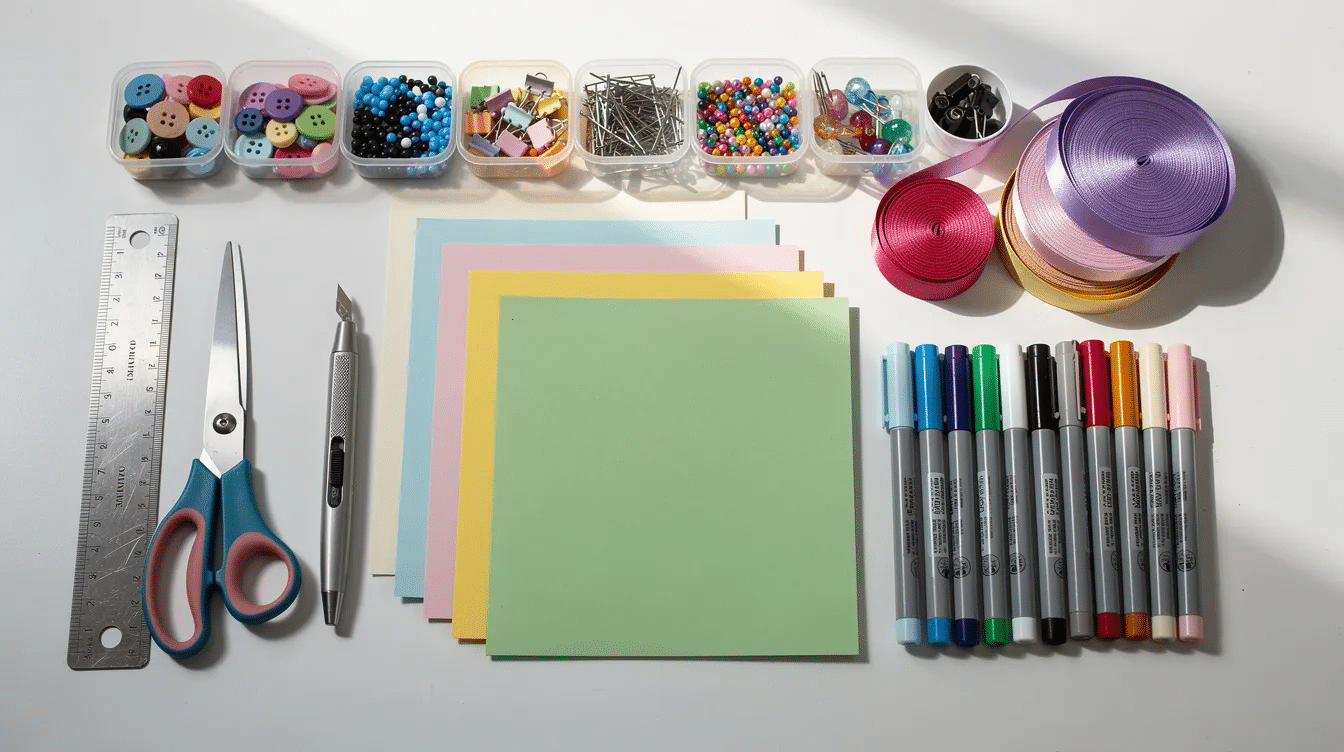
As a starting point, essential paper crafting supplies include paper, scissors, a paper trimmer, adhesives, a crafting mat, inks, and a pencil, which are considered must-haves for every crafter’s toolkit.
Top 7 Essential Paper Craft Supplies for Beginners
1. Quality Paper and Cardstock
Paper is the foundation of all paper crafting. Exploring the best types of paper for craft helps you choose a good selection of cardstock and patterned paper that is essential for various projects, including card making, scrapbooking, and gift boxes.
Cardstock should typically be medium-weight (80 lb) or higher for crafting, while cardstock weights ranging from 65 lb to 80 lb are ideal for crafting when you want flexibility without flimsiness. According to common paper weight guides, cardstock often sits around 175–300 gsm, making it sturdier than everyday printer paper.
Why It Stands Out
Quality paper makes all the difference between frustrating and enjoyable crafting. Cheap paper can tear, buckle, or show glue marks, while quality supplies give you cleaner folds, smoother layers, and better color results.
Pre-coordinated patterned paper pads simplify color matching for projects, especially if you are feeling overwhelmed by color choices. Using a variety of colors and patterns in paper crafting can add personality and creativity to projects, making them more engaging and fun.
Best For
Paper and cardstock are best for card makers, scrapbookers, and general paper crafters. Construction paper is fine for kids’ craft projects, but top craft paper supplies for creative projects like cardstock, scrapbook paper, tissue paper, and paper pads give you more creative possibilities for finished pieces.
Key Strengths
- Variety of weights and textures available
- Affordable foundation for unlimited projects
- Forgiving material that allows for mistakes
- Works for making cards, scrapbook pages, tags, boxes, and basically anything flat or folded
- Bone folders create sharp creases in paper without leaving shiny marks
Possible Limitations
Paper can be overwhelming at first because there are so many colors, finishes, and weights. It also takes storage space, especially once your supply stash grows into a collection of paper pads, scraps, card blanks, and specialty sheets.
2. Precision Cutting Tools (Craft Scissors and Craft Knife)
Clean cuts are crucial if you want paper crafting supplies to produce professional-looking results. Your first cutting tools should include scissors, small detail scissors, and eventually a craft knife.
A good pair of scissors is incredibly versatile, perfect for trimming card blanks and cutting out detailed centrepieces, frames, and borders. Small, sharp scissors are essential for intricate shapes in paper crafting, especially when you explore fun paper activities for creative minds. Precision snips, which are smaller than standard scissors with a fine 4.5” blade, are designed for delicate, detailed cutting, making them ideal for finishing touches.
Why It Stands Out
Sharp, precise paper craft tools boost confidence because your edges look intentional. A craft knife is essential for clean, accurate cuts, making it perfect for techniques like decoupage or working with finer materials.
Use a sharp blade with care, and replace dull blades instead of forcing them through paper. Dull blades cause ragged edges and are often less safe because they require extra pressure.
Best For
These tools are most urgent for beginners interested in detailed work, die cutting cleanup, borders, windows, layered frames, and intricate paper designs. If you mainly cut straight lines, a paper trimmer is also worth buying early.
Key Strengths
- Essential for detailed cutting work
- Long-lasting investment with proper care
- Dramatically improve project quality
- Help create clean cuts for layered designs, stamped images, and detailed embellishments
Possible Limitations
Cutting tools require safety awareness and proper handling. A craft knife should always be used on a cutting mat, ideally with a metal ruler, and stored with the cap on.
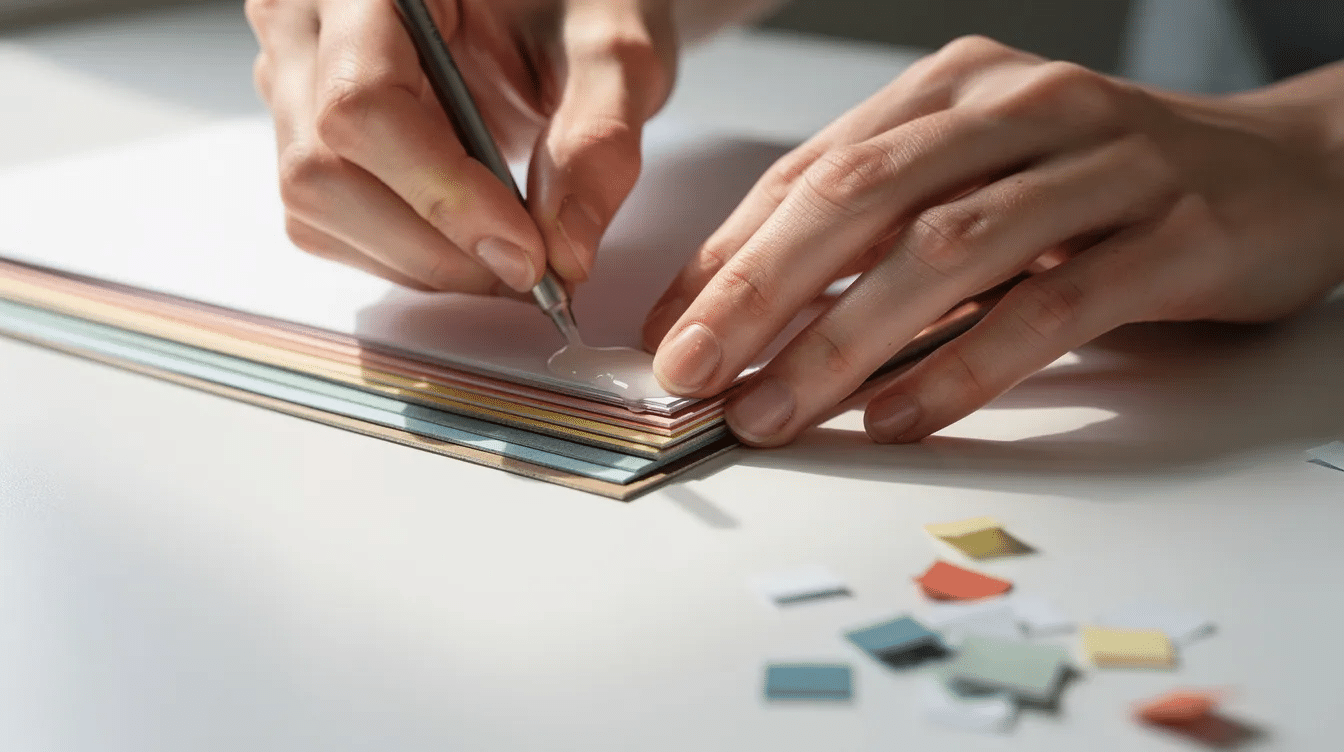
3. Reliable Adhesives (Glue Stick, Craft Glue, Foam Tape)
Adhesives are an essential part of any craft kit, with various options available to suit different projects, including wet glues, tapes, and sprays. You do not need every glue on the shelf, but you do need the right glue for the job, especially when working with textured surfaces like handmade paper sheets for creative projects.
Why It Stands Out
Proper adhesives prevent project failures. Double-sided tape provides a clean, mess-free method for paper bonding, while tape runners are the quickest method for layering paper without wrinkles. Double-sided tape runners offer a mess-free way to attach large paper layers.
Liquid tacky glue sets quickly and prevents paper warping. Quick-drying, wrinkle-free liquid glue is ideal for paper projects. Collall All-Purpose Glue is a reliable adhesive that offers a strong bond across a wide range of materials, making it a popular choice among crafters.
Best For
- Glue stick: lightweight paper, kids’ crafts, and quick layouts
- Craft glue: embellishments, heavier cardstock, and mixed materials
- Double-sided tape: flat layers, scrapbook pages, and clean borders
- Foam tape: dimension, focal images, and layered card fronts
- Glue Tape Pens: a no-mess option for adhesion, allowing for easy application on smaller elements and embellishments in crafting projects
Key Strengths
- Multiple options for different bonding needs
- Allow for repositioning when needed
- Create permanent, lasting bonds
- Make layering multiple layers easier and cleaner
Possible Limitations
Glue can be messy without proper technique, and different drying times require patience. Keep baby wipes or wet wipes nearby to clean fingers, caps, and your work surface before glue spreads onto the front of your project.
4. Measuring Tools (Ruler and Cutting Mat)
Accuracy matters in paper crafting because uneven borders and crooked folds are easy to see. Basic crafting tools such as a ruler and a cutting mat are important for ensuring precision and protecting your work surface during paper crafting.
Why It Stands Out
A cutting mat protects your work surface from sharp tools and helps ensure accurate measuring and cutting, making it a worthwhile addition to any craft setup. Self-healing mats protect tabletops and keep blades sharp during cutting.
Metal rulers provide a straight edge that prevents slippage when cutting. A metal ruler is safer than a plastic ruler when paired with a craft knife because the blade will not shave into the edge.
Best For
Measuring tools are best for card making, scrapbooking, box templates, envelopes, gift wrapping, and any diy project where straight lines matter.
Key Strengths
- Protect work surfaces while cutting
- Enable accurate measurements and straight cuts
- Self-healing mats last for years
- Give you a flat base for cutting, scoring, trimming, and aligning layers
Possible Limitations
A cutting mat requires a little dedicated workspace, and larger mats cost more. Still, it is an essential tool if you use knives, rotary cutters, or any sharp blade regularly.
5. Basic Embellishments (Buttons, Ribbons, Stickers)
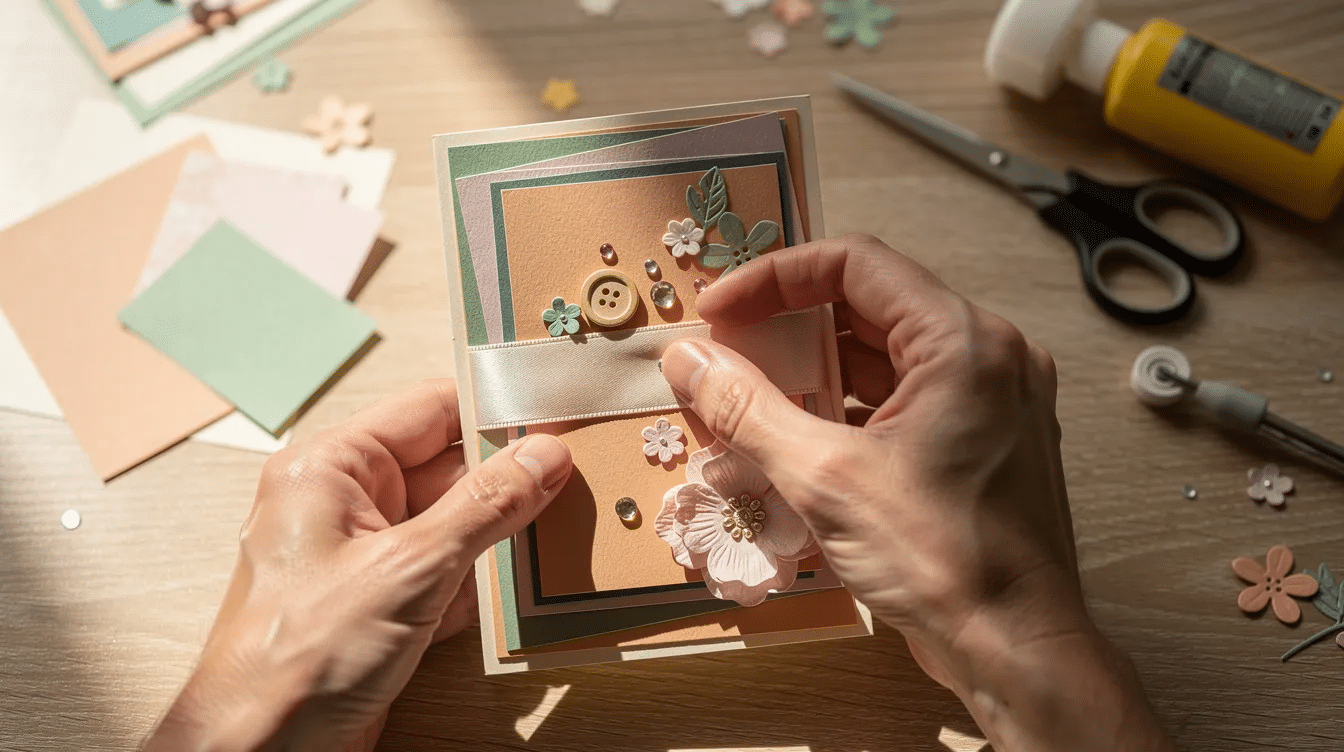
Embellishments add personality to paper crafts. Buttons, ribbons, stickers, gems, washi tape, twine, sequins, and even tiny craft sticks can turn a plain project into something more finished.
Why It Stands Out
Simple additions transform basic projects by adding texture, contrast, and dimension. Creating simple projects with a focus on layering and using embellishments can enhance the visual appeal of beginner paper crafts.
Using pre-printed and precision-cut sentiments can simplify the crafting process, allowing beginners to create beautiful designs with minimal effort.
Best For
Embellishments are best for paper crafters who enjoy card making, scrapbooking, tags, journals, and handmade gifts. They are also useful when combining paper with fabric, fabric crafts, ribbon, lace, or other soft materials, and when experimenting with vintage paper craft ideas that use old book pages, sheet music, and ephemera.
Key Strengths
- Add dimension and visual interest
- Available in countless varieties
- Can salvage less-than-perfect projects
- Help personalize your next project without advanced techniques
Possible Limitations
Embellishments can become expensive quickly. They can also overcomplicate simple projects, so start with a small set of stickers, ribbon, and neutral accents before expanding.
6. Coloring Tools (Markers, Colored Pencils, Pens)
Color brings paper crafts to life. Markers, colored pencils, gel pens, brush pens, and ink pads let you add shading, lettering, borders, and stamped details.
Why It Stands Out
Coloring tools support creative expression and personalization. They let you create custom color schemes, color stamped images, add handwritten messages, and make plain cardstock feel intentional.
Best For
Prioritize coloring tools if you enjoy stamping, journaling, handmade cards, or mixed media. They also pair beautifully with dimensional techniques like those in paper quilling art for beginners. Ink pads are especially useful for stamping sentiments, distressing edges, and adding soft backgrounds.
Key Strengths
- Enable custom color schemes
- Add personal artistic touches
- Work on various paper weights
- Pair well with patterned paper, scrapbook paper, and card blanks
Possible Limitations
Quality varies significantly by price point. Cheap markers can bleed through thin papers, and some inks do not dry well on glossy paper. A heat gun can help dry some inks or embossing powders, but it is not one of the first must have craft supplies for every beginner.
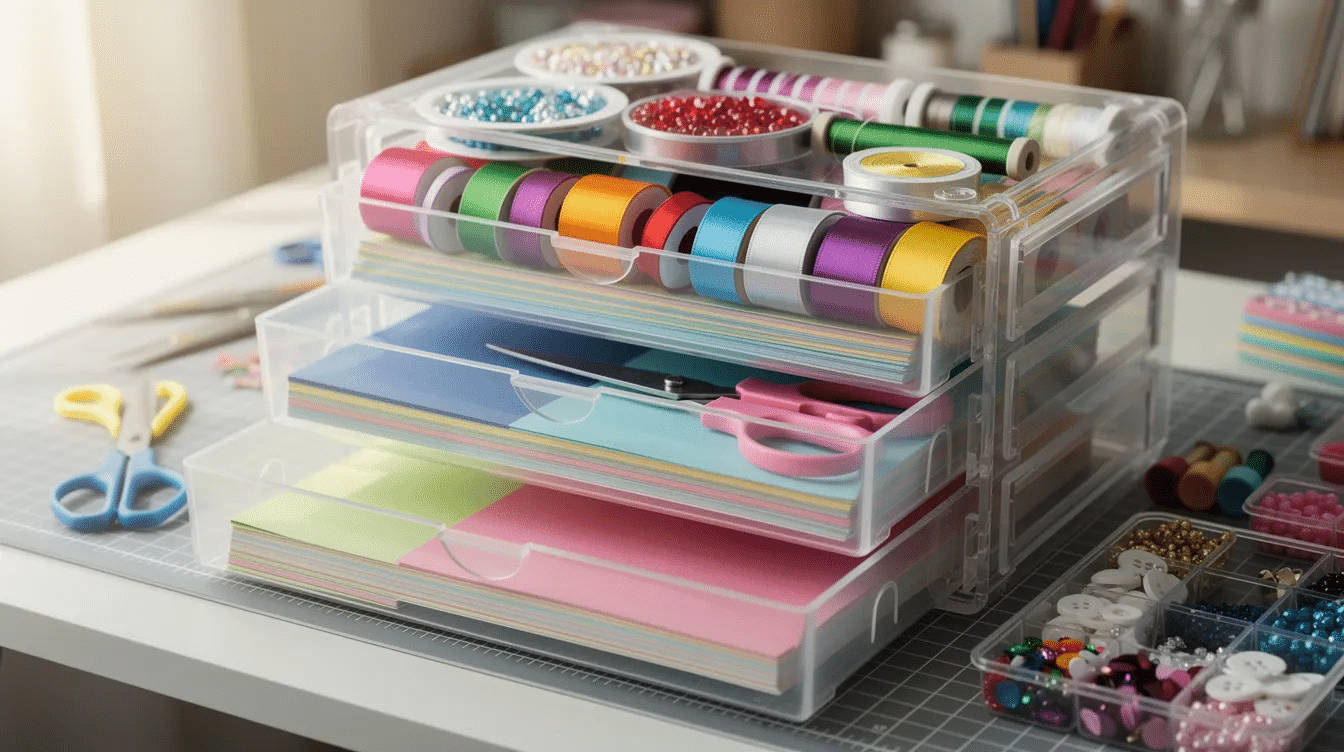
7. Storage Solutions (Clear Containers, Drawer Organizers)
Organization is crucial for enjoyable crafting. Using practical storage solutions helps protect your materials, keeps your workspace tidy, and ensures your tools are always within reach when inspiration strikes.
Why It Stands Out
A well-organized craft space not only looks great but also makes it easier to stay creative and productive. You spend less time crafting through piles of supplies and more time making.
Labeling your storage bins and containers will save you time and frustration, preventing the need to dig through piles of supplies to find what you need.
Best For
Storage solutions are best for anyone building a supply stash, working in a shared space, or using small items like brads, sequins, stickers, die cutting pieces, and embellishments, as well as organizing creative and useful paper printables like tags, labels, and planners.
Key Strengths
- Keep supplies protected and accessible
- Prevent loss of small items
- Make crafting space more inviting
- Help separate tools, paper, adhesives, and materials by project type
Possible Limitations
Storage bins and drawer organizers require upfront investment. They also need regular maintenance and sorting, especially after big craft projects or shopping trips with great deals.
Quick Comparison of Essential Paper Craft Supplies
Supply category | Primary use case | Beginner cost | Priority |
|---|---|---|---|
Paper and cardstock | Cards, scrapbook pages, tags, boxes | Low to medium | High |
Scissors and craft knife | Clean cuts, shapes, detailed work | Low to medium | High |
Adhesives | Bonding layers, embellishments, dimension | Low | High |
Ruler and cutting mat | Measuring, straight lines, safe cutting | Medium | High |
Embellishments | Decoration and dimension | Low to high | Medium |
Coloring tools | Stamping, shading, lettering | Low to high | Medium |
Storage solutions | Organization and protection | Low to medium | Medium |
A paper trimmer, cutting machine, and die cutting machine are useful upgrades, but they are not always first-day purchases. Buy them when you know your favorite paper crafting projects require repeated shapes, fast trimming, or detailed die cutting, especially if you plan to create paper crafts that sell well and need efficient production. |
How to Choose the Right Paper Craft Supplies
Choose Based on Your Project Type
Beginner-friendly paper crafting projects include making cards, gift tags, and scrapbook pages, which are great options to start with, along with cute crafts paper ideas for easy DIY projects that work well for families and kids.
If you want card making, prioritize sturdy cardstock, card blanks, double-sided tape, foam tape, sentiments, and a paper trimmer. If you want scrapbooking, focus on scrapbook paper, acid-free adhesives, stickers, ink pads, and storage. If you want origami, choose thinner paper instead of heavy cardstock. If you want mixed media, use stronger paper, wet adhesives, coloring tools, and baby wipes for cleanup.
Choose Based on Your Budget
Start with the absolute essentials: paper, scissors, glue, ruler, pencil, and a cutting mat. Add a glue stick, craft glue, double-sided tape, and a few coloring tools next.
If your budget is tight, buy individual supplies for beginners instead of large kits. Look for great deals, but avoid buying a huge collection before you know what you like. Starter kits are helpful when they include quality supplies you will actually use.
Choose Based on Your Skill Level
If you are a total beginner, keep your first setup simple. Choose one pack of white cardstock, one patterned paper pad, scissors, adhesive, a ruler, and a mat.
If you already have some experience crafting, add precision snips, foam tape, ink pads, embellishments, and a paper trimmer. Later, consider a die cutting machine or cutting machine when you want repeatable shapes and more advanced creative possibilities.
Which Supplies Are Best for You?
If you want to start making cards, buy cardstock, card blanks, scissors, double-sided tape, foam tape, sentiments, and a few embellishments.
If you want to make scrapbook pages, buy scrapbook paper, patterned paper, acid-free adhesives, stickers, pens, and storage bins.
If you want to explore gift wrapping, buy tissue paper, cardstock tags, ribbon, glue tape pens, and a good pair of scissors.
If you want detailed paper art, buy small sharp scissors, precision snips, a craft knife, a metal ruler, and a cutting mat.
If you are still unsure, start with a small kit rather than individual specialty tools. Browsing Simply Paper Crafts tutorials and inspiration and finding inspiration through mimicking existing designs, known as CASEing (Copy And Share Everything), can help beginners learn and develop their own style in paper crafting.
Final Thoughts
You do not need all the things to start paper crafting. You need reliable basics, a few ideas, and enough room to create without fighting your tools.
Start with the must have items: paper, scissors, adhesive, ruler, cutting mat, and simple decoration. Then expand as your skills grow. The joy of crafting comes from making something with your hands, not from owning every tool in the aisle.
Pick one simple project today, gather your best supplies, and make it from start to finish.