Paper crafts for classroom activities are hard to beat: they are affordable, flexible, and easy to adapt for different ages, subjects, and classroom schedules.
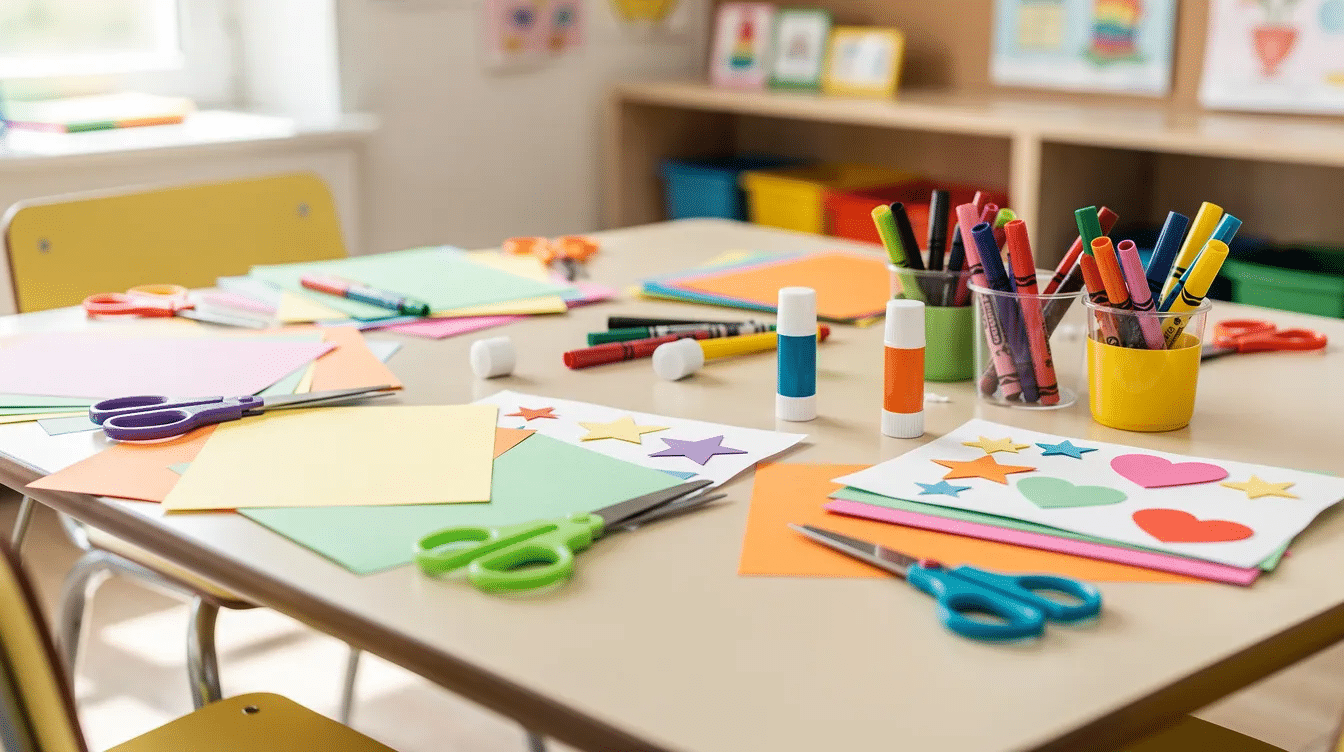
With simple materials like construction paper, scissors, glue, tape, colored pencils, and felt tip markers, teachers can create hands-on lessons that support fine motor skills, creativity, problem solving, and curriculum learning. Common types of paper used for crafting include printer paper, construction paper, kraft paper, origami paper, scrapbook paper, tissue paper, and recycled packaging such as newspapers and magazines, and choosing the best types of paper for craft projects helps each activity turn out more successfully.
In this guide, we’ll walk through seven classroom-friendly paper crafts, when to use them, and what to watch out for before you start.
- Introduction
- How We Chose the Best Paper Crafts for Classrooms
- Top 7 Paper Crafts for Classroom Activities
- 1. Paper Chain Rainbow
- Why It Stands Out
- Best For
- Key Strengths
- Possible Limitations
- 2. Simple Origami Animals
- Why It Stands Out
- Best For
- Key Strengths
- Possible Limitations
- 3. Paper Plate Masks
- Why It Stands Out
- Best For
- Key Strengths
- Possible Limitations
- 4. Construction Paper Flowers
- Why It Stands Out
- Best For
- Key Strengths
- Possible Limitations
- 5. Bookmarks with Corner Pockets
- Why It Stands Out
- Best For
- Key Strengths
- Possible Limitations
- 6. Paper Lanterns
- Why It Stands Out
- Best For
- Key Strengths
- Possible Limitations
- 7. Paper Weaving Place Mats
- Why It Stands Out
- Best For
- Key Strengths
- Possible Limitations
- Quick Comparison of the Best Paper Crafts
- How to Choose the Right Paper Craft
- Which Paper Craft Is Best for Your Classroom?
- Final Thoughts
Introduction
Paper crafts work well in classrooms because they are tactile, low-cost, and easy to scale. A single piece of paper can become a mask, flower, lantern, bookmark, globe, animal, or math manipulative.
They also give children a welcome break from screens. Paper crafts can be a powerful tool for development, connection, and pure fun, providing a tactile alternative to digital distractions.
The educational value is stronger than it may look at first. Engaging in paper crafts helps children develop fine motor skills, problem-solving abilities, and encourages self-expression. Colored paper crafts provide a tactile and sensory experience that digital activities cannot replicate, encouraging creativity and problem-solving in children.
These activities also support academic learning. Paper crafts help children practice mathematical concepts such as geometry, symmetry, and patterns, enhancing their understanding of measurement and spatial reasoning. When children create paper crafts, they are introduced to engineering concepts as they learn about structural integrity and balance while designing stable 3D objects.
For this list, the best paper crafts for classroom activities were selected based on three practical criteria:
- Ease of execution: Can students complete the craft without excessive teacher intervention?
- Educational benefits: Does the project connect to fine motor, literacy, math, science, or social studies?
- Student engagement: Will kids stay interested long enough to finish and personalize the work?
How We Chose the Best Paper Crafts for Classrooms
Choosing classroom crafts is different from choosing a rainy-day activity at home. Teachers need projects that are structured, manageable, and useful for learning.
Here are the main criteria used to evaluate each craft, drawing on experience with fun paper activities for creative minds of all ages.
Age appropriateness and skill level requirements
A good classroom craft should match the student’s developmental stage. Pre k students may need pre cut shapes and larger pieces for little fingers, while first grade students can practice basic scissor skills with guided lines. Older kids and older students can handle cutting strips, simple folds, layered designs, and more independent planning.
Research on folding development shows that children gradually improve in folding accuracy as they grow, with many 4- to 5-year-olds becoming more successful with guided folds. That matters when deciding whether a project uses tearing paper, folding paper, weaving, or detailed cutting.
Time needed to complete projects
A 15-minute simple craft works well for centers or transitions. A larger project, such as lanterns or 3D geometric models, may need a full class period or multiple sessions. Build in time for setup, instructions, drying, cleanup, and display.
Educational value and curriculum connections
The strongest crafts do more than decorate a hallway. Origami can teach students geometric fractions and symmetry. Creating 3D geometric shapes from flat templates reinforces spatial awareness and shape identification. Using hexagon paper templates can enhance students’ problem-solving and game design skills.
Paper plate clocks help kids practice telling time through hands-on activities. Students can use paper plates to explore physical geography by crafting globes. Educational paper fortune tellers allow students to write reading comprehension questions, enhancing learning.
Materials cost and availability
Most projects use affordable materials already found in classrooms. Essential tools for paper crafting and DIY projects include scissors, glue, tape, and various cutters, which are considered staples for most projects.
Construction paper is a popular choice for kids’ crafts due to its vibrant colors and sturdiness, making it suitable for various projects. Kraft paper is known for its durability and is often used for making bags, wrapping gifts, and creating sturdy craft projects.
Having a dedicated craft station or a well-stocked craft box can make spontaneous creative sessions easier and more inviting for children, especially if you draw project ideas from an inspiration hub like Simply Paper Crafts.
Cleanup difficulty and classroom management
Simple paper crafts usually have manageable cleanup, but scraps add up quickly. Keep bins ready for recyclable paper, place paper towels near glue stations, and set clear expectations for scissors and liquid glue.
Safety is paramount when crafting with children, especially when using scissors or glue, and it’s important to teach them how to use tools properly and safely.
Student engagement and creativity potential
The best crafts include room for choice. Students can select colored paper, draw details with a pencil, decorate with googly eyes, or add extra sparkle. That personalization turns a basic craft into a meaningful project.
A classroom study on STEAM-based papercraft found significant gains in children’s cutting, folding, pasting, and coordination skills after hands-on activities. Broader research also links fine motor skills with academic performance across writing, reading, mathematics, and cognition, according to a large meta-analysis of fine motor skills and academic achievement.
Top 7 Paper Crafts for Classroom Activities
1. Paper Chain Rainbow
A paper chain rainbow is a fun project where students connect colorful strips into linked loops, then arrange them into a rainbow display. You can use a rainbow template, or have students build the pattern from memory.
To make it, give each group paper strips in red, orange, yellow, green paper, blue, and purple. Students fold each strip into a loop, attach it with glue or tape, then connect the next loop. The finished paper chain can hang across a bulletin board, window, or classroom doorway as a fun decoration.
For younger students, simply print color guides or provide pre cut strips. For older students, let them measure and cut strips of paper independently.
Why It Stands Out
This is one of the best collaborative paper crafts for classroom activities because every student can contribute one section to a larger shared display.
It also supports sequencing, color recognition, and basic patterning. Colored paper crafts engage children in scientific principles as they observe how paper tears, folds, and holds its shape, while also exploring color theory and visual mixing.
Best For
Elementary classrooms, especially grades K-3, seasonal celebrations, weather units, kindness walls, and class community projects.
Key Strengths
- Requires only construction paper, scissors, and glue
- Builds fine motor control through folding, linking, and pressing edges together
- Helps students create beautiful patterns using repeated colors
- Can involve the entire class in one large project
- Works well as an easy project for pre k if the strips are pre cut
Possible Limitations
Younger students may need help with cutting and attaching loops. It can also become repetitive for older students unless you add a math challenge, such as counting loops, creating AB or ABC patterns, or estimating the total chain length.
2. Simple Origami Animals
Simple origami animals use one sheet of square paper to create frogs, dogs, cranes, fish, butterflies, or foxes. Students follow step by step instructions and transform a flat square into a recognizable figure using simple folds.
This craft is especially useful because it requires very few supplies. A piece of paper is enough, although students can use felt tip markers, colored pencils, or googly eyes to add character after the folding is complete.
Why It Stands Out
Origami stands out because it naturally connects art, math, and cultural studies. Students practice sequencing, precision, symmetry, fractions, and spatial reasoning.
For example, symmetry illustrations can be created by folding paper and applying paint. Students can also explore halves, quarters, diagonals, and mirror images while making origami animals, or branch out into popular origami designs for every skill level.
Best For
Middle grade classrooms, especially grades 3-6, STEM integration, cultural studies, geometry lessons, and calm independent work.
Key Strengths
- Needs only square paper sheets
- Connects to geometry, fractions, symmetry, and cultural learning
- Builds patience, persistence, and attention to detail
- Strengthens fine motor control through creasing and alignment
- Can become a great project for comparing 2D and 3D forms
You can extend the lesson by asking students to label folds, identify shapes, or explain how a flat square changed into a 3D form.
Possible Limitations
Origami can frustrate students who struggle with precise folding. Demonstrate slowly, use a document camera if possible, and pause after each step. For mixed-ability classrooms, offer easier animal options and more challenging ones so students can choose by skill level.
3. Paper Plate Masks
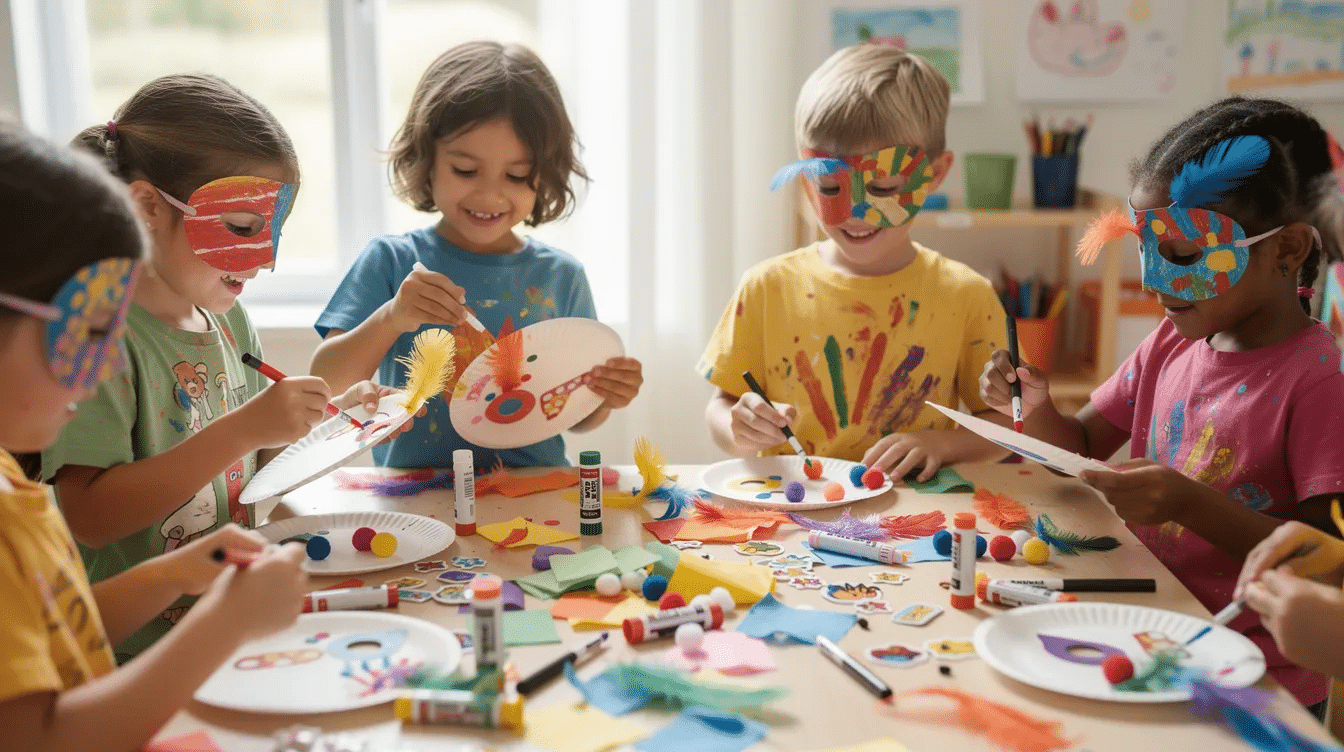
Paper plate masks are expressive, adaptable, and easy to connect with reading, history, science, or social-emotional learning. Start with a paper plate, cut eye holes, and let students create characters using markers, paper scraps, yarn, feathers, or fabric pieces.
Students might make animal masks for a habitat unit, historical figures for a social studies lesson, or characters from a novel. If you want a quick variation, use black paper for silhouettes or white paper for students to design their own face from scratch.
Why It Stands Out
This craft is perfect for dramatic play and storytelling. It helps students move from reading about a character to embodying one.
Paper plates also work across subjects. Paper plate clocks help kids practice telling time through hands-on activities. Students can use paper plates to explore physical geography by crafting globes.
Best For
All elementary grades, literature units, history lessons, classroom plays, community-building activities, and character studies.
Key Strengths
- Uses inexpensive paper plates as a sturdy base
- Encourages creative expression and character development
- Can be adapted for animals, people, planets, emotions, or cultural themes
- Supports speaking and listening when students present their masks
- Lets students draw, print, cut, glue, and decorate in one complete activity
Possible Limitations
Masks may require additional materials, such as yarn, craft sticks, elastic, or fabric scraps. Storage can also become challenging with larger classes, especially if students create large ears, horns, or butterfly wings.
If the glue dries slowly, keep masks flat overnight or use tape for faster assembly.
4. Construction Paper Flowers
Construction paper flowers are 3D decorations that can connect art, science, and seasonal celebrations. Students cut flower petals, stems, and leaves, then layer them into bouquets, garden scenes, or greeting cards.
This is a natural fit for spring, plant life cycles, and mother’s day gifts. A simple flower can be made from circles and teardrop shapes, while older students can create layered petals, curled edges, and realistic plant labels.
Why It Stands Out
Paper flowers are classroom-friendly because they look impressive without requiring expensive supplies. They also make excellent take-home gifts for family members or a classroom display that the whole family can appreciate during open house events.
Nature collages can teach students about native plant species through hands-on crafting, and flower projects can do the same when students label local plants or compare petal shapes, especially if you borrow ideas from cute paper craft projects for kids.
Best For
Elementary classrooms, spring celebrations, life science units, kindness bouquets, and handmade cards.
Key Strengths
- Creates beautiful patterns and colorful displays
- Connects to botany, plant parts, pollination, and seasons
- Students can take the finished project home as a gift
- Works with construction paper, tissue paper, scrapbook paper, or recycled magazines
- Builds fine motor skills through tracing, cutting, curling, and layering
Tissue paper suncatchers can help develop skills in color mixing and fine motor control, and the same color exploration can be added to flower centers or petals; you can even experiment with embellishing handmade paper sheets for a more advanced variation.
Possible Limitations
Paper flowers can crush easily, so store them in shallow trays or attach them to a bulletin board quickly. Some students may need help with assembly, especially if the design includes thin strips, curled petals, or multiple layers of liquid glue.
5. Bookmarks with Corner Pockets
Corner bookmarks are origami-style bookmarks that slip over the corner of a page. Students fold a square into a pocket, then decorate it as a monster, animal, flower, heart, rainbow fish, or reading-themed design.
This project is small, practical, and easy to connect with literacy. Students can write favorite quotes, reading goals, vocabulary words, or kindness messages on the bookmark.
Why It Stands Out
This craft promotes reading because students create something they will actually use. It also reinforces book care and gives students ownership over their independent reading routines.
Crafting kindness message cards can build empathy and improve writing skills in children. A bookmark can serve the same purpose when students write encouraging notes for classmates or reading buddies.
Best For
All grade levels, reading incentive programs, library lessons, book clubs, and partner reading activities.
Key Strengths
- Functional craft students can use right away
- Can be personalized with drawings, quotes, symbols, or book recommendations
- Reinforces reading habits and book care
- Needs only one sheet of paper for the base
- Easy to connect with writing, vocabulary, and comprehension
For a literacy extension, have students design educational paper fortune tellers with reading comprehension questions, then use the bookmarks to track the pages discussed.
Possible Limitations
The folding technique may challenge younger students. Use a printable template, model each fold, and provide pre-folded examples. Decorating materials can also add to the supply cost, but plain paper and glue are enough for a strong result.
6. Paper Lanterns
Paper lanterns are festive classroom decorations made by folding a rectangle, cutting slits, opening the paper, and attaching the edges into a cylinder. Add a handle with another strip of paper.
Students can make lanterns from colored paper, scrapbook paper, or sturdy printer paper. They can also add small squares of tissue paper for a stained-glass effect.
Why It Stands Out
Paper lanterns are ideal for cultural studies and holiday celebrations. Holiday luminaries can teach students about cultural celebrations through crafting, especially when teachers explain the history and meaning behind the tradition being studied, or compare their creations to different types of decorative paper lanterns.
The project also introduces basic engineering ideas. Students see how a flat rectangle becomes a stable 3D object and why spacing, balance, and careful cutting matter.
Best For
Elementary and middle school cultural awareness lessons, holiday displays, winter celebrations, and art-integrated social studies.
Key Strengths
- Creates an impressive classroom atmosphere
- Connects to world cultures, festivals, and traditions
- Uses simple cutting and folding techniques
- Helps students understand structure and balance
- Can be simplified or extended depending on grade level
A related winter option is making paper bag snowflakes. Creating paper bag snowflakes can teach students about pattern recognition and symmetry, and simple paper snowflake crafts work well as individual desk projects. Paper bags are also inexpensive, sturdy, and easy to display in windows or hallways.
Possible Limitations
Lanterns require careful supervision with scissors because students must cut slits without cutting through the edges. The finished product can be delicate, so avoid hanging lanterns where students frequently walk or line up.
7. Paper Weaving Place Mats
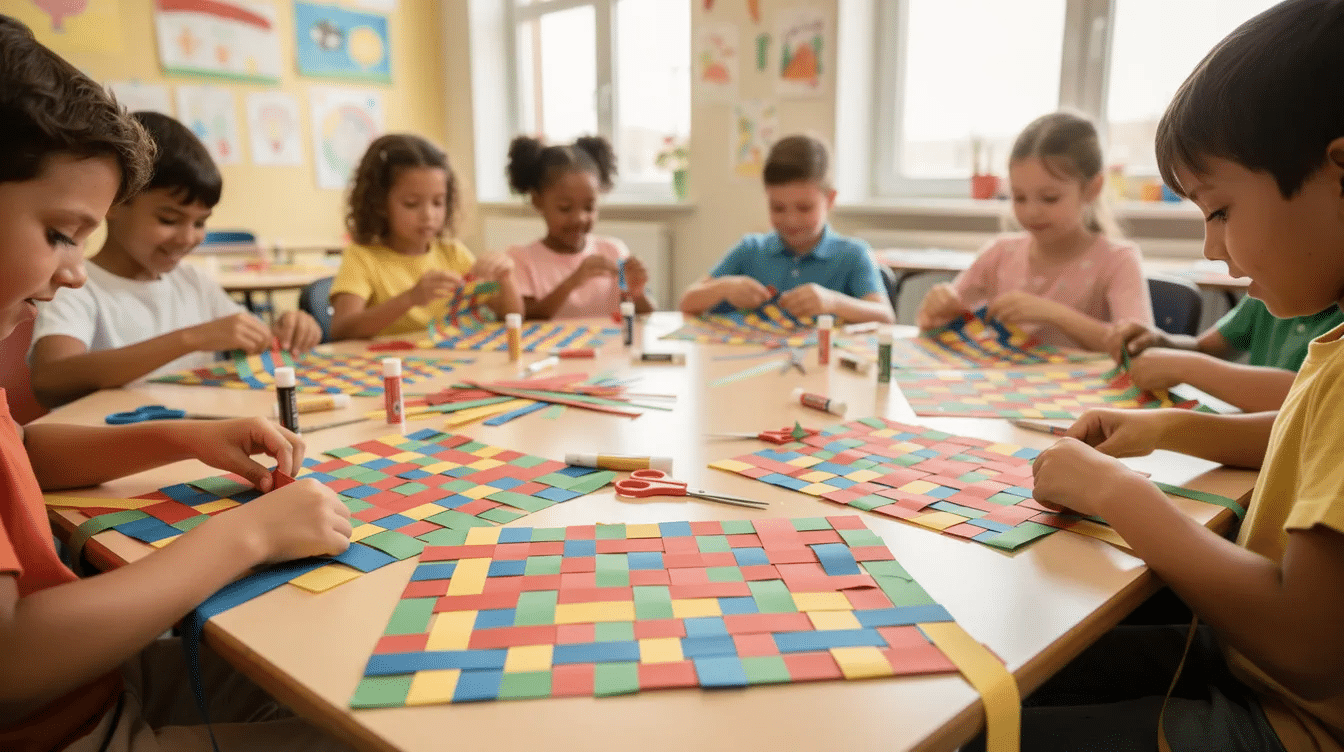
Paper weaving place mats are made by cutting slits in a base sheet and weaving strips over and under to create a patterned mat. This activity looks simple, but it gives students meaningful practice with sequencing, concentration, and hand-eye coordination.
Paper weaving is a simple technique for crafting with paper that can be used to create many cute crafts, enhancing creativity and dexterity, and it can even inspire discussions about paper crafts that sell well for older students interested in entrepreneurship.
Why It Stands Out
Paper weaving directly supports patterns and fine motor development. Students must hold the base steady, guide strips, alternate over-under movements, and check the design as they work.
It is also a good introduction to textile concepts, cultural art forms, and repeated patterns.
Best For
Elementary classrooms, occupational therapy integration, pattern lessons, art centers, and math activities.
Key Strengths
- Develops hand-eye coordination, concentration, and dexterity
- Creates useful classroom or home items
- Teaches over-under patterns and basic textile ideas
- Works with colorful strips, recycled magazines, or kraft paper
- Encourages students to create their own designs once they understand the technique
For a variation, students can weave a fish shape and add scales inspired by a rainbow fish. This supports shape recognition and lets students compare curved outlines with straight woven strips.
Possible Limitations
Paper weaving can be time-consuming for younger students. It also requires patience and persistence. To make the first paper weaving lesson easier, use wider strips, larger slits, and a pre cut base.
Quick Comparison of the Best Paper Crafts
Paper craft | Best for | Main classroom benefit | Best grade range |
|---|---|---|---|
Paper Chain Rainbow | Collaborative class projects | Color recognition, teamwork, patterning | K-3 |
Simple Origami Animals | STEM integration and cultural studies | Geometry, sequencing, symmetry | 3-6 |
Paper Plate Masks | Dramatic play and character studies | Storytelling, speaking, expression | K-5 |
Construction Paper Flowers | Seasonal celebrations and science connections | Botany, observation, display work | K-5 |
Bookmarks with Corner Pockets | Reading programs and practical use | Literacy, book care, personalization | K-8 |
Paper Lanterns | Cultural awareness and festive decorations | Traditions, structure, spatial thinking | 2-8 |
Paper Weaving Place Mats | Fine motor development and pattern recognition | Dexterity, over-under patterns | K-5 |
How to Choose the Right Paper Craft
Choose Based on Grade Level
Start with the students’ age, hand strength, and independence level.
For pre k and kindergarten, use larger pieces, pre cut shapes, tearing paper, paper and glue, and short activities. Projects like paper chains, simple flowers, and collage work are easier for little fingers.
For first grade through third grade, introduce basic scissor skills, folding paper, tracing, and pattern-based projects. Paper plate masks, paper flowers, bookmarks, and weaving mats work well.
For older kids and older students, increase the challenge with origami, lanterns, 3D shapes, symmetry work, and independent design decisions.
Choose Based on Curriculum Connection
Crafts become more valuable when they reinforce a lesson.
Use origami for geometry, fractions, and symmetry. Use paper plate clocks for time. Use paper plate globes for geography. Use nature collages for native plant species. Use hexagon paper templates for game design and problem solving.
Engaging with colored paper allows children to experiment with color mixing, basic geometry, and spatial reasoning through various crafting techniques. Colored paper crafts can enhance fine motor skills, hand-eye coordination, and dexterity through activities like cutting, gluing, and folding.
You can also connect crafts to writing. Students might create kindness cards, label plant diagrams, write character descriptions for masks, or add reading questions to paper fortune tellers.
Choose Based on Available Time
Match the craft to the schedule.
For 10-20 minutes, choose bookmarks, mini paper chains, kindness cards, or quick collage work. For 30-45 minutes, choose masks, flowers, paper weaving, or lanterns. For multi-day lessons, choose 3D geometric shapes, cultural displays, or research-based nature collages.
A good rule: if the craft requires drying time, storage space, or several assembly steps, treat it as a full project rather than a filler activity.
Keep cleanup simple by setting up material trays, scrap bins, paper towels, and a finished-work area before students begin.
Which Paper Craft Is Best for Your Classroom?
Choose Paper Chain Rainbow if you want a quick collaborative project for young students. It is fun, simple, colorful, and easy to display.
Choose Simple Origami Animals if you want to integrate math and cultural learning. It is especially strong for symmetry, fractions, sequencing, and patience.
Choose Paper Plate Masks if you want to enhance storytelling and dramatic activities. This craft helps students explore character, voice, emotion, and point of view.
Choose Construction Paper Flowers if you want seasonal decorations with science connections. Students can study plant parts, make gifts, or create a classroom garden display.
Choose Bookmarks with Corner Pockets if you want a practical literacy activity. Students can use their bookmarks immediately and personalize them for favorite books.
Choose Paper Lanterns if you want a cultural or festive display. They create atmosphere and help students explore traditions respectfully.
Choose Paper Weaving Place Mats if you want a fine motor and patterning activity. It is quiet, focused, and useful for building dexterity.
Final Thoughts
Paper crafts for classroom activities are more than a way to fill time. They help children cut, fold, plan, measure, compare, decorate, and create with purpose.
The best choice depends on student age, curriculum goals, available materials, and how much time you have. A simple craft may be perfect for a short lesson, while a more detailed project can support science, math, literacy, or cultural learning over several days.
Start with simple materials, model the process clearly, and leave room for student choice. With the right structure, paper crafts become affordable, engaging classroom activities that build skills students can carry into writing, reading, math, art, and everyday problem solving.