
Key Takeways
- Making a paper envelope at home is a quick and inexpensive craft; the easiest version takes under 10 minutes with a sheet of paper, scissors, and glue or tape.
- This envelope folding tutorial covers freehand folding, an envelope template, and a custom-fit method.
- You’ll learn how to make a homemade envelope for a finished card, birthday card, standard letter, or tiny gift note.
- Before you mail a handmade envelope, check size, thickness, address readability, and postage rules with your postal service.
Introduction: Why Make Your Own Envelope?
In 2026, when most messages disappear into screens, a handmade envelope makes a card feel more personal before the recipient even opens it. You can make an envelope from wrapping paper, scrapbook paper, calendar art, magazine pages, or other paper you already have.
This tutorial shows how to make an envelope from paper without special tools. Each method explains the bottom flap, side flaps, top flap, and quick measuring tips so you can adapt any sheet of paper at home.
- Supplies You Need To Make A Paper Envelope
- Method 1: The Easiest Envelope From A Single Sheet Of Paper
- Method 2: Make An Envelope With A Simple Template
- Method 3: Custom‑Fit Envelope For Any Card Or Note
- Choosing The Right Paper For Homemade Envelopes
- Finishing Touches: Sealing, Addressing, And Mailing
- Ideas For Using Your Own Envelopes
- FAQ: Making Envelopes From Paper
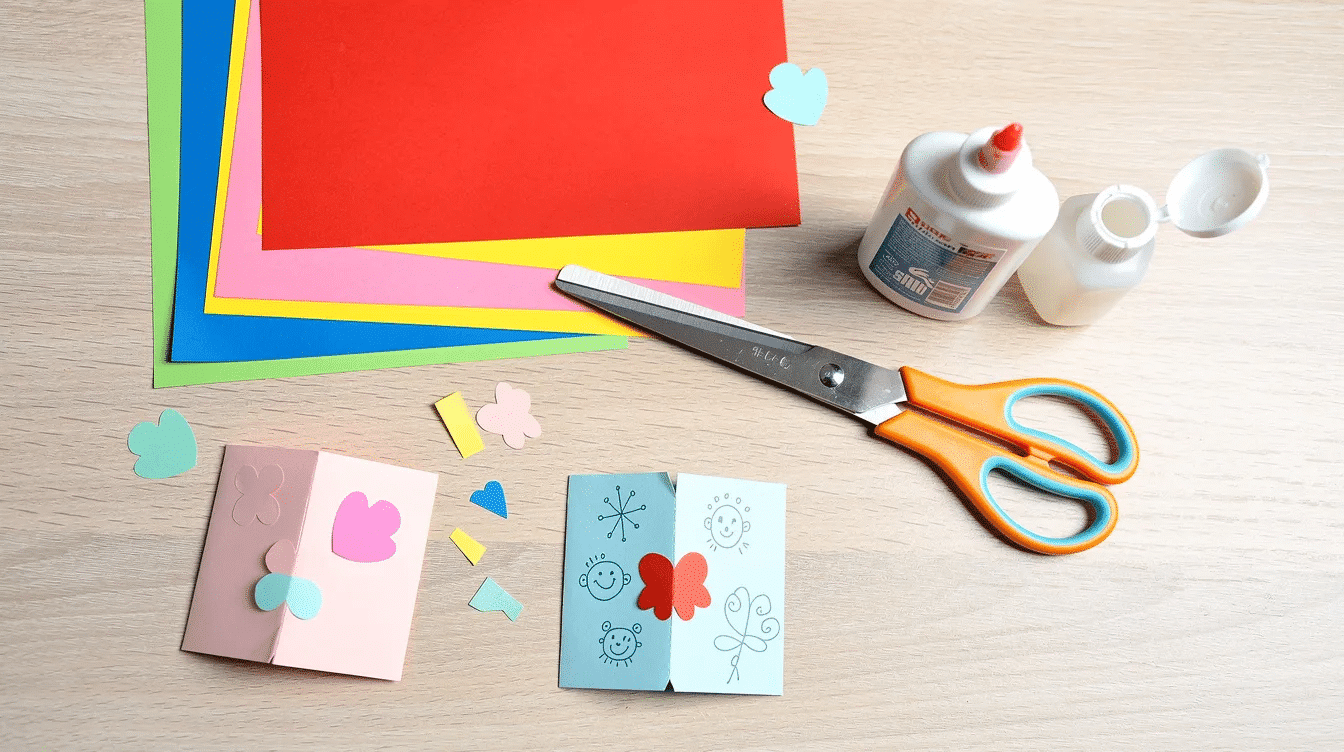
Supplies You Need To Make A Paper Envelope
Here are the basic supplies for diy paper envelopes, many of which overlap with top craft paper supplies for creative projects and DIY fun:
- Paper: A4 or US letter printer paper, wrapping paper, scrapbook paper, patterned paper, origami paper, cardstock, construction paper, brown paper bags, magazine pages, or squared paper
- Tools: scissors, pencil, ruler, glue stick, glue, or double-sided tape
- Optional: existing envelope for a template, stickers, washi tape, address labels, bone folder, or spoon
- Finishes: wax seal, decorative sticker, or string closure
Standard printer paper measures 8.5 x 11 inches or A4 size. Common materials for making envelopes include cardstock, scrapbooking paper, wrapping paper, and even brown paper bags, and understanding the best types of paper for craft helps you choose the right one for each project. Thin gift wrap feels cute and flexible; cardstock creates stronger edges but bulkier seams.
Method 1: The Easiest Envelope From A Single Sheet Of Paper
This pocket envelope method is best for easy envelopes and quick notes.
- Place your sheet in landscape, patterned side down. If using wrapping paper, choose a decent spot where the pattern or image will look good on the front.
- Fold the left and right edges inward by about 1.5–2 cm. Crease firmly.
- Put the card on the paper. Fold the bottom of the paper up far enough to cover it; fold the bottom to create the base.
- Unfold the bottom flap. Add glue or tape along the side folds only.
- Fold the bottom flap back up and press to secure the pocket.
- Fold the top corners toward the center to create a triangle shape on each side.
- Fold the top flap down. Seal it with glue, a sticker, washi tape, or a wax seal.
A pocket envelope can be made by folding the sides of a rectangular piece of paper over a card, then folding the top and bottom edges up to create a pocket. For a pocket envelope, position your card vertically in the center of the paper, fold the right and left sides over the card, then fold the top and bottom edges up, securing the sides and bottom with glue.
Method 2: Make An Envelope With A Simple Template
A classic commercial-style envelope is ideal for standard cards and letters, especially if you want repeatable sizes, and it’s a great beginner project if you’re exploring more ideas from Simply Paper Crafts.
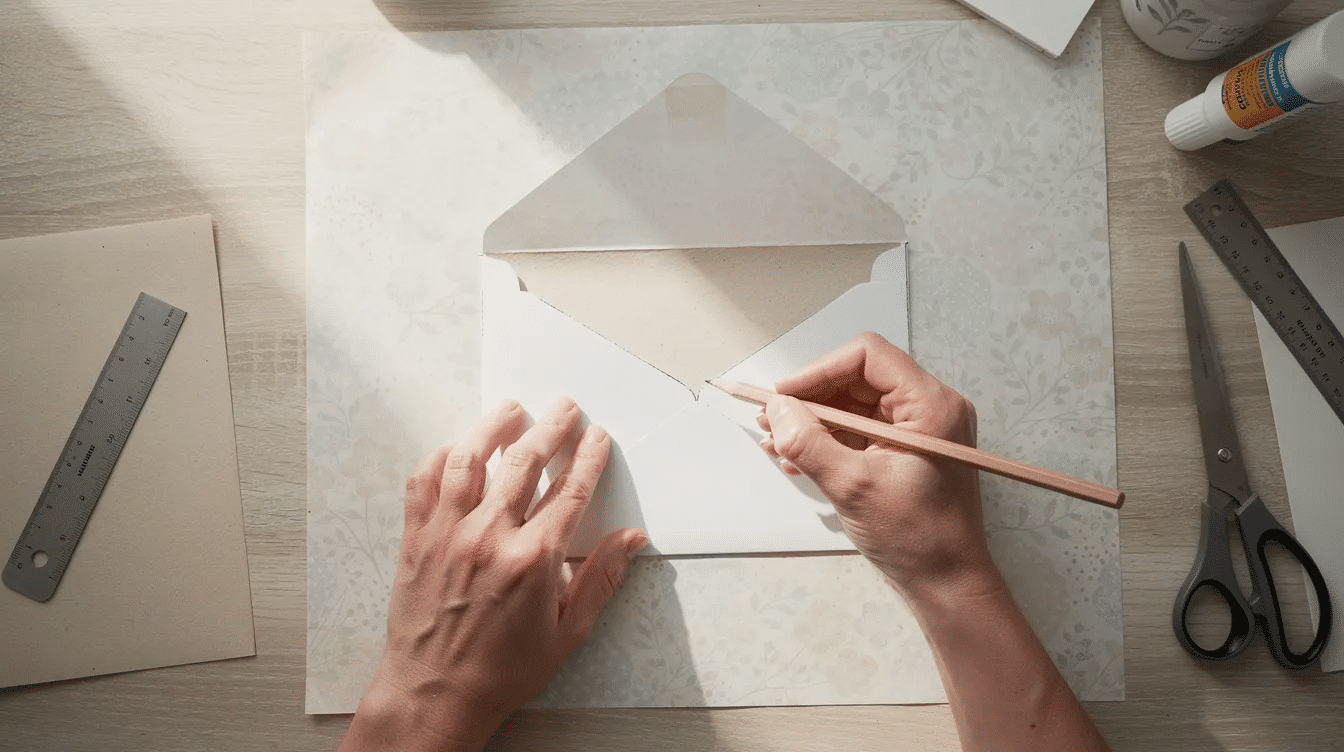
- Take a blank commercial envelope slightly larger than your card or letter.
- Open the glued edges carefully with a butter knife or light steam so it lies flat.
- Place it on the back of decorative paper and draw around it with a pencil.
- Cut the traced shape with scissors, keeping the original envelope flap, side flaps, and bottom flap shape.
- Fold along the same crease lines, using a ruler edge for sharp folds.
- Glue or tape the side and bottom flaps together, leaving the top flap free.
This envelope template is useful for batch envelope making, invitations, holiday cards, or wedding stationery.
Method 3: Custom‑Fit Envelope For Any Card Or Note
Use this method when you want your own envelope size, or as a starting point before trying other fun paper activities for creative minds of all ages.
Place the card in the center of a larger sheet laid diagonally, like a diamond. Put it slightly below the center line guide so there is more paper above for the top flap. Fold the right and left corners over the card so they overlap slightly at the center; crease firmly. Fold the bottom corner up over the card, keeping the bottom edge just below the card’s top edge.
Lift the flaps, remove the card, then stick the side flaps to the bottom flap with glue or tape. Fold the remaining top corner down to create the closure. Check that the card slides in and out before sealing.
To create a custom-sized envelope, the paper should be approximately 2 cm wider than the card on both sides and about 2.5 times as tall as the card. When making an envelope, ensure that the paper is approximately 2 cm wider than the card on both sides and about 2.5 times as tall as the card to create a proper fit.
To create a traditional envelope, start by cutting a square from your paper, then fold the right and left corners over the card, followed by the bottom and top corners, using the creases as guides for cutting and folding.
Choosing The Right Paper For Homemade Envelopes
When making envelopes, you can use various types of paper such as scrapbooking paper, wrapping paper, or even magazine pages, allowing for creative customization, or even create your own sheets using the best handmade paper sheet for your creative projects.
Paper | Best for | Note |
|---|---|---|
printer paper | practice, letters | cheap and easy to fold |
wrapping paper | gifts, parties | thin; use less glue |
scrapbook paper | sturdy decorative mail | strong and patterned |
cardstock | formal cards | score before folding |
construction paper | kids’ craft | colorful but bulky |
When making envelopes, it is recommended to use paper that is sturdy enough to hold its shape, such as cardstock or scrapbook paper. Use lighter paper for regular mail and thicker paper for hand-delivered cards or gift cards, especially if you’re pairing them with more decorative wrapping paper ideas to elevate your gift-giving. |
Finishing Touches: Sealing, Addressing, And Mailing
Seal the top flap with a glue stick, double-sided tape, sticker, washi tape, or wax seal. Write the recipient address in the center and the return address in the top left for US mail, or on the back flap if preferred.
If the pattern is busy, add a plain white or kraft label so postal machines can read it. For US letter postage, USPS lists common letter limits as at least 3.5 x 5 inches and no more than 6.125 x 11.5 inches, 1/4 inch thick, and 3.5 oz for standard letters; check the USPS letter guide or your local postal service for unusual square, heavy, or small mail.
Ideas For Using Your Own Envelopes
Once you know how to make an envelope from paper, you can create sets for birthday cards, wedding invitations, graduation notes, holiday cards, love letters, cash gifts, or scrapbooking, or even coordinate them with paper gifts for every occasion.
Try matching a card and envelope from the same wrapping paper, or make a variation with coordinating scrapbook paper inspired by cute crafts paper ideas for fun and easy DIY projects. Mini envelopes can hang in journals; oversized ones can store photo prints, tickets, a handmade paper snowflake winter decoration, or a special gift.
FAQ: Making Envelopes From Paper
Can I mail a handmade envelope made from wrapping paper?
Yes. In most countries, you can mail a wrapping-paper envelope if it is sturdy, flat, clearly addressed, and within postal size rules. Line thin wrapping paper with printer paper for long journeys, and add a plain address label if the pattern is busy.
What size paper do I need to make an envelope for a 4.25” x 5.5” card?
Use paper about 2 cm, or 3/4 inch, wider than the card on each side and about 2.5 times the card height. For a 4.25” x 5.5” card, an 8.5” x 11” sheet usually works. Test with scrap paper before cutting expensive cardstock.
How can I make my paper envelope more durable?
Use heavier scrapbook paper or light cardstock. Reinforce inside corners and the bottom flap with tiny strips of clear tape before sealing. Avoid overstuffing, because flat contents travel better through mail systems.
Do I need an envelope punch board or special tools?
No. These methods use paper, scissors, ruler, glue, or tape. An envelope punch board can speed up making envelopes in batches, but it is not required. You can watch craft videos later if you decide to upgrade, or explore creative and useful things to print on paper to tuck inside your envelopes.
Can I make an envelope without glue or tape?
Yes. The origami square fold for making envelopes requires no glue or tape. An elegant method for making envelopes requires only a square piece of paper and is suitable for gift cards, notes, or scrapbooking. If a tutorial says “required squared paper,” it means a true square. To make a traditional envelope, start with a square piece of paper, fold the corners to the center, and secure the flaps with glue if you want a permanent seal; for origami, only crease well and tuck the final point into the other side.