Key Takeaways
- Craft paper is an umbrella term for many paper types, including cardstock, construction paper, kraft paper, origami paper, crepe paper, tissue, vellum, and more.
- The right paper depends on weight, texture, color or print, and how you plan to cut, fold, paint, glue, or build with it.
- Cardstock paper is best for card making, greeting cards, boxes, and die cutting, while tissue paper and origami paper suit delicate paper crafts.
- Uncoated kraft paper, recycled materials, and recycled cardstock usually have a lower environmental impact than glittered, laminated, or heavily coated papers.
- Choosing the right paper can completely transform your arts and crafts projects.
Craft paper differs significantly in weight, texture, and intended purpose. This guide to types of craft paper explained will help you choose paper for your project with less guesswork, whether you are making wedding invitations, paper flowers, party decorations, or a scrapbook layout.
What Is Craft Paper?
Craft paper serves as a broad, catch-all term for any paper used in arts, crafts, and DIY projects. Craft paper encompasses a variety of specialty and utility papers used for art, packaging, and design, from lightweight tissue to heavy cardstock.
Craft paper is the general category; kraft paper is one specific type of strong brown paper. Kraft paper is made from wood pulp using the kraft process, which gives it high strength and durability.
Common uses include school projects, card making, scrapbooking, origami, paper flowers, gift wrapping, home décor, paper mache, and mixed-media art. Understanding different types of craft paper and the top craft paper supplies for creative projects and DIY fun helps you get cleaner folds, crisper die cutting, and longer-lasting results when buying materials online or in a craft store in 2026.
Overview of the Different Types of Craft Paper
Here is the quick map before we go deeper:
- cardstock paper – sturdy base for greeting cards, tags, boxes, and die cutting.
- scrapbook paper – decorative sheets for albums, layering, envelopes, and patterned backgrounds.
- construction paper – inexpensive colored paper for children’s crafts and classroom projects.
- kraft paper – durable rustic paper for wrapping, gift bags, tags, and journaling.
- tissue paper – airy filler, lantern material, decoupage layer, and gift wrapping accent.
- crepe paper – paper flowers, garlands, and party streamers.
- origami paper – precise paper folding and intricate designs.
- watercolor paper – wet media, ink washes, acrylic painting, and art journaling.
- vellum – translucent overlays, tracing, wedding invitations, and soft layers.
- specialty paper – handmade paper, foil, glitter, embossed sheets, and mulberry paper.
- recycled options – lower-waste choices for everyday crafting projects.
Many projects combine 2–3 paper types: a cardstock base, patterned scrapbook paper on top, and a vellum overlay on the other side. Weights, usually measured in gsm or lb, and finishes such as smooth, matte, glossy, rough texture, or pearlescent vary depending on the paper.
Cardstock Paper: The Workhorse of Paper Crafting
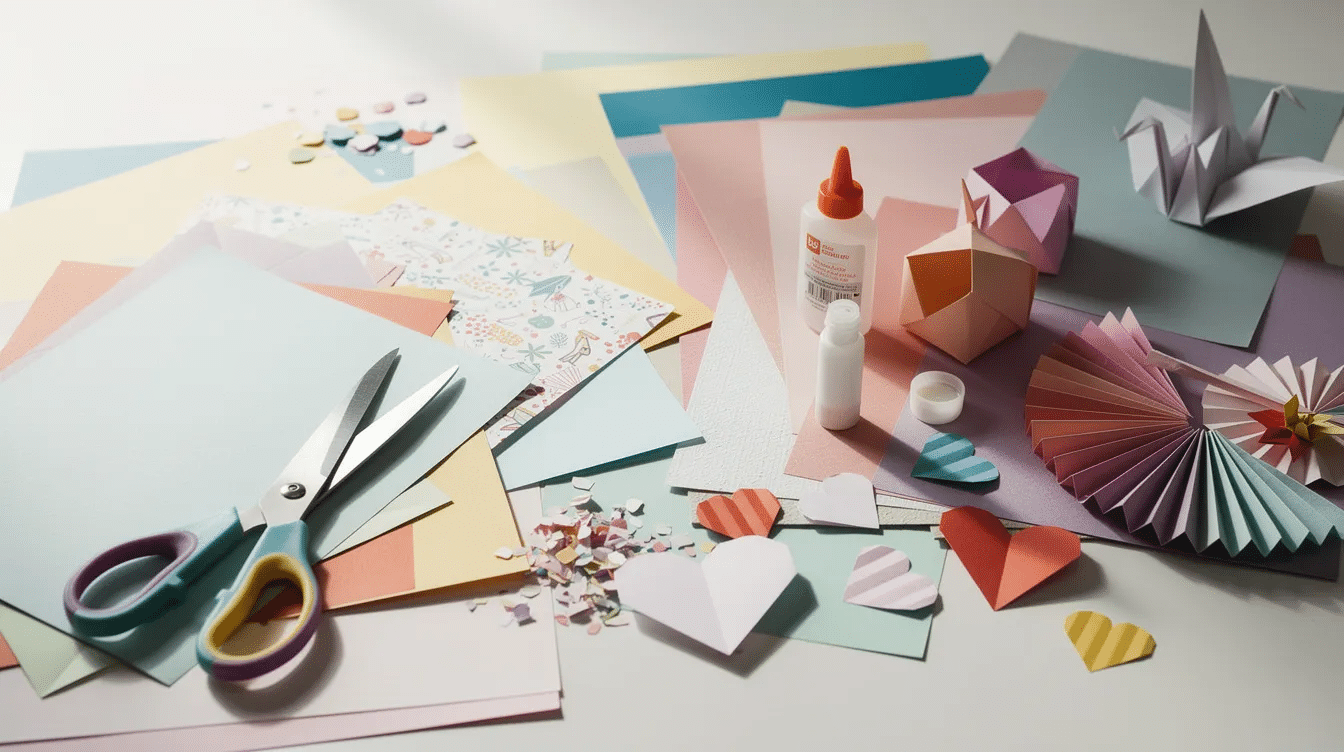
Cardstock is a medium-weight paper that is heavier than printer paper and thinner than cardboard, making it ideal for various crafting projects such as greeting cards and handmade boxes. Cardstock paper commonly falls around 200–300 gsm, or 65–110 lb cover; lighter cardstock folds more easily, while heavier cardstock holds dimensional structures better.
Cardstock is available in a variety of textures, colors, and weights, which allows crafters to choose the best option for their specific projects, including card making and scrapbooking. Colored cardstock is an ideal choice for birthday cards, party favor boxes, tags, and sturdy scrapbook embellishments.
Finishes matter. Smooth cardstock is better for stamping, printing, and ink blending. Linen, hammered, pearlescent, and glitter cardstock add texture, but they may affect how ink dries or how cleanly blades cut. Manual die-cutting machines and electronic cutters handle cardstock well when the settings match the weight.
Cardstock should ideally be acid-free and lignin-free, which prevents yellowing over time and makes it suitable for long-lasting projects like scrapbooking. For more advanced techniques, the best types of paper for craft and their uses include layering, quilling, and die cutting. Choose acid free, lignin-free stock for wedding invitations, heritage albums, and any scrapbook page meant to last.
Scrapbook and Patterned Paper
Scrapbook paper is decorative paper, usually lighter than cardstock but heavier than printer paper. Scrapbook paper is available in thousands of patterns and designs, making it a versatile choice for various crafting projects.
Standard scrapbook paper sizes are typically 12-inch x 12-inch or 8.5-inch x 11-inch, providing ample space for detailed layouts. You will find solid-color cardstock, single sided patterned paper, and double-sided patterned paper; patterned scrapbook paper is useful when both sides may show in folded pockets, envelopes, or mini albums.
When selecting scrapbook paper, it is important to choose acid-free and lignin-free options to ensure that the paper retains its quality over time without fading or yellowing, especially around printed photographs.
Practical selection tips:
- Choose small patterns for tiny die cuts and layered cards.
- Use large patterns for scrapbook backgrounds or gift wrapping small items.
- Coordinate colors across several sheets for albums, banners, and rosettes.
- Save paper scraps for collage, tags, and punched embellishments.
Construction Paper and Kids’ Craft Staples
Construction paper is a favorite for children’s crafts because it is inexpensive and available in many hues, making it ideal for various school projects. Since the late 19th century, construction paper has been primarily used as a drawing media canvas in classrooms, benefiting from the use of aniline dye during its manufacturing process for even color distribution.
- Pros: affordable, easy to cut, available in many colors, and good for hands on beginner projects.
- Cons: construction paper is known for its thickness, rough texture, and durability, but it is not ideal for projects meant to last long because the colors tend to fade quickly.
- Limits: it tears easily on intricate folds and performs poorly with detailed die cutting.
- Best uses: school collages, cut-and-glue shapes, simple greeting cards, classroom decorations, and kids’ parties, especially when you want cute crafts paper ideas for fun and easy DIY projects.
- Upgrade when: you need durable results, clean edges, or keepsake quality; choose cardstock or scrapbook paper instead.
Kraft Paper: Strong, Rustic, and Eco-Friendly
Kraft paper is typically brown in color but can be bleached to produce lighter shades, including white. Kraft paper is known for its strength and tear resistance, making it a popular choice for packaging, wrapping, and shopping bags.
In craft, kraft comes as rolls, sheets, pre-cut tags, envelopes, and gift bags. It works well for rustic gift wrap, journal pages, scrapbooking backgrounds, hand-lettered signs, and simple die cuts. Its natural look pairs beautifully with white ink, metallic pens, dried foliage, and twine.
Kraft paper is highly recyclable and biodegradable, contributing to its eco-friendly reputation in industrial packaging. It is often unbleached and sometimes made with recycled content, though coated or heavily printed kraft may be harder to recycle.
Project ideas:
- 2026 holiday wrapping: kraft paper, jute twine, dried orange slices, and stamped stars.
- Minimalist party décor: kraft tags, white gel pen lettering, and punched shapes.
Tissue Paper and Crepe Paper: Lightweight Papers with Big Impact
Tissue paper and crepe paper are lightweight papers used for decorations, volume, and 3D paper crafts. Tissue paper is a fragile paper that comes in a variety of colors and is commonly used for wrapping items in stores and for gift bags.
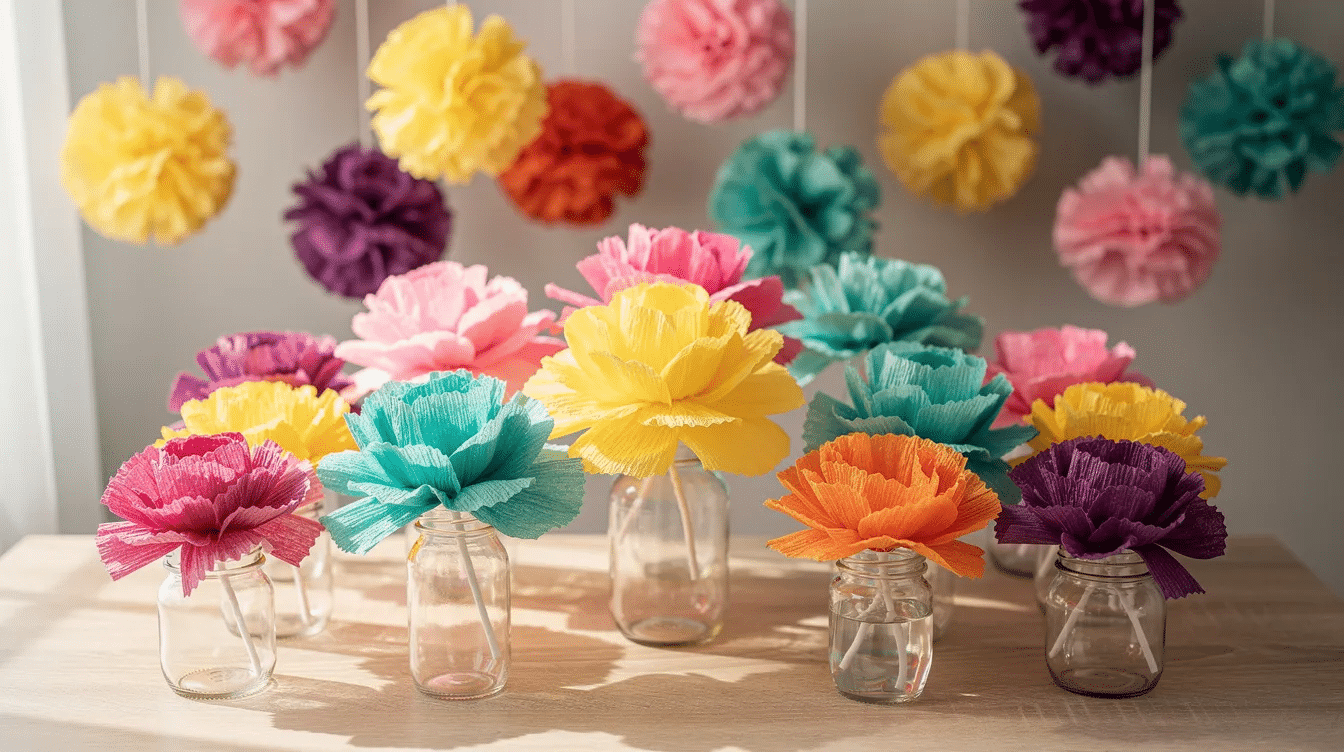
Tissue paper is known for its light, airy, and extremely thin characteristics, making it ideal for filling gift bags, boxes, or parcels. Tissue paper is used for gift wrapping, making delicate paper lanterns, and decoupage. Tissue Paper is mostly utilized for gift wrapping fillers, light festival lanterns, and delicate paper pom-poms. Colored tissue paper is often used for making the best tissue paper flowers for any occasion, collage work, and even in painting techniques.
Crepe paper is a type of thinly coated tissue paper that is gathered to produce a crinkled surface, making it ideal for paper flower making and party decorations. Crepe Paper’s unique stretchability makes it perfect for shaping realistic paper flowers and party streamers, and you can explore creative crepe paper flowers ideas for DIY projects to make the most of that flexibility. Standard party crepe is fine for garlands; heavier floral or Italian crepe paper is better for shaped petals.
Use light glue, glue sticks, or small amounts of tacky glue. Avoid soaking these sheets with wet paint because dyes can bleed, fibers can weaken, and the paper can lose shape.
Origami Paper and Other Folding-Friendly Papers
Origami paper is specifically designed for the art of paper folding, characterized by its thinness and ability to hold multiple creases. Typically, origami paper is square-shaped and often features a design on one side and a plain color on the other, enhancing the visual appeal of the finished folds.
While origami paper can be made from various materials, it is often thinner than regular paper, making it easier to fold and manipulate for intricate designs. Standard 6” x 6” or 15 x 15 cm sheets are beginner-friendly for cranes, hearts, boxes, and jumping frogs, and are ideal for practicing top origami designs for every skill level.
Other folding options include lightweight printer paper for practice and washi paper for more refined craft. Washi paper, also known as traditional Japanese paper, is an organic and delicate paper made from various fibers including those from the Misumata shrub, mulberry bush, Gampi tree, bamboo, hemp, and rice. Washi paper was invented in Japan and is known for its stunning appearance, allowing it to stand alone as artwork. Washi paper is unique in design and can be used for a variety of projects including card making, scrapbooking, wallpaper, bookbinding, and origami, and it pairs beautifully with handmade paper sheets for creative projects when you want richly textured layers.
Watercolor Paper and Mixed-Media Craft Papers
Some paper crafting projects involve wet media, so standard craft paper may pucker or pill. Watercolor paper is engineered to hold wet paints, inks, and water-heavy mediums without warping.
- Features: Watercolor / Mixed-Media Paper is designed to absorb wet mediums and is ideal for watercolors, acrylic painting, and ink washes.
- Weight: often 200–300 gsm, with cotton or cellulose fibers.
- Textures: hot press is smooth, cold press has light tooth, and rough paper has pronounced texture.
- Best uses: hand-painted card fronts, bookmarks, framed mini art, and journal pages.
- Handling: tape edges before heavy washes, let art dry fully before gluing to cardstock, and test markers on a scrap.
- Tools: heavy mixed-media sheets can handle collage, light embossing, and some die cutting with adjusted machine settings.
Vellum, Translucent, and Other Specialty Craft Papers
Vellum is a smooth, translucent paper that mimics traditional animal skin parchment. Vellum is used for elegant overlays, soft shadow layers in scrapbooking, and tracing.
Use low-show adhesive, hide glue under embellishments, and heat emboss carefully to avoid warping. Vellum can soften bold patterns, add layers to wedding invitations, or create a frosted window effect on cards.
Other types include foil card, mirror card, glitter cardstock, embossed paper, printed decoupage sheets, handmade paper, and mulberry paper. Specialty papers like mulberry paper are handcrafted using natural plant fibers and feature a distinct organic texture. Mulberry paper is a handmade paper made from the fibers of the mulberry plant, known for its lightweight yet durable quality, often used in scrapbooking, collage work, and paper crafts that sell well for crafters.
Corrugated Cardboard is a sturdy material featuring fluted paper layered between two flat sheets, best for structural craft projects. Newsprint is a cheap, thick paper used for printing newspapers, which is often utilized in paper mache projects due to its ability to tear easily and hold paste well, while thinner sheets of origami or printer paper are better suited to creative paper duck folding techniques.
Specialty finishes create exciting creative possibilities, but lamination, heavy glitter, and metallic foils can limit recyclability.
Choosing the Right Paper for Your Project
Choosing the right craft paper depends on your project’s needs, such as folding, painting, or constructing dimensional structures. Use this quick decision list:
- Card making: heavyweight cardstock base plus patterned paper, vellum, or specialty paper accents.
- Scrapbooking: photo-safe cardstock and patterned scrapbook paper.
- Origami: dedicated origami paper for clean, precise folds.
- Paper flowers: crepe paper for realistic petals, or cardstock for sturdy layered blooms.
- Children’s crafts: construction paper for budget-friendly group work.
- Structure: heavier paper for boxes, tags, and standing cards.
- Layering: medium paper for mats, punches, and die cutting.
- Volume: tissue and crepe for texture, fullness, and movement.
Also consider use: short-term party decorations can use inexpensive papers, while long-term keepsakes need acid-free materials. Scissors suit simple shapes; punches and electronic cutters need consistent sheets; manual die cutting works best with smooth, medium-weight stock.
Environmental Impact: Greener Choices in Craft Paper
Many crafters in 2026 are trying to reduce waste and choose lower-impact materials. Uncoated kraft paper, recycled cardstock, and FSC-certified papers are generally better choices than plastic-laminated, glittered, or heavily coated papers. The U.S. EPA reported that 68.2% of paper and paperboard in municipal solid waste was recycled in 2018, showing why paper recovery matters at scale (EPA).
Practical eco tips:
- Reuse paper scraps as collage strips, patchwork backgrounds, and small die-cut shapes.
- Reserve glitter, foil, and plastic film papers for special projects.
- Look for recycled content, chlorine-free bleaching, or FSC certification when buying new paper.
- Avoid overbuying dense card when a lighter sheet will work.
FAQ: Common Questions About Types of Craft Paper
What is the best craft paper for card making?
Heavyweight cardstock around 250–300 gsm is the best base for handmade cards because it stands upright and feels substantial. Smoother finishes are ideal for stamping, while lightly textured cardstock adds interest to minimalist designs. Layer patterned scrapbook paper, vellum, or foil accents for depth without making the card too bulky.
Which paper should I choose for detailed die cutting?
Smooth, medium-weight cardstock around 180–240 gsm usually gives the cleanest cuts without tearing. Very thick board or fibrous handmade paper may need extra pressure or multiple passes. Glitter or mirror card can work, but test a small scrap first and adjust the blade, shim, or speed.
Can I print on craft paper with a home printer?
Most home inkjet and laser printers can handle lighter cardstock, vellum, and scrapbook paper if the sheets fit the printer’s weight limits. Check your manual and use cardstock or heavy paper mode when available. Textured, very thick, or heavily coated papers may misfeed, so stamping or hand lettering may work better.
What type of paper is best for origami beginners?
Standard origami paper in a medium thickness and 6” x 6” size is easiest to learn with. Double-sided color or pattern helps beginners track mountain folds, valley folds, and visible layers. Printer paper cut into squares works for practice, but dedicated origami paper gives cleaner results for more complex projects.
How do I store craft paper so it doesn’t curl or fade?
Store paper flat in a dry room away from direct sunlight, humidity swings, open windows, and heat sources. Use flat drawers, shallow boxes, or vertical holders sorted by various sizes, color family, or paper types. Keep acid-free and specialty papers in sleeves if they are reserved for heirloom projects.
Choosing from the diverse range of various types of paper is easier when you match the material to the technique. Start with the end use, pick the right paper, and let your creativity guide the craft, drawing inspiration from Simply Paper Crafts’ paper crafting ideas and tutorials.