Scrapbooking is a creative activity used to document memories and express artistic sides, often involving storytelling through paper crafting. The right scrapbooking supplies list for beginners should help you create, protect, and enjoy your first scrapbook layouts without buying every tool in the aisle.
Before you purchase anything, gather a collection of mementoes such as photographs, tickets, and notes that you want to include in your scrapbook. A scrapbook typically includes various elements such as photos, tickets, mementos, and notes, allowing for a more personalized storytelling experience compared to traditional photo albums.
How We Chose the Most Essential Beginner Supplies
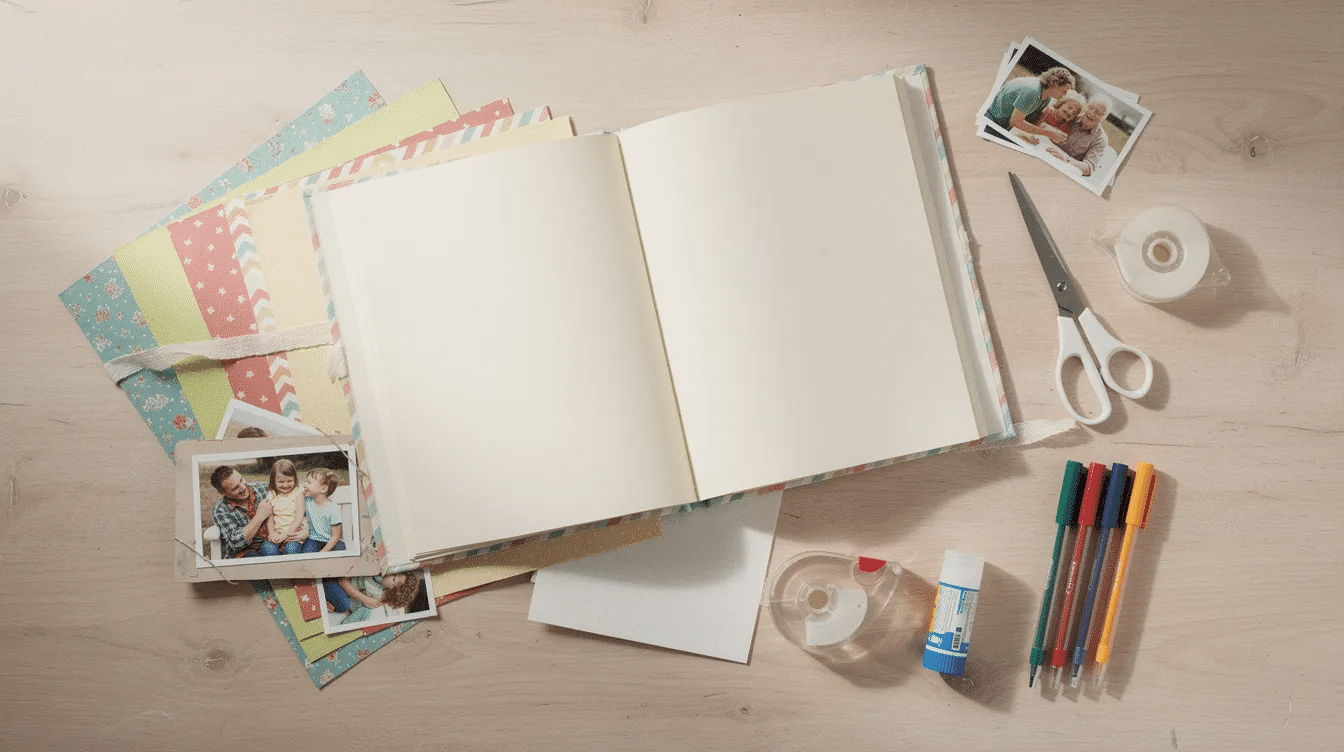
This list focuses on basic supplies that are useful from your very first scrapbook page through many future projects. We prioritized scrapbooking supplies that are versatile, beginner-friendly, cost-effective, and easy to find at a craft store, whether you shop locally, browse paper crafting tutorials and inspiration online, or search for “hobby lobby” coupons before a purchase.
We also considered preservation. Using high-quality materials in scrapbooking, such as acid-free and lignin-free papers, helps prevent fading and discoloration over time, ensuring that memories are preserved for future generations. The choice of materials in scrapbooking directly impacts the longevity of the scrapbook; using archival-quality products can help maintain the integrity of the scrapbook for years to come, whether you’re using store-bought cardstock or custom handmade paper sheets.
- Top 8 Essential Scrapbooking Supplies for Beginners
- Quick Comparison of Essential Beginner Supplies
- How to Choose the Right Supplies for Your First Projects
- Which Supplies Should You Buy First?
- Final Thoughts
Top 8 Essential Scrapbooking Supplies for Beginners
1. Scrapbook Album or Binder
An album is the foundation of your projects because it keeps every layout organized in one place. A 12”x12” binder-style album is the industry standard for scrapbook albums, though 8.5×11 and mini albums work well for smaller projects.
Why It Stands Out
Scrapbook albums give structure and protection to completed pages. A d ring album is especially beginner-friendly because you can add, remove, or rearrange pages without taking the whole album apart.
Best For
Beginners who want organized, protected layouts for loved ones, vacations, school years, or a special day.
Key Strengths
- Protects pages from damage and wear
- Comes in different sizes that match common scrapbook paper
- Leaves space to grow your collection of memories
Possible Limitations
- Requires an initial investment
- Your size choice affects future paper, page protectors, and layout decisions
2. Cardstock
Cardstock is a solid heavyweight paper that serves as a staple in scrapbooking, often used as the background for pages and to matte photographs. Cardstock is a fundamental supply in scrapbooking, often used as the base for pages and available in various colors and textures, with other popular craft paper supplies and acid-free options recommended to prevent fading.
Why It Stands Out
It is sturdy enough to support photos, stickers, flowers, letters, and other small elements without bending as easily as regular paper.
Best For
Anyone creating traditional scrapbook layouts, photo mats, titles, or layered designs.
Key Strengths
- Acid free and lignin free options help preserve memories
- Available in colors for nearly any theme
- Creates a strong foundation for beautiful scrapbook pages
Possible Limitations
- Costs more than basic printer paper
- Multiple colors require storage space
3. Adhesives
Adhesives are essential for scrapbooking, with options including glue dots, double-sided tape, glue sticks, and liquid glue, all of which should be long-lasting and acid-free to preserve scrapbook quality.
Why It Stands Out
High-quality adhesives are essential in scrapbooking as they ensure that photos and decorations remain intact without causing discoloration or deterioration over time. According to archival guidance from Colorado 4-H, items touching photos should be acid-free, lignin-free, and PVC-free when possible.
Best For
Every beginner. When beginning scrapbooking, it’s essential to have basic tools such as scissors, adhesive, and a scrapbook or album to compile your pages.
Key Strengths
- Double-sided tape gives clean, mess-free application
- Glue dots work well when you want to add dimension
- A double-sided adhesive runner or an Advanced Tape Glider (ATG) gun provides a clean, mess-free, and permanent hold for scrapbooking
Possible Limitations
- Different scrapbook materials need different adhesives
- Some adhesives are permanent and cannot be repositioned
4. Scissors and Paper Trimmers
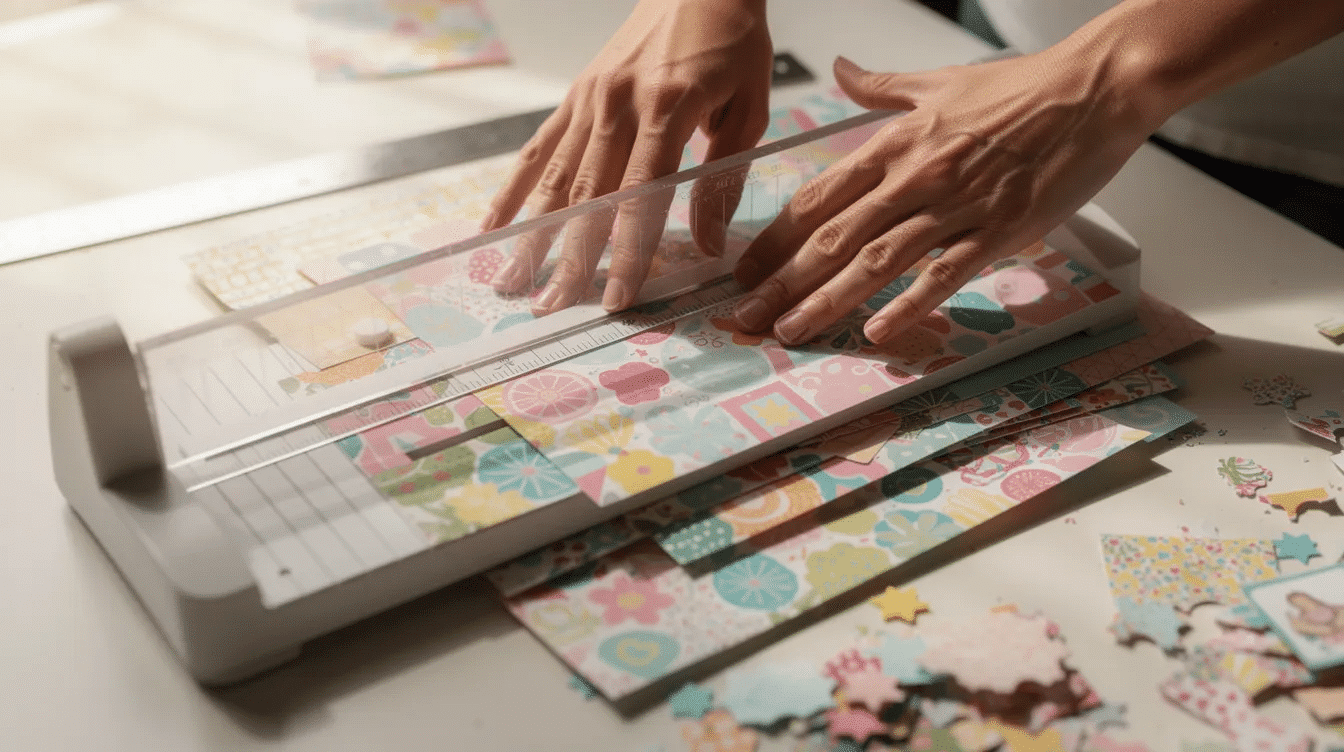
Good cutting tools make your scrapbook page look clean instead of crooked. A good pair of scissors helps with curves, images, and shapes, while a paper trimmer handles straight lines quickly, especially when you’re experimenting with different types of paper for crafts.
Why It Stands Out
A handheld or tabletop rotary paper trimmer ensures perfectly straight lines and speeds up cutting. This matters when trimming photos, making mats, or cutting strips of paper.
Best For
Beginners who want precision, efficiency, and neat edges without measuring every cut by hand.
Key Strengths
- Paper trimmers create perfectly straight cuts with guides
- Craft scissors are better than dull household scissors
- A corner rounder can create a rounded corner for photo mats, journaling cards, or decorative bases for beginner paper quilling art
Possible Limitations
- Quality scrapbook tools cost more upfront
- You may eventually want specialty tools for punches, circles, or decorative borders
5. Pens and Markers
Pens are used for journaling, titles, captions, important dates, and little notes beside pictures. They make your scrapbook feel personal in a meaningful way.
Why It Stands Out
Archival-quality, fade-proof, and waterproof pigment pens are recommended for writing in scrapbooks to prevent ink bleeding or smudging. Fine-tip pens are useful for journaling, while gel pens can add sparkle or color.
Best For
Beginners who want to write stories, label images, decorate a page, or add handwritten memories.
Key Strengths
- Pigment pens resist fading better than many dye inks
- Multiple colors support creativity and coordination
- Pens work well with stamps, stamp sets, or a stamped image once the ink is dry
Possible Limitations
- Archival pens cost more than regular pens
- You may need different tips for titles, captions, and doodles
6. Patterned Paper
Patterned paper is decorative scrapbook paper with patterns, colors, and themes. Patterned paper is commonly used in scrapbooking for matting photos and creating decorative elements, available in various designs and often sold in packs, including options that work beautifully for vintage-inspired paper craft projects.
Why It Stands Out
It helps beginners create coordinated pages without advanced techniques. A single paper collection can include solids, patterns, borders, and cut-apart cards.
Best For
Beginners who want quick theme coordination for birthdays, travel, holidays, baby books, or everyday memories.
Key Strengths
- Adds instant color and visual interest
- Saves time when creating backgrounds
- Packs and kits make it easier to match a layout
Possible Limitations
- Busy designs can compete with photos
- Themed packs may limit flexibility later
7. Basic Embellishments
Embellishments are the finishing touches that make a page feel complete. Embellishments are crucial for adding creativity and personality to scrapbook pages, with options including stickers, washi tapes, chipboard frames, and die-cuts, all of which also work well for cute paper craft projects.
Why It Stands Out
Decorative elements help tell the story visually. You can use stars for a school project, flowers for a garden memory, or travel stickers for a vacation album.
Best For
Beginners who want a fun way to add style without learning complicated techniques.
Key Strengths
- Stickers are fast and require no extra tools
- Washi tape is a decorative, repositionable paper tape for adding borders, pinning down memorabilia, or adding color
- Die-cuts and chipboard pieces add dimension to scrapbook layouts
Possible Limitations
- Embellishments can become expensive quickly
- Too many bulky elements can make albums hard to close
8. Page Protectors
Page protectors are clear sleeves that hold completed pages inside the album. They shield layouts from fingerprints, dust, abrasion, and loose pieces.
Why It Stands Out
They help preserve completed scrapbook layouts while keeping the page visible. Choose protectors that match your album size and are made from photo-safe plastics such as polypropylene, polyethylene, or polyester.
Best For
Beginners who want their projects to last, especially albums handled by children, friends, or loved ones.
Key Strengths
- Clear sleeves keep pages visible
- Top-loading designs make insertion easy
- Help prevent stickers and small elements from falling off
Possible Limitations
- They add ongoing cost per page
- Glossy protectors may create glare in bright light
Quick Comparison of Essential Beginner Supplies
- Scrapbook Album or Binder – Best for organizing and protecting pages
- Cardstock – Best for sturdy backgrounds and photo mats
- Adhesives – Best for attaching photos, paper, and embellishments
- Scissors and Paper Trimmers – Best for clean cutting and accurate sizing
- Pens and Markers – Best for journaling, titles, and important dates
- Patterned Paper – Best for quick themes and coordinated color
- Basic Embellishments – Best for personality, decoration, and fun details
- Page Protectors – Best for long-term protection and clean storage
How to Choose the Right Supplies for Your First Projects
Choose Based on Your Budget
If your budget is tight, start with supplies that let you finish a complete page: an album, cardstock, adhesive, scissors, pens, and page protectors. Add patterned paper, washi tape, stamps, and embellishments after you know what style you enjoy.
Choose Based on Your Project Type
A wedding scrapbook may need elegant paper, subtle stickers, and plenty of journaling space. A child’s school album may need bright cardstock, alphabet letters, pockets for tickets, and creative printables you can make at home. Mini projects need fewer materials but still benefit from archival basics.
Choose Based on Available Storage Space
If you have limited space, buy kits instead of loose stacks, choose one neutral cardstock pack, and keep tools simple. A compact paper trimmer, adhesive runner, scissors, and a few pens can handle most beginner projects.
Which Supplies Should You Buy First?
Start with an album, matching page protectors, cardstock, adhesive, scissors, and pens. These must have materials let you create your first complete scrapbook layout without feeling stuck.
Add next: patterned paper, stickers, washi tape, stamp sets, die-cuts, and specialty tools like a corner rounder. Adhesives are essential for scrapbooking, with options including glue dots, double-sided tape, glue sticks, and liquid glue, all of which should be long-lasting and acid-free to preserve scrapbook integrity.
If you want to save money, buy neutral basics first and choose decorative supplies around one theme at a time. Of course, the perfect way to build confidence is to finish one simple page before buying supplies for ten future projects.
Final Thoughts
A strong scrapbooking supplies list for beginners does not need to be huge. Start with basic supplies that protect your photos, support your creativity, and make each memory easy to revisit.
The goal is not to own every craft tool. The goal is to preserve memories in a meaningful way, one page at a time. Pick a few pictures, choose a simple layout, write the story, and create your first scrapbook page today.