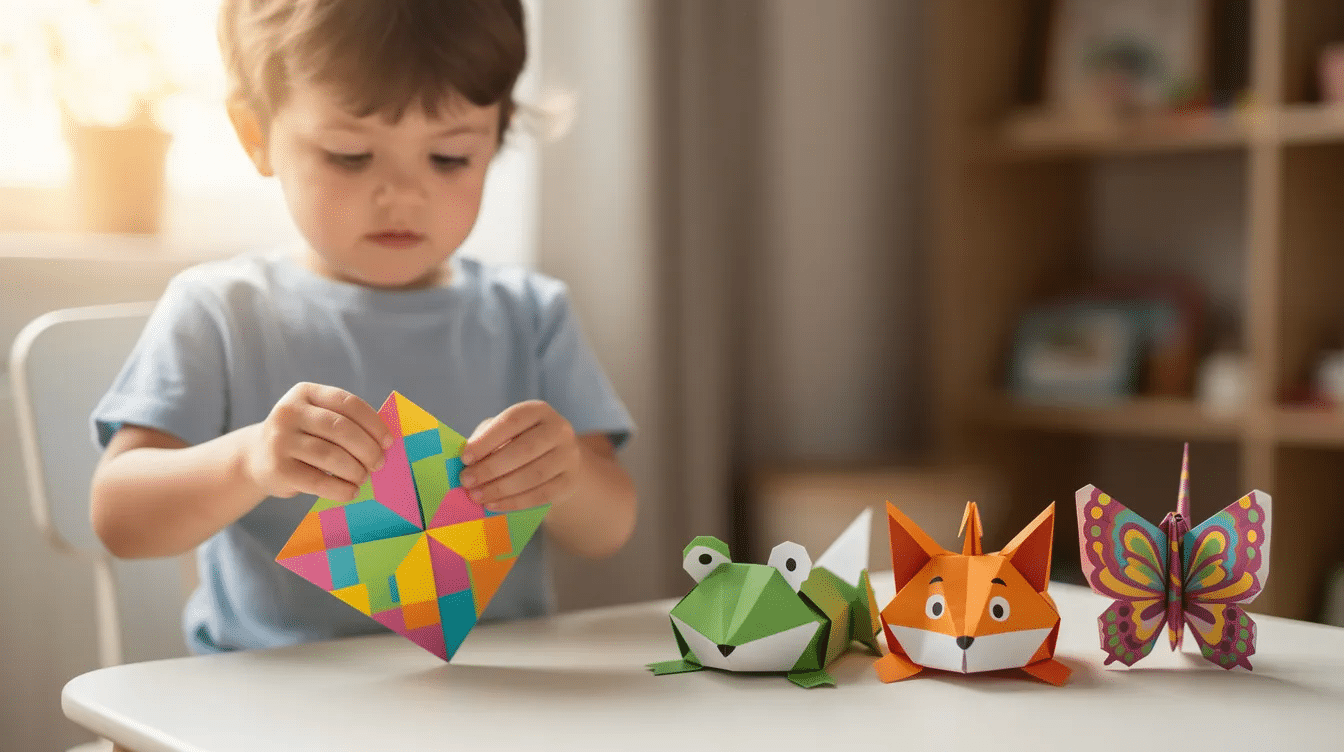
Origami is the art of folding paper into shapes, and few projects are more satisfying for kids than making animals they can recognize, decorate, and play with. The best easy origami animals for kids step by step are simple enough to finish without frustration, but interesting enough to feel like a real achievement.
Simple origami animals help children practice fine motor skills and spark creativity. They also build patience, hand control, visual memory, and early geometry skills. According to research on young children’s folding ability, verbal guidance and clear prompts can improve folding accuracy, especially when kids are still developing spatial skills (DOAJ).
To start folding origami animals, all you need is a square piece of paper, typically measuring about 7.5cm by 7.5cm for kids. Larger paper is also useful for younger beginners because it gives small hands more room to crease and correct mistakes, and choosing top craft paper supplies for creative projects can make folding easier and more enjoyable.
- How We Chose the Best Easy Origami Animals for Kids
- Top 7 Easy Origami Animals for Kids Step by Step
- 1. Origami Dog
- Why It Stands Out
- Best For
- Key Strengths
- Possible Limitations
- 2. Origami Crane
- Why It Stands Out
- Best For
- Key Strengths
- Possible Limitations
- 3. Origami Fish
- Why It Stands Out
- Best For
- Key Strengths
- Possible Limitations
- 4. Origami Butterfly
- Why It Stands Out
- Best For
- Key Strengths
- Possible Limitations
- 5. Origami Frog
- Why It Stands Out
- Best For
- Key Strengths
- Possible Limitations
- 6. Origami Cat
- Why It Stands Out
- Best For
- Key Strengths
- Possible Limitations
- 7. Origami Swan
- Why It Stands Out
- Best For
- Key Strengths
- Possible Limitations
- Quick Comparison of the Best Easy Origami Animals
- How to Choose the Right Origami Animal for Your Child
- Which Origami Animal Is Best for Your Child?
- Final Thoughts
How We Chose the Best Easy Origami Animals for Kids
We chose these origami animals based on four practical factors: low step count, clear instructions, recognizable results, and age-appropriate difficulty. A good beginner friendly origami tutorial should let a child follow each step without needing to understand advanced folds right away.
We also looked at time required. Some models, like a fish or cat face, can be finished in under 5 minutes. Others, like a crane or swan, take longer but teach important folding foundations. Origami tutorials often range from very easy models to slightly more detailed ones, catering to different skill levels.
Origami animals can be categorized into several types, including mammals, birds, fish, and arthropods, each offering unique folding experiences. Mammals are popular origami subjects, with models ranging from small pets to larger wild animals, often designed to be beginner-friendly. Birds, such as cranes, owls, and swans, are iconic origami models that are often among the first that beginners learn to fold. Fish and sea creatures are also popular in origami, utilizing simple folds and flowing shapes, making them suitable for beginners. Arthropods like butterflies and spiders are interesting origami subjects, featuring delicate shapes and recognizable silhouettes, and many of these appear in creative origami designs for every skill level.
There are dozens of classic, easy-to-follow origami diagrams for children available in the Origami for Kids – Animals directory. Each origami animal tutorial includes clear, step-by-step instructions, making it easy to follow along at your own pace, and you can also explore fun paper activities for creative minds of all ages to broaden your craft sessions.
Top 7 Easy Origami Animals for Kids Step by Step
1. Origami Dog
The origami dog is one of the best first projects because it uses familiar shapes: a face, ears, and a nose. The Origami Dog Face and the Traditional Paper Jumping Frog are beginner-level origami designs for children, but the dog face is usually the easier place to start.
Why It Stands Out
A dog face often needs only 6-8 basic folds. Kids can immediately see the animal appear, which makes the process feel fun instead of technical.
Best For
This model is best for kids aged 5-8 and absolute beginners to origami.
Key Strengths
- Requires only basic valley and mountain folds
- Takes 5-10 minutes to complete
- Creates a highly recognizable result that kids love
- Easy to decorate with eyes, a nose, spots, or floppy ears
Possible Limitations
The dog face has limited detail compared to advanced models. It may also be too simple for kids who already have some folding experience.
2. Origami Crane
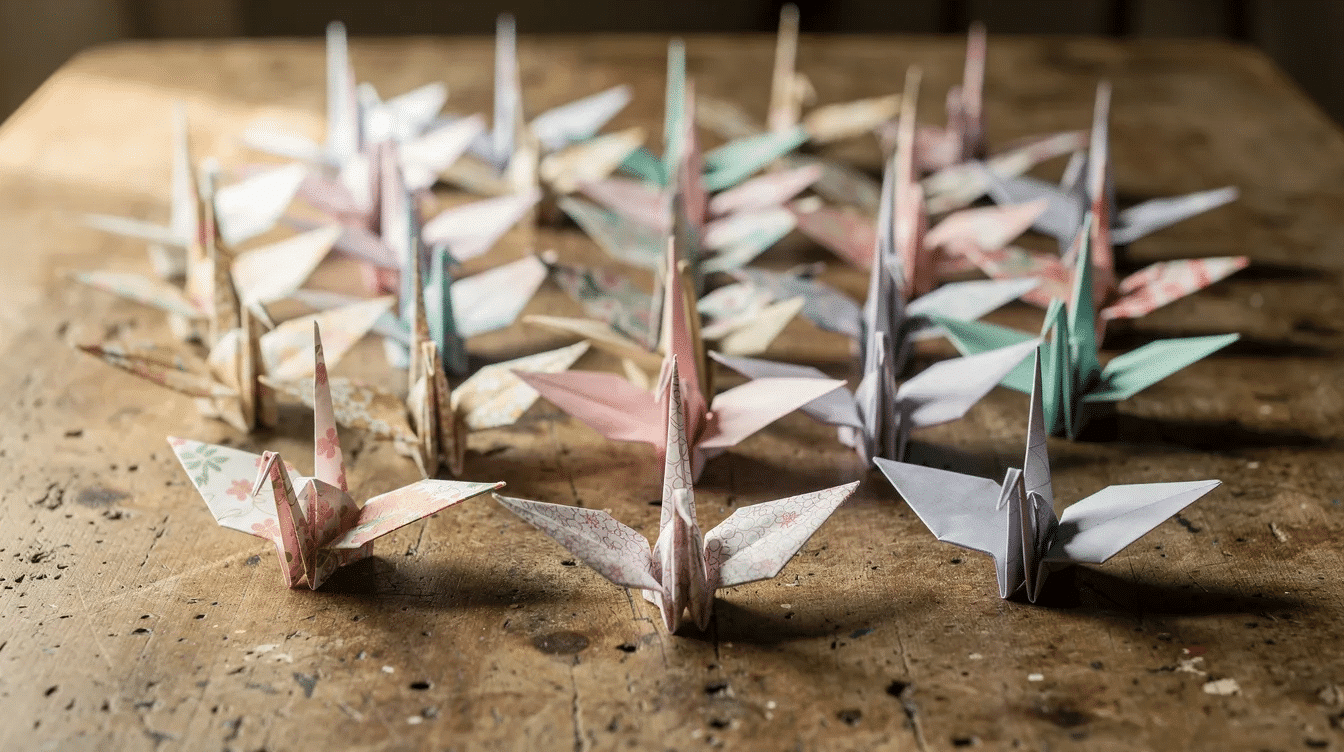
The crane is one of the most famous origami models in the world. Origami comes from the Japanese words “oru,” meaning to fold, and “kami,” meaning paper, and the crane is closely connected with Japanese paper-folding tradition (Britannica).
Why It Stands Out
The crane teaches proper origami foundations, including base folds, layered folds, and careful alignment. It also gives parents and teachers a chance to share the cultural story behind cranes and peace.
Best For
Choose the crane for kids aged 7-12 who are ready to follow longer instructions and want to learn traditional origami.
Key Strengths
- Teaches essential base folds used in many other models
- Produces a beautiful, meaningful result
- Builds confidence for more complex projects
- Encourages careful folding and patience
Possible Limitations
The crane usually takes 12-15 steps. Some steps may need adult guidance, especially when forming the bird base or shaping the neck and tail.
3. Origami Fish
The origami fish is quick, clear, and forgiving. It is one of the easiest animals for kids because the body and tail can be made with simple diagonal and corner folds.
Why It Stands Out
The fish uses only 4-6 basic folds and gives an immediate recognizable result. That makes it perfect when you want a short project with a high success rate.
Best For
This is ideal for preschoolers aged 4-6 and kids who need quick success before trying harder models.
Key Strengths
- Completed in under 5 minutes
- Great for decorating with scales, eyes, and bubbles
- Perfect introduction to origami concepts
- Easy to repeat for a school of fish display
Possible Limitations
The design is very basic and has limited details. It may not challenge kids who are ready for intermediate projects.
4. Origami Butterfly
A butterfly is colorful, symmetrical, and naturally appealing to creative children. It also works well as a craft for spring, birthdays, cards, or classroom displays, and pairs nicely with cute paper craft ideas for easy DIY projects.
Why It Stands Out
The symmetrical design helps children understand mirror-image folding. If one wing is folded one way, the other wing must match.
Best For
This model is best for kids aged 6-10 who enjoy decorative projects and nature themes.
Key Strengths
- Works beautifully with patterned or colored paper
- Teaches symmetry and precision
- Great for seasonal decorations and gifts
- Lets kids explore wing patterns with crayons or markers
Possible Limitations
The wings need reasonable symmetry, which can frustrate some beginners. Thin paper can also tear if kids press too hard.
5. Origami Frog
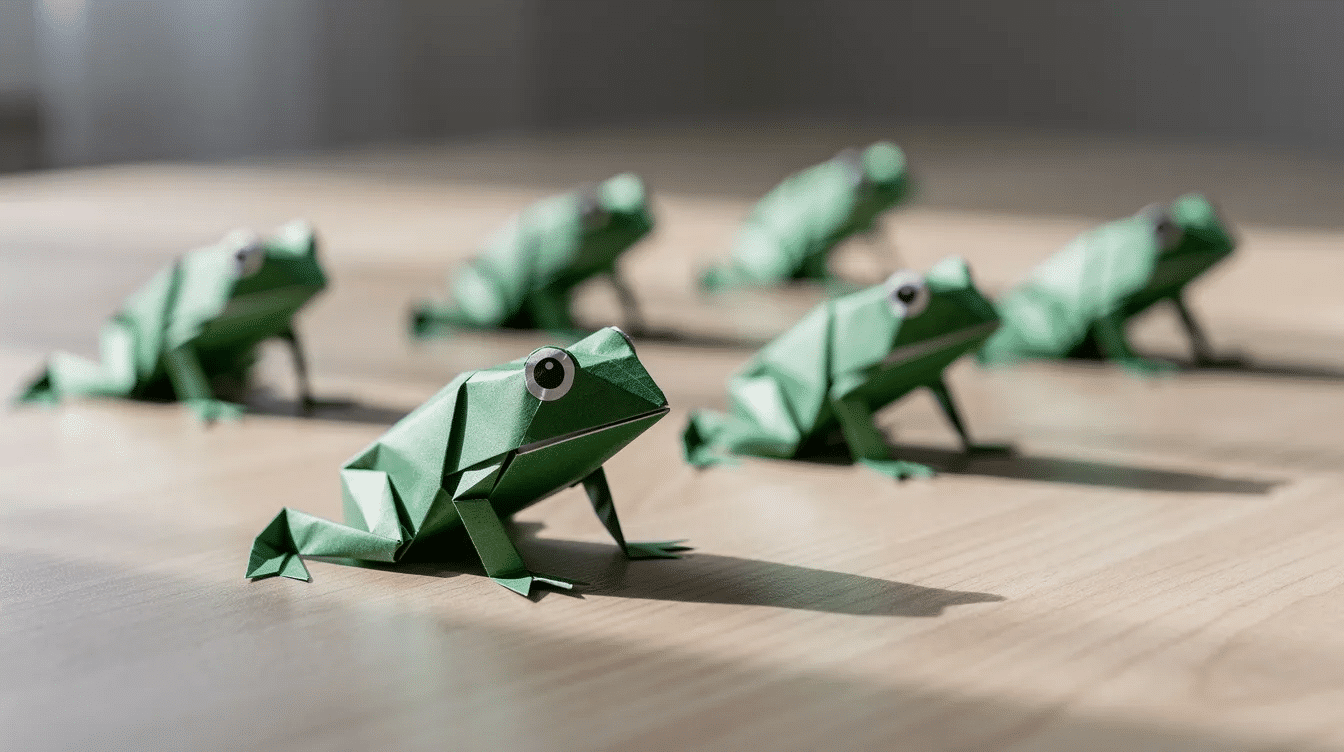
The origami frog is popular because it turns folding into play. Instead of just sitting on a page or shelf, the finished frog can move, much like other hands-on projects such as creative DIY paper squishies.
Why It Stands Out
The Traditional Paper Jumping Frog model jumps when you press and release its back. That one action gives the model extra life and makes kids want to watch, race, and share their frogs.
Best For
Choose this for active kids aged 6-12 who enjoy toys they can play with after creating.
Key Strengths
- Interactive result encourages continued engagement
- Teaches action-fold techniques
- Can be used for games and competitions
- Makes an easy origami project feel more dynamic
Possible Limitations
The jumping action depends on paper weight. Paper that is too stiff may not fold well, while paper that is too light may not spring properly. It is also slightly more complex than basic animal faces.
6. Origami Cat
The origami cat face is another excellent starter model, especially for pet-loving children. Like the dog, it uses a simple face shape and lets kids add personality afterward.
Why It Stands Out
The cat is easy to customize. Kids can draw sleepy eyes, whiskers, stripes, a smile, or a grumpy expression.
Best For
This model works well for kids aged 5-9 who love pets and want to personalize their creations.
Key Strengths
- Simple base with room for creative expression
- Quick to fold with satisfying results
- Perfect for storytelling and imaginative play
- Can be changed into a fox, bear, or tiger with small design choices
Possible Limitations
The model often needs markers or crayons for full effect. Its basic structure also limits advanced folding practice.
7. Origami Swan
The origami swan is more elegant than most beginner models and introduces children to shaping, curves, and 3D form.
Why It Stands Out
A swan teaches kids that origami can be more than flat folds. The neck, head, and body create a graceful shape that feels like a step toward intermediate work.
Best For
This is best for kids aged 8-14 who are ready to progress beyond basic animals.
Key Strengths
- Beautiful display piece that builds pride
- Introduces curved folding and 3D shaping
- Excellent stepping stone to complex models
- Works well with white, pastel, or lightly patterned paper
Possible Limitations
The swan requires more precision and patience. Very young children may find the neck shaping frustrating without help.
Quick Comparison of the Best Easy Origami Animals
Animal | Best Use Case | Approx. Time | Good For |
|---|---|---|---|
Dog | Absolute beginners and youngest folders | 5-10 min | Ages 5-8 |
Crane | Learning traditional origami foundations | 10-15 min | Ages 7-12 |
Fish | Quick success and confidence building | Under 5 min | Ages 4-6 |
Butterfly | Decorative projects and symmetry practice | 5-8 min | Ages 6-10 |
Frog | Interactive play after folding | 7-10 min | Ages 6-12 |
Cat | Personalization and creative expression | Under 5 min | Ages 5-9 |
Swan | Intermediate skill development | 8-12 min | Ages 8-14 |
A good rule is to start with flat animal faces, then move into full-body models, then try interactive or 3D designs. If your child wants to watch a video before folding, choose one with clear camera angles rather than just chasing a clip with “m views.” A calm, well-paced origami tutorial is often more useful than a fast viral one. If you find a helpful channel, you can subscribe so your child can return to the same instruction style over time, or explore a broader hub like Simply Paper Crafts for inspiration. |
How to Choose the Right Origami Animal for Your Child
Choose Based on Age and Skill Level
For younger kids, start with fewer folds and larger paper. A fish, dog face, or cat face is easier than a crane because mistakes do not compound as quickly. Older beginners can handle models with more steps if the instructions are clear and the folds are introduced gradually.
Choose Based on Interest and Motivation
Children are more likely to finish a project when they care about the animal. A pet lover may enjoy a cat or dog. A child who loves nature may prefer a butterfly, fish, or swan. A child who wants something active may enjoy the frog.
The best model is not always the easiest one. It is the one your child wants to finish.
Choose Based on Available Time and Patience
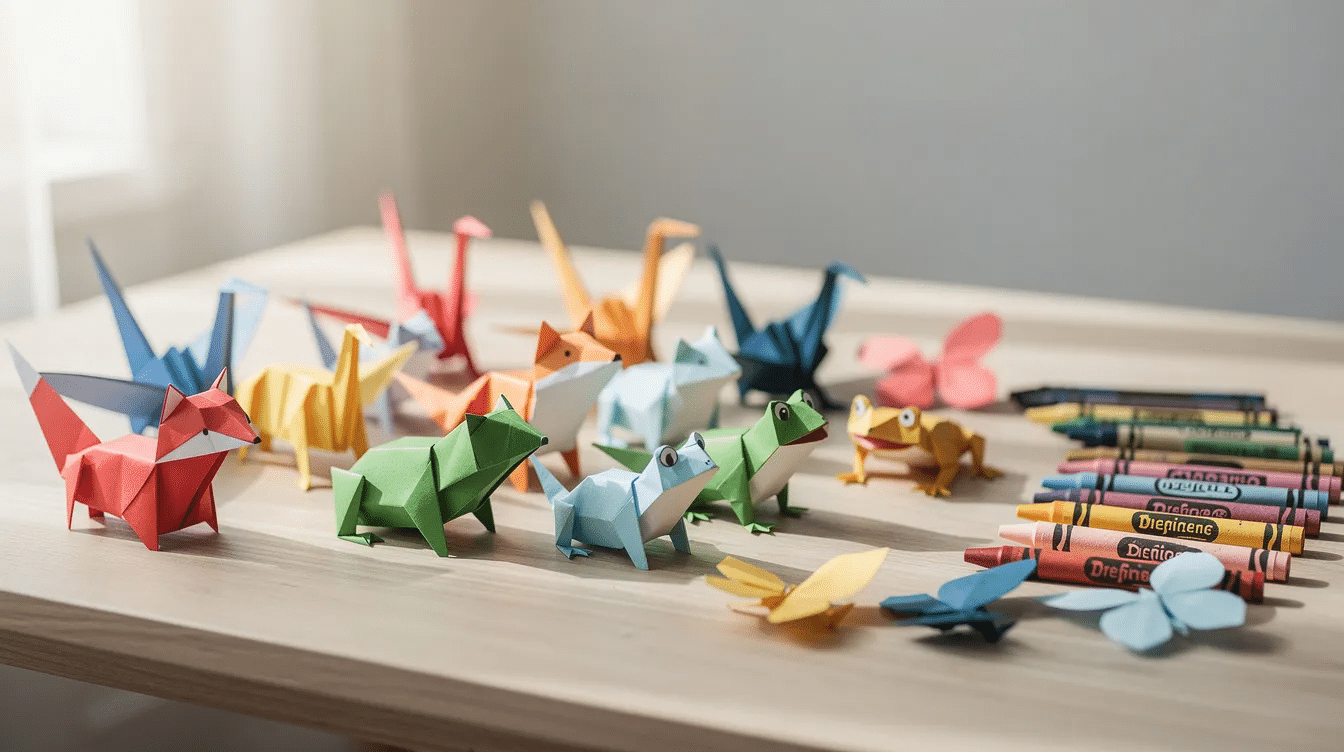
If you only have a few minutes, choose fish or cat. If you have a longer craft session, choose butterfly, frog, crane, or swan. Remember that a child’s first attempt does not need to be perfect. The goal is to enjoy the process and improve one fold at a time.
Which Origami Animal Is Best for Your Child?
Choose Dog or Fish if your child is under 6 or completely new to origami. These models are fast, simple, and confidence-building.
Choose Crane or Swan if you want to teach proper origami technique and tradition. These models require patience but reward kids with beautiful results.
Choose Butterfly or Cat if your child loves decorating and personalizing projects. These are perfect for kids who enjoy adding faces, patterns, colors, and stories.
Choose Frog if your child enjoys toys and interactive play. The jumping frog is especially fun because kids can fold it, test it, adjust it, and race it.
Final Thoughts
The best easy origami animals for kids step by step depend on your child’s age, interests, and current folding skill. Start with simple models, use clear step instructions, and let each child move at a comfortable pace.
Origami is more than a quiet craft. It gives kids a hands-on way to explore shapes, practice focus, build confidence, and bring paper animals to life.
Pick one animal, grab a square sheet, and start folding today. Then share the finished creation with someone your child loves.