
Zhezhi (折纸) is the Chinese art of paper folding. If you’ve ever folded a paper crane, you probably learned the Japanese term “origami.” But long before origami became a global phenomenon, China developed its own rich tradition of paper folding called zhezhi (折纸). This article is for anyone interested in the history, techniques, and cultural significance of Chinese paper folding, from beginners to experienced crafters. Understanding zhezhi not only connects you to a centuries-old tradition but also offers a unique perspective on the global history of paper arts. This article explores the history, ceremonial uses, key publications like Maying Soong’s 1948 book, the fascinating story of Golden Venture folding, and how you can start practicing this traditional art today.
Quick Overview of Zhezhi
The name zhezhi is the Chinese term for paper folding. Zhezhi is the ancient Chinese art of paper folding, which originated around 200 AD. Zhezhi is the Chinese term for paper folding, distinct from the more commonly known Japanese origami. The term ‘zhezhi’ is the Mandarin word for paper folding, while ‘origami’ is the Japanese term. While both practices share fundamental techniques, they developed along different cultural paths with unique aesthetic priorities.
Traditional Chinese paper folding historically focused on practical and ceremonial objects rather than living creatures. Where Japanese origami celebrates cranes, frogs, and flowers, zhezhi emphasizes inanimate objects like boats, hats, dishes, and representations of gold nuggets used in funeral rituals.
Paper folding techniques existed in China by the Song dynasty (960–1279) and evolved into both flat decorative forms and three-dimensional functional shapes. Some historians believe these practices emerged even earlier, shortly after paper itself became widely available.
Chinese paper folding, or zhezhi, is the art of paper folding that originated in medieval China.
This article covers the full scope of zhezhi: from its origins linked to the invention of paper, through its ceremonial and daily-life applications, to modern innovations like Golden Venture folding and contemporary artistic practice.
- Origins of Paper and Early Chinese Paper Folding
- Zhezhi in Chinese Ritual and Daily Life
- Chinese Zhezhi vs. Japanese Origami
- Maying Soong and Early Publications
- Golden Venture Folding and Three-Dimensional Zhezhi
- Classic Zhezhi Models and Bases
- Contemporary Zhezhi and Related Paper Arts
- How to Start Practicing Zhezhi
Origins of Paper and Early Chinese Paper Folding
The Invention of Paper
The story of zhezhi begins with one of China’s greatest inventions: paper itself. Understanding this connection helps explain why Chinese paper folding developed its distinctive character and how carefully chosen or even handmade paper sheets for creative projects can influence the look and feel of each fold.
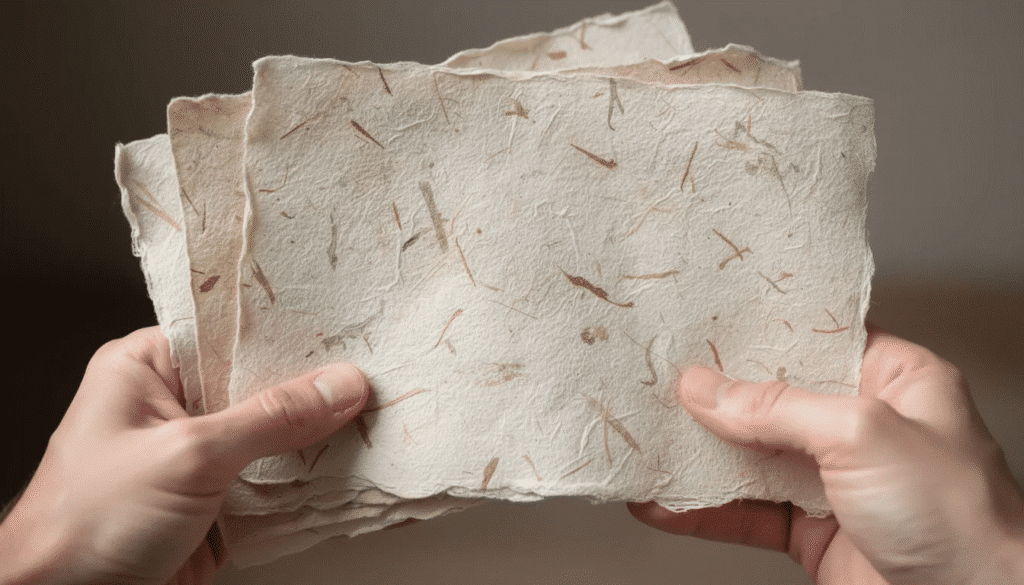
Paper was standardized by Cai Lun around 105 AD during the Eastern Han dynasty. He created sheets from an innovative mixture of materials including mulberry bark, bast fibers, old rags, fishnets, and hemp waste. This process made paper production more efficient and the resulting sheets more suitable for writing—and eventually, for folding.
Early Folding Practices
Archaeological finds show early forms of paper existed as far back as the 2nd century BC, but Cai Lun’s contribution was codifying and improving production methods. His work made paper affordable enough for widespread use beyond official court documents.
Cai Lun was later honored with a noble title (often translated as marquess) and a commemorative temple for his invention. His legacy transformed communication, art, and culture across Asia and eventually the entire world.
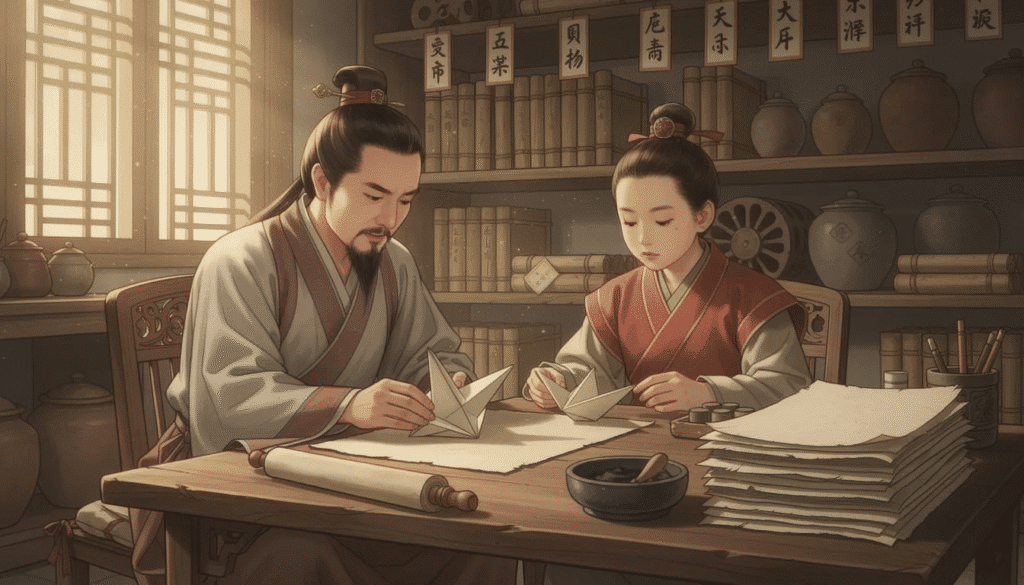
Once paper became widely available in the following centuries, folding techniques naturally emerged. People in China began creating religious offerings, everyday containers, and small toys for children. These humble beginnings would eventually develop into the sophisticated zhezhi tradition we can trace through historical records.
Zhezhi in Chinese Ritual and Daily Life
Ceremonial Uses
Chinese paper folding originally served strong ceremonial and symbolic functions that set it apart from purely decorative crafts.
Folded paper replicas of gold ingots (纸元宝) and currency were burned at funerals and ancestor rituals from at least the Song dynasty onward. These paper representations were created for ceremonial purposes—the belief held that burning these ephemeral objects would transfer wealth and comfort to deceased loved ones on their spiritual journey.
Folded paper objects were also placed in tombs as substitutes for real goods. This practice echoed older burial traditions where actual valuables accompanied the dead, but offered a more affordable and symbolic alternative. Small replicas of precious articles belonging to the deceased found their way into tombs and altars constructed in the person’s name.
Everyday Objects
Beyond ritual use, everyday zhezhi included simple, functional items that sit alongside many other fun paper activities for creative minds of all ages:
- Paper boats that children floated on water
- Hats worn for play or shade
- Small dishes used for holding nuts, ink, or other items
- Toys and puzzles passed down through generations
The terminological difference matters here: “origami” (折り紙) is Japanese, while Chinese uses “zhezhi” (折纸). Both words translate roughly to “folded paper,” but they represent distinct cultural practices with different histories and emphases.
Chinese Zhezhi vs. Japanese Origami
Both China and Japan developed paper folding traditions, though along different trajectories. Paper reached Japan from China around the 6th century, and the Japanese developed their own distinctive approach to the craft.
Chinese paper folding, or zhezhi, focuses primarily on inanimate objects such as boats and hats.
Traditional zhezhi usually starts from various paper shapes—not always a perfect square—and focuses on inanimate objects. Common subjects include boats, hats, pagodas, dishes, and ceremonial gold ingots. Chinese paper folding historically linked more to ritual and practical uses than pure artistic expression.
Japanese origami, by contrast, emphasizes living subjects such as cranes, fish, frogs, flowers, and other animals. Practitioners typically begin with a square sheet of paper. During Japan’s Edo Period (1603–1868), origami became strongly associated with recreation, education, and aesthetics, developing into both a ceremonial Shinto ritual and a popular leisure pursuit.
The difference extends to cultural context: Chinese zhezhi often served functional or spiritual purposes, while Japanese origami became celebrated as an art form with documented masters and systematized techniques, including widely taught models like top origami designs for every skill level.
That said, there are overlapping bases that appear in Chinese, Japanese, and even European folding traditions. The “blintz base” (folding corners to center) and “waterbomb base” (creating a collapsible balloon shape) show up across countries, suggesting cross-influence rather than strict separation. Paper folding, like many crafts, traveled along trade routes and cultural exchanges.
Maying Soong and Early Publications
Modern awareness of Chinese paper folding in the West was shaped heavily by mid-20th-century publications. Before these books appeared, many Western readers assumed all paper folding was Japanese origami, and few distinguished it from the broader world of paper crafting inspiration and tutorials.
Maying Soong and her 1948 book “The Art of Chinese Paper Folding” represents a landmark English-language work on zhezhi. Soong came from a prominent Chinese family and studied in England, France, and Switzerland, which helped her present Chinese traditions to international readers with clarity and cultural context.
The book distinguishes Chinese paper folding from Japanese origami’s cranes, flowers, and animal figures. Instead, it focuses on boats, pagodas, hats, and ceremonial objects, even though many modern folders also enjoy lighter motifs like creative paper duck folding ideas. Specific model types from the book include:
- Love knots
- Pinwheels
- The Old Scholar’s Hat
- Various ceremonial folds
Models are arranged roughly by difficulty level, making the book accessible to beginners while preserving traditional designs.
While the book includes some international folds and shared bases like the blintz base, it also preserves traditional Chinese regional designs that might otherwise have been lost. For anyone interested in the history of paper arts, Soong’s work remains an essential reference that helped establish zhezhi as a recognized form separate from Japanese origami.
Golden Venture Folding and Three-Dimensional Zhezhi
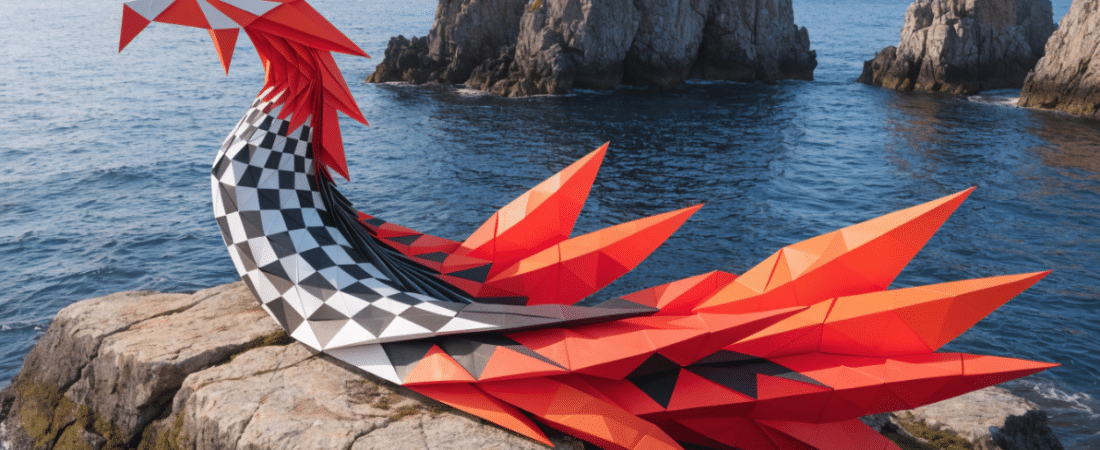
Golden Venture folding represents a modern modular, three-dimensional form of Chinese paper folding often referred to as “3D origami.” Its origin story is as remarkable as the technique itself.
In 1993, Chinese refugees aboard the cargo ship “Golden Venture” were detained in an American prison after attempting to enter the United States. While held in detention, they developed a distinctive paper folding technique to pass time and generate income for legal fees.
The basic technique works like this: small rectangular strips of paper are folded into triangular modules with flaps and pockets. These units can be interlocked without glue to build large, free-standing sculptures. Choosing the best types of paper for craft helps these modules lock together cleanly and hold their shape. A single model might require hundreds of identically folded triangular pieces.
Common Golden Venture subjects include:
- Swans (often the first model new folders learn)
- Pineapples
- Peacocks
- Vases
- Ships and boats
The refugees often used recycled magazine pages or paper cut to money-sized sheets, creating colorful works from whatever materials they could find. These pieces were sold at charity fundraisers and exhibited to raise awareness of their situation, helping some secure legal support and asylum.
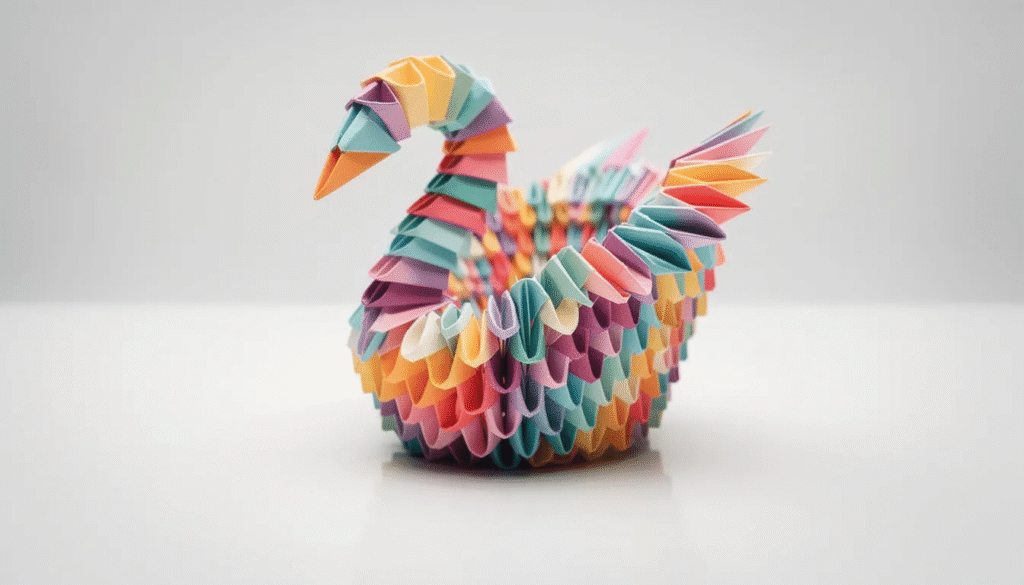
Golden Venture folding blends older Chinese modular folding concepts with newer sculptural ambitions. What began in an American prison has since spread globally, with hobbyists continuing to create elaborate 3D pieces. The technique demonstrates how traditional art forms can evolve and adapt under unexpected circumstances.
Classic Zhezhi Models and Bases
Understanding traditional Chinese folds gives you a foundation for exploring this craft. Here are several well-known zhezhi models that represent the tradition’s practical and ceremonial roots:
- Old Scholar’s Hat: A classic fold that creates a wearable paper hat, traditionally associated with scholarly or official dress.
- Simple paper boat: Remains one of the most popular folds across cultures—Chinese versions often emphasize stability for floating on water.
- Pagoda-like towers: Demonstrate how flat paper can become architectural, creating small decorative objects.
- Small dishes or boxes: Serve practical purposes, holding nuts, coins, or craft supplies.
- Gold ingot (yuanbao): Fold creates the ceremonial shape burned at funerals, representing wealth for the afterlife.
Common starting folds include the blintz base (folding all four corners to the center point) and the waterbomb base (creating a collapsible balloon shape from a square). Both appear in Chinese models and have parallels in Japanese and Western traditions.
Chinese paper toys such as the inflatable “waterbomb” balloon demonstrate playful reuse of scrap paper. Children across generations have learned to fold, inflate, and toss these simple objects—a form of recyclable, homemade entertainment.
Many traditional designs were taught informally in families and schools, so regional variations exist. You might find multiple versions of a boat or hat depending on which province or family passed down the technique. This oral and hands-on transmission means some folds exist in several forms with no single “correct” version.
Contemporary Zhezhi and Related Paper Arts
Zhezhi has moved from temple rituals and children’s toys into galleries, classrooms, and online communities. The practice continues to evolve while maintaining connections to its cultural roots, and a wide range of top craft paper supplies for creative projects now makes it easier for beginners to get started.
Contemporary uses for Chinese paper folding include:
- Decorative interior pieces (modular swans, pineapples, vases)
- Wedding or festival ornaments
- Educational projects demonstrating geometry and patience
- Therapeutic crafting activities
Some artists mix Chinese paper folding with other crafts. Jewellery designers combine paper cutting, folded elements, fabric, and metal to create structured 3D pieces that can be worn or displayed, while others experiment with sculptural media such as creative paper mache project ideas. These fusion approaches show how traditional techniques can work within modern artistic practice.
Modern makers adopt diverse materials beyond traditional rice paper. Colored printer paper, metallic foils, recycled magazines, and printed banknote replicas for ceremonial folds all find their way into contemporary zhezhi, sometimes alongside other media like creative uses of paper mache in art and craft. The type of paper you choose affects both the final appearance and the folding experience.
Social media and online tutorials have spread Golden Venture and other zhezhi styles globally. Many hobbyists who search for “3D origami” tutorials are actually learning Chinese modular folding techniques, even if they don’t know the term zhezhi. This digital dissemination ensures the craft reaches new practitioners who might never have encountered it otherwise.
How to Start Practicing Zhezhi
Choose Simple Models
Ready to try Chinese paper folding yourself? Here’s a practical path for beginners.
Start with simple, flat models before attempting modular 3D projects. A classic paper boat, a basic hat, and a small square dish make excellent first folds. These models teach fundamental techniques—accurate creasing, understanding paper behavior, working with symmetry—without overwhelming you with complexity.
Select Your Materials
Materials matter, but don’t overthink them initially. Inexpensive A4 or letter-size printer paper cut into rectangles or squares works perfectly for learning. For Golden Venture triangular units, slightly thicker paper (around 80–100 gsm) holds its shape better and interlocks more securely.
Progress Your Skills
Build your skills progressively:
- Learn a few common bases (blintz, waterbomb).
- Practice accuracy in creases—clean folds make assembly easier.
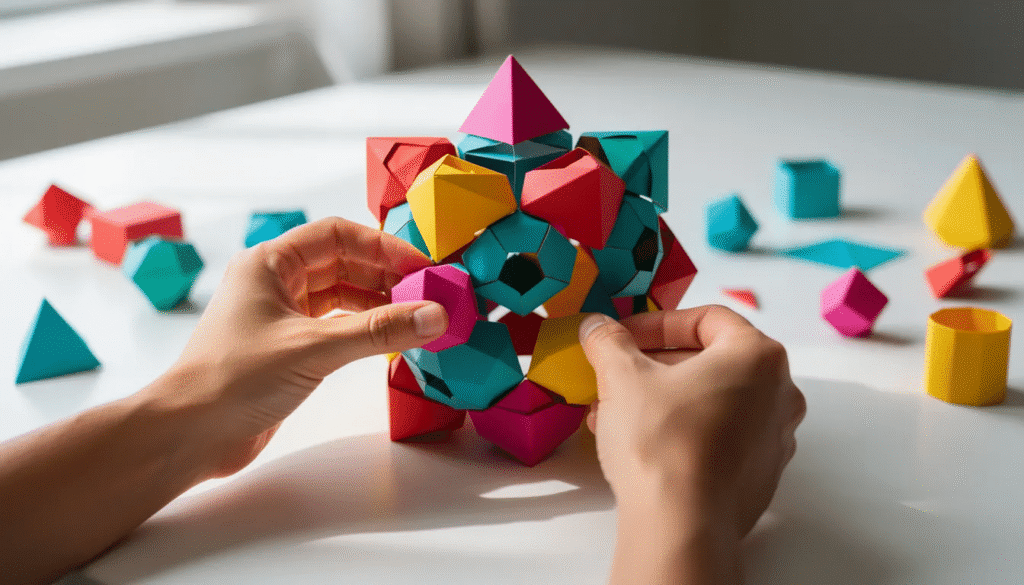
- Experiment with multi-unit constructions like a small swan or pineapple.
- Work up to larger, more complex modular pieces.
Explore both traditional ritual objects (paper ingots, offerings) and purely decorative pieces. When making ceremonial forms, consider the cultural and spiritual significance they carry. The gold ingot fold, for example, represents genuine beliefs about caring for ancestors—approaching these folds with respect honors the tradition’s deeper meaning.
Many people spend hours with modular folding as a meditative practice. The repetitive nature of creating hundreds of identical units can be calming, and watching a sculpture emerge from those pieces is genuinely satisfying, much like the slow, reflective pleasure of vintage paper craft ideas.
Whether you’re wondering about the difference between zhezhi and origami or ready to learn your first fold, Chinese paper folding offers a rewarding craft with centuries of history behind it. Pick up a sheet of paper and make your first crease—you’re continuing a tradition that began nearly two thousand years ago.