
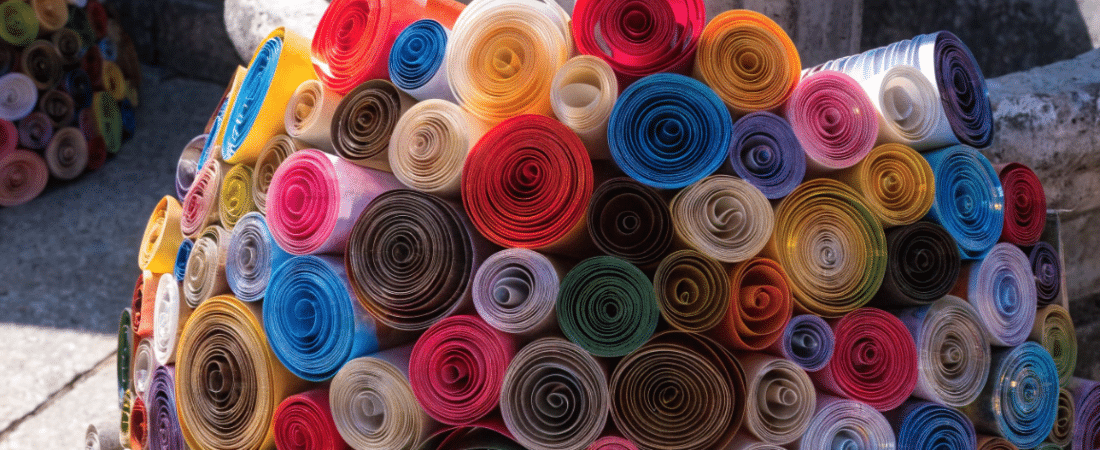
If you’ve ever admired intricate paper artwork on greeting cards or delicate jewelry pieces, you’ve likely seen quilling in action. Quilling is one of the most creative and accessible crafts, popular among craft enthusiasts for its versatility and beauty. At the heart of this centuries-old craft lies one essential material that makes everything possible. Understanding what quilling strips are and how to use them to quill beautiful designs opens the door to creating stunning decorative designs with nothing more than paper, glue, and a bit of patience.
We hope this introduction inspires you to try quilling and enjoy the creative process of making your own paper crafts!
- Quick Answer: What Are Quilling Strips?
- History of Quilling
- What Is Paper Quilling and How Strips Are Used
- Materials and Properties of Quilling Strips
- Standard Sizes: Widths and Lengths of Quilling Strips
- Buying vs. Cutting Your Own Quilling Strips
- How to Choose the Right Quilling Strips for Your Project
- Basic Tools and Techniques for Working with Quilling Strips
- Tips for Quilling with Strips
- Common Applications of Quilling
Quick Answer: What Are Quilling Strips?
Quilling strips are narrow, uniformly cut paper strips specifically designed for paper quilling—an art form where you roll, shape, and glue paper to create intricate designs. These strips serve as the fundamental building material for everything from simple coils to elaborate three-dimensional artwork. Quilling strips are made from flexible paper, allowing for easy rolling and shaping without breaking.
Typically made from colored paper ranging between 80–130 GSM (grams per square meter), quilling strips come in standard widths such as 3mm, 5mm, 8mm, and 10mm. Most commercially available strips measure around 30–53cm in length, giving you enough material to create multiple coils or larger shapes from a single strip.
These pre cut paper strips are the core supplies needed for quilling projects including greeting cards, framed wall art, jewelry, and decorative boxes. The uniformity of width and clean edges is what separates proper quilling paper from randomly cut scraps—consistency matters when you’re creating repeated elements like flower petals or geometric patterns.
Beginners often find 3mm to 5mm wide strips easiest to work with. They’re forgiving enough to roll without tearing but still produce refined results. Determining the appropriate width is important for achieving the desired effect in your quilling projects. Once you get comfortable, you can experiment with narrower widths for fine details or wider strips for bold, sculptural effects.
History of Quilling
Quilling, also known as paper filigree, boasts a fascinating history that stretches back thousands of years. The earliest forms of quilling can be traced to ancient Egypt, where artisans used thin papyrus paper strips to create decorative designs for ceremonial and everyday objects. As the centuries passed, the art of quilling evolved, finding a special place in 18th-century Europe. During this period, quilling became a favored pastime among the upper class, who used traditional quilling paper—carefully cut into fine strips—to embellish greeting cards, picture frames, and ornate boxes with intricate patterns.
The process of rolling and shaping paper quilling strips allowed crafters to create elaborate motifs and delicate flourishes, often seen in decorative designs adorning religious artifacts and personal keepsakes. These early quillers relied on high-quality paper, meticulously cut into uniform strips, much like the pre cut paper strips available to today’s enthusiasts. The standard 1/8 inch width, now common in modern quilling, has its roots in these traditional practices, making it easier for beginners to achieve consistent results.
Today, quilling is a global craft enjoyed by people of all ages and skill levels. With the wide availability of pre cut paper strips in a rainbow of colors and sizes, anyone can begin creating beautiful paper quilling projects—from greeting cards to framed artwork—using the same fundamental techniques that have inspired artists for generations.
What Is Paper Quilling and How Strips Are Used
Paper quilling is a decorative art form where paper strips are rolled into tight or loose coils, then pinched and shaped into various forms before being glued to a backing or assembled into freestanding pieces. The technique dates back centuries—historians trace it to Renaissance-era nuns who used gilded paper strips to decorate religious objects.
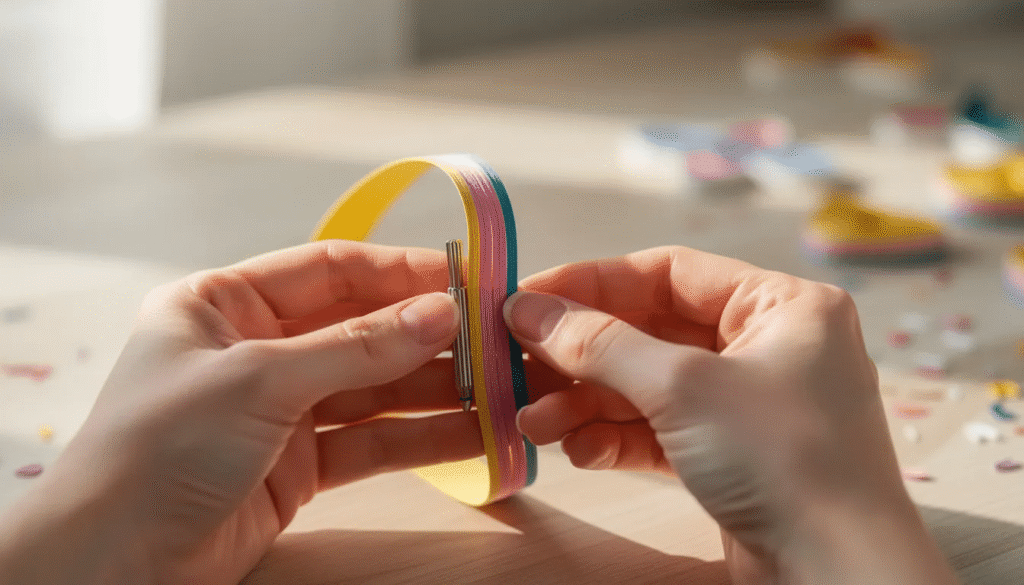
The basic process is straightforward. You take a strip, insert one end into a slotted quilling tool or wrap it around a toothpick, then roll it into a tight coil. From there, you can let it loosen to your desired size, secure the end with a small dot of glue, and pinch it into different shapes—teardrops, marquises, squares, hearts, or crescents.
These basic shapes become the building blocks for larger designs. Common project types include:
- Greeting cards with floral borders or monogram letters
- Framed wall art featuring landscapes, portraits, or abstract patterns
- Jewelry such as earrings and pendants, which pair beautifully with creative paper bead jewelry projects if you enjoy combining quilling with other paper-based accessories
- Gift tags and paper embellishments
- Decorative boxes with dimensional flower arrangements on top
- Typography and monograms using on-edge quilling techniques
We suggest experimenting with your own designs or trying different shapes to discover what you enjoy most. If you want to learn more or follow step-by-step guides, a comprehensive guide for mastering paper quilling art can walk you through essential techniques and creative project ideas.
What makes quilling so versatile is how different colors, widths, and shapes combine. A single flower might use five shades of pink in graduated strips, with green teardrops forming leaves and yellow tight coils creating the center. The depth and dimension come from layering these elements and playing with how strips catch light and shadow.
Materials and Properties of Quilling Strips
Not every paper works well for quilling. The strips you use need specific properties to roll smoothly, hold their shape, and display color vibrantly in your finished creations, and understanding the best types of paper for craft helps you choose options that perform well for quilling and other techniques.
Traditional quilling paper is typically dyed-through colored paper, meaning the color runs completely through the strip rather than sitting only on the surface. This matters because when you roll and shape the paper, the edge becomes visible—and you want that edge to match the face color rather than showing white cardstock underneath.
Most quality strips fall between 80–130 GSM, which translates to roughly 20–36lb paper weight. This range offers the sweet spot between flexibility and structure. Lighter weight paper can tear when rolled tightly, while thicker paper may crack or resist holding curved shapes. Some quillers prefer 160 GSM strips for sculptural pieces where structural integrity matters more than delicate detail.
The quilling paper market now offers remarkable variety beyond solid colors:
- Gradient strips where color transitions from dark to light across the width
- Two-tone papers with different colors on each side
- Metallic-edged strips with fine gold, silver, or copper edges
- Pearlescent finishes that add subtle shimmer
- Acid-free papers for archival-quality artwork that won’t yellow over time
What separates professional quilling paper from ordinary craft paper is edge quality. Machine-cut strips have perfectly smooth edges that create uniform coils. When you cut your own strips, even slight waviness shows up in the finished coil, making your artwork look less polished.
Standard Sizes: Widths and Lengths of Quilling Strips
Strip width dramatically affects both the appearance of your finished piece and how easy it is to work with. Understanding the standard sizes helps you match materials to your project goals.
Ultra-narrow strips (1.5–2mm, about 1/16”) create incredibly delicate filigree work. They’re ideal for intricate details, fine typography, and detailed borders. However, they’re less forgiving—beginners often find them frustrating because they tear easily and require precise handling.
Standard width strips (3mm, about 1/8”) represent the traditional quilling paper size that’s been used for centuries. At this width, you can create refined shapes that read as elegant without being too fragile. Many patterns and tutorials default to 3mm strips.
Medium strips (5mm, about 3/16”) are the most widely-used size according to industry data. They offer excellent versatility—suitable for flowers, scrolls, and most decorative applications. The slightly wider surface catches light better and creates more visual impact than 3mm strips while remaining easy to roll.
Wide strips (8–10mm, about 5/16” to 3/8”) work best for dimensional elements. On-edge quilling (where the strip stands upright rather than laying flat) creates bold outlines and contemporary designs. These wider strips also form substantial 3D petals and sculptural elements where you need height and presence.
Regarding length, commercially sold strips typically measure 30–53cm (about 12–21 inches). This provides enough material for multiple small coils from one strip or allows you to create larger shapes without joining strips together. You can always cut strips shorter, but starting with adequate length gives you flexibility.
Buying vs. Cutting Your Own Quilling Strips
Every quiller eventually faces this question: should you purchase ready-made strips or cut your own from sheets of paper? Both approaches have merit, and many experienced crafters use a combination depending on the project.
Advantages of buying pre-cut strips:
Commercially manufactured strips offer precision that’s difficult to match at home. Professional suppliers cut strips with perfectly consistent widths and clean edges, which matters enormously when you’re creating repeated elements. You’ll also find specialty options—metallic finishes, pearlescent effects, graduated colors—that would be impossible to replicate by hand. Major suppliers offer strips in over 60 colors across multiple width categories, saving significant time on color selection and preparation.
Advantages of cutting your own:
DIY cutting dramatically reduces cost per project, especially if you work through paper quickly. You gain complete control over width—want 4mm strips that aren’t standard? No problem. You can also experiment with different paper types and weights, including specialty papers from art supply stores that aren’t available as pre-cut strips, drawing inspiration from top craft paper supplies for creative projects to see which materials suit your style. Some quillers enjoy matching paper to specific project colors rather than being limited to what’s available in strip form, and even incorporate handmade paper sheets for creative projects when they want distinctive textures and eco-friendly materials.
If you choose to cut your own, the process is straightforward. Mark your sheet at the desired interval along both long edges using a ruler and pencil. Place a metal ruler connecting those marks, then cut with a sharp craft knife on a cutting mat. Work slowly and apply even pressure—rushing leads to crooked cuts and rough edges that wrinkle or catch when rolled.
Store finished strips in labeled envelopes or partitioned boxes organized by color and width. Keeping them flat prevents curling that can make strips harder to work with later.
How to Choose the Right Quilling Strips for Your Project
Selecting the right strips isn’t complicated once you understand how different properties affect your work. The ideal choice depends on your project type, the level of detail you’re aiming for, and your experience level, and browsing a dedicated paper-crafting hub like Simply Paper Crafts can give you ideas for how different strips perform in real projects.
For beginners: Start with 3mm or 5mm wide strips in a medium weight (around 80–120 GSM). These widths roll easily, hold shapes reliably, and are forgiving of technique mistakes that would show more dramatically with narrower paper. Choose pale or mid-tone colours initially—they show shadows and shape definition more clearly than very dark strips, which can hide detail and make it harder to see what you’re doing.
For intricate work: Once you’ve developed control, narrow strips (1.5–2mm) open up possibilities for detailed monograms, fine typography, and delicate borders. These require patience and a steady hand but create stunning results that aren’t achievable with wider materials.
For dimensional projects: When building 3D flowers, box toppers, or bold outline designs, reach for 8–10mm strips in slightly heavier paper. The extra width and weight provide the structure needed for pieces that stand up rather than lying flat. This is where 160 GSM strips become particularly suitable.
Color considerations: Beyond width and weight, think about how colors will interact in your design. Gradient strips create natural depth in flower petals. Metallic-edged strips add what quillers describe as “definite wow-power”—particularly effective for quilled jewelry where light catches the fine gold or silver edge.
Before committing to a whole project, test-roll a single strip. Check how easily it coils, whether the paper cracks at tight bends, and if the edges stay smooth. This simple practice saves frustration and potentially wasted supplies on strips that don’t perform as expected for your specific technique.
Basic Tools and Techniques for Working with Quilling Strips
You don’t need an elaborate setup to begin working with quilling strips. A handful of essential tools and some basic technique knowledge will take you surprisingly far.
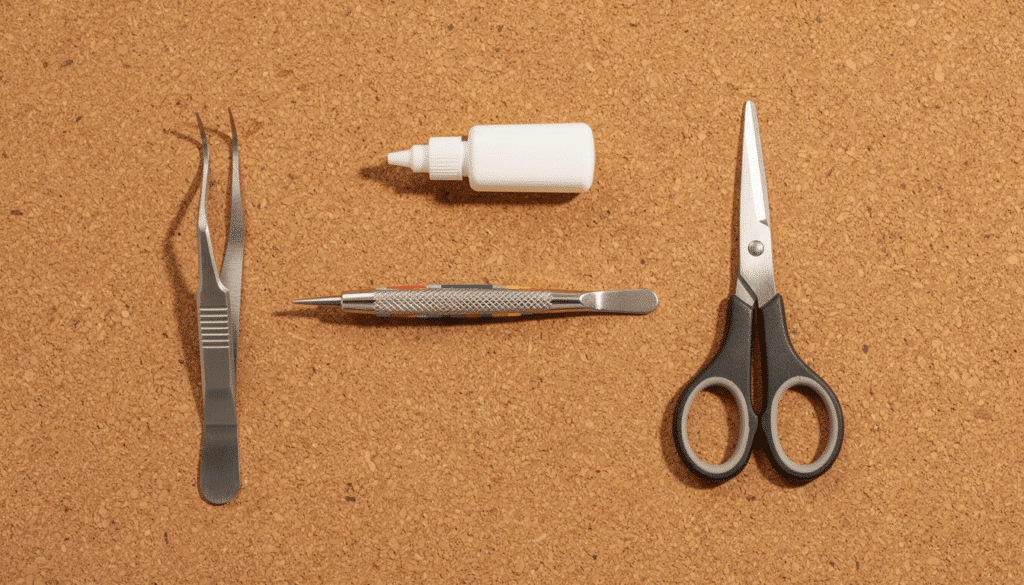
Core tools to purchase or gather:
- Slotted quilling tool – The most important tool, featuring a metal tip with a narrow slot that grips your strip for easy rolling. The quality difference between coils made with a proper tool versus a toothpick is immediately noticeable.
- Needle tool – Useful for applying small amounts of glue and for making tighter coils once you advance
- Fine-tip glue applicator – Precision matters; too much glue causes paper to wrinkle and warp
- Tweezers – Essential for placing small shapes and holding pieces while glue sets
- Scissors – For trimming strips to length
- Corkboard or foam mat with pins – Helpful for holding shapes in place while assembling larger designs
- Circle sizing template – Optional but useful for creating uniform loose coils
Basic rolling technique: Insert about 1/8 inch of your strip into the slot of your quilling tool. Hold the tool in your dominant hand and use your other hand to guide the strip as you roll, keeping gentle tension. Once fully rolled, slide the coil off the tool—for a tight coil, glue immediately; for a loose coil, let it expand first.
Creating basic shapes: The foundation of quilling involves transforming round coils into different shapes through pinching. Press one point of a loose coil to create a teardrop. Pinch two opposite points for a marquise (eye shape). These simple forms combine to create flowers, leaves, and complex patterns.
Gluing technique: Use only a tiny amount of white craft glue (PVA glue works well). Apply with a toothpick to the very end of a strip or to the back of a shape before placing. Excess glue shows through, warps paper, and takes longer to dry. When in doubt, use less than you think you need.
The fun of quilling comes from experimentation. As you practice and build confidence, you’ll develop preferences for specific strip widths, discover which shapes come naturally to you, and find inspiration in combining techniques—and you might even branch out into cute paper craft ideas for easy DIY projects alongside your quilling. Many quillers keep a “practice board” where they try new shapes before incorporating them into finished artwork.
With the right quilling strips and a few basic tools, you have everything needed to create beautiful quilled creations. Start with a small pack of 3mm or 5mm strips, roll a few test coils, and see where your creativity takes you. The money you invest in quality supplies pays off in smoother rolling and more professional results—and once you experience the satisfying process of transforming simple paper strips into intricate art, you’ll understand why this centuries-old craft continues to inspire makers around the world.
Tips for Quilling with Strips
To get the best results from your quilling projects, it’s essential to start with the right materials and techniques. For beginners, choosing a lighter weight paper—such as 24lb quilling paper—makes it much easier to roll and shape basic forms without the risk of tearing or wrinkling. Using a dedicated quilling tool is also crucial, as it helps you achieve smooth, uniform rolls and prevents the paper strips from breaking or becoming uneven.
As you work with quilling strips, don’t be afraid to experiment with different shapes and techniques. Try creating a variety of basic shapes, such as loose coils, tight scrolls, and leaf forms, to add intricate details to your quilled creations. Color selection plays a big role in the overall impact of your artwork, so consider using a color chart to match your quilling paper to your project’s theme. Mixing and matching colors can lead to unique and eye-catching effects that make your creations stand out.
When gluing your quilled shapes, remember that less is more—a small amount of glue applied with precision will keep your work neat and professional. Patience and practice are key; as you gain experience, you’ll develop a feel for the right weight of paper, the best tools, and the most effective techniques for your style. With time, you’ll be able to create stunning quilled artwork that showcases your creativity and skill.
Common Applications of Quilling
Quilling is a wonderfully versatile craft, lending itself to a wide range of creative projects. One of the most popular uses for quilling paper and a quilling tool is in cardmaking, where quilled shapes add dimension and elegance to greeting cards for any occasion, especially when combined with vintage paper craft ideas like using old book pages or sheet music as backgrounds. Beyond cards, quilled creations can be used to decorate picture frames, making personalized gifts or keepsakes that capture special memories.
For those who love wearable art, quilling offers endless possibilities for jewelry—think lightweight earrings, pendants, and brooches crafted from colorful paper strips. Decorative boxes and ornaments are also common quilling projects, perfect for adding a handmade touch to your home or as thoughtful gifts, and some crafters combine quilling with creative paper mache designs or explore creative uses of paper mache for art projects to build sturdy bases and sculptural forms.
Getting started is simple: you’ll need basic supplies such as quilling paper, a quilling tool, scissors, and glue. These essentials can be purchased at most craft stores or online, and there are countless tutorials and tips available to help you master new techniques. Whether you’re creating intricate artwork to frame and display or experimenting with new designs for fun, quilling encourages creativity and offers endless inspiration for crafters at every level.