
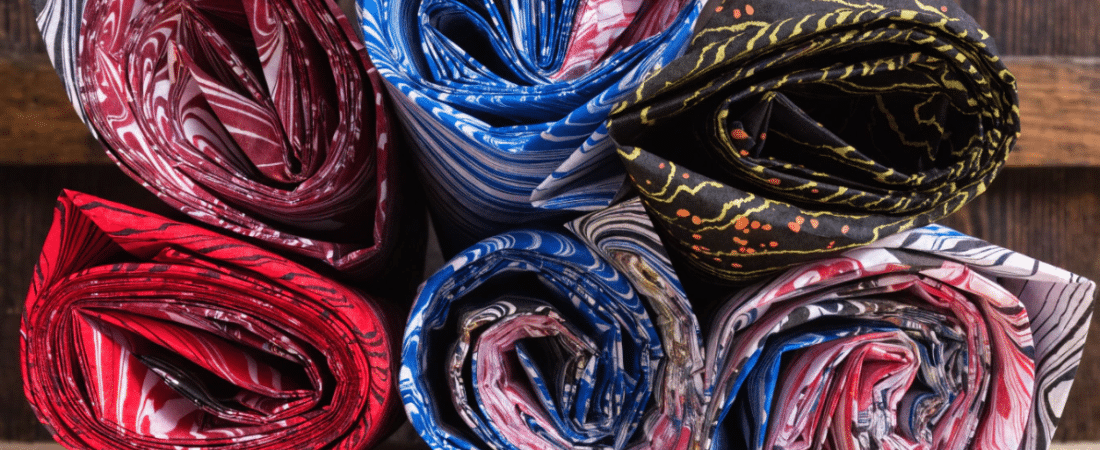
French marbled paper stands as one of the most refined expressions of the marbling craft in European decorative arts. This article is intended for bookbinders, artists, collectors, and craft enthusiasts who wish to deepen their understanding of French marbled paper—its historical significance, artistic value, and continued relevance in crafts and conservation.
French marbled paper is a method of aqueous surface design that produces patterns similar to marble. Genuine French marbled paper is created by floating paints on a liquid and laying the paper on the resulting pattern, and is characterized by intricate, swirling patterns resembling natural stone or marble.
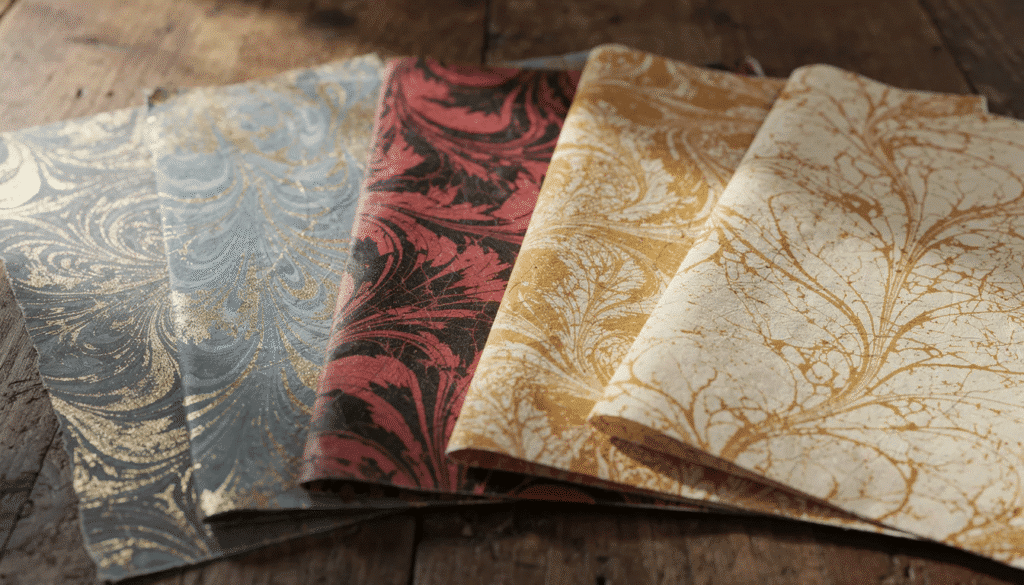
Distinguished by restrained colour palettes, precise comb work, and iconic patterns like the French Curl and French Shell, this form of marbled paper became synonymous with Parisian elegance from the seventeenth century onward.
French marbled paper is a traditional decorative art form originating from 15th-century Persian techniques, perfected in 18th/19th-century France for bookbinding, and is characterized by unique, intricate patterns that do not repeat exactly. It is used in book covers, boxes, crafts, and a wide range of artistic projects, making it a versatile and enduring element in both historical and contemporary decorative arts.
The history of French marbling intertwines with the golden age of bookbinding in France, where master craftsmen in Paris and Lyon created papers that graced everything from legal documents to luxurious literary volumes. Today, French marbled paper continues to find its place in fine bookbinding, box making, art prints, interior accents, and the careful restoration of historical books.
- Historical Development of French Marbled Paper
- Techniques and Materials Used in French Marbling
- Characteristic French Marbled Patterns
- French Marbled Paper in Bookbinding and Decorative Arts
- Collecting and Using Antique and Contemporary French Marbled Paper
- Contemporary Production, Catalogues, and Digital Access
Historical Development of French Marbled Paper
The arrival of marbled papers in France traces back to trade connections with the Ottoman Empire and Persia during the late sixteenth and early seventeenth centuries. Merchants and diplomats brought back examples of Turkish ebru and Eastern marbling techniques, sparking interest among French artisans who saw potential in adapting these methods for European tastes.
By the 1600s, marbling had taken firm hold in France, particularly in the workshop districts of Paris and Lyon. Early applications focused on practical uses—covering legal documents, notarial registers, and book bindings where the decorated surface served both aesthetic and anti-forgery purposes. The earliest examples of French production show a clear adaptation of Eastern techniques but with distinctly French refinements in pattern structure.
The eighteenth century marked the flourishing of French marbling as a regulated trade. Guild structures emerged to control quality and training, with specialist ateliers supplying binders and printers across the country. This period saw the rise of named French patterns that would become internationally recognized, including the characteristic French curl pattern documented in Parisian workshops around 1700-1720.
During the nineteenth century, industrialisation transformed the craft. Larger factories introduced machine-assisted marbling, enabling greater production volumes while maintaining the essential hand-guided elements. “Papier marbré français” became an export commodity, shipped across Europe and to North America, where it appeared in book covers, boxes, and decorative packaging throughout the world.
The late nineteenth and early twentieth centuries brought decline, as machine printed papers and cheaper imitation decorated papers displaced hand-marbled work. However, from the 1970s onward, a revival emerged among artisan marblers, conservators, and bookbinding masters seeking to preserve traditional methods. This renaissance continues today, with practitioners worldwide studying French techniques and contributing to an international marbling network.
Period | Key Developments |
|---|---|
c. 1600 | Marbled paper imports arrive from Ottoman trade routes |
c. 1650 | Established Paris workshops begin production |
c. 1700-1720 | French curl and other named patterns documented |
19th century | Mechanisation and export expansion |
Late 20th century | Artisan revival and conservation focus |
Techniques and Materials Used in French Marbling
Preparation of the Size Bath
Traditional French marbling follows a precise workflow that has remained largely unchanged for centuries: preparation of the size bath, mixing of colours, pattern creation on the floating surface, and transfer to prepared paper. Each stage demands attention to detail that separates accomplished marblers from beginners.
The marbling bath consists of a shallow tray filled with size—a viscous, gel-like medium thicker than water. Historically, French marblers used fermented flour paste or plant mucilage derived from tragacanth. Modern practitioners typically favour carrageenan extracted from Irish seaweed, which produces superior consistency when mixed at 14-20 grams per liter of distilled water. After heating and thorough stirring, the size must rest for 24-48 hours to clear bubbles and achieve the ideal honey-like consistency.
Some marblers prefer methyl cellulose at approximately 12 grams per liter for a thinner working surface. The bath’s viscosity proves critical—too thin and pigments sink; too thick and manipulation becomes difficult.
Mixing and Applying Colours
French marbling traditionally employed natural vegetable dyes and earth pigments, starting as dry powders that are liquefied and adjusted for floating properties. The key material enabling proper dispersion is ox gall—a purified bile surfactant, ideally sourced from Dutch producers who create a virtually clear, odorless product. This purity allows several colors to spread evenly and retain their true hues without muddying, much as high-quality handmade paper sheets for creative projects depend on careful material selection and preparation.
Contemporary marblers may use acrylics or gouache mixed with dispersants, though purists maintain that traditional pigments mixed with quality ox gall produce unmatched fine-line patterns and colour depth.
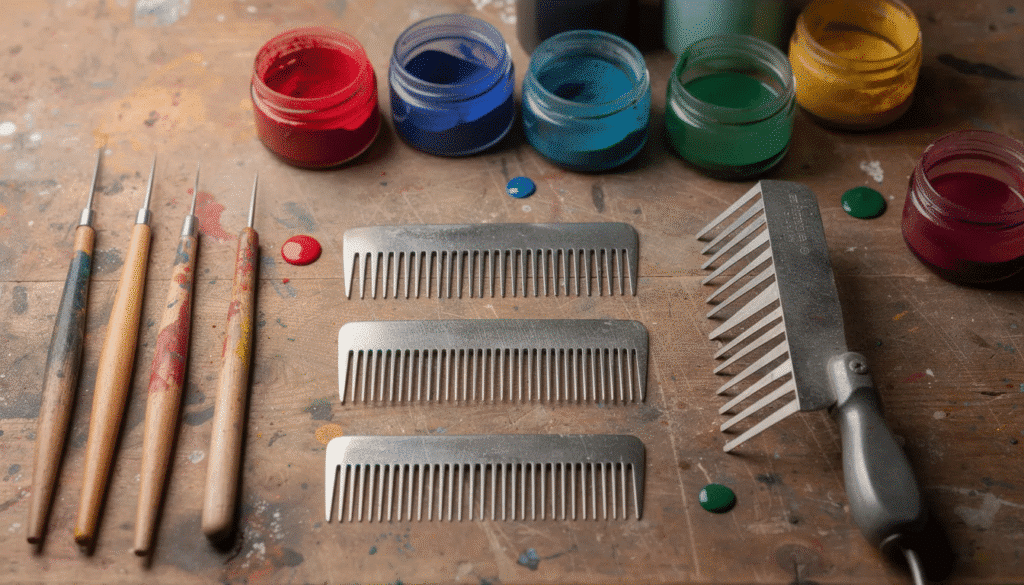
Marbling Tools
Standard French marbling tools include:
- Styluses: Used for creating individual swirls and the characteristic French curl.
- Combs: Equipped with finely spaced teeth for shell patterns and delicate veining.
- Rakes: Feature wider spacing for bolder linear effects.
- Simple rods: Utilized for dragging colours across the bath surface.
French comb spacing typically creates finer, denser lines than some Italian or German traditions, producing the tight, controlled patterns that define the French manner of marbling.
Paper Preparation
Paper preparation involves selecting sheets of appropriate weight—commonly 90-120 gsm—that have been sized and often treated with aluminum sulfate (alum) to improve colour adhesion. This mordanting process, applied 1-2 hours before marbling, ensures the pigments bond permanently to the paper surface.
Standard formats include 50 x 65 cm short-grain sheets favoured by bookbinders, though sheet size varies according to intended use. The paper is gently laid onto the bath, where it absorbs the floating design in seconds, then lifted and rinsed if needed before drying.
Machine-Assisted Marbling
Modern machine-assisted French marbling can vary drop size and comb motion automatically, generating unique sheets without repeating patterns. While machinery speeds production, the essential process remains hand-guided, distinguishing quality French marbling from purely industrial printed alternatives.
Characteristic French Marbled Patterns
French marbled paper is often recognized by its specific named patterns and the distinctive way colours are layered and combed. These patterns developed over centuries, each requiring particular techniques and tools to achieve their characteristic appearance.
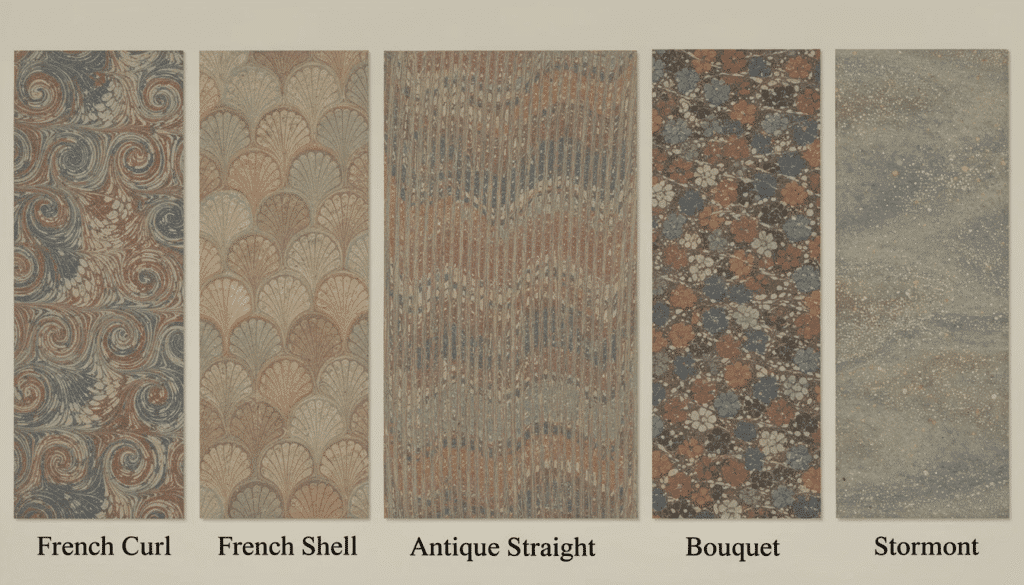
French Curl (Tourniquet)
- Created using spiral movements with a stylus after colours are dropped onto the bath
- The final dominant colour is often mixed with oil to form characteristic white outlines
- Centres tend toward darker tones while edges lighten
- Dating to early 18th-century Paris, this pattern mimics natural marble veins
French Shell
- Achieved using finely spaced combs drawn in wavy, undulating motions
- Produces shell-like repeats across the sheet
- Requires consistent hand pressure and rhythm
- Typical of high-quality French endpapers from the 18th and nineteenth century
Antique Straight
- Linear, combed patterns running lengthwise across the sheet
- Created by drawing a comb in one direction without additional manipulation
- Often appears in muted, antique colourways
- Popular for legal documents and formal bindings
Bouquet
- Floral, clustered spots formed from controlled drop placement
- Drops are positioned deliberately rather than randomly sprinkled
- May incorporate multiple colour layers
- Creates a decorative effect suited to luxury packaging and gifts
Stormont Pattern
- Speckled, clouded veining achieved through additional sprinkling
- Chemical dispersants create characteristic spread and mottling
- Named after the Stormont variation popular in Britain and France
- Environmental issues with some traditional dispersants have led to modern alternatives
Scale and Variation
The character of any pattern changes dramatically based on:
- Drop size: Fine drops create delicate, detailed patterns; bold drops produce dramatic effects
- Ox gall concentration: Higher concentrations cause colours to spread more widely
- Colour layering: Additional colours can form subtle variations like “Zebra” or dense antique finishes
Double and overprinted marbles involve marbling a sheet, allowing it to dry, then adding a second marbled or printed layer. This technique heightens contrast or introduces secondary motifs, creating papers of exceptional complexity.
French Marbled Paper in Bookbinding and Decorative Arts
Applications in Books
From the seventeenth to nineteenth centuries, French marbled paper became a hallmark of French bookbinding. Master binders in Paris established conventions that spread throughout Europe, making marbled endpapers nearly essential for quality book production.
French marbled paper served multiple roles in traditional bookbinding:
- Pastedowns and free endpapers in literary and legal volumes
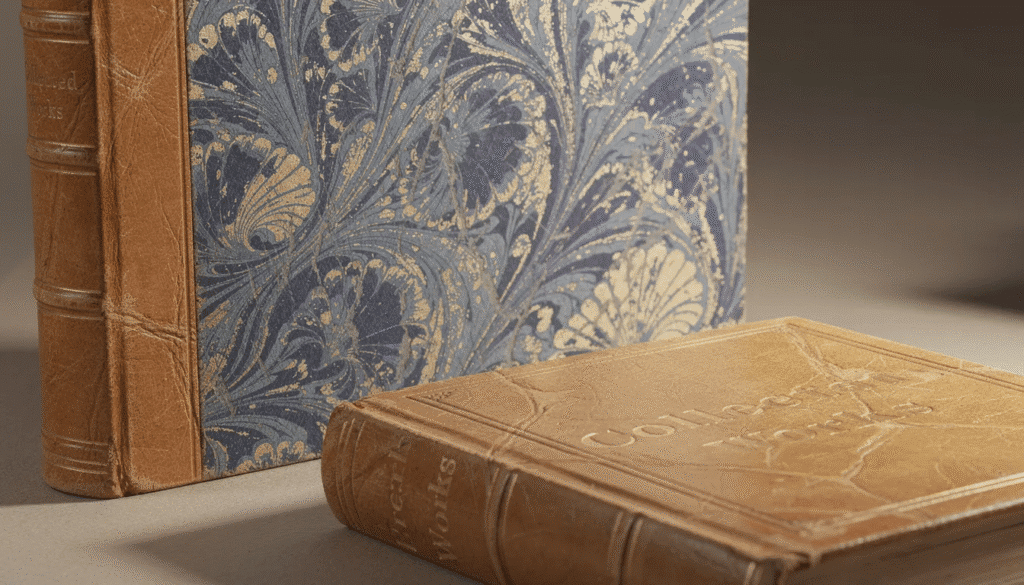
- Covered boards on half-calf and quarter-leather bindings
- Decorative slipcases and portfolios protecting valuable books published in limited editions
- Archival boxes in libraries and private collections
Historically typical pairings included tan or red calf spines with blue-and-white or red-and-black French marbled sides—combinations that appeared throughout France, Germany, and London binding houses.
Beyond Books
French workshops produced marbled papers for numerous applications beyond bound volumes:
- Luxury stationery and letter papers
- Hat boxes and decorative packaging
- Document folders and ledger covers
- Writing desk interiors and drawer linings
- Decorative edges for journals and notebooks
These uses extended the reach of French marbling into everyday objects, bringing the art form into domestic spaces.
Conservation Today
Conservators working on 18th- and 19th-century French books actively seek historically accurate French marbled papers to repair or rebind damaged volumes. Accurate reproduction requires matching not only patterns but also paper weight, colour chemistry, and surface finish. This demand has supported contemporary artisan production oriented toward restoration needs.
Collecting and Using Antique and Contemporary French Marbled Paper
Identifying Older French Marbled Paper
Genuine antique French sheets from the 18th and 19th centuries hold particular appeal for collectors, binders, and collage artists. The patina, colour depth, and historical significance of original papers create a detail and character impossible to replicate exactly.
When evaluating potentially antique sheets, consider:
Feature | Typical Characteristics |
|---|---|
Paper weight | Usually 90-110 gsm, with noticeable hand-formed texture |
Watermarks | May show maker’s marks or mill identification |
Colour palette | Earth tones, muted hues consistent with period pigments |
Pattern style | Recognizable French patterns with period-appropriate execution |
Surface condition | Possible age-related darkening or foxing |
Paper laid down in books published before 1850 often shows distinctive chain lines from hand-made production methods. |
Purchasing Options
Contemporary collectors and craftspeople can purchase French marbled paper through several channels:
- Single antique sheets or small lots: Individual hand-marbled French papers from the 1800s, often sold as unique art papers in sizes around 10 x 7.75 inches
- Contemporary artisan production: New sheets on standard formats such as 50 x 65 cm, typically in the 100 gsm range
- Specialist dealers and auction houses: For rare or exceptional antique examples
- Online marketplaces: Where both antique and contemporary options appear, though authenticity review is essential
Practical Uses Today
French marbled paper serves numerous contemporary purposes, and understanding the best types of paper for craft and their uses helps makers choose suitable substrates for each project:
- Covers for handmade journals and notebooks
- Decorative boxes and portfolio cases
- Framed wall art and interior decoration
- Printmaking substrates and mixed-media drawings
- Book repair and conservation projects
When working with irreplaceable antique sheets, exercise particular care. Consider whether the intended use justifies consuming a historical material.
Maintenance and Preservation
To protect marbled surfaces:
- Store flat or loosely rolled, away from strong light
- Avoid humidity extremes that can cause cockling or mould
- Use archival paste and adhesives when mounting or binding
- Handle with clean, dry hands or cotton gloves
- Never fold or crease valuable sheets
Note: Lightweight or damaged antique papers may benefit from professional conservation before use in new projects.
Checklist: What to Look for When Buying French Marbled Paper
- Confirm paper weight suits intended application (90-120 gsm typical)
- Verify pattern authenticity against known French examples
- Assess colour condition—fading may indicate age or poor storage
- Check for tears, losses, or previous repairs
- Consider whether sheet size meets project requirements
- Review seller reputation and return policy
- Request images showing surface detail and any watermarks
Contemporary Production, Catalogues, and Digital Access
Modern makers and suppliers offer curated ranges of French-style marbled papers designed specifically for book covers, boxes, and craft projects. These papers typically maintain traditional weights around 100 gsm while ensuring consistent quality that workshop users can depend upon.
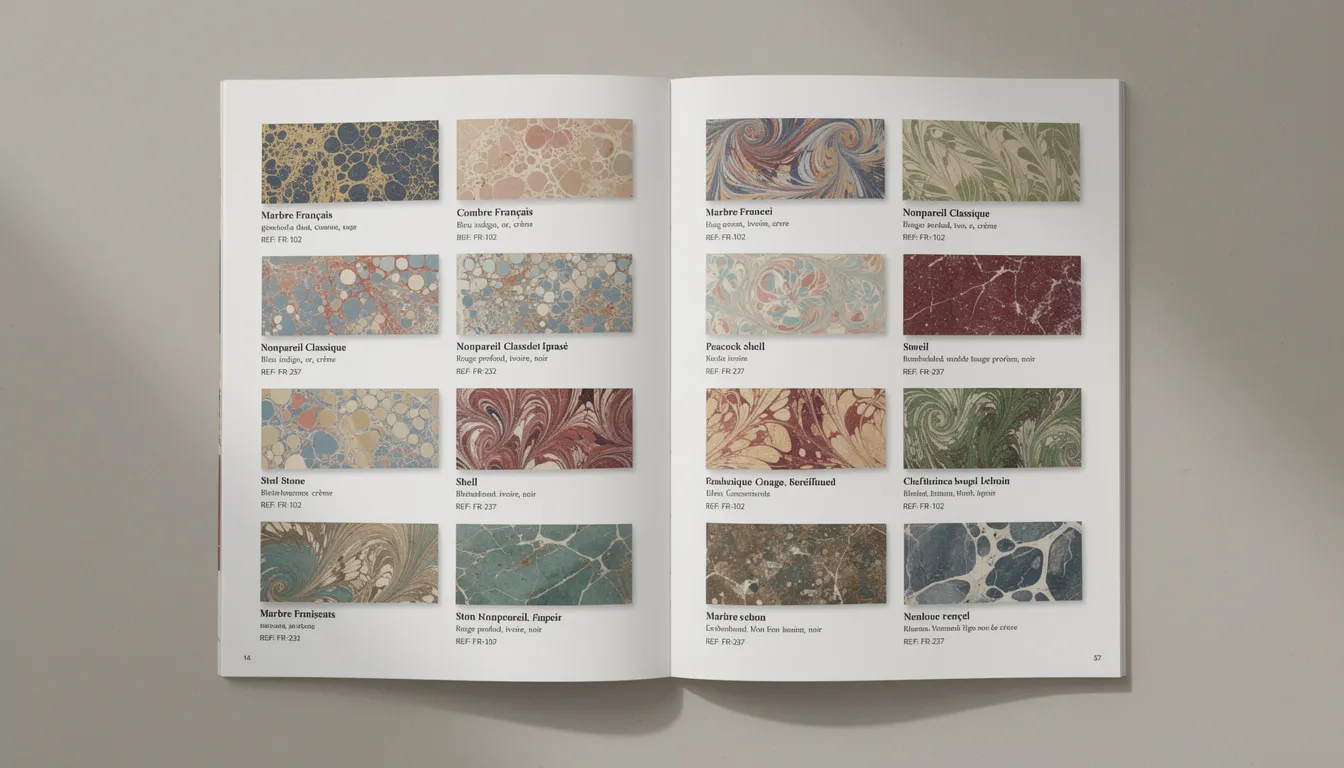
Comprehensive catalogues present hundreds of decorated and marbled designs, organised by pattern type and colour family for easy selection. A typical catalogue might include sections for French Curl variations, shell patterns, Stormont derivatives, and contemporary interpretations, each with technical specifications and ordering codes.
Many catalogues are now available as downloadable PDFs alongside printed booklets for studios and workshops. Digital catalogues often include links to online product pages where specific French patterns or colourways can be ordered directly. This combination of print and digital access has made it easier than ever for binders, designers, and artists to find exactly the papers they need.
Beyond marbled sheets, related bookbinding items frequently appear in supplier catalogues—sewing thread, awls, board materials, and specialty tools. While availability may fluctuate with production schedules and material sourcing, established suppliers maintain core offerings that support traditional craftsmanship.
Catalogue Feature | Benefit |
|---|---|
Pattern organisation | Quick identification of desired style |
Colour swatches | Accurate colour matching for projects |
Technical specifications | Weight, size, and material information |
Ordering codes | Efficient purchasing and reordering |
Bibliography and essays | Historical context and technique guidance |
 |
Whether you are restoring an 18th-century bound volume, creating contemporary journals, or simply appreciating the art form, French marbled paper offers timeless elegance derived from centuries of refined technique. The combination of historical significance, technical sophistication, and visual beauty ensures this craft continues to find new admirers and practitioners.
Begin exploring by visiting museum collections where original examples appear, seeking out catalogues from established suppliers, or connecting with the growing community of contemporary marblers who keep these traditions alive. The surface of a well-marbled sheet holds not just pigment and pattern, but the accumulated knowledge of generations of masters who perfected this remarkable art form free from shortcuts or compromise.