
There’s something unexpectedly powerful about receiving a physical postcard in 2026. While texts vanish into notification streams and emails pile up unread, a postcard arrives as a tangible surprise—something your friend can hold, read slowly, and pin to their fridge for months. This guide walks you through every step of choosing, writing, stamping, and mailing postcards to friends and family, whether you’re sending from across town or across the world.
- Introduction to Postcards
- Why Sending a Postcard to a Friend Still Matters
- Step 1: Choose the Perfect Postcard
- Step 2: Gather Stamps and Check Postage
- Step 3: Write a Short, Memorable Message
- Step 4: Address and Stamp Your Postcard Correctly
- Step 5: Mail Your Postcard (At Home or Abroad)
- Tracking and Delivery: What Happens After You Mail It
- Common Mistakes to Avoid
- Postcard Etiquette
- Extra Ideas to Make Your Postcard Even More Special
- Conclusion
Introduction to Postcards
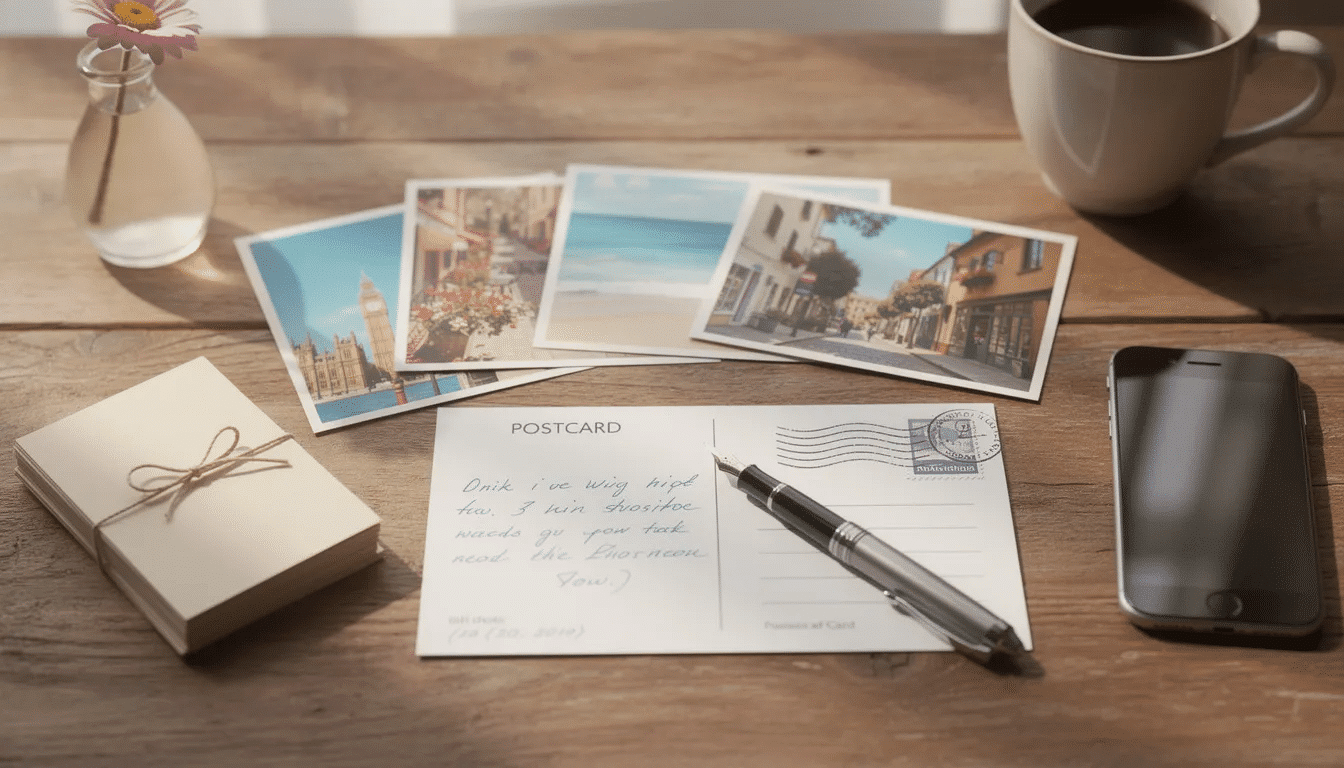
Postcards are more than just a rectangular piece of paper—they’re a classic, creative way to send short messages through the mail and connect with friends and family across the world. Whether you’re traveling, celebrating a special occasion, or simply want to brighten someone’s day, postcards offer a fun and personal touch that digital messages can’t match.
In today’s fast-paced, digital-first world, receiving a handwritten postcard stands out as a thoughtful gesture. You can personalize your message, share your own photos, or choose a design that reflects your personality or the local landmarks of your city. The postal service makes it easy to send postcards almost anywhere, whether you’re reaching out to loved ones or using postcards for business promotions.
Sending postcards is also cost-effective. For just the price of a stamp and a card, you can create a memorable moment for someone special. Businesses often use postcards as a perfect solution for marketing, while families and friends use them to stay in touch, share travel stories, or celebrate milestones. No matter the occasion, postcards are a simple, affordable, and enjoyable way to communicate—one that brings a little extra joy to both sender and recipient.
Why Sending a Postcard to a Friend Still Matters
In an era where you can message anyone instantly, taking the time to send a postcard to a friend communicates something different. It says you thought about them while standing in front of the Eiffel Tower in July, or during a quiet moment at a roadside diner on a weekend road trip through the Southwest. That rectangular piece of paper carries weight that a text simply cannot replicate.
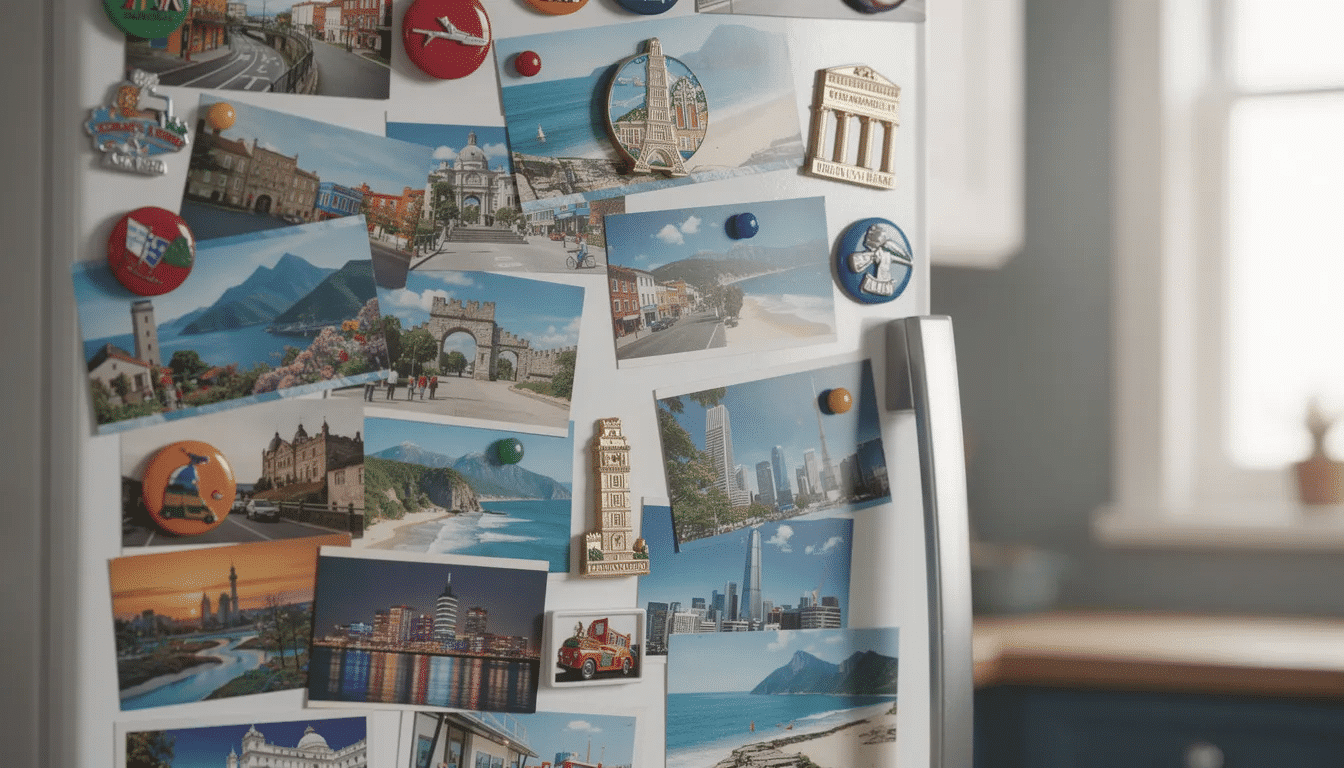
The emotional benefits are real and measurable. Research suggests that physical mail creates a stronger emotional connection than digital messages—some studies indicate tangible correspondence boosts feelings of closeness by 20-30% compared to electronic alternatives. Your friends pin postcards from that 2018 trip to their bulletin boards or stick them on refrigerator doors with magnets, where they stay visible for years. Postcards become keepsakes in a way that Instagram stories never will.
This article will walk you quickly through the entire process: picking the right postcard, gathering stamps and checking postage, writing a short but memorable message, addressing everything correctly, and finally dropping it in the mail. Whether you’re mailing domestically within the U.S. or sending internationally to Europe or Asia, you’ll have everything you need to make it happen.
Step 1: Choose the Perfect Postcard
Finding the perfect postcard is half the fun. You have more options than you might think, both in the real world and through creative alternatives at home.
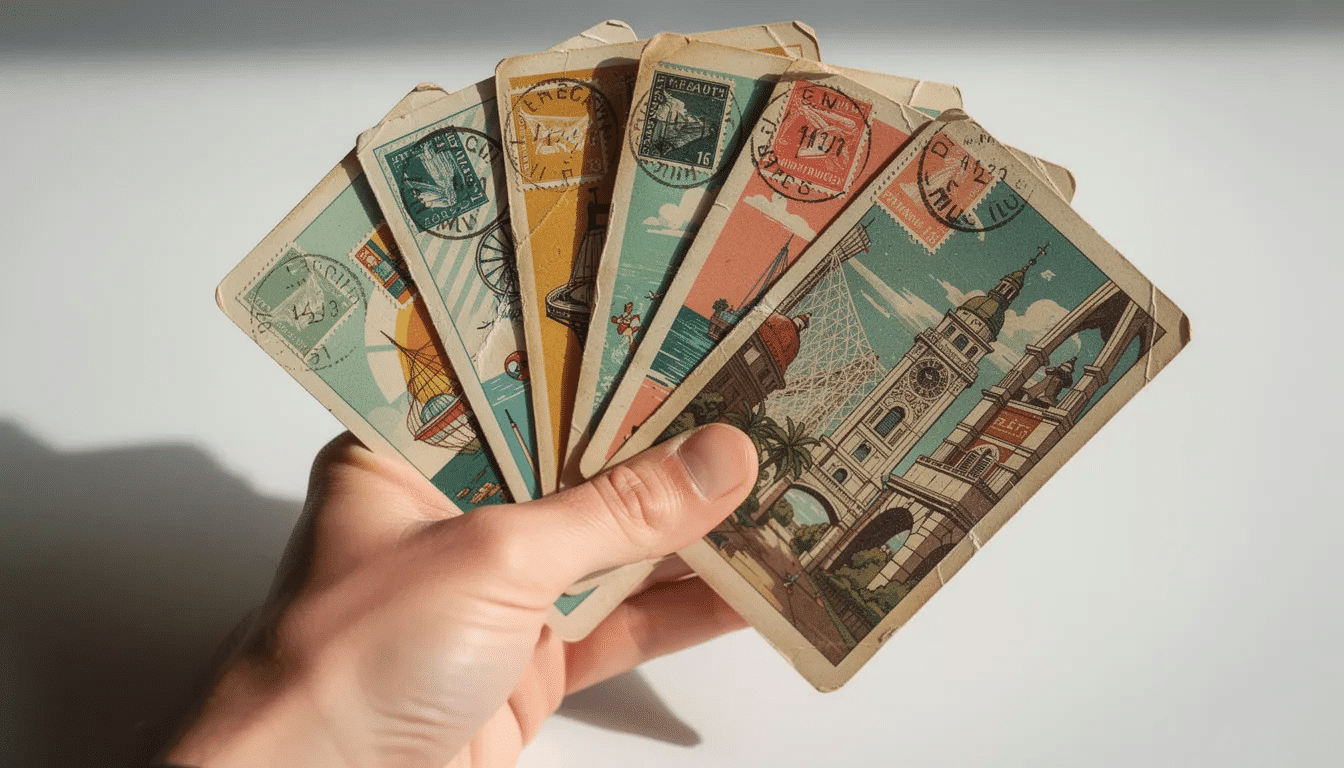
Start with the obvious spots when you’re traveling. Souvenir stands near local landmarks almost always stock postcards featuring the Golden Gate Bridge in San Francisco, the Empire State Building in New York City, or beach scenes from Miami in August. Museum gift shops often carry higher-quality cards with art reproductions or architectural photography. Gas stations at highway rest stops, supermarkets, and even your local post office frequently have rotating racks of regional post cards that capture the character of a place.
If you want something more personal, consider designing your own postcard at home. Many online services and apps allow you to upload your own design for a personalized touch. Using a computer and basic design software, you can upload your own photos from that hiking trip or dinner party and create a custom card. You can also choose from a variety of font styles to enhance your postcard’s look. Print on sturdy photo paper or card stock, keeping the standard postcard size in mind—4 x 6 inches is common in the U.S., while A6 (about 4.1 x 5.8 inches) works internationally. Many online services also let you upload images and have them print and deliver finished cards to you. You can access these platforms from any device connected to the internet, making it easy to create and order postcards from anywhere. Some sites and apps offer free design elements or even free shipping for your postcards. For added convenience, you can order postcards directly through their site or app.
When selecting an image, think about what will resonate with your friend. A cityscape works well for urban trips, but a photo of that ridiculous plate of spaghetti you ate might spark more joy. Funny illustrations that reference an inside joke often become treasured keepsakes. To make your card even more personal, consider using stickers as a creative way to decorate your postcard. The goal is choosing something that feels like a message itself, even before you write a word.
One practical note: check your country’s postal regulations for minimum and maximum postcard sizes. In the U.S., postcards must generally be at least 3.5 x 5 inches and no larger than 4.25 x 6 inches to qualify for the lower postcard postage rate. Cards outside these dimensions may require additional postage at the letter rate or higher.
Step 2: Gather Stamps and Check Postage
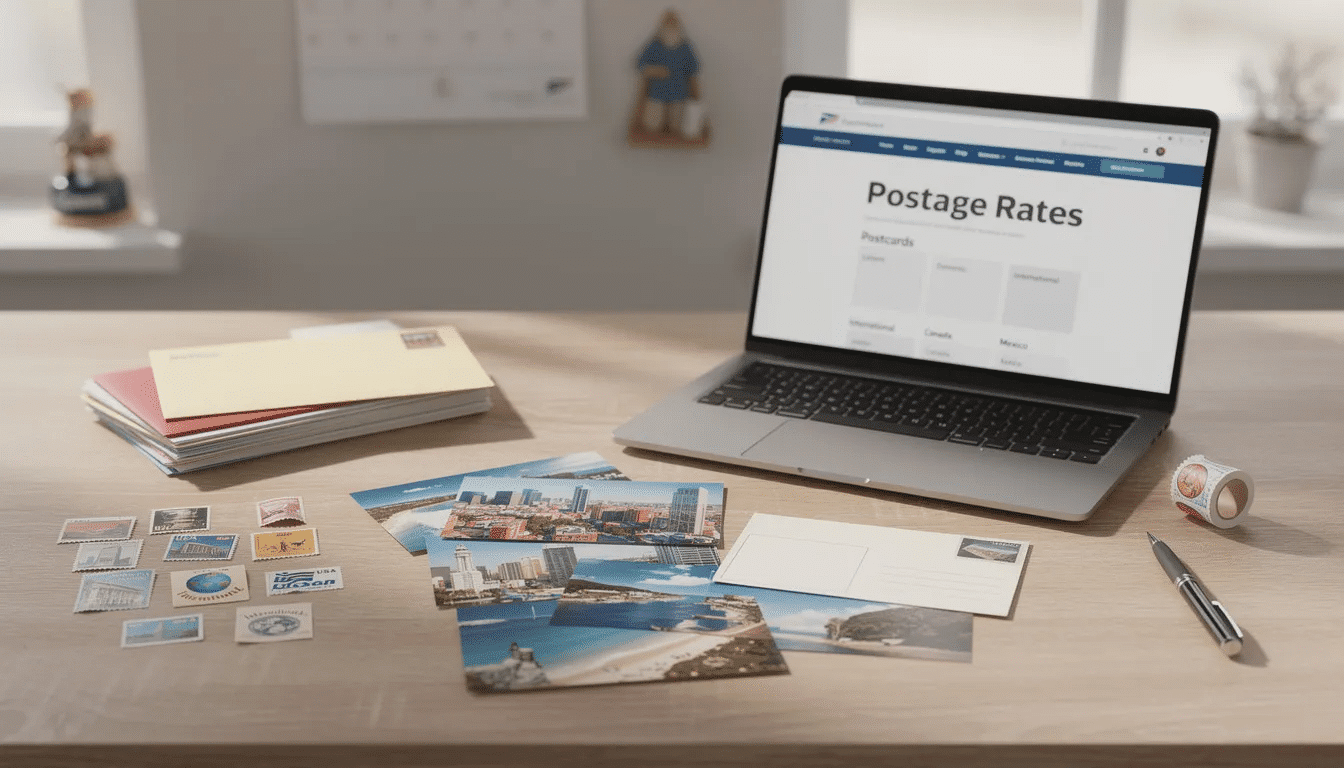
Getting the right postage is essential before you mail anything. A few minutes of preparation here saves the frustration of having your card returned or delayed.
Postcard postage typically costs less than letter postage because postcards are thinner and lighter. In the U.S., a domestic postcard stamp is usually a few cents cheaper than a standard letter stamp. The exact cost changes periodically, so check the postal service website for current rates before you buy stamps. This small price difference adds up if you send postcards regularly from trips or as part of a birthday tradition.
You can buy stamps at several convenient locations. The post office counter is the most obvious option, but self-service kiosks inside post offices work just as well and often have shorter lines. Supermarkets, drugstores like CVS or Walgreens, and some convenience stores sell stamps too. For the most accurate pricing and specialty stamps—like international postage—the official postal website lets you purchase and print stamps at home.
The difference between domestic and international postage matters significantly. Mailing a postcard from Chicago to Toronto costs more than mailing within the U.S., and sending from Chicago to Berlin costs more still. Check the current international postcard rate for your destination country before you stamp your card. Rates vary by region, with separate pricing tiers for Canada, Mexico, and other international destinations.
If you don’t have a single stamp with the exact international value, you can combine multiple stamps as long as the total meets or exceeds the required amount. Just make sure all stamps fit in the upper right corner without overlapping the address area. The post office won’t reject a card with three smaller stamps adding up to the correct postage. If your postcard is unusually shaped, delicate, or made from special materials, consider mailing it in an envelope to protect it during transit and ensure it meets USPS processing requirements.
Consider keeping a small sheet of postcard-rate stamps in your travel wallet or passport holder. Having stamps ready means you can send cards spontaneously from trips or weekend getaways without hunting for a post office in an unfamiliar city.
When mailing your postcard at the post office, you can request a hand cancel at the counter to ensure your stamp receives a clear postmark on the day of mailing. This is especially useful if you want proof of mailing or to preserve the postmark for your records.
Step 3: Write a Short, Memorable Message
The limited space on a postcard is actually a gift. It forces you to distill your thoughts into something vivid and personal rather than rambling. A few well-chosen sentences beat a page of generic travel descriptions every time.
Focus your handwritten message on one or two specific details from your day. Instead of writing “Having a great time in Europe,” try “I biked along the Amsterdam canals this morning and nearly fell in when a duck startled me.” Concrete moments stick in your friend’s memory. “We tried street tacos in Los Angeles last night at 11 PM” tells a story in a single sentence.
A simple structure works well for most postcards. Start with a greeting using your friend’s name. Follow with two to four sentences about where you are or what you’re doing. Add one warm thought directed at your friend specifically. Close with your name and the date. This formula keeps your note focused without feeling formulaic.
Here’s an example of what that might look like: “Hey Sarah, I’m sitting in a tiny café in Tokyo watching cherry blossoms drift past the window. Yesterday I got lost for an hour in Shibuya and ended up finding the best ramen of my life. Thinking of you and that ramen place we used to hit after late shifts. Miss you! — Jake, April 14”
Make your personal message feel specific by mentioning a shared memory or future plan. Phrases like “Can’t wait to bring you here next summer” or “This reminded me of that trip we took in college” transform a generic greeting into something meaningful. Your friend should feel like this card was written only for them.
One practical tip: use a pen that doesn’t smudge easily, like a fine-point ballpoint. After writing your message on the other side of the postcard (the side opposite the image), let any ink dry for a few seconds before flipping the card over to address it. Nothing ruins a perfect postcard like a smeared message.
Step 4: Address and Stamp Your Postcard Correctly
Getting the layout right ensures your postcard actually reaches your friend. The format has been standardized since 1907, when postal services introduced the divided back design that separated the message area from the address area.
The standard layout places the picture on the front and everything else on the back. The back is divided into two halves. The left side holds your message. The right side is reserved for the recipient’s address and the stamp. This division exists because postal sorting machines need clear access to the address without interference from your handwriting.
Write your friend’s address on the right half of the back, using neat block letters for maximum legibility. Include the full name, street address, city, state or province, postal code, and country for international cards. Place the stamp in the top right corner, making sure it doesn’t overlap with any part of the address. Postal machines scan this area, and a stamp covering address text can cause delays.
For example, if you’re sending from London to a friend in Austin, Texas, your address block might look like this:
Jane Smith 1234 Oak Street, Apt 5B Austin, TX 78701 USA
Leave a small margin at the bottom of the address area. Postal services often print barcodes or routing marks in this space during processing. Writing too close to the bottom edge risks having your text obscured.
At the top of your message area on the left hand side, consider writing the date and city where you’re sending from. This small detail helps the recipient know exactly when and where you wrote the card, which becomes meaningful when they look back at it years later.
Don’t forget to add your return address if there’s space, typically in the upper left corner of the address side or worked into your message. This ensures the card comes back to you if delivery fails for any reason.
Step 5: Mail Your Postcard (At Home or Abroad)
Once your card is written, addressed, and stamped, mailing it takes only a minute. The process is simple whether you’re at home or traveling in an unfamiliar country.
In your home country, you have several options for outgoing mail. Drop your postcard into any official street mailbox—in the U.S., these are the blue collection boxes found on street corners and near post offices. You can also hand it directly to a clerk at the post office counter, which gives you a chance to confirm your postage is correct. Many apartment buildings and workplaces have designated outgoing mail areas where postal carriers collect letters and postcards daily.
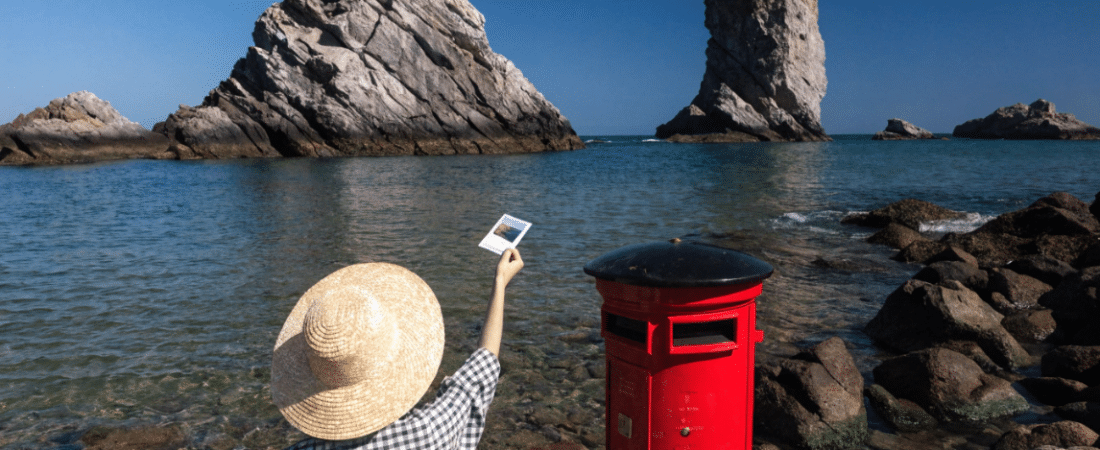
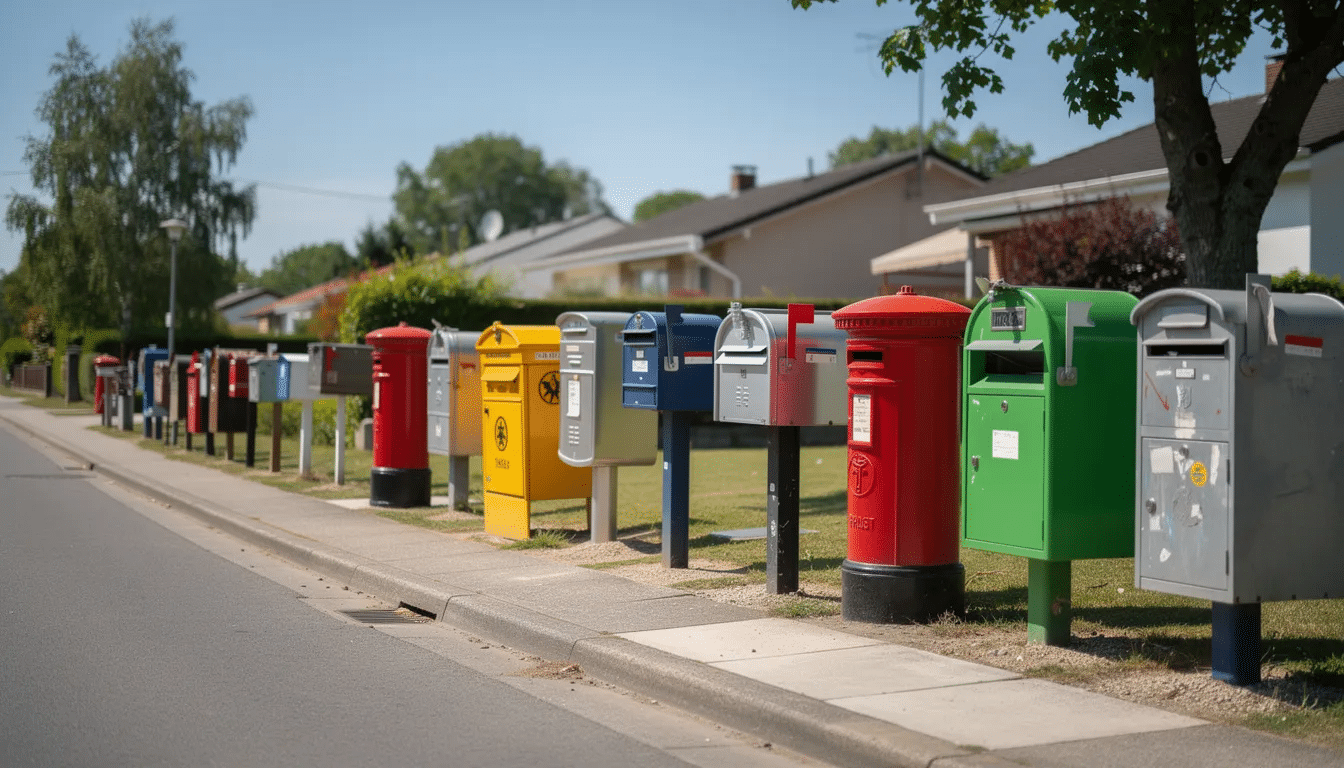
Mailing while traveling abroad requires a bit more attention but remains straightforward. Look for official post boxes, which vary by country: blue in the United States, red in the United Kingdom, yellow in Germany, green in Ireland. When in doubt, ask your hotel or hostel reception—they often sell stamps and can direct you to the nearest mailbox or central post office. In major cities, the main post office is usually located near the city center and handles international mail efficiently.
Set realistic expectations for delivery times. Domestic cards within the same country typically arrive within three to five business days. International postcards take longer—expect one to two weeks for most destinations, though cards to remote areas or during busy seasons like December can take three weeks or more. The postal service prioritizes speed, but international mail passes through multiple sorting facilities and customs checkpoints.
Before you drop your card in the mailbox, take a quick photo of the written side with your phone. This lets you remember what you wrote and can spark a fun follow-up conversation when your friend receives it. You can also use the photo as proof you sent the card if it somehow gets lost in transit.
Double-check your postage and address one final time at the mailbox or counter. Confirm the stamp value matches the destination, verify you spelled your friend’s name correctly, and make sure the postal code is accurate. This quick review takes ten seconds and can save weeks of wondering why your friend never mentioned receiving your card.
Tracking and Delivery: What Happens After You Mail It
Once you drop your postcard into the mailbox or hand it over at the post office, the postal service takes over. Your postcard joins the outgoing mail and is whisked away to a local processing facility, where it’s sorted alongside letters and packages. From there, it’s routed to its destination city, making its way through a network of post offices and delivery trucks until it finally lands in your recipient’s mailbox.
While most postcards travel without tracking, some postal services offer tracking options for an additional fee—especially useful for business mailings or important occasions. For standard postcards, you’ll usually have to trust the process, but rest assured that the postal service handles millions of postcards every year with impressive efficiency.
Delivery times can vary. Domestic postcards typically arrive within 3-5 business days, while international mail may take 7-10 business days or longer, depending on the country and postal service. To avoid delays, always double-check that your postcard is properly addressed and stamped. If you’re ever unsure about delivery times or want to explore tracking options, your local post office or postal service website is the best place to get up-to-date information.
Common Mistakes to Avoid
Even the most heartfelt postcard can go astray if you overlook a few key details. One of the most common mistakes is using insufficient postage—if your card doesn’t have the right stamp or needs additional postage due to its size or weight, it may be delayed or returned by the postal service. Always check the current rates and requirements before you mail.
Incorrect addressing is another frequent pitfall. Make sure you write the recipient’s full address clearly, including any apartment numbers, postal codes, and country for international mail. Double-check for typos or missing information to ensure your postcard reaches the right mailbox.
Avoid using old or expired stamps, as they may no longer be valid for postage. If you’re sending a postcard that’s larger or heavier than standard, check with the postal service to see if you need to pay extra. By taking a moment to review these details, you’ll help your postcard travel smoothly and arrive right on time.
Postcard Etiquette
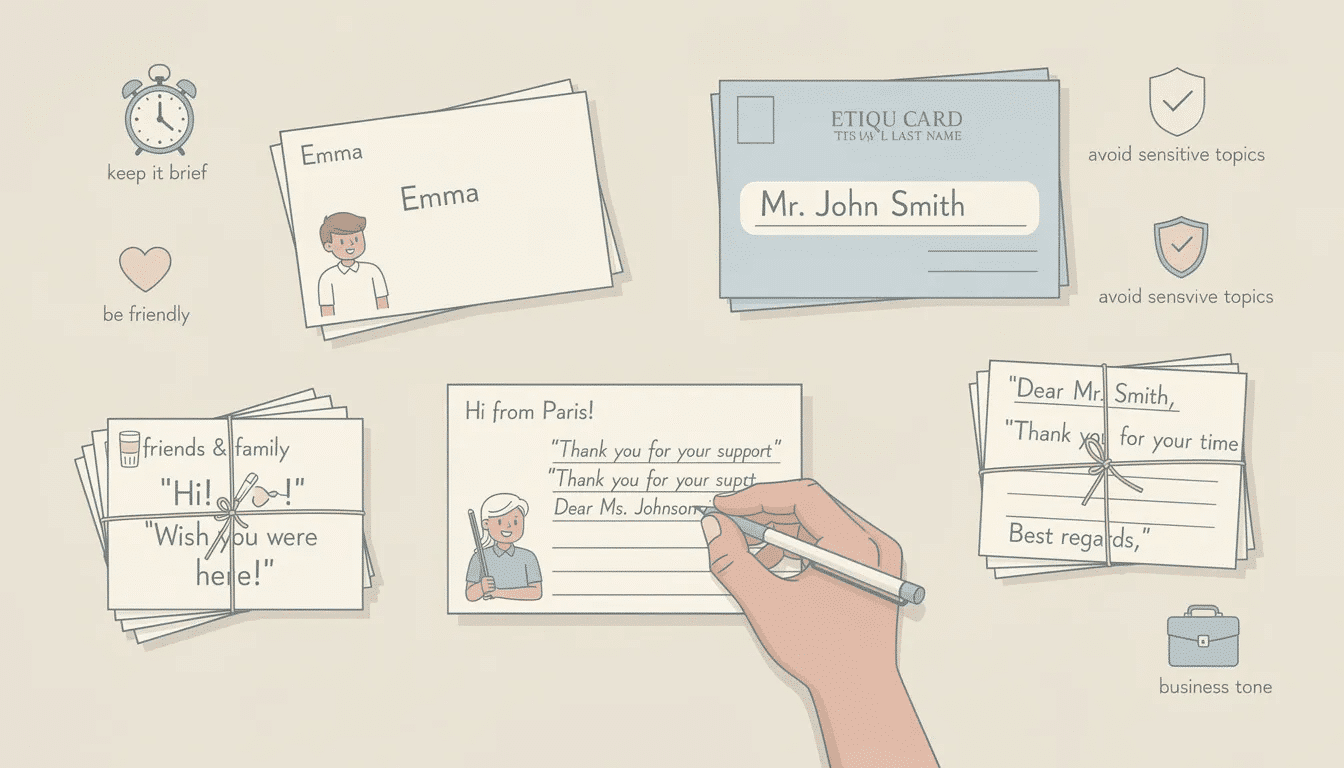
Sending postcards is all about making a positive impression, so a little etiquette goes a long way. Start by considering your recipient—keep your message concise, friendly, and appropriate for the occasion. Avoid sensitive or overly personal topics, especially if you’re unsure who else might see the card.
When addressing your postcard, use the recipient’s title and last name if it’s for business or a formal occasion. For friends and family, a first name is usually perfect. Tailor your message to the reason you’re sending the card—whether it’s a quick hello, a thank you, or a business update, make sure your words fit the moment.
For business postcards, keep your message professional and focused on your intended purpose. A well-crafted note can leave a lasting impression, whether you’re reaching out to clients, colleagues, or loved ones. By following these simple etiquette tips, you’ll ensure your postcard is both well-received and remembered.
Extra Ideas to Make Your Postcard Even More Special
With the basics covered, here are some creative touches that transform a nice gesture into something truly memorable.
Add a small doodle or sketch somewhere on the card. It doesn’t need to be artistic—a simple palm tree for a beach town, a tiny mountain peak for an alpine village, or even a stick-figure version of yourself waving works perfectly. These personal illustrations make your card feel handmade and one-of-a-kind, even if you bought it from a souvenir rack.
Write a specific question or prompt for your friend to answer. Something like “What city should we visit together next year?” or “When was the last time you tried something totally new?” invites a response and keeps the conversation going beyond the single card. Your friend might even send a postcard back, starting a collection of correspondence between you.
Always date and sign your postcard clearly. Include the month, day, and year, along with the city name. When your friend looks at that card five or ten years from now, they’ll appreciate knowing exactly when you sent it. These details transform a nice note into a time capsule.
Consider turning postcard-sending into a shared tradition with friends and family or pairing it with other meaningful paper gifts for every occasion. Mail a card every birthday, from every major trip, or on the first day of each new year. Traditions create anticipation and deepen relationships over time. Some people even start a collection of all the postcards they receive, creating a visual record of their friendships across years and places.
If you take a photo of your postcard before sending it, you can also share the image on Facebook to let more friends see your message or travel memories.
The best postcard isn’t necessarily the one with the most amazing view or the perfect design. It’s the one you actually write and mail. Pick one friend today—someone you’ve been meaning to connect with, someone who would smile finding unexpected mail in their box—and send them a card from wherever you are right now. It takes five minutes, costs less than a cup of coffee, and creates something they might keep for years. That’s a pretty good return on a simple rectangular piece of paper and a stamp.
Conclusion
Sending a postcard is a simple yet powerful way to connect with friends and family or reach out for business. By following the steps in this guide—choosing the right postcard design, crafting a thoughtful message, addressing it correctly, and using the right postage—you can create a memorable experience for your recipient.
Avoid common mistakes like insufficient postage or incorrect addressing, and always keep postcard etiquette in mind to ensure your message is appreciated. Whether you’re sharing travel adventures, celebrating milestones, or promoting your business, postcards offer a cost-effective and fun way to communicate.
So pick out the perfect postcard, add your personal touch, and send a little happiness through the mail. It’s a small gesture that can make a big difference—one that your friends, family, or business contacts will remember long after the card arrives.