
Rice paper for decoupage is a thin, lightweight material made from plant fibers like mulberry, specifically designed for crafting applications where it gets glued onto surfaces and sealed with varnish. Since around 2010, it has become incredibly popular among crafters in Europe and the US, driven by the rise of DIY home decor trends, furniture upcycling movements, and the accessibility of online craft supplies.
This guide answers the most common questions quickly: what rice paper actually is, how it differs from napkins and tissue, and how to use it successfully on wood, glass, and furniture. Modern printed decoupage rice papers come in stunning themes like vintage florals, French typography, animals, Christmas motifs, and shabby chic designs that inspire creativity in every project.
What makes rice paper special is its semi-transparent and lightweight nature, typically weighing just 25–30 g/m². This thinness helps achieve almost wrinkle-free results compared to thicker scrapbook paper, while its fibrous structure provides flexibility that lets it conform to curves and “melt” into glue layers seamlessly.
- Crafters report up to 80% fewer bubbles and creases when using rice paper over napkins
- Semi-transparency allows underlying painted surfaces to show through, creating depth without bulk
- Vibrant colors stay true after sealing due to fade-resistant pigments
- Ideal for both beginners working on small trays and advanced crafters tackling large furniture pieces
- Easy to handle, cut, and position compared to fragile tissue paper
- What Is Decoupage and How Does Rice Paper Fit In?
- Why Choose Rice Paper for Decoupage?
- Types, Sizes, and Styles of Rice Paper for Decoupage
- How to Use Rice Paper for Decoupage: Step‑by‑Step
- Best Glues, Mediums, and Finishes for Rice Paper
- Techniques for Wrinkle‑Free, Professional‑Looking Results
- Working with Rice Paper on Different Surfaces
- Common Mistakes and How to Avoid Them
- Inspiration: Project Ideas with Rice Paper for Decoupage
- Caring for and Protecting Finished Decoupage Pieces
- Where to Buy Rice Paper for Decoupage and What to Look For
- Conclusion
What Is Decoupage and How Does Rice Paper Fit In?
Decoupage, derived from the French word “découper” meaning to cut out, is the art of gluing printed paper onto objects like boxes, trays, frames, and furniture, then sealing them with varnish for a smooth, professional finish. The craft has roots going back to 17th-century Europe, where Venetian artisans imitated scarce Chinese lacquerware by pasting colored engravings onto furniture and applying multiple layers of varnish, much like today’s crafters experiment with different types of paper for craft projects.
Rice paper is a specific type of decoupage paper made from plant fibers, often mulberry or kozo, valued for its exceptional strength-to-weight ratio and remarkable thinness. Unlike paper napkins that fray easily or tissue that tears during glue application, rice paper maintains its integrity while remaining flexible enough to wrap around curved surfaces.
Consider these practical examples: decorating a 30×40 cm wooden tray with baroque florals, transforming glass bottles with coastal motifs, covering MDF boxes with vintage typography, or giving upcycled cabinet doors a completely new look with coordinated botanical prints.
- Superior durability compared to tissue paper, which tears easily when wet
- Thinner than scrapbook paper (120–200 g/m²), preventing bulk and wrinkles on curves
- Better adhesion on porous wood surfaces due to natural absorbency
- Resists color bleeding, unlike napkins that often run when wet
- Works seamlessly on non-porous glass when surfaces are properly degreased
Why Choose Rice Paper for Decoupage?
The primary allure of rice paper lies in its semi-transparent quality and flexible, fibrous composition. Colors printed with UV-resistant inks maintain their vibrancy through multiple varnish layers without yellowing, and the material’s moldability prevents wrinkles and bubbles by stretching minimally when wet.
High-quality printed rice papers at 25–30 g/m² hit the sweet spot: thick enough to handle glue without disintegrating, yet thin enough to virtually disappear into the surface. This makes them ideal for both small crafts and ambitious furniture makeovers where you want that hand-painted, lacquer-like appearance.
- Semi-transparency allows base colors to influence final hues, creating depth
- Flexible fibers resist tearing during application and smoothing
- Fewer wrinkles and bubbles compared to thicker materials
- Easier positioning on curved surfaces like vases, jars, and ornaments
- Better blending with painted backgrounds using white or pastel acrylics
- Perfect for furniture makeovers including wardrobe doors and drawer fronts
- Works beautifully on Christmas ornaments, journal covers, and mixed-media canvas projects, fitting naturally into inspiration-focused paper crafting platforms
- Reduces preparation time by 50–70% compared to repositioning napkins
Types, Sizes, and Styles of Rice Paper for Decoupage
Rice paper comes in standardized sizes tailored to common project scales, along with a huge range of designs that elevate any crafting project. Understanding the options helps you choose the right stock for your specific needs and how it can work alongside top craft paper supplies for creative projects.
- A4 (21×29.7 cm) works well for small frames, boxes, and journal covers
- A3 (29.7×42 cm) suits medium trays and decorative panels
- 30×40 cm is popular for cabinet doors and larger trays
- 50×70 cm accommodates furniture panels and wall art projects
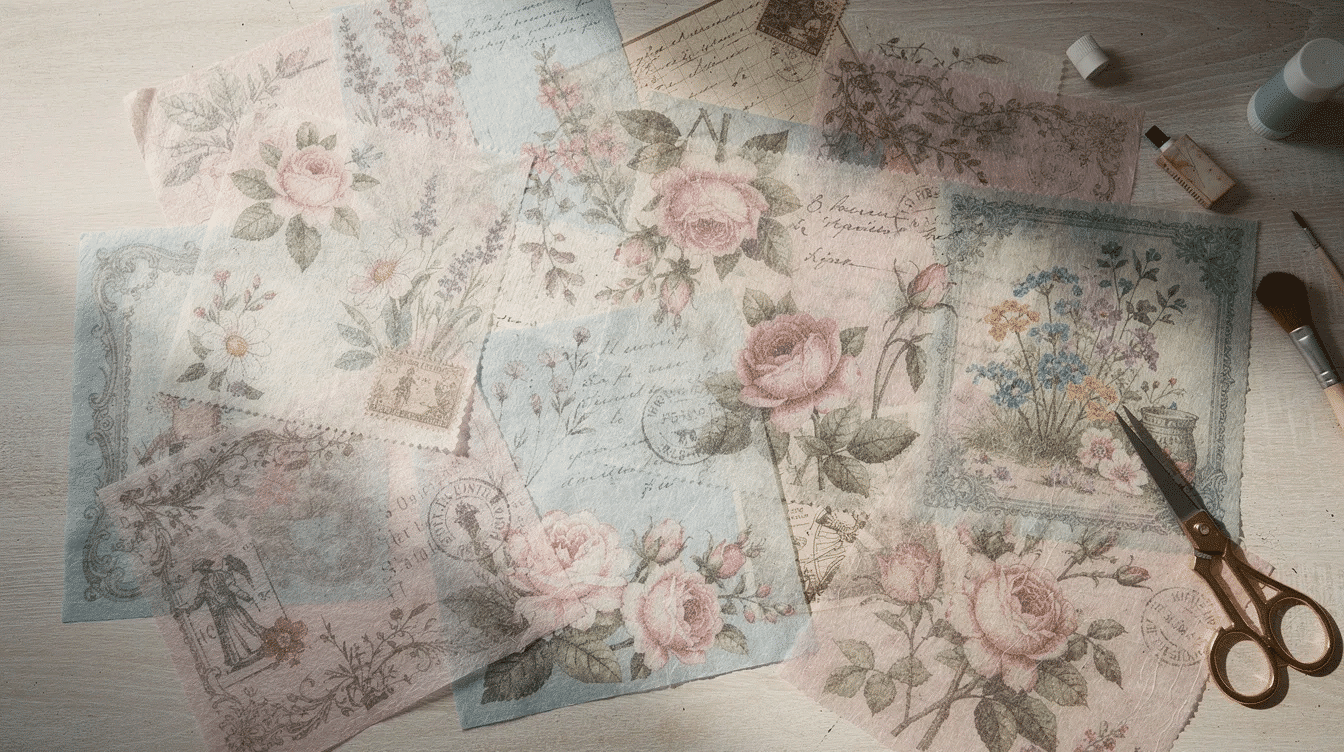
- Vintage florals feature hand-sketched roses and peonies in sepia tones
- Baroque and damask patterns replicate 17th-century Venetian motifs
- Old maps and clocks offer antique cartography and steampunk aesthetics
- Animals and birds include realistic owls, watercolor foxes, and songbirds
- Coastal designs depict seashells, lighthouses, and ocean themes in blues and aquas
- Seasonal motifs span Christmas village scenes, Easter bunnies, Halloween pumpkins, and spring blossoms
- Full-background sheets provide seamless coverage for trays and large surfaces
- Focal-image sheets feature a central motif like a single rose for vases and bottles
- Collage sheets include multiple small elements to cut out for mixed arrangements
- Premium brands from Italy and Poland use high-resolution printing (up to 2400 DPI) for sharp details
- Look for archival, fade-resistant inks that maintain colorfastness for decades
How to Use Rice Paper for Decoupage: Step‑by‑Step
This section provides a clear, practical tutorial suitable for beginners and intermediate crafters alike. Following these steps in order will help you achieve professional-looking results on your first attempt.
- Clean your surface thoroughly to remove dust, grease, and debris
- Sand raw wood lightly with 220-grit sandpaper to create texture for adhesion
- Apply a white acrylic base coat on wood (2 thin layers work best for color vibrancy)
- Degrease glass with isopropyl alcohol (90%+) and skip primer entirely
- Prime metal and MDF surfaces with universal primer, then sand smooth
- Plan your layout by dry-fitting cut pieces before applying any glue
- Cut rice paper with a craft knife or scissors, following motif edges precisely
- Dilute water-based decoupage medium 1:1 with water for thin, even application
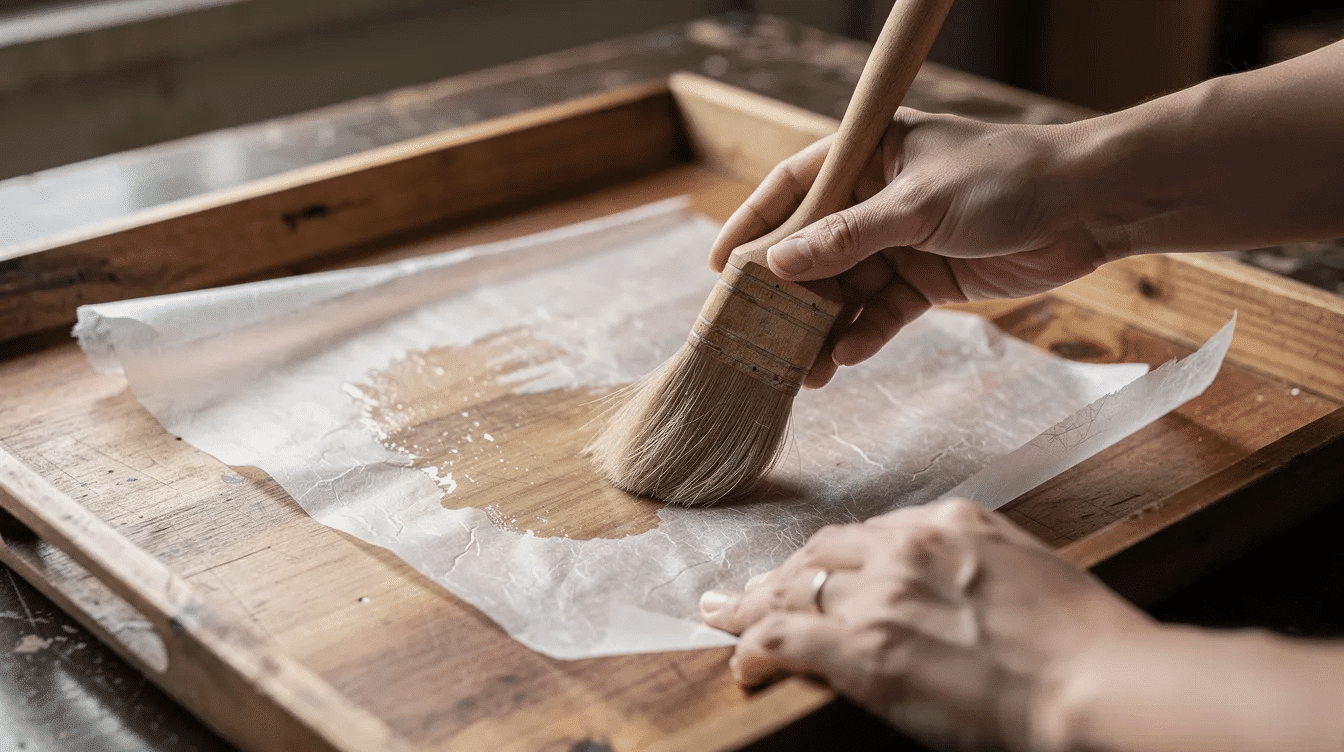
- Apply a thin glue layer to the surface using a flat synthetic brush or soft sponge
- Position rice paper by floating it onto wet glue from one edge
- Press gently from the center outward in radiating strokes to expel air bubbles
- Smooth excess glue with a lint-free cloth or silicone roller
- Work in 20×20 cm sections for large pieces to prevent wrinkling
- Allow initial drying for 15–30 minutes (fan-assisted speeds this up)
- Apply 3–5 thin varnish coats, allowing full cure between each
Best Glues, Mediums, and Finishes for Rice Paper
The right adhesive and varnish are essential for a smooth finish and a long-lasting project. Water-based materials work best with rice paper’s delicate fibers.
- Water-based decoupage mediums and matte acrylic glues are safest for rice paper
- These products don’t yellow over time and clean up easily with water
- pH-neutral formulas (7–8) prevent discoloration over 5–10 years
- Dilute glue 20–50% with water for thin applications that reduce saturation risks
- Choose matte varnish for vintage pieces and shabby chic styles
- Satin finish (20–40% gloss) offers balanced sheen for trays and everyday items
- Gloss varnish (70–90% reflectivity) suits modern, high-shine looks on glass
- Apply at least 2–3 thin varnish layers rather than one thick coat
- Sand lightly with 320–600 grit between coats after 4-hour cure times
- Allow 7 days of final hardening before heavy daily use
- Brush-on varnishes offer more control than spray sealers
- Spray sealers work well for fiddly shapes and ornaments
- Avoid oil-based products that crack more readily on flexing surfaces
Techniques for Wrinkle‑Free, Professional‑Looking Results
Rice paper is remarkably forgiving, but technique still matters for a flawless finish. These advanced tips help you achieve results that look professionally done.
- Work in small sections rather than tackling the entire surface at once
- Avoid over-saturating the paper with glue, which causes tears and wrinkles
- Gently press out air pockets with a soft, lint-free cloth or silicone roller
- Never scrape with hard tools that can damage the delicate fibers
- Silicone rollers outperform brushes by 30% in even pressure distribution
- Use the reverse decoupage method on glass plates by applying the image face-down on the back
- Try the file method for large furniture: sandwich wet paper between plastic folders, roll smooth, then transfer
- Blend edges seamlessly by feathering with matching acrylic paint
- Apply soft shading around motifs using dry-brushing for 3D depth
- Hide seams when combining multiple sheets by overlapping 1–2 cm with translucent gels
- Sand seamed areas post-varnish for invisibility
- Mist glue with a spray bottle rather than brushing to avoid pooling on large surfaces
- Pat bubbles with microfiber cloths rather than rubbing to achieve 95% bubble-free results
Working with Rice Paper on Different Surfaces
Rice paper behaves differently on wood, glass, ceramic, metal, and fabric, so your approach must be adjusted for each material. Understanding these differences helps you work more efficiently and achieve better results.
- Wood furniture: prime with 2 coats of chalk paint or gesso for optimal opacity control, yielding 10-year wear
- Wardrobe doors and drawer fronts: sand between primer coats for glass-smooth base
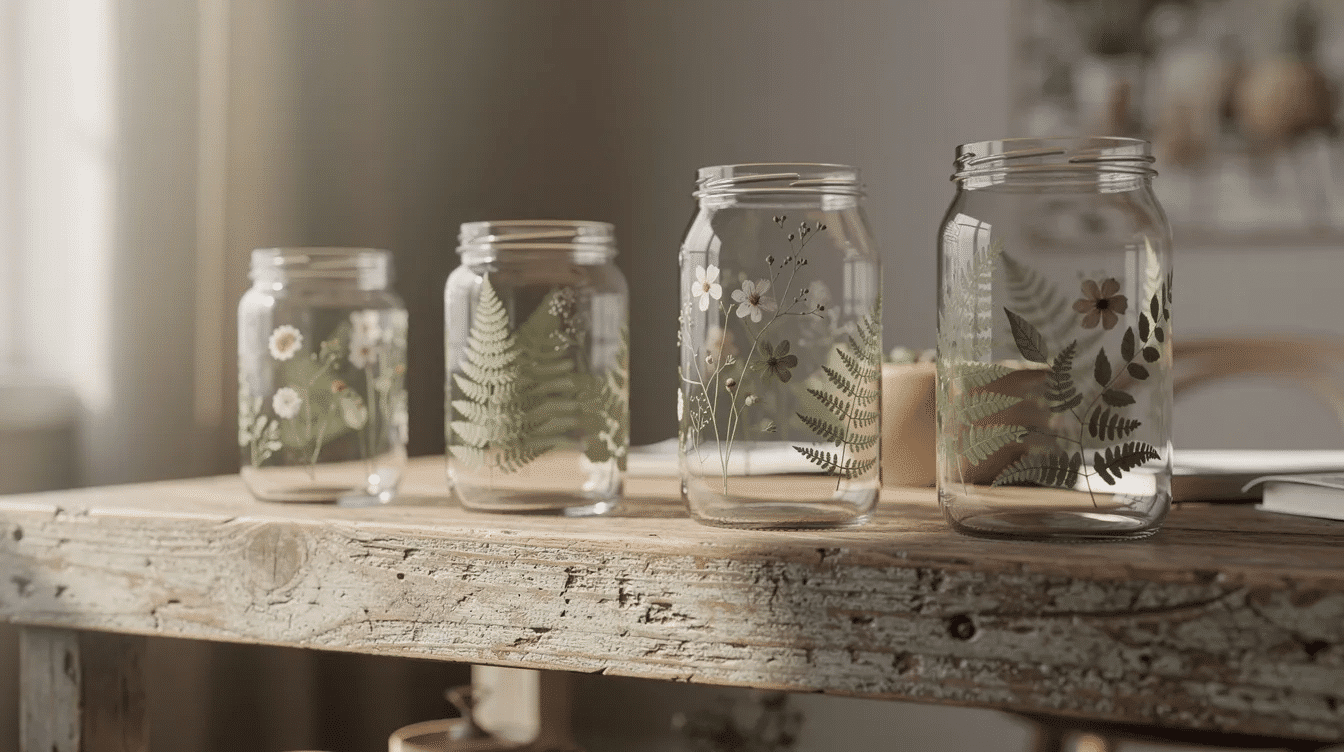
- Glass jars and bottles: degrease with alcohol, use minimal glue (1:3 dilution), leverage transparency for backlit effects
- Wine bottles with coastal themes create stunning home decor with minimal effort
- Ceramics and tiles: use dishwasher-safe varnishes over epoxy primer for moisture resistance
- Kitchen backsplash projects need extra sealing to withstand steam and splashes
- Metal tins: apply rust-inhibiting primer before adding vintage kitchen motifs
- Upcycle cardboard boxes with 3 varnish layers for decorative storage holding 2–5 kg
- Botanical and kitchen themes work beautifully on storage tins and containers
- Fabric bases require stiffener sprays first to prevent bleed-through
- Outdoor garden signs need exterior polyurethanes with UV rating (98% fade resistance after 2 years)
- Apply 5–7 coats minimum for outdoor pieces exposed to weather
Common Mistakes and How to Avoid Them
Even experienced crafters sometimes struggle with tearing, wrinkles, or milky varnish. These issues can usually be prevented with a bit of knowledge and patience.
- Too much glue causes tearing when paper absorbs over 200% its weight; prevent with 1:2 dilutions and sponge application
- Moving the sheet repeatedly once wet creates wrinkles since fibers bond within 30 seconds; lay once and smooth immediately
- Milky varnish results from humidity above 60% or coats thicker than 4 mils; dry in 40–50% relative humidity and apply thin layers
- Dark bases dull colors by up to 50%; always prime with white or cream first
- Drips form from rushed varnishing; hover your brush and sand any imperfections between coats
- Skipping primer on wood leads to uneven absorption and blotchy results
- Wrong background colors kill the semi-transparent effect; test rice paper over white, cream, and pastel bases before committing
- Very humid rooms extend drying times dramatically; use a fan or dehumidifier
- Thick varnish coats trap bubbles and take forever to cure; multiple thin layers always beat one thick one
- Test on a scrap piece first to get a feel for glue consistency and drying behavior
Inspiration: Project Ideas with Rice Paper for Decoupage
Imagine transforming everyday objects into beautiful works of art with themed rice papers. The possibilities span every season and style, from cozy winter decorations to fresh summer landscapes.
- Christmas ornaments and baubles with winter village prints under gloss varnish create twinkling tree decorations
- Wooden baubles (7 cm diameter) with snowy scenes dangling on ribbons make thoughtful handmade gifts
- Easter eggs on wooden blanks covered in pastel florals sealed matte for tactile spring hangings
- Halloween pumpkins with gothic arches and fantasy elements add spooky seasonal charm
- Mother’s Day frames (13×18 cm) layered with rose motifs over gilded edges
- Shabby-chic trays (30×40 cm) in damask full-sheets waxed with metallic accents
- Key holders from MDF cutouts featuring bird collages brighten entryways
- Wall plaques (50×70 cm) in old map themes add culture and sophistication to offices
- Large wardrobe panels using coordinated curated collection sets transform entire rooms
- Summer coastal themes on bathroom accessories bring beach vibes indoors
- Autumn leaf patterns on harvest-themed trays celebrate the season
- Mix rice paper with stencils, texture pastes, or creative paper mache designs for layered, artistic effects
- Pair with crackle mediums for aged, antique appearances on canvas
- Add metallic waxes highlighting baroque seams for dramatic furniture makeovers

Caring for and Protecting Finished Decoupage Pieces
Proper care and sealing extend the life of decoupage items used daily. A little attention to finishing and maintenance keeps your work looking beautiful for years.
- Clean finished pieces with a soft, slightly damp cloth rather than soaking or scrubbing
- Avoid abrasive cleaners that can scratch varnish and damage printed surfaces
- Trays and boxes used daily need 5–7 varnish coats (total 10–15 mils) plus a polycrylic topcoat
- Allow heavily used surfaces like table tops to cure 7–21 days before regular use
- Use coasters on decoupaged tabletops to protect the finish
- Store seasonal decor (Christmas items, Easter decorations, Halloween pieces) wrapped in acid-free tissue
- Bubble wrap prevents scratching the varnish when stacking multiple items
- Avoid stacking decorated items directly on top of each other without protective layers
- Indoor pieces with standard varnish can last 5–10 years with gentle care
- Outdoor items require periodic resealing to maintain weather resistance
Where to Buy Rice Paper for Decoupage and What to Look For
Rice paper is available from specialized craft stores and online shops that focus on decoupage and mixed media materials. Finding the right vendor ensures you get quality products that make your projects successful.
- Evaluate print sharpness by checking for pixelation, especially on detailed florals and typography
- Look for rich color saturation that appears vibrant even before varnishing
- Paper weight around 25–30 g/m² feels crisp but not limp and handles glue without disintegrating
- Designs should be centered and well-aligned on the sheet with adequate borders (2 cm minimum)
- The decoupage queen of any craft collection knows that coordinated sets ensure cohesive room-decor projects
- Choose matching backgrounds and motifs when planning larger furniture transformations
- Check product descriptions for European printing origins (Italy, Poland) indicating higher quality standards
- Archival or fade-resistant inks resist 40% more fading than standard imports
- Look for “decoupage rice paper” labels confirming proper fiber content and pH 6–8 acid-free status
- Curated collection sets in the cart save money compared to buying individual sheets at the highest price
- Sold in various sizes allows flexibility for different project scales
- Reputable vendors offer consistent quality and accurate product photography
Conclusion
Rice paper is a versatile, beginner-friendly, yet professional material that has earned its place as a favorite among decoupage artists worldwide. Its unique combination of strength, thinness, and semi-transparency makes it ideal for achieving smooth, wrinkle-free results that look hand-painted.
The main benefits speak for themselves: easy application even for first-time crafters, rich design variety spanning vintage styles to modern themes and seasonal collections, and compatibility with surfaces from wood furniture to glass and beyond. Whether you want to elevate everyday items or create stunning mixed-media art, rice paper delivers professional results with minimal fuss.
Start with a small project like a wooden box or glass jar to practice your technique. Once you feel confident with glue application and smoothing, move on to larger pieces such as trays, frames, and furniture panels. The lightweight, forgiving nature of rice paper means mistakes are easy to correct, and success comes quickly.
Gather your favorite rice paper designs, pick up some quality decoupage glue and varnish, and begin experimenting with your own ideas. Your next beautiful, handcrafted piece is just a few simple steps away.