
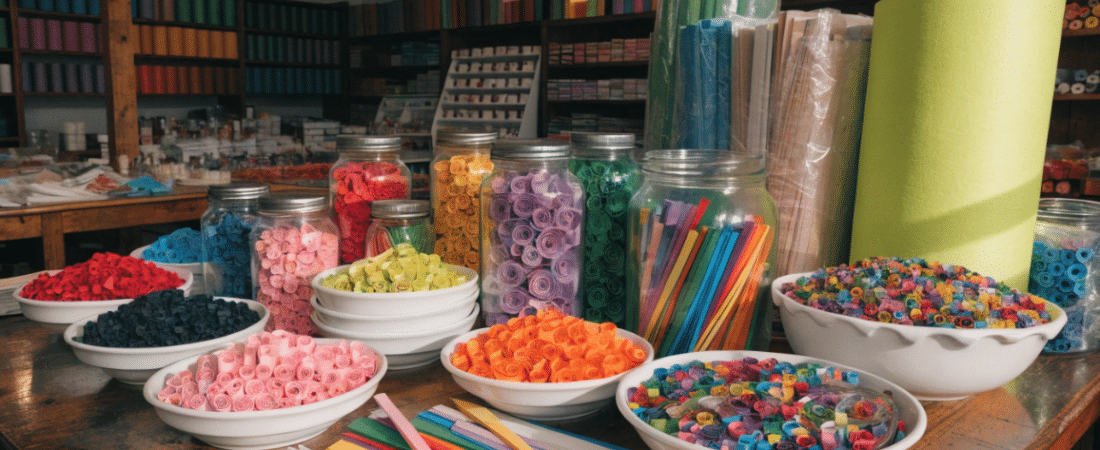
Paper quilling transforms thin strips of colored paper into intricate three-dimensional designs, from delicate filigree cards to bold jewelry pieces and framed art. For craft business owners, workshop instructors, and serious hobbyists, sourcing quilling supplies wholesale is essential for maximizing profit margins, ensuring consistent quality, and supporting scalable production.
This guide covers everything you need to know about sourcing quilling supplies at wholesale prices, including types of products available, how to order, and tips for quality and supplier selection. Whether you’re stocking a craft studio, preparing for workshops, or selling quilled creations online, understanding the wholesale process will help you streamline your operations and grow your creative business.
Buying quilling supplies wholesale means purchasing paper strips, tools, adhesives, and kits in bulk quantities directly from distributors or manufacturers. This approach serves concrete needs: stocking a small craft shop in 2026 with reliable inventory, supplying weekly quilling classes with matching tool sets, or preparing hundreds of kits for holiday markets without scrambling for last-minute restocks. The key wholesale benefits include consistent color batches across large orders, significantly lower per-strip costs, and dependable availability of your best-selling designs throughout peak seasons.
- Types of Quilling Supplies Available Wholesale
- Benefits of Buying Quilling Supplies Wholesale
- How to Order Quilling Supplies at Wholesale Prices
- Shipping, Processing Times, and Packaging
- Quality Considerations When Buying Wholesale
- Customer Support and Long-Term Partnerships
- Major Wholesale Quilling Suppliers and Resources
- Conclusion and Next Steps
Types of Quilling Supplies Available Wholesale
Wholesale sourcing extends far beyond basic paper strips. Suppliers serving volume buyers typically offer complete product lines covering everything from raw craft paper materials to finished kits ready for resale or classroom distribution.
The main product categories available through wholesale channels include quilling paper strips in various widths and finishes, essential tools and specialized accessories, adhesives and finishing products, storage and organization solutions, and ready-made kits bundled for specific projects or skill levels. Wholesale bundles are specifically optimized for volume buyers, featuring multi-pack color assortments that ensure batch consistency, mixed tool sets for classroom deployment, and case quantities that reduce per-unit shipping costs.
Wholesale Quilling Paper Strips
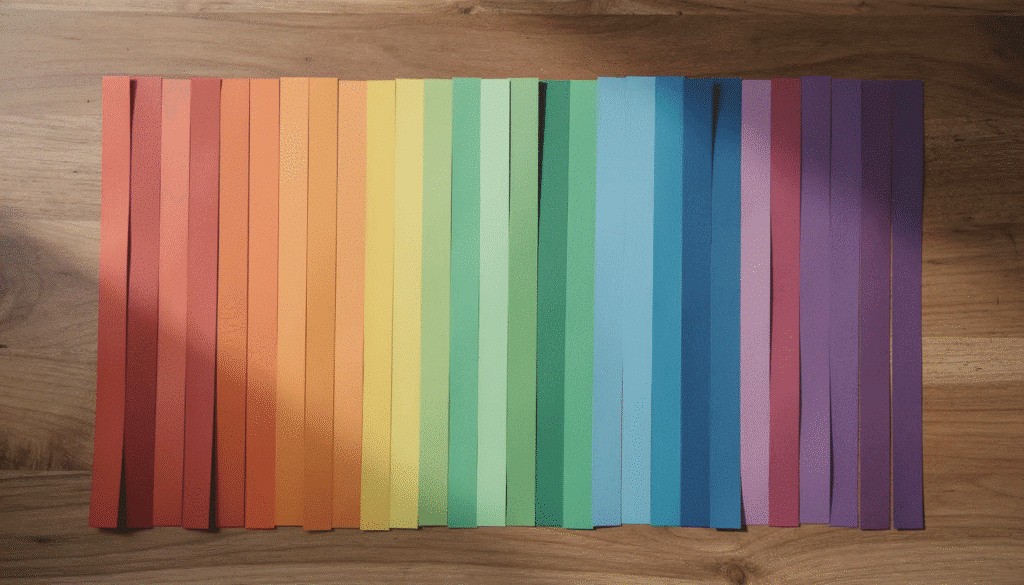
The foundation of any quilling project is the paper itself. Wholesale quilling paper strips come in standardized widths that serve different design purposes. Common options include 1mm and 1.5mm for fine detail work and delicate filigree, 3mm and 5mm for standard coils and basic shapes, and 7mm to 10mm for bold structural elements and 3D projects. Strip lengths typically range from 30cm for compact designs to 45cm or longer for extended coiling work.
Paper weight, measured in gsm, directly affects how strips behave during shaping. Lightweight papers around 80-90 gsm offer flexibility ideal for tight curls and intricate scrollwork. Mid-range weights of 120 gsm balance pliability with structure. Heavier stock at 160-180 gsm provides the stiffness needed for architectural 3D pieces and jewelry that must hold its shape over time.
Key Quilling Paper Terms:
- GSM (grams per square meter): Indicates paper weight. Common options include 80 gsm and 160 gsm.
- Strip Width: Quilling paper strips can be customized to different sizes, ranging from 1 mm to 10 mm.
- Customization: Wholesale quilling paper strips can be customized in size, color, and thickness to meet specific project requirements.
- Color and Weight: The color of quilling paper can influence its weight, which is measured in grams per square meter (GSM). Even if thickness and texture seem identical, color can affect overall weight.
- Fade Resistance: Vibrant colors of quilling paper resist fading over time, ensuring that creations maintain their vivid beauty.
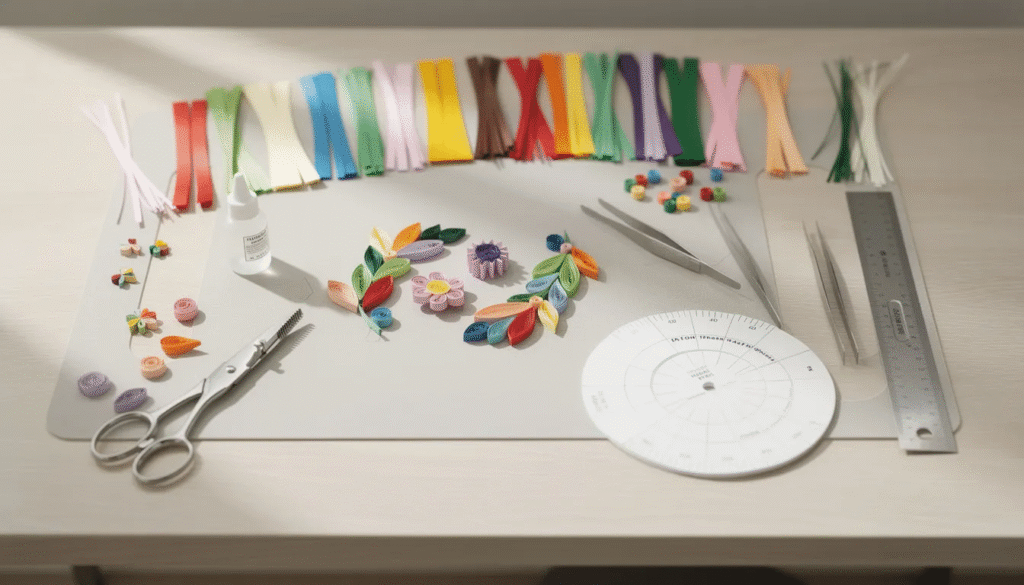
Standard wholesale pack sizes range from 50-strip bundles for color sampling up to 200-strip packs and bulk cartons containing thousands of strips for studios producing hundreds of finished pieces monthly. Finish options include matte for clean detail visibility, pearlized for subtle shimmer, metallic for festive applications like holiday cards, and textured papers for specialty effects that benefit from understanding the best types of paper for craft. Light pastel strips typically feel slightly softer and more pliable than deep saturated colors, where denser dye concentrations can add subtle stiffness to the paper.
Wholesale Quilling Tools and Accessories

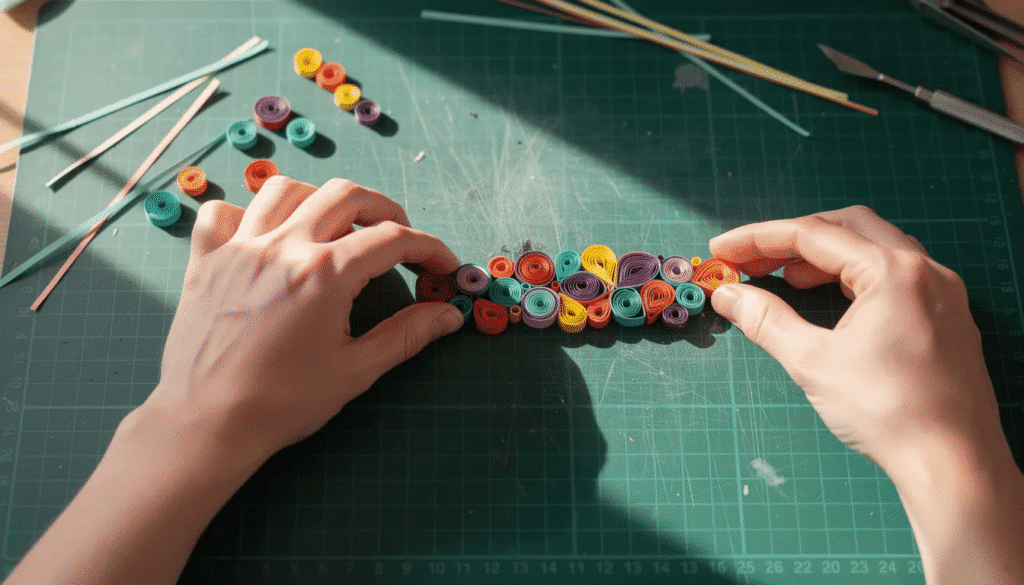
Essential quilling tools purchased at wholesale quantities include slotted tools for beginners, needle tools for experienced quillers seeking tighter coils, fine-tip tweezers for precise placement, circle sizers for consistent shape production, curling coaches for uniform scrolls, and crimpers for textured effects.
Teaching studios and workshop providers benefit from ordering 10 to 50 identical tool sets at once. This ensures every student works with matching equipment, simplifying instruction and maintaining consistent results across a class. Suppliers like Quilled Creations—recognized as a world-leading manufacturer—offer full tool lines suitable for both educational and professional applications.
Specialized tools such as electric quilling tools, border buddy forms, and multi-needle combs carry higher individual price tags, making wholesale pricing particularly valuable for studios investing in advanced capabilities and for quillers who are mastering paper quilling art from beginner to advanced levels. Packaging formats vary between blister packs designed for retail display and bulk-packed tools bundled for in-house class use without retail packaging overhead.
When buying tools in volume, consider the trade-off between student-grade options and premium stainless-steel tools. Student-grade tools work well for introductory workshops where some tools may be lost or damaged, while investing in durable professional tools makes sense for ongoing programs where the same equipment will serve hundreds of students over several years.
Glues, Sealants, and Finishing Products
Adhesives purchased wholesale typically come in multi-bottle cartons, such as 24 bottles of 120ml pH-neutral white glue, clear-drying craft glue in bulk containers, or sets of fine-tip applicator bottles for precision work. Products like PPA adhesive from established brands ensure reliable bonding without yellowing over time.
Clear sealants and varnishes protect finished pieces, particularly important for jewelry, ornaments, and framed art that may incorporate handmade paper sheets for unique textures. Options include water-based varnish for subtle protection, dimensional glaze for raised glossy effects, and spray sealers for quick coverage on larger pieces. Some quillers use products like H2O cover coat or DecoArt Triple Thick Glaze to create durable, heirloom-quality jewelry with professional finishes.
Shelf life matters when buying adhesives wholesale. Most craft glues remain usable for 12-24 months when stored in cool, dry conditions with caps tightly sealed. Thickened glue creates inconsistent bonds and frustrating application issues, so storage planning is essential before committing to large quantities.
Maintaining a consistent glue brand across all your work eliminates variables in drying time and finish appearance. For example, preparing 100 quilled card fronts for a December craft fair typically requires approximately 500ml to 750ml of craft glue, depending on design complexity. Knowing your consumption rate helps calculate wholesale quantities accurately.
Benefits of Buying Quilling Supplies Wholesale
The primary advantages of wholesale purchasing fall into four categories: economy, consistency, convenience, and scalability. Understanding each helps you evaluate whether bulk buying aligns with your production needs.
Cost-per-unit reduction represents the most immediate benefit. Where a single retail pack of quilling paper strips might cost several dollars, a 20-pack wholesale carton often delivers savings of 40-61% per strip. Suppliers like Lively Paper Creations advertise savings reaching 61% over retail pricing for bulk buyers, with access to wholesale codes available through direct contact.
Beyond pricing, wholesale ensures color batch consistency. Ordering 500 strips of the same red guarantees they all match, unlike assembling the same quantity from multiple retail purchases where dye lots may vary. This consistency proves critical for commissioned work requiring precise color matching across wedding invitation sets or corporate gift collections.
Reliable stock availability eliminates the stress of discovering your best-selling color is out of stock two weeks before Christmas or Mother’s Day. Wholesale relationships typically include priority access to popular items and advance notice of production schedules. This predictability supports smoother production planning throughout the year.
Why Buy Quilling Supplies Wholesale?
- Significant Cost Savings: Purchasing quilling paper strips wholesale can provide substantial cost savings compared to buying individual packs.
- Access to Official Wholesale Programs: Specialized quilling suppliers often have official wholesale programs for high-volume users, offering exclusive discounts and priority service.
- Consistent Quality and Color: Wholesale orders ensure batch consistency, which is crucial for professional results.
- Reliable Stock and Availability: Avoid last-minute shortages and keep your production running smoothly.
- Scalability: Easily scale your business or workshop with bulk purchasing options.
Ideal Buyers for Wholesale Quilling Supplies
Several buyer profiles benefit most from wholesale arrangements. Small craft brands selling finished quilled items on Etsy or at local markets can dramatically improve margins by reducing material costs, especially when they focus on paper crafts that sell well for crafters and entrepreneurs. Workshop instructors gain from purchasing matched tool sets and consistent paper supplies that simplify classroom logistics.
Brick-and-mortar craft shops stocking quilling supplies for retail customers benefit from wholesale pricing structures that protect their margins while offering competitive local pricing. Community centers and schools running arts programs can stretch limited budgets further through volume purchasing.
Realistic order volumes vary by use case. A teacher might order 30 mixed-color paper packs and 30 tool sets to prepare for a six-week course starting September 2026. A small Etsy shop producing 50 cards monthly might order quarterly in quantities of 500-1000 strips per color in their core palette.
Hobbyists typically graduate to wholesale-level purchases when their production exceeds 20 finished pieces monthly or when they begin selling at seasonal craft fairs, often after discovering broader paper crafting inspiration on sites like Simply Paper Crafts. At that volume, the administrative overhead of managing wholesale accounts pays off through meaningful cost savings.
How to Order Quilling Supplies at Wholesale Prices
The typical wholesale ordering process begins with browsing a supplier’s dedicated wholesale page or catalog, selecting product variants including width, color family, and pack size, and confirming that your order meets any minimum quantity requirements.
Modern platforms make this straightforward. Most independent craft sites let you choose strip width from a dropdown menu, select color families such as earth tones or bright primaries, and specify the number of packs needed—all from a single product listing. Prices often adjust automatically as quantities increase, showing your per-unit savings in real time.
Some suppliers require wholesale account registration or approval before displaying wholesale pricing. This typically involves submitting business information and waiting for verification, after which logged-in users see reduced pricing automatically applied.
Step-by-Step Wholesale Ordering Walkthrough
A typical wholesale ordering sequence follows these steps. First, create an account on the supplier’s website, providing contact and business details. Next, request wholesale access through a contact form or by sending an email to the supplier’s wholesale department—for example, some suppliers like Lively Paper Creations direct inquiries to their dedicated wholesale email address.
After approval, log in to find wholesale pricing displayed on product pages. Navigate to the quilling paper section and select your options from available dropdowns: width (perhaps 3mm), color range (such as a “Cool Tones” collection), and quantity (10, 20, or 50 packs). Add selections to your cart and proceed to checkout.
Wholesale discounts typically display as adjusted per-pack pricing once your quantity passes certain thresholds. You might see standard pricing for 1-9 packs, a 15% reduction for 10-24 packs, and a 25% reduction for 25 or more packs. The checkout page should clearly show your total savings before you confirm the order.
Common Wholesale Terms and Conditions
Minimum order quantities (MOQs) vary by supplier. Some require a minimum item count, such as 200 packs total. Others specify a minimum order value, perhaps $150 or €100, before wholesale pricing applies. Understanding these thresholds helps you plan orders that maximize value without overcommitting.
Lead times extend when ordering custom color mixes or made-to-order strip cutting. Standard in-stock items might ship within 3-5 business days, while custom requests could require 5-10 business days for production before shipping begins.
Policies around backorders and out-of-stock colors vary. Some suppliers accept backorders and ship as items become available. Others require full payment only for in-stock items, with separate orders placed later for restocked colors. Communicating with suppliers about popular shades you use regularly can sometimes secure priority allocation.
Payment options typically include credit cards for smaller orders and bank transfers for larger purchases. Very large custom runs may require a deposit before production begins, with the balance due before shipping.
Shipping, Processing Times, and Packaging
Shipping bulk paper differs substantially from ordering a few retail packs. Weight accumulates quickly—a carton of several thousand strips can weigh 10kg or more—and carton dimensions affect carrier pricing tiers.
Shipping costs are usually calculated at checkout once you’ve entered your destination and selected a service level. Economy shipping costs less but takes longer, while express options provide faster delivery at premium prices. Some suppliers, such as those offering DHL Express shipping starting around USD 45 for international orders, provide tracking and insurance on expedited shipments.
Standard processing times run 3-5 business days for in-stock items. During peak crafting seasons from October through December, processing can extend to 2 weeks as suppliers manage high order volumes. Planning ahead during these periods prevents delays that could disrupt your production schedule.
Quality packaging protects strips during transit. Expect bundled stacks secured with rubber bands or paper bands, shrink-wrapped packs preventing moisture damage, and reinforced outer boxes that resist crushing. Many suppliers now use eco-friendly packing materials including recyclable cardboard and paper tape.
Calculating and Managing Shipping Costs
Many wholesale sites display product costs initially, then calculate shipping separately once your complete order weight and destination are confirmed. Final shipping charges often appear on a pro forma invoice for review before payment, allowing you to verify total costs before committing.
Strategies to optimize shipping costs include consolidating multiple product needs into single orders rather than placing separate shipments, planning quarterly stock-ups that maximize carton efficiency, and selecting regional carriers when available for domestic deliveries.
As a concrete example: shipping a 10kg carton of mixed quilling strips from a European warehouse to a US studio typically costs between $45-80 depending on service speed, with transit times ranging from 5 days for express service to 2-3 weeks for economy shipping.
Handling Large or Time-Sensitive Orders
Seasonal ordering requires advance planning. Place Christmas market orders by September to avoid delays caused by elevated order volumes industry-wide. Mother’s Day and Valentine’s Day supplies should be secured by January for comfortable lead times.
For large orders, discuss partial shipments versus holding until the full order is ready. Partial shipments let you begin production sooner but may cost more in total shipping. Holding for complete orders saves shipping costs but delays your start date.
When ordering for events with fixed deadlines—weddings, corporate workshops, gallery exhibitions—confirm delivery timelines in writing. Professional suppliers understand event deadlines and can often prioritize orders when given adequate notice of hard dates.
Quality Considerations When Buying Wholesale
Wholesale volume magnifies quality variations. A minor inconsistency barely noticeable in a 50-strip retail pack becomes a significant problem across 2,000 strips. Careful evaluation before committing to large orders protects both your budget and your brand reputation.
Key quality factors include even cutting producing uniform strip widths, stable colors that don’t bleed when wet or fade under light, clean edges without ragged fibers, and reliable paper memory that holds shapes after coiling. European suppliers often emphasize dye penetration and precision cutting, while Asian manufacturers may prioritize volume at lower prices with more variable results.
Ordering small trial batches before scaling up is standard practice. Request sample packs in colors you plan to use heavily, create test pieces—perhaps experimenting with cute paper craft ideas for fun DIY projects—and evaluate how the paper handles before committing to bulk quantities.
Confirm color consistency across batches by keeping reference strips from each order. When reordering, compare new shipments against your references to catch any shifts in color mixing that could affect product matching.
Paper Weight, Color, and Finish Consistency
Different dyes can subtly change how paper feels even at identical GSM ratings. Dark navy strips often feel slightly stiffer than soft cream strips at the same weight because concentrated pigments affect paper fiber behavior. Testing papers side by side reveals these differences.
Simple quality tests take only minutes. Roll tight coils and watch for cracking along the outer edge, which indicates brittle paper or inconsistent thickness. Unroll strips and observe how much memory the paper retains—quality strips should relax partially but maintain some curve. Compare strips from different packs under natural daylight to verify color matching.
Document your preferred combinations for streamlined reordering: perhaps 120 gsm matte for filigree cards where you need tight coils, 160 gsm pearlescent for jewelry requiring structural strength, and standard 100 gsm in your core color palette for everyday production, along with any printable elements you regularly use when creating useful things to print on paper.
Tool Durability and Ergonomics in Bulk Purchases
When purchasing dozens of tools for classes or resale, durability and comfort become critical. Smooth tool shafts prevent paper snagging, well-aligned slots grip strips evenly, and comfortable handles reduce fatigue during extended use.
Request samples of any tool line before committing to 20-50 units. This is particularly important for higher-priced items like electric quillers and crimpers where a poor choice locks up significant budget in unsuitable equipment.
For children’s workshops, prioritize safety features: rounded edges, non-slip grips, and sturdy construction that withstands rough handling. Parents and school administrators notice these details when evaluating program quality.
Maintain tools by cleaning glue residue regularly with warm water and soft cloth. Dried adhesive in tool slots causes paper tearing and frustration. Proper maintenance extends tool lifespan significantly, protecting your wholesale investment over years of use and keeping supplies ready for additional projects like DIY paper squishies and other playful crafts.
Customer Support and Long-Term Partnerships
Wholesale relationships work best as ongoing partnerships rather than one-time transactions. Suppliers who understand your business can anticipate needs, alert you to relevant new products, and prioritize your orders during high-demand periods.
Responsive customer support proves its value when issues arise: questions about product selection, updates on restocks, and flexible solutions when shipping problems occur. The best wholesale suppliers offer direct contact methods and respond promptly to inquiries.
Communicate your long-term plans when establishing wholesale relationships. If you’re expanding workshop programs through 2027 or planning to add new product lines, suppliers can adjust their stocking accordingly. This collaborative approach benefits both parties.
Keep records of your order history and favorite product combinations. When contacting suppliers about new orders, referencing previous purchases streamlines conversations and ensures consistency in what you receive.
Working with Suppliers on Custom Needs
Volume thresholds often unlock customization options: custom color mixes matching your brand palette, kits bundled specifically for your workshops, or private-label packaging featuring your business name. These options differentiate your offerings from competitors using generic supplies.
For special projects like corporate-branded quilling sets or large-scale community art initiatives, early communication is essential. Custom work requires additional production time, and suppliers need adequate notice to plan manufacturing schedules.
Recurring order arrangements benefit both buyers and suppliers. Monthly or quarterly scheduled orders smooth inventory management for suppliers while ensuring you never face unexpected stockouts. Discuss recurring order options once you’ve established your consumption patterns through several purchase cycles.
Major Wholesale Quilling Suppliers and Resources
When sourcing wholesale quilling supplies, consider these reputable suppliers and platforms:
- Quilled Creations: Full line of quilling products
- Lake City Craft: Complete line of quilling products
- Custom Quilling: Wide range of quilling products and related craft supplies
- Quilling Superstore: Wide variety of quilling papers and tools
- Let’s Quill On: Full range of colorful and unique paper quilling supplies
- Craft Gully: Wide variety of quilling supplies and paper
- Itsy Bitsy: Wide variety of quilling supplies, papers, kits, and craft supplies
- Craft Haven: Brick and mortar and online shop for quilling tools and paper
- PaperQuilling.ca: Wide variety of paper quilling strips, tools, kits, and more
- Michaels: 12-pack bulk bundles of Quilled Creations paper
- Hunter Creek Crafts: Over 300 colors of quilling paper
- Lively Paper Creations: Wholesale quilling paper strips and customization
- Alibaba: Factory-direct sourcing
- AliExpress: Competitive pricing for bulk Juya brand paper
- PandaHall/PandaWhole: High-volume, lower-cost sourcing
- Uniquilling: Wholesale discounts starting at 25% off
- Quilling.com: 50% discount on Craft Harbor paper for orders over $250 with Tax ID
- Easy Quilling Paper: Automatic discounts on bulk orders of 25+ bags
- MichaelsPro: Bulk quantities and tax-exempt purchases
- Facebook groups and Reddit: User-generated advice on sourcing
- Craft Gully, Itsy Bitsy, Craft Adda: General craft suppliers
- Many online shops: Offer a variety of quilling supplies and tools, often with international shipping options
- Amazon: Variety of paper quilling supplies
These resources provide a wide range of options for bulk purchasing, customization, and international shipping, ensuring you can find the right fit for your business or creative needs.
Conclusion and Next Steps
Wholesale quilling supplies offer meaningful advantages for anyone producing quilled art beyond occasional hobby projects: better per-unit pricing that improves margins, stable quality that protects your reputation, reliable availability that prevents production disruptions, and scalable sourcing that grows with your business.
Assess your current consumption honestly. Track how many strips you use monthly across your core colors, how often you replace tools, and how much adhesive your typical projects require. These numbers reveal whether wholesale volumes align with your actual needs or would result in excess inventory.
Practical next steps include listing your most-used colors and widths, estimating quarterly needs based on your production history, requesting samples from potential suppliers to verify quality, and placing an initial wholesale order focused on your highest-volume supplies. Start conservatively—you can always increase quantities on subsequent orders once you’ve confirmed the relationship works well.
Building a sustainable quilling practice or business depends on reliable supply chains. Whether you’re preparing for your first craft fair or scaling an established workshop program, wholesale sourcing positions you to create consistently, price competitively, and grow confidently into the years ahead.