Key Takeaways
- You can create a beautiful paper snowflake in under 15 minutes with paper, a pencil, and sharp scissors.
- Thin paper works best for creating paper snowflakes, such as standard printer paper, origami paper, or tracing paper.
- A precise six-point fold makes the whole snowflake look balanced and closer to real snow crystals.
- Start simple, then add smaller details as your hands get used to cutting through layers.
Introduction: From Plain Paper to Magical Snowflakes
A paper snowflake is a classic winter craft: fold a square, cut shapes into it, then unfold it to reveal a symmetrical snowflake design. Real snowflakes always feature six-fold symmetry due to the molecular structure of ice, which is why the six-point version looks more natural than a quick four-point craft.
This paper snowflake pattern step by step guide walks you through each fold and cut without needing to download or print a template. It works with ordinary white copy paper, wrapping paper, tracing paper, or recycled paper bags, making it a low-cost idea for winter 2026 decorating.
Following the same folding pattern helps guarantee a balanced snowflake every time, even when you draw your own designs freehand.
Supplies You’ll Need for Paper Snowflakes
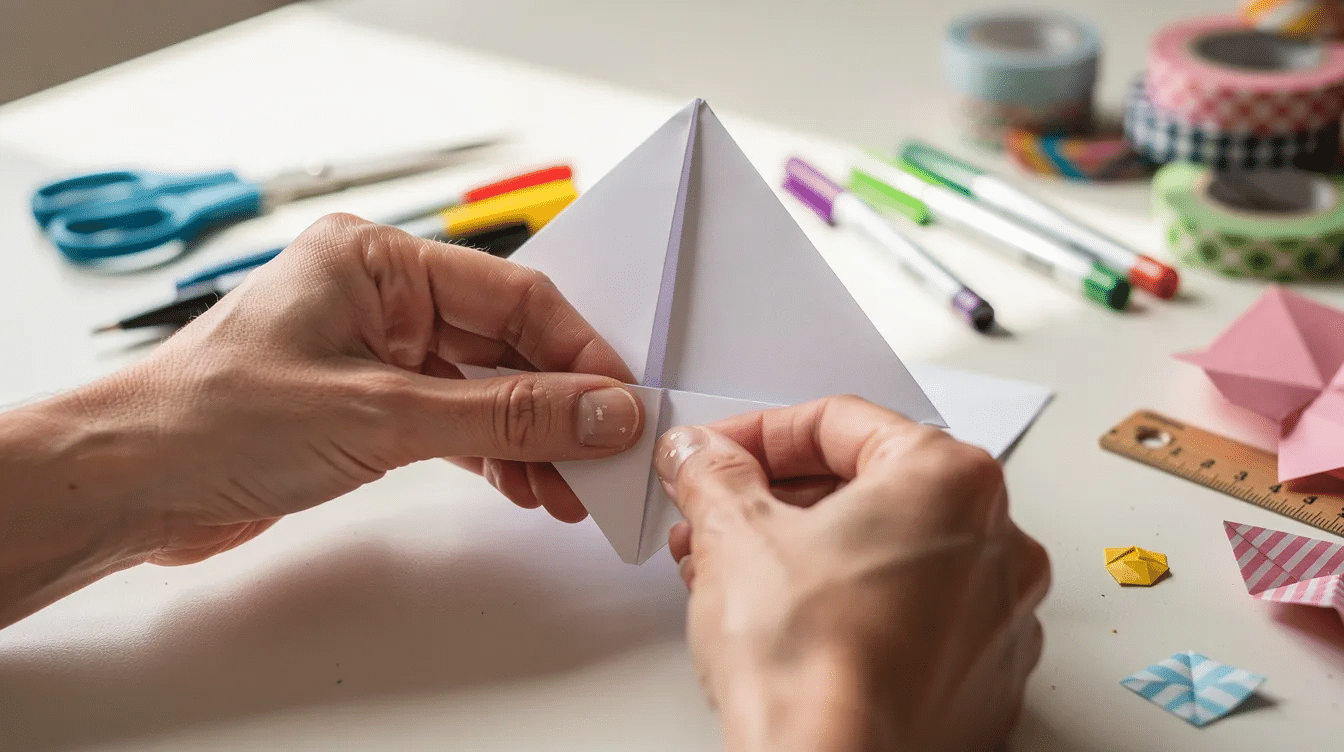
Gather your materials before you begin, and consider exploring top craft paper supplies for creative projects to see which types of paper and tools might suit your style best:
- A4 or 8.5”x11” copy paper
- Brown paper bags for rustic, sturdy snowflakes
- Sharp scissors, or cuticle scissors for intricate designs if they feel comfortable
- Pencil and optional eraser
- Ruler or protractor for precise folds
- Flat, well-lit workspace
Using sharp scissors is essential for making clean cuts when crafting paper snowflakes, and some recommend using cuticle scissors for more intricate designs. Comfort matters too, so choose scissors sized for your hands.
Tracing paper is often recommended for making delicate and symmetrical snowflakes, as it allows for more precise cutting compared to regular paper. A broader guide to the best types of paper for craft and their uses can help you choose options for snowflakes, garlands, cards, and more. Paper bags work better for bold garlands than tiny lace-like patterns. For kids, use a safe cutting area and adult supervision.
Step 1: Start With a Perfect Square
To create a paper snowflake, start with a square piece of paper, which can be made from a rectangular sheet by folding one corner down to form a triangle and trimming off the excess.
- Place the page in front of you.
- Fold one corner diagonally until the short edge lines up with the long edge.
- Cut off the excess paper strip.
- Keep the remaining square folded into a triangle.
- To make two smaller snowflakes, cut the sheet in half first, then square each half.
Hold the paper tightly while cutting so later folds line up. This one fold decides how clean the finished design will look.
Step 2: Fold the Paper for a Classic Six-Point Snowflake
Fold the square paper diagonally to form a triangle, then fold this triangle in half again to create a smaller triangle before folding it into thirds for cutting.
- Press each fold firmly with a fingernail for a crisp edge.
- Imagine the triangle divided like a pie into three equal parts.
- Fold one third over the middle.
- Turn the piece and fold the opposite third over the top.
- You should now have a narrow wedge form.
To achieve more symmetrical snowflakes, aim to fold the paper into thirds as precisely as possible, as this will enhance the overall balance of the design. A pencil line or protractor can help you check the 30°/60° angles.
To mimic real snow crystals, snowflakes should have a precise 6-point fold; 4-point or 8-point folds will look blocky and less authentic, and you can compare this method with another guide on how to make paper snowflakes step by step if you want extra pattern ideas.
Step 3: Trim the Top Edge to Set the Snowflake Shape
The top cut controls the outside outline.
- Hold the folded wedge with the pointed tip at the bottom.
- Cut straight across the top edge for a rounder look.
- Cut at a diagonal for sharper star-like points.
- Experiment with shallow and steep angles on scrap paper.
Cut through all layers evenly with sharp scissors. If the paper is thicker, go slowly rather than forcing the blades.

Step 4: Cut Your Snowflake Design (Basic Pattern)
Now add the pattern. Cutting shapes into the folded sides of the triangle, such as triangles, half-diamonds, and semicircles, enhances the design of the snowflake, and fans of precise folding might also enjoy trying creative origami designs for every skill level.
- Begin with simple triangle cuts along the long sides.
- Add half-diamonds, teardrops, or a small circle near the center.
- Cut shallow bites from the top edge for lacy points.
- Leave some parts of the folded edges intact to avoid the snowflake falling apart when opened.
- Avoid cutting all the way through from one side to the other to prevent the snowflake from falling apart; instead, cut shapes into the sides to create intricate designs.
- Avoid leaving large blank spaces; anything thicker than 1/4 inch should be cut down to create delicate lines instead of clunky ones.
- Make the smaller details last, when the big shapes are already in place.
Pause often, pinch the layers together, and sweep scraps aside so you can find every drawn line. If you like character-themed crafts, similar folding focus helps when making creative paper duck origami projects.
Step 5: Carefully Unfold and Flatten Your Paper Snowflake
This is the best part: gently and slowly unfolding the paper after cutting prevents tearing, especially with intricate designs containing many delicate folds.
- Open the wedge one layer at a time.
- Support the middle so the arms do not tear.
- Watch the full pattern reveal itself.
- Place the snowflake inside a heavy book to flatten it out and help remove creases caused by folding.
- You can also iron it between two sheets of copy paper on a low, dry setting.
Let an ironed snowflake cool before handling so it stays flat and crisp.
Advanced Paper Snowflake Pattern Ideas
Once the basic method feels fast and simple, try a more detailed snowflake design. Lightly draw a guide before cutting, and look through Simply Paper Crafts for more paper crafting inspiration whenever you want fresh project ideas.
A snowman paper snowflake can include rounded body cuts, a triangle carrot nose, and small button holes made with a hole punch. A starburst design uses long, thin triangles pointing toward the tip, plus inner circles near the center.
Different types of paper can be used for snowflakes, including plain white copy paper, wrapping paper, and even paper bags, depending on the desired effect; you can even incorporate handmade paper sheets for unique textured snowflakes. Keep one folded wedge as a master template and trace it onto future sheets to build repeatable patterns. If an online maker or bot gives you an idea, sketch it first instead of cutting blindly.
Decorating With Paper Snowflakes
Paper snowflakes look best when displayed in layers and different sizes, and they also pair nicely with birthday decorations made from colorful paper if you want a festive, budget-friendly party look.
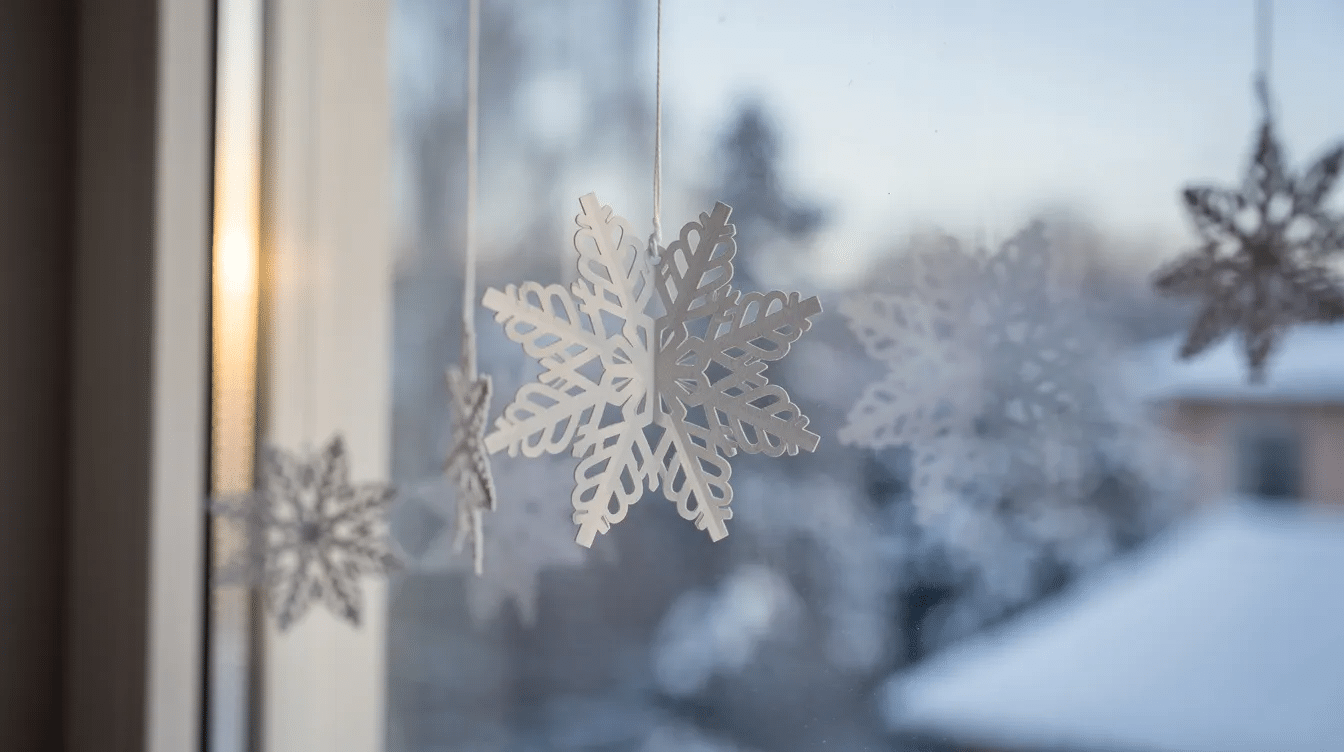
- Tape them to windows with tiny loops of clear tape.
- Hang them from the ceiling with invisible thread.
- Glue flat snowflakes onto kraft gift wrap instead of bows for December 2026.
- Use paper bags with twine and pinecones for a rustic look.
- Group tiny 2–3” flakes around larger 8–9” ones to fill a wall, mantel, or classroom, and mix in printable decorations like signs, tags, or banners for a complete display.
Safety and Pro Tips for Perfect Paper Snowflakes
A few habits make making snowflakes easier:
- Use sharp scissors; dull blades crush fibers and make detailed cuts hard and less safe.
- Let adults handle narrow cuts while kids cut larger shapes.
- Start with simple patterns before complex ones.
- Save scraps for mini flakes or confetti accents, or roll narrow strips into beginner-friendly paper quilling art projects.
- Practice on scrap printer paper before special metallic paper.
- Remember to leave paper bridges between openings.
If you want more comments on your own designs, share a photo and ask people which cut they like most. One helpful comment can inspire your next beautiful pattern.
FAQ
How thick can the paper be for making detailed paper snowflakes?
Standard 70–80 gsm copy paper is ideal. Cardstock over about 160 gsm is harder to fold cleanly and difficult to cut with small scissors. Paper bags work for larger, bold patterns but not very tiny lace details.
Can I make paper snowflakes without sharp scissors?
Yes, but it is not recommended. Dull scissors tear fibers and leave ragged edges. Use school-safe but sharp craft scissors for children, and reserve precision scissors or craft knives for adults.
How do I stop my paper snowflakes from tearing when I unfold them?
Make firm folds so layers do not slip. Avoid cuts too close to the center, and leave small bridges of paper between openings to support the design.
Can I reuse paper snowflakes from one winter to the next?
Yes. Store flattened snowflakes between tissue paper or copy paper inside a large envelope or flat box. Label it “Winter 2025–2026 Snowflakes” and keep it dry, away from direct sun.
Is there an easy way to create identical sets of snowflakes for a party?
Fold and draw one favorite pattern, then use it as a template. You can stack 2–3 folded wedges and cut them together if your scissors are strong enough.