
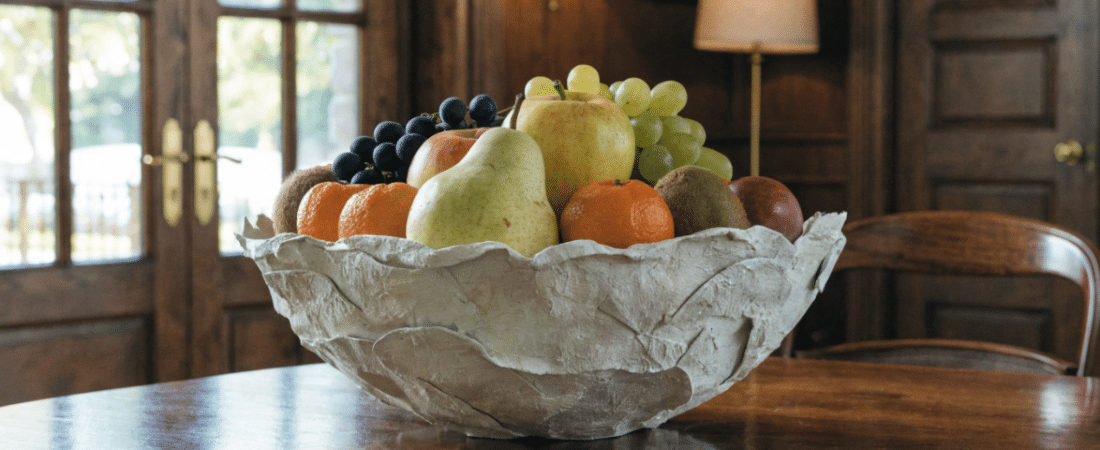
Creating your own paper mache fruit bowl is one of those super fun weekend projects that transforms recycled paper into a charming piece of home decor. This guide is perfect for beginners, families, and anyone interested in creative, eco-friendly crafts. Paper mache fruit bowls are a fun, sustainable way to create custom home decor from recycled materials. With just flour, water, and some newspaper, you can craft a sturdy, lightweight bowl that looks like rustic pottery but costs almost nothing to make.
Making a paper mache fruit bowl is a cost-effective and creative DIY project. Paper mache fruit bowls are versatile, lightweight, and customizable. They can be styled as functional storage for small items or decorative pieces, and creating a paper mache fruit bowl transforms simple household materials into functional art.
- Quick Answer: How to Make a Paper Mache Fruit Bowl
- Why Make a Paper Mache Fruit Bowl?
- What Is Paper Mache Pulp (Paper Clay)?
- Supplies You’ll Need for a Paper Mache Fruit Bowl
- Step-by-Step: Making the Paper Mache Pulp
- Forming the Paper Mache Fruit Bowl on a Mold
- Drying Your Paper Mache Bowl Safely
- Painting and Decorating: Turn It Into a Summer Fruit Bowl
- Ideas for Using and Displaying Your Paper Mache Fruit Bowl
- Troubleshooting & Tips for the Best Results
Quick Answer: How to Make a Paper Mache Fruit Bowl
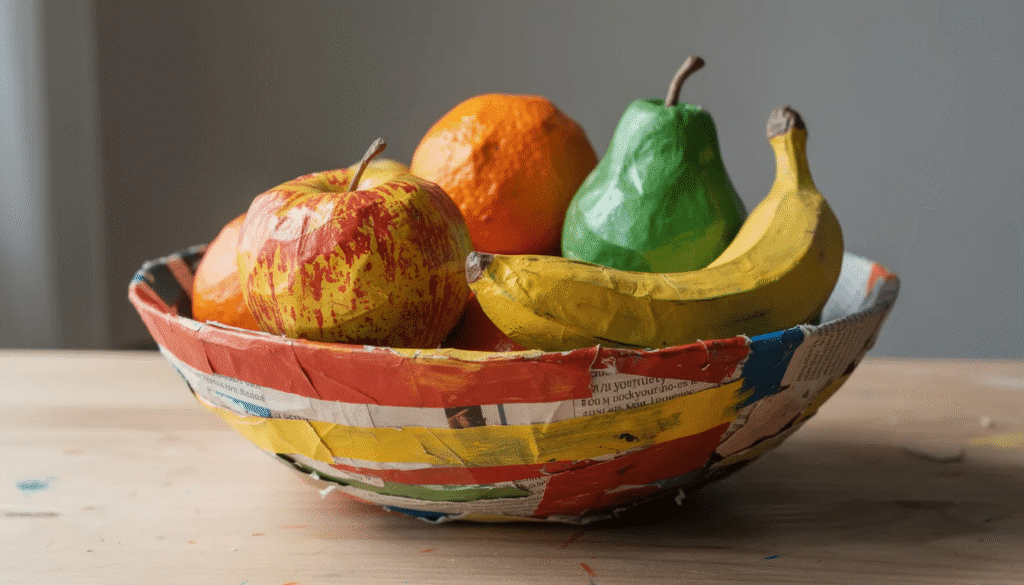
Making a paper mache bowl is easier than you might think, and you can have a beautiful finished piece ready for display in about a week. Here’s what the process looks like:
- Tear paper into small pieces, soak in water for 2+ hours, then blend into pulp
- Mix the pulp with a thick paste made from flour and water (1:2 ratio)
- Add a teaspoon of salt to flour-based paste to prevent mold
- Press the mixture onto a bowl mold lined with plastic wrap
- Aim for at least 4-7 layers of paper strips for a sturdy bowl, and cover the mold thickly to ensure the project does not break when removing it
- Let it dry for 3–7 days, turning occasionally for even drying
- Paint it to look like summer fruits—watermelon, lemon, orange, or kiwi
Note: Do not use paper mache bowls for holding real fruit or anything damp, as moisture will cause the bowl to turn soggy.
The finished bowl works perfectly for holding dry fruits like bananas, oranges in their peel, and apples. It also makes a gorgeous decorative centerpiece for your dining table or kitchen island.
This is an eco-friendly project that uses recycled paper and pantry ingredients instead of store-bought clay or plastic. Even if you’ve never tried paper crafts before, this tutorial will walk you through every step, and sites like Simply Paper Crafts can give you even more inspiration to keep going.
Why Make a Paper Mache Fruit Bowl?
There’s something special about handmade paper mache bowls that you simply can’t buy in stores. They have that rustic, organic quality of pottery but are made entirely from materials you’d otherwise throw away.
Making a paper mache fruit bowl is a cost-effective and creative DIY project. Paper mache fruit bowls are versatile, lightweight, and customizable. They can be styled as functional storage for small items or decorative pieces, and creating a paper mache fruit bowl transforms simple household materials into functional art.
Here’s why this project is worth your time:
- Practical everyday use: Keep apples and oranges on your kitchen counter, create a buffet display for summer barbecues, or use as a table centerpiece for family brunch
- Creative expression: Paint realistic summer fruits like watermelon rind with pink interior, lemon yellow with white pith, orange segments, or bright green kiwi with seeds—or go abstract with patterns and colors
- Sustainability matters: Repurpose old newspaper, junk mail, or those school worksheets piling up instead of sending them to landfill, and explore fun recycled paper activities for all ages to make even better use of your scraps
- Budget-friendly decor: Similar decorative bowls on Pinterest or Etsy can cost $30-50, but making your own costs under $5 in materials
Kids love this project because it’s messy, creative, and produces something they can actually use, and it pairs perfectly with other cute paper craft ideas for family DIY time. Adults love it because the finished bowl looks surprisingly professional.
Making a paper mache fruit bowl is a cost-effective and creative DIY project. Paper mache fruit bowls are versatile, lightweight, and customizable. They can be styled as functional storage for small items or decorative pieces, and creating a paper mache fruit bowl transforms simple household materials into functional art.
What Is Paper Mache Pulp (Paper Clay)?
Paper mache is an easy-to-make material that can be used to create bowls suitable for various uses. You can choose between a flour-water mixture or a white glue-water mixture for the paste.
Paper mache pulp, sometimes called paper clay, is shredded paper that’s been soaked in water and mixed with flour paste to create a moldable “dough.” It behaves much like clay you can press and sculpt into shapes.
- Strip method vs. pulp method: Traditional papier mache uses strips of paper layered with paste to create shells. Pulp gives you a thicker, more organic texture that works better for bowls and small sculptures
- Pottery-like results: The pulp method produces a finish that resembles handmade pottery once dried and painted
- Child-safe recipe: This tutorial uses flour and water paste with no PVA glue, making it perfect for classroom projects and home crafting with kids
- Best papers to use: Newspaper breaks down fastest, but office printer paper, kraft packing paper, or even a full toilet paper roll all work well; if you’re curious about materials, a guide to the best types of paper for craft projects can help you choose what to stock at home
- Make ahead option: Store unused pulp in an airtight container in the fridge for 2–3 days if you can’t finish in one sitting
The mixture acts as a moldable material that hardens as it dries, creating a surprisingly strong finished product that won’t break under the weight of typical fruits, and the same basic pulp can be adapted for many creative paper mache designs and projects.
Supplies You’ll Need for a Paper Mache Fruit Bowl
The materials for this project are simple, and most people already have everything at home. If you’re building up a stash, it helps to know the top craft paper supplies for DIY projects. Here’s your complete checklist:
Paper Options (choose one):
- 4–5 sheets of newspaper from a weekend edition
- 20–25 pages of scrap printer paper
- One full roll of plain white toilet paper (no lotion or prints)
Paste Ingredients:
- About 1 cup (120 g) plain flour
- 2 cups (480 ml) water for the paste
- Extra water for soaking paper
Mold Options:
- A medium cereal or salad bowl, 20–25 cm (8–10 in) diameter
- Ceramic, glass, or metal all work fine
- Optional: a second smaller bowl if you want to create a pedestal stand
Mold Release Helpers:
- Plastic wrap (cling film) works best
- Baking parchment as an alternative
- Thin layer of petroleum jelly if you prefer
Tools:
- Large bowl for mixing
- Wooden spoon or spatula
- Old kitchen hand blender or stick blender (optional but helpful)
- Scissors
- Old tea towel or cheesecloth for squeezing water
Painting and Finishing:
- Acrylic paints in red, pink, orange, yellow, green, white, black, and brown
- 2–3 paintbrush sizes
- Clear acrylic sealer or water-based varnish for durability
Safety and Cleanup:
- Wear an apron or old T-shirt—flour paste can be messy
- Cover your work surface with old newspaper or oilcloth to avoid staining
Step-by-Step: Making the Paper Mache Pulp
This stage covers soaking and pulping the paper before you form the bowl. Getting the consistency right here makes everything else easier.
Tear the Paper
- Tear or shred paper into small pieces about 2–3 cm (1 in) square
- Smaller pieces break down faster and give a smoother pulp
- Don’t worry about perfect squares—irregular shapes work fine
Soak the Paper
- Place paper pieces into a large bowl
- Cover with very hot tap water
- Let soak for at least 2 hours, or overnight if using thicker printer paper
Remove Excess Water
- Squeeze the soaked paper by hand or through a tea towel
- Aim for damp, not dripping—remove as much excess water as possible
- The paper should feel like a wet sponge you’ve wrung out
Create the Pulp
- Use a stick blender in short bursts until the paper looks like porridge with no large flakes
- No blender? Hand-crumble the paper for a more rustic texture
- The pulp should be smooth enough to press into a mold
Cook the Paste
- Whisk 1 cup flour with 2 cups water until smooth
- Heat gently on the stove, stirring constantly, or microwave in 30–40 second intervals
- Stop when it thickens to the consistency of yogurt
- Add a teaspoon of salt to flour-based paste to prevent mold
Combine Pulp and Paste
- Let the paste cool until just warm
- Mix roughly 1 part paste with 3 parts paper pulp
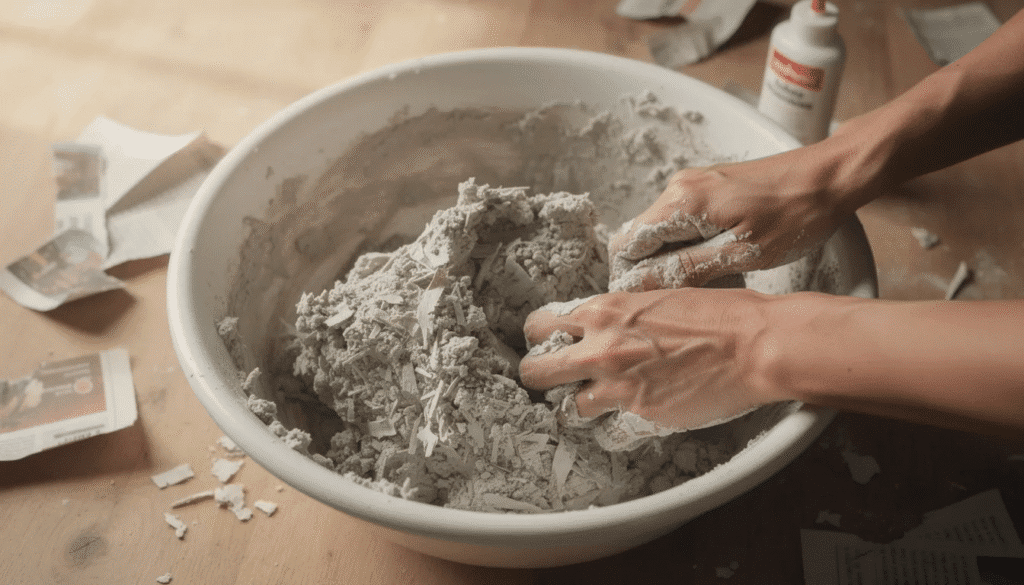
- Knead together with your hands until it feels like soft, slightly sticky dough
Check Consistency
- Too wet and slumping? Add a handful of dry shredded paper or a spoonful of flour
- Too dry and crumbly? Add a spoonful of water or paste
- The finished mixture should hold its shape when squeezed
This finished pulp can be used immediately or kept in a lidded container in the fridge overnight if you need to take a break, much like the pulp you’d use when making your own handmade paper sheets for cards or stationery.
Forming the Paper Mache Fruit Bowl on a Mold
Now comes the fun part—shaping your fruit bowl using a household bowl as a mould. This step determines the final shape and thickness of your creation.
- Flip the bowl upside down for an outer-mold approach (creates a rounder outside)
- Or keep it upright and build inside the bowl—this is often easier for beginners
- Working inside the bowl gives you more control over thickness
Cover your mold bowl completely with aluminum foil or cling wrap to prevent sticking, and apply a coating of cooking spray or Vaseline to the mold for easier removal of the bowl. A light layer of plastic wrap can help remove the paper mache bowl from the mold after drying.
- Cover the mold completely with plastic wrap
- Leave extra overhanging the rim to help with removal later
- Press out air bubbles for a smoother surface—this step prevents tricky removal issues
Apply the Pulp:
- Pinch off small portions of pulp about the size of a golf ball
- Press firmly into the mold, working from the bottom center out toward the sides
- Create an even wall around 5 mm–1 cm (about 1/4 in) thick
Aim for at least 4-7 layers of paper strips for a sturdy bowl, and cover the mold thickly to ensure the project does not break when removing it.
- Overlap each bit of pulp slightly
- Smooth with damp fingertips to eliminate gaps, thin patches, or trapped air pockets
- Check for thin spots by holding the mold up to light if possible
Strengthen the Rim:
- Add an extra ring of pulp around the top edge
- Blend it down the sides to avoid a fragile rim that chips later
- The rim takes the most wear, so don’t skimp here
Optional Pedestal Stand:
- Tape a smaller bowl upside down to the base of the main mold
- Wrap both together with plastic wrap
- Cover with a continuous layer of pulp for a seamless connection
Add Texture (Optional):
- Create subtle grooves like a melon rind by lightly dragging a finger across the damp pulp
- Avoid deep grooves that weaken the structure
- Keep decorative textures shallow
Final Check:
- Gently press with fingers from inside to check thickness
- The bowl should feel firm and consistent all over
- Add more pulp to any thin areas before drying begins
Drying Your Paper Mache Bowl Safely
Slow, thorough drying is essential to avoid mold growth and cracks. Rushing this step is the most common mistake beginners make.
- At normal room temperature (20–22°C / 68–72°F), expect 3–5 days
- Cooler, damp weather can extend drying to a full week
- Patience here prevents problems later
Optimal Drying Location:
- Place the mold on a wire rack or somewhere with good air circulation
- A sunny windowsill works well
- Near (not directly on) a radiator is acceptable
- Avoid areas with steam or high humidity
Turn Regularly:
- Rotate the bowl every day or two so different areas get air
- Once the outer surface feels firm, gently peel it away from the mold
- The inside may still be slightly damp at this point—that’s normal
Trim the Rim:
- Once released and still slightly flexible, use scissors or a craft knife to neaten the rim
- Create a smooth circle or gentle wave shape
- This is much easier while the material is still somewhat pliable
Optional Oven Drying:
- Place the bowl on a baking tray lined with parchment
- Set oven to about 75–80°C (170–175°F)
- Heat for 20–30 minutes, then turn off
- Repeat once or twice daily until fully dry
Avoid Rushing:
- High heat causes deep cracks and browning
- The inside must be completely dry before sealing or storing
- If in doubt, wait another day
Watch for Mold:
- Musty smell or dark spots indicate mold growth
- Scrape off affected pulp and let dry thoroughly
- Patch thin areas with fresh pulp if needed
- Never store a damp bowl in a closed space
Painting and Decorating: Turn It Into a Summer Fruit Bowl
This is where your bowl transforms from rough paper into a bright summer fruit centerpiece. The painting stage is when the magic really happens.
Note: Do not use paper mache bowls for holding real fruit or anything damp, as moisture will cause the bowl to turn soggy.
Prime the Surface
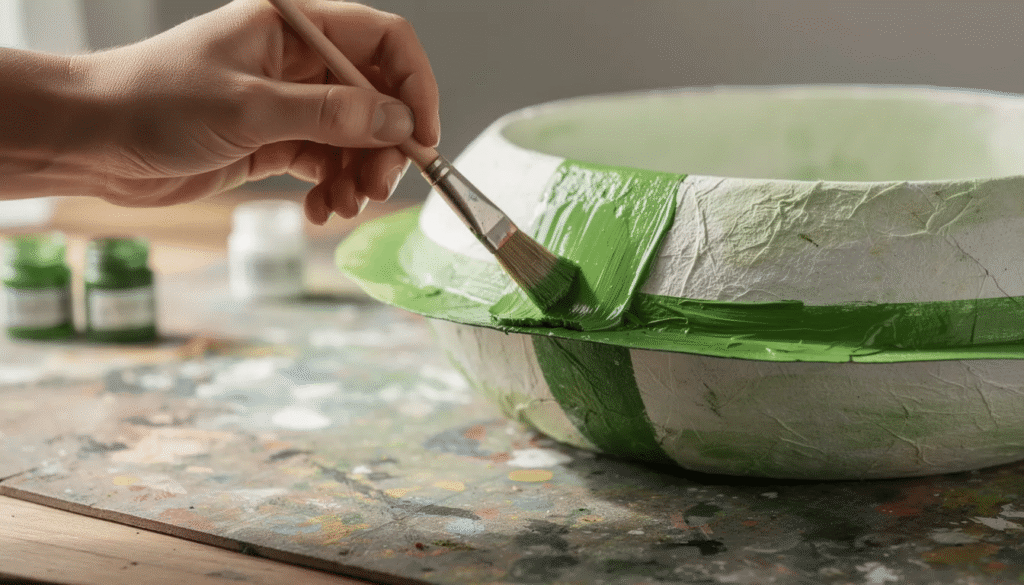
- Apply a coat of white acrylic paint or gesso to the entire bowl, inside and out
- This creates a clean surface and helps colors pop
- Let dry completely—usually a couple of hours
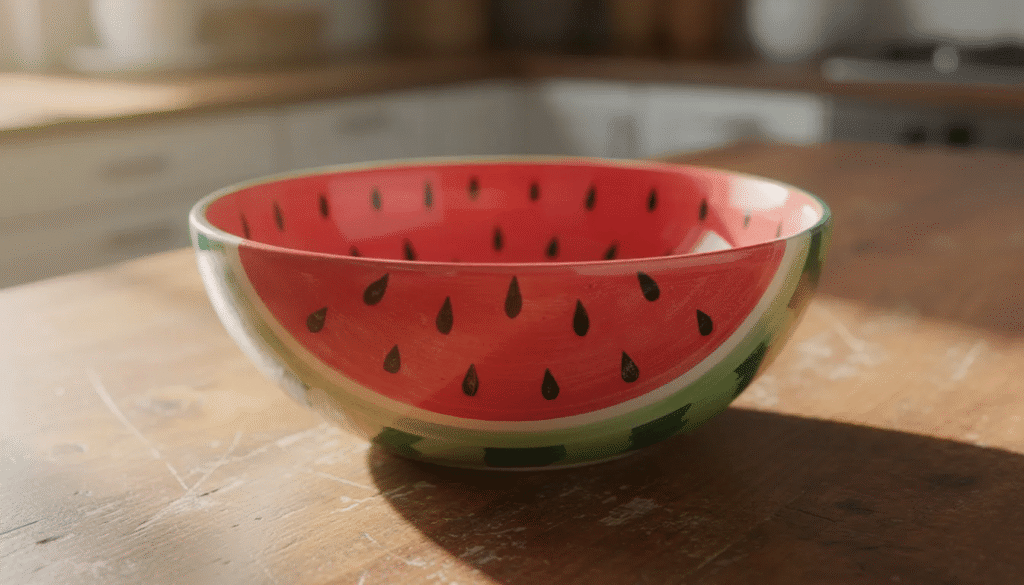
Watermelon Design
- Paint the outside dark green with lighter green stripes
- Paint the inside a rich pinky-red
- Add a thin white band between rind and fruit
- Dot in black seeds toward the inner rim
- This is probably the most popular design and looks amazing on display
Lemon or Orange Bowl
- Paint the outside bright yellow (lemon) or orange
- Paint the inside pale yellow or white
- Add wedge segments radiating from the center using thin white lines
- Include subtle speckling of darker dots for realistic texture
Kiwi Design
- Paint outside in soft brown with tiny darker specks
- Paint inside bright green, fading lighter toward the center
- Add a white oval core
- Dot small black seeds in a ring around the core
Alternative Styles
- Bold stripes or polka dots for a modern look
- Minimalist solid colors for Scandinavian-style decor
- Mix multiple fruits inside one bowl for a playful, eclectic piece
- Abstract patterns in your favorite color palette
Seal for Durability
- Apply clear acrylic sealer or water-based varnish
- Use 2–3 thin coats rather than one thick coat
- Allow at least a couple of hours between coats
- This adds durability and a light sheen
- Applying a coat of Mod Podge or a spray-on acrylic sealer provides a glossy finish and protection against light humidity
Important Usage Note
- Even when sealed, paper mache bowls work best for dry items
- Perfect for whole fruits in their skin, wrapped snacks, or potpourri
- Never submerge in water or use for wet items
- Clean by dusting with a dry or slightly damp cloth
Ideas for Using and Displaying Your Paper Mache Fruit Bowl
A single project can serve many purposes around your home and for special events. Once you’ve made one, you’ll find endless ways to use it.
Everyday Kitchen Use
- Store apples and oranges on your kitchen counter
- Keep bananas and pears on the dining table
- Hold wrapped sweets in the living room
- Display seasonal fruits as they ripen
Seasonal Decor
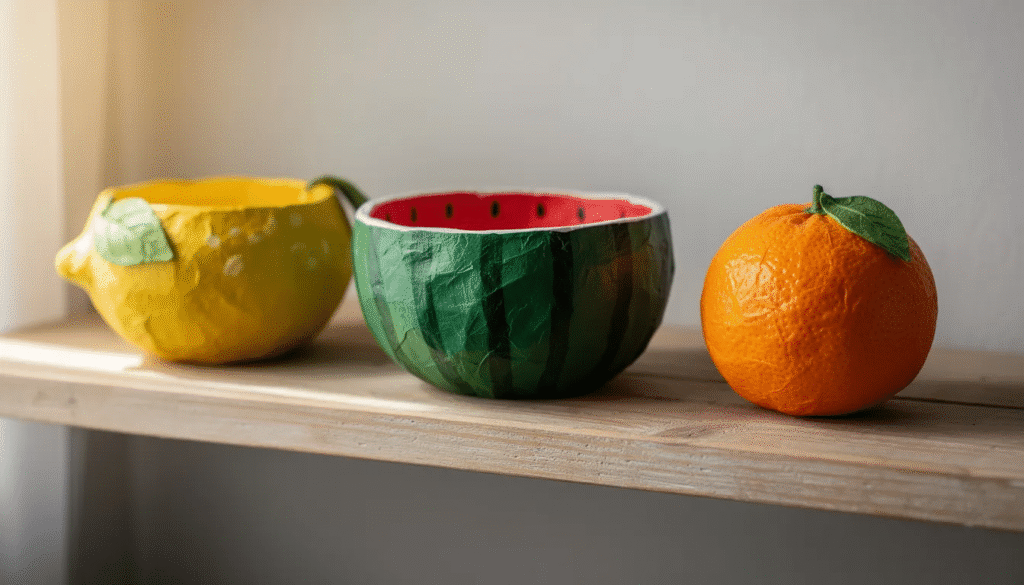
- Use a watermelon bowl for July summer garden parties
- A lemon bowl brightens spring brunch settings
- Create a mixed-fruit set arranged down the center of a long table for family celebrations
- Switch bowls seasonally to keep your decor fresh
Gift Ideas
(paper gifts for every occasion are especially meaningful when they’re handmade):
- Handmade Mother’s Day gift that shows real effort
- Teacher appreciation present at the end of the school year
- Christmas gift filled with chocolates or clementines
- Housewarming present for new homeowners
Kids’ Rooms
- Store hair clips and accessories
- Organize toy figures or LEGO minifigures
- Hold school supplies on a desk
- Create a special spot for collected treasures
Craft Extension Ideas
(you can also design coordinating printable paper elements for your decor):
- Make a set of three nested bowls in different fruit designs
- Create a matching set of watermelon, orange, and kiwi
- Try different sizes for a coordinated display
- Experiment with interesting designs beyond fruits—abstract patterns, galaxy themes, or floral motifs
Once you’ve mastered the first bowl, making multiples goes much faster. Consider creating a whole collection or branching out into other creative paper mache home decor projects.
Troubleshooting & Tips for the Best Results
Even experienced crafters run into issues sometimes. Here’s how to solve the most common paper mache bowl problems and ensure your project turns out beautifully.
Cracking Issues
- Hairline cracks usually mean the pulp dried too fast or was too thick
- Lightly sand the affected area
- Fill with fresh pulp and let dry more slowly
- Next time, keep layers around 5mm–1cm and dry gradually
Warping Problems
- Bowls twist if walls are uneven in thickness
- Check thickness carefully while forming
- Turn the bowl regularly during drying
- Use a wire rack for even air circulation
Mold Prevention
- Never leave the bowl in a damp basement or closed cupboard while wet
- Keep layers no thicker than about 1 cm (1/4–3/8 in)
- Ensure complete drying before storing
- Good airflow is your friend throughout the process
Smooth vs. Textured Finish
- For a refined pottery look, lightly sand with fine sandpaper (220 grit) before painting
- For rustic charm, leave the natural texture
- Gesso helps smooth minor imperfections
Working with Kids
- Keep pulp batches small and manageable
- Use aprons and cover work surfaces thoroughly
- Schedule the project over at least two sessions—forming one day, decorating after full drying
- This approach works well in classrooms or for weekend family crafting
- The messy pulp stage is often what kids love most
Storage and Longevity
- Keep finished bowls away from persistent humidity
- Avoid placing directly above a kettle or next to open windows during rainy season
- With proper care, these bowls last for years
- Store flat to prevent warping
Ready for More? Once you’re comfortable with bowls, adapt the basic method for other shapes. Trays work beautifully for organizing small items. Coasters make great gifts. Pencil holders are perfect for desks. Search for video tutorials online if you prefer visual guidance—there are plenty available as of April 2025 that show even more diy paper techniques.
The techniques you’ve learned here transfer directly to dozens of other projects. Start with a single watermelon bowl this weekend, and see where your creativity takes you.