
Whether you’re a seasoned ceramic artist or just getting started with hand building, finding the right paper clay can transform your projects. This guide walks you through where to find paper clay for sale, what types are available, and how to choose the perfect formulation for your work.
- Find Paper Clay for Sale Online and In-Store
- Types of Paper Clay Available for Sale
- Why Choose Paper Clay? Key Benefits for Artists and Potters
- Popular Paper Clay Products and Specifications
- Pricing, Bulk Discounts, and Wholesale Options
- FAQ: Buying and Using Paper Clay
- Getting Started: Tips Before You Buy Paper Clay
Find Paper Clay for Sale Online and In-Store
Locating paper clay is easier than ever in 2024, with multiple purchasing channels offering everything from small sample packs to bulk studio quantities. Here’s where to start your search and what to expect when you’re ready to add paper clay to your cart.
- Major online marketplaces like Amazon, Walmart, and Blick Art Materials carry a range of paper clay options, from air-dry formulations to kiln-fire ceramic bodies
- Dedicated pottery and ceramics suppliers such as Clay-King, Laguna Clay, and Sheffield Pottery offer specialized formulations with detailed technical specifications
- Local art supply stores and community studios often stock popular paper clay brands and can provide hands-on advice before you purchase
- Store locator tools on manufacturer websites let you search by ZIP code or city to find nearby stockists—simply check the “find a retailer” page
- Shipping and pickup options in 2024 typically include curbside pickup and 2–3 day delivery, though stock can vary seasonally, so checking live inventory is recommended
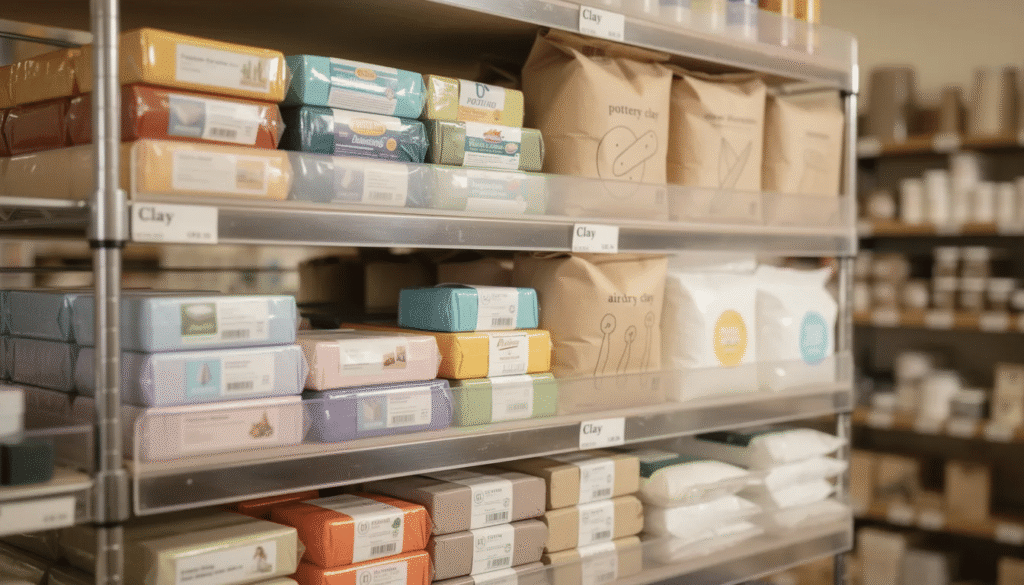
- Typical package sizes include 1 lb sample packs for testing, 5 lb bags perfect for hobbyists, and 25 lb boxes designed for studios and classrooms
Types of Paper Clay Available for Sale
Paper clay refers to traditional clay bodies—stoneware, earthenware, or porcelain—enhanced with processed cellulose from paper pulp. The added paper fibers create a stronger, more forgiving medium that ceramic artists and sculptors have embraced for its unique working properties.
- Low-fire cone 06 paper clay (similar to WC886-style formulations) fires bright white and works well for classroom projects, decorative pieces, and beginners exploring the medium
- Mid-range cone 5 paper clay (comparable to WC952) is formulated for functional ware and hand building, offering a balance of workability and durability after firing
- High-fire cone 10 paper clay (like WC-953 or Laguna-style bodies) performs in both oxidation and reduction atmospheres, suitable for large sculptures and architectural tile work
- Air-dry paper clay requires no kiln access and appeals to sculptors and mixed-media artists who want the strength benefits without firing—note this is distinct from ceramic paper clay, though many artists also explore creative paper mache designs when working without a kiln
- Texture options range from smooth, fine-grained bodies ideal for capturing detail, to medium textured paper clays with grog for sculpture and tile, to coarse formulations for larger structural work
- Multi-range bodies rated for cone 06–10 exist, but testing at each cone is recommended since color and shrinkage shift across firing temperatures
Why Choose Paper Clay? Key Benefits for Artists and Potters
Paper clay has gained popularity among ceramic artists throughout the 2020s for its strength, lightness, and forgiving nature during the building process. The cellulose fibers integrated into the clay body create advantages that standard modeling clay simply can’t match.
- Stronger joins result from the fiber network, making it easy to attach handles, slabs, and delicate elements without the cracking that plagues conventional clay—artists can even join wet-on-dry or dry-on-dry pieces
- Low shrinkage body designed for even drying means less warping, which is perfect for tiles, wall pieces, and larger hand-built forms
- Lightweight finished pieces compared to traditional clay of the same volume help with large sculptures and wall-hung work where weight matters
- Clean fired surface results after paper fibers burn out completely during firing, leaving ceramics that look indistinguishable from conventional bodies
- Easier bone-dry repairs allow artists to re-attach broken sections, fill seams, and save pieces that would otherwise end up in the reclaim bucket
- Creative freedom expands because reduced technical constraints let sculptors build thinner, more delicate forms and experiment with armature-supported structures, similar to how handmade paper sheets for creative projects open up new surface and texture possibilities
Popular Paper Clay Products and Specifications
This section provides concrete examples of paper clays currently in stock at major suppliers, including firing ranges and typical applications to help you compare options before you purchase.
- Cone 06–05 white paper clay designed for classroom and hobby use typically ships in 5 lb and 25 lb options; it fires bright white at cone 05 and works well for beginners focusing on basic forming techniques
- Mid-range cone 5 paper clay similar to WC952 is optimized for hand building and functional ware, with moderate shrinkage and absorption that supports durability in daily-use pieces
- Cone 10 paper clay comparable to WC-953 performs differently depending on atmosphere—expect off-white at cone 5 oxidation and a gray-stony-white at cone 10 reduction, making it great for large sculptures and architectural tile work
- Medium-textured paper clay with fine and medium mesh grog supports cross-sections up to 1 inch thick without excessive cracking, a favorite among sculptors working at scale
- Technical data sheets from each manufacturer list specific shrinkage percentages (typically around 4% at cone 06, 8% at cone 5, and 10% at cone 10) along with recommended firing schedules and compatible glazes, much like guides to the best types of paper for craft uses and benefits explain how material properties affect final results
- Moist versus dry options exist at some suppliers—moist paper clay is ready for immediate modeling, while dry powder forms require rehydration but offer longer shelf life
Pricing, Bulk Discounts, and Wholesale Options
Prices vary by brand, firing range, and pack size, but understanding realistic price bands helps you plan your budget whether you’re buying a single box or stocking a community studio.
- Small quantities of air-dry paper clay (1–2 lb blocks) typically start around $5–$10 USD in 2024, making them accessible for testing or small projects
- 5 lb bags of kiln-fire paper clay usually range from $15–$30 depending on formulation, firing range, and brand reputation
- 25 lb boxes offer better per-pound value, often priced between $40–$80 USD, which is why studios and schools gravitate toward these larger quantities
- Tiered bulk discounts kick in when orders exceed thresholds like $75, $150, or full case quantities—similar to wholesale club pricing models, which can be especially important if you’re turning your ceramics or paper crafts that sell well into a business
- Wholesale accounts are available for educators, community centers, and professional studios, providing access to catalog bundles and recurring order discounts (contact suppliers directly to apply)
- Shipping costs for heavy 25 lb boxes can significantly affect the final delivered price, so compare local pickup options against freight charges before finalizing your order
When comparing prices, always factor in shipping—a cheaper product with expensive freight may cost more than a pricier option with free delivery.
FAQ: Buying and Using Paper Clay
New buyers often have questions about safety, drying, and compatibility with kilns and glazes. Here are answers to the most common concerns.
- Is paper clay non toxic? Reputable paper clays marketed for art and school use are typically non-toxic and may carry AP (Approved Product) or similar safety seals—always check the product label before use, especially in classroom settings
- What size projects work best? Paper clay handles everything from small figurines and jewelry components to large tiles and multi-piece sculptures, provided you manage thickness and drying time appropriately
- How long does drying take? Small air-dry paper clay pieces can harden overnight, while thicker kiln-fired work may require several days of slow, even drying before you’re ready for bisque firing
- Do standard glazes work on paper clay? Most commercial glazes and underglazes compatible with the base clay body (earthenware, stoneware, or porcelain) will also work on its paper clay version once fired—test tiles first to confirm color and fit
- What happens if I fire outside the cone range? Firing significantly above or below the rated cone without testing can cause slumping or warping even with paper clay’s forgiving properties, so stick to recommended temperatures
- Where can I get more support? Online ceramics forums, Facebook groups, and dedicated sites like Simply Paper Crafts for inspiration and tutorials offer ongoing tips, troubleshooting, and real-world examples of paper clay projects from artists at every skill level
Getting Started: Tips Before You Buy Paper Clay
Choosing the right paper clay for your specific projects and skill level makes all the difference. Use this checklist to narrow down your options before placing an order.
- Absolute beginners and classrooms should start with low-fire or air-dry paper clay to avoid kiln access issues and focus on basic forming and sculpting techniques, pairing clay work with top craft paper supplies for DIY projects for mixed-media lessons
- Potters already using cone 5 or cone 10 clay bodies should look for a compatible paper clay in the same firing range so existing glazes, kiln programs, and firing schedules still apply
- Artists planning large or wall-mounted work benefit from medium-textured, grogged paper clays that offer extra strength and reduced warping during drying and firing
- Order a small test quantity first (1–5 lb) to evaluate workability, fired color, and shrinkage before committing to multiple 25 lb boxes
- Keep simple records of your tests—note the cone used, atmosphere (oxidation or raku reduction), glaze combinations, and results so future purchases can be fine-tuned to your studio’s needs, just as tracking designs improves your paper quilling art projects over time
- Check product specifications for details like shrinkage percentages, absorption rates, and showing how the clay performs across different conditions
Finding the right paper clay transforms what’s possible in your ceramic practice. Start with a test quantity, document your results, and scale up once you’ve found the product that works best for your creative vision.