
The term “origami symbol” carries two distinct meanings that every folder should understand. On one hand, it refers to the standardized visual language of arrows, lines, and icons that appear in origami diagrams worldwide. On the other hand, it points to the deeper cultural and spiritual significance of folded figures like cranes, lotus flowers, and animals that have carried meaning in Japanese culture for centuries. In Japanese culture, origami symbols represent profound, often spiritual, messages of good fortune, longevity, and affection. Every fold tells a story and holds intention, giving origami its deep cultural and spiritual weight.
Modern paper folding uses a visual “alphabet” developed in mid-20th century Japan by master Akira Yoshizawa and later refined by experts like Robert Lang. This system allows anyone, anywhere, to pick up a diagram and follow along without translation. At the same time, traditional Japanese and East Asian traditions layer spiritual and emotional symbolism onto finished models—connecting a simple sheet of paper to ideas of peace, good fortune, protection, and transformation. Understanding both aspects of origami symbols helps you achieve two things: the ability to read any international folding diagram confidently, and a genuine appreciation for the cultural stories behind paper cranes, dragons, turtles, and more.
- The Visual Language of Origami Diagrams
- Basic Origami Symbols and Their Diagram Meanings
- How to Read Origami Diagrams Step by Step
- Origami Symbolism: Cultural and Spiritual Meanings
- Iconic Origami Symbols and What They Represent
- Geometric and Abstract Origami Symbols of Harmony
- Modern Uses of Origami Symbols in Daily Life
- FAQ About Origami Symbols
The Visual Language of Origami Diagrams
Before exploring the symbolic meanings of cranes or dragons, beginners should first learn the universal drawing symbols that appear in most books and websites. This “diagram code” was pioneered by Akira Yoshizawa in 1950s Japan and later standardized globally, allowing a model designed in Tokyo to be folded in London or New York without any language barrier.
This section focuses on the technical side of origami diagrams—the lines, arrows, and icons that tell you exactly what to do with the paper. Think of these as the grammar of folding origami, while the symbolic meanings of finished models (peace, longevity, luck) represent the poetry. Most people confuse these two concepts, but keeping them separate will help you understand both more clearly.
Basic Origami Symbols and Their Diagram Meanings
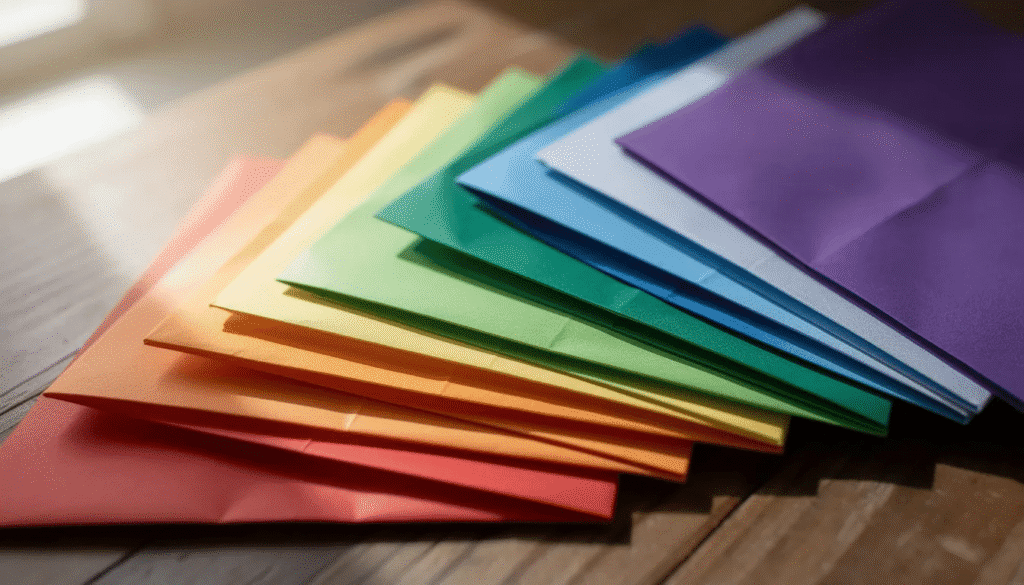
Most modern books and online tutorials reuse the same core set of symbols developed out of Yoshizawa’s system and refined by Robert Lang’s proposals in the early 1990s. Once you familiarize yourself with these basics, you’ll find that even complex models become approachable because the language stays consistent. Understanding these basic origami symbols is essential to fold from diagrams, as they are based on conventions developed by Akira Yoshizawa and modern internationally recognized standards.
Here are the key symbols you’ll encounter in basic origami instructions:
Solid lines indicate visible edges of the paper—the boundaries you can actually see at that step. Dashed lines typically show hidden edges or mark where a valley fold should occur. A valley fold (often shown with dashes and a curved arrow) means folding the paper toward you, creating a crease that looks like a valley. The mountain fold (usually represented by a dash-dot-dash line) requires folding the paper away from you, so the crease forms a ridge like a mountain peak.
Arrows communicate movement: a simple curved arrow shows the direction to fold, while an arrow with a loop indicates you should turn the entire model over. A pull arrow (often hollow with a pointed tip) tells you to pull paper out from between layers. Repeat signs (small marks resembling tally lines) indicate that you should perform the same action on other parts of the model.
More advanced symbols include the squash fold (pressing a flap open and flattening it) and the reverse fold (pushing a point inside itself). These basics are enough for readers to tackle classic beginner models such as the traditional crane, jumping frog, and other top origami designs, along with simple boxes found in entry-level books..
How to Read Origami Diagrams Step by Step
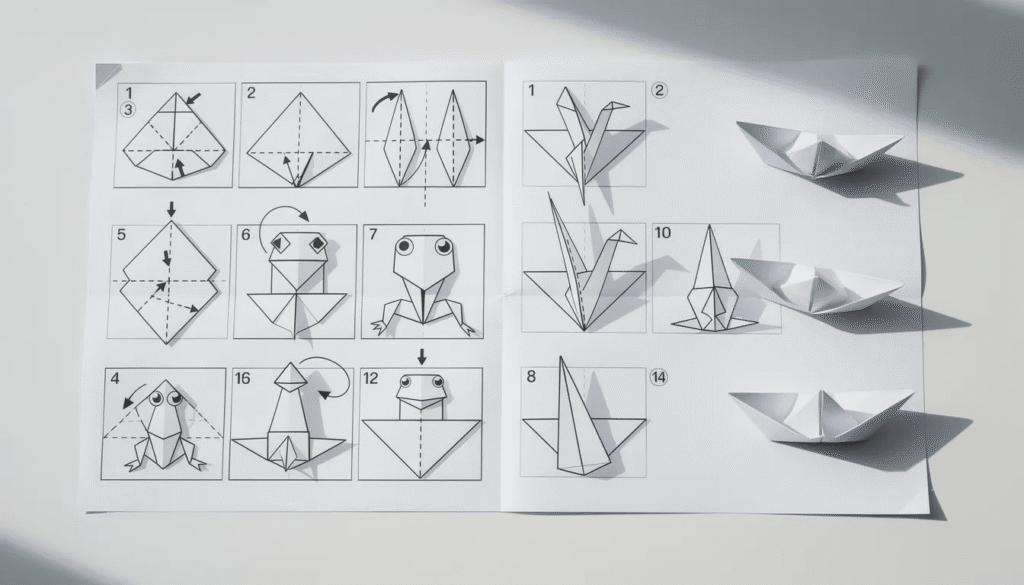
Diagrams work like comics: each frame uses origami symbols to show what happens to the paper from one step to the next. Your job is to interpret each panel and replicate the action before moving forward.
When approaching any new diagram, start by checking if there’s a symbol legend—many books include one on the first few pages. Identify the paper orientation at step one: is the colored side facing up or down? Then read each step in order, typically left to right and top to bottom.
Consider how you might read the first steps of a traditional crane diagram. Step one usually shows a square with a diagonal dashed line, indicating a valley fold corner to corner. The arrow points the direction of the fold. Step two might show the resulting triangle with another fold line and arrow. By step three or four, you’re creating the preliminary base that serves as the foundation for the crane’s wings and body.
Common pitfalls trip up even experienced folders. Misreading a mountain fold as a valley fold can send your entire model in the wrong direction. Skipping pre-creases—folds you make and then unfold to create guidelines—leaves you without the reference points needed for later steps. And ignoring rotation arrows means you might be folding on the wrong axis entirely. When something doesn’t look right, go back and check whether you missed a crease or misread an arrow direction.
Origami Symbolism: Cultural and Spiritual Meanings
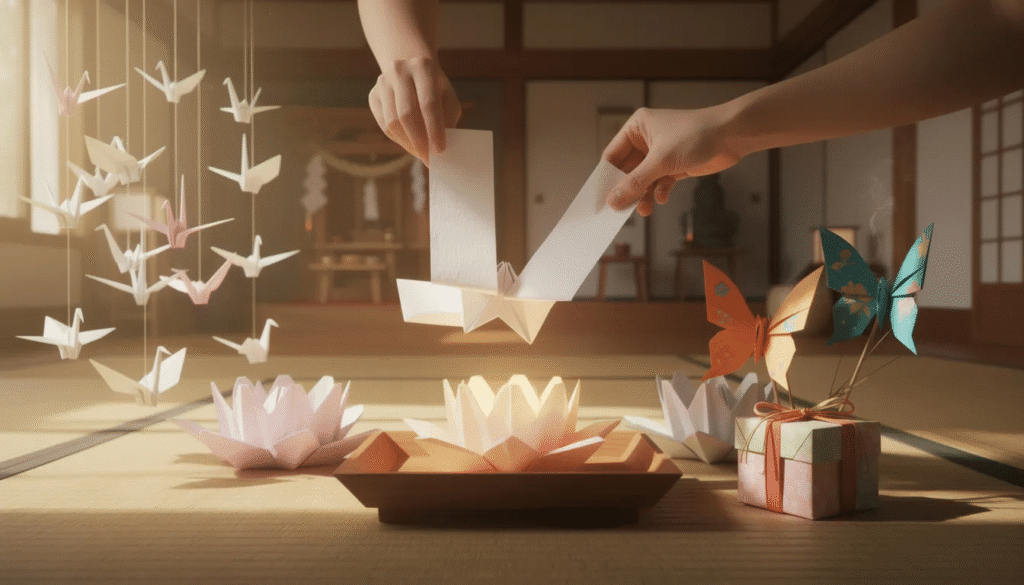
Beyond the technical diagram language, the phrase “origami symbol” also refers to what specific folded shapes represent in Japanese and global culture. This is where folding paper transforms from craft into art with emotional and spiritual depth.
Shinto and Buddhist traditions, along with Japanese folklore, give paper figures layered meanings related to peace, good fortune, protection, and transformation. The connection between origami and the sacred stretches back centuries—paper itself was once so precious that folded forms appeared only in religious ceremonies and noble gift-giving.
These meanings influence when certain models are folded. Cranes appear at weddings and memorials. Butterflies mark graduations and birthdays. Lotus flowers carry prayers for enlightenment and healing. Understanding this symbolism helps you choose meaningful models for gifts, therapy practices, or personal milestones like recovery and new beginnings.
Iconic Origami Symbols and What They Represent
Some origami shapes have become universally recognized symbols, carrying meaning that transcends their paper origins. The crane, lotus, butterfly, and various animals each hold distinct cultural significance that modern folders continue to honor and reinterpret.
The following subsections explore the most familiar origami symbols, covering their origins, cultural context, and how people use them today in décor, healing rituals, and gifts.
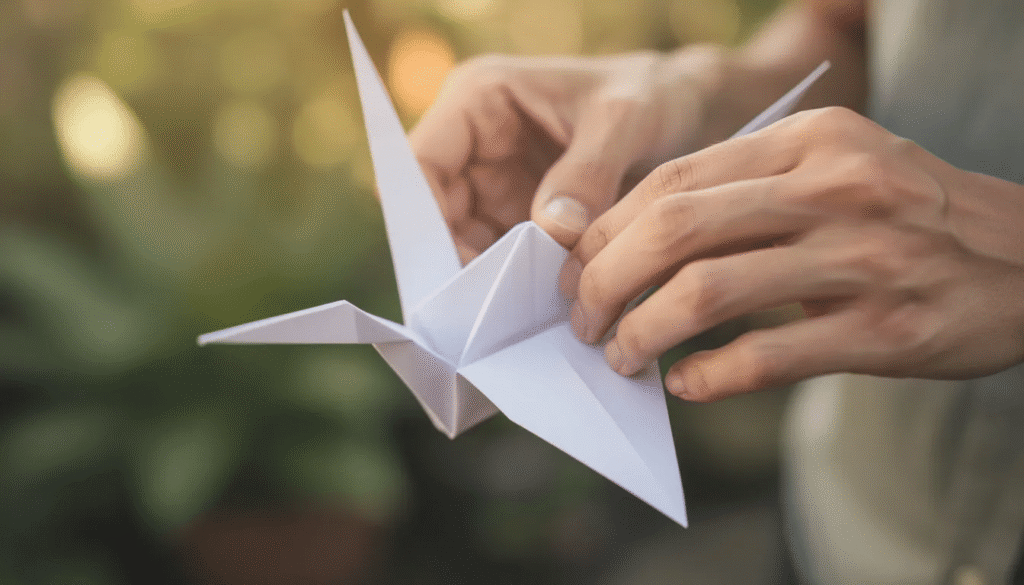
Origami Crane: Peace, Longevity, and Wishes
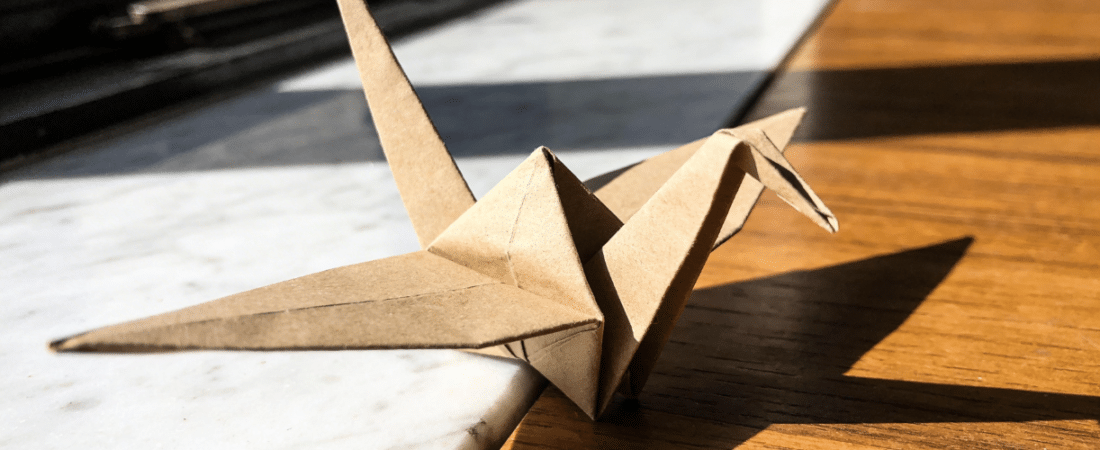
The origami crane stands as the most recognized origami symbol worldwide, forever linked to peace and hope through post-World War II Japan. In Japanese culture, the red-crowned crane is considered a creature of heaven, believed to live for a thousand years and serve as a messenger between earth and the divine.
The tradition of folding 1,000 cranes, called Senbazuru, promises that anyone who completes the set will have their deepest wish granted. This practice gained global attention through the story of Sadako Sasaki, a young girl who developed leukemia after radiation exposure from the Hiroshima atomic bomb. In 1955, at age 12, she began folding paper cranes from medicine wrappers and gift paper, hoping to reach 1,000 and wish for her health. She folded 644 before her death; her classmates completed the remaining cranes in her memory. Today, the Children’s Peace Monument in Hiroshima Peace Memorial Park, unveiled in 1958, honors her life, and millions of paper cranes arrive there each year as symbols of hope and reconciliation.
Cranes symbolize long life, fidelity in marriage, and the connection between earth and heaven, making them appropriate for weddings, memorials, and peace events. Strings of cranes hang in temples, schools, and hospitals as physical prayers for healing. When you fold a crane, you participate in a practice that has carried emotions and intentions for generations.
Lotus, Butterfly, and Natural Motifs
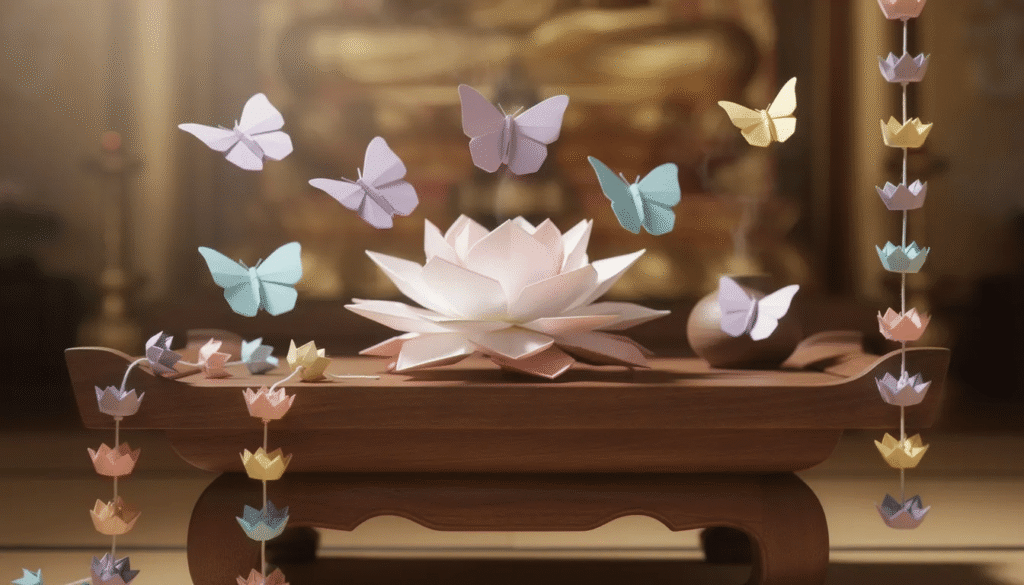
Many origami symbols draw inspiration from nature, each carrying its own message of growth or change that resonates across cultures.
The paper lotus represents purity and spiritual awakening, drawing on the real flower’s ability to bloom pristine from muddy water. In Buddhist teachings throughout East Asia, the lotus embodies enlightenment rising from suffering—a powerful idea that gives folded lotus flowers their meditative significance. People often place paper lotus flowers on altars or use them in ceremonies honoring ancestors.
Butterflies in origami symbolize transformation, rebirth, and the soul’s journey. The creature’s metamorphosis from caterpillar to winged beauty makes it a natural symbol for major life transitions. Paper butterflies appear at birthdays, graduations, and memorial altars, marking moments when someone emerges changed. The paired butterflies called ocho and mecho have appeared in Japanese wedding ceremonies since at least the 17th century, adorning sake vessels to represent marital harmony.
Folders sometimes create garlands of butterflies or lotus flowers as meditative projects. The repetitive nature of folding the same model many times quiets the mind, turning paper folding into a reflective practice that calms emotions and sharpens focus.
Origami Animals as Personal Symbols
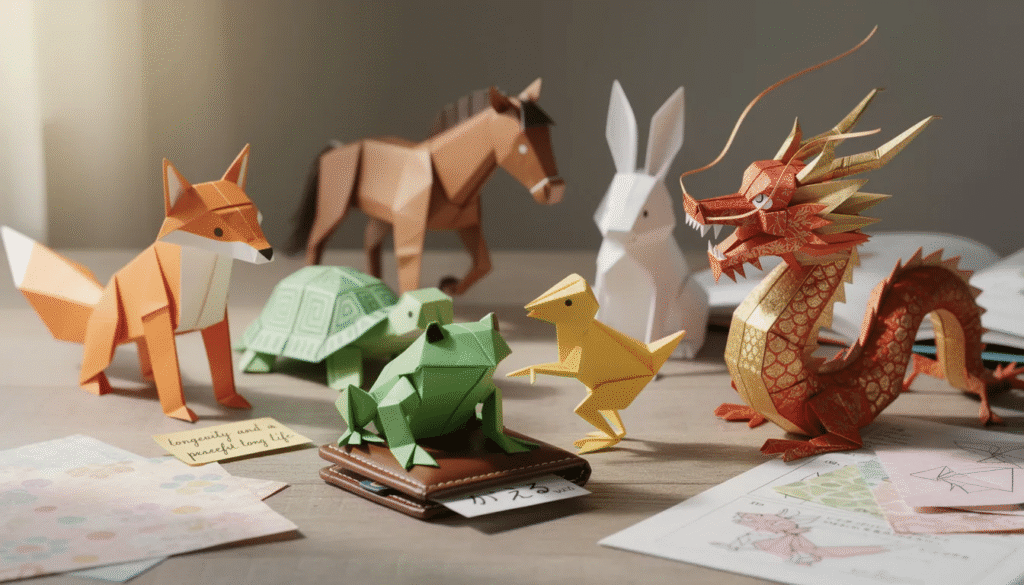
Folding specific animals lets people express traits they admire or wish to cultivate. Each creature carries associations from folklore and observation that give the finished model personal significance.
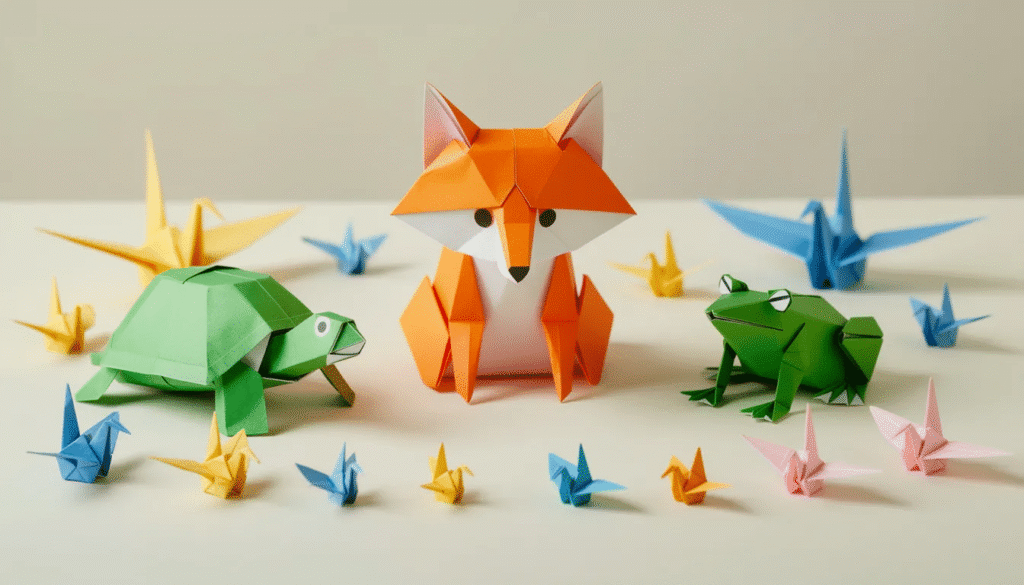
Foxes in Japanese folklore often symbolize intelligence, cunning, and adaptability. Folding a fox might represent cleverness or the ability to navigate tricky situations. Turtles represent longevity, steady progress, and patient persistence—qualities that make turtle models meaningful gifts for retirement or for someone facing a long journey.
Frogs hold special significance because the Japanese word for frog, kaeru, also means “to return.” Paper frogs are sometimes kept in wallets as reminders of financial prudence and the hope that money spent will return. The jumping frog model or a playful origami duck design, with its clever mechanism that makes it leap when pressed, adds playful energy to this symbolism..
Dragons in Japanese and Chinese art are typically wise guardians and bringers of balance rather than fearsome monsters. Complex dragon models represent strength, discipline, and protective power, making them prized symbols among experienced origami artists who appreciate both the technical challenge and the meaning behind the form.
These animal symbols connect naturally to everyday life. A horse or rabbit model might accompany wishes for energy and success before exams. A dragon could mark confidence for a new job. A turtle might celebrate a peaceful, long life ahead.
Geometric and Abstract Origami Symbols of Harmony
Not all symbolic origami represents living creatures. Many folders are drawn to stars, boxes, and modular shapes for their sense of order, balance, and quiet meaning.
Origami stars can symbolize guidance, hope, and wishes. Folders often create them in large numbers, storing them in jars or bowls as visual reminders of goals or prayers. The act of folding many small stars becomes meditative, each one representing a discrete intention or moment of focus.
Simple origami boxes and envelopes serve as containers not just for small objects but for written intentions, gifts, or keepsakes. Folding a box to hold a handwritten note transforms both the container and its contents into something meaningful—a physical “vessel” for memories or promises.
Modular origami, where multiple folded units combine into complex polyhedra, has become a collaborative symbol of community and interconnectedness. Popular in classrooms, clubs, and group workshops since the late 20th century, these projects require many hands to complete. The finished form represents what individuals can achieve together, making modular origami a powerful tool for team-building and collective expression.
Modern Uses of Origami Symbols in Daily Life
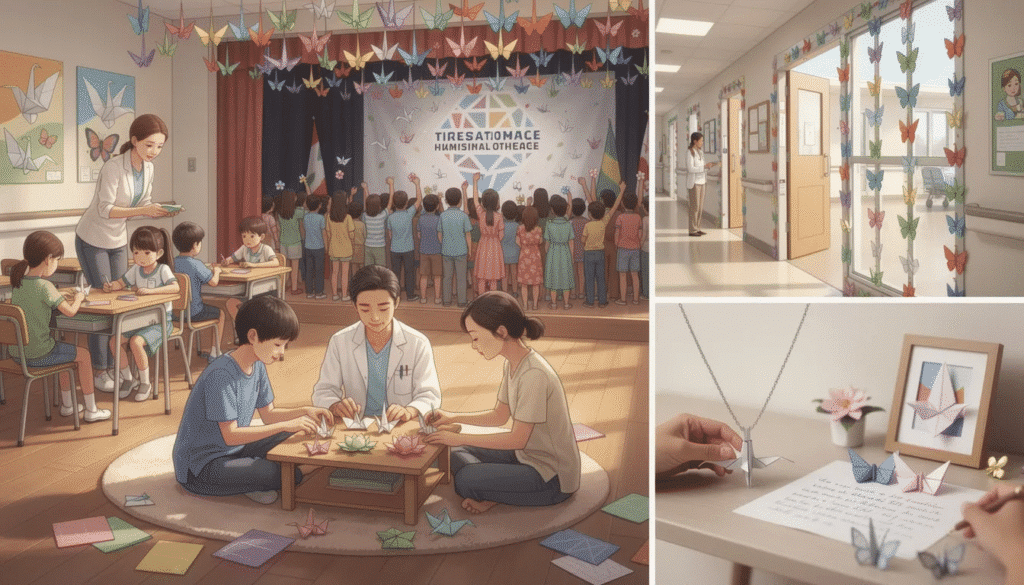
Since the early 2000s, origami symbolism has moved from traditional ceremonies into therapy rooms, schools, offices, and home décor worldwide, inspiring broader interest in paper crafting and creative paper projects. The practice has found creative ways to serve contemporary needs while honoring ancient meanings..
Therapists and educators use crane-folding, lotus flowers, and simple animals in mindfulness and grief-support groups. The focused attention required for paper folding helps people externalize hopes and fears, giving abstract emotions a tangible form. Studies suggest that repetitive folding can reduce anxiety by engaging the mind in a calm, purposeful task.
Contemporary uses expand constantly. Symbolic cranes appear at international peace events, connecting participants to Hiroshima’s legacy. Butterflies and flowers brighten hospital wards, offering patients visible reminders of transformation and healing. Personalized origami gifts attached to cards or wrapped presents add layers of meaning that printed decorations cannot match.
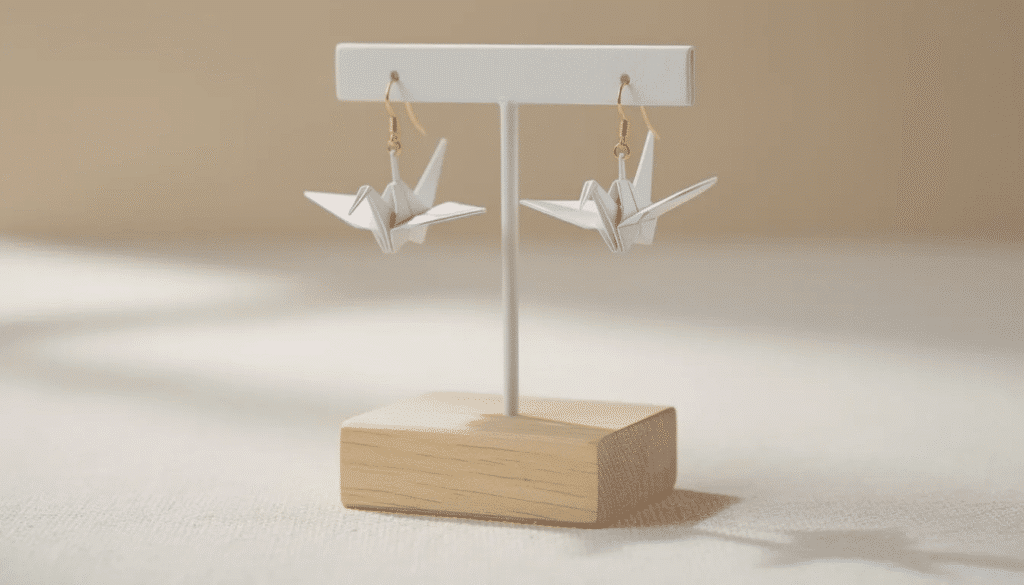
Wearable origami—jewelry, keychains, and framed art—lets people carry their chosen symbol with them daily. A small crane pendant or butterfly earring becomes a quiet reminder of resilience, healing, or change. These pieces contribute to a sense of connection with tradition while fitting seamlessly into modern life.
FAQ About Origami Symbols
This section answers common beginner questions about both diagram symbols and cultural meanings, helping you understand the full scope of what “origami symbol” can mean.
What does the origami crane symbolize?
The origami crane symbolizes peace, longevity, and hope. In Japanese tradition, cranes are sacred creatures associated with a lifespan of 1,000 years and considered messengers between heaven and earth. After Sadako Sasaki’s story spread globally following her death in 1955, the crane also became an international symbol of anti-nuclear advocacy and healing.
Why do people fold 1,000 cranes?
The tradition of Senbazuru holds that anyone who folds 1,000 paper cranes will have their deepest wish granted. This practice often accompanies prayers for recovery from illness, wedding blessings, or wishes for peace. The cranes are typically strung together and displayed at temples, hospitals, or memorial sites.
Do different origami animals have different meanings?
Yes, different animals carry distinct symbolism. Turtles represent longevity and steady progress. Frogs symbolize luck and safe return home (the Japanese word kaeru means both “frog” and “to return”). Dragons represent wisdom, protection, and strength. Butterflies signify transformation and the soul’s journey.
Can origami be used as meditation?
Many people use origami as a meditative practice. The focused attention required to follow instructions and execute precise folds creates a mindful state similar to other contemplative activities. Repetitive folding of the same model—like creating many cranes or stars—can calm emotions and provide a sense of accomplishment.
Are origami symbols only Japanese?
While origami’s most famous symbols developed in Japan, paper folding traditions exist worldwide. Chinese zhezhi includes symbols like ingots for wealth. The Spanish pajarita (little bird) dates to at least the 12th century. Modern origami culture has become truly global, with folders everywhere creating and interpreting symbolic models through their own cultural lenses.
What’s the difference between diagram symbols and symbolic meanings?
Diagram symbols are the visual instructions (arrows, fold lines, icons) that tell you how to fold paper. Symbolic meanings refer to what finished models represent culturally (peace, luck, transformation). A valley fold arrow is a diagram symbol; the crane’s association with longevity is a symbolic meaning. Understanding both helps you read instructions and appreciate the deeper inspiration behind what you create.
Whether you’re learning to read your first origami diagrams or folding a crane for someone facing a difficult time, understanding origami symbols connects you to centuries of meaning. The same simple sheet of paper that puzzled you at step one can become a gift carrying wishes for good fortune, a meditation on patience, or a contribution to a larger story of peace and healing. Start with a single crane, practice reading those arrows and fold lines, and let the paper teach you both technique and intention.