
Key Takeaways
- You will make one easy origami flower: a five-petal blossom from square origami paper.
- To create an easy origami flower, you typically need five squares of paper, each measuring 3” x 3”.
- Each petal is folded from one square, then the petals are joined with glue or tape.
- This origami flower step by step easy guide is for complete beginners and kids aged 7+ with help.
- Once completed, make a bunch for gifts, a bouquet, party decor, or a room display.
Introduction to Easy Origami Flowers
Origami is the Japanese art of folding paper into shapes. According to Britannica, its history connects to early paper craft in Asia and later Japanese ceremonial folding, and today you can fold everything from flowers to creative paper ducks for all skill levels.
This simple origami flower looks like a small blossom, similar to a cherry blossom. If you want to make origami at home, this is a great first project: it uses easy origami folds, common paper flowers materials, and no advanced skills.
Paper flowers became popular DIY decor in the 2010s through blogs and Pinterest. Today, you can start folding with origami paper, magazine pages, newspaper, or even comic book pages and create lovely flowers in one day.
- What You Need to Make an Easy Origami Flower
- Step 1 – Prepare Your Paper Squares
- Step 2 – Start Folding the Basic Petal Shape
- Step 3 – Shape and Lock the Petal (Easy Origami Folds)
- Step 4 – Turn the Folded Unit into One Petal
- Step 5 – Repeat to Make Five Petals
- Step 6 – Assemble the Origami Flower
- Optional: Add a Stem and Leaves
- Ideas for Using Your Easy Origami Flowers
- Tips for Beginners: Getting Neat, Clean Folds
- FAQ – Easy Origami Flower Questions
What You Need to Make an Easy Origami Flower
Good materials make cleaner folds and sharper creases, and browsing Simply Paper Crafts for inspiration can help you choose colours and styles.
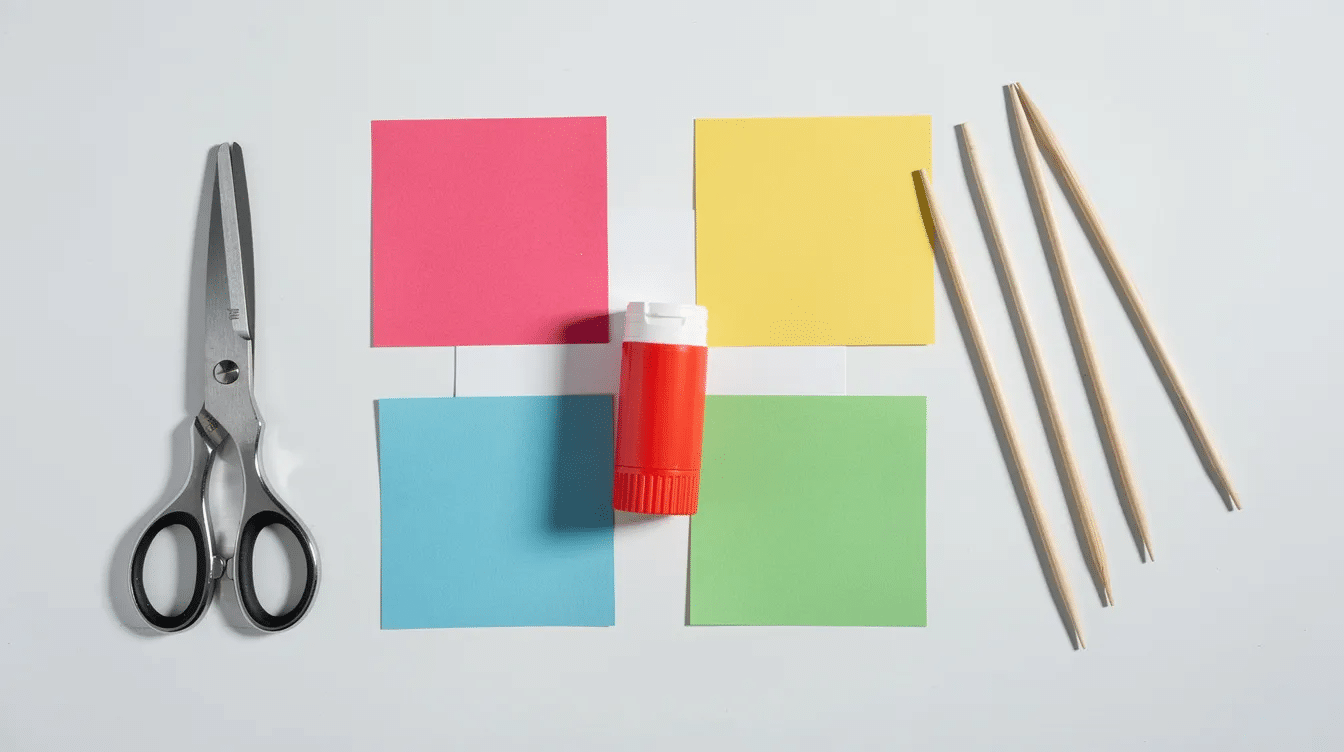
You need:
- Five square pieces of paper per flower; 3” x 3” or 5” x 5” are popular choices.
- 15 x 15 cm origami paper for practice, or 7.5 x 7.5 cm for mini flowers.
- Scissors to cut squares, plus a ruler and pencil.
- Glue, double-sided tape, and scissors are often used in the process of assembling origami flowers and securing petals together.
- Optional skewer or cocktail stick for a stem.
- Colours: pastels for spring, red and gold for Lunar New Year, white and green for weddings.
Origami flowers can be made from various types of paper, including magazine pages, newspaper, and specially printed origami and craft paper supplies.
Step 1 – Prepare Your Paper Squares
Each petal starts as a square, and you need five identical squares per origami flower.
If using A4 paper, mark 15 cm along two sides, draw a line, then cut. For beginners, five 8–10 cm squares are easier to hold than tiny paper.
Use single-sided paper with the colored side facing down when you begin. Check that every piece is even before making the first fold.
Step 2 – Start Folding the Basic Petal Shape
Place one square flat on the table, colored side down.

- Fold the square in half diagonally to make a triangle.
- Align the corners carefully.
- Press the crease with your fingernail.
- Bring the two bottom corners up to the top point.
- You should now have a diamond, with the middle point at the top.
Do not worry if the sides are slightly uneven. You can still create a great flower.
Step 3 – Shape and Lock the Petal (Easy Origami Folds)
Now shape the unit so it becomes three-dimensional.
Open the side flaps gently, then squash them flat. Each side should form smaller triangles, like a fan. Fold the top corners of those side triangles down a little to soften the petal edge.
Next, fold each outer flap back toward the center line. The flaps should make a slim, tapered shape. This step is simple, but take your time.
Step 4 – Turn the Folded Unit into One Petal
Bring the two long edges together. The folded piece should turn into a hollow cone, with the inside open.
Add a thin line of glue or a small strip of double-sided tape along one inner edge. Press the edges together and hold for 10–20 seconds to secure the petal.
The process of making an origami flower involves folding the paper into petals and then securing them together, usually with glue or tape, which makes it one of many relaxing fun paper activities for all ages.
Step 5 – Repeat to Make Five Petals
Repeat Steps 2–4 with the other four squares.
For faster making, set up a batch system: fold all pieces into triangles, then diamonds, then shaped petals. You can use one colour, alternating colours, or lots of bright colours for a rainbow flower.
To create an origami flower bouquet, you typically need five petals per flower, which can be made from squares of paper, such as 3” x 3” or 5” x 5” squares, or you can experiment with making complementary crepe paper flowers for extra texture.
Step 6 – Assemble the Origami Flower
Place two petals side by side. Add glue to one side, press them together, and keep the edges aligned.
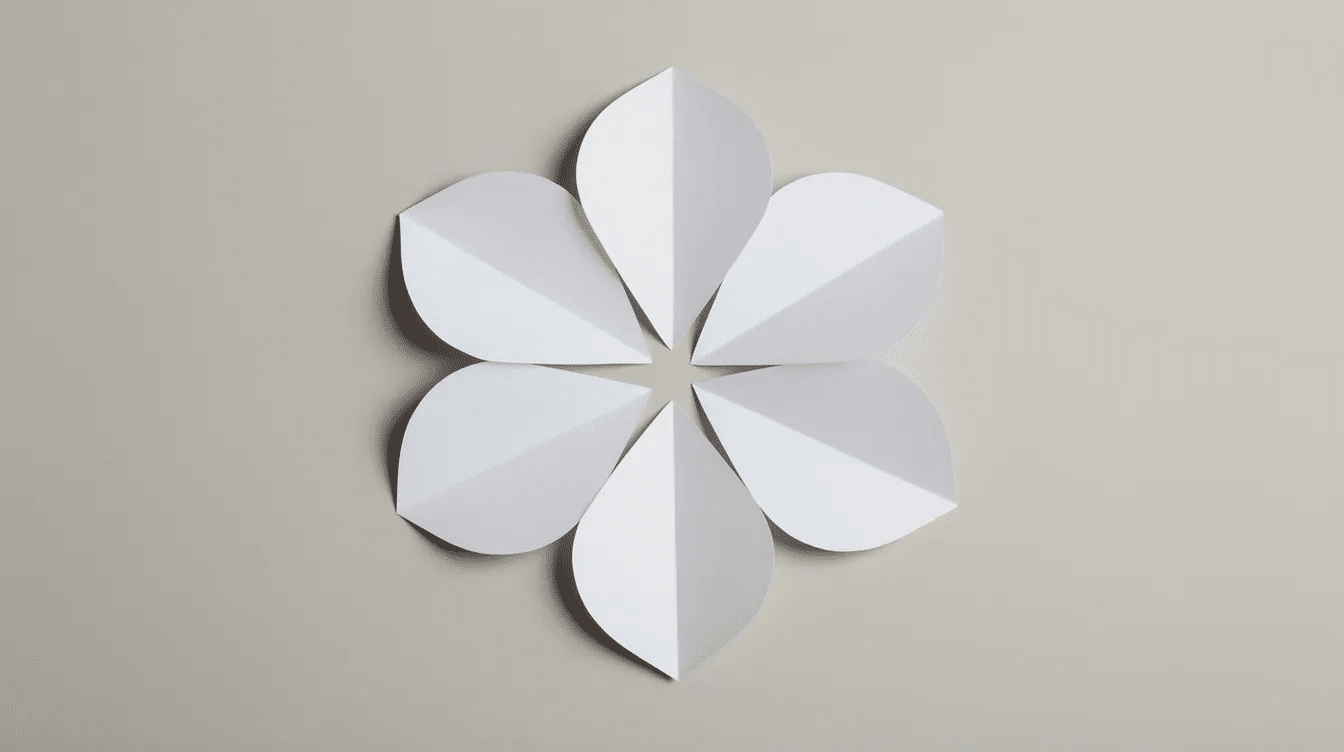
Continue adding petals until all five form a circle. The last join can feel tight, so adjust the space gently until the flower closes neatly. Your origami flower is now completed.
Optional: Add a Stem and Leaves
For stalks of the origami flowers, you can cut strips of green paper, ideally 6cm wide, from an A4 sheet, and roll them tightly to form tubes, then mix them with tissue paper flowers for any occasion if you want a fuller bouquet.
Glue the tube end inside the flower center, or tape it to the back. For leaves, fold a small green rectangle in half, cut a leaf shape, open it, pinch the center crease, and glue it to the stalk.
Ideas for Using Your Easy Origami Flowers
Once you discover this method, you can make a bunch quickly, and even turn them into paper crafts that sell well at fairs or online if you enjoy sharing your creations.
Use them for a teacher gift bouquet, birthday table, wedding place cards, or home decor as part of your birthday decorations paper ideas. For recycled style, use magazine pages, music sheets, old book pages, newspaper, or comic book pages.
When assembling the bouquet, you can either arrange the flowers first and then wrap them, or create a wrap for the bouquet and arrange the flowers inside it.
Tips for Beginners: Getting Neat, Clean Folds
Fold on a hard, flat desk, not a bed. Run a nail, ruler edge, or bone folder along each crease. Practice one petal on scrap paper before using special paper.
If you watch video instructions, old tutorials marked 6 years ago, 5 years ago, 4 years ago, 3 years ago, or 2 years ago can still be useful, especially for exploring top origami designs for every skill level. You may see phrases like skip navigation, search with your voice, playback doesn’t begin shortly, begin shortly try restarting, try restarting your device, videos you watch may be added to the tv’s watch history and influence tv, sign in to youtube, youtube on your computer, error occurred while retrieving, occurred while retrieving sharing, history and influence tv, and watch history and influence. Read the fold steps here and enjoy.
FAQ – Easy Origami Flower Questions
Can I make this origami flower without special origami paper?
Yes. Standard printer paper, notebook paper, magazine pages, newspaper, and comic book pages work if cut into even squares. Thin 70–80 gsm paper is easier than cardstock.
How long does it take to make one easy origami flower?
Your first flower may take 15–20 minutes. After practice, one flower often takes 5–7 minutes. Set aside about an hour to receive a small bouquet of five or six flowers.
Is this origami flower suitable for children?
Yes, children aged 7–8+ can usually follow with adult help. Pre-cut squares for younger kids, and use non-toxic glue sticks instead of sharp craft knives.
How can I make my paper flowers last longer?
Keep them away from moisture and direct sunlight. Store spare paper flowers in a box. A light spray varnish can help if adults agree it is safe and ventilated.
Can I use this method to make larger or smaller origami flowers?
Yes. The same fold works from tiny 5 x 5 cm squares to 20 x 20 cm squares. Larger flowers suit wall art; smaller ones suit cards. Search your paper stash, pick a square, and follow the instructions again.