
Origami as therapy, the traditional Japanese art of paper folding, has quietly made its way from cultural practice to clinical tool. Origami is the traditional Japanese art of paper folding that improves mental health by fostering mindfulness, reducing anxiety, and boosting self-esteem. What began centuries ago in Japan as a ceremonial and artistic discipline is now being used in therapy rooms, schools, and hospitals around the world to help people of all ages manage anxiety, process trauma, and build emotional well being. This article is for therapists, educators, and individuals interested in using origami as a tool for mental health and emotional well-being. This article will explore how origami therapy works with children, teens, and adults—both in individual sessions and group sessions—and why mental health professionals are increasingly reaching for a simple piece of paper as a therapeutic instrument.
Therapeutic origami typically involves folding a single sheet of square paper without cutting or gluing, distinguishing it from kirigami and other paper crafts. This constraint is part of what makes the practice so powerful: you create something beautiful and dimensional from nothing more than precise folds and patience. Since at least the late twentieth century, mental health professionals, art therapists, and educators in North America, Japan, and beyond have recognized that the act of folding paper can foster relaxation, improve concentration, and support emotional healing in ways that feel less intimidating than traditional talk therapy.
With rising rates of stress and anxiety, accessible and creative therapeutic tools like origami are more important than ever.
- A Brief History of Origami and Its Path into Therapy
- How Origami Works as a Therapeutic Tool
- Expressive Origami Therapy and Trauma Work
- Mental Health Benefits of Origami
- Origami in Child and Adolescent Therapy
- Origami for Adults: Stress, Anxiety, and Everyday Well-Being
- Practical Guide: How Therapists and Individuals Can Get Started
- When Origami May Not Be the Right Fit (and How to Adapt)
- Conclusion: A Simple Sheet of Paper, Real Therapeutic Possibility
A Brief History of Origami and Its Path into Therapy

Paper was invented in China around 105 CE, and the craft of folding paper evolved distinctly in japan by the seventeenth century. While the word “origami” (from the Japanese words “ori” meaning fold and “kami” meaning paper) became widely used in the late nineteenth and early twentieth centuries, paper-folding ceremonies existed much earlier. Ceremonial folds called “tsutsumi” were used in religious rituals and as wrappings for gifts symbolizing good fortune, establishing paper folding as a practice imbued with meaning and intention from its earliest days.
One of the most powerful examples of origami’s symbolic role in healing comes from the story of Sadako Sasaki, a Japanese girl who developed leukemia after the atomic bombing of Hiroshima. According to tradition, folding one thousand paper cranes (senbazuru) would grant the folder a wish. Though Sadako died in 1955 at age twelve, her story spread globally and transformed the paper crane into an international symbol of hope, peace, and resilience. This tradition continues today in hospitals, support groups, and therapy settings where people fold origami pieces as acts of intention and healing.
Modern recreational and artistic origami grew significantly after 1950, largely due to pioneers like Akira Yoshizawa, who formalized folding notation and elevated paper folding to a recognized art form, inspiring countless creative origami designs for every skill level.. His work inspired educators and therapists to explore origami’s potential beyond craft. By the 1970s through the 1990s, art therapists and counselors began incorporating origami into clinical sessions as interest in mindfulness, sensorimotor interventions, and expressive arts therapies increased. What had been a beautiful art became a therapeutic experience with documented benefits for emotional regulation and cognitive function.

How Origami Works as a Therapeutic Tool
The therapeutic benefits of origami emerge from the intersection of hands-on activity, focused attention, and symbolic meaning. When someone sits down to fold origami, they engage in a process that is at once physical, cognitive, and emotional. Understanding these mechanisms helps explain why a simple folding process can have such a profound impact on mental well being.
The first mechanism is mindfulness and present moment awareness. Following origami instructions step by step requires total focus on the task at hand. This concentration naturally quiets racing thoughts and pulls attention away from worries about the future or regrets about the past. The experience is similar to guided meditation but more active—your hands are busy, your eyes are tracking creases, and your mind has little room for intrusive thoughts. For people managing anxiety or depression, this active form of practicing mindfulness can be more accessible than sitting still with closed eyes.
The second mechanism involves sensorimotor engagement. The folding process demands fine motor skills, bilateral hand use, and hand eye coordination. These physical demands activate both hemispheres of the brain: the left side processes sequential instructions tied to logic, while the right side engages in creative visualization of the final form. This bilateral integration supports self-regulation and can be particularly grounding for trauma survivors and children who struggle with attention. The tactile feedback of paper between fingers provides sensory input that helps the nervous system settle.
The third mechanism is symbolic and metaphorical meaning-making. Paper can be folded, unfolded, and reshaped—a powerful metaphor for internal change and resilience. A client might choose to fold a crane to represent hope after loss, or a lotus to symbolize growth through difficulty. These intentional associations give the finished origami project personal significance that extends far beyond the craft itself. Art therapists often invite clients to assign meaning to their creations, turning each model into a tangible reminder of therapeutic progress.
Origami can serve as a standalone exercise or integrate into existing treatment approaches, including cognitive-behavioral therapy, art therapy, and trauma-focused work. Its flexibility makes it a valuable addition to a therapist’s toolkit.
Expressive Origami Therapy and Trauma Work
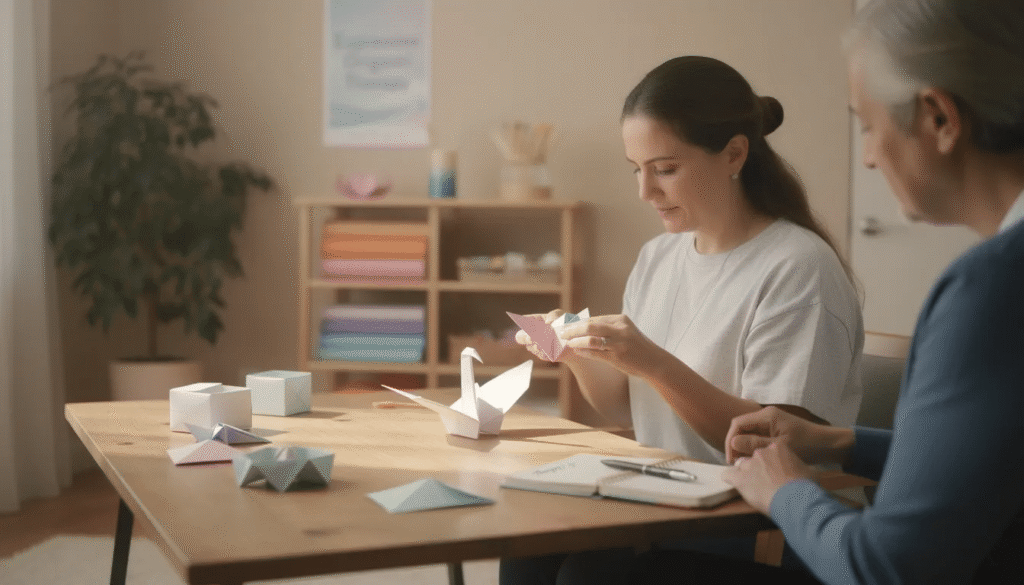
When working with trauma survivors, origami serves as a supportive technique within comprehensive treatment rather than a replacement for evidence-based trauma therapy. Art therapists have developed structured methods that intentionally use folding sequences, symbolism, and narrative alongside talk therapy. These approaches, sometimes called Expressive Origami Therapy, recognize that the body holds trauma and that hands-on creative work can access healing pathways that words alone cannot reach.
In trauma-focused origami therapy sessions, the folding process offers opportunities for “titrated” exposure to difficult emotions. A client might engage with a challenging fold while remaining grounded in the present moment, practicing the ability to tolerate discomfort without becoming overwhelmed. The physical focus of pressing a crease or aligning edges serves as an anchor, keeping the nervous system regulated while emotional material surfaces. This builds frustration tolerance safely—mistakes in folding can be corrected, paper can be smoothed and refolded, and imperfection becomes part of the process rather than a source of shame.
Consider a forty-two-year-old woman in 2023 coping with post-traumatic stress after a serious car accident. In weekly origami therapy sessions with her art therapist, she began with simple box folds, practicing breath work between steps. Over several weeks, she progressed to more complex figures while tracking her emotional states in a journal. The crane she completed in her eighth session became a tangible marker of her progress—evidence that she could persist through difficulty and create something meaningful from a flat piece of paper. She kept it on her bedside table as a reminder of her growing capacity for resilience.
Safety and pacing are essential in this work. Therapists monitor activation levels carefully, choosing models of appropriate difficulty and integrating grounding techniques like gentle stretching or focused breathing into the folding process. If a client becomes overwhelmed, the therapist might simplify the model, pause the folding, or shift to another activity entirely. The goal is always to support healing, not to push through distress.
Mental Health Benefits of Origami
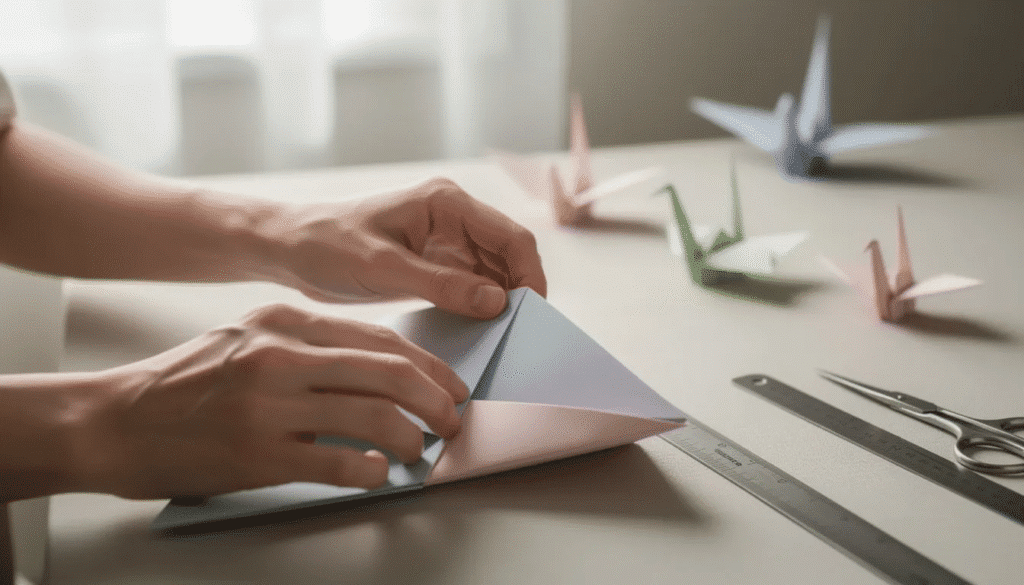
Research and clinical experience suggest that origami offers multiple mental health benefits when incorporated into therapy or personal self-care routines. These benefits span emotional, cognitive, and social domains, making origami a versatile tool for diverse populations. Children, teens, adults, and older adults have all shown improvements in various dimensions of well-being through regular folding practice. People managing anxiety, depression, ADHD, autism, trauma histories, and stress-related difficulties have found value in this accessible creative practice.
Emotional regulation and calm represent one of the most frequently reported benefits. The repetitive, rhythmic nature of folding activates the parasympathetic nervous system, fostering relaxation and lowering physiological arousal. Some practitioners report that consistent origami practice helps reduce stress and may even support healthy blood pressure levels over time. The sense of accomplishment from completing a model—even a simple one—generates positive emotions that can counter depressive symptoms and build self confidence.
Cognitive benefits include improved attention, problem solving skills, and working memory. Following origami instructions requires sequential thinking, spatial reasoning, and the ability to hold multiple steps in mind while executing them. A psychologist named Cristina Belló studied older adults practicing origami and found measurable improvements in attention, memory, and psychomotor skills—factors critical for slowing age-related cognitive decline. For children and adults alike, the practice strengthens the brain’s capacity for focused, sustained effort.
Self esteem and a sense of competence grow naturally through the origami process. Completing a model provides concrete evidence of one’s ability to learn something new, persist through challenge, and create something with one’s own hands. This is particularly valuable for individuals who struggle with negative self-perception or who have experienced repeated failures in other areas of life. The tangible nature of the finished product—something you can hold, display, or give to someone else—reinforces feelings of pride and accomplishment.
Social connection and group cohesion flourish in group origami settings. A school counselor might use a simple “jumping frog” model with students before exams, drawing from fun paper activities for creative minds of all ages to create a shared experience that reduces anxiety and builds classroom community.. An adult peer support group meeting weekly since 2021 to fold cranes and discuss coping strategies exemplifies how social interaction combines with creative practice to enhance mental well being. Teaching others to fold builds leadership skills and deepens interpersonal bonds.
While origami is not a cure for any mental health condition, it complements evidence-based therapies and medication by offering a low-cost, accessible practice that individuals can continue independently between sessions or after formal treatment ends.
Origami in Child and Adolescent Therapy
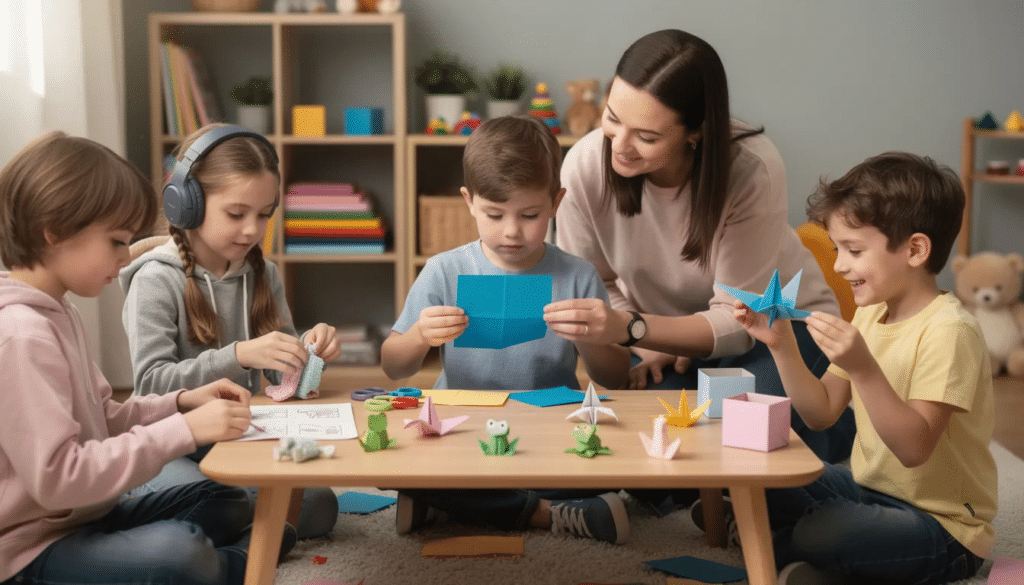
Origami works especially well with children and teens because it feels like play, involves creativity, and produces quick, visible results. Unlike traditional talk therapy, which can feel abstract or intimidating to young people, folding paper offers concrete engagement that holds attention and builds investment in the therapeutic process.
For children roughly ages six through twelve, origami supports development across multiple domains. The practice builds motor skills and bilateral coordination as small hands learn to make precise creases. Following step-by-step instructions supports focus and attention span—skills that transfer to academic settings. The trial-and-error nature of learning to fold teaches frustration tolerance, as children discover that mistakes can be corrected and imperfect folds still lead to recognizable figures. Perhaps most importantly, successfully completing an origami project helps children develop positive self-statements: “I can learn hard things” and “I can make something beautiful.”
Children with ADHD, autism spectrum disorder, dyslexia, and other neurodivergent profiles often respond particularly well to origami. The highly structured, predictable nature of folding sequences provides a sense of safety and reduces anxiety about unexpected demands. Therapists working with neurodivergent youth might offer sensory-friendly materials like softer or textured paper, and providing choices in color and model supports autonomy and self-advocacy. The routine-based nature of origami can calm hyperactivity and support self-regulation in children who struggle to settle their bodies and minds.
For adolescents, more complex models provide appropriate challenge and engagement. Modular origami, intricate animals, geometric shapes, and themed figures like creative paper duck folding ideas appeal to teens who might dismiss simpler crafts as childish.. Therapists can connect origami projects to meaningful themes like identity, resilience, or recovery. A teen might fold a series of stars, labeling each with a personal strength, or create a collection of figures representing stages of healing. In group sessions at schools or residential programs, teens can teach each other designs, building leadership and social skills while processing difficult emotions together.
In one residential treatment setting in 2022, a fifteen-year-old participated in weekly origami skills groups to practice patience and emotion regulation. Initially resistant and quick to crumple paper in frustration, she gradually learned to slow down, ask for help, and persist through challenging folds. By her third month, she was teaching younger residents how to fold simple boats and boxes—a shift that marked significant growth in her ability to manage behavior problems and connect positively with peers.
Origami for Adults: Stress, Anxiety, and Everyday Well-Being
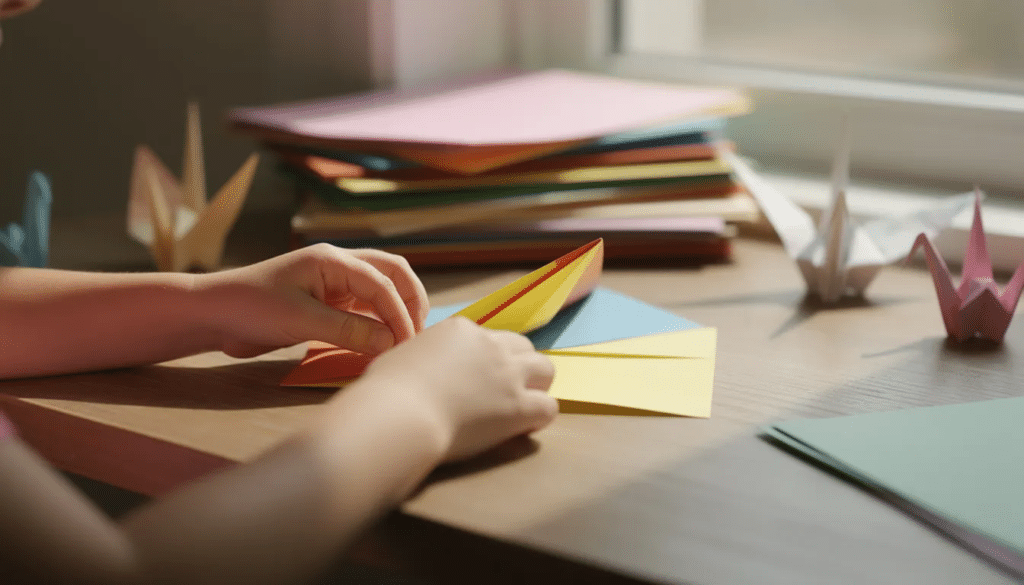
Adults often rediscover origami as a calming, screen-free activity that fits naturally into daily routines. Spending ten to fifteen minutes folding in the evening—perhaps while listening to music or sitting quietly—offers a reset after demanding workdays. Unlike scrolling social media or watching television, folding paper engages the hands and mind in active creation, leaving many people feeling more settled and present.
The repetitive, rhythmic quality of folding resembles active meditation. Each crease requires precision and attention, which naturally quiets racing thoughts and reduces physiological arousal. Adults managing anxiety report that focusing on the difference between a mountain fold and a valley fold leaves little mental space for worry spirals. The tactile sensation of smooth paper and the satisfaction of clean creases provide grounding that supports emotional regulation throughout the day.
Workplace applications have expanded in recent years as organizations recognize the value of creative breaks for employee well-being. An office in 2024 hosting a monthly “lunchbreak origami circle” exemplifies this trend—colleagues gather with simple paper and basic instructions to fold together, building team bonds while managing stress. Small projects like paper boats, butterflies, or simple hearts serve as quick reset activities that employees can complete in five to ten minutes, returning to work refreshed and focused.
For adults in ongoing mental health treatment, origami offers metaphors for gradual growth. A therapist might introduce progressively more complex models as a client builds skills and confidence, mirroring the arc of therapeutic progress. Some practitioners integrate origami into journaling practices—clients write reflections on paper before folding it into a figure, literally transforming their thoughts into something new. A forty-year-old with generalized anxiety disorder began a daily folding ritual as part of her self-care routine, completing one simple model each morning as a way to anchor her day before checking email or news. Over time, her collection of folded figures became a visual record of her commitment to her own well-being.
Practical Guide: How Therapists and Individuals Can Get Started
Starting with origami as therapy requires no advanced art skills. Even the simplest models can be therapeutic when approached with intention and presence. The magic lies not in complexity but in the process of engaging hands and mind in creative focus.
For therapists considering origami for their practice, beginning with basic forms is essential. The traditional crane, a simple box, or a heart shape can all be taught in five to fifteen minutes. Choosing paper size and color intentionally enhances the therapeutic experience—larger sheets of six inches or more work best for beginners, and calming colors like blue, green, or soft pastels suit anxiety work well. Matching model complexity to the client’s developmental level and emotional state ensures early success, which builds confidence for future folding. Having clear origami instructions available, either printed or on a tablet, supports both therapist and client through the steps.
For individuals and families exploring origami at home, setting up a small dedicated folding space makes the practice more accessible, especially when paired with a platform dedicated to paper crafting tutorials and inspiration.. A corner of a table with a stack of square paper and a simple printed guide creates an invitation to fold whenever the urge arises. Beginning with one or two models and practicing the same design across several days builds confidence and rhythm. Repetition is part of the benefit—each time you fold the same figure, your hands remember more and your mind settles more quickly.
Integrating meaning deepens the therapeutic experience. Clients might assign intentions or themes to each piece—folding a star for each night of restful sleep, or a crane for each step completed in recovery. A child might fold a boat for each worry they want to send away, or an adult might fold a heart for each person they feel grateful toward. Keeping completed models visible—on a windowsill, in a jar, or strung as a garland—creates tangible reminders of progress and practice.
Resources for learning abound, but choosing well matters. Beginner-friendly books with clear diagrams and reputable online video tutorials with calm, clearly paced instruction support success. Rushing through complicated models too soon can generate frustration rather than peace. The science of therapeutic folding suggests that process matters more than product—a slightly lopsided crane made with full attention holds more value than a perfect figure folded while distracted.
When Origami May Not Be the Right Fit (and How to Adapt)
While origami often provides remarkable benefits, it is not ideal for every person or every moment in therapy. Recognizing limitations and adapting accordingly ensures that the practice remains supportive rather than frustrating.
Some clients face physical challenges that make folding difficult. Significant hand pain, fine motor limitations, or visual impairments can turn what should be calming into a source of stress. Perfectionistic clients may become so focused on achieving exact folds that minor imperfections trigger shame or discouragement. For these individuals, origami might feel like another arena for failure rather than a space for growth.
Adaptations can address many of these challenges. Using larger paper reduces the precision required for small folds. Thicker paper or pre-creased templates ease physical demands for those with limited dexterity or hand strength. Simplifying models and explicitly emphasizing process over outcome normalizes imperfect folds. A therapist might say, “This crane doesn’t have to look like the picture—it just has to be yours.” Offering choice throughout the process supports autonomy: “Would you like to try again with this paper, or switch to a different model?”
Emotional safety requires ongoing attention. Therapists should monitor for rising frustration or shame and be prepared to pause, switch models, or shift to another grounding technique as needed. Some clients simply do not connect with paper folding, and that is perfectly acceptable. Drawing, clay work, movement, or music might serve similar functions for those individuals. Flexibility and client choice remain central to ethical practice.
It bears emphasizing that origami should not replace crisis care, medical treatment, or comprehensive trauma therapy. It works best as a supportive, complementary practice—one tool among many in a well-rounded approach to mental health. For clients fascinated by the practice and drawn to its quiet focus, origami can become a meaningful part of their healing journey. For others, it may simply be an interesting experiment that points toward other paths.
Conclusion: A Simple Sheet of Paper, Real Therapeutic Possibility
Origami brings together mindfulness, creativity, and symbolic meaning in a form that is accessible to nearly everyone. A single sheet of paper, folded with care and intention, becomes more than a figure—it becomes evidence of focus, persistence, and the capacity to create something beautiful from something simple. The additional benefits extend across ages and settings, supporting stress reduction, building self confidence, strengthening cognitive function, and fostering social connection.
The world offers many paths toward healing, but few are as portable, affordable, and universally available as origami. Whether practiced in a therapist’s office, a school classroom, or a quiet corner at home, paper folding invites us into the present moment and offers tangible proof of our ability to learn, grow, and transform.
Consider trying one small step this week—perhaps folding a single crane or a simple box. Practice the folds several times. Notice how your hands become more confident, how your breathing settles, how your mind quiets. Just as paper can be folded and reshaped into figures of amazing complexity and beauty, people can gradually reshape their lives and responses to stress with care, patience, and practice. The therapeutic possibility begins with a single fold.