
A memory book transforms scattered photos and half-forgotten stories into something your family will treasure for decades. Whether you’re documenting a baby’s first year or celebrating a 50th wedding anniversary, these books give your favorite memories a permanent home—one that won’t disappear when you change phones or forget a password.
- What Is a Memory Book?
- Why Memory Books Matter
- Types of Memory Books You Can Create
- Designing a Memory Book: Step-by-Step
- Choosing Formats, Materials, and Styles
- Occasions and Gift Ideas for Memory Books
- Digital vs. Printed Memory Books
- Tips for Writing Captions and Stories
- How to Involve Family and Friends
- Preserving and Caring for Your Memory Books
- Getting Started on Your Own Memory Book Today
What Is a Memory Book?
A memory book is a curated album that combines photos, written stories, and meaningful details to preserve specific people, events, or periods of life. Unlike a shoebox of loose prints or a social media feed that gets buried over time, memory books organize everything in one place with context: dates, locations, and the small stories that make each moment matter.
Memory books can cover virtually any timeframe or theme. You might create one documenting a baby’s first year in 2024, complete with monthly milestone photos and handwritten notes about first words and wobbly steps. Or perhaps you’ll compile a 50-year marriage story spanning 1974 to 2024, weaving together wedding day snapshots, vacation adventures, and family growth over five decades. Even a single event—like a 2023 Europe tour—can fill its own book with maps, ticket stubs, and daily travel notes.
The difference between a memory book and random photo storage is intentionality. When you create a memory book, you’re choosing which moments to capture and adding the context that transforms images into stories. Picture a finished hardcover sitting on your coffee table or displayed on a bookshelf—ready to be picked up, flipped through, and shared whenever family gathers.

Why Memory Books Matter
There’s something irreplaceable about opening a book and seeing a graduation photo from 2015, a birthday celebration from childhood, or a wedding day from decades past. Memory books let you relive these moments in a way that scrolling through a phone never quite matches.
More importantly, memory books help families pass stories from one generation to the next. A grandparent’s life story—documented from the 1940s through today—becomes something grandchildren can read, touch, and share with their own kids. Without these books, family history often fades as the people who lived it pass on. Writing down even simple details ensures your children and their children won’t miss the stories that shaped your family.
Creating a memory book can also be therapeutic during major life changes. People processing grief find comfort in compiling memorial books filled with photos and favorite quotes from loved ones. Those retiring after 30-year careers discover closure in documenting professional milestones. Families moving to new homes preserve memories of the place they’re leaving behind.
Key emotional benefits include restored sense of identity through milestone recaps, strengthened family bonds through shared reminiscing, reduced anxiety and improved mood (studies show up to 40% improvement in seniors engaging with memory materials), and a lasting gift that survives beyond any device or app.
Here’s a practical reality: approximately 43% of cloud-stored photos become inaccessible within 10 years due to forgotten passwords, discontinued services, or hardware failures. Your printed memory book, stored properly, can last over a century.
Types of Memory Books You Can Create
Memory books come in many forms, each designed around specific life events and purposes. Here’s a concrete look at the most popular types.
Baby and childhood memory books follow a child from pregnancy through age 18. These might include ultrasound images from early 2024, first steps around month 12, kindergarten photos from 2029, and eventually high school graduation in 2042. Parents often add growth charts, vaccination records, and notes about daily routines—creating a complete childhood story.
Travel memory books document adventures large and small. A 2025 Japan tour might feature Shinkansen tickets, temple maps from Kyoto, and daily captions describing favorite meals and unexpected discoveries. Annual family vacation books blend beach snapshots from holidays over multiple years with expense notes and weather memories.
Wedding and anniversary books tell love stories from beginning to present. Starting with a 2022 engagement ring photo, moving through the 2023 ceremony, and continuing with anniversary updates as the family grows. Layflat binding works perfectly here, allowing panoramic reception photos to spread across two pages without interruption.
Family history and legacy books dig into genealogical depths. These compile black-and-white photos from the early 1900s, wartime letters from the 1940s, and DNA test results, giving descendants verifiable lineage and stories that might otherwise be lost.
Life event books focus on specific milestones: a 40th birthday collage pulling one image per decade from 1986 to 2026, a retirement volume celebrating a career from entry-level in the 1990s to farewell parties in 2026, or an annual “Our 2023” review capturing the year’s highlights.
Memory support books serve a therapeutic purpose for people living with dementia. These feature large-print names beside faces—“Brother John, born 1955, fishing trips in the 1970s”—with minimal text to help trigger recognition and reduce repetitive questions by up to 60% according to care facility research.
Designing a Memory Book: Step-by-Step
Creating a memory book doesn’t require design expertise—just a clear process. Here’s a practical guide from initial idea to finished book.
Step 1: Choose the focus and timeframe. Before gathering anything, decide what your book will cover. Will it be “Baby’s First Year 2024” with 12 monthly spreads? “Our Wedding Story 2023” documenting engagement through honeymoon? “Grandma’s Life 1935-2025” organized by decade? A clear focus prevents the project from becoming overwhelming.
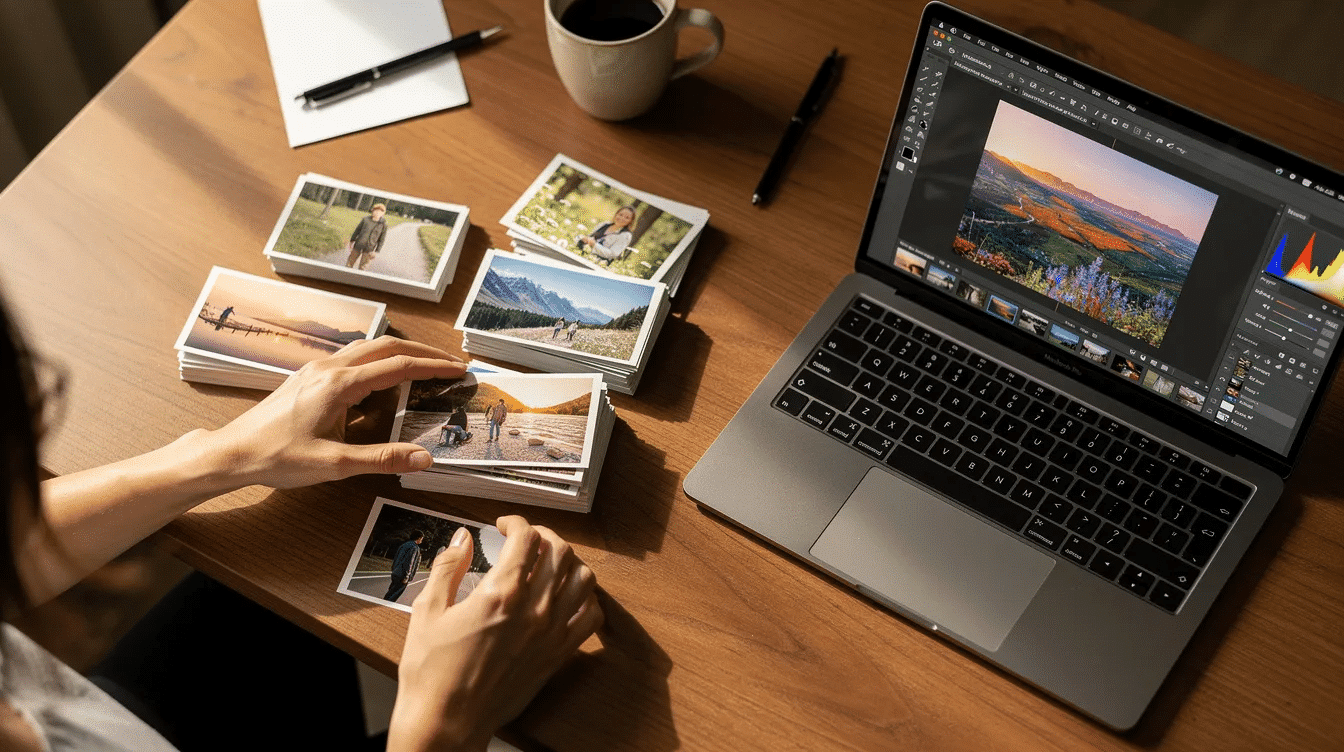
Step 2: Gather photos. Pull images from every source available: smartphone libraries (which contain 90% of modern photos), old albums requiring scanning at 600 DPI for quality preservation, cloud services like Google Photos, and social media archives. Don’t forget to ask relatives for their photos too—especially for family history projects.
Step 3: Sort and select. Organize your collected photos by year, event, or person. For example, group all “Summer 2022 Road Trip” images into a subfolder, then separate them by location—California Day 1, Nevada Day 2. Aim for 1-2 standout images per event rather than including every shot. Quality and storytelling matter more than quantity.
Step 4: Plan the structure. Sketch a simple page plan before arranging anything digitally. You might allocate one spread per year, per trip, or per family member. A balanced approach uses roughly 60% visuals and 40% text for easy reading.
Step 5: Add stories and dates. This is where photos become memories. Write specific captions including dates, places, and small details: “July 14, 2023, 2 PM—first hike at Rocky Mountain National Park. You were 35 and summited Emerald Lake despite a sprained ankle.” These details help future generations understand what they’re seeing.
Step 6: Add extras. Personalize your book with physical artifacts scanned or photographed: a 2023 concert ticket stub, a handwritten recipe from grandma, a child’s crayon drawing from age 5. These additions make each book unique.
Step 7: Final check and print. Before ordering, verify spelling, confirm dates against calendars, and preview image quality. Many self-publishers report 15-20% rework rates from skipped proofreading. Take time here to avoid reprinting costs.
Choosing Formats, Materials, and Styles
The physical form of your memory book affects how people interact with it and how long it lasts. Making intentional choices here ensures your book serves its purpose for years to come.
Size options range from compact 8×8-inch books—perfect for gifts holding 20-50 pages of baby milestones—to standard 8.5×11-inch family albums accommodating 100+ pages, to large 10×10-inch hardcovers ideal for wedding or anniversary keepsakes with room for panoramic spreads.
Cover types influence durability and presentation. Softcovers work for everyday photo yearbooks that will be handled frequently but don’t need to last generations. Hardcovers suit milestone occasions like a 25th anniversary, offering greater protection. Linen or leather-style covers elevate heirloom pieces intended to be passed down, resisting wear 2-3 times better than standard materials.
Paper finishes should match your content. Semi-gloss amplifies vivid colors for holiday photos with bright reds and greens. Matte reduces glare and creates a modern, intimate feel for wedding books readable in varied lighting. Lustre hybrids work beautifully for portraits and black-and-white family history images, minimizing fingerprints while retaining detail.
Binding choices affect usability. Layflat binding allows pages to open completely flat, letting panoramic images—like a 2023 safari landscape—spread seamlessly across two pages. Standard binding works well for everyday albums but creates a slight curve at the center that can obscure details in spread images.
Design style ranges from minimalist layouts with 40% white space emphasizing subject isolation, to colorful themed backgrounds matching specific occasions—pastel palettes for baby’s first year, elegant neutrals for wedding books. Consider reserving endpapers or final pages for handwritten dedications, especially for gifts where recipients might sign at a party or gathering.
Occasions and Gift Ideas for Memory Books
Memory books make personal, one-of-a-kind gifts that manufactured items simply can’t match. Here are specific occasions where they shine.
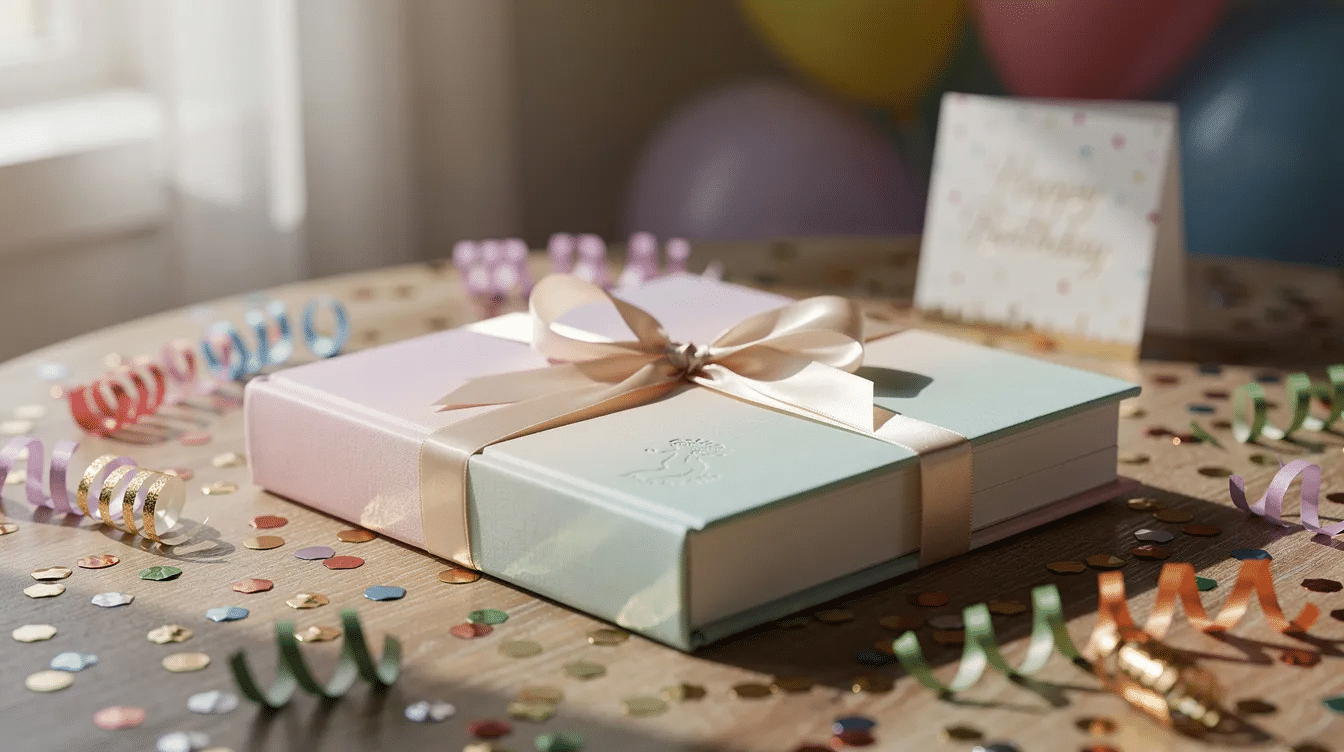
Birthdays offer natural opportunities for “Through the Years” books. For a 21st, 30th, 40th, or 60th birthday, collect one photo per year of the person’s life plus messages from friends and family, and consider adding coordinating paper birthday decorations to make the celebration feel even more special. The result is a gift that took real effort and thought—something impossible to buy in a store.
Anniversaries call for books telling the couple’s complete story. A 10th, 25th, or 50th anniversary edition might start with their first date in a specific year, move through the wedding, and document major milestones: buying a home, welcoming children, celebrating holidays together over decades.
Retirements deserve recognition of entire careers. Colleagues can contribute photos from projects, office events, and conferences spanning 30+ years, adding farewell messages and dates of memorable achievements.
Farewell and moving away occasions benefit from memory books too. A teacher leaving a school in 2026 might receive a book filled with class photos, local landmarks, and heartfelt notes from students. Friends moving abroad can carry a book of their life in the community they’re leaving.
Memorial and celebration of life books provide comfort during grief. These respectful tributes combine photos from different decades of a person’s life, their favorite quotes, and stories shared by family members—creating something tangible to hold when memories threaten to fade.
New baby and adoption books capture journeys from the very beginning: first ultrasound dates or adoption approval paperwork, homecoming photos, and the excitement of that first year together as a family, and they pair beautifully with meaningful paper gifts for special occasions when you’re welcoming a new child or celebrating a family milestone.
Digital vs. Printed Memory Books
Many people wonder whether to create digital albums, printed books, or both. The answer depends on how you plan to use and share your memories.
Digital memory books offer distinct advantages. Cloud-based albums can be shared instantly with family across countries—relatives in Europe can view 2025 updates without waiting for shipping. You can easily add new content after each event, and digital books require no physical storage space. They’re accessible on tablets (with 95% senior adoption rates according to 2024 data) and can incorporate multimedia elements like short video clips.
Printed memory books provide a different experience entirely. The tactile sensation of turning pages creates deeper engagement—research suggests 70% higher retention compared to screen viewing. Physical books display beautifully on shelves and coffee tables, require no passwords or apps to access, and can be passed down through inheritance. They survive app discontinuations and changing technology platforms that render 20% of digital formats obsolete each year.
Practical advantages break down this way: Digital excels at easy sharing, quick updates, zero storage requirements, and multimedia integration. Print excels at tactile experience, display value, independence from technology, and archival permanence.
The hybrid approach often works best. Design layouts digitally, back up all files to cloud storage, then print final versions for important milestones—weddings, major anniversaries, memorial tributes. This preserves flexibility while ensuring physical copies exist for the moments that matter most.
Tips for Writing Captions and Stories
Words transform photos from images into memories. Even brief captions add context that makes pictures meaningful decades later.
Include specific details whenever possible: dates with day, month, and year; exact locations; ages of people pictured; and small anecdotes that capture the moment. Instead of “Family vacation,” write “July 14, 2023—our first hike in the Rockies. Dad was excited to reach the summit despite threatening rain.”
Interview relatives to gather stories you might not know. Record a grandparent describing life in the 1950s. Ask parents about your early childhood moments. These conversations often reveal details that would otherwise be forgotten.
Simple prompts can help unlock memories: “What were you feeling that day?” “What was happening in the world that year?” “What do you remember about the weather, the sounds, the smells?” Answers to questions like these add texture that photos alone can’t provide.
Label people clearly for future generations who won’t recognize faces. Write “Aunt Maria (born 1960) and Uncle Paul at their wedding in 1982” rather than assuming everyone will know.
Mix caption styles throughout your book. Short labels work for everyday photos: “First Steps, 14 months, March 2024.” Save longer, full-page stories for key events like wedding days, once-in-a-lifetime trips, or milestone moments that deserve more space to hear the complete narrative.
How to Involve Family and Friends
Making a memory book a collaborative project enriches the final result and distributes the work.
Invite relatives and friends to contribute photos, stories, and messages via email, shared folders, or messaging apps. People often have images you’ve never seen—childhood photos from visiting relatives, candid shots from friends at events you attended together.
Consider surprise memory books where each contributor submits materials secretly. For a 50th birthday, ask 20 people to each provide one favorite photo and a short note. The finished book becomes a chorus of voices celebrating the recipient.
Organize contributions by assigning specific themes or time periods. One sibling handles holidays and vacations. Another covers school days. A colleague documents work memories from the 2010s. This prevents duplicate content and ensures comprehensive coverage.
Group video calls work wonderfully for gathering stories for family history books covering several generations. Schedule a call specifically to reminisce, record the conversation (with permission), and transcribe key details for your captions.
Add a “message pages” section at the end of your book where people can write by hand at a party or family gathering. This transforms the book from a finished product into an ongoing document that grows with each celebration.
Preserving and Caring for Your Memory Books
Proper care ensures memory books remain readable and beautiful for decades, potentially centuries.
Store books upright on shelves away from direct sunlight, heat sources, and damp areas. UV exposure causes fading at approximately 20% per decade, while humidity promotes mold growth affecting 15% of improperly stored items annually.
Handle books with clean, dry hands. Natural skin oils can degrade paper and photographic emulsions over time. For especially fragile pages or books containing original vintage photos, archival sleeves provide extra protection.
Create digital backups of your layouts and scanned photos. If a book is ever damaged by flood, fire, or accident—events affecting 12% of heirlooms annually—you can reprint from preserved files. Store backups in cloud services and on external drives in different locations.
Add a simple label inside the front cover: “If found, please return to [name, phone, email].” Books travel to relatives’ homes for visits, get borrowed for events, and occasionally misplaced. A return address increases chances of recovery.
Revisit and update books every few years. A family story that started in 2020 can receive new chapters in 2030, documenting how the story continued. This keeps books relevant and growing alongside your family.
Getting Started on Your Own Memory Book Today
The best way to begin is simply to begin—small, focused, and imperfect.
Pick one theme, one person, or one year. Gather 20-30 favorite photos from that period. Jot down a few key stories or details you want to remember. Don’t worry about covering everything or making it perfect. Sincerity and specific details matter far more than professional design skills.
You don’t need to be a writer or a designer. Free apps and services make layout easy, and the content—your family’s actual memories—is what creates value. A book with honest captions and meaningful photos will be treasured even if the design isn’t magazine-worthy.
Your future self will thank you for starting today. So will future generations who will find your book on a shelf, open it, and discover the stories of people they love. The time you invest now in preserving these memories creates something that lasts far beyond any device, any app, any passing trend.
Start your first memory book this week. Choose the theme. Gather the photos. Write the first caption. Everything else follows from there.