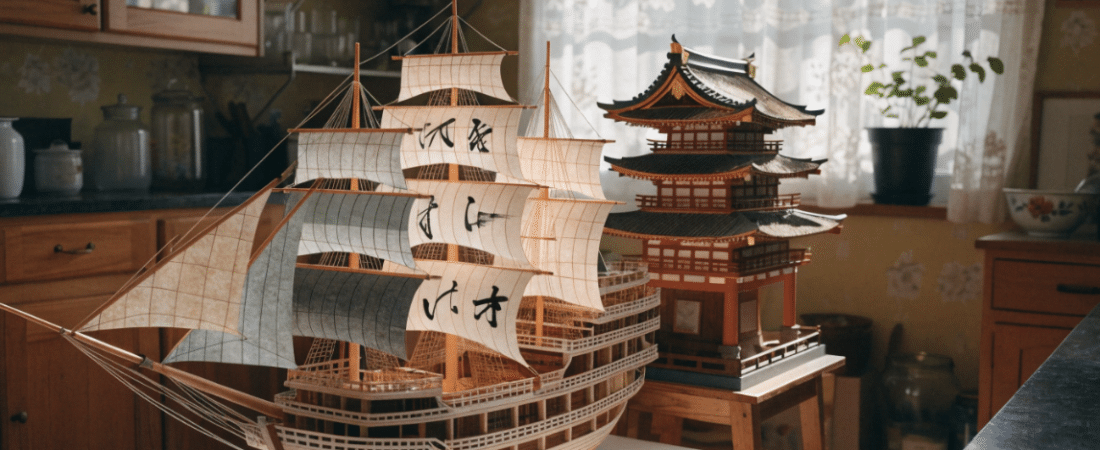
Japanese paper model kits offer something you won’t find in Western cardboard models or snap-together plastic sets. These kits combine laser-cut precision, authentic architectural detailing, and licensed anime themes into compact packages that transform flat sheets into stunning three-dimensional worlds. From Studio Ghibli dioramas by Sankei to micro-scale landmarks from Kawada Paper Nano and kinetic Kamikara toys that actually move, Japan has elevated paper modeling into a distinct art form.
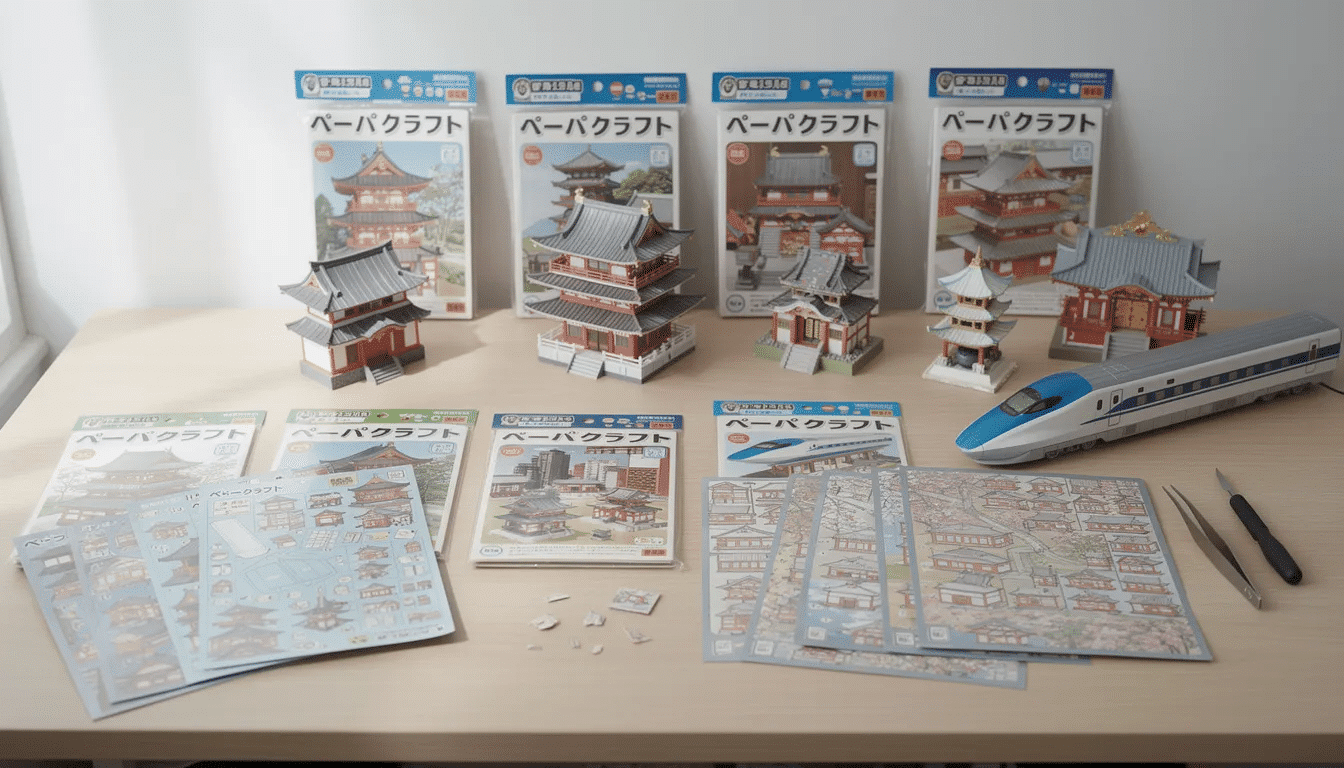
These kits range from simple builds that take under an hour—like Bandai’s kid-friendly vending machines released in the mid-2010s—to advanced Showa-era townscapes in 1/150 scale that require multiple evenings of careful work. The selection appeals to railway modelers seeking N-gauge buildings, anime fans hunting for Ghibli collectibles, architecture enthusiasts fascinated by castles and shrines, and families looking for a screen-free activity that sparks creativity. If you love things that reward patience and attention to detail, Japanese paper model kits deliver an experience that’s hard to find elsewhere.
- Introduction to Paper Crafting
- History and Origins
- Types of Japanese Paper Model Kits
- Popular Japanese Paper Model Kit Brands & Series
- Sankei Miniatuart & Studio Ghibli Kits
- Ensky Paper Theater & Layered Dioramas
- Piperoid & Character-Based Kits
- Terada Mokei 1/100 Architectural Scenes
- Sankei Nostalgic Georama & Railway Townscapes
- Kawada Paper Nano Landmarks
- UPLIFT Vehicles & Bandai Vending Machines
- Kamikara & Shubunsha Karakuri Mechanical Kits
- Cultural Significance in Japan
- What You Need to Build Japanese Paper Model Kits
- Choosing the Right Japanese Paper Model Kit for You
- Tips for Building and Displaying Japanese Paper Model Kits
- Common Challenges and Solutions
- Where and How to Buy Japanese Paper Model Kits
- Community and Resources
Introduction to Paper Crafting
Paper crafting is a beloved pastime in Japan, celebrated for its blend of fun, creativity, and the satisfaction of bringing models and characters to life. Whether you’re assembling a tiny cityscape, recreating your favorite anime scenes, or designing original creations, working with paper offers endless opportunities to explore your imagination. Even a bit of patience and curiosity can open the door to this rewarding hobby. From simple folds to intricate layers, paper crafting invites you to experiment, learn, and enjoy the process of making something unique with your own hands, and exploring fun paper activities for creative minds of all ages can give you plenty of ideas beyond model kits. For anime fans and anyone looking to try a new creative outlet, Japanese paper model kits are a fantastic way to get started and experience the joy of building miniature worlds.
History and Origins
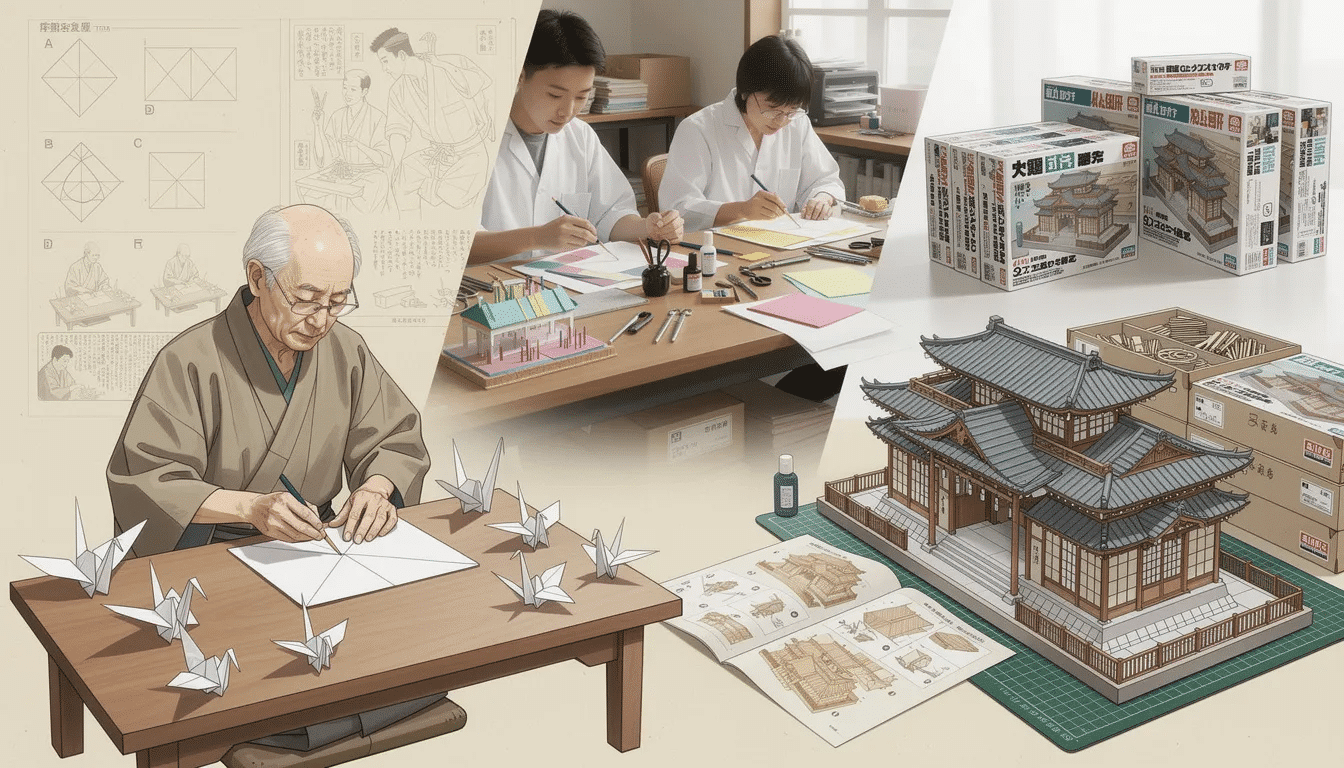
The roots of paper crafting stretch deep into Japan’s history, beginning with the ancient art of origami—where paper is folded into elegant shapes and figures. Over time, Japanese artisans expanded their techniques, introducing cutting, gluing, and layering to create more complex models and scenes. As the hobby evolved, companies like Sankei began producing specialized kits that allow enthusiasts to assemble detailed models at home, while traditional origami designs for every skill level continued to influence how people approach folding and construction in paper art. Today, Japanese paper model kits are shipped around the world, admired for their precision and artistry. The journey from traditional origami to modern kits reflects both the enduring appeal of paper as a medium and Japan’s ongoing innovation in model making.
Types of Japanese Paper Model Kits
Japanese paper model kits fall into several distinct categories, each with its own character, scale, and level of challenge. Understanding these types helps you find the right set for your interests and skill level.
Anime and pop culture dioramas represent one of the most popular categories. Sankei’s Miniatuart line brings Studio Ghibli films to life with scenes from My Neighbor Totoro, Spirited Away, and Kiki’s Delivery Service. Ensky’s Paper Theater series offers layered dioramas featuring Demon Slayer, Jujutsu Kaisen, Sailor Moon, and even Star Wars. These licensed pieces let you build scenes you already love from your favorite characters and stories.
Architectural and cityscape kits appeal to those who appreciate buildings and urban landscapes. Sankei’s Nostalgic Georama series recreates Showa-era Japan with 1/150 scale wooden stations, covered shopping arcades, and corner cafés complete with Japanese signage. Tokyo Diorama Factory produces contemporary buildings that capture modern cityscapes. Kawada Paper Nano offers impossibly detailed micro-scale landmarks like Tokyo Tower, Himeji Castle, and Senso-ji Temple.
Mechanical and automaton-style kits add motion to paper. Kamikara creates paper automata with springs and weighted joints—a wolf whose mask flips to reveal a sheep, an armadillo that curls into a ball when you press it, rabbits that jump. Shubunsha’s Karakuri kits use crank mechanisms to make animals walk or swim. These bring engineering principles to life using nothing but paper and glue.
Character figure kits like Piperoid use printed paper tubes that you cut and slot together to create robots, samurai, and animal mascots, making them a great complement to cute paper craft ideas for fun DIY projects you can enjoy with kids or friends. Most require only scissors—no glue—making them accessible for younger builders around age ten and up.
Vehicle-focused sets round out the options. UPLIFT produces detailed classic cars from the 1950s through 1990s in 1/12 and 1/32 scales, while paper trains and buses work perfectly in N-scale railway layouts, and many builders also adapt these skills to paper crafts that sell well for crafters at markets or online.
Difficulty ranges from beginner-friendly kits that take thirty minutes to advanced models requiring ten or more hours across several sessions. Build time typically correlates with piece count—a simple Bandai vending machine might have twenty pieces, while a large Sankei town block can include hundreds of laser-cut parts demanding precision assembly.
Popular Japanese Paper Model Kit Brands & Series
Japan has cultivated several specialist makers of paper model kits, each bringing a distinct style and focus to the hobby. Some cater to railway modelers, others to anime collectors, and still others to architecture enthusiasts or families seeking fun projects. The following brands and series represent what you’ll encounter most often when you explore this world.
Sankei Miniatuart & Studio Ghibli Kits
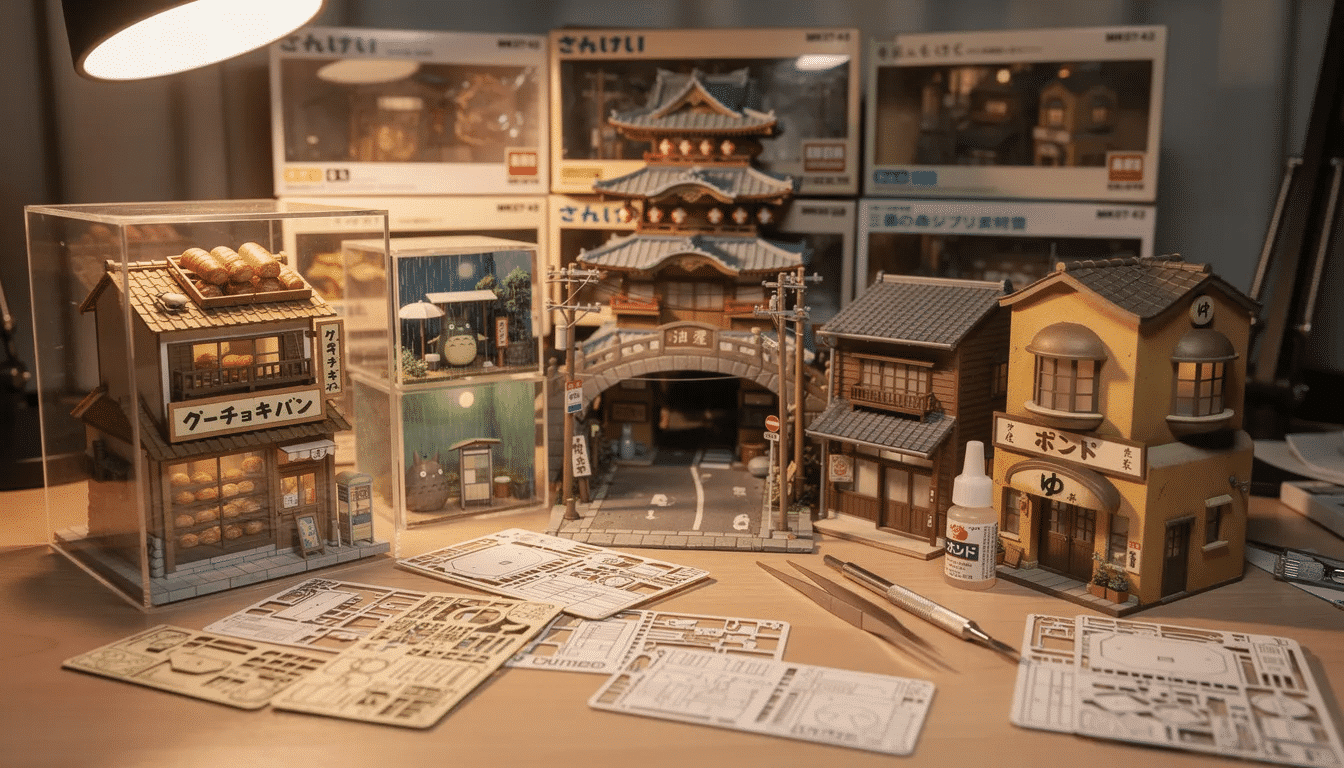
Sankei stands as Japan’s leading maker of laser-cut paper kits, having built a devoted following since the late 2000s among railway modelers and Ghibli fans alike. Their Studio Ghibli license produces some of the most sought-after kits in the hobby—the Guchokipan bread shop from Kiki’s Delivery Service (MK07-43), Totoro bus stop scenes, the Spirited Away bathhouse exterior, and even a replica of the Ghibli Museum in Mitaka.
Typical scales run 1/150 for town buildings and 1/80 to 1/87 for certain structures. The box-style Ghibli dioramas fit neatly in display cubes, making them perfect for shelves and desks. Assembly requires craft glue, tweezers, and a hobby knife—suitable for ages twelve and up, though younger builders can work with adult help.
Beyond Ghibli, Sankei’s broader line includes the Nostalgic Georama series that recreates Showa-era Japan. Corner cafés with hand-painted signs, wooden houses with tiled roofs, neighborhood bathhouses, and small train stations with telegraph poles capture the atmosphere of 1950s through 1970s Japanese streetscapes.
Ensky Paper Theater & Layered Dioramas
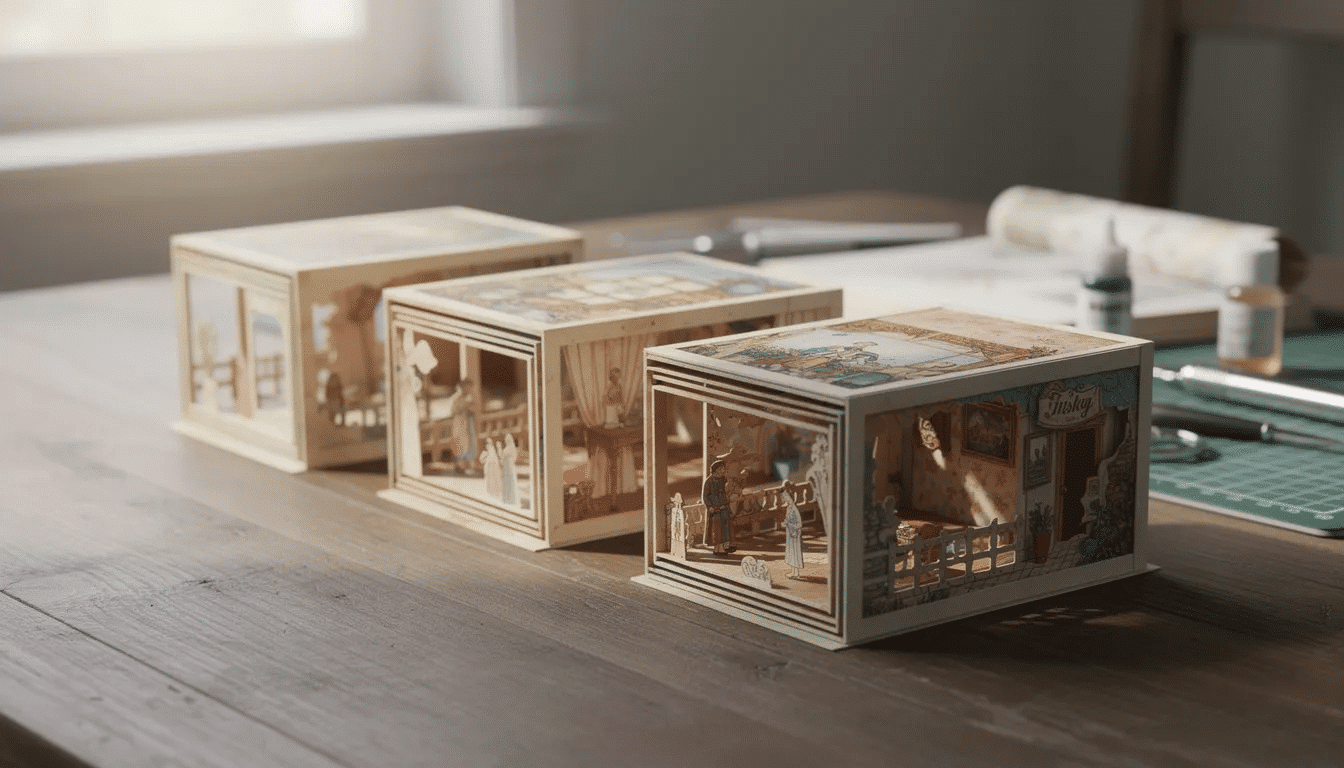
Ensky’s Paper Theater line emerged in the early 2010s as layered three-dimensional dioramas roughly the size of a postcard, and choosing the best types of paper for craft projects helps you understand why certain stocks work so well for these precise layers. Each kit uses five to seven precisely cut paper layers stacked on a small frame measuring around 100 to 120 millimeters, creating surprising depth from flat stock.
Licensed themes span Demon Slayer, Jujutsu Kaisen, Sailor Moon, Disney, Pixar, and Star Wars. The build process involves cutting or punching out pieces, folding where indicated, and gluing in sequence. These kits suit puzzle fans who enjoy careful sequencing and following a line of steps to completion.
Displayed on a desk or shelf—especially with a small LED strip behind them for backlighting—Paper Theater pieces glow with layered shadows that bring scenes to life.
Piperoid & Character-Based Kits
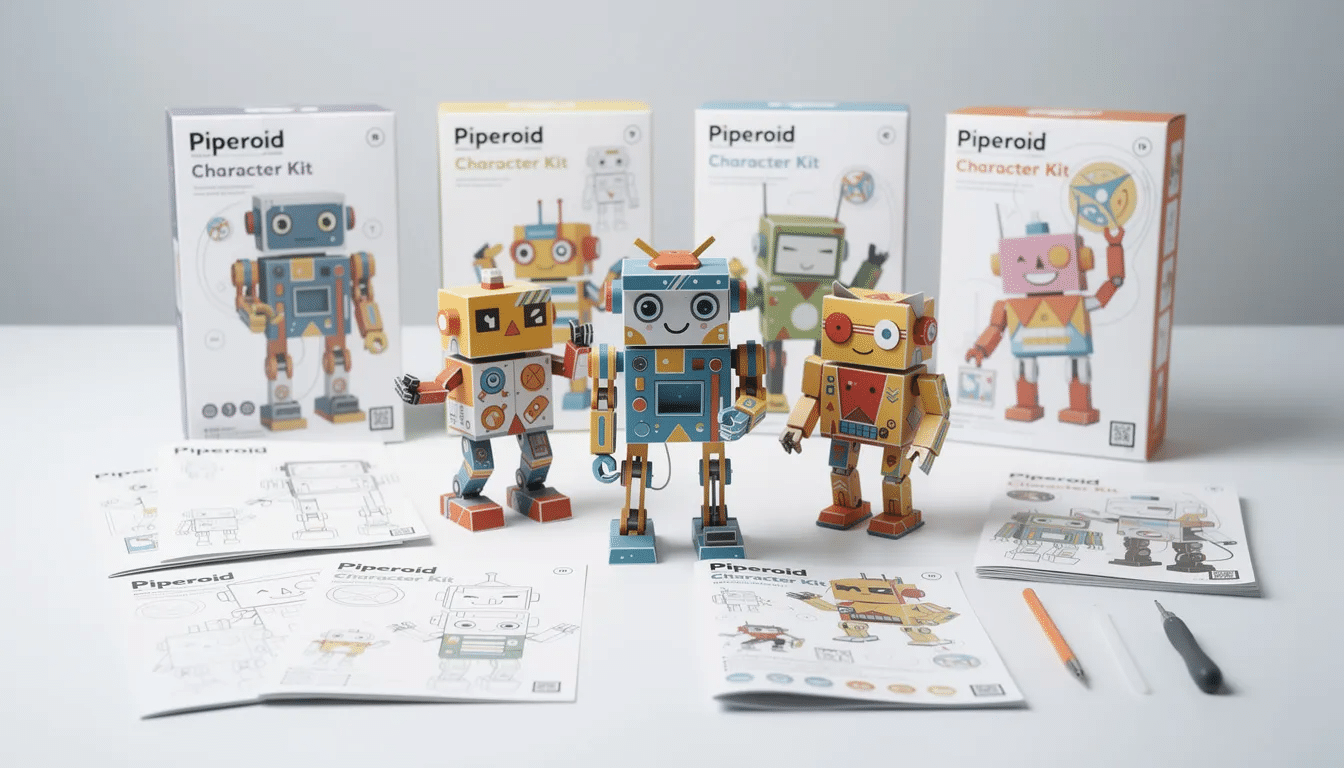
Piperoid introduced its tube-shaped paper models in the mid-2000s, creating a distinctive niche. These kits use printed paper pipes that you cut, fold, and slot together without glue. The finished models—samurai robots, cats in kimonos, music-themed characters like trumpeters—stand palm-sized and pose easily.
Most Piperoid kits require only scissors, making them ideal for classrooms and younger builders. They work wonderfully as desk decorations or gifts, and assembly typically takes under an hour even for those just getting started with paper crafts.
Terada Mokei 1/100 Architectural Scenes
Architect Naoki Terada launched Terada Mokei around 2011, offering minimalist 1/100 scale Scene kits that tell small stories. The urban park Scene 001 includes tiny people, benches, and trees. Other sets depict train platforms, wedding chapels, sports scenes, and seasonal themes like hanami cherry blossom viewing or Christmas gatherings.
These kits use single-color or dual-color sheets from which you cut miniature figures, bicycles, furniture, and foliage, much like other projects that benefit from well-chosen craft paper supplies for creative projects. Hobbyists arrange these elements into their own narratives, often using them as accessories for architectural models or creating tiny vignettes in display boxes. The aesthetic is clean, modern, and surprisingly expressive despite its simplicity.
Sankei Nostalgic Georama & Railway Townscapes
Sankei’s Nostalgic Georama sub-brand deserves special attention for railway modelers. These kits recreate the look and feel of Showa-era Japan at 1/150 scale—perfect for N-gauge layouts but equally compelling as standalone dioramas on bases around ten to twenty centimeters.
Specific buildings include wooden station buildings with weathered timber, shotengai covered shopping arcades, retro cafés with Coca-Cola signage, and corner tobacco shops. The pre-colored pieces include realistic Japanese shop names, and experienced modelers often combine several kits to form entire blocks complete with streets, alleys, and tiny backyards.
Kawada Paper Nano Landmarks
Kawada, the company behind Nanoblock, produces Paper Nano as ultra-small-scale architectural paper models. These kits recreate landmarks at an impossibly compact size—Tokyo Tower, Senso-ji Temple, Osaka Castle, Himeji Castle, plus global monuments like the Eiffel Tower and Tower Bridge.
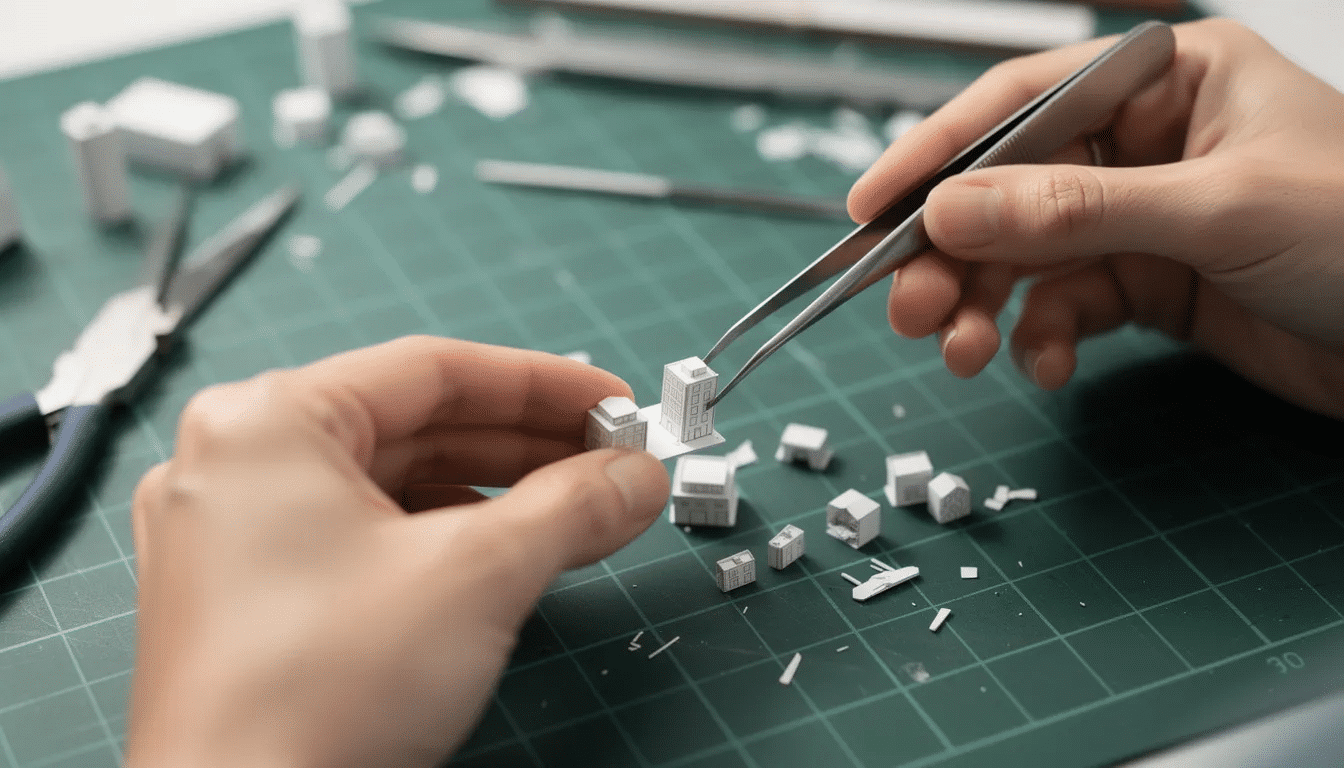
Paper Nano kits use extremely fine laser-cut pieces that require precision tools and patience, and they pair beautifully with textured handmade paper sheets for creative projects when you’re building custom bases or backgrounds. Build times can stretch to several hours even for experienced modelers. The finished models fit in the palm of your hand, making them ideal for those who appreciate micro-detail and want display pieces that occupy minimal space.
UPLIFT Vehicles & Bandai Vending Machines
UPLIFT’s vehicle series offers detailed classic cars from the 1950s through 1990s in 1/12 scale, plus 1/32 Model Mini kits of modern compacts, buses, and trucks. Features include separate dashboard parts, transparent windshields printed on acetate, and interiors that mimic real upholstery patterns.
Bandai’s kid-focused paper vending machine kits became popular in the late 2010s. These sets let children assemble functional candy or toy dispensers using pre-scored sheets, folding tabs, and stickers—no glue required. Suitable from age six and up, they provide an easy entry point for families exploring paper crafts together.
Kamikara & Shubunsha Karakuri Mechanical Kits
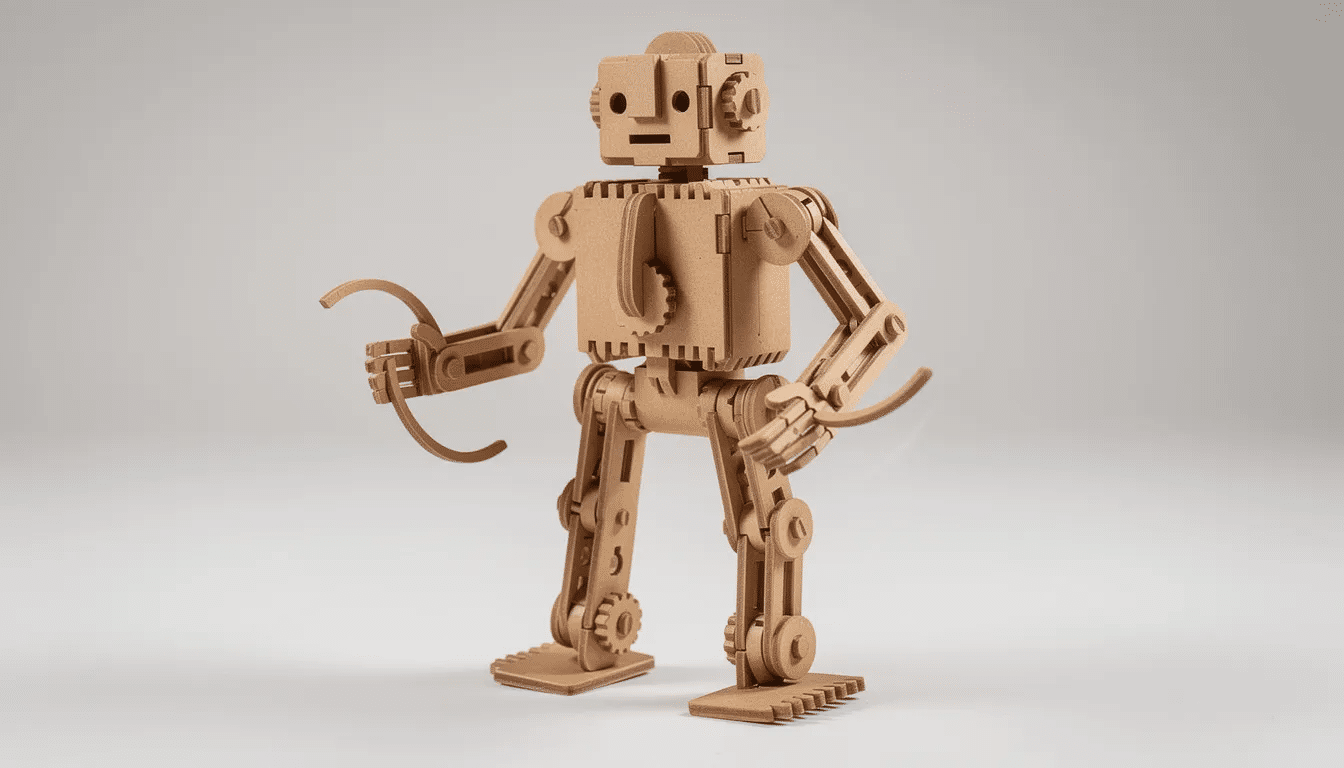
Kamikara creates paper automata that genuinely move. Using springs, weights, and cleverly folded joints, these kits produce jumping animals, popping monsters, and rolling characters. The wolf-and-sheep trick—where a wolf’s paper mask flips to reveal a sheep face underneath—demonstrates how mechanical principles translate into paper engineering.
Shubunsha’s karakuri kits incorporate crank or wheel mechanisms. Turn a knob and animals walk, swim, or play peekaboo. Both brands offer genuine educational value, introducing children and adults to basic mechanics, cams, and linkages using only paper and glue, much like other creative uses of paper mâché for art projects that turn simple materials into engaging educational tools.
Cultural Significance in Japan
In Japan, paper crafting is more than just a hobby—it’s a cherished tradition that nurtures creativity, patience, and skill. Many Japanese families and schools encourage children to work with paper, helping them develop fine motor skills and an appreciation for careful craftsmanship. Paper models often feature beloved characters or scenes from Japanese history and mythology, allowing builders to connect with cultural stories while expressing their own creativity, much like vintage paper craft ideas that upcycle old ephemera connect makers with the stories behind older printed materials. Whether recreating a famous landmark or assembling a favorite anime character, Japanese paper crafting celebrates both the country’s artistic heritage and the joy of making something beautiful by hand.
What You Need to Build Japanese Paper Model Kits
Tools and workspace setup significantly influence your building experience, especially with fine Japanese kits where precision matters. Having the right equipment at your fingertips makes the difference between frustration and fun.
Essential tools include a hobby knife or precision cutter for clean cuts, small scissors for curved edges, a self-healing cutting mat to protect your work surface, and a metal ruler for straight lines. Fine-tipped craft glue—white PVA works well for most kits—allows precise application without mess.
Detail tools improve results dramatically. Tweezers help you position tiny pieces without crushing them. Toothpicks work perfectly for applying small amounts of glue. A scoring tool or empty ballpoint pen creates crisp fold lines that make assembly easier. A small paintbrush lets you color cut edges with matching markers, eliminating the white paper showing at folds.
Organization aids save time and prevent lost parts. Small trays keep pieces sorted, numbered envelopes match instruction steps, and labeled bowls prevent laser-cut sheets from getting mixed up during multi-session builds.
Optional but useful aids include a magnifying lamp for working with Paper Nano or detailed Sankei kits, magnetic corner clamps with gentle pressure for holding walls at right angles while glue dries, and simple jigs made from scrap cardstock for maintaining consistent angles; some builders also branch into paper quilling art for beginners to apply these precision techniques in new ways.
Most kits include Japanese instructions, but don’t let that intimidate you. The diagrams are clear enough to follow step by step, and many manufacturers now add bilingual elements or numbered part references that make assembly intuitive.
Choosing the Right Japanese Paper Model Kit for You
Matching kit complexity and theme to your interest, time, and experience level prevents frustration and maximizes enjoyment. Not every kit suits every builder, and that’s perfectly fine.
For beginners and families, start with Bandai vending machines, Ensky Paper Theater, or simple Piperoid figures. These require minimal tools, offer clear assembly processes, and produce satisfying results in under an hour. They’re excellent for testing whether paper modeling appeals to you before investing in more complex sets, and broader resources like general paper crafting inspiration and tutorials can help you explore additional techniques and project ideas.
Intermediate builders should try small Sankei buildings, mid-range Paper Nano sets, or Terada Mokei scenes. These introduce more pieces and require greater precision but remain manageable for those who’ve built a few simpler kits.
Advanced recommendations include large Sankei town blocks, UPLIFT 1/12 vehicles, complex Kamikara automata, and multi-kit dioramas where you combine several buildings into complete streetscapes. These demand patience, steady hands, and often multiple work sessions.
Consider display space before purchasing. A Sankei station base typically measures around fifteen by ten centimeters. Paper Theater frames are roughly postcard-sized. Large townscape dioramas might need thirty centimeters or more.
Theme matters as much as difficulty. Anime fans gravitate toward Ghibli or Demon Slayer kits. Railway enthusiasts prefer Nostalgic Georama buildings. Architecture buffs enjoy castles, shrines, and Tokyo Diorama Factory’s contemporary structures. Putting together something you genuinely care about makes the work more engaging.
Check practical details before ordering: age recommendations, approximate build times listed by manufacturers, and whether kits require extra materials like LED lights that aren’t included in the box.
Tips for Building and Displaying Japanese Paper Model Kits
Experienced paper modelers have developed techniques that help avoid common mistakes. Following their hard-won wisdom saves time and improves results.
Pre-score all fold lines before cutting pieces from sheets. Test-fit parts before applying glue—this catches alignment issues early. Work from large structural elements to tiny details, allowing full drying time for walls and roofs before adding delicate elements. Rushing leads to warped buildings and crooked windows.
Humidity affects paper. Thick chipboard from brands like Sankei and Tokyo Diorama Factory holds up well, but long roof spans or large flat surfaces may benefit from hidden reinforcement strips glued inside. A bit of extra cardstock adds rigidity without showing.
Small hacks make big differences. Hair clips or gentle clamps hold corners while glue dries. Wax paper between magnets and printed surfaces prevents marks. Matching markers—grays for unpainted buildings, browns for wood—color cut edges and eliminate visible white paper at folds.
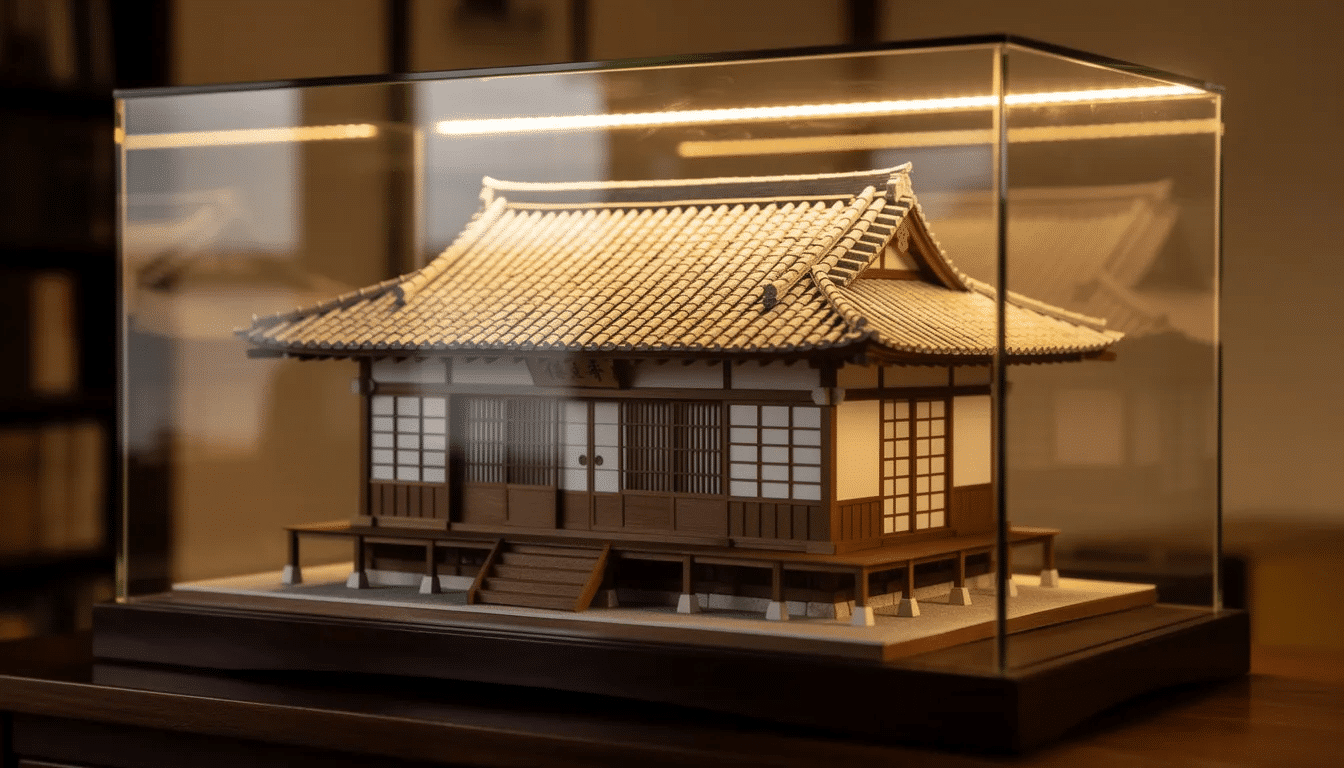
For display, consider glass cases that protect finished models from dust. Small LED strips add dramatic backlighting to Ensky Paper Theater and Ghibli dioramas. Railway modelers integrate buildings directly into N-scale layouts, creating cohesive scenes.
Dust protection matters for delicate models. Acrylic covers, transparent storage boxes, or wall-mounted shadowboxes preserve Paper Nano and Terada Mokei scenes for years. These pieces represent real investment of time and care.
Photograph your finished works using macro or portrait modes with natural light. Miniature models photograph beautifully when properly lit, and sharing images online connects you with fellow hobbyists worldwide.
Common Challenges and Solutions
Building Japanese paper models can be both rewarding and challenging, especially when working with tiny pieces and delicate edges. Applying glue precisely without making a mess, handling small parts, and pressing layers together smoothly all require a steady hand and a bit of practice. Many crafters rely on tweezers and their fingertips to position pieces accurately, while tools like brayers or even a credit card help press layers flat and eliminate bubbles. Taking your time and working patiently makes a big difference—soon, you’ll find that even the most intricate models become easier to assemble. With the right techniques and a little perseverance, anyone can master the art of paper crafting and enjoy the satisfaction of a finished model.
Where and How to Buy Japanese Paper Model Kits
Many of the best Japanese paper model kits are still produced primarily for the domestic market, though international availability has improved significantly. Many Japanese paper model kits are available for international shipping, but prices may vary significantly between local and international retailers. Finding the right sources makes all the difference.
Japanese online hobby shops offer the widest selection. Some provide international shipping directly, while others require proxy services for access to marketplaces like Yahoo! Auctions Japan. Brick-and-mortar model shops in Tokyo, Osaka, and Nagoya carry extensive inventory for those visiting Japan.
Some brands—Sankei, Ensky, Kawada, Piperoid—are increasingly available internationally through authorized retailers, both online and in specialty hobby stores. Others like Tokyo Diorama Factory remain harder to find outside Japan, often priced higher on export sites than domestic retailers charge. Tokyo Diorama Factory products can be ordered via personal shopper services like RailGallery Rokko or ModelTrainPlus.
Compare prices between official international sites and Japanese hobby retailers. Hobbysearch offers Tokyo Diorama Factory kits at prices that are often lower than the manufacturer’s international site. Export markups on certain brands run significant, sometimes thirty to fifty percent above Japanese retail. Some retailers may require customers to sign agreements or acknowledge pricing obligations related to exports and competitive practices. Consolidating orders saves on shipping, which can otherwise add substantially to total cost.
Check stock status carefully. Popular or limited-run kits—especially licensed anime scenes or seasonal sets—go out of print regularly. When items are shipped from Japan, factor in delivery time and confirm whether instructions are bilingual or Japanese-only if language matters to you.
Review return policies before ordering. Paper kits with manufacturing defects can usually be exchanged, but returns for opened items are rarely accepted.
Proxy services are useful for shops that do not ship internationally. ZenMarket allows users to order items from Japanese websites and consolidate shipping.
Online retailers like AmiAmi, HobbyLink Japan, and Plaza Japan offer a broad selection of Japanese paper model kits. Plaza Japan offers fast shipping directly from Japan for paper model kits.
Japanese paper model kits offer an accessible way to build miniature worlds—from Ghibli streets to Showa-era towns and working paper machines. Whether you’re drawn to the meditative process of careful assembly or the satisfaction of displaying finished dioramas, there’s a kit waiting that matches your interests. Start with one that speaks to you, gather your tools, and discover why this hobby has captivated builders across Japan and around the world.
Community and Resources
The world of Japanese paper model kits is supported by a vibrant, welcoming community. Online forums, social media groups, and dedicated websites are filled with tips, inspiration, and encouragement for builders of all skill levels. Many crafters share photos of their completed models, offer advice on tricky steps, and celebrate each other’s creativity. If you’re just getting started, you’ll find plenty of tutorials, videos, and classes to guide you through your first projects. Companies like Plaza Japan make it easy to find a wide selection of kits and models, so you can choose something that matches your interests and experience. Whether you’re making your first fold or tackling an advanced build, the paper crafting community is always ready to help you learn, grow, and have fun along the way.