
Key Takeaways
- You can turn normal paper scraps and cotton pulp into sturdy watercolor paper with a blender, screen, towels, and a simple frame.
- Cotton fibers, correct thickness, and gelatin or another sizing agent are what make homemade watercolor paper usable for watercolor painting.
- Handmade watercolor paper lets you control texture, color, deckled edges, and weight in ways store-bought pads cannot.
- Expect a few hours of active paper making plus 24–48 hours of drying before each sheet is ready to paint on.
If you have ever started painting and watched cheap paper buckle, tear, or absorb water like a paper towel, this process is worth trying. The recommended method for creating homemade watercolor paper is simple: transform raw or recycled fibers into pulp, form sheets, then apply sizing to manage water absorbency.
Why Make Your Own Watercolor Paper?
Store-bought watercolor papers range from student grade papers to Professional or Artist’s Grade sheets. Student Grade watercolor paper is typically made from a combination of cellulose and wood pulp, resulting in different absorbency and texture compared to Professional Grade paper, which is usually made from 100% cotton. Professional Grade watercolor paper is usually mould made, acid-free, and pH neutral, ensuring it is archival quality and will not yellow over time, unlike most Student Grade papers.
Watercolor papers come in three weight classes: Light (90lb / 190gsm), Medium (140lb / 300gsm), and Heavy (300lb / 640gsm). Most experienced painters advise against using paper lighter than 140lb / 300gsm, as it requires preparation like stretching or taping down to prevent buckling. Heavy weight watercolor paper (300lb / 640gsm) is preferred by artists who work with a lot of water, as it can handle wet techniques without warping.
DIY sheets are not identical to high quality watercolor paper from a specialist company. The durability of professional commercial paper is typically superior due to its construction from 100% cotton rag, while homemade paper may vary in cellulose content, leading to fragility. Homemade paper differs from commercial alternatives in its surface texture consistency and mechanical strength, as well as the uniformity of the sizing agent. Commercial watercolor paper is typically mould-made, resulting in consistent texture, whereas homemade paper yields an organic, irregular texture.
The tradeoff is control. You can create deckled edges, warm cream or light grey color, a rough grain, or a smooth surface for drawing and inks, similar to other handmade paper sheets for creative projects. You can also save money by recycling old cotton shirts, rag scraps, failed paintings, and mixed paper scraps into fresh handmade paper.
Tools and Materials You’ll Need
Here is a practical checklist before you begin:
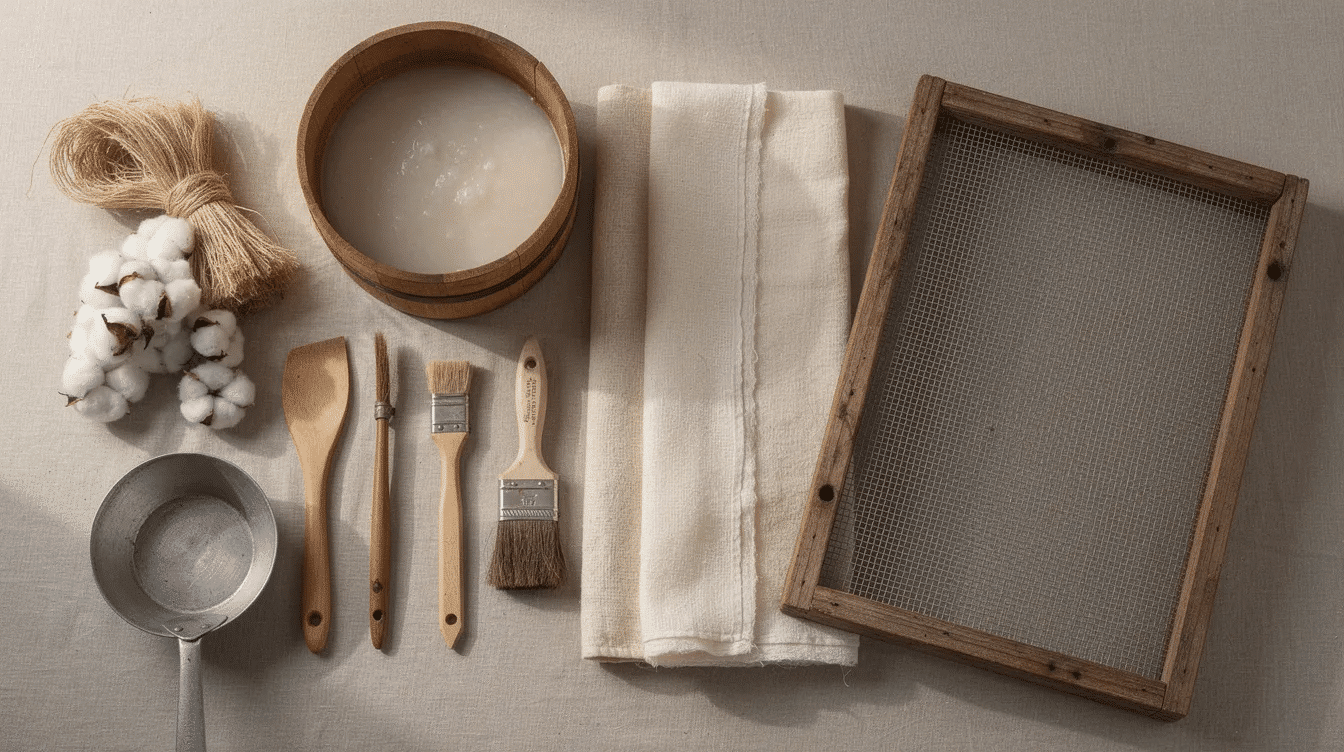
- Fibers: 100% cotton rag, old white cotton T-shirts, bedsheets, cotton linters, or a mixed batch of cotton and high-quality cellulose scraps.
- Avoid: glossy magazines, newsprint, and too much wood pulp if you want better quality, and choose the best types of paper for craft when you’re mixing in purchased sheets.
- Equipment: a craft-only blender, a 10–15 litre tub or basin, a bucket, a sieve, and a measuring jug, plus any top craft paper supplies for creative projects you already keep in your studio.
- Mould and deckle: two wooden frames; one frame has fine mesh, window screen, or wire stapled tightly across it.
- Pressing and drying: cotton towels, felt or fleece, flat boards, heavy books, and a table or mesh rack.
- Sizing: unflavoured gelatin packets, usually 7–10g each, or powdered gelatin; alkyl ketene dimer (AKD) liquid sizing is another option. Liquid starch or methylcellulose can work as a vegan coating.
- Extras: rubber gloves, apron, tea, coffee, diluted pigment, brushes, and a notebook.
Make sure your blender is not used for food again after papermaking. That is one small safety rule worth keeping.
Preparing the Pulp
This step turns normal paper scraps and cotton into a smooth, paint-ready pulp. Cut or tear fabric and paper into 2–3 cm squares so the fibers separate evenly.
Place the pieces in a bucket, cover with warm water, and leave them soaked for 4–12 hours. Longer soaking makes blending easier and helps create a more even pulp.
To blend:
- Fill the blender halfway with water.
- Add one handful of soaked fibers.
- Pulse in short bursts.
- Stop when the mix looks like a cloudy slurry with no large clumps.
- Pour each batch into your large tub of clean water.
Do not overblend. Short pulses keep the fibers long enough to form a stronger sheet. Scoop some pulp into your hand as a quick test. If it runs away like cloudy water, your paper will be thin. If it sits in heavy clumps, your sheet may dry lumpy and thick.
Forming the Sheets (The Fun Part)
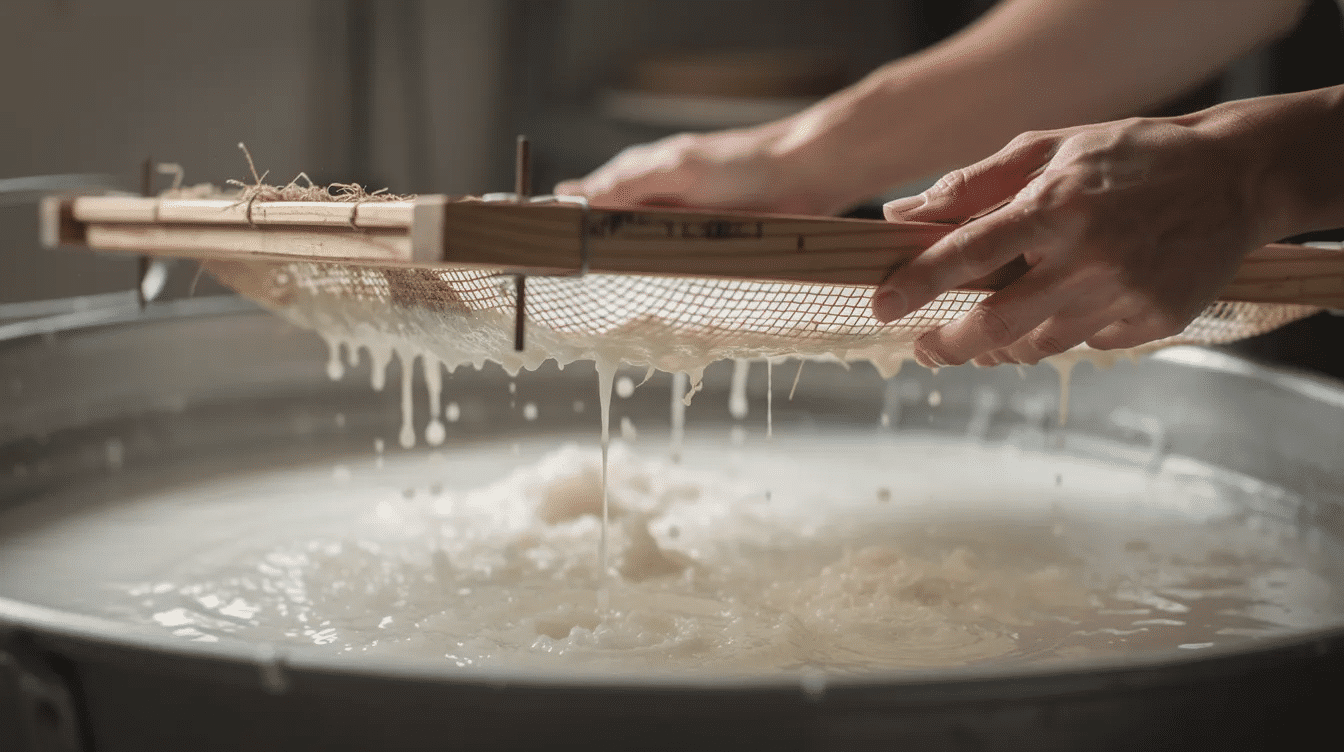
This is the core step where you pull sheets of watercolor paper using the mould and deckle. Place the empty deckle on top of the mesh-covered mould, aligning the edges to form a shallow box.
Stir the pulp bath before every sheet. Fibers settle quickly, and skipping this step is the most common sign of patchy handmade watercolor paper.
Hold the mould and deckle at a slight angle, dip them under the pulp surface, level them, and lift steadily. Let water drain through the screen. A slower lift and denser vat usually create heavier paper weights; more water in the tub makes thinner sheets.
Gently tilt and shake the frame from side to side while it drains. This distributes fibers across the surface and helps achieve an even watercolor paper texture.
Couching, Pressing, and Drying Your Watercolor Paper
Couching, pronounced “kooching,” is the process of transferring the wet sheet from the screen to fabric.
Lay a damp towel or felt on a flat board. Flip the mould face-down onto it and press firmly with a sponge or towel. Slowly lift the mould away so the fresh watercolor sheet stays behind. Be gentle, because wet handmade paper can tear easily.
To make several sheets, alternate layers:
- towel or felt
- wet paper
- towel or felt
- wet paper
Place another board on top and press with heavy books for several minutes. This removes water, flattens the paper, and improves fiber bonding.
Dry flat for 24–48 hours. A mesh rack improves airflow, while changing damp towels speeds the process. Avoid harsh sun because fast drying can make sheets brittle.
Adding Sizing for Watercolor Painting
Sizing is what makes paper behave like true watercolor paper instead of blotting paper. Untreated homemade watercolor paper tends to be extremely absorbent and requires the right materials and post-treatment techniques to create a functional surface. Homemade watercolor paper requires dense, absorbent fibers and a heavy sizing agent to prevent paint from bleeding.
There are two approaches:
- Internal sizing: added to the pulp vat. Internal sizing can be added by mixing liquid gelatin directly into the pulp vat to help with paint adherence.
- Surface sizing: brushed or dipped onto dried sheets. This is easier at home.
For gelatin sizing, dissolve powdered gelatin in hot water, then let it cool until lukewarm. Brush it over each sheet or briefly dip the paper into the solution, then dry flat again. Manual application of sizing on homemade watercolor paper can lead to inconsistencies in stiffness compared to perfectly calibrated industrial sizing found in commercial paper.
Sizing prevents homemade paper from immediately absorbing paint, unlike untreated paper which behaves like a paper towel. Test with a small swatch: watercolor should sit briefly on the surface instead of soaking straight through.
Customizing Texture, Weight, and Color
Watercolor papers come in three main textures: Hot Press, Cold Press, and Rough, each affecting how paint interacts with the surface. Hot Press paper has a smooth surface, making it ideal for detailed work, while Cold Press paper has a textured surface that is more absorbent and commonly used by watercolor artists. Rough watercolor paper has the most texture and is the most absorbent, allowing pigments to settle into its deeper valleys, which is great for achieving a textured look.
At home, you can imitate these finishes:
- Hot press feel: dry against a smooth board or glass-like surface.
- Cold press feel: press between cotton towels or felt.
- Rough feel: use textured cloth and avoid heavy flattening.
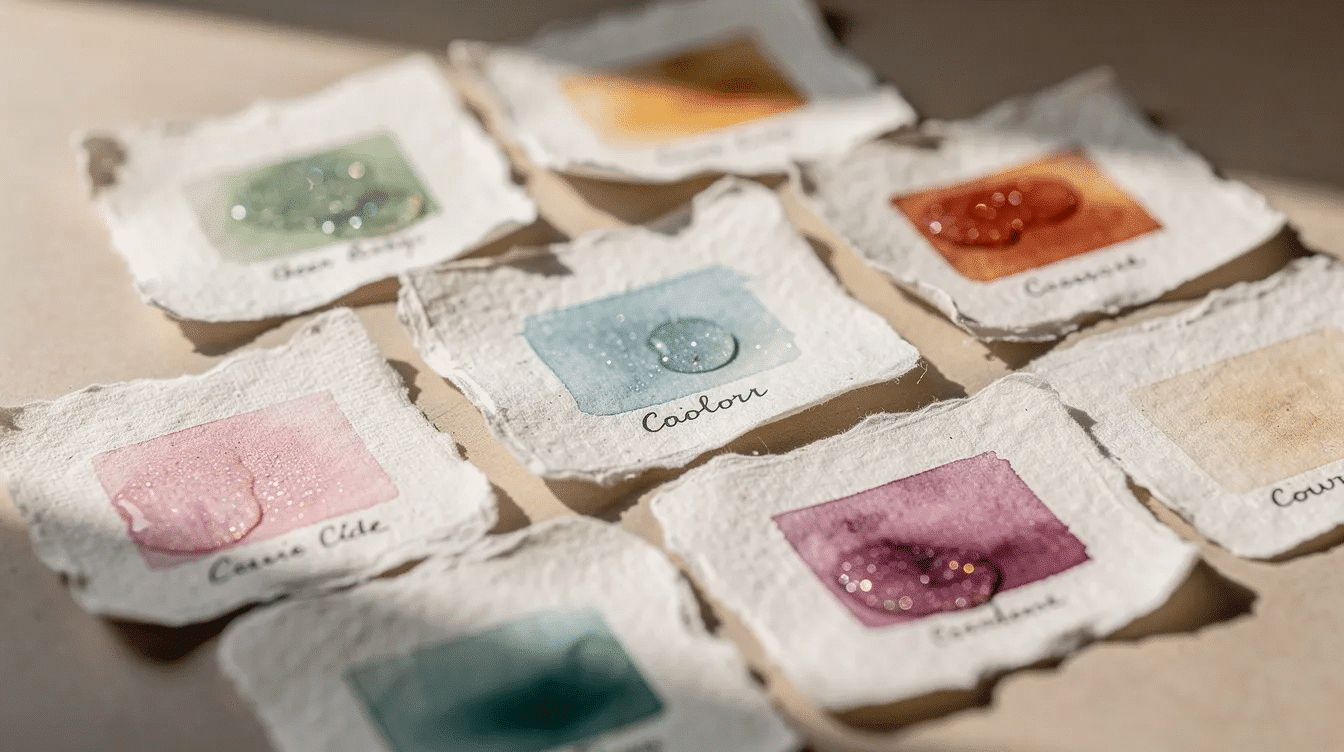
Add weak tea, coffee, or diluted ink to the pulp for color. You can also embed threads or petals, but too many inclusions interrupt washes. Make small test tiles first; different brushes, pigments, and sizing choices give different results, just as with other fun paper activities for creative minds.
Testing and Using Your Homemade Watercolor Paper
Testing helps you learn how your specific paper handles watercolor techniques. Try flat washes, graded washes, lifting, glazing, drybrush, gouache, inks, and mixed media.
Compare one sheet against commercial 140lb cold press watercolor paper. Note drying time, color vibrancy, buckling, and whether paint feathers. Keep a batch record with pulp mix, sizing method, and drying technique so you can repeat your favorite recipe.
If you want to print on watercolor paper, trim the paper to fit your printer’s input size, typically 8.5 by 11 inches. When printing on watercolor paper, select “Photo Paper” in the print settings to achieve better image quality. To prevent issues while printing, remove any regular paper from the printer’s feed before inserting the watercolor paper, especially if you plan to cut and fold those prints into seasonal crafts like homemade paper snowflakes.
Finished sheets are ideal for studies, cards, sketching, color charts, and smaller art pieces, or even for printing creative and useful things to print on paper. Store them flat between boards or in a portfolio to protect the surface.
Common Mistakes and Troubleshooting
Use this quick reference when homemade watercolor paper quality is not quite right.
- Uneven thickness: Stir the pulp more often, lift the mould more slowly, and keep the frame level.
- Paint sinks in: Add more sizing or reapply a stronger gelatin coating.
- Brittle sheets: Use more cotton rag, avoid overblending, and dry away from harsh heat.
- Wrinkles or warping: Press longer, dry between boards, or lightly humidify and re-press; reserve badly warped offcuts for sculptural projects like creative uses of paper mache.
- Mold or odor: Improve airflow, make thinner sheets, and replace wet towels promptly.
One suggestion: label every batch. If you learned a trick from a class, course, youtube video, website, or this article, write it down or add it to your favorite paper crafting inspiration platform. Your future artist self will thank you.
FAQ
Can I use normal printer paper to make watercolor paper?
Printer paper alone is usually too short-fibered and weak, so it can tear when rewetted for watercolor painting. Mix shredded printer paper with at least 50–70% cotton fibers for better strength. Even with mixed pulp, you still need sizing to control bleeding.
How thick should homemade watercolor paper be for good results?
Aim for a firm, card-like sheet similar to 140lb / 300gsm commercial paper. It should bend slightly but not feel flimsy. Experiment with pulp concentration until your paper resists buckling during washes.
Do I really need a special mould and deckle?
A mould and deckle make the process easier, but you can improvise with two picture frames. Attach fine mesh or window screen to one frame and use the second to shape the edges. The key is a flat, tensioned screen.
Is homemade watercolor paper archival?
True archival paper is usually 100% cotton, acid-free, pH neutral, and manufactured under controlled conditions. DIY paper can last if you use cotton rag, avoid acidic scraps, and dry thoroughly, but reserve critical gallery work for professional paper.
Can I use this method for other media like ink or gouache?
If you enjoy detailed line work or decorative borders, you can also reserve some of your sturdier sheets for paper quilling art projects.
Yes. Properly sized sheets can handle gouache, ink drawing, and mixed media. Watery inks may need stronger sizing than gouache. Test an offcut first, then comment on your own batch notes, save the recipe in your computer or account, and post what worked if you hope to help others in the watercolor world enjoy painting.