
Key Takeaways
- You can make diy washi tape with paper, acrylic paint, double sided tape, and basic supplies you probably already have.
- This tutorial focuses on how to make washi tape at home paper style, using thin printer paper, book pages, tissue paper, or napkins to mimic real washi tape.
- You’ll learn painted, printed, faux vellum, and upcycled versions without a cutting machine or special sticker paper.
- Handmade tape is budget-friendly, customizable, repositionable, easy to tear by hand, and great for journaling, scrapbooking, envelopes, and gift wrap.
What Is Washi Tape and How Does Paper DIY Compare?
Washi tape is a Japanese-style decorative tape inspired by washi paper, a traditional plant-fiber paper used in crafts, art, writing, and home decor. Store-bought washi is popular because it is matte, lightweight, easy to tear, and gentle on most paper surfaces.
DIY washi made with paper and adhesive imitates that look using common materials. It may be thicker or less transparent than real washi tape, but you can still create cute patterns, soft colors, and a writable surface.
Use your own tape for:
- Bullet journals and planners
- Scrapbooks and photo corners
- Card making and envelopes
- Gift wrap, labels, and collage crafts
Supplies You’ll Need to Make Your Own Washi with Paper
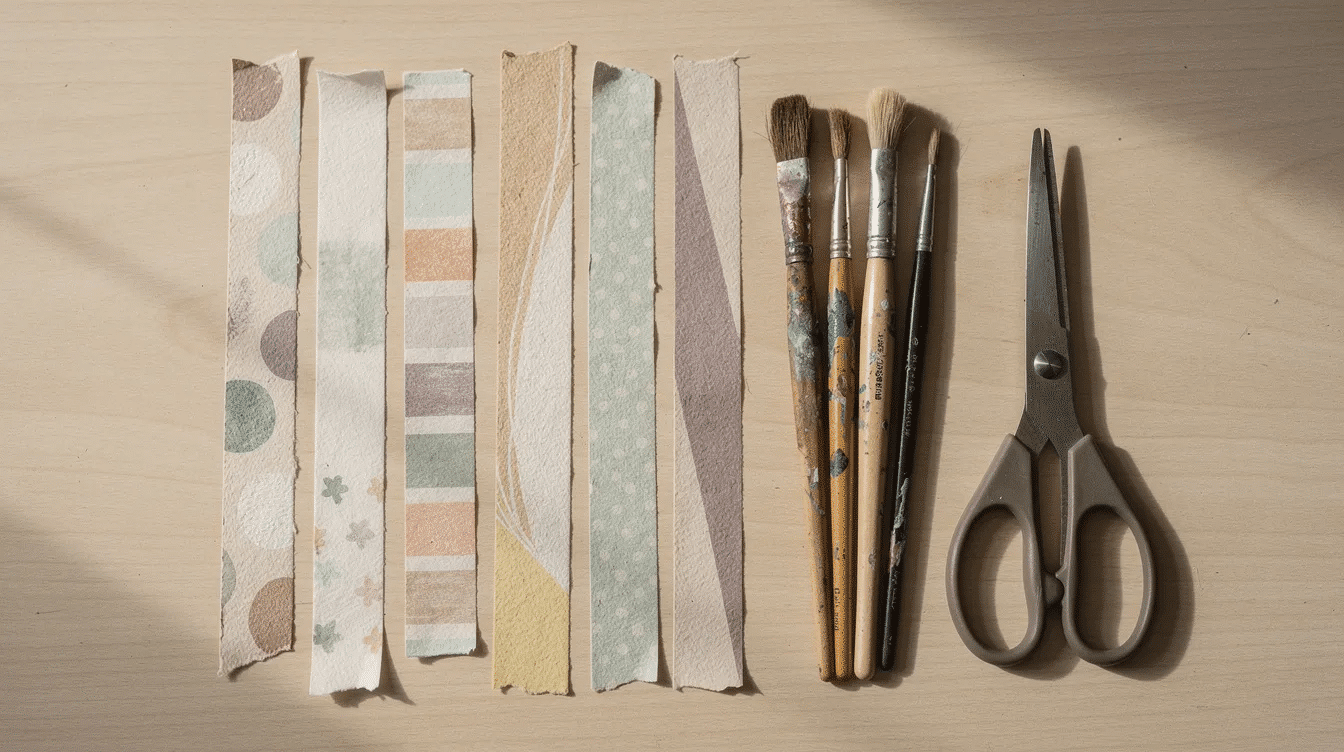
Most materials are inexpensive, and high-end tools are optional, especially if you stock up on top craft paper supplies for creative projects.
Base paper:
- 80–90 gsm printer paper
- Old book pages, music sheets, maps, or kraft paper
- Tissue paper, napkins, or standard gift-wrapping paper
- Tracing paper, baking parchment, or thin washi paper scraps
Adhesive options:
- double sided tape in narrow or wide rolls
- clear packing tape for a Packing Tape Method, ideal for magazine cutouts
- masking tape as a base; masking tape has similar properties to traditional washi tape and is easy to customize
- low tack artist tape or drafting tape as flexible, less adhesive alternatives
- optional sticker paper for a more polished backing
Design tools:
- acrylic paint, metallic acrylic paint, watercolor, markers, ink, stamps, brush pens, pencils
- Rubber stamps can be used to add design elements and patterns to customized washi tape.
- Using watercolors on masking tape can give a matte effect, but the colors will not be waterproof, making acrylic paint a better option for durability.
Other tools:
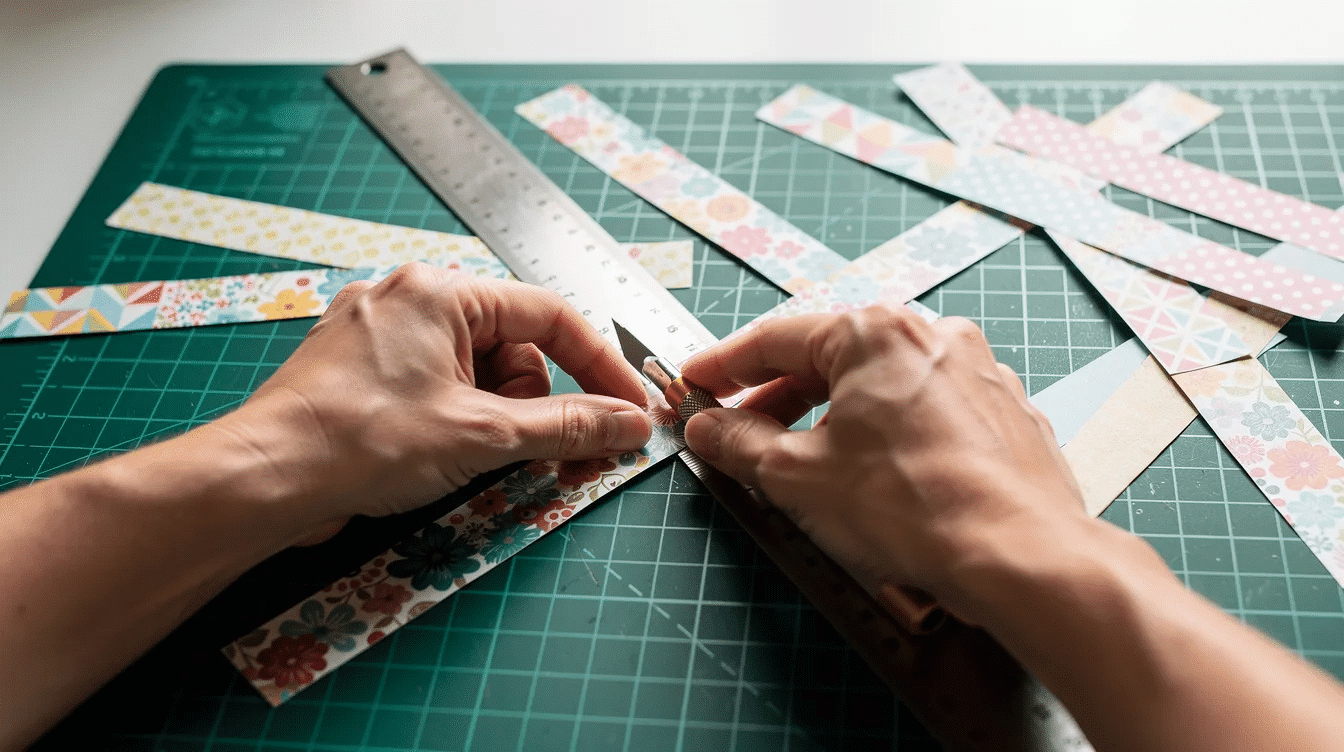
- scissors, craft knife, ruler, cutting mat
- soft brushes, old gift card, paper towel
- wax paper, parchment paper, or a plastic sheet as non-stick backing
- white glue or glue stick for tissue layering
- baby oil, beeswax, wax, or a small amount of Vaseline for transparent effects
Method 1 – Classic DIY Washi Tape on Paper with Acrylic Paint
This is the most versatile way to make your own washi with plain paper, paint, and double sided tape.
- Cut an A4 or Letter sheet of thin paper. Tape the edges to a board so the surface stays flat.
- Lightly mark guide lines for strips if you want 6 mm, 10 mm, or 15 mm widths.
- Dilute acrylic paint with water and brush on thin layers. Acrylic paint diluted with water helps achieve a lighter, more transparent finish.
- Add patterns: dots, stripes, grids, flowers, borders, or tiny words like “note.”
- Metallic paints can add shiny details. Diluting metallic acrylic paint with water can create a more transparent effect for lighter colors.
- Wait 30–45 minutes, or until the sheet is completely dry.
- Flip the sheet over. Run several strips of double sided tape along the back, parallel to each other.
- Press firmly with an old gift card, then cut between strips.
- Peel the backing when ready to stick the tape.
Pro tips:
- One thing that prevents bubbles is laying the adhesive slowly from one end.
- Keep designs straight by drawing faint pencil guides before you paint.
Method 2 – Faux Vellum Washi Tape: Oiled Paper Technique
This technique creates soft, frosted, semi-transparent handmade tape.
- Print line art, vintage designs, or black-and-white patterns on printer paper.
- Rub a tiny bit of baby oil, mineral oil, beeswax, or a small amount of Vaseline into the printed side.
- A method to make DIY washi tape involves using double-sided tape on a book page, which can then be enhanced with a small amount of Vaseline to create a transparent effect.
- Avoid oil near the future tape edges so the adhesive can still stick.
- Blot shiny areas with paper towel.
- Let the sheet rest 1–2 hours on parchment paper or wax paper.
- Flip, apply double sided tape, press, cut, and peel.
Wax paper can serve as a non-stick backing for storage of homemade washi tape. The finished tape is ideal for layering over journal text or collage art.
Method 3 – Upcycled Book Pages and Tissue Paper Washi
This is a great idea if you like vintage texture or want an eco-friendly project, especially if you enjoy vintage paper craft ideas that upcycle old materials.
- Tear or cut book pages, old atlases, or damaged dictionaries from before 2010.
- Brush on a pale wash of diluted acrylic paint if the paper looks too yellow.
- For tissue paper, use a glue stick or white glue to attach colored tissue over plain paper. Smooth wrinkles gently.
- The Double-Sided Tape Method is suitable for scrapbook paper or napkins, especially when the paper is thin and decorative.
- Apply long strips of double sided tape on the back.
- Add stamps, ink pads, markers, or pen doodles over the text.
- Cut narrow strips for text-heavy pages and wider strips for bold tissue colors.
Decorative paper can include tissue paper, napkins, or standard gift-wrapping paper. This is a cool idea for turning leftover wrap and damaged books into new craft supplies, or even pairing them with handmade paper sheets for unique mixed-media projects.
Method 4 – Printed Paper Washi Tape Without Fancy Machines
You can design your own washi tape patterns digitally and print them on normal paper, then browse Simply Paper Crafts for more paper-crafting inspiration.
- Create 1–2 cm bands of stripes, florals, grids, or icons in a free design tool.
- Print on standard 80–90 gsm paper at high quality.
- Leave small blank margins between rows.
- Flip the sheet and align double sided tape behind each pattern row.
- Cut along the bands and trim white borders.
This mimics commercial washi tape paper without special sticker paper. Silhouette or Cricut machines can print and cut similar designs automatically, but scissors work absolutely fine.
Custom washi tape can be created by combining decorative paper and double-sided tape or clear packing tape. The Packing Tape Method is ideal for magazine cutouts because clear packing tape protects the picture side and gives a glossy plastic tape finish, similar to other cute paper craft ideas for fun DIY projects.
Adding Details: Metallics, Lettering, and Layered Color
Once the base is done, upgrade it with small details, or try other seasonal paper projects like making paper snowflakes for winter decor.
Try:
- Gold, copper, or bronze metallic acrylic paint dots
- Starbursts, splatters, and thin borders
- Watercolor over dry acrylic for layered color
- Stamps and fine-liner outlines
- Planner words like “today,” “love,” “note,” or “2026”
Finishing options for handmade tape include applying a thin layer of Mod Podge or clear acrylic spray to prevent ink smudging. Use a light coat so the tape stays flexible and easy to tear.
If you take a close-up photo for a blog post, facebook share, or etsy listing, show the edges and sticky side so readers can understand the technique, just as you would when sharing DIY paper squishies and other playful crafts. Ask for more comments if friends try their own version.
How to Store, Use, and Gift Your Paper Washi Tape
Good storage keeps diy tape usable for months.
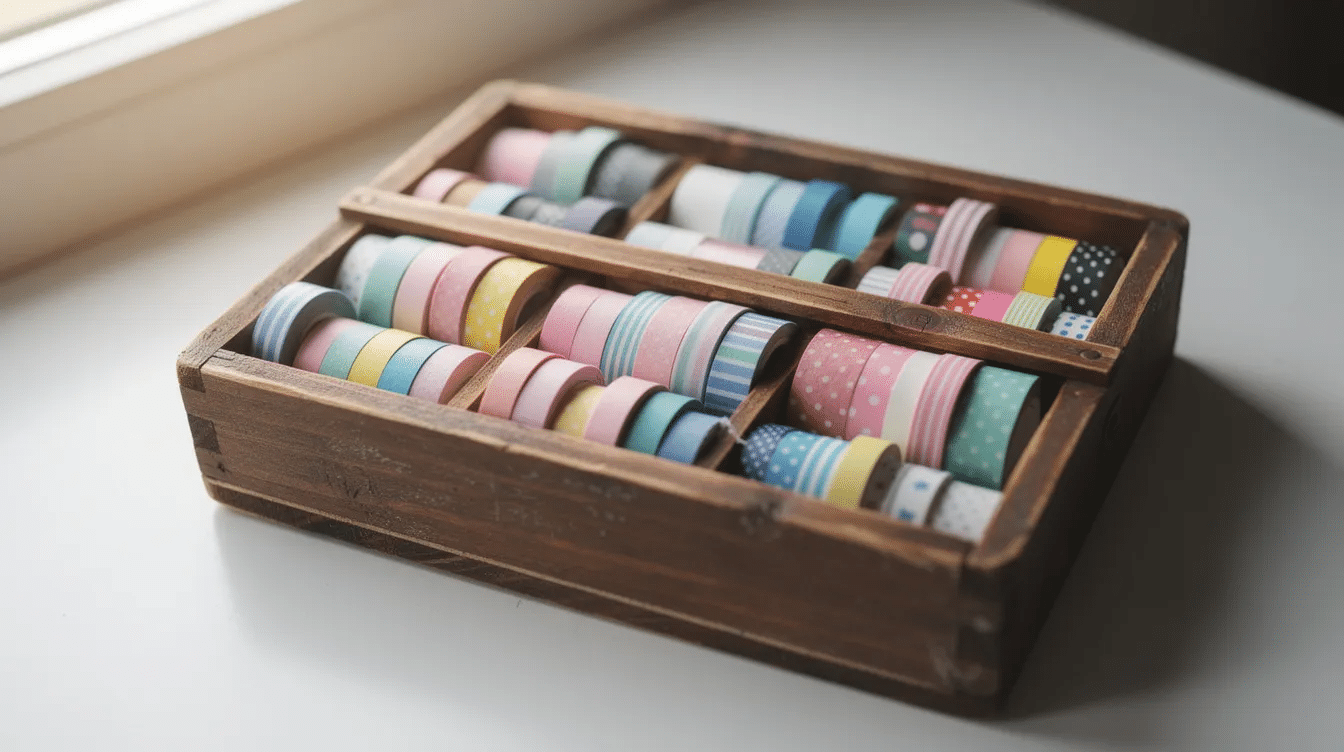
- Store flat on backing sheets in a folder, binder sleeve, or small box.
- Use wax paper or parchment paper so strips do not stick permanently.
- To make mini rolls, stick one end to parchment, roll loosely, and secure with a paper loop.
- Keep tapes away from direct sunlight and heat so adhesive does not dry out or leak.
Use the finished tape for scrapbooking, journaling, calendar tabs, envelopes, labels, and gift wrap. The resulting tape from these methods is repositionable and easy to tear by hand, making it suitable for scrapbooking or journaling.
Bundle several strips with twine and a handwritten note for a low-cost gift. It is super easy, and the fun making process is part of the charm.
Common Problems When Making Your Own Washi (and Easy Fixes)
Warped paper: Too much water can buckle paper. Use lighter coats and tape the edges down while drying.
Weak adhesion: Switch to stronger double sided tape, use less oil, and avoid heavy paint near the edges.
Cracking paint: Thick acrylic can crack when you tear the strip. Thin it with water or acrylic medium.
Smudging ink: Test pens first. Permanent ink works best, especially if you plan to seal the surface.
Too glossy: Clear packing tape and plastic finishes look less like washi. Use matte paper if you want a softer result.
Wrong sheet: Cut failed designs into collage pieces instead of throwing them away.
Double-sided tape, clear packing tape, and masking tape can be used to create washi-style tape at home. To create DIY washi tape, you can use masking tape as a base, which allows for a similar feel to real washi tape and can be easily customized with paints or designs. These techniques translate well to paper mache designs such as masks, bowls, and sculptures and other creative uses of paper mâché for art and decor.
FAQ – Making Washi Tape at Home with Paper
Can I make DIY washi tape without acrylic paint?
Yes. You can use watercolors, brush pens, colored pencils, markers, stamps, or printed patterns. Acrylic paint is usually more durable and less likely to smear.
What type of paper feels closest to real washi tape?
Thin, slightly textured paper feels closest. Try tracing paper, lightweight printer paper, or high-quality tissue layered over plain paper for a soft, fibrous washi feel.
How long does homemade paper washi tape stay sticky?
Most double sided tape-backed strips stay sticky for several months if stored flat, cool, and away from sunlight. Test one strip after a few weeks before making large gift batches.
Is DIY paper washi tape safe to use in photo albums?
It depends on the materials. Use acid-free double sided tape and non-yellowing acrylics for memory-keeping, and avoid irreplaceable photo prints if product labels are unclear.
Can I remove homemade washi tape without damaging paper?
Sometimes. Low-tack masking tape, artist tape, or removable adhesive is gentler, but always test on a spare page first because every surface reacts differently.