Key Takeaways
- You can make strong paper mache paste without flour using PVA glue, methyl cellulose art paste, or gluten-free starch.
- PVA glue, cornstarch, and wallpaper paste are alternatives to flour for paper mache paste, and each suits different types of projects.
- A simple paper mache recipe with white glue and water is the easiest option for beginners, kids, masks, and bowls.
- Flour-free paste helps prevent mold, reduces odor, and is better for gluten-sensitive classrooms.
- This post compares drying time, strength, and best uses for strips, sculptures, and a paper mache clay recipe.
Why Make Paper Mache Paste Without Flour?
Traditional paper mache uses flour and water. That method is inexpensive, and the traditional method for making paper mache paste involves mixing flour and water, which creates a strong and durable adhesive suitable for various crafting projects. To enhance the strength of the paper mache paste, it is recommended to heat the flour and water mixture, as this helps release the starch in the flour, acting as a binding agent. Homemade paper mache paste made from flour and water can be stored in a sealed container in the refrigerator for up to a week, although it is best used within a few days for optimal results.
The problem is that flour paper mache can smell, attract insects or mice in storage, and grow mold in damp rooms. In a humid Gulf Coast summer, or in a 2020s classroom with sealed windows and limited airflow, wet layers may stay damp too long. A no-flour mache paste gives you longer shelf life, less odor, and a better finished product for masks, decor, school models, and any big project you hope to keep for years.
- Basic PVA Glue Paper Mache Paste (No Flour)
- Methyl Cellulose “Art Paste” for Mold‑Resistant Paper Mache
- Gluten‑Free Starch Paste (Cornstarch or Potato Starch)
- No‑Flour Paper Mache Clay Recipe (For Sculpting Details)
- How to Use Flour‑Free Paste in a Paper Mache Project
- Choosing the Right No‑Flour Mache Paste for Your Project
- FAQ
- Can I use clear school glue instead of white PVA for paper mache paste?
- How can I keep a flour‑free paper mache project from warping over time?
- Is no‑flour paper mache safe for young children to use?
- Do I still need to seal a paper mache sculpture if I used a mold‑resistant paste?
- Can I mix different flour‑free pastes in one project?
Basic PVA Glue Paper Mache Paste (No Flour)
This is the easiest way to make paper mache without flour. A common alternative to flour in making paper mache paste is using a mixture of water and glue, which can create a strong adhesive without the use of flour. Using a combination of white glue and water is a popular method for creating a flourless paper mache paste, allowing for easy application and quick drying times.
Use standard pva glue: elmer’s glue, Elmer’s Glue-All, generic school glue, craft glue, or basic white glue from a craft site or store. Do not use silicone, super glue, or hot glue. Wood glue can work, but it is usually thicker, so experiment with a little extra water.
Basic recipe:
- 1 part PVA glue to 1 part water for general paper mache glue
- 2 parts glue to 1 part water for stronger adhesion; a mixture of PVA glue and water in a 2:1 ratio creates a paper mache paste
- 1 part glue to 2 parts water for delicate tissue paper or very thin paper strips
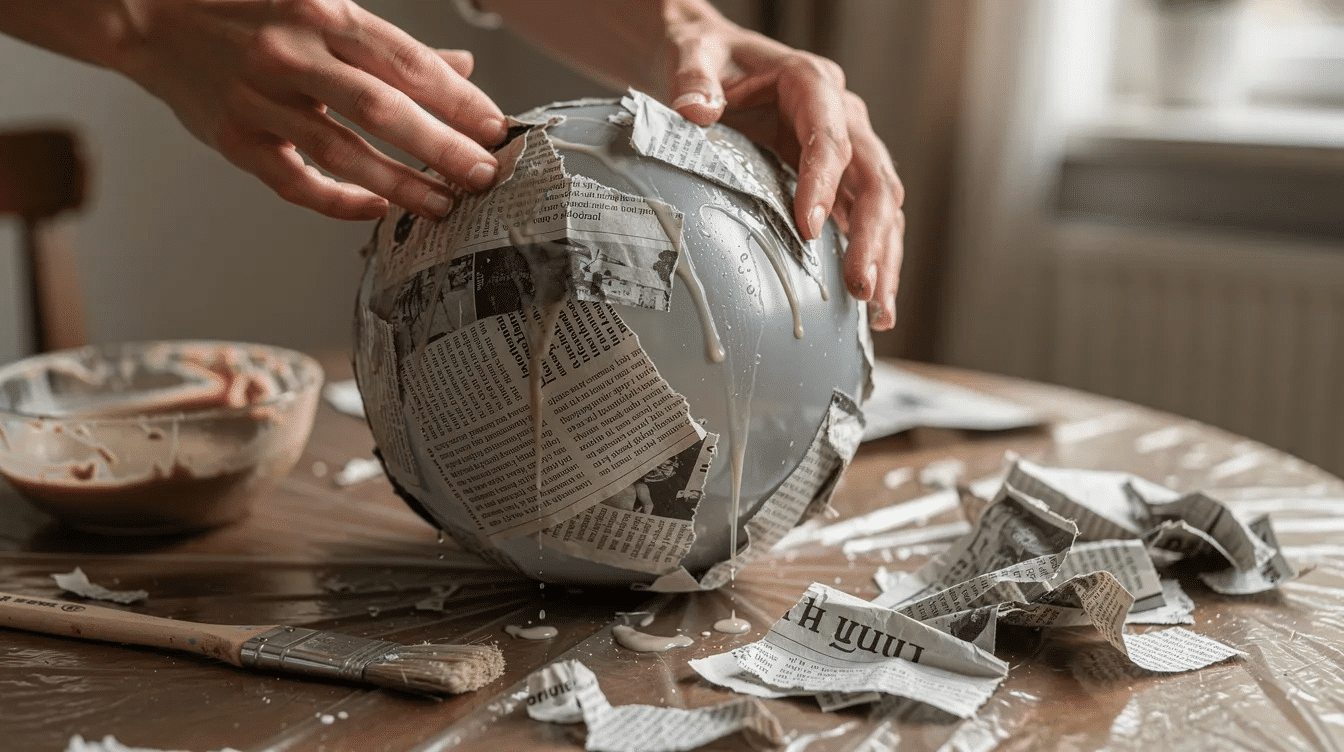
Pour glue into a bowl, add water slowly, and stir until the glue mixture is smooth with no streaks. Aim for light cream or thin yogurt consistency: sticky enough to soak newspaper, but not so wet that it drips everywhere. Dip strips into the paste, wipe off excess with your fingers, or brush paste onto the form and press dry paper on top. Using PVA glue mixed with water creates a smooth, water-resistant paper mache paste that dries clear, usually in 12–24 hours depending on humidity. It is non-toxic when used as directed, but kids should not eat it; cleanup is warm, soapy water.
Methyl Cellulose “Art Paste” for Mold‑Resistant Paper Mache
Methyl cellulose is a cellulose-based powder often sold as art paste or wallpaper paste. It is known in paper conservation because it makes a smooth gel and resists spoilage; methyl cellulose is also used in many paper and adhesive applications. Wallpaper paste is effective as an adhesive for paper in paper mache projects, especially when the product is plain methyl cellulose.
For a quart batch, add about 0.5 oz powder, roughly a heaped tablespoon, to a large jar. Add a little cold water to make a slurry, then top up to 1 quart. Shake or whisk well, cover with plastic wrap or a lid, and let it thicken for 15–30 minutes. It becomes a slick gel like clear school glue. Store it in the fridge in an air tight container; clean batches can last for months.
Use methyl cellulose for strip-based masks, a paper mache project that must last all semester, or humid-climate crafting where flour paste would sour; its long working time and smooth application work especially well for creative paper mache designs like masks, bowls, and sculptures. It dries almost transparent, wets paper evenly, and helps create a fine, smooth surface with fewer ridges. A small carton can make multiple quarts or even a gallon, so it is practical for a classroom. Gel medium used in paper mache dries completely clear too, but it costs more and is usually better as a final coat than as a bulk paste.
Gluten‑Free Starch Paste (Cornstarch or Potato Starch)
Some crafters want a flour-free and glue-free paper mache recipe. Cornstarch is a gluten-free alternative for traditional paper mache paste that provides a smooth texture. Some recipes for flourless paper mache paste suggest using cornstarch mixed with water as a base, which can provide a similar consistency and bonding strength.
For a small batch, mix 1/4 cup cornstarch with 1/2 cup cold water. Whisk this slurry into 2 cups simmering water and cook until cloudy liquid turns translucent and thick. For a larger batch, cornstarch paste can be made using 1/2 cup cornstarch mixed with 1/2 cup cold water and 3 cups of boiling water. Let the paste cool completely before use.
The target texture is slightly thinner than pudding but thicker than cream, so it clings to strips without running off. Store leftovers in a sealed jar in the refrigerator for 3–4 days, and stir if it separates. Add 1 teaspoon salt or a splash of white vinegar to slow spoilage, but it will not match PVA or methyl cellulose for mold resistance. This method is great for a temporary pinata, a quick classroom craft, or a party project where kitchen ingredients are preferred, and it’s an easy way to test creative uses of paper mache for art and craft projects.
No‑Flour Paper Mache Clay Recipe (For Sculpting Details)
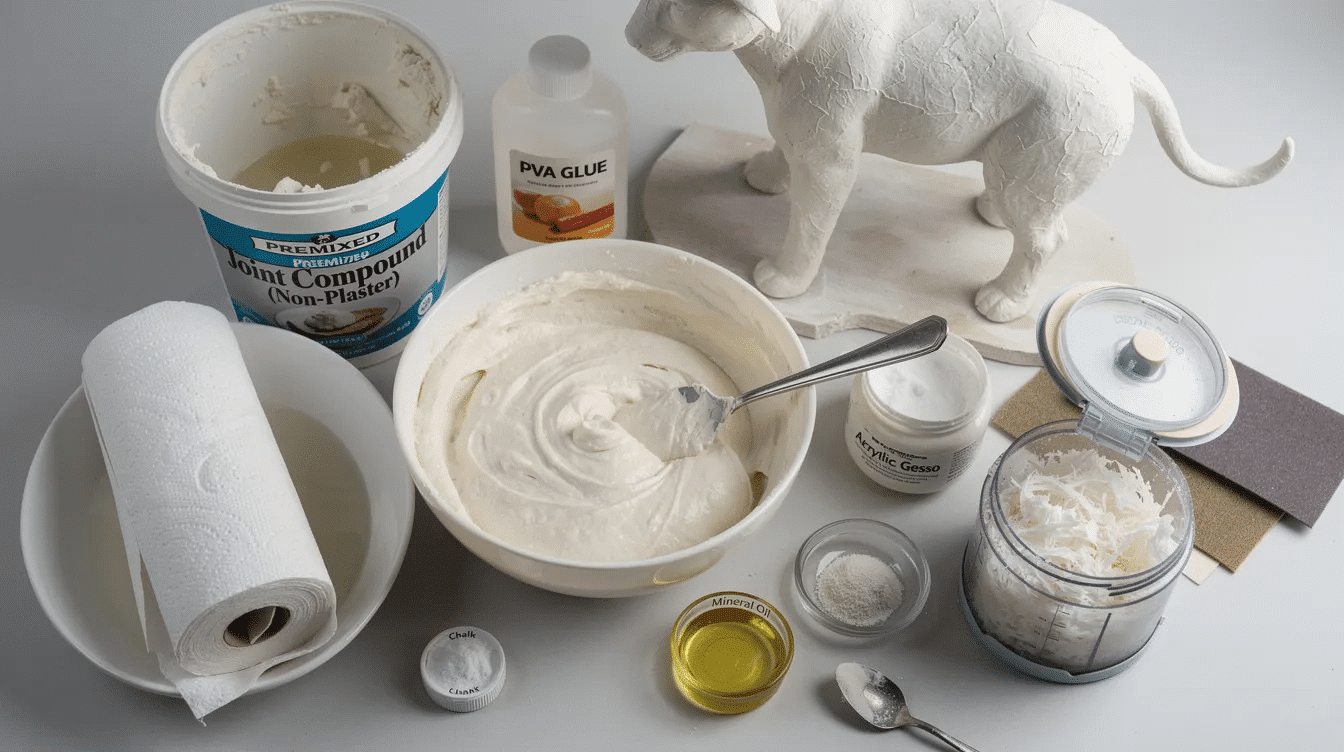
Paper mache clay is a spreadable paper clay used for animal figures, reliefs, and textured surfaces. This no-flour paper mache clay recipe is for detail work, not solid pottery-style clay.
Small test batch:
- 1 roll cheap white toilet paper
- About 1 cup premixed joint compound, non-plaster type
- 1 cup PVA glue
- 2–3 tablespoons mineral oil or vegetable oil
- Optional acrylic gesso or chalk for stiffness
Soak toilet paper in warm water, squeeze out as much moisture as possible, tear it up, then pulse it in a small chopper until the paper pulp looks like fine shredded coconut. Mix joint compound and PVA glue in a bowl until smooth. Stir in processed paper gradually, then add oil until the mixture becomes soft, creamy, and holdable.
Apply this paper mache clay in thin layers, about 1–3 mm, over cardboard, foil, or a strip-paper armature. Do not use it as a thick solid mass. Smooth the surface with a damp knife or spatula, let each layer dry for about 24 hours, then sand, paint, and decorate. Use premixed joint compound with clear labeling; some brands turn rubbery when mixed with PVA. Wear a dust mask if sanding or handling dry powders.
How to Use Flour‑Free Paste in a Paper Mache Project
Here is a simple glue paper mache process for a balloon bowl or mask. Choose porous material such as newspaper, printer scraps, tissue paper, packing paper, or fabric strips. Packing paper and fabric strips can be used as materials in paper mache for flexibility and durability. Tear paper strips about 1 inch wide; torn edges blend better than sharp scissors cuts.
Prepare your shape: a balloon, cardboard form, recycled plastic bowl, or crumpled foil. Dip strips into PVA or methyl cellulose paste and wipe off excess, or brush paste on the form and apply dry strips. Smooth each piece to remove bubbles. Alternate strip directions and build 4–8 layers for strength. Let every 2–3 layers become partly dry before adding more, so the structure does not collapse.
Dry on a rack with airflow. Rotate the piece and allow at least overnight drying before cutting. When fully dried, use scissors or a craft knife to remove the balloon or mold, then cover seams with more strips and paste. These same flour-free pastes can repair older flour-based pieces by adding a less mold-prone outer shell.
Choosing the Right No‑Flour Mache Paste for Your Project
Different types of paste work better for different results. PVA paste is best for strong bowls, masks, and durable crafts. It dries clear, feels slightly rubbery on fingers, and is ideal when white glue is already in your supplies.
Methyl cellulose is best for mold resistance, long shelf life, and silky application. It has less instant tack than glue, but it covers large surfaces evenly. Starch paste is budget-friendly, gluten-free, and closest to traditional paper mache, but it dries more slowly and spoils sooner.
Use paper mache clay for sculptures, fur, feathers, raised details, and repairs. If you want broader inspiration or to branch into other techniques, browse Simply Paper Crafts for tutorials and ideas. Many artists combine methods: strips for the base, then clay for texture. For example, use methyl cellulose for a school volcano that must survive until June, PVA for a Halloween mask you will store for years, and cornstarch paste for a one-day kids’ pinata. Before committing, test each recipe on scrap paper and compare drying time, flexibility, and smoothness.
FAQ
Can I use clear school glue instead of white PVA for paper mache paste?
Yes. Clear school glue is usually a form of PVA and can be mixed with water in the same ratios as white glue. It dries more transparent, which helps under thin white tissue or translucent papers. Avoid novelty glitter glues or dyed glues because they can stay tacky or brittle.
How can I keep a flour‑free paper mache project from warping over time?
Let the piece dry completely, which can take several days for a thick form. Seal all exposed paper with acrylic paint, acrylic varnish, polyurethane, or clear spray sealer, including the underside and inside. Store finished art in a dry room, not a damp basement, attic, or sunny window.
Is no‑flour paper mache safe for young children to use?
PVA and methyl cellulose pastes are generally non-toxic when used as directed, but children need supervision to avoid ingestion and eye contact. Cover tables with plastic, use aprons, and keep a hand-washing station nearby. For preschool groups, starch paste is a useful kitchen-ingredient option.
Do I still need to seal a paper mache sculpture if I used a mold‑resistant paste?
Yes. Mold-resistant paste helps, but paper itself still absorbs moisture from the air. Add at least two protective coats after paint, especially if the project will be handled or stored for weeks. Outdoor display is risky unless the piece is thoroughly sealed and protected from rain.
Can I mix different flour‑free pastes in one project?
Yes. You can create base layers with inexpensive starch paste, add stronger PVA layers, then finish details with paper mache clay. Water-based PVA and cellulose pastes usually bond well to each other as long as each coat is dry before the next one is added.