
Introduction: Drying Is Half of Papermaking
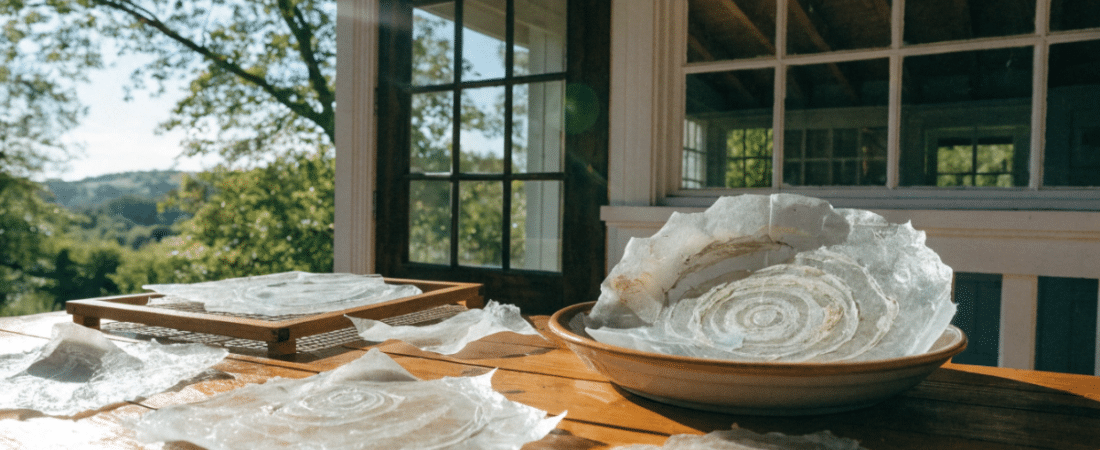
Drying is just as critical as forming the sheet itself. When you pull a freshly formed sheet from your mould, it contains roughly 80-90% water by weight. How you remove that moisture determines whether you end up with a flat, strong paper sheet or a cockled, brittle disappointment.
The drying phase directly affects three things: flatness, fiber bond strength, and surface texture. Rush it with too much heat, and fibers shrink unevenly, causing cracks. Ignore airflow in a humid room, and you’re inviting mold. Get it right, and you’ll produce finished sheets that rival commercial handmade paper.
This guide focuses specifically on drying methods for homemade paper made at home from recycled materials like junk mail, office paper, and cardboard. Whether you’re working in a cramped apartment kitchen or a dedicated studio, these techniques scale to your space and climate.
What you’ll learn in this guide:
- Air-drying on felts, pellon, and racks for beginners
- Drying paper directly on the mould or silkscreen in dry climates
- Loft drying in “spurs” for flatter, more professional results
- Board and wall drying techniques borrowed from Japanese and Chinese traditions
- Improvised methods using griddles, foam boards, and household items
- Building your own drying box or controlled stack system
- Preventing mold, cockling, and cracks
- Conditioning and storing your paper for creative use
Most techniques require only basic equipment you likely already own, and your local climate—whether humid or arid—will guide which approach works best for your situation.
- Key Factors That Affect How Your Homemade Paper Dries
- Simple Air-Drying on Felts, Pellon, and Racks
- Drying Homemade Paper Directly on the Mould or Silkscreen
- Loft Drying in “Spurs” for Flatter, More Even Sheets
- Board and Wall Drying for Very Flat, Textured Sheets
- Improvised and Indoor-Friendly Drying Methods
- Building a Simple Drying Box or Controlled Drying Stack
- Preventing Problems: Mold, Cockling, and Cracks
- After Drying: Conditioning, Storing, and Using Your Paper
Key Factors That Affect How Your Homemade Paper Dries
Before choosing a method, understand how climate, available space, and your desired surface finish affect your drying strategy. These factors determine whether sheets dry quickly or slowly, flat or wavy.
- Climate and humidity: In a dry Colorado-like climate, wet sheets can dry on the mould in just a few hours. In a humid Florida summer, you may need a fan or dehumidifier, and drying can stretch to 24-48 hours. The ideal relative humidity sits below 50% for fastest drying—above 70%, and mold becomes a real risk within 12-48 hours.
- Air circulation: Placing sheets on racks, screens, or lines where air circulates on both front and back speeds drying dramatically. Forced air from a simple box fan can halve drying times from 24 hours to 12. Stagnant air traps moisture and invites problems.
- Thickness of sheets: Thick cardstock-like sheets can take 2-3 times longer than thin writing sheets. Consider pressing thick sheets more firmly first to remove excess water before air exposure.
- Surface choice: Smooth surfaces like glass or melamine board create smooth, slightly shiny paper on the contact side. Textured boards, wood grain, or plaster walls transfer their pattern to the back of the sheet. This two-sidedness is a feature, not a flaw—use it intentionally.
- Temperature limits: Avoid direct heaters or drying surfaces above 60-70°C (140-160°F). Higher temperatures speed evaporation but risk scorching, warping, and brittle paper. Fibers degrade above 150°C, and anything over 120°C risks embrittlement.
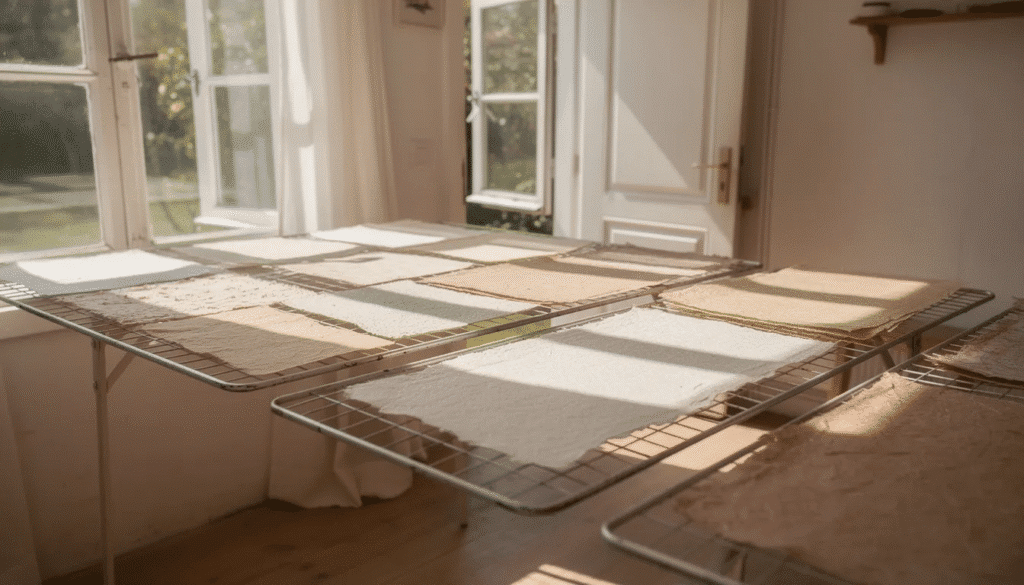
The method you choose for drying your homemade paper will directly influence its final quality, including flatness, texture, and appearance. For example, drying on a smooth surface will imprint that texture onto the paper, resulting in a sleek, polished finish, while air drying or using absorbent materials can create a more rustic or organic look. Proper drying is essential to prevent warping and to achieve a smooth finish. By experimenting with different drying techniques and surfaces, you can tailor the final appearance and feel of your paper to suit your creative projects and preferences.
Simple Air-Drying on Felts, Pellon, and Racks
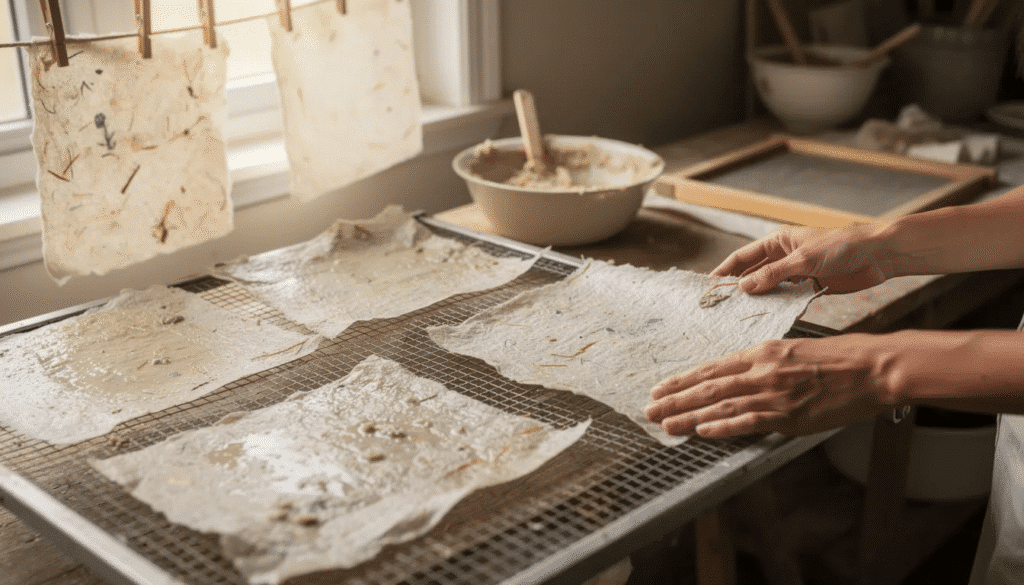
Air-drying means leaving wet sheets on whatever absorbent material they were couched onto—felt, interfacing, shop towels—until fully dry. It’s the simplest method and works for most home papermakers with patience.
- Recommended materials: Polyester interfacing (pellon) releases dried paper easily and can be reused hundreds of times. Wool felt provides cushion and absorbs water well. Thick cotton sheets or reusable shop towels work as budget alternatives. Lay these on a mesh rack, wire shelving, or even a clean window screen.
- Basic steps: After couching your sheet, gently press with a clean sponge or rolling pin to remove surface water. Then transfer the entire support—felt or pellon with the sheet still attached—to a drying rack or flat table where air can reach both sides.
- Approximate drying times: In a dry, air-conditioned room, expect 8-12 hours for thin sheets. In a damp basement without a fan blows, drying extends to 24 hours or more. Thick sheets may need 36-48 hours.
- Small space solutions: Stack cooling racks like those used for cookies to create vertical drying space. Use a folding clothes line or drying rack from a home goods store. In tiny apartments, lay pellons across a clean bathtub rack or shower rod.
- Flattening cockled sheets: If sheets cockle after drying, gently mist with clean water from a spray mister, then press overnight between boards and blotter paper or heavy books. Applying moderate pressure for 12-24 hours usually restores flatness.
- Paper towels as blotters: In a pinch, thick paper towels work as absorbent layers between sheets during drying, though they may leave faint texture and aren’t as reusable as proper felts.
Drying Homemade Paper Directly on the Mould or Silkscreen
In dry climates, couched freshly formed sheets can dry right on the mould’s screen or on large silkscreens. This approach gives a distinct screen texture on one side of the paper and requires minimal handling.
This method traces back to Nepalese papermaking traditions, where unpressed sheets dry directly in floating cloth-covered molds under sunlight. It ties up each mould for hours, but the simplicity appeals to crafters who prefer minimal intervention.
- Mould drying basics: Leave thin sheets stuck to the mould’s mesh in direct sun for a few hours on a dry, breezy day. Flip the mould occasionally so the sun dries both surfaces evenly. The screen surface imprints its pattern onto the paper directly.
- When mould drying works best: This method suits thin sheets, wire or plastic screen meshes, low humidity environments, and access to outdoor sun or a very dry indoor room. Thick sheets may dry unevenly and cockle.
- Silkscreen drying: For several sheets at once, couch wet paper onto a large silkscreen or printing screen, then prop it vertically against a vertical surface like a wall. Air circulates behind the sheets, speeding evaporation.
- Batch drying: Multiple individual sheets can dry on one large screen if spaced apart. This lets you dry papers more efficiently than one-at-a-time mould drying.
- Using a wet vac: If you have a wet/dry vacuum, place it behind the silkscreen and gently pull water through the mesh. This shortens drying time significantly by removing bulk moisture before evaporation begins.
- Weather precautions: Don’t leave wood or metal frames in rain. Dry screens under cover or bring them indoors if weather changes. Sun dries sheets rapidly in good conditions, but unexpected moisture undoes your work.
Loft Drying in “Spurs” for Flatter, More Even Sheets
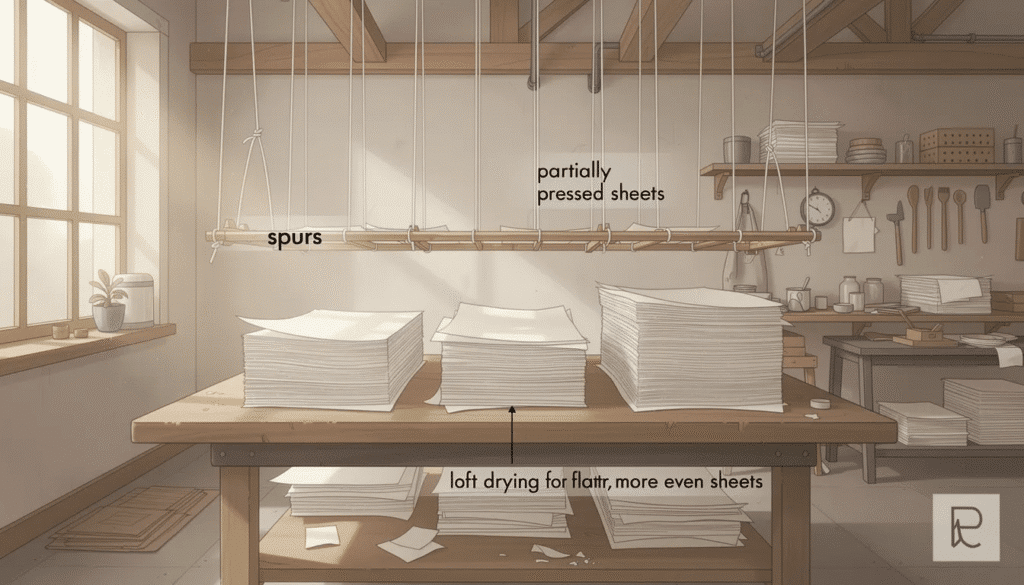
Loft drying involves drying small stacks of partially pressed sheets—called “spurs”—to keep them flatter and reduce cockling. This traditional Western method produces professional-quality results and suits medium to thick sheets where flatness matters.
- What is a spur: A spur consists of four to six sheets of handmade paper pressed together, usually with thin felts or blotters between some layers. The sheets support each other during drying, reducing individual warping.
- Basic procedure: Press a full stack of wet sheets first to remove bulk water. Separate the stack into smaller spurs. Rotate sheet order so thick edges aren’t all aligned in the same direction. Gently press again lightly to ensure good contact.
- Drying options for spurs: Traditional methods involved hanging spurs over thick ropes or hair lines in ventilated rooms. At home, drape spurs over nylon clothesline, plastic tubing, or PVC pipe. Alternatively, lay spurs flat on wire shelving or wooden slats where air can reach both sides.
- Best applications: Loft drying especially helps medium to thick sheets used for cards, book covers, or printmaking where flatness matters, particularly when you’ve chosen specific paper types for crafting projects that need to stay rigid and flat. Thin sheets benefit less since they dry evenly anyway. .
- Separating dried sheets: Once fully dry, peel sheets apart in one fluid motion to avoid tearing. Work slowly from one upper left corner or upper right corner, peeling at a shallow angle. Stack separated sheets under weight overnight to finish flattening.
- Home weights: Heavy art books from your shelf, a stack of hardcover novels, or a cutting board with a cast-iron pan on top all provide sufficient pressure for final flattening when you’re preparing craft paper supplies for DIY projects. .
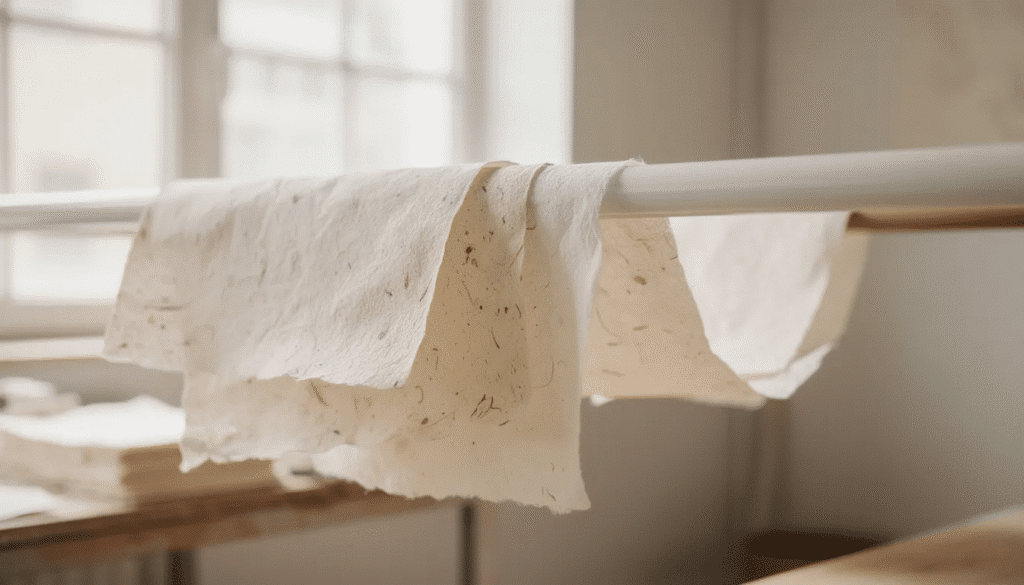
Board and Wall Drying for Very Flat, Textured Sheets
Brushing wet sheets onto boards or walls is a classic technique used for centuries in China, Japan, and India. The paper picks up the texture of the drying surface, and the contact prevents shrinkage that causes cockling.
In Japan, wooden boards produce smooth, two-sided sheets—one denser side against the board, the air-exposed side softer and more absorbent. Indian papermakers historically used heated metal sheets or plaster walls for efficient evaporation in hot climates. These methods translate easily to home studios.
- Recommended surfaces: Smooth plywood sealed with polyurethane works well and costs little. Melamine shelving boards from hardware stores provide an absorbent surface that releases paper easily. Polished stone tiles, glass, or sealed plaster walls also work. Experiment to find textures you like.
- Basic method: Lightly press or blot the wet paper, lay it onto the board, then use a rubber brayer, soft squeegee, or wide paintbrush to brush firmly but gently, pushing out water and air bubbles. The sheet should adhere evenly to the entire surface.
- Brushing direction: Use diagonal strokes from center to edges—brushing diagonally in overlapping passes. Continue brushing until no air pockets remain. Trapped bubbles cause blisters and uneven drying.
- Understanding two-sidedness: The back of the sheet takes on the texture of the board—very smooth if glass or melamine, more organic if wood grain shows through. Plan which side you want smooth before brushing.
- Outdoor drying tip: Start in shade or diffused light, then move into sun once the sheet is partially set. Starting in direct sun can cause edges curl as they dry faster than the center, popping the sheet off the board.
- Edge treatment: Applying methyl cellulose or starch paste in a very thin line along edges keeps corners from curling up. Once fully dry, peel sheets off slowly using a razor blade or thin spatula to start the edge if needed.
- Surface alternatives: Formica countertop scraps, smooth linoleum tiles, or even clean laminate flooring pieces all work as drying surfaces. Avoid porous, unsealed wood that absorbs moisture unevenly.
Improvised and Indoor-Friendly Drying Methods
Not everyone has a dedicated studio or favorable climate. These “hack” solutions work well for small-batch papermaking in kitchens, dorm rooms, or cramped apartments where traditional methods aren’t practical.
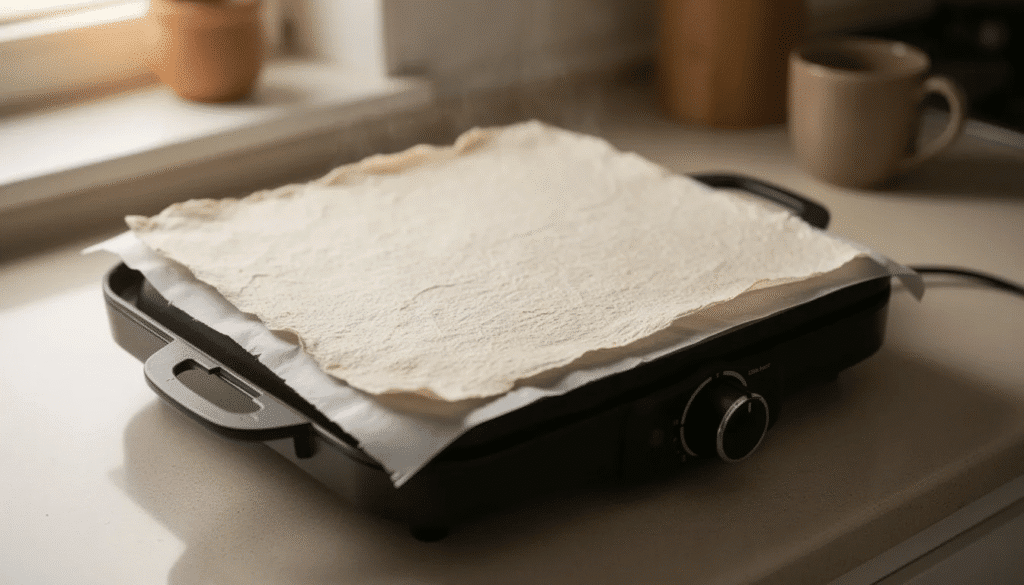
- Electric griddle or hotplate: Set on the lowest temperature (around 120-140°F / 50-60°C). Place a sheet on a clean cotton cloth or parchment paper directly on the surface. Sheets dry quickly in 15-30 minutes, producing very flat results. Never leave unattended—check every few minutes to prevent scorching.
- Pink insulation foam: Extruded polystyrene panels (the dense pink or blue kind from hardware stores) have smooth faces that work beautifully. Lay wet sheets on the smooth surface and leave for 12-24 hours. Paper releases easily when dry, and the foam can be wiped clean and reused indefinitely.
- Household racks and rods: Repurpose clothing racks, shower curtain rods, or tension rods hung in a doorway. Clip thin sheets with clothespins and let them hang. Single sheets dry quickly this way, though they may cockle more than pressed sheets.
- Window screens: Lay sheets on clean window screens propped horizontally on blocks or books. Air reaches both sides, and the screen texture transfers to the paper for an interesting effect.
- Safety reminders: Never place drying paper directly on unprotected heaters or near open flames. Avoid radiators that can overheat and brown the paper. Keep griddles away from paper pulp and other flammable materials.
- Combination approach: Partially air dry on a rack for a few hours, then finish on a warm griddle or under a desk fan to tighten and flatten sheets rapidly. This simple method balances time and quality effectively.
Building a Simple Drying Box or Controlled Drying Stack
A drying box lets you dry many sheets at once using absorbent layers and controlled airflow. This elaborate system requires some setup but processes production volumes efficiently—ideal if you’re making handmade paper regularly.
- Basic drying box structure: Build alternating layers: blotter paper or thick watercolor paper, then your handmade sheet, then corrugated cardboard or plastic mesh spacers for airflow. Repeat until your stack contains the sheets you need to dry papers.
- Adding airflow: Cut ventilation holes in the sides of a cardboard box enclosure. Position a small fan blows across these holes—not directly onto the sheets—to promote air circulation. This can cut drying time to overnight even in humid conditions.
- Keeping stacks rigid: Use laminated cardboard, plastic cutting boards, or thin plywood boards at top and bottom to prevent warping as sheets dry. Apply more pressure with weights if sheets cockle.
- Exchange drying technique: Every 12-24 hours, remove the dampest blotters or towels and replace them with dry ones. This system requires attention but prevents mold and speeds the overall process dramatically. Wet blotters can be dried separately and reused.
- Cleanliness matters: Use clean, mold-free blotters every time. If any musty smell appears, sanitize the interior with dilute hydrogen peroxide or isopropyl alcohol. Let everything dry completely before reassembling.
- Scaling up: For serious production, commercial papermakers use forced-air dryers with corrugated aluminum plates and industrial fans. At home, even a simple shoebox-sized system handles four to six sheets per layer across several sheets stacked high.
Preventing Problems: Mold, Cockling, and Cracks
Slow, uneven drying causes three common issues: mold growth, wavy sheets that cockle, and brittle cracks along edges or surfaces. Understanding the causes helps you prevent them before they ruin a batch.
- Mold prevention: Use a fan or dehumidifier during humid months—mold thrives above 70% humidity and can appear within 12-48 hours on damp paper. Never stack extremely wet sheets without absorbent layers between them. Never seal damp sheets in plastic bags or containers.
- Addressing cockling: Sheets cockle when they dry unevenly, with edges drying faster than centers. Good initial pressing removes bulk water evenly. Rotating sheets in loft spurs prevents aligned thick spots. Post-drying, press cockled sheets between boards and heavy books for 24 hours after a light misting.
- Preventing cracks and edge tearing: Avoid baking sheets at high oven temperatures—225°F (107°C) is the safe maximum. Don’t overdry on hot plates. Never try to remove sheets from boards or surfaces before they’re truly dry; they’ll tear where they sheets stick.
- Simple fixes for common problems: Lightly re-dampen overly curled sheets with a spray mister or gently moisten with a damp sponge, then press under weight. Trim torn edges with scissors for a deckle-style border on art projects. Badly damaged sheets can be repulped and reformed.
- Humidity monitoring: A cheap digital hygrometer helps you track ambient humidity. Keep your drying area between 40-60% relative humidity when possible. In other eastern countries with monsoon seasons, papermakers traditionally time production around dry weather.
After Drying: Conditioning, Storing, and Using Your Paper
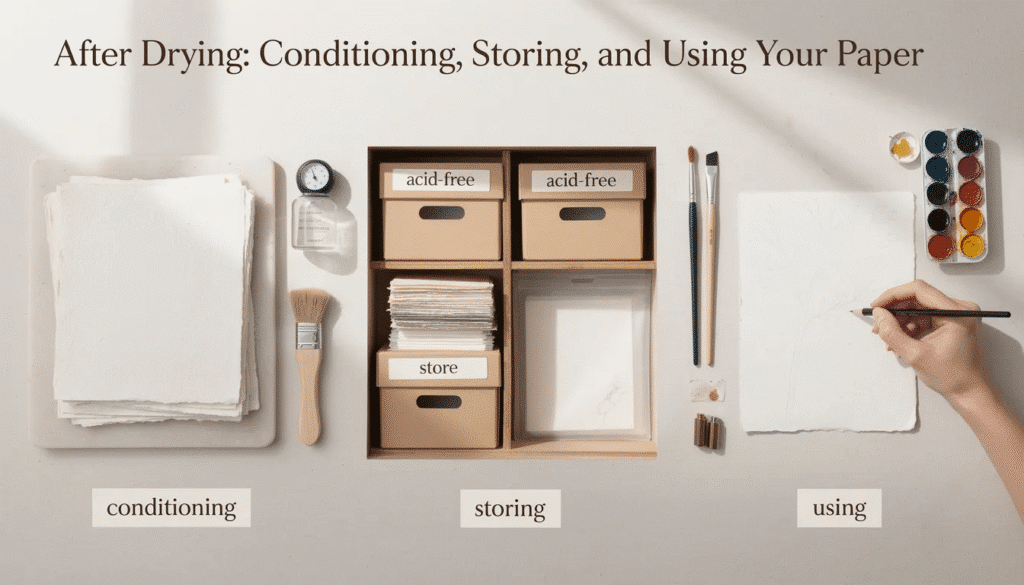
Fully dried sheets still benefit from conditioning and careful storage before you use them for drawing, printing, or bookbinding. This final step ensures consistent results when you actually put pen or ink to paper.
- Conditioning process: Stack finished sheets between clean blotters or kraft paper under moderate weight for 1-3 days. This allows sheets to equalize humidity and flatten completely. Conditioning is especially important if sheets dried in spurs or on racks where slight waviness may remain.
- Storage suggestions: Keep paper in a dry drawer, portfolio case, or archival box. Store away from direct sunlight, which yellows and weakens fibers over time. Avoid areas near household humidity sources like dishwashers, bathrooms, or basement walls.
- Labeling for future reference: Note the date, fiber source (e.g., “June 2026 junk mail + cotton linters”), and drying method on each stack. Over time, this lets you compare results and refine your process based on what worked best.
- Test uses: Try writing with fountain pens to check ink absorption. Print linocuts to test surface strength. Fold small notebooks to assess flexibility. Different drying techniques change stiffness, smoothness, and absorbency—testing reveals what each method produces and what useful things you can print on paper with your finished sheets. .
- Matching method to purpose: Once you understand how to dry homemade paper using various techniques, you can intentionally choose methods to create papers suited to specific projects and pair them with high-quality handmade paper sheets made from recycled fibers. Want smooth writing paper? Use board drying on melamine. Need textured art paper? Let it dry slowly on felt. Making paper becomes not just a craft but a design decision. .
Making handmade paper is endlessly rewarding, and mastering the drying phase unlocks the full potential of your work. Experiment with different surfaces, timing, and conditions. Document what works in your specific climate and space. Before long, you’ll develop reliable techniques that produce consistently beautiful sheets—ready for whatever creative project calls to you next, whether you explore simple paper craft project ideas, dive into vintage-inspired paper craft designs, or use your sheets for decorative paper quilling art. .