Key Takeaways
- Kirigami is a Japanese art form that combines paper folding and paper cutting; origami focuses solely on folding without any cutting.
- You can start today with smooth paper, scissors or a craft knife, a cutting mat, and a flat sheet workspace.
- This beginner’s guide covers paper snowflakes, paper flowers, a kirigami card, and simple pop up cards.
- Practice on scrap paper, begin with symmetrical patterns, and use light pencil guidelines before every cut design.
- Kirigami is calm, low-cost, and fun for adults and kids around age 7+ when tools are used safely.
Introduction: What Is Kirigami and Why Start Now?
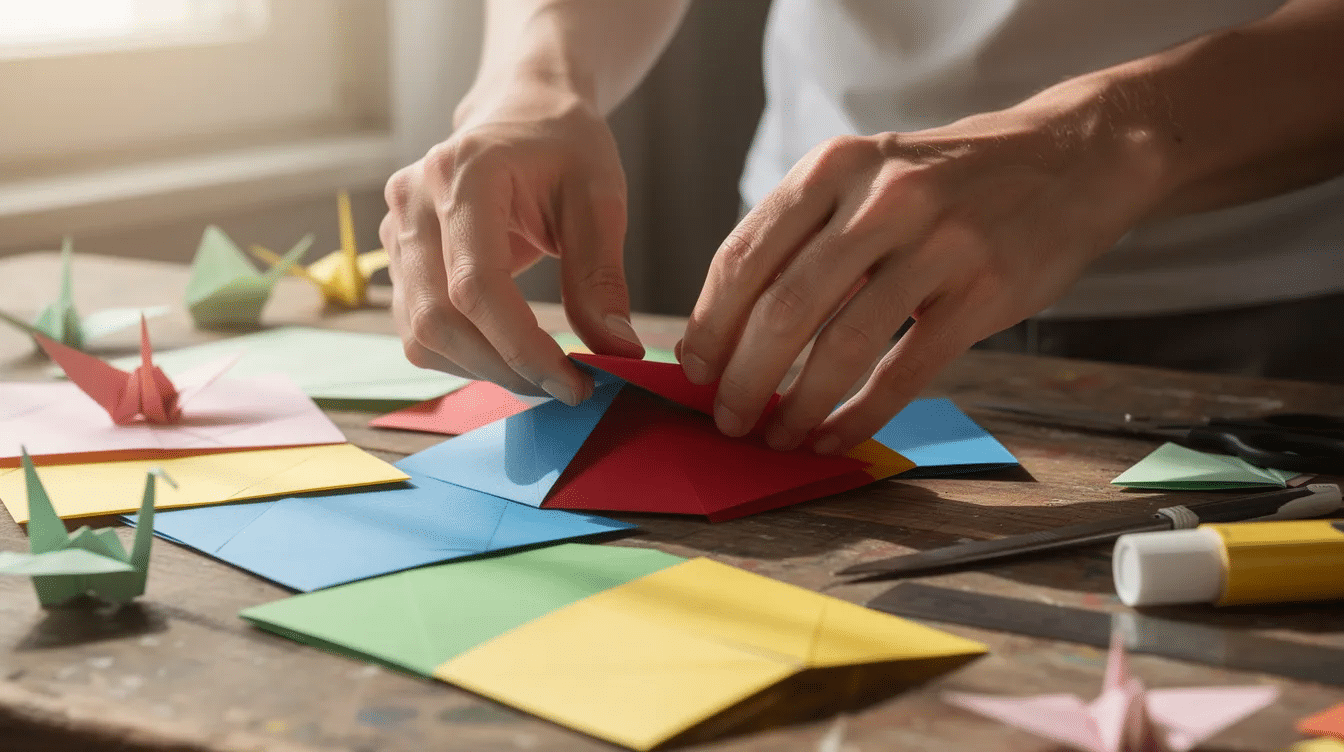
Kirigami is a paper craft where you fold and cut a sheet of paper to create patterns, pop-up scenes, decorations, and three-dimensional structures. The term “Kirigami” comes from Japanese: “kiru” meaning “to cut” and “kami” meaning “paper.” Its history is rooted in ancient Chinese paper cutting, called “jian zhi,” which evolved into the Japanese practice of kirigami by incorporating elements of origami. Unlike origami, which focuses solely on folding without cutting, kirigami allows greater artistic expression through cut-out patterns, complex shapes, and detailed designs. Common introductory kirigami projects include creating snowflakes, simple geometric patterns, decorative wall art, birthday pop up cards, and party paper flowers.
- Basic Tools and Materials for Kirigami
- Core Kirigami Techniques for Absolute Beginners
- First Project: Classic Kirigami Paper Snowflakes
- Second Project: Simple Kirigami Paper Flowers
- Third Project: A Basic Kirigami Card for Beginners
- Fourth Project: Simple Pop Up Card (Step-by-Step)
- Ideas to Practice and Improve Your Kirigami Skills
- Frequently Asked Questions
- Is kirigami suitable for children, and what age can they start?
- What is the best paper thickness for beginner kirigami projects?
- How can I fix mistakes if I cut too far or tear the paper?
- Do I need special templates to start with kirigami?
- How should I store finished kirigami pieces so they don’t get damaged?
Basic Tools and Materials for Kirigami
You do not need expensive materials to discover this paper folding art. Start simple, then upgrade once your skill improves.
- Paper: Use printer paper, about 80–100 gsm, for practice. Thinner paper is easier for folding paper and cutting, while heavier cardstock is ideal for 3D pop-ups that need to stand on their own. A smooth paper around 160gsm is recommended for kirigami because it supports folds while allowing clean cuts, and choosing from different types of craft paper supplies helps you match the material to each project.
- Cardstock: Use 160–200 gsm for a kirigami card, pop up cards, or any model that must stand.
- Cutting tools: Essential tools include sharp craft scissors or a precision craft knife, a self-healing cutting mat, and a metal ruler for straight cuts, all of which are common in general paper crafting projects.
- Marking tools: Keep a pencil, eraser, and optional bone folder for crisp folds.
- Extras: Masking tape can secure paper, a glue stick or glue gel can assemble pieces, and regular tape helps display finished artwork.
- Safety: Always cut away from your body, cap blades, and supervise children closely. Keep craft knife work for teens and adults.
Core Kirigami Techniques for Absolute Beginners
The process of kirigami involves starting with a sheet, folding it, cutting a design into the folds, and unfolding it to reveal a pattern or structure. These basic techniques matter more than complicated templates.
- Fold halves, quarters, and diagonals to create symmetry for a kirigami snowflake or flower.
- Mountain folds create an inverted “V” shape, while valley folds create a “V” shape dip in the paper.
- Symmetrical cuts can be achieved by folding paper in half or quarters before cutting.
- Mark your design lightly; use dotted lines for folds, solid lines for cut lines, and on a template, fold all the dotted lines before cutting.
- Avoid cutting through folded edges unless the instructions say to.
- Carefully cut with smooth, controlled motions; rotate the paper instead of your hand.
- Practice consistent pressure during the folding stage to maintain clean, sharp folds.
First Project: Classic Kirigami Paper Snowflakes
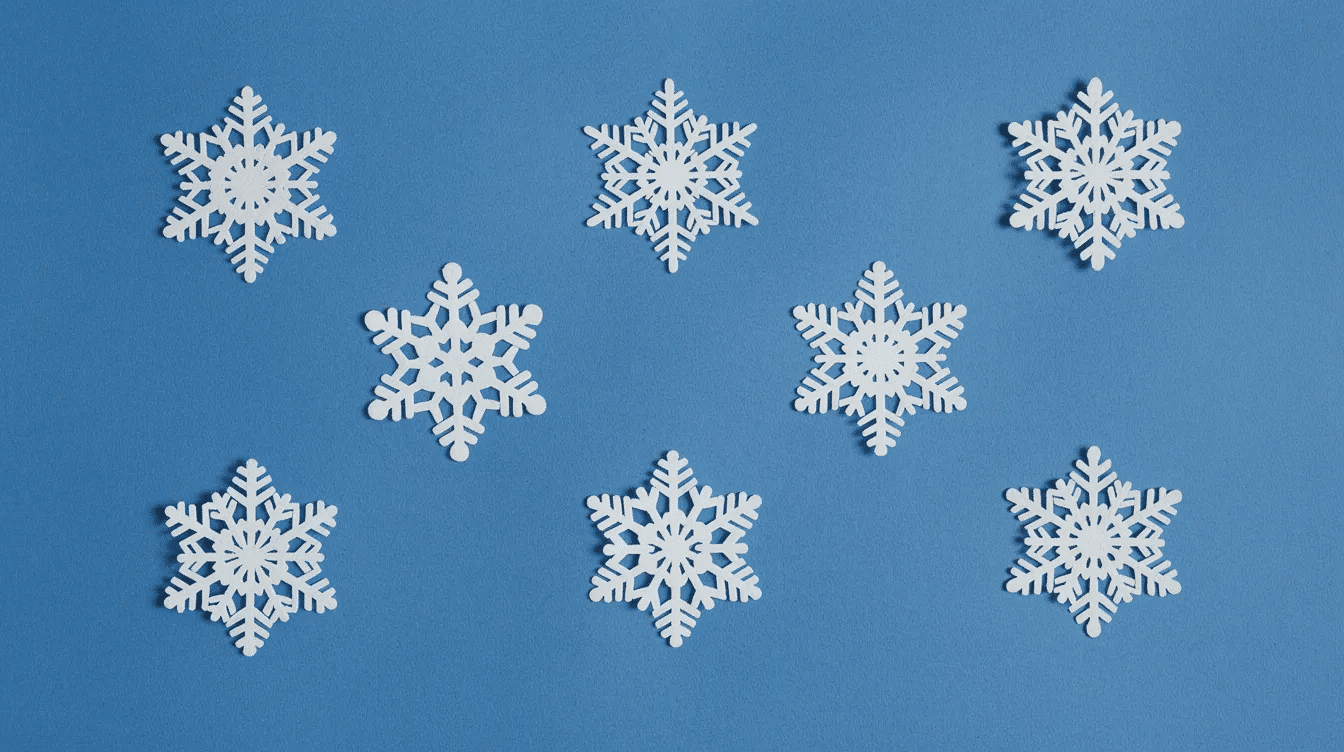
Paper snowflakes are super easy and teach symmetry fast, and you can explore more detailed step-by-step paper snowflake instructions once you know the basics.
- Start with one 15 cm × 15 cm square page of printer paper, pencil, and scissors.
- Fold the square in half into a rectangle, fold again into a square, then fold diagonally into a triangle and finally a narrow wedge.
- Draw triangles, arches, or half-hearts on one side along the folded edges.
- Leave a certain amount of the spine uncut so the snowflake holds together.
- Cut small shapes first. Do not cut through the folded point.
- Unfold slowly. If it looks wrong, flatten it under a book.
- Tape to a window, hang as a garland, or layer on blue cardstock for wintry wall art.
Second Project: Simple Kirigami Paper Flowers
Kirigami paper flowers work for school displays, parties, crafts, and bright wall decorations, and many crafters also enjoy making tissue paper flowers for any occasion as a related project.
- Use 1–2 squares of colored paper, about 12–15 cm, plus scissors and double-sided tape or a glue stick.
- Fold the square diagonally into a triangle, then again until you have a cone-like wedge.
- Draw a rounded petal shape at the wide edge.
- Cut along the line to create several petals at once.
- Add small curved or V-shaped cuts inside the petal area, but do not cut the tip.
- Unfold carefully, curl petals around a pencil, and attach the center to backing paper; for more realistic blooms, you can also experiment with crepe paper flower techniques.
- Upgrade: stack a smaller flower over a larger flower, or create a garland. The kirigami bow project is another great starting point for beginners because it practices basic folds and cuts before complex designs, similar to many cute paper craft ideas for families.
Third Project: A Basic Kirigami Card for Beginners
A flat kirigami card is easier than a pop-up because the front uses windows and shapes instead of moving parts.
- Fold an A5 piece of light cardstock into A6.
- Sketch a heart, star, or flower, leaving 1–1.5 cm around the edge for strength.
- Use a ruler for straight lines and a craft knife on a cutting mat.
- Cut interior shapes only; keep some bridges attached so the design stays in a single piece.
- Glue contrast paper behind the front panel.
- Decorate inside with a message, date, small images, or a stamped motif.
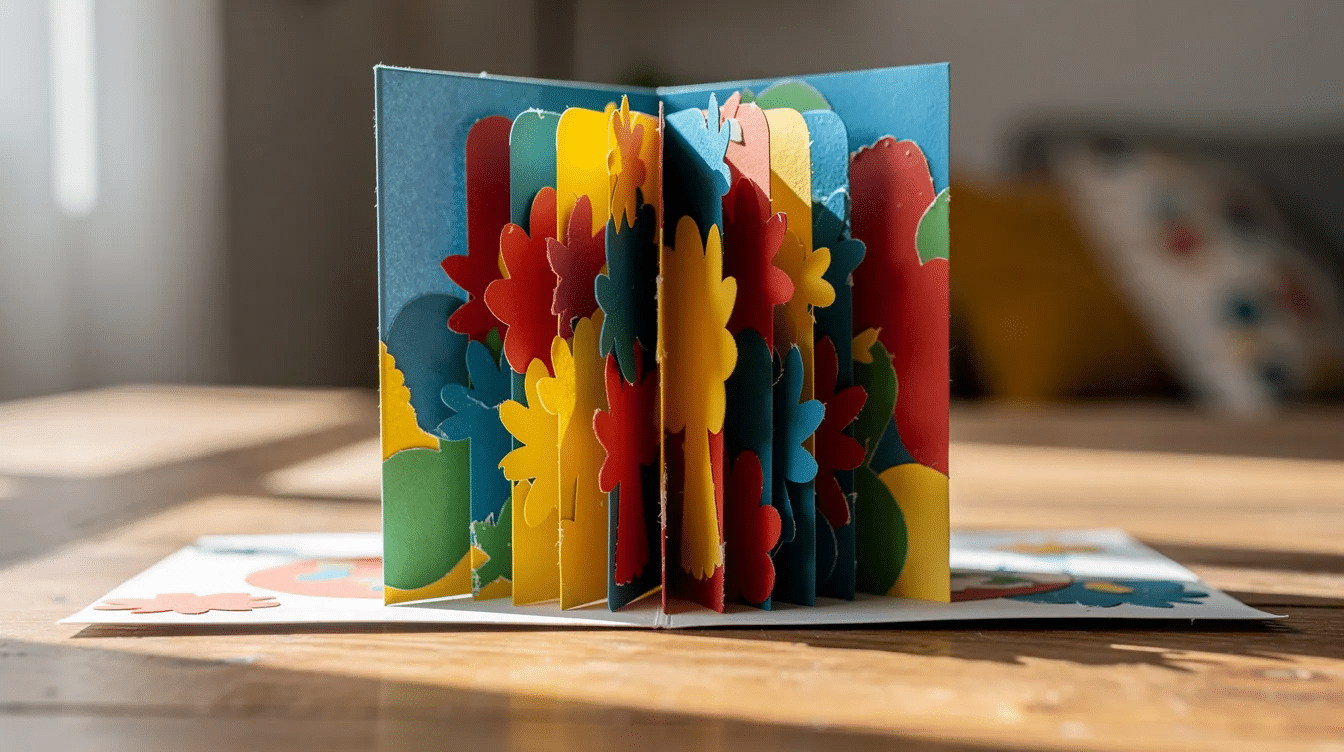
Fourth Project: Simple Pop Up Card (Step-by-Step)
A pop up card is kirigami in 3D: cut sections stand when the card opens. This kirigami technique shows why kirigami allows artists to create three-dimensional structures and detailed patterns.
- Fold A5 cardstock to A6.
- With the card closed, draw two parallel horizontal lines from the folded spine toward the open edge, spaced 2–3 cm apart.
- Cut only those two lines.
- Open slightly and push the cut section inward to form a rectangular step.
- Glue a heart, gift box, or flower to the step.
- Add more steps for a row of paper flowers or birthday gifts.
- Finish by gluing the insert into a second, uncut card shell.
Ideas to Practice and Improve Your Kirigami Skills
Build confidence through repetition. Try grids, stripes, and different types of geometric pattern before detailed motifs. Make a week of paper snowflakes in December, paper flowers in spring, or several cards before a holiday. A popular beginner project in kirigami is creating a chain of figures holding hands, which uses simple folds and cuts and fits nicely alongside other fun paper activities for all ages. Keep a folder dated “May 2026” or “June 2026” so you can see progress. If you like online inspiration, search printable template ideas, diagram examples, popular origami designs for different skill levels, and meaningful mama-style family crafts, but still draw some designs yourself to teach your hands how folds and cuts interact. Around the world, kirigami also appears in design and engineering research, including stretchable structures inspired by paper forms, as noted by ScienceDaily. Once you are comfortable with simple folds, you might branch into more specialized paper arts like origami duck designs or even beginner-friendly paper quilling art, which both build fine motor skills and pattern awareness.
Frequently Asked Questions
Is kirigami suitable for children, and what age can they start?
Yes. Simple projects like paper snowflakes and large paper flowers suit kids around 7–8 with child-safe scissors. Adults should handle knives and closely supervise all cutting.
What is the best paper thickness for beginner kirigami projects?
Use 80–100 gsm paper for learning and 160 gsm cardstock for cards. It is important to control the weight of the paper used in kirigami to achieve desired results; very thick cardstock can crack or resist clean folds.
How can I fix mistakes if I cut too far or tear the paper?
Reinforce the back with clear tape or washi tape. You can also trim the shape smaller or repeat the “mistake” as part of the pattern.
Do I need special templates to start with kirigami?
No. You can start with hearts, petals, arches, and simple shapes drawn in pencil. Templates are useful later for architectural models and detailed pop-ups.
How should I store finished kirigami pieces so they don’t get damaged?
Store flat pieces between cardboard sheets in an envelope. Keep 3D cards upright in a box with tissue paper between them, or frame favorite artwork under glass for long-term display.