
Creating a dragon from paper is one of the most rewarding crafts for kids and adults alike. Whether you’re looking for a quick toddler project, a flying model for a classroom STEM lesson, or a challenging origami figure, paper dragons offer something for every skill level and age group.
This guide covers three distinct projects: a fire-breathing toilet paper roll dragon that kids can blow through to make tissue flames flutter, a printable flying paper dragon glider that soars across the room, and an intermediate origami dragon folded from a single square sheet. Each project uses common craft supplies you likely already have at home, requires no special tools, and produces impressive results that children love to play with and display.
The fire-breathing dragon takes about 15–20 minutes and suits toddlers through early elementary with adult supervision. The flying glider works well for school-age kids (around 6+) and takes 20–30 minutes. The origami dragon challenges older kids (10+) and adults over 30–45 minutes. Grab your scissors, glue, and paper—let’s bring these dragons to life.
Fire-Breathing Dragon from a Toilet Paper Roll
This fun kids’ craft transforms an empty cardboard tube into an interactive toy that “breathes fire” when children blow through it. The tissue paper flames flutter dramatically, making it perfect for imaginative play, dragon-themed parties, or rainy-day projects.
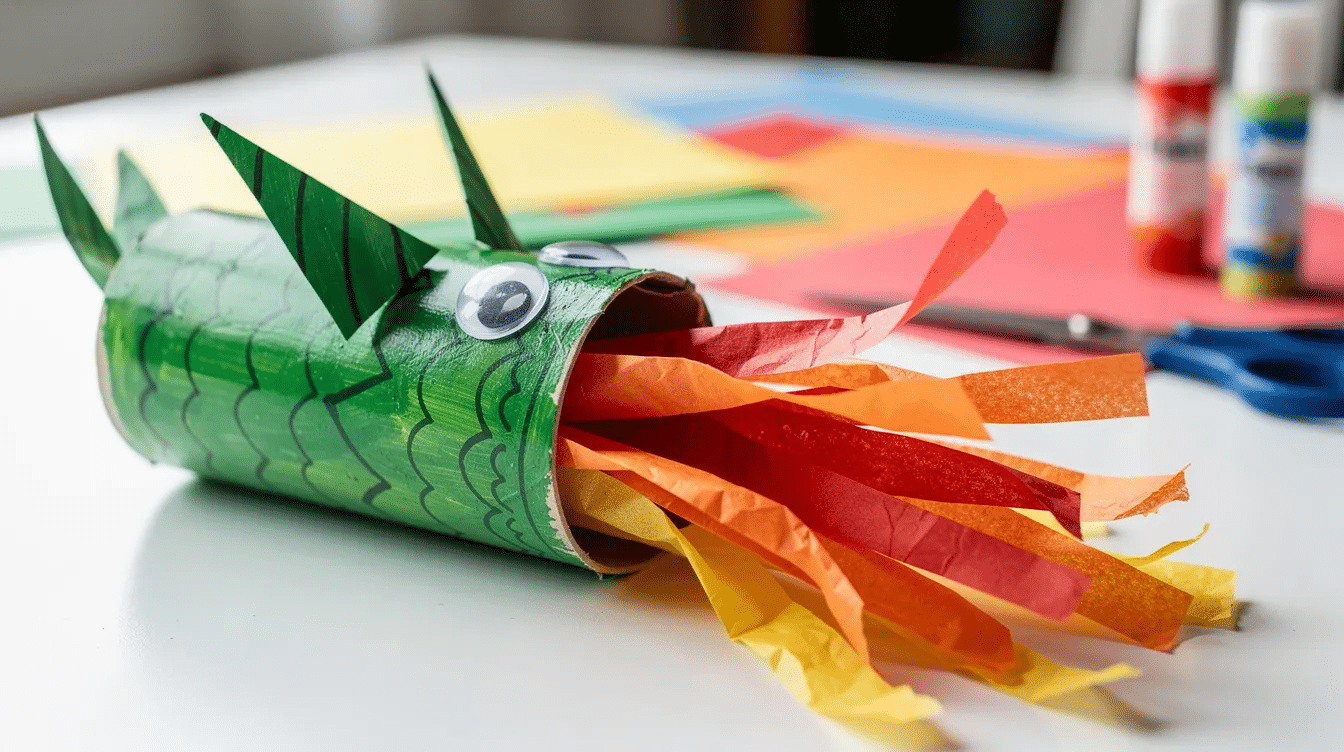
The recommended age for this craft is 3–7 years old, always with adult supervision for cutting and hot glue. The process takes about 15–20 minutes per dragon, and the difficulty level is very easy—even toddlers can help with tearing tissue and placing pom poms.
The dragon body starts with a toilet paper roll covered in green construction paper or any color kids choose. The dragon’s flames are strips of red, orange, and yellow tissue paper glued inside one end of the roll. Two large pom poms with googly eyes become the dragon’s eye stalks, glued on top near the mouth. Two small pom poms at the same end form the dragon’s nostrils, positioned just above where the flames emerge.
For extra flair, add optional paper details like triangle spikes along the back, wings on the sides cut from cardstock, and tiny zigzag teeth at the mouth opening. Once complete, kids can test the fire effect by blowing through the opposite end—the tissue should flutter outward without tearing. Adjust the length of tissue strips (around 20–25 cm works well) until you get a nice, dramatic flutter lasting 2–3 seconds per blow.
Materials and Tools for the Fire-Breathing Dragon
You’ll need one empty toilet paper roll per dragon as your base. Gather a sheet of construction paper in green or another color for covering the tube, plus tissue paper in red, orange, and yellow for the flames—plan on cutting 6–8 strips per roll, each about 2–3 cm wide and 20–25 cm long.
For the facial features, you’ll need 2 large pom poms (around 2–2.5 cm) and 2 small pom poms (about 1 cm) along with 2 googly eyes (1.5 cm works perfectly). A glue stick or white school glue handles paper-to-paper bonds, while a mini hot glue gun helps adults securely attach pom poms. Child-safe scissors with rounded tips let kids help with cutting, and optional markers or stickers allow for extra decoration.
If you don’t have toilet paper rolls handy, substitute pieces of a paper towel roll cut to 10 cm lengths with an exacto knife (adults only), thick cardstock rolled into a tube shape, or purchased cardboard craft tubes from craft stores. Any cylinder around 4 cm in diameter works well.
Step-by-Step Instructions: Fire-Breathing Dragon Roll
Begin by covering the tube. Measure a rectangle of construction paper slightly wider and longer than the roll—about 12 cm x 15 cm works perfectly. Wrap the paper around the tube, apply glue stick along one edge, and press down the overlap seam so it lays flat. Allow a minute or two for the glue to set before continuing.
If you want a neat “mouth” rim, glue a thin strip of contrasting paper around one end of the roll. This creates a polished look and helps hide any rough edges from the original tube.
Cut tissue paper into flame strips about 2–3 cm wide and 20–25 cm long. Mix colors freely—three red, three orange, and two yellow strips create a nice layered fire effect. Young kids can tear the tissue instead of cutting, which actually creates more realistic ragged flame edges.
Glue one end of each tissue strip inside the roll on the “mouth” side. Overlap them slightly as you work around the interior, creating a complete ring of flames. Position the glued ends only on the upper half of the interior—attaching them all the way around can cause the lower strips to droop from gravity.
Make the eyes by gluing googly eyes to the center of each large pom pom, then attach them on top of the roll near the mouth end, spaced about 2–3 cm apart. A dot of hot glue (handled by adults) creates an instant, secure bond.
Place the 2 small pom poms at the edge of the mouth opening, positioning them to look like dragon nostrils peeking out above the flames. Hot glue works best here for a firm hold.
Cut simple triangle spikes from a contrasting color of paper—each spike about 3 cm wide at the base and 4 cm tall. Glue them in a line along the top or back of the roll running from head to tail.
For optional wings, cut 2 wing shapes from cardstock (teardrop shapes about 8 cm x 10 cm each), decorate with markers or patterns, and glue to the sides of the dragon behind the eye stalks.
End with testing: kids hold the dragon facing away from them and blow through the open back of the roll so the tissue flames flutter outward. Encourage them to pretend their dragon roars as they play—the visual effect is surprisingly impressive for such a simple craft.
Tips, Variations, and Safety for Young Crafters
Try different color combinations to create themed dragons. Red or black dragon bodies with orange flames make classic “fire” dragons. Blue and silver tissue with white pom poms create “ice” dragons. Rainbow pom poms and multicolored tissue work perfectly for fantasy or party dragons.
Pre-cut small pieces like tissue strips, spikes, and wings for very young children. This keeps the project under 20 minutes and reduces frustration. Let toddlers focus on tearing tissue, placing pom poms, and decorating rather than precise cutting.
Always supervise use of hot glue, scissors, and any sharp tools. For preschool-friendly assembly, glue dots offer a clean, quick option without drying time or burn risk. Glue sticks work well for paper-to-paper bonds but may not hold pom poms securely long-term.
Use washable markers and non-toxic materials throughout. Check that googly eyes are securely attached before giving the finished dragon to children under 3, as small parts pose a choking hazard.
Turn this into a group activity for birthdays, classroom art centers, or rainy-day playdates by exploring other creative toilet paper roll crafts to complement your dragons. Set up a simple station with pre-cut materials, labeled containers for each supply type, and one adult managing the hot glue gun. Kids can move through stations covering their tube, adding flames, attaching eyes, and decorating—assembly-line style makes large groups manageable.
Flying Paper Dragon (Printable Glider)
This flying paper dragon glides across the room like a paper airplane, using a printable template and simple folds to achieve impressive flights of 5–15 meters. The aerodynamics rely on dihedral wing angles and balanced weight distribution, making it a perfect blend of art and STEM learning.
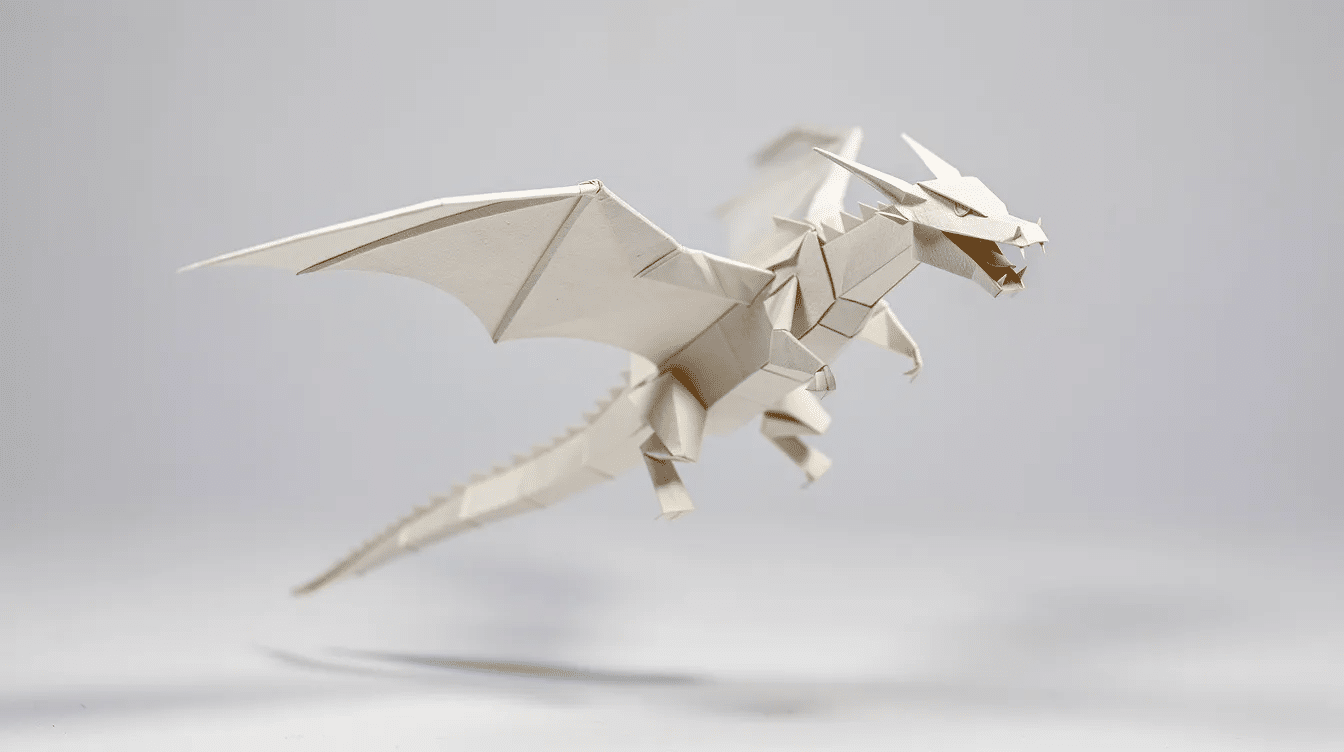
This project suits school-age children around 6 and up, as well as adults who enjoy paper airplane design. It works wonderfully for dragon-themed parties, classroom science days, or family craft sessions. A single A4 or US Letter sheet produces one dragon, with success depending on accurate cutting and crisp folds.
Readers can choose between a classic green dragon design, a night-sky “shadow” dragon in dark colors, or a blank template kids can color with their own patterns before folding.
Download, Print, and Prepare the Template
Search for a PDF pattern for a dragon glider template online—many craft sites and YouTube channels offer free downloads. Save the file to your device before printing to ensure you can access it later for repeat projects.
Set your printer options to “Actual size” to maintain proper proportions. If you want to experiment with different wingspans, try “Fit to page” and compare flight performance between sizes. Most templates are designed for standard paper dimensions, so check the original design specifications.
Use standard 80–100 gsm printer paper for easier folding and lighter weight. Slightly heavier 120 gsm cardstock creates a sturdier model that still flies well but may need minor weight adjustments. For more guidance on the best types of paper for craft, consider how texture and weight affect both folding and flight. Avoid glossy paper—it folds less crisply and tends to slip during assembly.
Trim any white borders along the outer rectangle of the printed page if you chose “Fit” and see large margins. Use a ruler to ensure straight cuts that won’t affect the dragon’s symmetry.
Labeling key parts on the template (head, wings, tail, horns) helps kids understand each piece before cutting begins. This is especially helpful in classroom settings where you’re guiding multiple students through the process simultaneously.
Cutting and Basic Folds
Cut out the printed dragon outline carefully along solid lines, including the wings, tail, and horns. Take your time around curves—rushing leads to jagged edges that can affect flight. Small scissors give better control around detailed areas like horn tips and tail points.
Fold the sheet in half along the dragon’s spine so the printed design faces outward. This creates a decorative top surface that’s visible during flight and makes the dragon easy to spot.
Cut out internal shapes—like gaps between wings or around horns—while the paper is folded. Cutting through both layers at once ensures perfect symmetry on both sides. Hold the folded paper firmly to prevent slipping.
Fold along all dotted or dashed lines sharply, using a ruler edge if needed to create crisp creases. Run your fingernail along each fold line to set the crease firmly. Soft folds lead to floppy wings that won’t generate lift.
Main folds include the wings (which need a shallow upward angle), tail fins (for stability), neck (to position the head), and horn folds (mostly decorative). Each fold affects the glider’s balance, so take your time and make adjustments as needed.
Shaping the Dragon for Flight
Angle the wings slightly upward in a shallow “V” shape—about 5–10 degrees from horizontal. This dihedral angle creates stability by causing the dragon to self-correct when it tilts to one side during flight. Too much angle reduces speed; too little causes wobbling.
Create small upward bends (called elevators or elevons) at the back edges of the wings. These slow descent and prevent nose-diving by generating additional lift at the rear. Bend only 1–2 mm at first—you can always adjust after test flights.
Fold the tail fins slightly outward from the center line to stabilize side-to-side movement during flight. This prevents the spinning that occurs when one wing generates more lift than the other.
Gently curve the horns or head to add character, but avoid large flaps that could catch air unevenly. Any asymmetric features near the nose affect weight distribution and flight path.
If the dragon stalls mid-air (pitches up and loses speed), add a tiny paperclip or small piece of tape at the nose for weight. If it dives too steeply, remove any nose weight and check that your wing elevons are bent upward enough.
Test Flights, Adjustments, and Games
Test-throw indoors first in a hallway, gym, or large living room. Aim for smooth, level releases rather than hard overhand throws—gliders work best with gentle forward motion that lets the wings generate lift.
Simple adjustments fix most flight problems. For longer floating glides, increase the upward wing angle slightly. For faster flights, reduce the angle. Tiny tweaks to tail fins correct veering left or right. If the dragon spins, check that both wings are folded identically and the spine fold is straight down the middle.
Organize a friendly flying dragon contest with kids measuring distance, flight time, or accuracy to a target. Use a tape measure for distance competitions and a stopwatch for hang time challenges. These games make the activity more engaging and provide natural opportunities to discuss physics concepts.
Decorate the underside of the wings with names, numbers, or patterns so kids can identify their dragon in flight. This is especially helpful when multiple dragons are flying simultaneously during races or contests.
Common troubleshooting: nosedives usually mean the nose is too heavy or elevons need more upward bend; stalls indicate insufficient speed or too much nose-up attitude; spins result from asymmetric folds that need correction. Watch each flight carefully and make one adjustment at a time to isolate what works.
Origami Dragon from a Square Sheet
This more advanced dragon from paper is folded from a single square without cutting or glue, making it a pure test of folding skill. The finished piece features a long tail, spread wings, and a shaped head with horns—all emerging from precise creases and reverse folds.
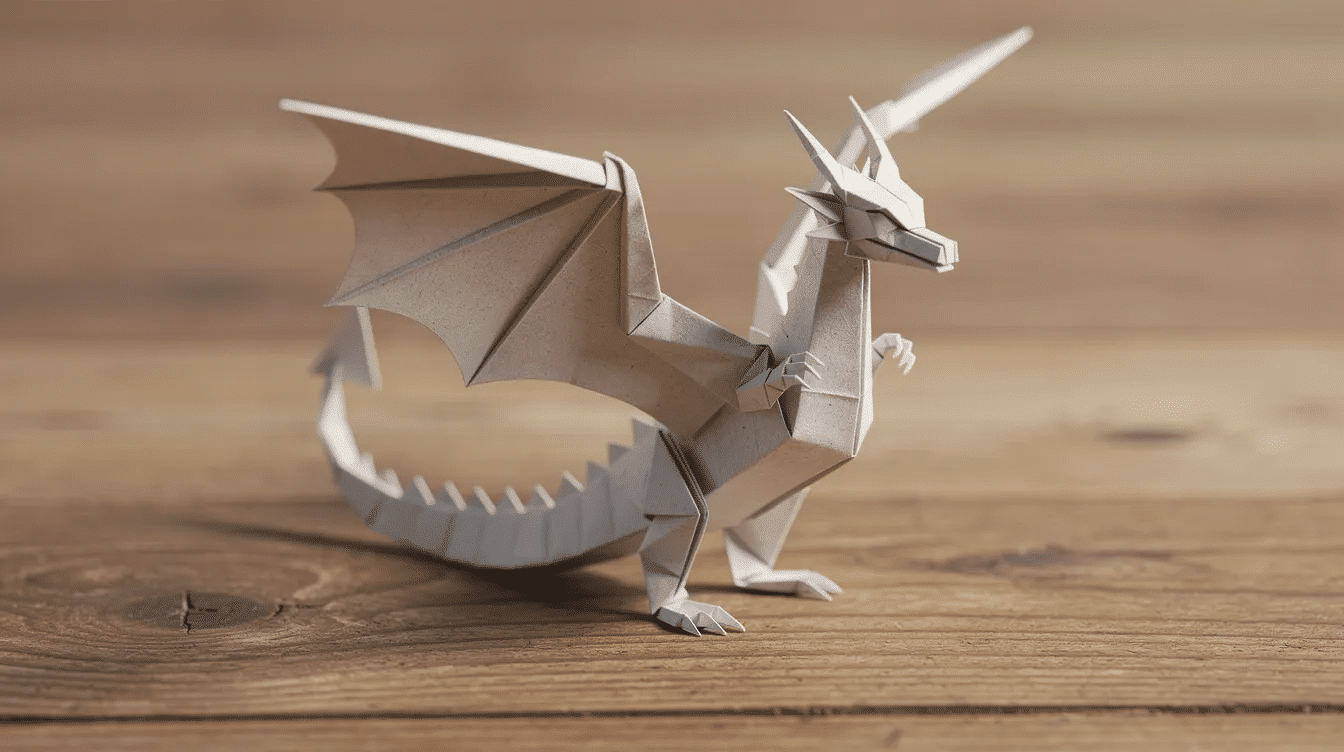
This section targets older kids around 10 and up, teens, and adults who are comfortable with traditional origami techniques. If you’ve folded cranes or other bird base models, you have the foundation needed here, and you might enjoy exploring top origami designs for every skill level as you progress. Complete beginners may find this challenging but rewarding with patience.
The model uses standard bases like the bird base and petal folds, building toward a recognizable dragon shape over 30–45 minutes. Using a 20 cm x 20 cm square of origami paper gives beginners room to work while keeping folds visible and manageable.
Choosing Paper and Understanding the Base
Several paper types work well for this project. Standard origami paper (kami) in 50–70 gsm weight folds easily and holds creases. Thin colored paper cut to a square produces similar results. Foil-backed paper creates sharper details but can be unforgiving of mistakes—save it for when you’ve practiced the model a few times.
Avoid thick cardstock because multiple layers around the head and wings become nearly impossible to fold cleanly. The head area alone can stack 16+ layers, and thick paper simply won’t cooperate.
Start with a bird base, the foundation for most dragons and many other origami figures. Create valley folds along both diagonals, bringing opposite corners together to form a preliminary base (a square standing on one corner). From there, petal folds on each side create four long points extending from the center.
These four points become head, tail, and two wings—accuracy in these early folds determines how clean your final dragon looks. Sloppy early creases compound into lumpy, uneven shapes later. The bird base technique dates back centuries in Japanese paper folding traditions and remains fundamental for any origami expert working on complex models.
Press each crease firmly with a fingernail or bone folder. This helps the model hold its form during later manipulation and prevents the paper from “wanting” to unfold. Crisp creases are the single most important factor in successful origami.
Forming the Head, Neck, and Tail
Assign one of the long points from the bird base to become the dragon’s head—the opposite point becomes the tail. Most dragons use this arrangement because it creates natural proportions for neck length and tail extension.
Thin the neck by folding the long edges toward the center line, narrowing the point. Then use an inside reverse fold to angle the head downward at about 30 degrees from the neck. This creates the characteristic “looking forward” pose that brings the dragon to life.
Create a jaw by making a small reverse fold at the tip of the head point. Open this fold slightly to suggest a mouth—even a subtle opening adds character. You can pull the tip slightly to shape the nose.
Form small horns by splitting a tiny flap at the back of the head and folding the two tips upward and outward. This requires careful manipulation but dramatically improves the dragon’s appearance. Some folders skip this step on their first attempt.
Stretch the tail gently to extend it, then add zigzag folds along its length to suggest scales or spikes. Three to five pleats work well without making the tail too bulky. The tail should curve naturally, adding dynamic movement to the final pose.
Shaping the Wings and Final Details
Assign the remaining two points as wings and flatten them out horizontally from the body. Position them so they extend at roughly the same angle on each side—symmetry matters for a balanced appearance.
Create wing segments by folding the wings back and forth in small pleats, then opening them slightly like a fan. This adds texture and suggests the membrane structure of dragon wings. Experiment with the number and depth of pleats until you achieve a look you like.
Adjust wing angle so the dragon looks balanced when viewed from the side and front. Wings angled slightly upward appear more dynamic; horizontal wings create a calmer, gliding appearance.
Optional details take the model further: tiny crimps along the back suggest spines, slight curves in the neck create a dynamic pose, and gentle shaping of any available flaps can suggest claws. These refinements separate a good fold from a great one.
Display the finished origami dragon on a shelf, desk, or as part of a fantasy-themed diorama. Many folders create complete scenes with multiple folded creatures, trees, and terrain. Years ago, simple origami models served primarily as gifts or decorations—today they’ve evolved into complex art forms that challenge even experienced folders.
Glue, Tools, and Alternatives: Making Paper Dragons Easier
Successful paper dragons depend on using the right adhesives and tools for each project type, along with choosing top craft paper supplies for creative projects that suit your design. Choosing incorrectly leads to frustration—pom poms falling off, paper tearing, or folds that won’t hold.
White school glue (PVA) dries in 5–10 minutes and bonds paper surfaces well. It’s safe for kids but requires patience while drying. Use it for covering tubes with construction paper and attaching flat decorations.
Glue sticks offer mess-free application and work well for paper-to-paper bonds. They’re perfect for classroom settings but lack the strength needed for pom poms or heavier materials.
Mini hot glue guns provide instant, extremely strong bonds—ideal for pom poms, googly eyes, and anything that needs to survive enthusiastic play. However, the tip reaches about 180°C and causes burns quickly. Adults should handle all hot glue application while kids watch from a safe distance.
Glue dots and crafter’s tape offer a middle ground: no drying time, no heat risk, and repositionable bonds that let you adjust placement. They’re ideal when kids need clean, quick assembly without supervision concerns.
Store child-safe scissors (rounded tips, 10 cm blades), a 15 cm ruler, and a bone folder together in a labeled “dragon craft kit” box. Having supplies ready reduces setup time and encourages spontaneous crafting sessions.
Adult supervision is essential when using hot glue, craft knives for trimming thick tubes, scissors with pointed tips, and very small decorative pieces that pose choking hazards for young children.
Creative Variations and More Paper Dragon Ideas
Once you know the basics, you can invent countless dragon variations using the techniques from these three projects and branch out into fun paper activities for all ages. The world of paper crafting rewards experimentation and creativity.
Try themed dragons to match seasons or interests. An ice dragon uses blue and silver tissue flames with white pom poms and a pale blue body. A forest dragon features leaf-shaped wings cut from green cardstock with brown tube body. A galaxy dragon gets decorated with star stickers, metallic markers, and deep purple tissue flames.
Combine techniques for hybrid creations. Attach simple origami wings to a toilet paper roll body for a more sophisticated look, or explore creative paper dragon puppet ideas if you want more interactive designs. Add a flying glider’s tail design to a simple roll dragon for improved aerodynamics. Use origami folding methods to create a 3D head that attaches to a tube body.
Educational twists turn crafts into learning opportunities. Label body parts on paper dragons for a fantasy biology lesson—wing membrane, fire gland, scale pattern. Measure flight distance and time for gliders, recording data for a simple science experiment. Compare different wing angles and document which flies farthest, or rotate in cute paper craft ideas for kids to build a broader project-based lesson plan.
Create a whole “dragon family” set in different sizes and colors for display. Line them up on a shelf from smallest to largest, arrange them around a classroom bulletin board, or use them as a party table centerpiece. For even more inspiration, browse Simply Paper Crafts to discover other paper projects that can join your dragon display. The fire-breathing dragons work especially well in groups, as kids can have “roaring contests” together.
Photograph your finished dragons and document your steps. Turn your process into a tutorial video for YouTube or post step-by-step photos on Instagram. Share your feedback on which techniques worked best, comment on craft community posts with your variations, and help other crafters learn from your experience. Published tutorials on your own site or channel can inspire other families to create their own paper dragon projects.
Whether you’re making a simple craft with a toddler or challenging yourself with an easy origami model that builds toward more complex folds, paper dragons offer endless possibilities. As your folding skills grow, try branching into other models like creative paper duck origami ideas. Check out origami books for even more advanced designs, search online communities for inspiration, and buy quality origami paper when you’re ready to level up your skills.
Now grab your supplies, pick a project that matches your skill level, and start bringing these dragons to life. Your finished creations are ready to roar.