
Key Takeaways
- This diy sketchbook binding step by step guide uses folded signatures, sewing thread, pva glue, and sturdy front and back covers.
- Start small: 3–6 signatures with 3–4 sheets each is enough for a strong first sketchbook.
- Mixed media, watercolor paper, drawing paper, or sketch paper can work, but heavier paper handles paint better.
- Accurate holes, even thread tension, and patient drying make the book’s spine much stronger.
- You can create your own sketchbook in one afternoon with basic materials from an art store or your home.
Introduction: Why Bind Your Own Sketchbook?
Making your own sketchbook is cheaper, more customizable, and often more sustainable than buying one off the shelf. DIY sketchbook binding means you fold sheets into a signature, sew several signatures together, then add a hard cover. You choose the paper, the size, and the outside cover, so the finished sketch book fits how you actually draw, paint, and travel. This beginner tutorial focuses on a small A5-style book, but the same bookbinding method can scale up or down, complementing your choice of the best sketchbook for your art style.
Other binding styles exist. Saddle Stitching is the easiest method for quick, thin pamphlets, Perfect Binding is a glue-based method that offers a clean, professional finish, and a sketchbook bound with Coptic stitching allows for artistic techniques such as sketching and painting because it opens very flat.
Supplies and Tools You’ll Need
Getting the right materials first will make the binding faster and less frustrating.
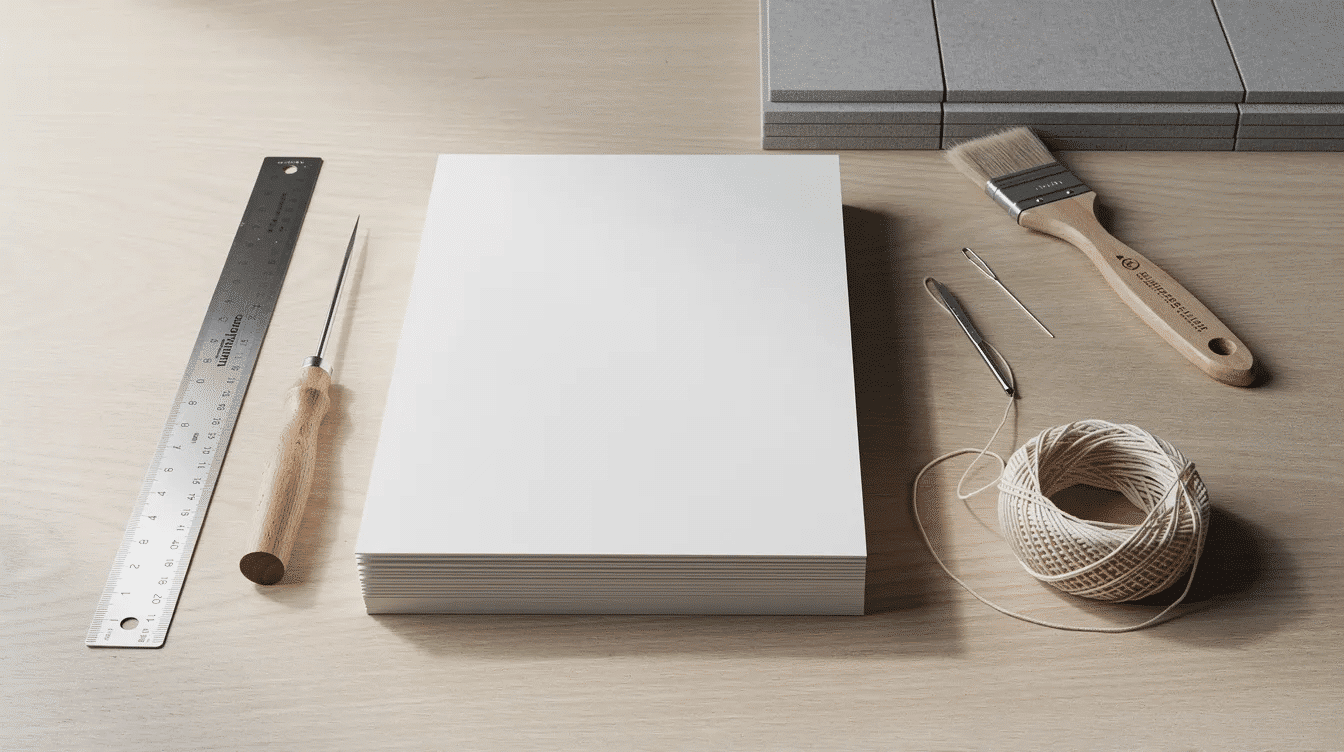
You’ll need:
- Paper: 30 sheets of 11” x 14” paper, which can be drawing paper or copy paper, or use 140 lb / 300 gsm watercolor paper for wet media. Loose or folded paper sheets are common materials in bookbinding, especially for DIY projects, and they are also at the heart of many paper crafting projects and tutorials.
- Thread: waxed linen thread is frequently used in bookbinding for its strength and durability. You can also use heavy-duty sewing thread or embroidery thread.
- Needle: a sturdy bookbinding needle is essential for sewing signatures together during the binding process.
- Wax: to manage fraying thread during bookbinding, pushing it through beeswax can help strengthen and smooth the thread.
- Covers: heavyweight book board or thick cardboard is commonly used for sketchbook covers. Avoid weak corrugated cardboard unless it is layered and compressed.
- Cover supplies: decorative paper, cover paper, bookboard or mattboard, heavy-duty thread, scissors, a ruler, and an awl.
- Binding support: linen tape or binding tape, and optionally, a headband for the spine.
- Tools: pencil, straight edge, metal ruler, x acto knife or craft knife, cutting mat, bone folder, awl or heavy needle, brush, pva glue, and a heavy book or clamps.
Using PVA glue is recommended for bookbinding due to its thicker consistency and archival qualities, making it superior to regular white glue.
Preparing and Folding Your Pages into Signatures
A signature is a small folded booklet of pages. Multiple signatures help a thicker sketchbook open flatter and spread stress across the spine instead of forcing all pages to bend at one glued edge. To bind a sketchbook, first create signatures by folding sheets of paper in half and grouping them into stacks, typically 3-4 sheets per signature.
Start with 15–24 sheets for a lighter book, or use the full 30 sheets if you want something chunkier. Keep every sheet the same size. For example, an 8.5” x 11” sheet folded in half becomes a 5.5” x 8.5” page size. If you use 11” x 14” sheets, fold each sheet in half lengthwise or across the half depending on your preferred format.
Stack 3–4 sheets, fold along the fold line, and sharpen the folded edge with a bone folder. Using a bone folder helps achieve crisp folds and flat edges in paper preparation. Create the first signature, second signature, third signature, and the remaining signatures in order, then lay them together so the top edge and top and bottom edges line up.
Marking and Punching Holes in the Signatures
Accurate holes make sewing easier and keep the spine neat. Cut a small piece of scrap paper the same height as your folded pages. Fold it in half, label the top, and draw 4–6 marks as vertical lines along the center crease.
Keep the first hole about 0.5” from the bottom, the second hole above it, the third hole near the middle, and the rest evenly spaced toward the top. Open one signature like a tent, place the template along the fold, and punch holes straight through the folded edge.
An awl or heavy needle is useful for punching holes in the folds of signatures for binding. Work on scrap cardboard or a cutting mat so you do not damage your table. Use the same template for every signature so the holes match.
Sewing the First, Second, and Third Signature
This is basic pamphlet-style sewing expanded into a multi-signature binding. Thread the needle with 2–3 feet of thread and tie a knot at the end. If the thread drags, wax it again.
When sewing signatures together, start by threading a needle through the first hole of the first signature, pulling the thread taut, and then continue through the subsequent holes in a specific pattern to secure the pages. Begin inside the first signature at the bottom hole. Pull the thread until the knot catches, then move through the next hole, across the outside spine, and back through the next hole. Keep going along the fold until you exit on the outside.
Place the second signature on top of the first. Put the needle into the nearest hole of the second signature and follow the same in-and-out route. At the end, tie the second signature to the first signature with a square knot. Do not pull so hard that the paper puckers.
Add the third signature the same way. When the thread coming out of one station reaches the spine, loop it under the thread of the previous signatures before moving to the next hole. This creates a simple link stitch. At the end, make a new knot around the previous stitch to secure the third signature.
Sewing the Remaining Signatures and Strengthening the Spine
Continue adding each new signature in order. The pattern is the same as the third signature: sew through the holes, link the new section to the previous signatures, and make kettle-style knots at the ends.
Check alignment as you go. If two signatures shift, press firmly along the spine and adjust before tying the next knot. The tension should be firm, not tight.
After sewing all signatures together, apply glue to the spine and attach a piece of book tape or fabric to secure the spine and provide additional support. Brush on a thin layer of pva glue, then add linen tape, binding tape, gauze, or mull. Let it become completely dry under light weight before adding the cover.
Cutting and Building the Front and Back Covers
Sturdy front and back covers protect pages and help the sketchbook lay flat over time. Trace the text block onto bookboard or thick cardboard and add about 1/8”–1/4” overhang on each edge.
Cut two pieces for the front cover and back cover. Cut a second piece as the spine strip, matching the thickness of the sewn signatures and keeping it the same width as the book’s spine. Arrange the three pieces with the spine cover in the center and a 1/8” gap on each side for the hinge.
Test-fit the text block before gluing. The cardboard covers should open freely without pushing the pages out of alignment.
Wrapping Covers with Decorative Cover Paper
Choose cover paper that suits your style: handmade paper, printed kraft, fabric-backed paper, or an old gift bag, or even reuse creative wrapping paper ideas for gift-giving as a unique cover material. Place the cover assembly face down on the back of the decorative sheet and trace around it with at least a 1” margin.
Cut cleanly with a straight edge and x acto knife. Brush glue evenly onto one side of each board, place the boards onto the cover paper, and smooth from the center outward. If large wrinkles appear, it is possible to reposition the paper if done quickly and carefully before the glue sets.
Trim the corners at a slight angle. Fold the flaps over the top edge, bottom edge, and side edges, then press firmly to create clean corners. This forms the visible outside cover, so take your time, much like you would when crafting paper decorations for birthday celebrations where neat folds make a big difference.
Attaching the Text Block to the Front and Back Covers
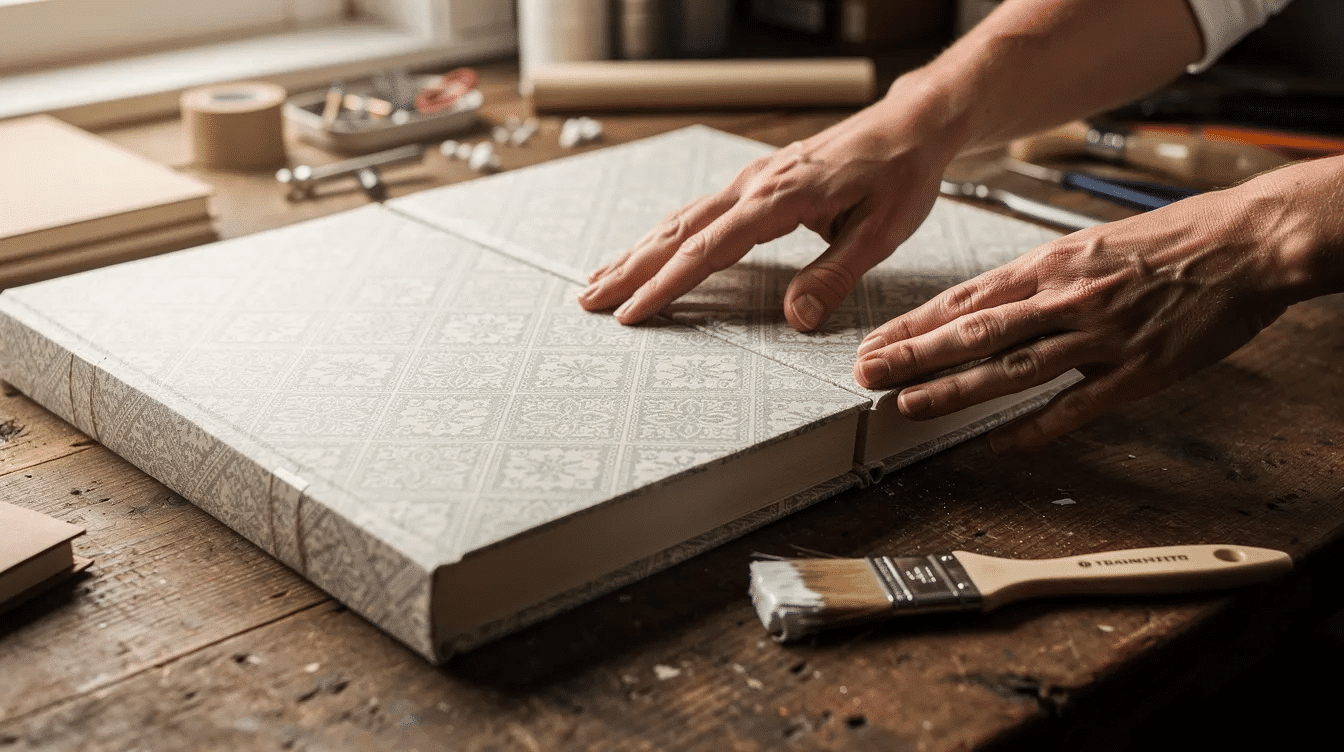
This stage is called casing in. Cut two endpapers the same size as the pages. These hide the hinge area and connect the first and last pages to the inside of the covers.
Dry-fit first. Lay the sewn text block into the cover, center the spine against the spine strip, and check that the front cover and back cover open without pulling.
Brush glue onto the outside of the first page or onto the endpaper, then attach it to the inside front cover. Repeat on the other side for the back cover. Slip wax paper between glued areas and the remaining pages.
Close the book and press it under weight for several hours. Clamp pressure is recommended to ensure a solid bond when drying glue in binding. If you do not own clamps, use heavy books and scrap boards.
Finishing Touches and Customization Ideas
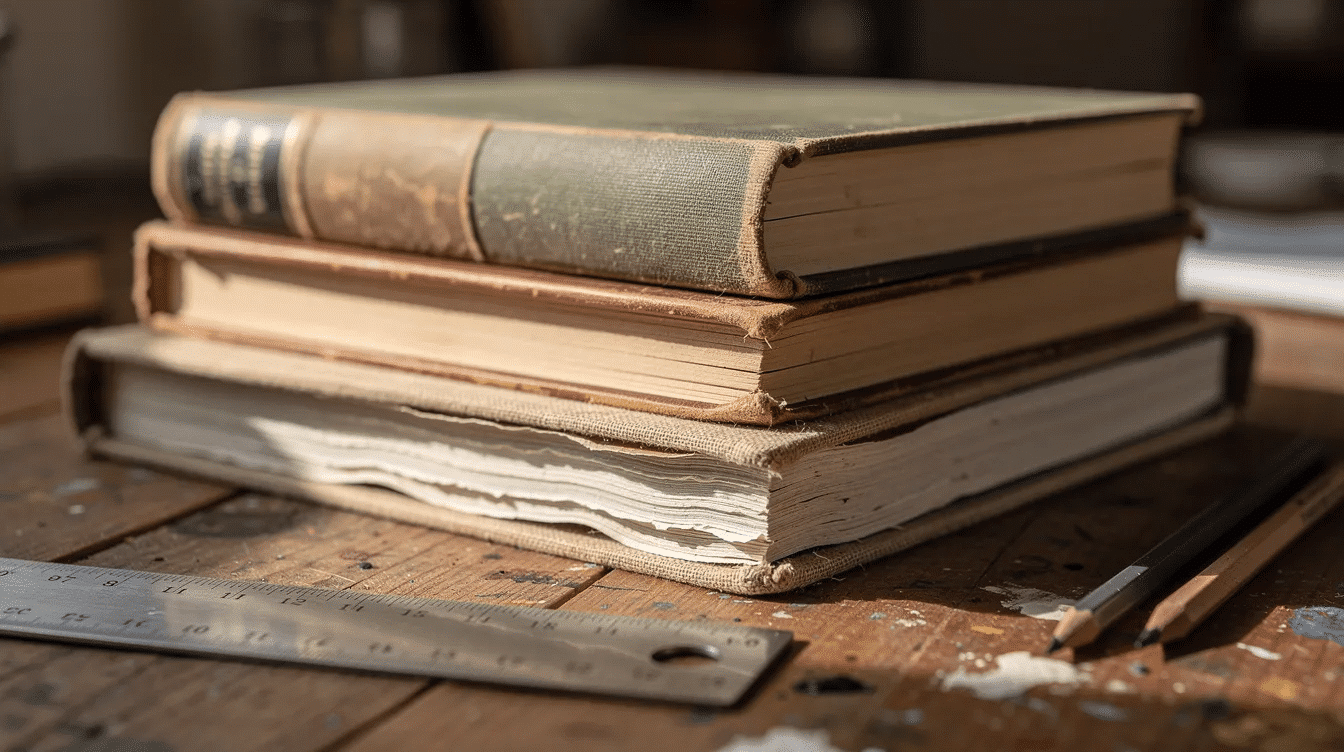
Now make the sketchbook useful for your process. Add a label, stamps, painted designs, or “Mixed Media Sketchbook 2026” to the cover. Years ago, many handmade books were plain utility objects; now they can be both practical and personal, just like other detailed paper crafts such as beginner-friendly paper quilling art.
You can add an elastic closure, ribbon bookmark, or pocket inside the back cover for loose sketches. Gently flex the spine by opening a few pages at a time along the length. Let wet mixed media pages dry before closing, avoid damp storage, and store the book flat if it becomes thick with paint, then explore drawing ideas for every skill level to start filling your new sketchbook.
Now fill the pages with pencil studies, ink tests, color swatches, notes, and experiments.
Common Mistakes to Avoid (Beginner Tips)
Most beginner problems come from rushing, over-gluing, or pulling thread too tight.
- Problem: holes do not line up. Solution: use one scrap paper template and label the top.
- Problem: pages pucker. Solution: pull thread evenly, but stop before the holes tear.
- Problem: flimsy back cover warps. Solution: use thicker board or laminate two pieces together.
- Problem: glue seeps into pages. Solution: use a thin coat on the spine, not a puddle.
- Problem: the cover is upside down. Solution: check the front and back covers before gluing.
- Problem: one signature feels loose. Solution: tie another knot or reinforce with fabric and glue.
FAQ
What kind of paper works best for a DIY sketchbook?
Drawing paper is good for pencil, charcoal, and light ink. Watercolor paper is better for washes and heavy wet media. Mixed media paper sits between them and usually handles pencil, ink, marker, and light paint well.
For wet work, choose 140 lb / 300 gsm paper when possible. Lighter 160–200 gsm paper can work for light washes, but it may buckle. Mixing different paper types in one book is possible, but different thicknesses and absorbencies can make the spine flex unevenly.
How many signatures should I use for my first sketchbook?
Use 3–6 signatures of 3–4 sheets each. A slim 3-signature book is enough to learn the process without making sewing frustrating.
More signatures create a thicker, more durable book, but they also require more accurate holes, steadier thread tension, and longer drying time. If this is your first diy sketchbook binding step by step project, start small.
Do I really need special bookbinding tools like a bone folder and awl?
You need a needle, thread, glue, ruler, knife, and a way to punch holes. A bone folder and awl make the work cleaner, but they are not mandatory.
Use a blunt butter knife or pen cap instead of a bone folder. Use a pushpin or heavy needle instead of an awl. Upgraded tools mostly improve neatness and speed.
How long does it take to bind a sketchbook from start to finish?
Plan on 2–4 hours spread over a day. Folding and sewing may take 1–2 hours, while cover building and final gluing may take another hour.
Drying is the part you should not rush. Let the glued spine and covers dry under pressure so the book stays square and strong.
Can I repair my sketchbook if a signature comes loose later?
Yes. A loose signature does not mean the entire book is ruined. Carefully lift the endpaper near the hinge, re-stitch or reinforce the loose area, then glue the endpaper back down.
Keep leftover thread, cover paper, and a small piece of binding tape from the original build. Repairs are much easier when your materials match.