Transforming everyday objects into charming, nostalgic pieces doesn’t require advanced artistic skills or expensive materials. Decoupage using vintage-style paper napkins offers one of the easiest ways to customize home décor, create thoughtful gifts, and breathe new life into upcycled items. With just a few supplies and some time, you can achieve that coveted heirloom aesthetic.
- What Are Vintage Paper Napkins for Decoupage?
- Benefits of Using Vintage Napkins in Decoupage Projects
- Essential Supplies for Decoupage with Vintage Paper Napkins
- How to Decoupage with Vintage Paper Napkins (Step-by-Step)
- Creative Vintage Decoupage Project Ideas
- Tips for Choosing and Storing Vintage Napkins for Decoupage
What Are Vintage Paper Napkins for Decoupage?
Vintage paper napkins designed for decoupage are 2- to 3-ply products featuring printed motifs drawn from approximately 1890 to 1970. These designs span a range of beloved aesthetics that bring instant character to any project.
What makes a napkin “vintage” for decoupage:
- Victorian florals – Delicate rose arrangements and botanical illustrations with intricate detail
- Sepia-toned postcards – Edwardian portraits, travel scenes, and handwritten correspondence imagery
- Botanical plates – Hyper-detailed leaf veining and flower studies from 19th-century herbals
- Retro advertising graphics – Mid-century kitchen ads, French patisserie scenes, and 1950s typography
- Shabby chic patterns – Faded elegance mimicking aged textiles or vintage wallpaper
Unlike standard party napkins, specially curated decoupage napkins feature a thinner top ply (often just 20-30 microns thick) with higher print resolution. This allows for seamless adhesion and subtle translucency, letting the underlying surface show through for an authentically aged effect.
Crafters commonly apply these napkins to glass jars, MDF shapes, wooden trays, small furniture accents like drawer fronts or stool tops, decorative candles, and canvas panels. The thin ply conforms beautifully to curves, and coordinated collections from specialist suppliers ensure thematic consistency across your projects.
Benefits of Using Vintage Napkins in Decoupage Projects
- Instant heirloom appeal – Vintage motifs deliver a “passed-down antique” look without requiring distressing techniques or faux aging mediums, making them perfect for beginners who want professional-looking results.
- Soft, muted color palettes – Sepia browns, faded ivories, and pastel washes inherently mimic natural patina, eliminating the need for additional aging steps.
- Evocative visual details – Hand-lettered Victorian typography, halftone sepia photographs, and French ephemera with swirling scripts add depth and storytelling to any piece.
- Ultra-thin application – The top ply adheres with minimal buildup (often less than 0.1mm thick), blending seamlessly with background surfaces and conforming to curves on jars or bottles without bridging.
- Natural feathered edges – The paper tears easily, creating organic 2-5mm feathered edges that reduce visible seams by up to 80% compared to scissor-cut papers.
- Exceptional affordability – At roughly $0.10-0.25 per motif versus $1+ for scrapbook papers, vintage napkins offer outstanding value for crafters on any budget.
- Collection coordination – A single napkin pack can theme-coordinate jars, trays, and coasters into a cohesive 1920s speakeasy vignette, 1940s wartime aesthetic, or 1960s atomic-age set.
- Seasonal versatility – Pastel Easter florals with bunny motifs transition effortlessly to muted holly-berried Christmas scenes on ornaments, while sepia travel posters suit summer coastal displays.
Essential Supplies for Decoupage with Vintage Paper Napkins
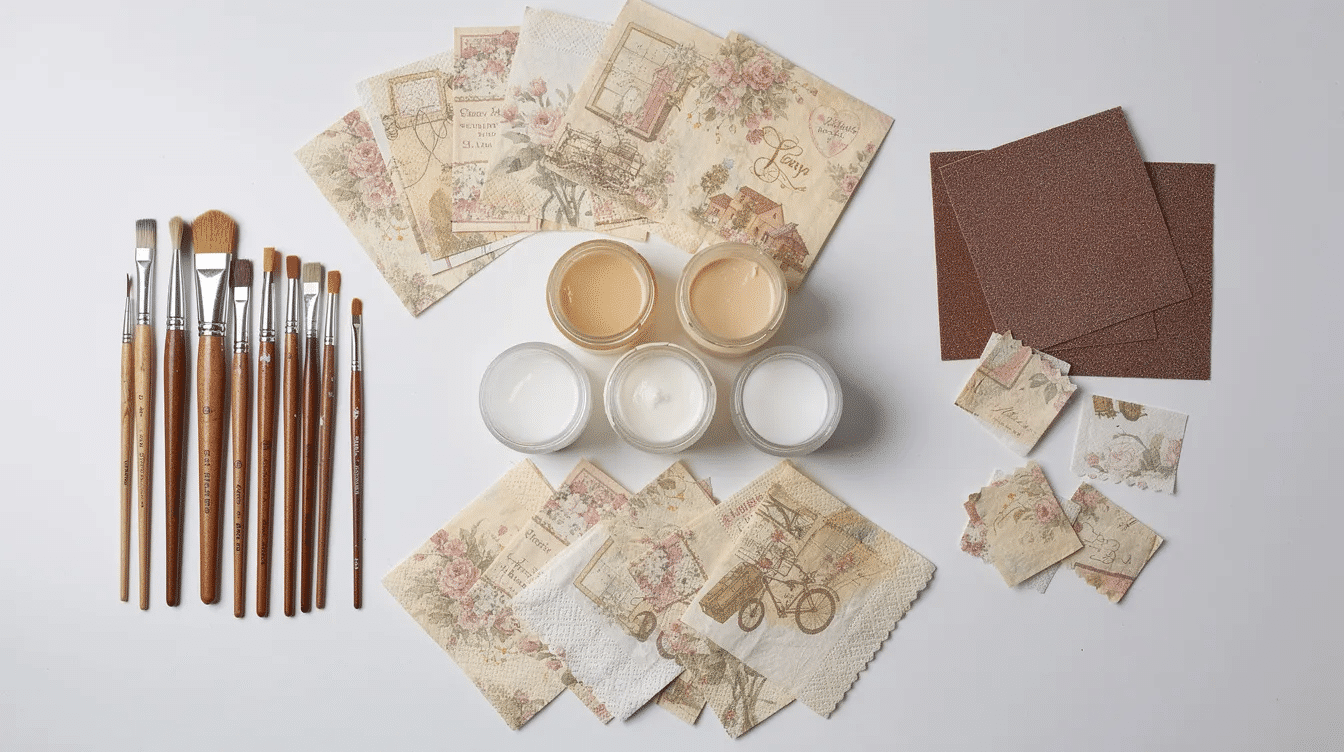
You only need a small set of tools and mediums to begin your first vintage napkin project. Here’s a simple checklist of supplies to gather before you start:
Surfaces to decorate:
- Glass jars and old bottles
- Wooden trays and MDF plaques
- Small stools or furniture accents
- Cardboard boxes for gift packaging
Adhesives and sealers:
- Matte Mod Podge (archival PVA formula that minimizes yellowing)
- Dedicated decoupage medium like Liquitex Matte
- Diluted PVA glue (1:1 with water) as a budget alternative
- Use matte finish to preserve vintage paper’s non-shiny authenticity on wood; choose gloss for enhanced translucency on glass
Brushes:
- Soft flat brush (1–1.5 inch width) for even glue coverage
- Smaller detail brush (1/4 inch) for edges and corners
- Silicone-tipped tool (optional) to reduce wrinkles during smoothing
Surface preparation materials:
- Fine-grit sandpaper (220-grit for wood, working to 320-grit smoothness)
- White acrylic gesso or chalk paint as a base coat for clearer prints
- Lint-free microfiber cloth for dust removal
Helpful extras:
- Craft knife or precision scissors for post-dry trimming
- Cling film or quartered plastic bag for gentle smoothing
- Low-heat hair dryer (under 50°C) for faster drying without distortion
How to Decoupage with Vintage Paper Napkins (Step-by-Step)
This beginner-friendly process yields professional results in 2-4 hours of active time plus drying. Even if this is your first decoupage project, you’ll find the technique forgiving and the results impressive.
1. Prepare your surface. Start by degreasing glass with 70% isopropyl alcohol wipes, which evaporate without leaving residue. For wood or MDF, sand lightly to 320-grit smoothness to expose pores for better adhesion. Apply a base coat of gesso or chalk paint in two thin layers (about 0.2mm total thickness), allowing 1-2 hours drying time per coat. A light-colored base amplifies print clarity by 30-40% through light reflection.
2. Separate the napkin plies. Gently peel the napkin layers apart until only the printed top layer remains. A helpful trick: tape one corner with low-tack tape, then peel from that point. Quality decoupage napkins have a 90% success rate with this technique, while cheaper ones may tear more easily.
3. Plan your image placement. Dry-fit the napkin to your surface before applying any glue. Decide on focal points—perhaps centering a vintage rose motif on a jar or positioning a postcard off-axis on a tray for dynamic flow. Account for approximately 10-15% napkin shrinkage when the paper gets wet.
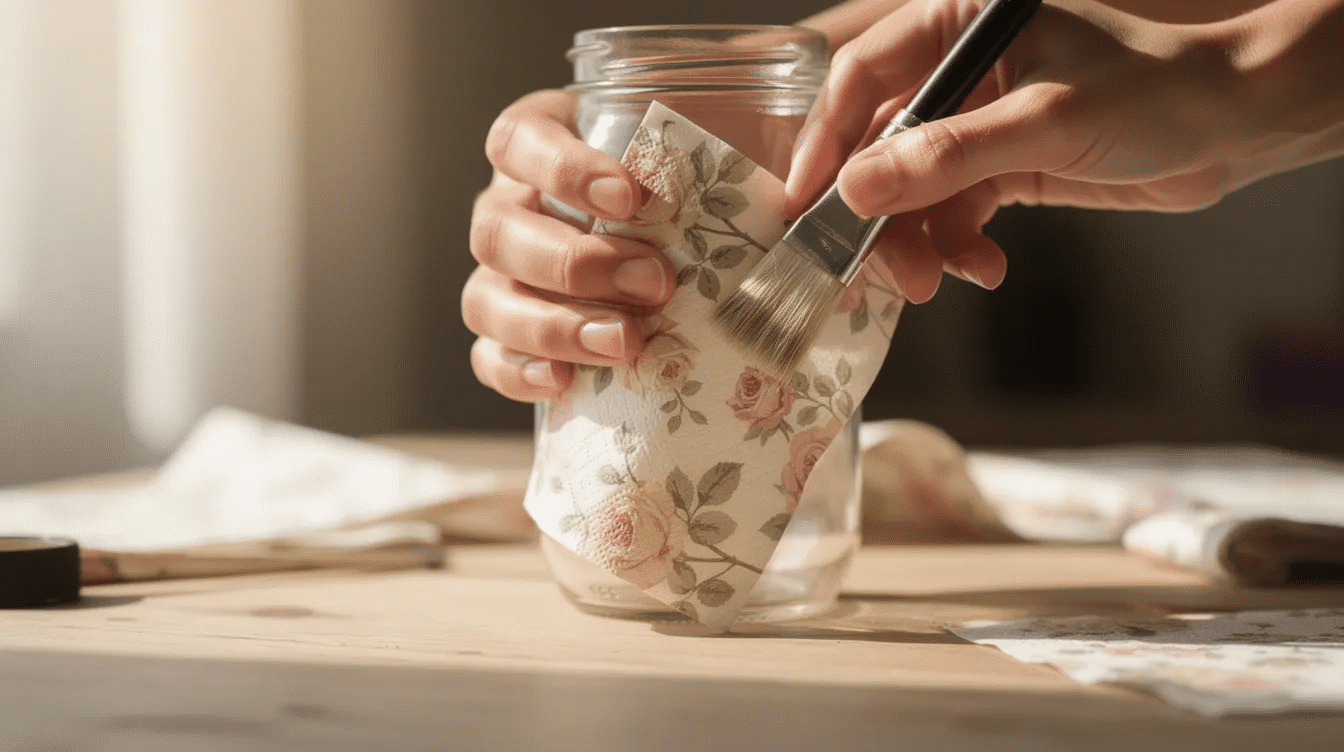
4. Apply the napkin. Brush a thin, even coat of decoupage medium onto your surface (about 0.1mm wet film). Place the napkin starting from one side, then smooth outward with gentle finger pressure through cling film or a soft brush. The water method works well for curved surfaces: lay the napkin face-down on plastic, mist evenly to expand fibers 5-10%, then transfer.
5. Minimize wrinkles and tears. Work slowly and avoid over-brushing, which can tear the delicate paper. If tiny creases appear, embrace them—these micro-wrinkles add authentic vintage charm. Working in a 60% humidity environment helps, and a dry sponge can absorb excess glue.
6. Seal your work. Allow the piece to dry for 24 hours before sealing. Apply 2-3 thin coats of varnish or polycrylic (which offers 95% spill resistance), waiting 30-60 minutes between coats. Light sanding between coats creates a smooth satin finish that protects against 80% of handling wear.
Creative Vintage Decoupage Project Ideas
With a bit of creativity and the right napkins, you can turn ordinary things into nostalgic décor pieces that look like antique shop finds, especially if you enjoy experimenting with vintage paper craft ideas that use old books, sheet music, and ephemera.
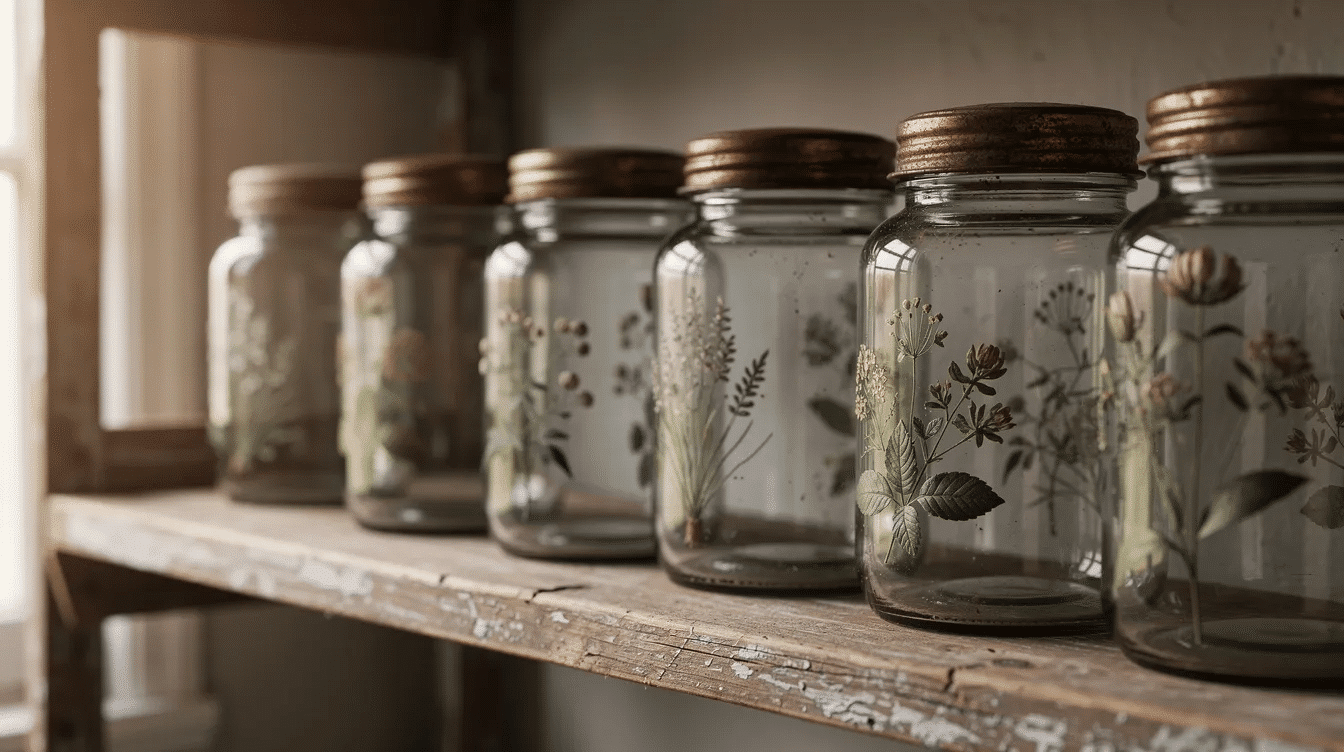
Vintage apothecary jar: Repurpose brown-tinted or clear glass spice jars with botanical label or old pharmacy print napkins. Seal thoroughly, then wrap jute twine around the neck for an Edwardian apothecary aesthetic. These make beautiful containers for candles, potpourri, or bathroom storage.
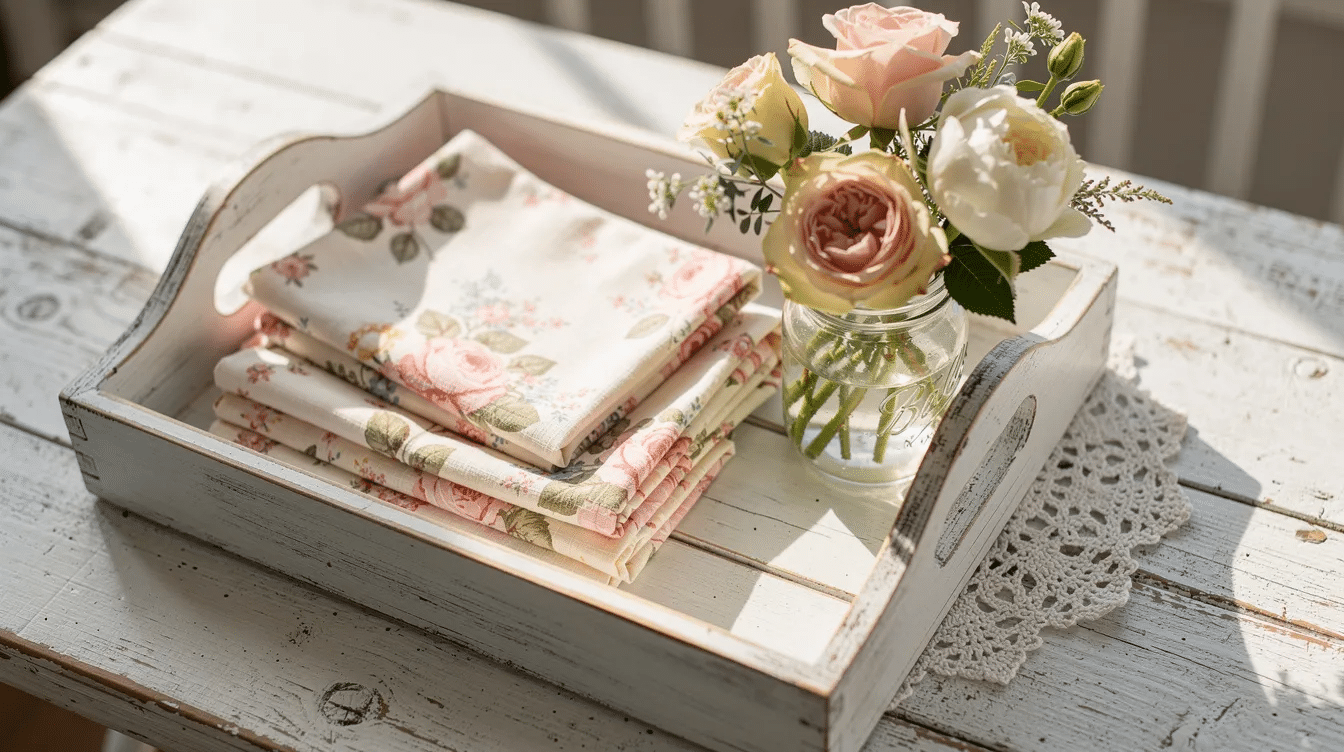
Shabby chic breakfast tray: Start with a wooden tray painted in antique white chalk paint. Apply 1950s floral napkins with French script accents, then distress the edges with 220-grit sandpaper to expose about 20% of the base wood. The result evokes French provincial style perfect for morning coffee service.
Postcard memory box: Cover a cardboard or wooden lidded box with postcard or handwritten correspondence napkins from the 1930s-1960s era. Fussy-cut individual postcards for the lid, creating a collage effect. These boxes make meaningful storage for letters, photographs, or keepsakes.
Seasonal décor pieces: Create Easter eggs by fragmenting pastel floral napkins onto styrofoam bases with torn edges that blend naturally. For Christmas, apply muted holly and angel motifs to clear ornaments using the water method for sphere conformity. Summer calls for retro beach advertising napkins on driftwood-wrapped bottle necks.
Mixed-media combinations: Elevate your projects by combining vintage napkins with other supplies like moulded frames finished with gold leaf, rub-on transfers featuring old text, or crackle varnish that produces fine fissures mimicking 50 years of age. These techniques create museum-worthy pieces from simple materials.
Tips for Choosing and Storing Vintage Napkins for Decoupage
Building a curated collection of 10-20 napkin packs serves you better than hoarding random designs. Focus on versatility: select napkins that will work across multiple projects and complement each other when mixed.
- Choose light-background designs with clearly visible, isolated motifs that can be cut or torn apart without losing their impact. Repeatable floral sprays, separate postcards, and small labels work especially well.
- Pay attention to color schemes. Collect sets in similar tones—pastel pinks and creams for shabby chic, sepia and brown for industrial vintage, blue-and-white Delft patterns for classic European elegance. This makes mixing and matching across projects effortless.
- Store napkins properly. Keep them flat in acid-free polypropylene sleeves (about 0.05mm thick) or clear folders within flat drawers. Protect from direct sunlight and moisture to prevent fading and warping. Maintain 40-60% relative humidity for optimal preservation.
- Organize by theme and era. Create categories like Victorian florals (1890-1910), Art Deco geometrics (1920-1930), mid-century kitchen and advertising (1950-1970), and vintage travel postcards. This system makes finding the perfect design quick when inspiration strikes.
- Save your offcuts. Keep a small folder with leftover napkin pieces for micro-accents on gift tags, tray corners, or mixed-media art boards. These remnants often provide exactly the right finishing touch.
Whether you shop online for specialty decoupage napkins or discover unique finds at estate sales, building a thoughtful collection opens endless creative possibilities. Start with one simple project—perhaps a decorated jar or small box—and you’ll quickly discover why vintage paper napkins have become a beloved staple in the decoupage community. The link between past and present, created through your own hands, makes each piece uniquely meaningful. Check the description of any napkin pack before purchasing to ensure the designs match your vision, then let your creativity guide you.