The origami Spanish box is a delightful paper folding project that offers both beauty and function, making it a must-learn for anyone interested in origami. Whether you’re a complete beginner looking for your first impressive model, a paper craft enthusiast seeking a new challenge, or an experienced folder wanting to expand your repertoire, this traditional design is a valuable addition to your skills. The Spanish box stands out because it looks far more complex than it actually is, making it a rewarding project that helps you develop precision, patience, and an eye for decorative detail. Its elegant pleated rim and versatile uses make it perfect for gifts, storage, or festive occasions, ensuring that folders of all levels will find joy and practical value in mastering this classic origami container.
What Is the Origami Spanish Box?
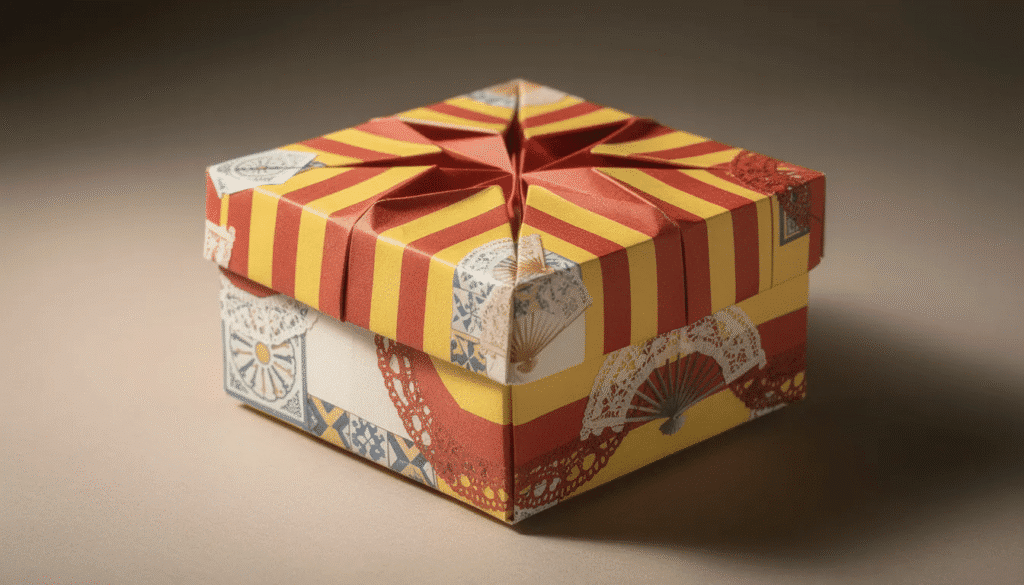
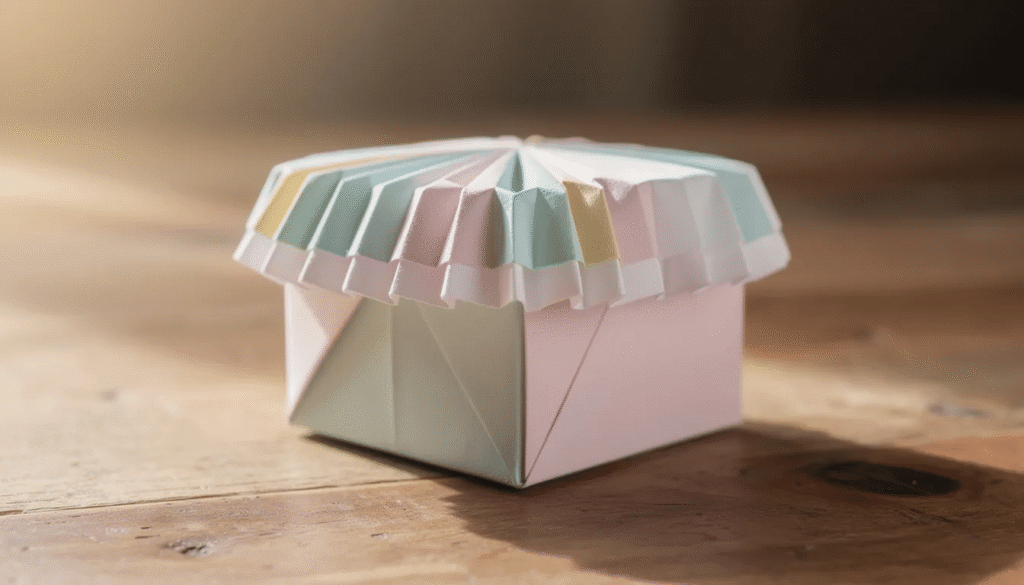
The Spanish box, also known as the “Decorative Box” or “Fancy Box,” is celebrated for its unique pleated rim, which gives it a festive and ornamental appearance. This decorative origami box gained widespread popularity in the 1960s and continues to be a beloved model among paper crafters today. With its distinctive pleated rim and elegant proportions, this easy paper project has stood the test of time as a functional yet beautiful container.
Robert Harbin, the British origami pioneer and magician, introduced the model to Western audiences through his BBC television series around 1967. In his 1968 book “Teach Yourself Origami,” Harbin explicitly named it the “Spanish Box” while noting its hybrid Japanese-Argentinian origins. The design had actually appeared in South American educational publications as early as 1913, where variants called “Bandejo” and “Canestilla” were used in Argentine primary school curricula.
In many English-language origami books published 8 years ago or even 11 years ago, you’ll find this model listed under alternate names like the fancy box or “decorative box.” The finished piece features a shallow square base with pleated or fluted sides that create a slightly raised, ornamental rim—almost flower-like in appearance. This zigzag pattern around the top edge is what gives the Spanish box its distinctive character and makes it instantly recognizable among origami enthusiasts.
Spanish Box vs. Other Origami Boxes
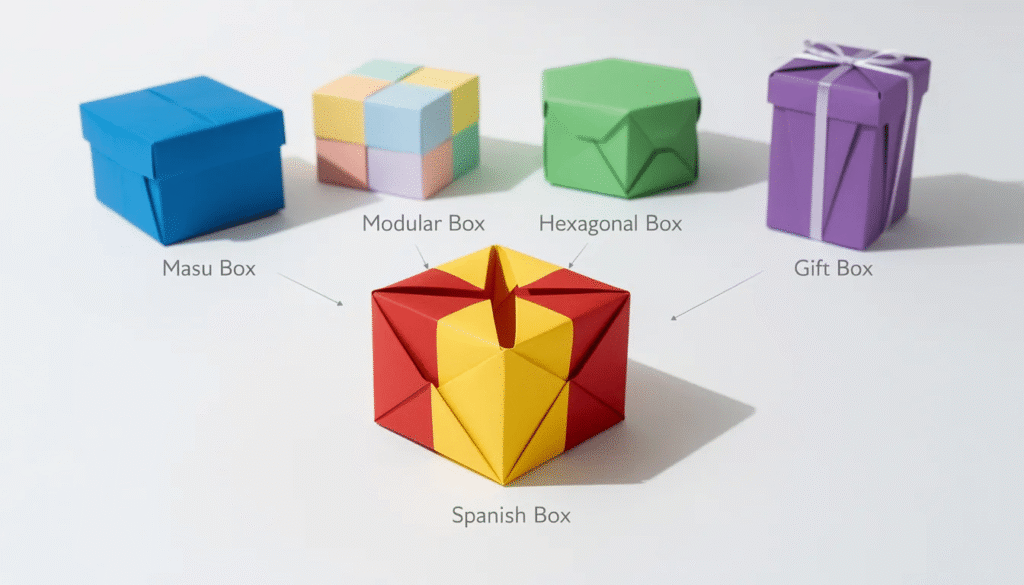
When you’re exploring the world of origami containers, you’ll quickly discover that not all boxes are created equal. The Spanish box occupies a sweet spot between overly simple designs and complex modular constructions.
Compared to the basic masu box—a straightforward origami box that can be completed in just a few folds—or other classic origami designs for beginners and beyond, the Spanish box requires more steps and attention to detail. However, it’s nowhere near as time-intensive as modular designs by creators like Tomoko Fuse, which often require folding and assembling multiple units. Here’s how they stack up:
Feature | Masu Box | Spanish Box | Modular Box |
|---|---|---|---|
Sheets Required | 1 | 1 | 6-30+ |
Folding Time | 2-3 minutes | 5-8 minutes | 20-60 minutes |
Visual Complexity | Simple | Ornate | Highly complex |
Skill Level | Beginner | Beginner-Intermediate | Intermediate-Advanced |
The Spanish box looks more intricate than it really is, making it a favorite “show-off” model for beginners who want to impress friends and family. Unlike modular origami, this paper box is made from a single square sheet and requires no glue or cutting—just careful folding and accurate creases. |
Paper Size, Shape, and Materials
Choosing the right origami paper and dimensions will significantly impact your finished Spanish box. The model is folded from a single square sheet, with size selection depending on your intended use.
Common sizes and their results:
- 15 × 15 cm square: Yields a box approximately 8-9 cm wide and 4 cm tall—perfect for small trinkets or jewelry
- 20 × 20 cm square: Creates a medium-sized container ideal for desk organization
- 30 × 30 cm or larger: Produces a substantial box suitable for serving sweets or party favors
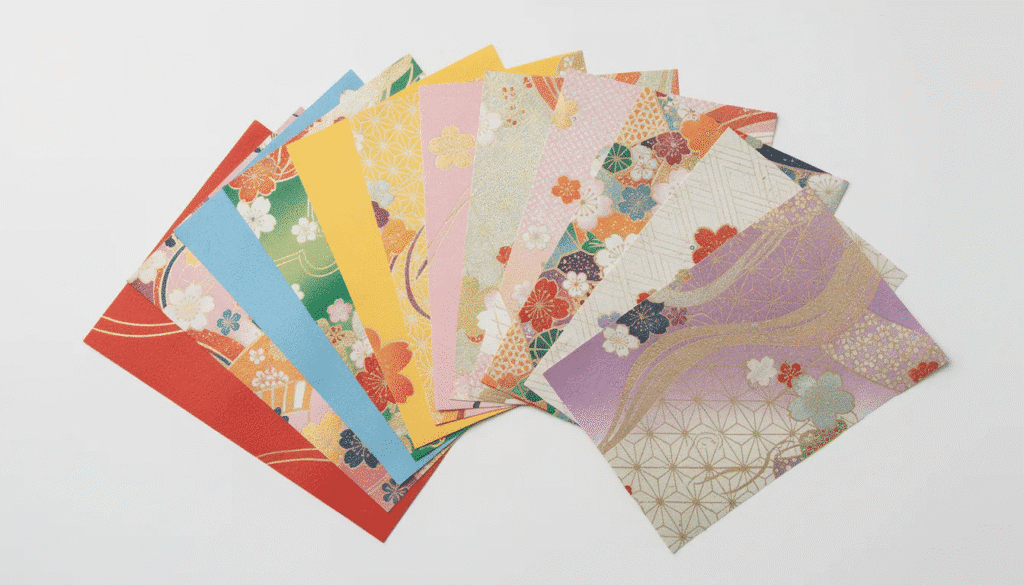
For functional uses like holding wrapped candy or small gifts, slightly stiff paper or thin card stock (120-160 gsm) works best, and understanding the best types of paper for craft will help you match the material to your project. This weight helps the walls maintain their shape and supports the contents without sagging. If you’re creating boxes for a special occasion, consider these decorative options and explore top craft paper supplies for creative projects:
- Duo-color origami paper (different colors on front and back)
- Metallic foil-backed paper for an elegant shimmer
- Patterned scrapbooking card for seasonal themes
Color choice can dramatically emphasize the pleated rim. When using duo-color paper, the contrasting shade peeks through at the pleats, creating a striking visual effect. Even subtle patterns on the inside surface become visible and add interest to the finished design.
Step-by-Step Folding Overview
This section provides a high-level overview of the folding sequence rather than a complete diagram. You can find detailed video tutorials on YouTube—many were uploaded 5 years ago or 9 years ago and remain excellent resources, though if playback doesn’t begin shortly, try restarting your device.
Note: If an error occurred while retrieving sharing information, please try again later or search with your voice on YouTube on your computer.
1. Prepare your square and create guide creases
Place your square colored-side down if using duo-color paper. Fold both diagonals to create guide creases, then unfold completely. These initial creases will serve as reference points throughout the folding process.
2. Form the blintz base
Fold all four corners to the center point, creating a smaller square. This is called the blintz base (or zabuton base in Japan). The traditional Spanish box instructions then call for unfolding and repeating from the new corner points to build a grid of creases.
3. Build the grid structure
Edges are folded toward the center multiple times, creating the network of creases that will later collapse into the pleated sides. Take your time here—accuracy in this step determines how cleanly your final box comes together.
4. Create the characteristic pleating
The rim is formed by reversing some creases along the top edges. This is where the zigzag pattern emerges. Fold each section into thirds, then sixths, working around all four sides systematically.
5. Shape the walls and lock the corners
Lift the sides while tucking small triangular flaps at each corner to lock the box into its three-dimensional form. Square the base by pressing firmly along the bottom edges.
Practical tips:
- Use a bone folder for sharp, crisp creases
- Lightly pre-bend the pleats before final shaping to avoid tearing thick card
- Check alignment frequently—watch history and influence your results by reviewing video tutorials
Wetfolded Spanish Box Variant
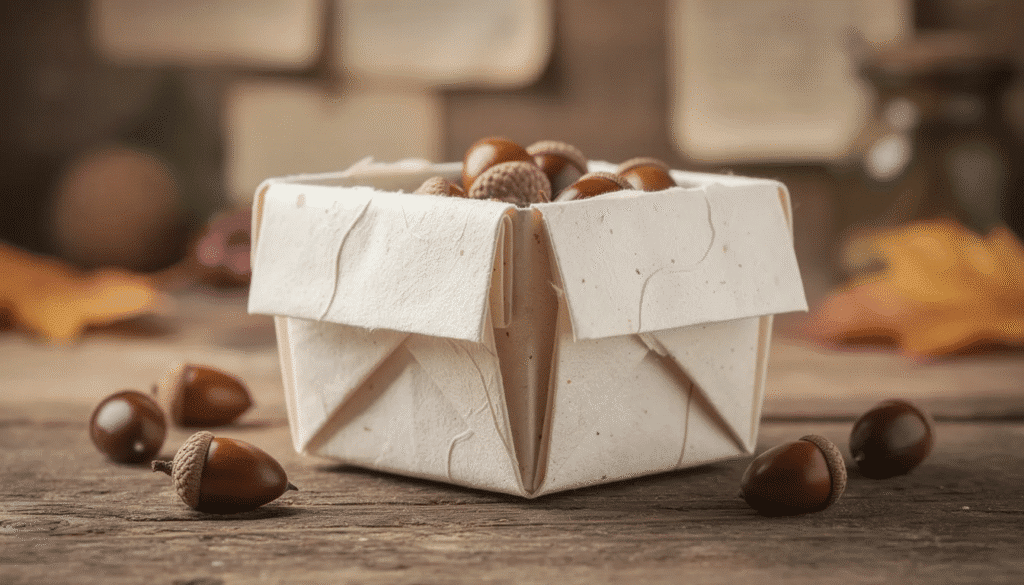
Wetfolding is a technique originated and popularized by Akira Yoshizawa in the mid-20th century to create smoother, more sculpted folds, and it pairs beautifully with handmade paper sheets for unique textured results. This approach transforms the Spanish box from a crisp, geometric container into something with organic, rounded character.
For a wetfolded Spanish box, folders typically use heavy paper (around 200 gsm) or thin watercolor paper that’s been lightly dampened before folding. The moisture softens the fibers, allowing the paper to curve and hold gentle shapes that would be impossible with dry paper. The benefit is a sturdier, more sculpted box with smooth, rounded pleats that maintains its form even with long-term use as a functional container.
Practical applications for wetfolded boxes include storing acorns gathered on autumn walks, shells collected from a holiday beach, or seasonal sweets at winter gatherings, and they complement vintage paper craft ideas using old ephemera if you enjoy a nostalgic aesthetic. The enhanced durability makes them suitable for items with some weight. One important caution: avoid soaking the paper. Only a light mist from a spray bottle or a quick wipe with a damp cloth is needed. Over-wetting causes the paper to tear during folding and lose structural integrity.
Creative Uses and Decoration Ideas
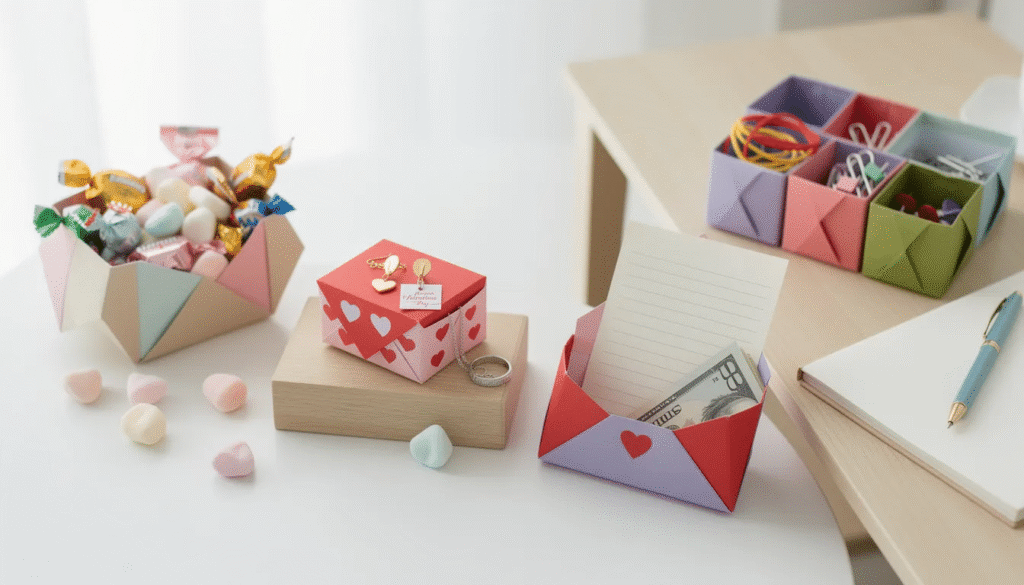
The Spanish box transitions beautifully from simple paper craft to thoughtful gift or party accessory, making it a perfect addition to a broader simply paper crafts inspiration gallery. Here are concrete ways to put your folded creations to use:
Functional applications:
- Candy dish at a birthday party or wedding reception
- Ring or earring holder on a bedside table
- Small gift box for jewelry on Valentine’s Day
- Envelope replacement for a handwritten note or cash gift
- Desk organizer for paperclips, rubber bands, or small office things
Seasonal themes:
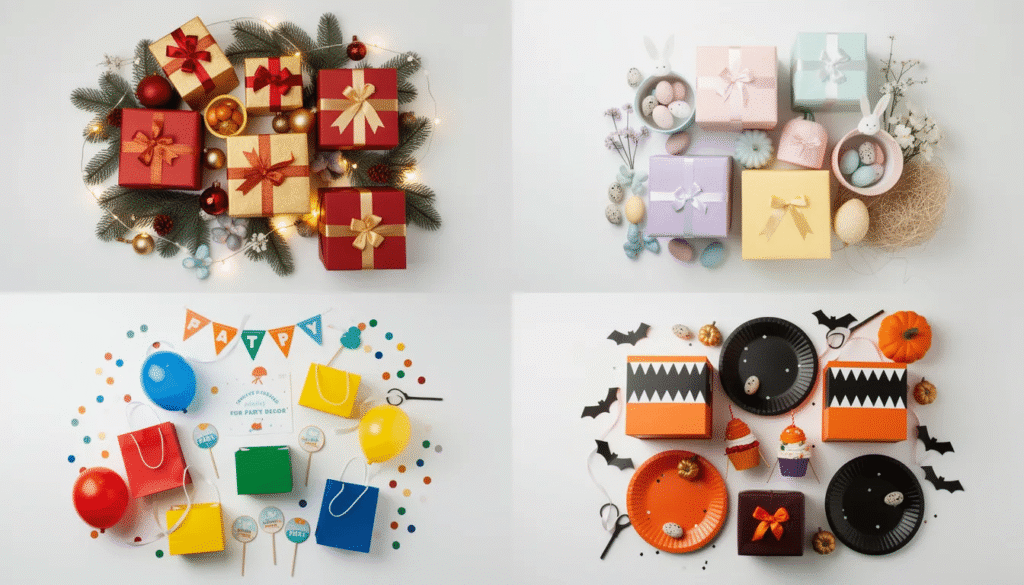
- Red and gold boxes for Christmas celebrations
- Pastel tones for Easter gatherings
- Bright primary colors for children’s parties, paired with creative paper printables for party decor
- Orange and black for Halloween (the pleated rim resembles monster teeth!)
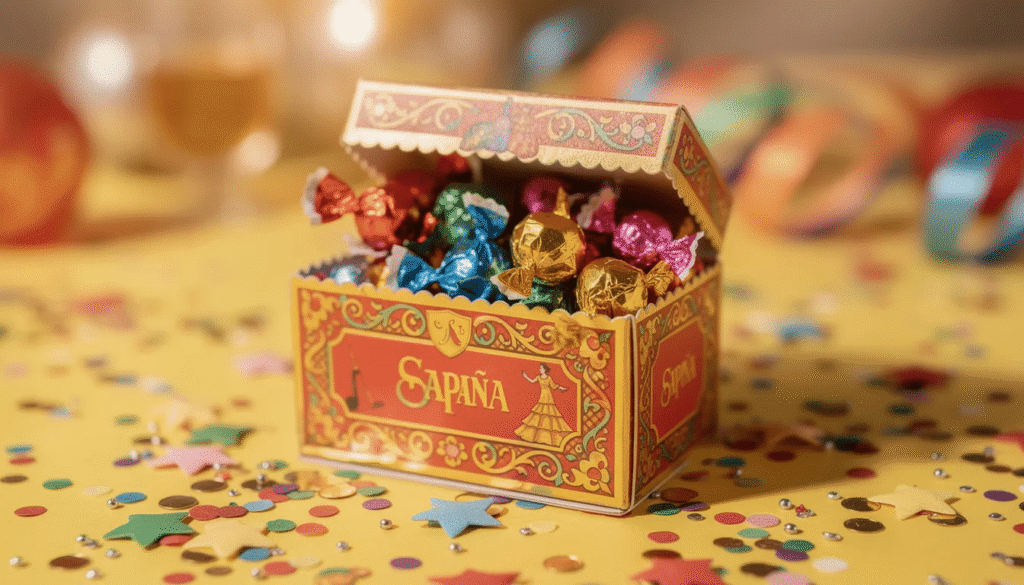
You can combine the Spanish box with other simple crafts—add a 4-petal origami flower, experiment with paper quilling art embellishments, or make a small paper crown as a lid decoration. Finishing touches like stickers, washi tape along the rim, or a small bow on one corner enhance the presentation while keeping the elegant folds visible. The fun is in making each box unique to its occasion.
Tips, Troubleshooting, and Further Practice
Common Problems and Solutions
Even experienced folders encounter challenges with the Spanish box. Here are solutions to common issues:
Problem | Cause | Solution |
|---|---|---|
Corners not meeting | Inaccurate initial creases | Re-fold diagonal guide lines with precision |
Walls sagging | Paper too thin | Use 120+ gsm card stock |
Rim pleats misaligned | Inconsistent third-folds | Measure and mark before folding |
Box won’t stay open | Creases not sharp enough | Use bone folder, press firmly |
Start practicing with inexpensive 20 × 20 cm copy paper or recycled wrapping paper before investing in high-quality materials. Videos uploaded 2 years ago, 3 years ago, or even 4 years ago remain valuable learning resources—sign in to YouTube to watch full video tutorials and tap to unmute for verbal instructions. Be aware that videos you watch may be added to the TV’s watch history and influence TV recommendations if you’re signed in. To avoid this, cancel and sign out, or skip navigation to show less personalized content. |
Practice Recommendations
To build general box-folding skills, practice related models like the classic masu box, simple lidded boxes, modular containers, or even three-dimensional paper mâché craft projects to explore different construction techniques. Consider documenting your Spanish boxes by date and paper type to track how your technique improves over time—many folders started this habit years ago and enjoy looking back at their progress.
Additional Resources
If you can’t find videos, you can also include playlist links or copy link URLs to share with fellow folders. Many diagrams and instructions are available in print as well.
The origami Spanish box is both a beginner-friendly project and a timeless classic that rewards practice with increasingly beautiful results. Whether you’re folding your first easy origami container or your hundredth, this design continues to offer opportunities for creativity and refinement. Grab some paper, find a quiet moment, and enjoy the meditative process of transforming a flat sheet into something both beautiful and useful.