If you’re buying your first stamps in 2026, you’re in excellent company. Card stamping has become one of the most accessible ways to create beautiful cards without years of artistic training. The best part? You can start making cards today with just a handful of affordable supplies.
This guide is designed for absolute beginners who want to start making handmade cards with stamping. Card stamping is a fun, accessible craft that lets anyone create beautiful, personalized cards with minimal supplies.
Card stamping is the art of using rubber stamps or clear stamps combined with ink pads and cardstock to create handmade greeting cards. Whether you’re crafting birthday wishes, holiday greetings, or thank-you notes, stamping lets you produce professional-looking results in minutes—even on your very first attempt.
This guide focuses on simple techniques that work even if you’ve never touched a stamp before. You don’t need fancy equipment or an art degree. A trip to any craft store or a quick online order is all it takes to begin.
Here’s what we’ll cover:
- Types of stamps (photopolymer, red rubber, and wood-mounted)
- Essential tools and supplies for beginners
- Step-by-step instructions for your first stamped card
- Basic techniques like layering, borders, and adding color
- Cleaning, storage, and stamp care basics
- Essential Supplies to Get Started
- Understanding Stamp Types
- Ink Pads and Cardstock Basics
- First Steps: Making Your Very First Stamped Card
- Simple Design Techniques: Layers, Borders, and Color
- Basic Tools and “Nice to Have” Add-Ons
- Cleaning, Care, and Storage of Your Stamps
- Next Steps: Building Skills and Confidence
Essential Supplies to Get Started
Beginners only need a small core kit to start stamping. It’s far better to invest in a few quality basics than to overwhelm yourself with gadgets you won’t use for months, especially when you understand the top craft paper supplies for creative projects that truly make a difference. Here’s what actually matters when you’re beginning your card making journey.
Must-have supplies:
- A small stamp set with greetings and a simple image (florals, hearts, or geometric shapes work well)
- One or two dye ink pads—black is essential, plus one favorite color
- A pack of smooth basic white cardstock (around 80–110 lb weight)
- One clear acrylic block sized to fit your stamps
- Basic adhesive like double-sided tape or liquid glue
Nice-to-have beginner tools:
- A paper trimmer or craft knife with ruler for straight cuts
- Low-tack tape for positioning elements before committing
- A bone folder for crisp, professional folds
- A few sheets of colored cardstock for layers
With a birthday sentiment set, a floral image stamp, black ink, and bright colored cardstock, you can already make birthday and thank-you cards. That’s the magic of stamping for beginners—minimal investment, maximum creative potential.
Understanding Stamp Types
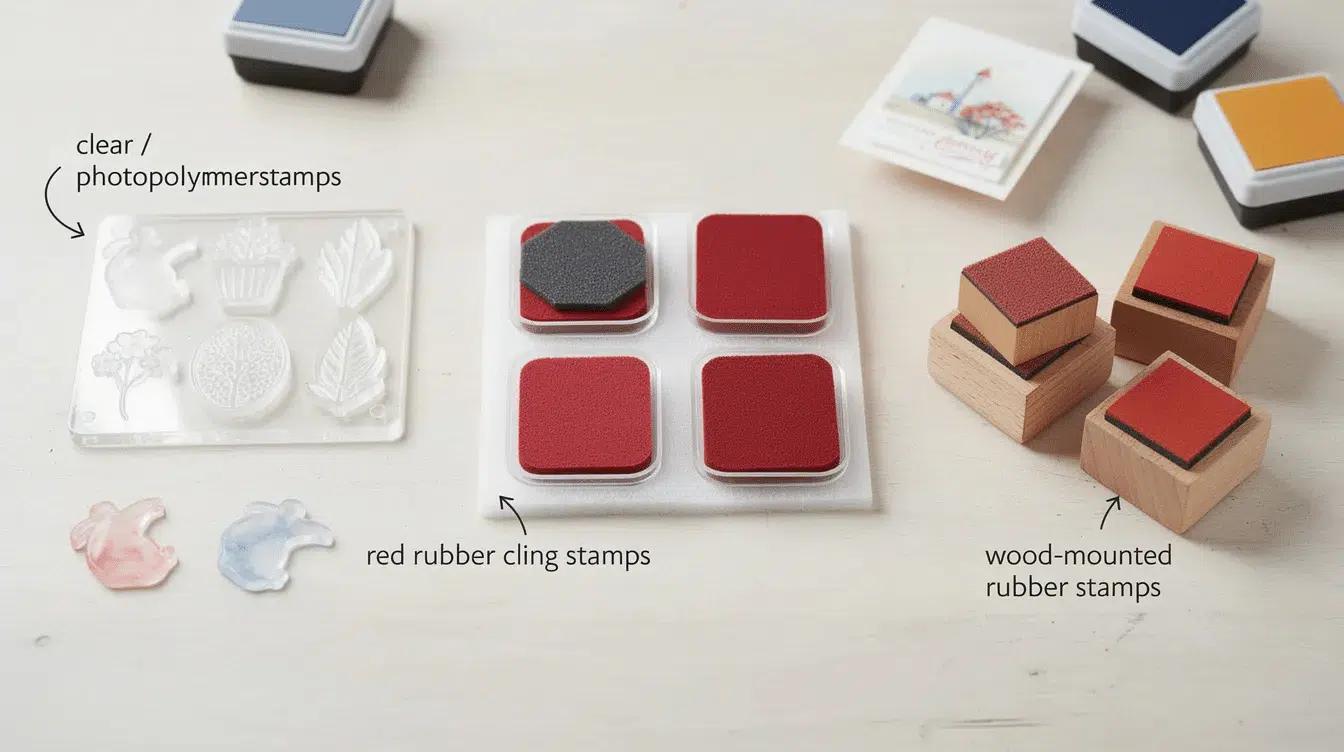
Stamps come in two main types: clear stamps and rubber stamps. Each type affects how they’re used, stored, and inked. Understanding these differences helps you work more confidently, though you certainly don’t need to master all of them before making your first card.
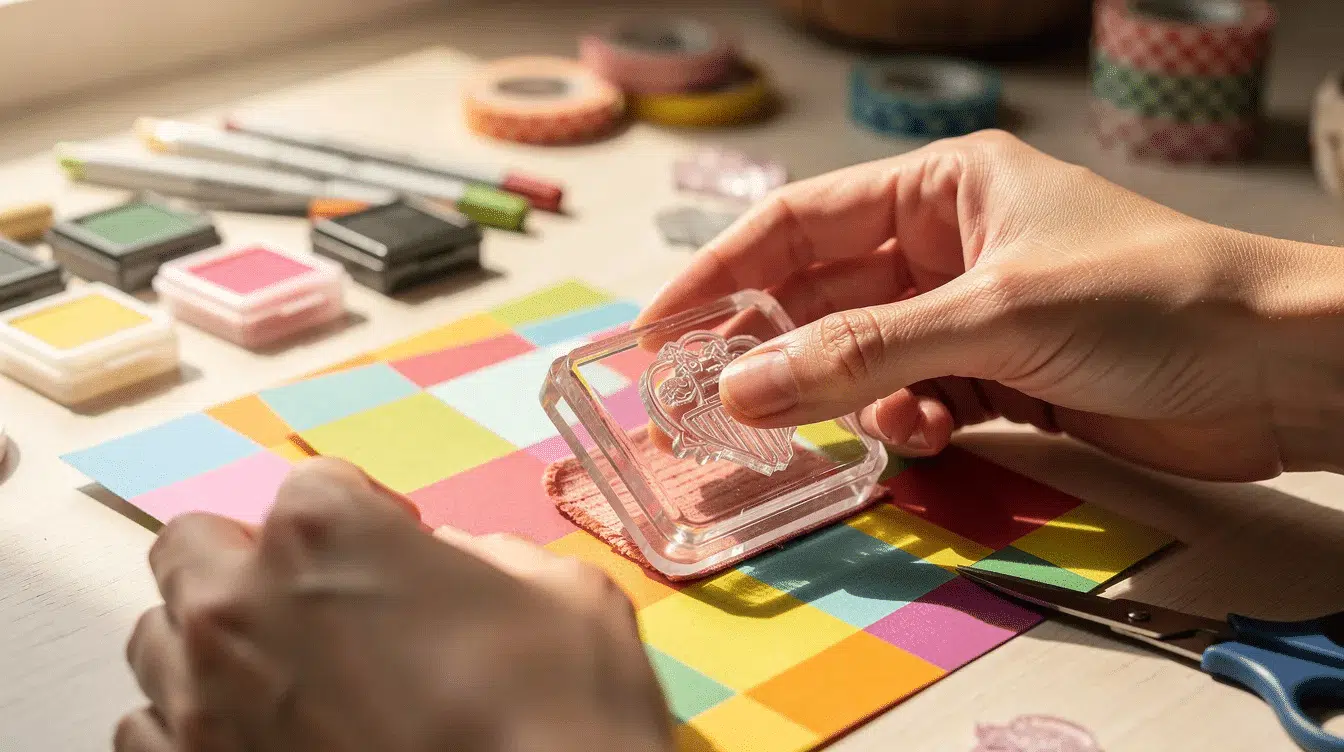
Clear/photopolymer stamps are transparent, flexible polymer stamps that stick directly to clear acrylic blocks. Clear stamps are made from photopolymer or vinyl and are applied to clear acrylic blocks for use. They’re extremely popular in modern card kits because you can see exactly where your image will land before pressing. These stamps can develop staining over time (especially from reds and dark blues), but this is purely cosmetic and doesn’t affect performance.
Red rubber stamps offer excellent detail and durability. Cling mount stamps are also known as red rubber stamps and have a foam backing for better adhesion to clear blocks. They typically come mounted on foam as “cling” stamps that attach to acrylic blocks, or permanently mounted on wood blocks. Red rubber tends to produce crisper impressions with less effort, making it ideal for fine line work.
Wood-mounted stamps are the traditional format—rubber permanently attached to a wooden block. Rubber stamps are typically pre-mounted on wooden blocks, making them sturdy but bulkier than clear stamps. They’re nostalgic and ready to use without additional equipment, though positioning can be trickier since you can’t see through the wood.
Don’t stress about picking the “best” type. Start with whichever stamp set appeals to you and fits your budget, then experiment as your skills grow.
Clear (Photopolymer) Stamps in Practice
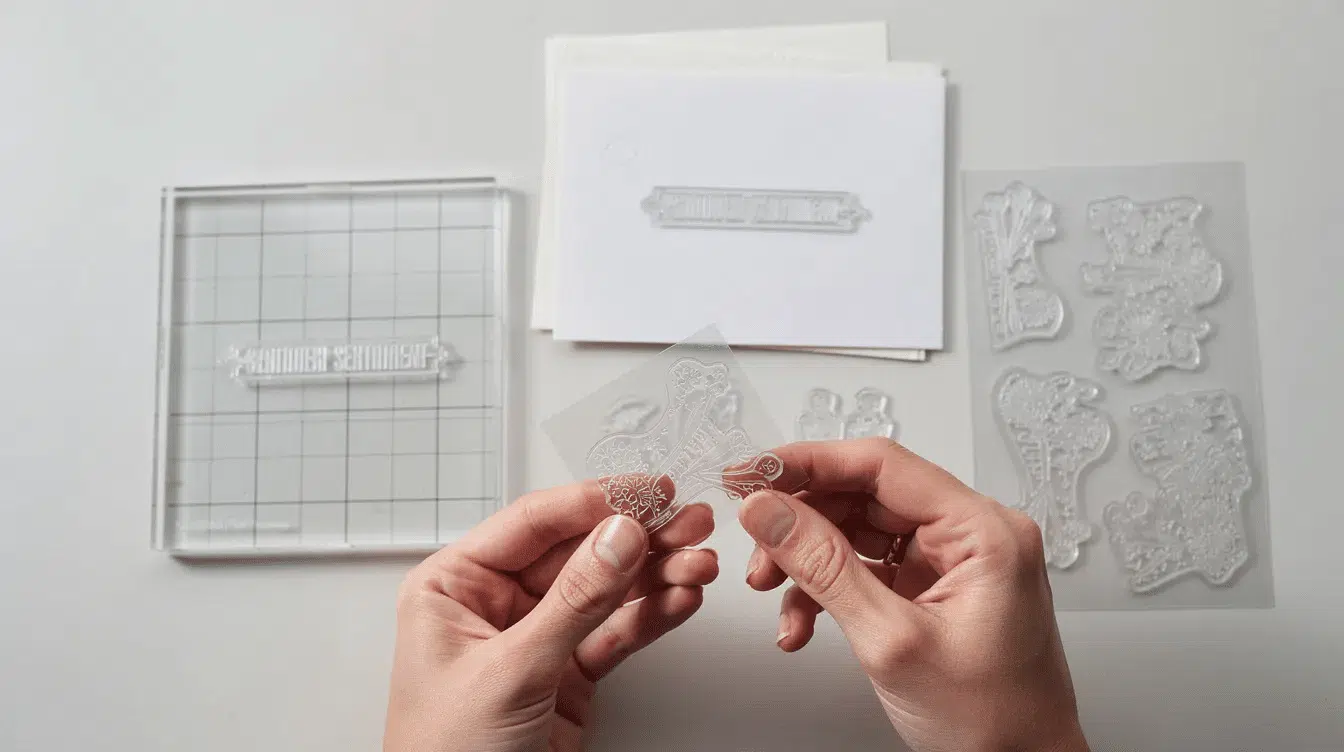
Working with photopolymer stamps is intuitive once you understand the basics. The transparency is your biggest advantage—what you see is what you get.
To mount a clear stamp, peel it gently from its backing sheet and place it image-side down on a flat surface. Press your acrylic block firmly on top, working from one edge to eliminate air bubbles. The stamp clings through static—no adhesive needed.
Many acrylic blocks feature grid lines printed on top. Use these to align sentiment stamps so your words stamp perfectly straight on the card front. This simple trick eliminates crooked text, one of the most common beginner stamper frustrations.
New photopolymer stamps sometimes benefit from “conditioning.” Stamp them a few times on scrap paper before your final project so they accept ink more evenly. And when removing thin stamps from their sheet, peel slowly and gently to avoid stretching or tearing delicate designs.
Red Rubber & Cling Stamps in Practice
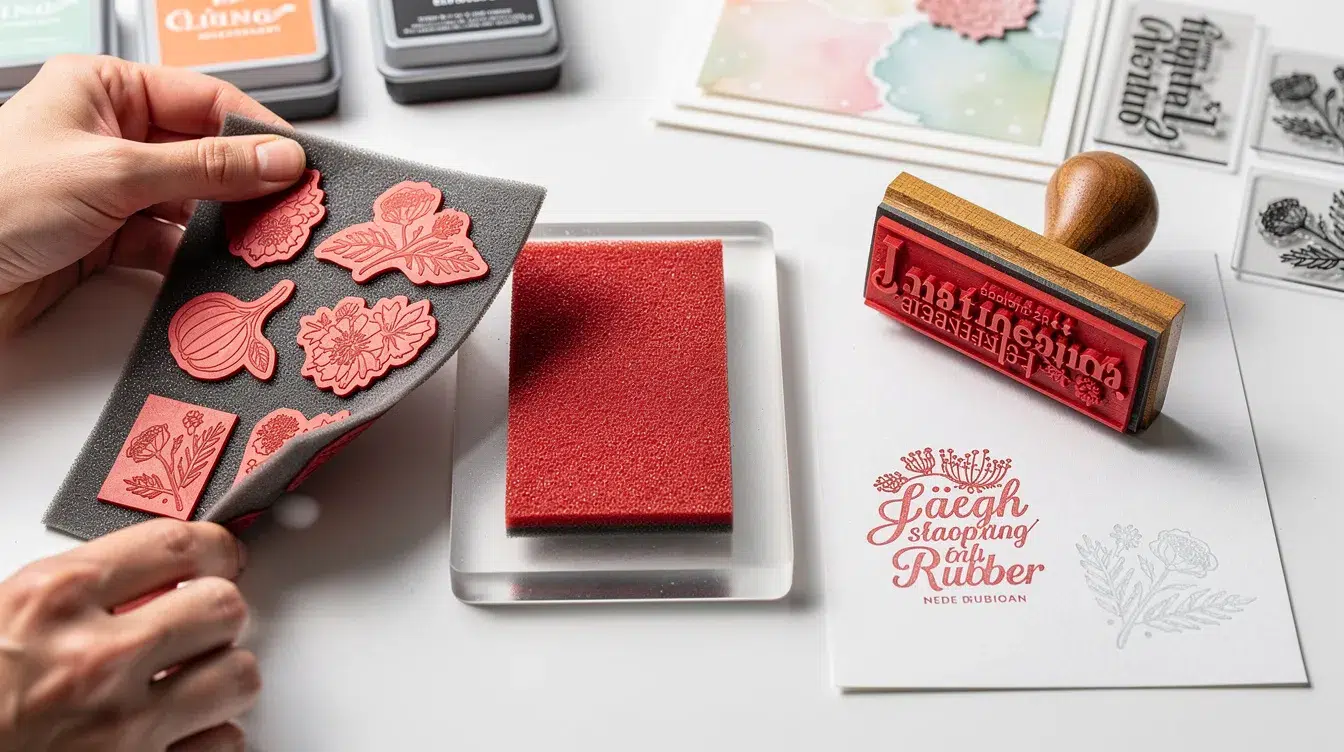
Red rubber has a different feel than photopolymer—slightly firmer with more tactile feedback when you press. Many experienced crafters prefer it for detailed sentiments and fine artwork.
Cling stamps usually arrive as red rubber mounted on foam sheets. To separate individual images, gently bend or flex the sheet until the foam backing pops away from the larger piece. Mount by pressing the foam side firmly against your acrylic block.
One advantage of red rubber: it typically gives crisper detail with less pressure. If you’re struggling with incomplete images using clear stamps, red rubber might solve the problem immediately.
For wood-mounted stamps (which need no block), always stamp a test image on scrap paper first. This helps you learn exactly where the design sits relative to the wood edges before committing to your final card.
Ink Pads and Cardstock Basics
The combination of ink type and paper surface determines how clean and vibrant your stamped images appear. Getting this pairing right makes everything easier.
Dye ink pads are the most beginner-friendly option. They dry rapidly (usually within seconds), come in hundreds of colors, and work beautifully for everyday greeting cards. You can layer multiple colors without worrying about smearing, which opens up creative possibilities immediately.
Pigment inks and specialty inks (like embossing ink) exist for specific techniques like heat embossing or watercoloring. These are fun to explore later, but not necessary when you’re just beginning.
Cardstock selection matters more than most beginners realize. Choosing from the best types of paper for craft helps you match your paper to your project for consistently clean results. Smooth, medium-weight cardstock (around 250–300 gsm or 80–110 lb) produces the crispest images. Heavily textured or handmade paper creates patchy impressions because only the raised fibers contact the stamp.
Start with a stack of basic white cardstock in A4 or 8.5″ × 11″ sheets. Cut these in half and fold to create standard card bases. Add a few sheets of colored cardstock for layers and accents, and you’re fully equipped.
First Steps: Making Your Very First Stamped Card
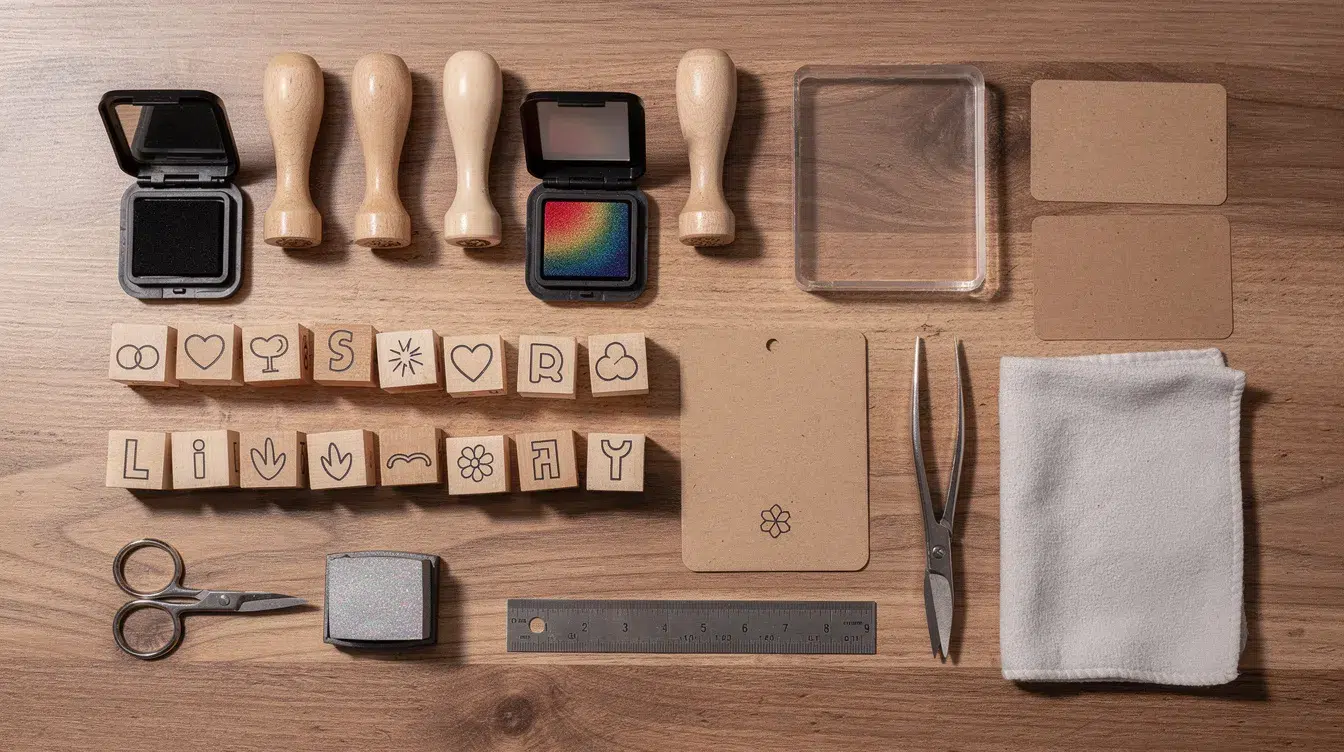
Your first project should be simple, achievable, and confidence-building. The following basic card takes about 20–30 minutes and requires only the supplies we’ve already covered, similar to the kind of beginner-friendly ideas you’ll find on Simply Paper Crafts.
The sequence is straightforward: cut a card base, stamp a focal image on the front panel, add a sentiment, and assemble. That’s it—no advanced techniques, no special equipment.
Here’s a concrete example: create a top-fold A6 or A2 card (approximately 4 x 5 inches) with a stamped floral image centered on the front and a “Happy Birthday” sentiment positioned below in the same color or a contrasting ink.
Before stamping on your actual card, always test on scrap paper first. This reveals how much ink coverage and pressure you need without risking your finished piece. Use just one or two ink colors for your first project to keep things stress-free.
Cutting and Folding Your Card Base
Accurate cutting and folding transforms amateur-looking cards into professional ones. This step takes only a few minutes but makes a noticeable difference.
To create two A2 top-fold cards from one sheet, cut an 8.5″ × 11″ cardstock sheet at the 5.5″ mark. For side-fold cards, cut at 4.25″ instead.
If you have a paper trimmer with a scoring blade, score along your fold line before folding. Otherwise, use a ruler and a blunt tool (like a bone folder or butter knife) to create a shallow indentation where you’ll fold. This prevents cracking and ensures a crisp crease.
After folding, burnish the fold by running a bone folder (or the back of a spoon) firmly along the entire length. This flattens the card completely so it sits properly in envelopes.
Don’t own a trimmer yet? Pre-made blank card bases with matching envelopes are a perfectly valid starting point.
Stamping the Focal Image and Sentiment
This is where the fun begins—the moment your card design appears. Position your blank panel on scrap paper to catch any ink overflow.
Ink your stamp using a gentle “tap, tap, tap” motion rather than pressing hard into the pad. New ink pads arrive well-saturated, so light tapping is usually sufficient. Watch videos of experienced stampers and you’ll notice they never press stamps forcefully into pads.
Place the inked stamp straight down onto your cardstock. Apply even fingertip pressure across the whole stamp surface—don’t rock it back and forth, which causes smudging. Hold for about one second, then lift straight up.
Stamp your main image first, then position your sentiment relative to that focal point. This method ensures balanced placement every time.
Standing while you stamp often provides better control and leverage than sitting. And if you’re switching colors, give your stamp a light wipe on a damp cloth between inks to prevent muddiness.
Simple Design Techniques: Layers, Borders, and Color
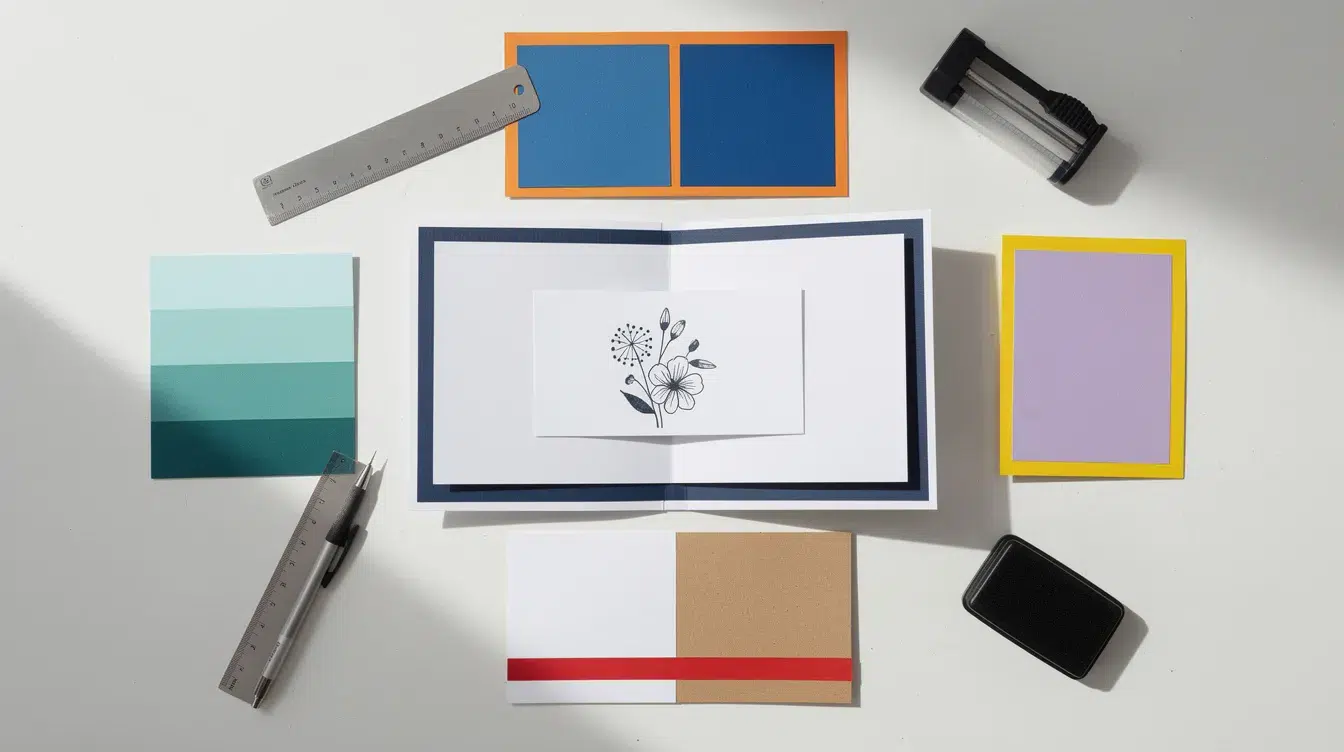
Simple design tricks can dramatically elevate a basic card without requiring advanced tools or techniques. Adding a contrasting layer, creating a border, or introducing a touch of color transforms a good card into a beautiful one, and exploring vintage paper craft ideas can add even more character to your designs.
In card design terms, a “layer” is an additional piece of cardstock (slightly smaller than your card base) adhered behind your stamped panel. This creates a visible border of color, adding depth and visual interest.
A standard layering measurement: cut your stamped panel about 1/4″ to 1/2″ smaller in both directions than the card base. This creates a balanced, professional-looking frame around your design.
For beginners, these color schemes work consistently well:
- Monochromatic: One color in light, medium, and dark tones
- Complementary pairs: Blue and orange, purple and yellow
- Neutrals plus accent: White, gray, or kraft paper with one bright pop of color
A concrete example: white card base, navy layer, white stamped panel with black ink and a touch of navy coloring. Simple, elegant, and achievable on your first attempt.
Adding Easy Color to Stamped Images
You don’t need expensive markers or a professional art kit to add color. Beginners can create charming, colorful cards with tools they probably already own.
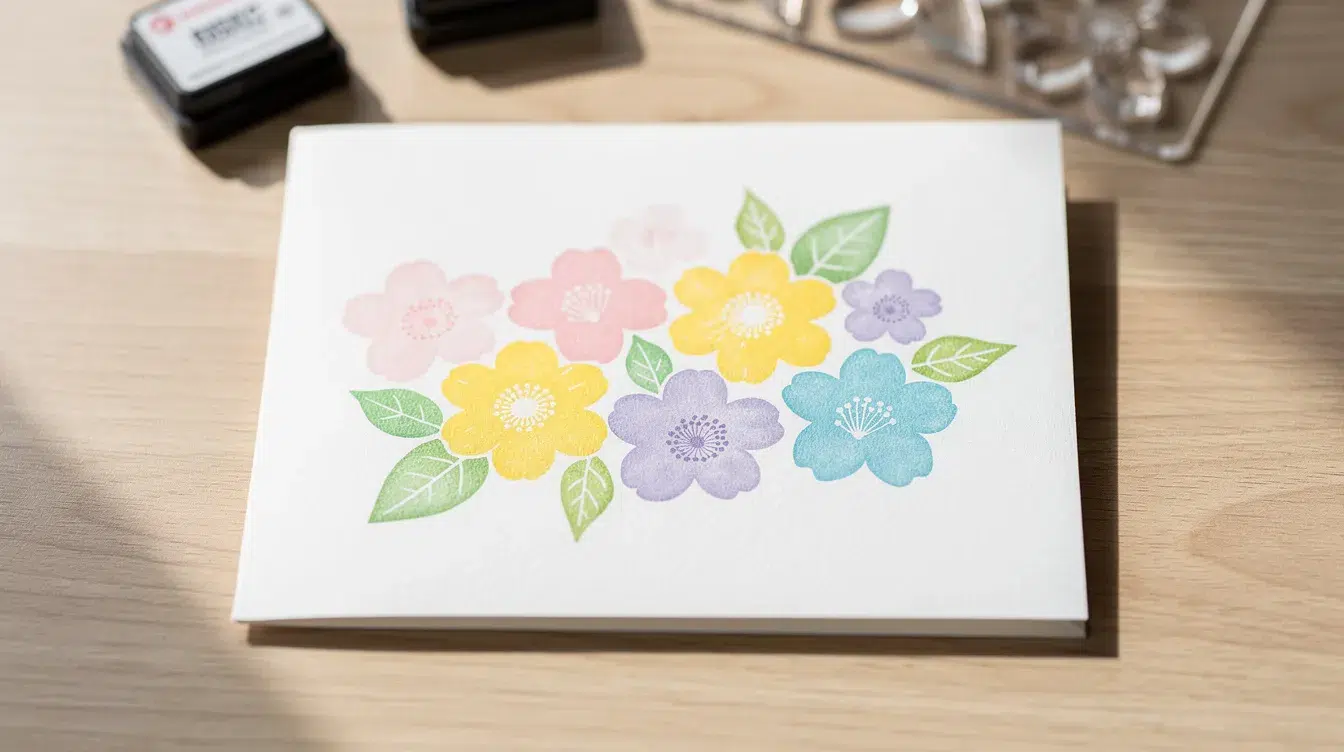
Colored pencils are incredibly forgiving—light pressure creates delicate shading, while heavier pressure intensifies color. Water-based markers work similarly and come in affordable sets, and you can even combine stamped images with paper quilling art for beginners to create layered, dimensional cards.
If coloring over stamped outlines, use fast-drying black dye ink and allow it to dry completely (about 15–30 seconds) before adding color. This prevents smearing and keeps your lines crisp.
Try this simple technique: lightly shade around the edges of a stamped flower, then blend the color toward the center. This creates a soft, dimensional look that requires zero artistic training.
Imperfect coloring still produces results that recipients love. Handmade cards have charm precisely because they’re handmade—embrace the slightly imperfect look.
Basic Tools and “Nice to Have” Add-Ons
Distinguishing essential tools from optional upgrades saves money and prevents overwhelm. You don’t need everything at once—build your collection as your skills and interests develop.
Print-at-home elements like tags, labels, and calendars pair beautifully with handmade cards, especially when you explore creative and useful things to print on paper.
Basic tools that make stamping easier:
- Fine-tip scissors or paper snips for trimming and fussy cutting
- A pencil and eraser for light positioning guidelines
- A ruler for measuring and aligning elements
Optional upgrades to explore later:
- Stamp positioning tools for perfectly aligned repeat stamping
- A heat tool and embossing powder for raised, shiny effects
- An emboss machine for intricate shapes
- Patterned paper collections for varied backgrounds
None of these extras are required for your first 20–30 cards. They represent natural next steps once you’re comfortable with the basics and have discovered which techniques bring you the most joy.
Two Everyday Tools You’ll Use Constantly
Some tools earn their place on every project. These two are worth prioritizing even on a tight budget.
Small, sharp scissors or paper snips handle countless tasks: cutting ribbon, trimming cardstock edges, and fussy cutting around stamped images for dimensional effects. Dull scissors crush cardstock edges and create frustration. A quality pair (around $15–25) pays for itself immediately in cleaner results.
Reliable adhesive makes or breaks your card construction. Multipurpose liquid glue with a fine tip helps beginners use appropriate amounts without warping cardstock. Alternatively, a tape runner provides instant adhesion with no drying time. Either works—just have one you trust.
These two tools directly determine whether your finished cards look polished or hastily assembled. They’re the sole responsibility of many successful projects.
Cleaning, Care, and Storage of Your Stamps
Proper maintenance keeps your stamps usable for years, protecting your investment and ensuring consistent performance project after project.
For cleaning, simply tap your used stamp on a damp chamois, stamp cleaning cloth, or paper towel after each session. For stubborn ink, a mild stamp cleaner works without damaging the material. Avoid harsh household cleaners, very hot water, or aggressive scrubbing—these can compromise adhesive bonds or warp photopolymer.
Store stamps away from direct sunlight and heat sources to prevent yellowing and warping. Keep clear stamps on their original backing sheets inside protective sleeves or a box. This prevents dust accumulation and maintains the static cling that allows them to stick to acrylic blocks.
Light staining on clear stamps is completely normal and doesn’t affect stamping quality. Consider it a badge of creative use rather than a defect to fix.
Extending the Life of Your Ink Pads and Blocks
Smart care habits save money over time by extending the usable life of your supplies.
Many modern ink pads perform best when stored upside down (closed, of course). This keeps ink near the surface and prevents premature drying. Store pads in a protective container, organized by color for easy access.
Once you’re stamping regularly, consider refill bottles instead of replacing entire pads. A few drops restore a tired pad to full function at a fraction of replacement cost. Check ink coverage on scrap paper before re-inking to avoid waste.
Clean acrylic blocks periodically with mild soap and water to remove ink residue and fingerprints. Clear blocks mean precise positioning—keep them that way.
Next Steps: Building Skills and Confidence
Improvement comes from practice, not perfection. Every card you create—especially the early, imperfect ones—teaches something valuable and represents genuine creative effort.
Simple practice routines build skill naturally:
- Stamp the same image multiple times with different pressure levels
- Try unexpected color combinations on scrap paper
- Make a small set (four thank-you cards) in one sitting for repetition
- Join online card making communities like Paper Pumpkin groups or independent stampin’ forums to share projects and gather inspiration
As confidence grows, gradually explore techniques like heat embossing, masking, simple ink blending, and background stamping. These build naturally on what you’ve already learned.
The world of stamping offers endless creative possibilities, but it all starts with one stamp, one card, one moment of pressing ink to paper. Whether you create cards for personal gifts or eventually explore the hope of selling handmade creations, the fundamentals remain the same.
Your first stamped card is waiting. Grab a stamp set, some basic white cardstock, and your favorite ink color. The whole process takes less than an hour, and the result—something handmade and personal—is so much fun to give and receive. Start today.