

Spray paint transforms paper mache from a humble craft project into something that looks genuinely impressive. This guide is for artists, crafters, teachers, and anyone looking to achieve professional results on paper mache projects. Whether you’re building a detailed mask for cosplay, creating oversized letters for a wedding, or sculpting an animal figure with your kids, exploring creative paper mache project ideas can help you plan your build before you ever pick up a can, and the right spray paint then delivers smooth, even coverage that brushes simply cannot match. But here’s the catch: paper mache is porous, slightly flexible, and surprisingly delicate when wet—which means not every spray paint will work.
In this new guide, we’ll walk through the best spray paint options for paper mache in 2026, explain what to look for when shopping, and share techniques that prevent the most common disasters like peeling, warping, and that dreaded orange-peel texture.
- Quick answer: the best spray paints for paper mache in 2026
- What to look for in spray paint for paper mache
- Best overall: Montana GOLD Acrylic Spray Paint
- Best budget & craft options: Krylon and Rust-Oleum for paper mache
- Best for artists who already use acrylics: Liquitex & Montana Water Based
- How to prepare paper mache for spray paint
- Spray painting technique for paper mache (coats, curing, and weather)
- Special effects & finishing: light dusting, details, and sealing
- FAQ: common questions about spray paint on paper mache
Quick answer: the best spray paints for paper mache in 2026
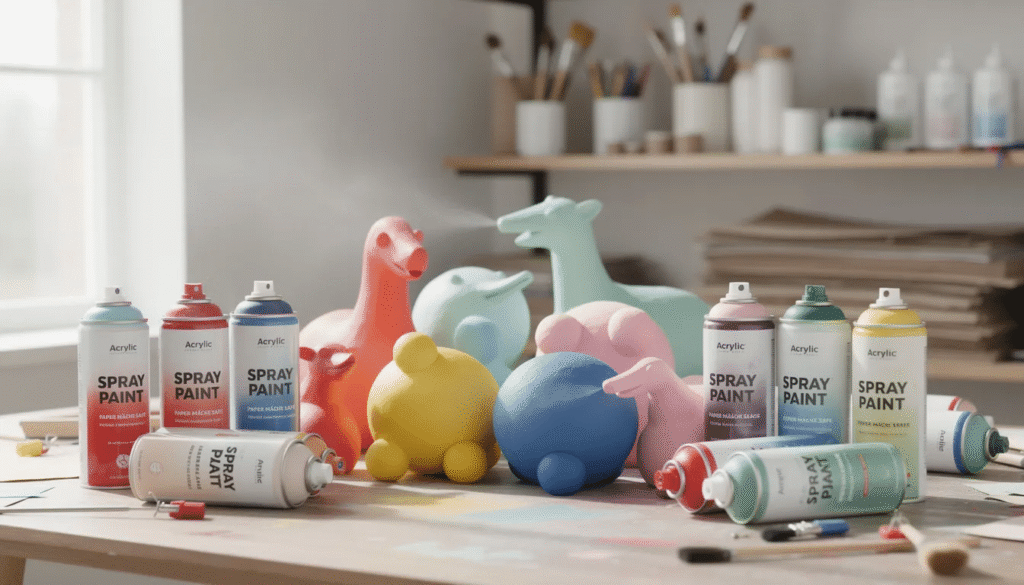
Spray paint is ideal for fast, even coverage on dry paper mache, but only if you choose the right type and apply it correctly. Spray paints can provide quick coverage and a smooth finish on paper mache surfaces. The good news is that several brands consistently deliver excellent results across different project types—from delicate masks to large piñatas.
Here are the top picks worth considering:
- Montana GOLD Acrylic Professional Spray Paint – best overall for serious art pieces, masks, and display sculptures where color accuracy and durability matter most.
- Krylon COLORmaxx Spray Paint & Primer – best budget option for letters, party décor, and classroom projects where speed and affordability win.
- Rust-Oleum Painter’s Touch 2X Ultra Cover – best paint for big, smooth shapes like animals, piñatas, stage props, and anything requiring heavy coverage.
- Liquitex Professional Spray Paint – best color range for artists who already use Liquitex acrylics and want seamless layering between spray and brush work.
- Montana BLACK – best for graffiti-style effects, bold opaque colors, and projects where you want that glossy, high-impact finish.
All of these picks are compatible with well-dried, sealed papier mache and should be used outdoors or in very well-ventilated areas. One thing to avoid: generic enamel-only sprays designed for metal surfaces. These formulas stay rigid after curing and will crack as your paper mache flexes over time—even if it’s just from humidity changes.
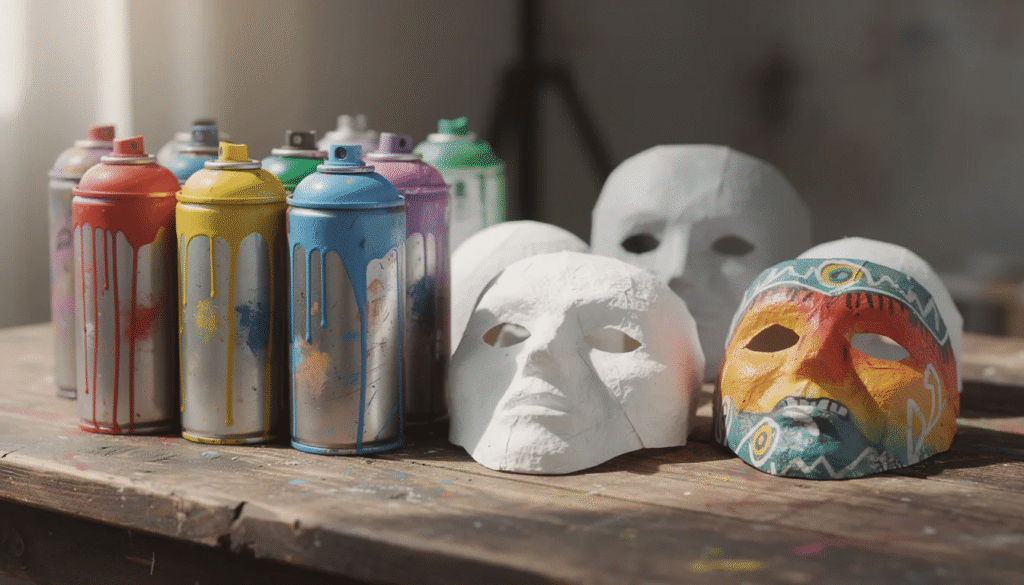
What to look for in spray paint for paper mache
Paper mache creates a unique surface that’s porous, slightly flexible, and prone to warping if it gets too wet too fast. This means spray paint choice genuinely matters—you can’t just grab whatever’s on sale at the hardware store and expect professional results.
Here’s what to prioritize when shopping:
Acrylic-based or acrylic-compatible formula. Acrylic paint forms a flexible polymer film that bonds well with paper fibers and moves with the material rather than cracking. Solvent-heavy enamels can show crack rates of 25-40% under flex tests, while quality acrylics stay in the 5-10% range.
Built-in primer or strong adhesion over gesso. Look for sprays that work well over acrylic gesso or white primer—this reduces soak-in and saves you from needing tons of coats to achieve opacity.
Appropriate drying speed. You want fast drying (5-15 minutes per coat is typical) but not “hot” solvents that cure too aggressively. Ultra-fast formulas can cause crazing on thick layers or soften unsealed paper mache.
Finish options that match your project. Consider whether you need matte, satin, or high gloss finishes. Think about colors too—solid shades work for most projects, but metallic, neon, and specialty finishes open up creative possibilities for costumes and décor.
Low-odor or water-based where possible. Brands like Liquitex and Montana Water Based reduce VOC emissions by 50-70% compared to traditional aerosols, making them more manageable for indoor studios and classroom settings.
Indoor vs. outdoor durability. If your piece will sit outside—even briefly for a party—choose a spray with UV resistance or plan to seal with a protective clear coat.
One critical point: spray paint should always be applied in multiple light coats rather than heavy wet coats. Heavy application can warp or even dissolve PVA-based paper mache paste, creating a mess you can’t fix. Where possible, it helps if your spray paint brand matches or is compatible with the acrylics you’ll use for brush details later.
Best overall: Montana GOLD Acrylic Spray Paint
Montana GOLD has earned its reputation as the best quality spray paint for paper mache among serious artists and prop makers. Its professional-grade acrylic lacquer formula, fine atomization, and enormous color range make it the go-to choice for masks, sculptures, and display pieces where quality can’t be compromised.
What makes it work so well on paper mache specifically?
The acrylic lacquer formula bonds reliably to sealed surfaces without becoming brittle. Unlike cheaper sprays that can feel stiff and plastic-y, Montana GOLD maintains enough flexibility to move with paper mache’s natural slight flex over time. The low-pressure valve system delivers controlled application that prevents the heavy buildup and dripping common with hardware-store brands.
Artists like Manning Krull use Montana GOLD exclusively for commission work, including Mardi Gras skull masks that require museum-quality opacity. His go-to shades—Shock Black and Shock White—provide the coverage needed for complex sculptural work, and the finished pieces survive handling without chipping after proper sealing.
Concrete usage tips:
Always remove the black safety ring under the nozzle before first use. Shake the can for a full 2 minutes—longer in cold weather—then test spray on scrap cardboard or leftover paper mache before touching your actual project. Use multiple light passes at about 3-6 inches distance, moving your hand in quick zigzags or loops rather than holding still and soaking one area.
The pros here are substantial: excellent coverage, artist-grade pigments, predictable behavior over gesso, and full compatibility with acrylic brush details and clear coats. Jon Barber’s 2022 comparative tests showed Montana GOLD performing exceptionally on glossy sealed surfaces, with its stock cap producing consistent lines and minimal overspray.
The cons? It’s more expensive than hardware-store brands—expect $12-18 per 400ml can versus $5-8 for something like Rust-Oleum. Cans don’t have protective lids, so storage requires care. And the smell is strong enough that you absolutely need to work outdoors or in a proper spray booth.
Choose Montana GOLD when you’re creating work meant to last for years—display sculptures, cosplay masks, gallery pieces—or when color accuracy genuinely matters for your project.
Best budget & craft options: Krylon and Rust-Oleum for paper mache
For school projects, party décor, and large letters, mid-priced hardware-store sprays work surprisingly well when paired with good surface preparation. If you’re planning creative paper mache art and craft projects for these occasions, you don’t need to spend artist-grade money on a piñata that’s getting destroyed at a birthday party.
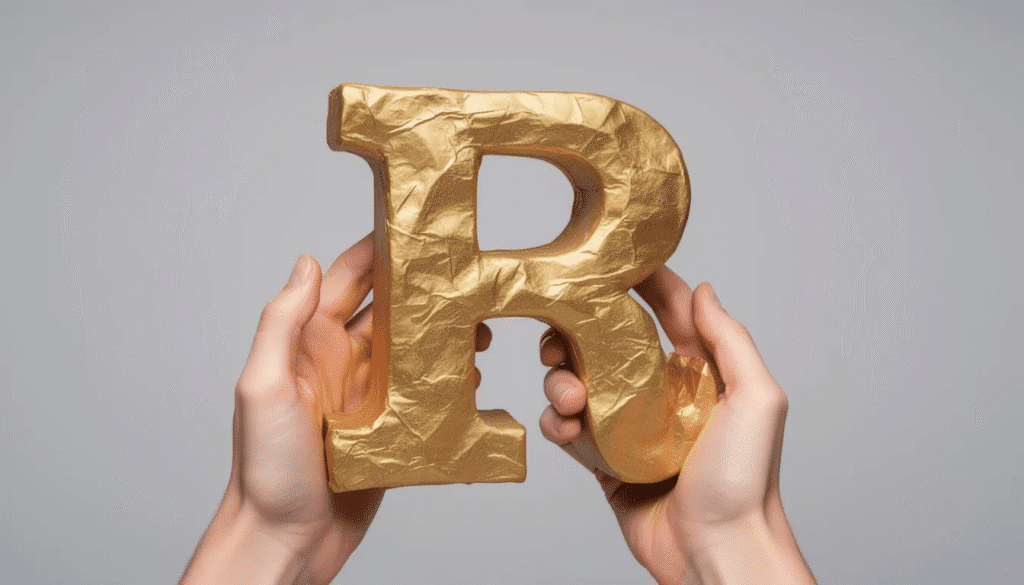
Krylon COLORmaxx Spray Paint & Primer is the easiest way to get solid results on porous paper mache letters and numbers from craft stores. The built-in primer helps reduce the absorption issue that makes unprimed paper mache such a paint hog. Available finishes include matte, satin, and gloss, plus popular metallic shades like gold, rose gold, and silver that look fantastic on décor pieces.
This is the one to grab for 3D letters, centerpieces, birthday numbers, and signs where “archival museum quality” isn’t the goal—you just want something that looks great for the event and photographs well.
Rust-Oleum Painter’s Touch 2X Ultra Cover shines when you’re covering large party props, piñatas, animal figures, and stage scenery. The “2X” in the name refers to coverage, and it delivers—you’ll use fewer cans on big projects compared to thinner formulas.
One watch-out: this paint can feel slightly thick, so the technique matters more. Stress lighter coats and longer drying times between them. Rushing will give you drips and texture problems that show up badly on smooth shapes.
Practical guidance for both brands:
Prime your paper mache with white gesso or a spray primer like Kilz for the brightest, most accurate colors. Let the primer dry overnight before spraying color—this single step prevents most peeling and bubbling problems. If you prefer brush-on primer, two coats with about an hour between them creates an ideal surface.
The quick comparison: Montana GOLD is “art studio” quality while Krylon and Rust-Oleum are “craft and décor” best buys. For serious work you want to keep, spend the extra money. For seasonal décor and classroom projects, the budget brands do the job.
Best for artists who already use acrylics: Liquitex & Montana Water Based
Some artists prefer keeping everything within the same paint system, ensuring perfect compatibility between spray base coats and brush-applied details. If you already work with Liquitex or Montana acrylics, their spray lines make this seamless.
Liquitex Professional Spray Paint uses a water-based acrylic formula with noticeably lower odor than solvent-heavy options. This matters when you’re working in a home studio or teaching a workshop where harsh fumes create problems.
The spray works beautifully over acrylic gesso and layers perfectly with Liquitex Heavy Body or Soft Body tube paints for detail work. The color range is extensive and matches Liquitex’s tube paint naming system, so you can mix media confidently. Artists doing fine mixed-media paper mache—combining spray, stenciling, and brushwork—find this predictability invaluable.
Montana Water Based offers another low-odor alternative that’s particularly suitable for classrooms and workshops with beginners. It still needs ventilation, but it’s far more manageable around students than traditional solvent sprays. The dual-pressure valve system allows for line widths up to four centimeters, giving flexibility for both broad coverage and more controlled application.
Both of these lines create flexible acrylic films that move with paper rather than cracking—essential for any paper mache that might flex with temperature or humidity changes. They’re excellent for “underpainting” a base color quickly, then refining with brushes for details and highlights.
The downsides? Both cost more per can than craft-store sprays. They’re also harder to find locally—you’ll likely need to order online or visit a specialty art store rather than grabbing them at the hardware store during a supply run.
If you’re doing mixed-media paper mache work with collage elements, stenciling, or significant brush detail, pairing quality sprays with the right craft paper supplies for DIY projects helps you get clean edges and strong layers, and these artist-grade spray lines offer maximum compatibility and predictable layering behavior.
How to prepare paper mache for spray paint
Most spray paint disasters on paper mache trace back to poor preparation: damp cores, rough surfaces, or skipping primer entirely. Take the prep seriously and your paint job becomes dramatically easier.
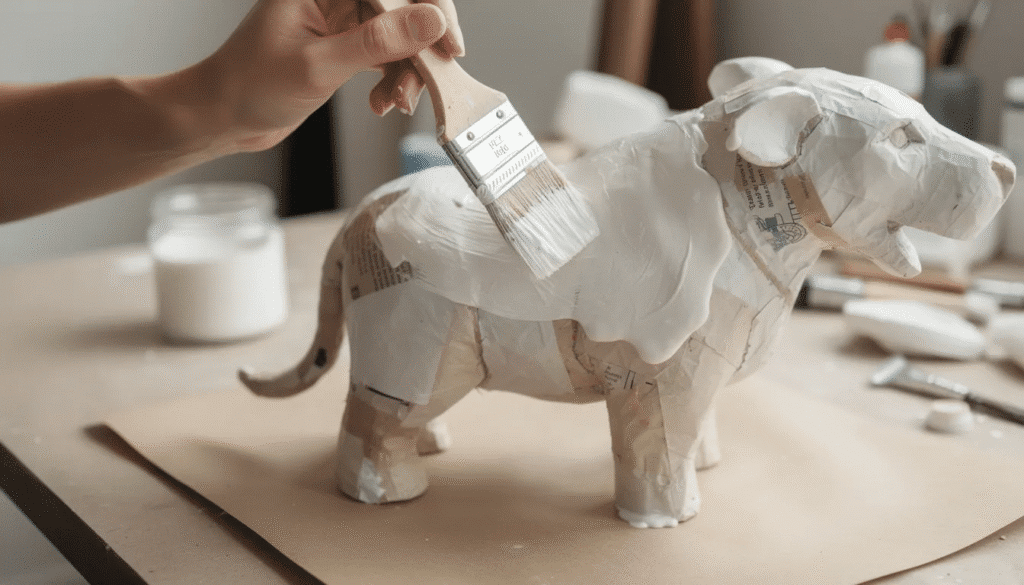
Applying a base layer of gesso or a similar primer is recommended before painting paper mache to prevent absorption and ensure better paint adhesion.
Drying comes first—and patience pays off.
Let paper mache dry completely before even thinking about paint. This typically means 24-72 hours depending on thickness, humidity, and your specific climate. Large hollow forms are tricky because moisture can hide inside long after the surface feels dry. Place pieces near a fan or in a warm, dry room, and watch for any remaining dark or soft spots.
Smoothing makes everything look better.
Once fully dry, lightly sand with fine sandpaper (220-320 grit) to knock down ridges, bumps, and visible newspaper texture. You’re not trying to create a glass-smooth surface—just removing the worst imperfections. Wipe away dust with a dry cloth before moving to primer.
Priming is where the magic happens.
You have several options for sealing and priming:
Primer Type | Application | Best For |
|---|---|---|
Acrylic gesso | Brush on one layer, wait an hour, add second layer | Masks, sculptures, any piece getting brush details |
White spray primer (Kilz) | Light spray coats | Large props, letters, items covered entirely by spray |
DIY mix (PVA + white acrylic) | Brush on | Budget projects, when gesso isn’t available |
Acrylic gesso remains the gold standard. One or two coats brushed on, with about an hour between coats, seals the porous surface and strengthens the whole thing. Tests suggest proper priming boosts paint adhesion by roughly 50% compared to spraying bare paper mache. | ||
Whatever primer you choose, let it dry at least overnight before the first spray coat. This single step prevents most crazing and peeling issues. Delicate or thin paper mache—especially balloon-based masks—especially needs this sealing step to prevent buckling under wet spray paint. |
Spray painting technique for paper mache (coats, curing, and weather)
The same spray paint behaves very differently depending on how you apply it and what the weather is doing. Paper mache’s porous nature makes technique even more critical than it would be on plastic or metal.
Shaking and testing aren’t optional.
Shake the can for at least 2 minutes—this isn’t exaggeration. In cold weather (below about 60°F / 15°C), you may need 3-4 minutes, and warming the can indoors first helps significantly. Always test spray on scrap cardboard or leftover paper mache before touching your actual project. This confirms the paint is mixing properly and the nozzle isn’t clogged.
Distance and movement determine finish quality.
Hold the can about 3-6 inches from the surface for normal coverage. For light dusting effects—adding shadows, weathering, or soft gradients—move back to 10-12 inches. Use continuous motion in loops or tight zigzags, and start your spray off the piece, sweep across, then stop off the other side. This prevents the heavy blobs that form when you start or stop directly on your work.
Multiple light coats beat one heavy coat every time.
Several light coats build up smoothly and dry faster than one heavy, wet coat. This is especially critical on masks and thin forms where heavy application can warp the paper mache or cause the surface to become soft. Plan on at least two coats for basic coverage, often three or four for full opacity.
Wait at least 6 hours between coats in warm, dry weather. In cold or humid conditions, extend this to 8-24 hours to avoid crazing and cracks. Rushing this process is the number one cause of paint problems on paper mache.
Weather matters more than you’d think.
Never spray in very damp, foggy, or rainy conditions. Moisture slows curing dramatically and can leave you with a rough, chalky finish that ruins the whole surface. Ideal conditions are warm weather (70-85°F / 21-29°C) with low humidity. Wind should be minimal to keep overspray under control and prevent dust from landing on wet paint.
Clear nozzles after every session.
When you’re done spraying, turn the can upside down and spray until the mist turns clear—usually 2-3 seconds. This purges paint from the nozzle so it doesn’t dry inside and clog. If a nozzle does clog despite this, you can soak it in paint thinner or replace it with a new cap. Swapping caps also lets you vary line width and texture for different effects.
Special effects & finishing: light dusting, details, and sealing
Once your base color is down, spray paint becomes a tool for creating shadows, aging effects, and gradients that would take hours to achieve with brushes. Combined with brush details and proper sealing, you can create paper mache that looks genuinely professional.
The light dusting technique creates instant depth.
Hold the can about 12 inches away and move quickly for a soft, speckled coat rather than full opacity. This is perfect for accenting eye sockets on masks, highlighting folds and scales on sculptures, or adding weathered, aged effects to props.
Use dark colors—black, deep brown, dark gray—to create shadows in recessed areas. Build up several very quick passes instead of trying to nail the full effect at once. You can always add more, but you can’t remove overspray without starting over.
Combining spray with brush work opens creative possibilities.
Spray a flat base color, let it dry completely, then add patterns, lines, and highlights with acrylic paint, acrylics from tubes, or paint pens. This hybrid method gives you the smooth base coverage of spray with the precision of brushes for adding details.
For geometric designs on letters and numbers, mask off areas with painter’s tape and newspaper before spraying additional colors. You can create stripes, blocks, or clean edges that would be nearly impossible freehand.
Topcoats and clear finishes protect your work.
A clear acrylic spray in matte, satin, or glossy finish protects paint on props, party décor, and masks that will be handled. Krylon UV-Resistant Acrylic Coating performed well in comparative tests, providing true gloss and matte options without the yellowing that some cheaper clear coats show on light-colored pieces.
Wait at least a full day after your last color coat before adding clear coat. Spraying clear over uncured color causes cracking, cloudiness, or a tacky surface that never fully hardens.
Sealing for maximum durability.
For pieces handled frequently—classroom projects, kid-safe décor, costume elements—consider brushing on acrylic varnish, Mod Podge, or acrylic gel medium as an alternative to spray clear coats. These options let you work indoors and provide a thick protective layer that resists scuffing.
Sealing also helps lock down chalky or matte finishes that might otherwise show fingerprints or wear marks after minimal handling.
Remember: all spray techniques should be done in a well-ventilated work area with an N95 mask or respirator and protective coverings for your table and floors.
Protecting your workspace and airing out projects
Spray painting indoors—even in a garage—creates overspray and fumes that linger. Setting up properly saves cleanup time and keeps everyone safe.
Workspace protection setups that actually work:
Use large foam boards or cardboard lined with plastic or a cheap shower curtain as a movable spray station. This creates a contained area you can reposition as needed and dispose of when it gets too covered with overspray.
For quick sessions, tape down newspaper or kraft paper in multiple layers. The top layer catches the worst overspray and can be peeled away, leaving cleaner layers underneath for your next session. Weigh down corners or tape edges firmly—wind lifting your coverings mid-spray creates a mess you don’t want.
Airing out freshly painted pieces:
Spray paint smell can linger 1-4 days depending on brand, number of coats, and weather conditions. Don’t bring freshly sprayed pieces inside your living space immediately.
Place finished work under a table, inside a large cardboard box with one side open, or in a plastic container with the lid propped slightly open. This keeps off dust and rain while allowing fumes to escape gradually.
Never leave freshly sprayed pieces where pets or children can touch them while curing. The surface may feel dry to the touch while still off-gassing compounds you don’t want on hands—or in mouths.
FAQ: common questions about spray paint on paper mache
Here are quick answers to the questions that come up most often when people start spray painting paper mache masks, letters, and sculptures.
“Will spray paint make my paper mache soggy?” Light coats over a sealed, dry surface will not cause problems. Heavy wet coats on unprimed paper mache absolutely can cause warping—sometimes severe enough to miss your intended shape entirely. The solution is always multiple thin coats rather than trying to cover in one pass.
“Can I skip primer?” You can, but you’ll use significantly more spray paint to achieve opacity, colors may look dull or inconsistent, and surface imperfections will show through more obviously. Priming with gesso or white primer typically saves money overall despite the extra step.
“What finish is best for masks?” For realistic, non-reflective faces—think creature masks, character costumes, and theatrical work—choose matte spray or satin finish. For stylized, dramatic, or fantasy masks where you want that bit of shine, gloss finishes create eye-catching impact under stage lights or photography.
“Can I spray paint store-bought paper mache letters from craft stores?” Yes, these work great with spray paint. However, apply one or two coats of gesso or white primer first for longest life and best color accuracy. Store-bought pieces are often surprisingly porous and will drink up spray paint without proper sealing.
“Is spray paint safe for kids’ projects?” Adults should always handle the spraying portion outdoors or in a well-ventilated area. Once pieces are fully dry and have aired out (typically 24-48 hours), kids can safely add brush details, stickers, or other decorations. For items kids will handle frequently, finish with a non-toxic acrylic sealer or Mod Podge to create a durable, washable surface.
Choosing the right acrylic-friendly spray paint and using light, patient coats will give you smooth, durable finishes on almost any paper mache project—from quick classroom crafts to display-worthy sculptures you’ll keep for years.