What transforms an ordinary sheet of paper into breathtaking sculpture that commands gallery walls and corporate lobbies? The answer lies in the remarkable versatility of paper as an artistic medium, where simple material becomes the foundation for everything from delicate origami birds to room-sized architectural installations.
Paper art represents one of the most accessible yet sophisticated forms of creative expression available today. Unlike traditional painting or sculpture that requires expensive materials and specialized equipment, artwork made by paper can begin with nothing more than standard sheets, scissors, and imagination. Yet this simplicity belies the medium’s incredible potential for complexity and beauty.
From ancient Asian folding traditions to contemporary laser-cut masterpieces, paper continues to evolve as artists push the boundaries of what’s possible with cellulose fibers. Pop-up books and sculptures demonstrate the transformative properties of paper, showcasing how flat sheets can become dynamic, interactive creations. Whether you’re a beginner curious about basic paper crafts or an experienced artist exploring new techniques, this comprehensive guide will walk you through everything you need to know about creating stunning paper artwork.
- What is Paper Artwork?
- Essential Techniques for Paper Art Creation
- Famous Paper Artists and Their Masterpieces
- Professional Paper Art Projects and Installations
- Paper Art Styles and Categories
- Materials and Tools for Paper Artwork
- Contemporary Paper Art Market and Pricing
- Paper Art in Commercial Applications
- Learning and Creating Paper Art
What is Paper Artwork?
Paper artwork encompasses a vast range of creative practices where artists manipulate paper using techniques such as folding, cutting, layering, sculpting, and laser-cutting to produce sculptures, installations, and decorative pieces. This versatile medium bridges traditional craftsmanship with modern design innovation, offering artists unlimited creative possibilities.
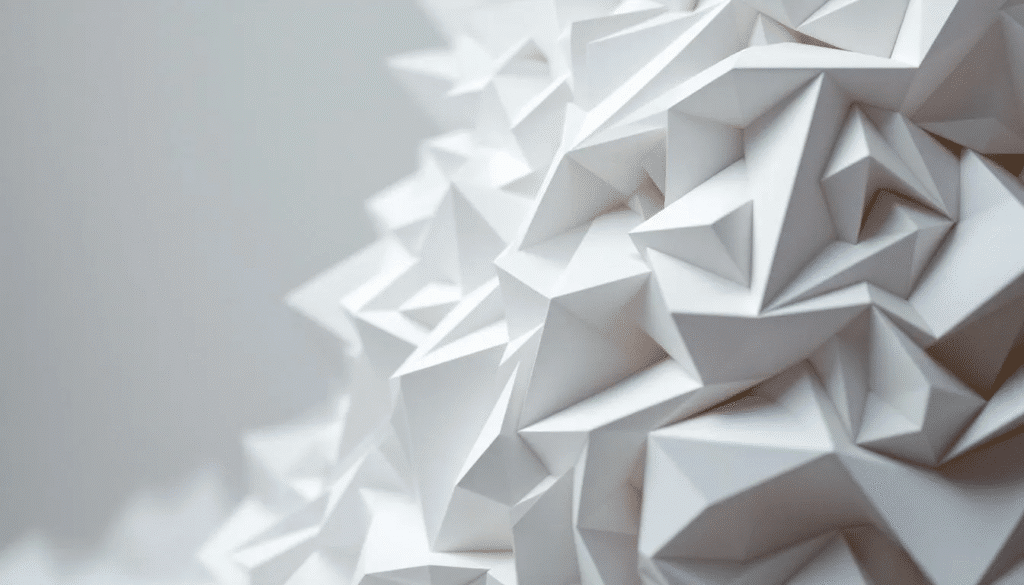
The concept ranges from the elegant simplicity of origami and kirigami—rooted in traditional Asian craftsmanship—to highly experimental and scale-driven contemporary installations that feature innovative structures and artistic narratives. Artists working with paper can create everything from intimate tabletop pieces to immersive environments that transform entire gallery spaces.
Contemporary paper art has expanded far beyond its traditional roots. Artists now combine digital design with handcraft, use laser cutting technology for pixel-perfect precision, and integrate lighting elements to create dynamic installations. The accessibility of paper as a material means that virtually anyone can begin creating, while the medium’s sophistication allows for professional-quality artwork that commands serious market attention.
The transformative quality of paper enables artists to take flat, two-dimensional sheets and turn them into complex three-dimensional forms. This transformation process—whether achieved through careful folding, precise cutting, or innovative layering—lies at the heart of what makes paper art so compelling to both creators and viewers.
Essential Techniques for Paper Art Creation
Mastering artwork made by paper requires understanding several fundamental techniques, each offering unique creative possibilities and challenges. These core methods form the foundation for virtually all paper art projects, from simple crafts to sophisticated professional installations.
Folding Techniques
Origami represents the purest form of paper folding, where artists create intricate shapes and figures without cutting or using glue. This Japanese art focuses on geometric solutions and visual poetry in form, requiring precise sequential folding that sometimes involves hundreds of individual steps. Advanced practitioners like Akira Yoshizawa developed wet folding techniques that permit organic curves and more lifelike forms.
Kirigami expands on traditional folding by incorporating strategic cuts, combining ‘kiri’ (cut) and ‘gami’ (paper) to create pop-up effects and three-dimensional structures. This technique enables artists to achieve complex spatial relationships and dramatic reveals when the folded paper is opened.
Paper Cutting Methods
Precision cutting forms the backbone of many paper art projects. Artists use various tools depending on their needs: scalpels and X-Acto knives for detailed work, ceramic scissors for clean edges, and increasingly, laser cutting technology for projects requiring pixel-level accuracy and scalability.
The development of laser cutting has revolutionized paper art, allowing artists to achieve consistently perfect cuts across multiple layers and create works at scales previously impossible with hand cutting. This technology has opened new possibilities for large installations while maintaining the intricate detail that makes paper art so captivating.
Layering and Sculpting
Advanced paper artists often work with multiple layers to create depth and dimension. Calvin Nicholls, who has been creating paper sculptures since 1983, sometimes uses as many as 150 layers of heavy and light paper for a single piece, building up form gradually to achieve remarkably lifelike results.
Paper sculpture extends the medium into full three-dimensional expression, with artists manipulating heavier papers or cardstock—sometimes dampened for increased pliability—to create robust structural forms. These sculptures can range from delicate tabletop pieces to room-scale installations that transform entire spaces.
Quilling and Assembly
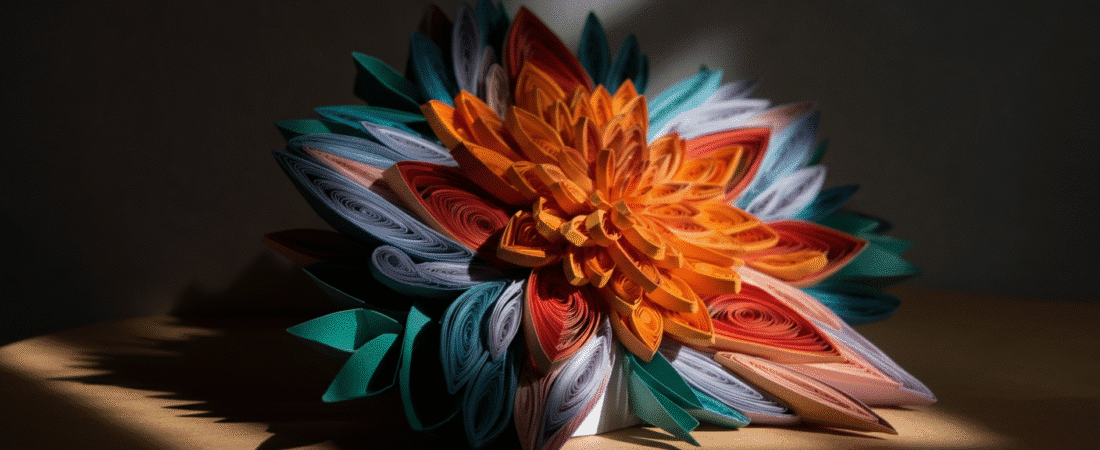
Quilling involves rolling thin strips of paper into coils, then shaping and arranging them into elaborate decorative patterns. Modern quilling has evolved to include specialty tools like curlers and tweezers, and many artists now integrate digital die-cutting machines to achieve consistent results across large projects.
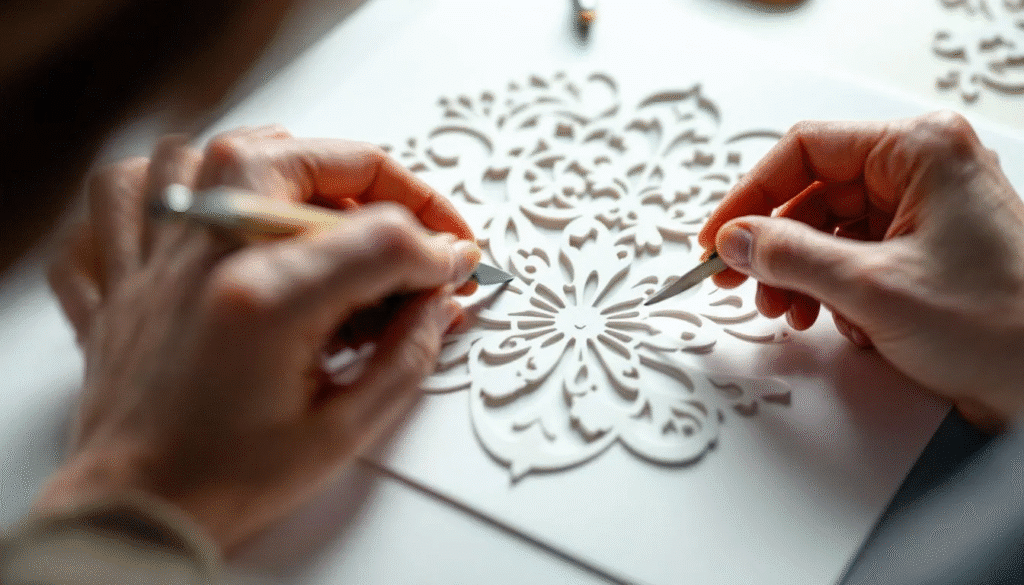
The assembly process for complex paper artworks often requires careful planning and specialized adhesives. Artists typically use archival glues or double-sided tape to avoid staining while ensuring long-term stability. For larger installations, the engineering considerations can be as complex as those found in traditional architecture.
Famous Paper Artists and Their Masterpieces
The world of paper art has been shaped by visionary artists who have pushed the boundaries of what’s possible with this humble material. These masters demonstrate the incredible range and sophistication achievable through dedicated craft and innovative thinking.
Marc Hagan-Guirey has gained international recognition for his intricate kirigami Star Wars scenes, each meticulously cut and folded from single sheets of paper. His work demonstrates the narrative potential of paper art, transforming beloved pop culture imagery into delicate, three-dimensional sculptures that capture both the epic scope and intimate details of the original films.
Yulia Brodskaya pioneered what she calls “drawing with paper,” pushing the boundaries of quilling and paper illustration to create vibrant, multidimensional portraits and compositions. Her technique involves building up layers of carefully shaped paper strips to create paintings that seem to glow with internal life and energy.
Calvin Nicholls represents the pinnacle of paper sculpture craftsmanship, creating wildlife portraits of stunning realism using only layers of paper. His process involves building up form gradually, sometimes using 150 or more individual layers to achieve the subtle gradations of light and shadow that bring his animal subjects to life. Each piece requires weeks of careful work, demonstrating the patience and precision required for master-level paper art.
Nguyen Hung Curong specializes in origami using Vietnamese Dó paper, achieving near-photorealistic animals from single, uncut squares. His work showcases the cultural heritage of paper arts while pushing technical boundaries, creating pieces that seem impossible given their origin as flat sheets.
Eric Standley creates multi-layered installations that incorporate dozens—sometimes hundreds—of laser-cut paper sheets, revealing fractal geometry and gothic architectural inspiration. His work demonstrates how contemporary technology can serve traditional artistic vision, creating pieces that exist at the intersection of craft and digital design.
Maude White’s technique involves hand-cutting thousands of tiny shapes to evoke filigree and lace in her nature-inspired works. Her delicate cuts create negative space patterns that seem to float weightlessly, transforming solid paper into gossamer-light sculptures that capture the essence of natural forms.
Professional Paper Art Projects and Installations
The commercial applications of artwork made by paper extend far beyond gallery walls, with corporations, institutions, and brands commissioning large-scale installations and promotional pieces that leverage paper’s unique visual impact and cultural associations.
Jony Ive’s design of the Comic Relief Red Nose using delicate red paper folding techniques exemplifies how established designers bring paper craft into mainstream commercial contexts. This project transformed charity branding by emphasizing tactile beauty and careful craftsmanship over mass-produced uniformity.
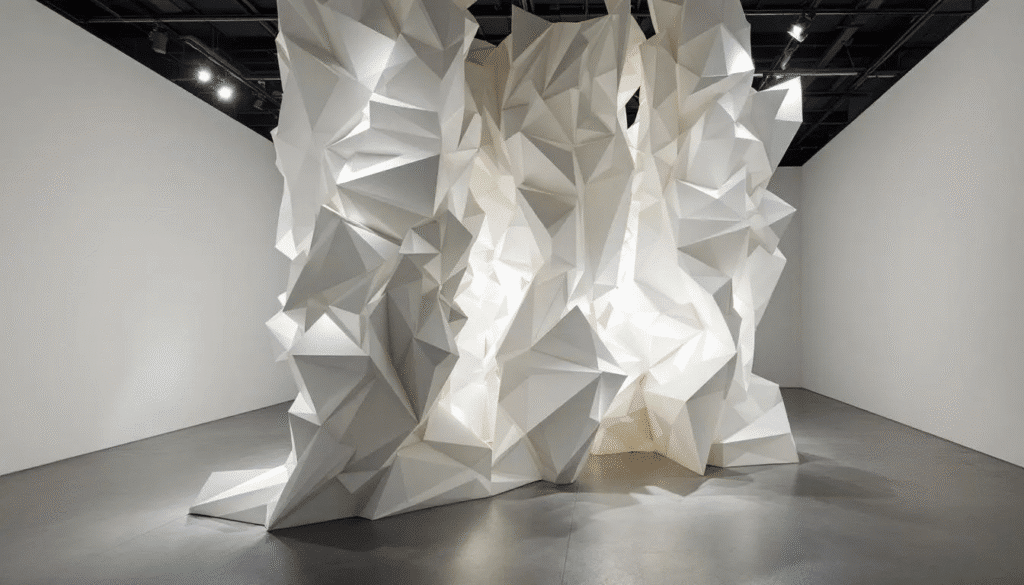
Hattie Newman’s Canon City project featured detailed paper architecture created specifically for camera test scenes, demonstrating paper’s photogenic qualities and its ability to create convincing miniature environments. This project showcased how paper’s inherent properties—its ability to hold crisp edges, catch light beautifully, and create convincing textures—make it ideal for commercial photography and film work.
The Malmö Festival identity created by Snask agency centered around colorful, interactive paper art installations designed to boost local engagement and create shareable social media content. This project illustrated how paper art can serve marketing objectives while maintaining genuine artistic integrity.
Visit Bristol’s Christmas campaign featured 3D paper sculptures integrated with LED lighting, creating seasonal ambiance at scale across the city. The project demonstrated how paper art can transform public spaces and create memorable experiences that extend far beyond traditional advertising.
TBWA South Africa has made a practice of transforming client briefs into visually impactful paper installations, leveraging paper’s tactile appeal for experiential marketing. Their approach shows how paper art can make abstract business concepts tangible and emotionally engaging for audiences.
These professional projects typically command premium pricing due to their custom nature, design complexity, and the specialized skills required for execution. Corporate commissions frequently exceed $100,000 for major installations, reflecting both the artistic value and marketing impact of well-executed paper art.
Paper Art Styles and Categories
Understanding the various approaches to artwork made by paper helps both creators and collectors navigate this diverse field. Each style carries its own aesthetic traditions, technical requirements, and creative possibilities.
Traditional Folding Arts
Origami emphasizes purity and transformation through folding alone, with no cuts or adhesive permitted. The form encompasses both abstract geometric compositions and lifelike representational pieces, with complexity ranging from simple childhood projects to museum-worthy sculptures requiring advanced mathematical understanding.
Contemporary origami has evolved to include complex modular origami designs where multiple folded units combine to create larger structures, and tessellations that create repeating patterns across continuous surfaces. These advanced forms push the boundaries of what many people consider possible with paper folding.
Cutting and Pop-Up Techniques
Paper cutting traditions exist across cultures, from Chinese jianzhi to Mexican papel picado, each carrying distinct aesthetic sensibilities and symbolic meanings. Modern Western paper cutting has evolved into a fine art form, with artists creating gallery-worthy pieces that rival traditional drawing and painting in their complexity and emotional impact.
Pop-up and kirigami techniques create dramatic three-dimensional reveals from flat sheets, often incorporating engineering principles to achieve reliable mechanical action. These forms require careful planning of fold and cut placement to ensure proper function while maintaining artistic beauty.
Sculptural and Installation Work
Paper sculpture extends the medium into full three-dimensional space, with artists creating everything from delicate tabletop pieces to room-sized installations. The structural engineering required for large works often involves hidden armatures, strategic reinforcement, and careful consideration of environmental factors like humidity and air circulation.
Contemporary installation artists working with paper often integrate other media—lighting, sound, digital elements—to create immersive environments that engage multiple senses. These hybrid works demonstrate paper’s compatibility with other materials while highlighting its unique aesthetic qualities.
Collage and Mixed Media
Collage techniques allow artists to combine different papers, textures, and colors in complex compositions that can incorporate found materials, photographs, and other media. This approach emphasizes paper’s versatility as both primary medium and supporting element in broader artistic visions.
Book art represents a specialized category where artists transform physical books into sculptural objects, often preserving literary themes while completely reimagining the book’s physical form. This approach highlights the conceptual relationship between paper as information carrier and paper as artistic medium.
Materials and Tools for Paper Artwork
Successful paper art depends heavily on selecting appropriate materials and tools for specific projects. Some staples for paper crafting include scissors, glue, and tape, which form the foundation for most projects. Understanding the properties of different papers and the capabilities of various cutting and shaping tools enables artists to achieve their creative vision efficiently and effectively.
Paper Selection
Paper choice fundamentally affects both the creative process and final results. Lightweight origami paper, typically under 80 gsm, enables complex folding sequences while maintaining sharp creases, but lacks the structural strength for large sculptural works. Heavier cardstock, ranging from 200-400 gsm, provides the rigidity needed for architectural forms but requires different folding and cutting approaches.
Handmade papers like Japanese washi or Vietnamese Dó offer unique textural qualities and exceptional strength due to their long fiber content. These premium materials support both detailed origami work and precise cutting while adding subtle aesthetic sophistication that machine-made papers cannot match.
Specialty papers expand creative possibilities significantly. Metallic and iridescent papers add visual drama, while translucent vellums create layering effects and subtle color mixing. Textured surfaces can simulate natural materials or create distinctive tactile experiences for viewers.
Cutting and Shaping Tools
Precision cutting requires appropriate tools for different scales and materials. X-Acto knives with replaceable blades remain the standard for detailed hand cutting, while ceramic scissors provide clean cuts without the blade degradation common with metal alternatives.
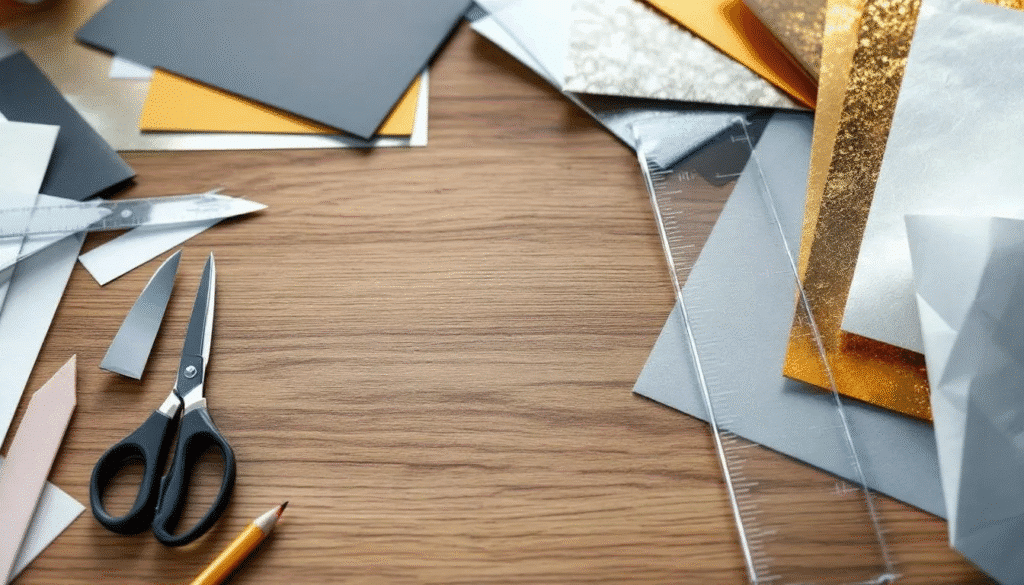
Professional bone folders enable crisp, consistent folds across heavy papers, while scoring wheels create precise fold lines that ensure clean geometric forms. Cutting mats protect work surfaces and extend blade life significantly, making them essential for any serious paper artist’s toolkit.
Laser cutting technology has revolutionized possibilities for precision work and scalability. CO2 and UV laser systems can achieve details impossible with hand cutting while enabling consistent reproduction across multiple pieces or large installations.
Adhesives and Assembly Materials
Archival adhesives preserve artwork longevity by avoiding chemical reactions that cause yellowing or degradation over time. Double-sided tape provides invisible joins for many applications, while specialized paper glues offer repositioning time without permanent staining.
For mounting and display, acid-free backing materials prevent chemical interaction between artwork and support surfaces. Professional framing often requires museum-quality materials to ensure pieces remain pristine for decades or longer.
Assembly of complex three-dimensional works may require additional structural support beyond paper alone. Artists often incorporate wire armatures, internal frameworks, or hybrid construction techniques that combine paper’s aesthetic qualities with other materials’ structural properties.
Contemporary Paper Art Market and Pricing
The market for artwork made by paper has evolved significantly as galleries, collectors, and institutions recognize the medium’s artistic legitimacy and investment potential. Understanding current pricing structures helps both buyers and creators navigate this expanding field.
Pricing varies dramatically based on several key factors. Small paper sculptures typically retail between $182 and $800, reflecting the artist’s reputation, piece complexity, and gallery representation. These works often appeal to beginning collectors and make excellent entry points into paper art collecting.
Major installations by established artists can command $100,000 or more, particularly for pieces with exhibition history or museum provenance. Artists like Eric Standley and Calvin Nicholls have achieved these price levels through consistent gallery representation and critical recognition.
Limited edition prints on archival papers like Hahnemühle Photo Rag Ultra Smooth command premium prices due to material quality and production limitations. These pieces often appreciate significantly when artists gain broader recognition, making them attractive to collectors seeking both aesthetic pleasure and investment potential.
The reputation factor cannot be overstated in paper art valuation. Gallery representation, museum exhibitions, and critical reviews all contribute to market confidence. Artists who successfully bridge commercial and fine art applications—like those creating both gallery pieces and corporate installations—often achieve the strongest market positions.
Custom commissioned pieces frequently exceed standard pricing due to their exclusive nature and the extensive design process involved. Corporate clients particularly value the unique visual impact paper art provides in lobbies, conference rooms, and public spaces.
Paper Art in Commercial Applications
The commercial applications of paper art continue expanding as businesses recognize its unique advantages in marketing, branding, and environmental design. Paper’s inherent associations with craft, sustainability, and innovation make it particularly effective for brands seeking to communicate these values.
Advertising campaigns increasingly utilize bespoke paper art for its shareable visual impact and tactile appeal. The handmade quality inherent in paper craft creates authenticity that mass-produced imagery cannot match, making it especially valuable for brands targeting consumers who value artisanal quality.
Event and festival installations leverage paper’s lightweight properties and dramatic visual potential to create immersive experiences that photograph beautifully for social media sharing. Large-scale paper environments can transform spaces quickly and cost-effectively while maintaining sophisticated aesthetic appeal.
Children’s book publishing has embraced paper art’s interactive potential, incorporating pop-up elements, lift-the-flap mechanisms, and textural components that enhance storytelling and promote learning. These applications demonstrate paper’s educational value while creating premium products that command higher retail prices.
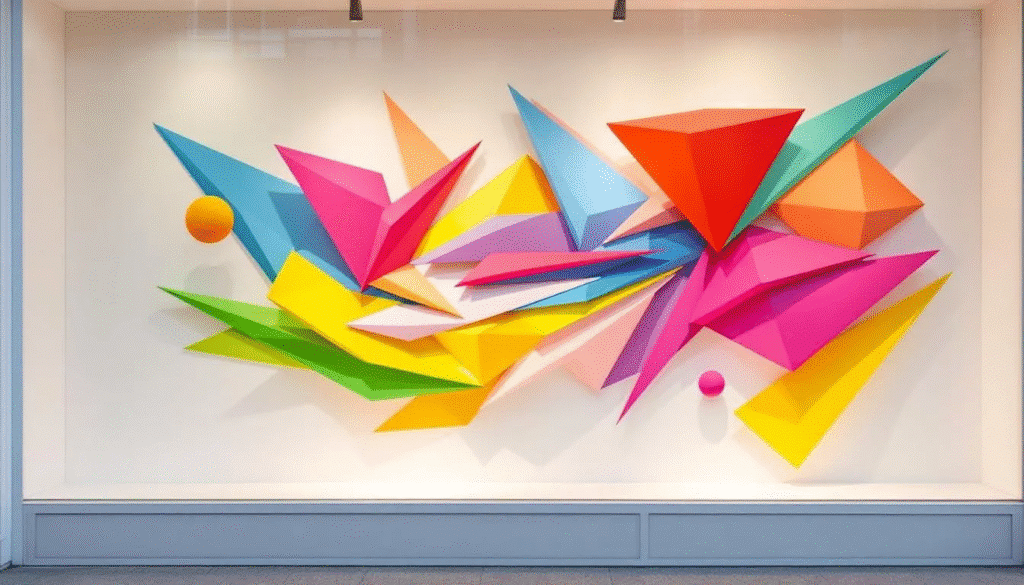
Retail environments increasingly feature paper art installations for seasonal displays and brand activation. High-end stores commission paper artists to create window displays and interior installations that attract foot traffic while reinforcing brand identity through sophisticated visual presentation.
Corporate art collections now regularly include contemporary paper sculptures alongside traditional media. The medium’s innovative associations and often-affordable pricing make it attractive for companies seeking to project creativity and forward-thinking values in their physical spaces.
Learning and Creating Paper Art
Beginning your journey with artwork made by paper requires patience, practice, and a willingness to experiment with different approaches until you find techniques that resonate with your creative vision. Paper crafting can be enjoyable for people of all ages, making it a versatile and inclusive activity. The accessibility of basic materials means almost anyone can start immediately, while the medium’s depth ensures continued challenge and growth.
Start with simple projects that build fundamental skills without overwhelming complexity. Many paper crafts don’t require any skill and are simple enough for kids and toddlers to create, making them an excellent introduction to the medium. Paper flowers are a timeless decorative staple that can be made at home, offering both beauty and an opportunity to practice essential folding techniques. These beginner projects also help you understand how different papers behave under various stresses and manipulations.
Essential skills development focuses on scoring, folding, and cutting techniques that form the foundation for all paper art. Practice creating consistent, sharp creases with bone folders, and develop steady hands for precision cutting. These basic competencies enable progression to more ambitious projects as confidence builds.
Experimentation with paper weights and textures reveals how material properties affect both process and results. Try the same folding sequence with different papers to understand how weight, flexibility, and surface texture influence the final form. This hands-on learning builds intuitive understanding that guides better material selection for future projects.
Study master artists’ documented processes through books, online tutorials, and workshops. Many established paper artists generously share their techniques, providing detailed step-by-step guides that accelerate learning while preserving traditional methods for future generations.
Document your own creative process through photography and written notes. This practice helps identify successful techniques for repetition while building a portfolio that demonstrates artistic development over time. Many artists find that process documentation becomes as valuable as the finished pieces themselves.
Develop your personal style by combining traditional methods with your own innovations. The most successful paper artists typically master established techniques before branching into original approaches that express their unique artistic vision.
Maintain archives of completed works through careful photography and storage. Paper’s relative fragility makes documentation especially important, and professional-quality images enable sharing work online and in portfolios even when original pieces are sold or damaged.
Consider joining paper art communities, both online and in-person, where artists share techniques, provide feedback, and offer encouragement. The paper art community tends to be particularly welcoming to newcomers, recognizing that the medium’s accessibility makes it ideal for fostering creativity across skill levels.
Practice patience with the learning process. Complex paper art requires significant time investment, and rushing often leads to mistakes that require starting over. Crafting with family during the holidays keeps kids preoccupied and adds a festive, collaborative element to the process. The meditative aspects of careful folding and cutting can become as rewarding as the finished results.
Continue challenging yourself with increasingly ambitious projects as skills develop. The unlimited creative potential in artwork made by paper means artists can spend lifetimes exploring new techniques, forms, and artistic expressions within this single medium.
Whether you’re drawn to the geometric precision of origami, the narrative possibilities of kirigami, or the architectural ambitions of large-scale installation work, paper art offers creative possibilities limited only by imagination and dedication. The journey from simple paper crafts to sophisticated artistic expression rewards every step with tangible beauty and growing creative confidence.