
If you have one sheet of paper and a few minutes, you can create a tiny notebook for quick notes, lists, or sketches. This guide shows how to make a mini notebook from paper using the classic instant-book method, plus a thicker multi-sheet option with a cover, ribbon, or stitch binding.
Key Takeaways
- You’ll learn how to make a tiny diy notebook from a single standard size A4 or 8.5” x 11” sheet in under 5 minutes.
- The main method needs only a fold pattern and one simple cut paper step; no stapler, sewing, or special tools required.
- A single standard sheet of paper, 8.5” x 11” or A4, is sufficient to make an 8-page mini notebook.
- You can use colorful paper, lined paper, graph paper, or any kind and size, as long as it has one blank side.
- The FAQ answers extra questions about durability, page count, punch holes, and using string or thread.
What You’ll Need for Your Mini Paper Notebook
The goal is simple: begin with one sheet and turn it into your own notebook. This is a fantastic, convenient, easy project for kids, students, writers, and anyone who likes making notebooks without buying supplies, especially if you already enjoy paper crafting projects and inspiration.
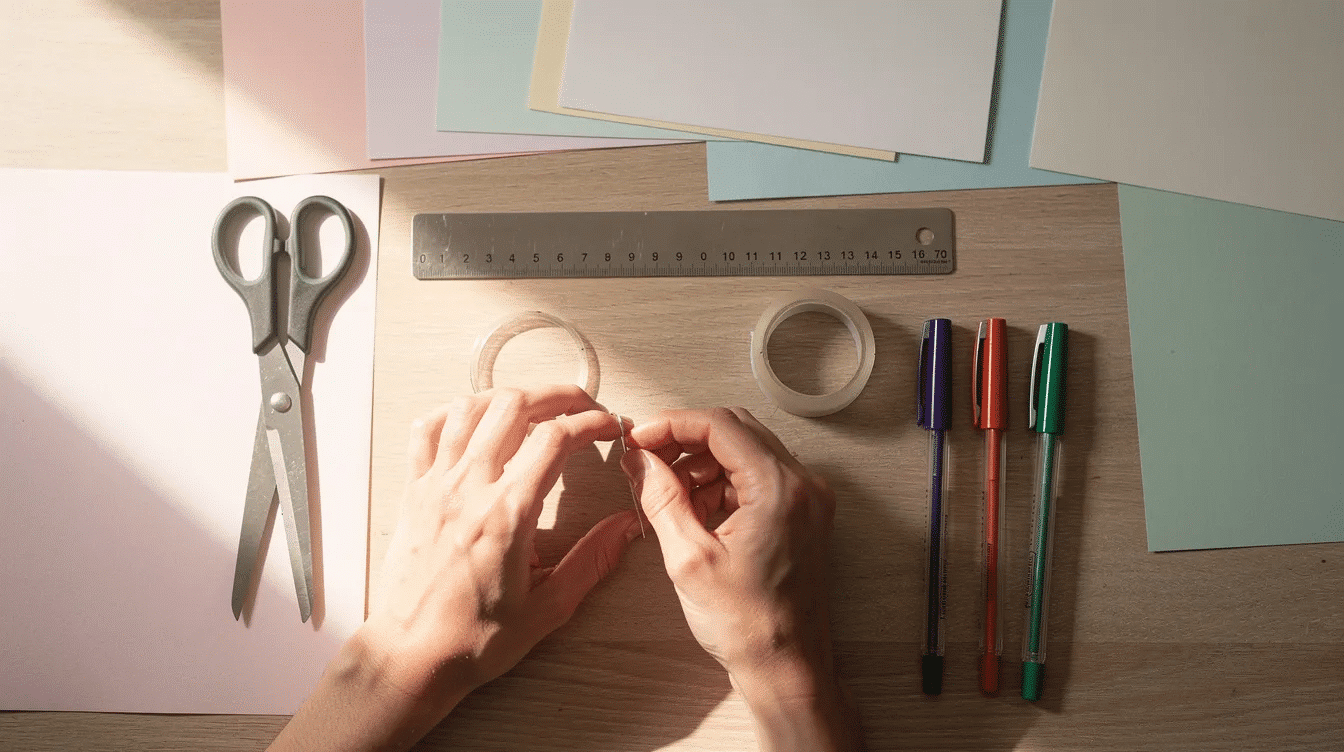
You’ll need:
- 1 sheet of A4 or U.S. Letter printer paper
- scissors, a craft knife, or a paper cutter
- a flat table
- a ruler, if you prefer sharper measurements
- a cutting mat if using a blade
Optional supplies (especially if you like experimenting with different craft paper types and supplies):
- cardstock or construction paper for a cover
- markers, gel pens, stickers, prints, or calligraphy pens for decorating
- washi tape or paper tape for the spine
- needle, heavy thread, twine, ribbon, or string for extra binding
- wrapping paper, wallpaper, or textured fabrics for wrapping a cover
A4 folded this way ends around A7. Letter paper creates pages roughly 2.75 x 4.25 inches. According to general paper weight guidance, 80–100 gsm paper works well for everyday writing, while thicker material is better for covers, and you can even experiment with handmade paper sheets for creative projects.
Step-by-Step: How to Make a Mini Notebook from One Sheet of Paper
This classic instant-book method is the fastest answer to how to make a mini notebook from paper. A mini notebook can be made by folding a piece of paper lengthwise, then widthwise, and creating a W shape before cutting and folding it into a booklet.
- Lay the paper landscape, with the long sides running left to right. Fold it in half lengthwise, crease the line firmly, then unfold.
- Fold the sheet in half widthwise. Crease the middle, then unfold again.
- Fold each short edge toward the center crease. When opened, the sheet should show four equal panels.
- Refold along the long center crease. Starting at the folded bottom edge, cut along the middle crease only halfway across the sheet, stopping at the center.
- Open the sheet flat. You should see a slit in the middle, not loose separate pieces.
- Fold lengthwise again. Hold the two ends and push them toward each other so the slit opens into a diamond shape.
- Keep pushing until the panels collapse into pages. Flatten the booklet, sharpen the edges, and your notebook is ready to write in.
To create a simple notebook, you can fold a single sheet of paper in half and make four folds, resulting in a booklet with pages that can be used for notes or sketches. If you’re teaching this, close-up pictures or a short video help people watch the fold and cut clearly.
Alternative Method: Simple Folded Mini Notebook with Multiple Sheets
If you want a thicker, more traditional notebook, use a stack of sheets instead of one folded sheet, or dedicate one booklet to printable lists, calendars, and organizers you create at home.
- Stack 3–6 sheets of paper, aligning all corners carefully.
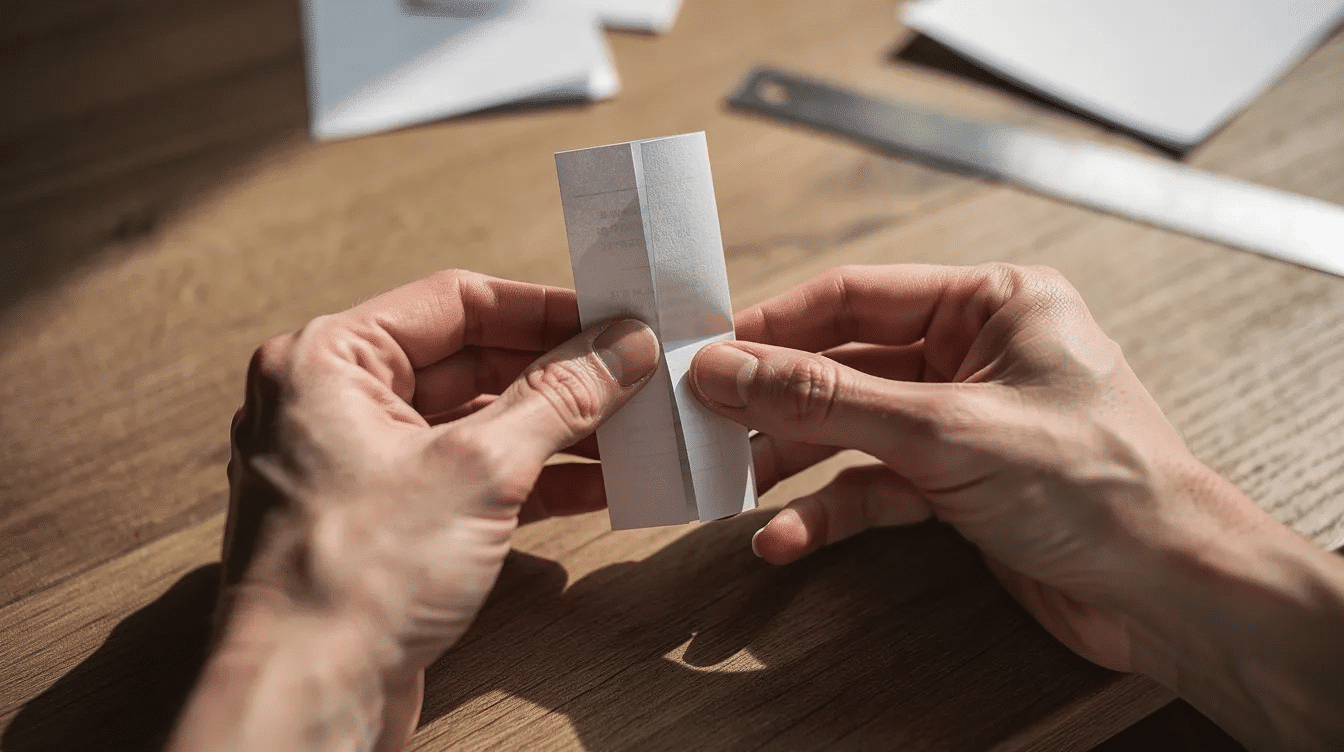
- Fold the stack in half to create a booklet.
- For a smaller notebook, cut A4 in half first, or trim Letter paper to your preferred size.
- Secure the spine with a stapler, stitch, or ribbon.
- Trim uneven edges if needed.
This method gives more pages, but too many sheets make the spine bulky. As a practical rule, 3–6 sheets of standard paper creates about 12–24 pages, depending on how you count each side. To create a thicker, more traditional notebook, multiple pages can be bound together using heavy thread or twine.
You can make a custom notebook in less than 15 minutes by cutting paper to size, designing a cover, stitching the pages together, and optionally using paper tape for the spine.
Adding a Simple Cover to Your Mini Notebook
A cover makes the notebook sturdier and more like something you’ll honestly want to carry every day. You can use a thicker cardstock sheet for a durable cover for your mini notebook.
Here’s the quick method:
- Place the folded pages on cardstock or thin cardboard.
- Trace around them and mark a border 2–3 mm larger on all sides.
- Cut the cover, then fold it in half.
- Slide the pages inside and align the spine.
- Secure it with staples, string, or thread if needed.
Good cover material includes cereal boxes, colored cardstock, scrapbook paper, or thin cardboard. Using wallpaper or wrapping paper to cover a notebook can give it a fresh and unique look, allowing for creative expression. Experimenting with different materials, such as colorful paper or textured fabrics, can enhance the aesthetic appeal of your notebooks.
You can decorate your notebook cover with drawings, prints, or calligraphy to personalize it according to your style, taking cues from inspiring notebook cover designs.
Binding Options: From No-Tools to Hole Punch and Ribbon
The single-sheet instant notebook doesn’t need binding, but multi-sheet diy notebooks usually last longer with one of these methods.
Binding method | Best for | Quick directions |
|---|---|---|
No binding | One-sheet booklets | Press each fold firmly and keep the pages tight. |
Stapler | Fast school projects | Add two staples along the spine, about 1.5–2 cm from the top and bottom edge. |
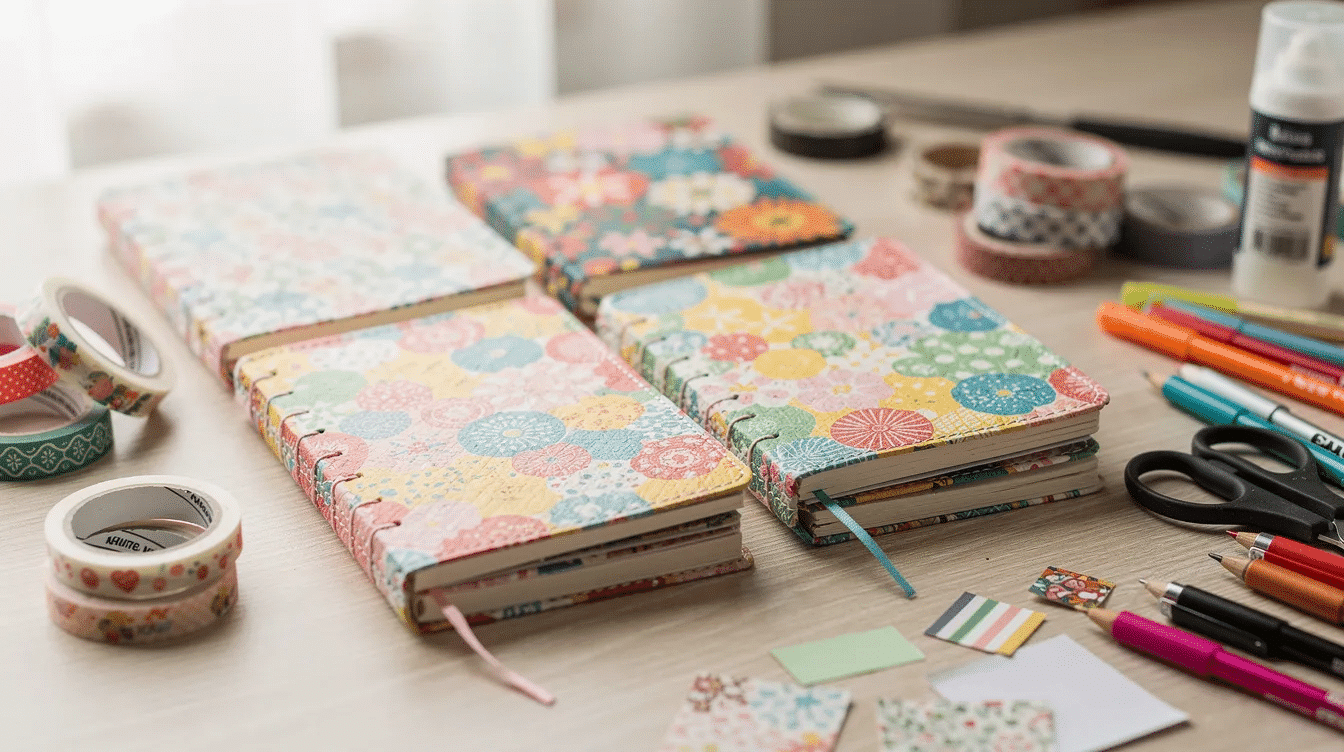
Punch holes | Decorative notebooks | Punch holes along the spine and tie ribbon, yarn, or string through them. |
Simple stitch | Stronger handmade books | Use a needle and thread to sew through three holes. |
For a three-hole stitch, pierce a first hole near the top, a second hole in the center, and a third hole near the bottom. Start inside the center, sew out and back through the holes, then tie a double knot with a small tail inside the middle page to secure it. |
If you don’t have a hole punch, carefully pierce holes with an awl or needle on a cutting mat.
Decorating and Using Your DIY Mini Notebook
This is the fun part of the project. Once the shape is finished, decorations turn plain paper into something cute and personal.
Try these ideas (and mix them with other cute paper craft projects):
- Add a hand-lettered title, such as “Ideas – June 2026.”
- Use washi tape on the spine.
- Glue on collage pieces from magazines.
- Draw tiny borders around the pages.
- Add a sign, symbol, or color code for each notebook.
- Print a small pattern and glue it to the front.
- Use blank, lined, dotted, graph, or colorful paper inside.
Use your mini notebook for:
- quick notes
- a pocket sketchbook
- vocabulary words
- habit tracking
- grocery lists
- project plans
- travel memories
- a bunch of small creative ideas
Of course, you can repeat the method with different paper styles until you have a full set.
Tips, Variations, and Safety Notes
Small changes affect size, thickness, and durability.
- For tiny notebooks, cut the paper in half before folding.
- For easier writing, leave the sheet full-size.
- For kids or beginners, start with 3–4 sheets in the multi-sheet method.
- For daily use, add a thick cover and reinforce the spine.
- Reuse misprints, flyers, or one-sided pages so the blank side becomes useful again.
Safety matters. Keep scissors and craft knives pointed away from fingers, and supervise children during the cutting step. A cutting mat protects the table and helps create cleaner edges.
The broader folding-book idea has a long history in booklet and concertina formats; if you like the craft side, the folding book tradition is worth exploring.
FAQ
How many pages can my mini notebook have before it gets too thick?
A single-sheet instant mini notebook usually has 8 small pages, or 16 sides, which is ideal for short notes. For a folded multi-sheet version, 3–6 sheets of standard printer paper is a good balance; more than that can make the spine hard to staple or punch cleanly.
Can I make a stronger notebook that lasts longer in my bag?
Yes. Add a cardstock or thin cardboard cover, then staple or sew along the spine. A strip of washi tape, fabric tape, or paper tape over the spine also helps prevent tearing in pockets and bags.
Do I need a hole punch, or can I bind without one?
You do not need a hole punch for the instant-book method. If you want ribbon or string binding without a punch, carefully pierce the spine with a needle, awl, or sharp scissor tip while protecting your work surface and fingers.
What kind of paper works best for making notebooks?
Standard 80–100 gsm printer paper folds well and works for most pens. You can also use colorful paper, lined paper, graph paper, recycled sheets, or dotted paper, as long as the paper can fold and cut cleanly.
Can kids make these mini notebooks on their own?
Older kids around 8+ can usually follow the folding instructions after a demonstration. Younger children may need an adult to make the center cut first, then they can handle folding, decorating, and adding stickers.
If you try this project, take photos of your finished notebook and leave a comment with your favorite variation.