
Learning how to make a journal from scratch is a rewarding, hands-on project: you choose the paper, size, binding, cover, and personality. This tutorial walks you through a simple journal first, then gives you junk journal ideas, upcycled variations, and finishing touches for handmade journals you’ll actually use.
Key Takeaways
- You can make your own journal at home with a paper trimmer, pencil, needle, thread, glue, and a little patience.
- Choose a classic hard-cover diy journal or a relaxed junk journal made from recycled stuff like packaging, brochures, and old book pages.
- Mix plain paper, graph paper, card stock, and watercolor paper to create inside pages for writing, planning, drawings, or paint.
- The best step for a clean result is consistent folding, holes, sewing tension, and spine alignment.
- Finally, you’ll have one or more notebooks ready for daily writing, gift giving, or a fun weekend project.
Why Make Your Own Journal?
In 2026, handmade journals are popular because they are personal, sustainable, and often cheaper than premium store-bought notebooks. You can create a 90-day habit tracker, summer travel journal, reading log, or renovation project book with exactly the pages you need.
Mass-produced notebooks rarely let you place graph paper for budgeting, plain paper for sketches, and thick card stock for dividers in one place. A junk journal goes further, using collage, vintage ephemera, a cereal box, textured paper, or old book covers for a creative upcycling style.
This blog post starts with a simple stitched journal, then shows ways to change things for your own journal.
Gathering Your Tools and Materials
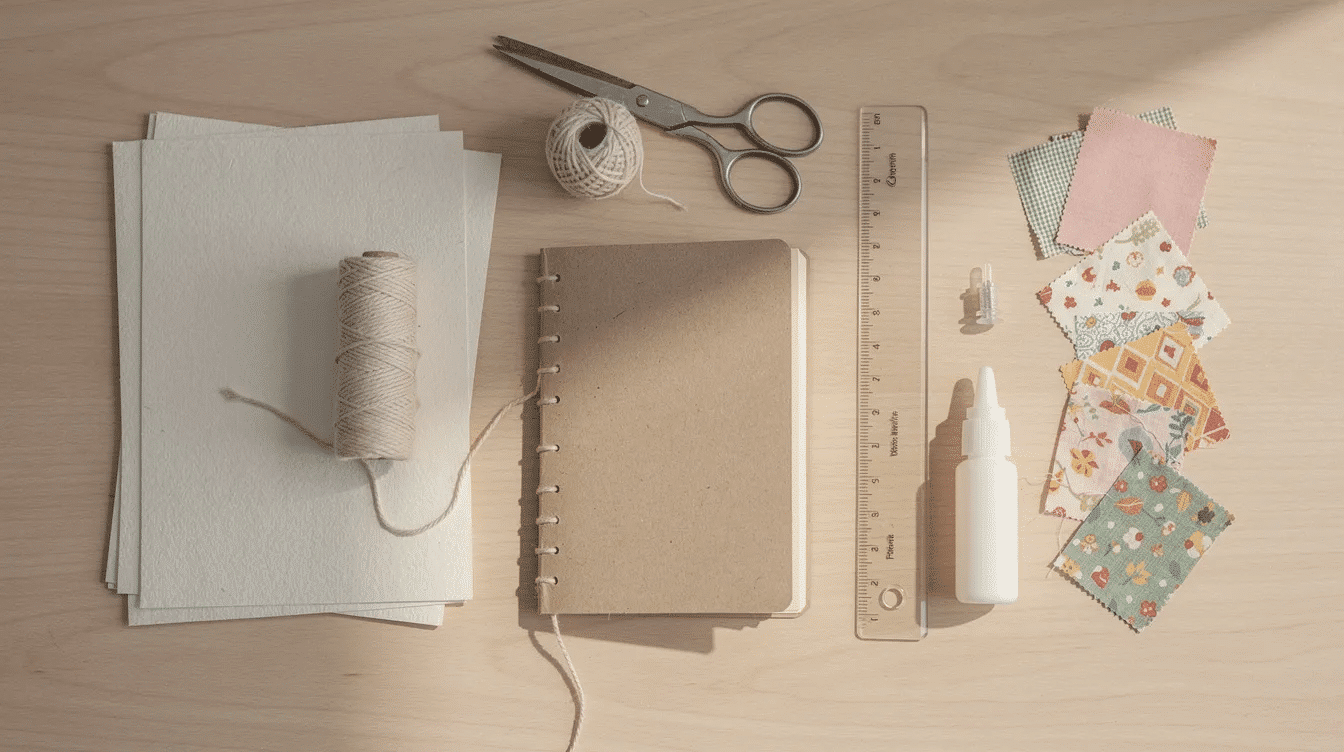
Having every material on your table before you begin makes the course of the project smoother.
- Tools: metal ruler, pencil, paper trimmer, scissors, craft knife, cutting mat, bone folder, awl, and a thick bookbinding needle or a blunt tapestry needle, which is commonly used in bookbinding.
- Adhesives: PVA glue is a common adhesive used in bookbinding; white craft glue, glue stick, and double-sided tape also work.
- Inside pages: 80–100 gsm printer paper, lined paper for writing journals, graph paper for trackers, and plain paper for sketching.
- Art pages: watercolor paper is recommended for art journals; use it sparingly because it is thick.
- Cover supplies: scrapbook paper, card stock, chipboard, fabric, faux leather, book cloth, or leather — all among the best types of paper for craft.
- Extras: ribbon, elastic, twine, envelopes, pocket pieces, washi tape, and small labels to complement top craft paper supplies for creative projects.
To create sharp creases in bookbinding, a bone folder is utilized.
Planning Your Journal Layout and Size
Before cutting anything, decide what the journal is for: daily notes, junk journaling, planning, or mixed media.
- A5 is practical because it is about half of A4 or Letter size.
- A 5 x 7 inch format works well for collage-heavy junk journal pages.
- Books are made by nesting folded sheets of paper into small booklets called signatures.
- One signature is often 4–6 sheets folded in half, giving 16–24 pages.
- Start with 3 signatures for a beginner journal; use 1–2 for a mini book.
- Paper grain should run parallel to the spine in bookbinding to allow pages to turn easily.
Make a quick plan: graph paper in one group, plain paper in another, and card stock dividers where you want tabs or photos.
Choosing and Preparing Your Papers
Mixing paper types is what makes a handmade journal more useful than a standard notebook, especially if you experiment with handmade paper sheets for creative projects.
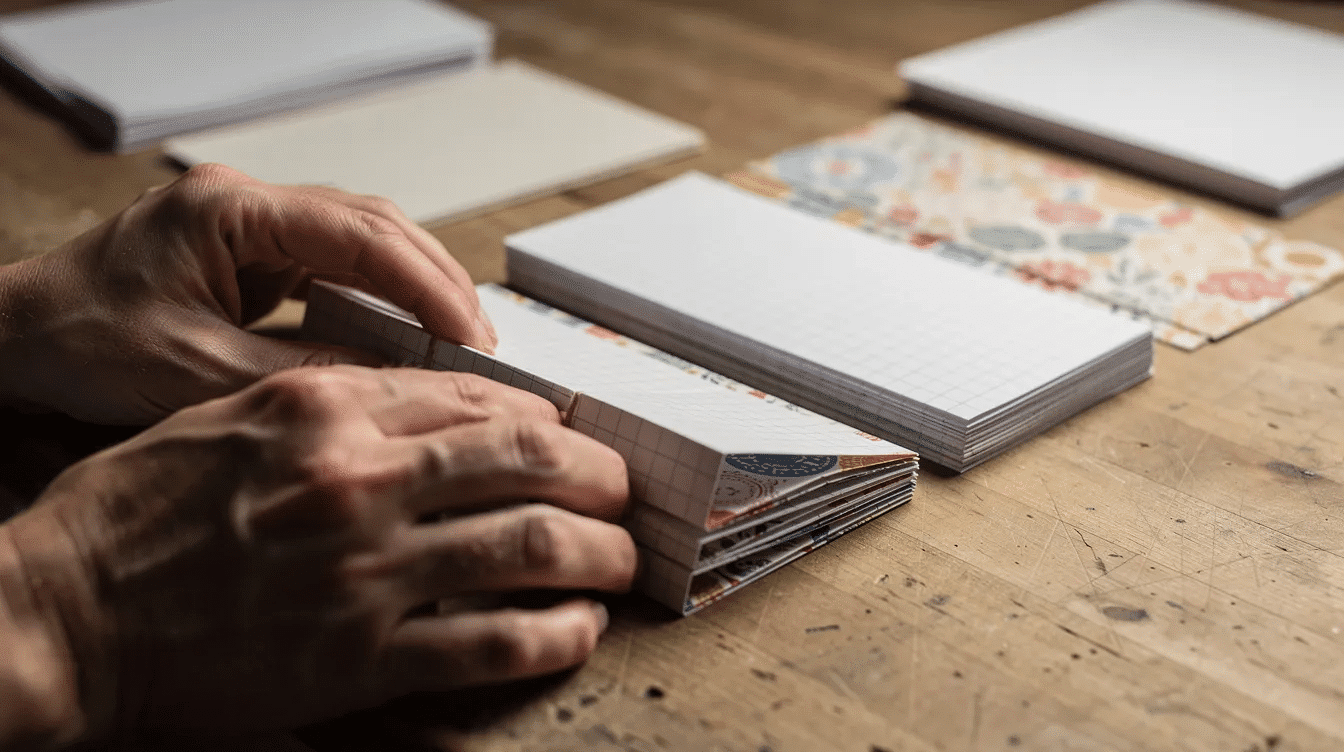
- Cut each sheet to double the final journal width.
- Stack 4–6 sheets, align the edge, then fold in half.
- Press each fold with the bone folder.
- Repeat until you have your signatures.
- Add occasional card stock for dividers, tip-ins, or heavier glue work.
You can print dotted, lined, or graph templates at home, along with creative and useful things to print on paper. Note the margins first so trimming does not cut off lines. If anything looks wrong, adjust the file and print one test page before printing the full collection.
Marking and Punching Sewing Holes
Marking and punching holes along the spine fold is essential for sewing signatures together in bookbinding.
- Clip each signature so pages do not shift.
- Make a card stock template strip.
- Mark 3, 5, or 7 holes along the fold, at least 1.5 cm from top and bottom.
- Place the open signature on an old magazine.
- Punch straight down with an awl, push pin, or thick needle.
Consistent holes make the binding look cleaner and help the book open smoothly, and exploring Simply Paper Crafts can give you more ideas for paper-based projects to try next.
Stitching the Signatures Together
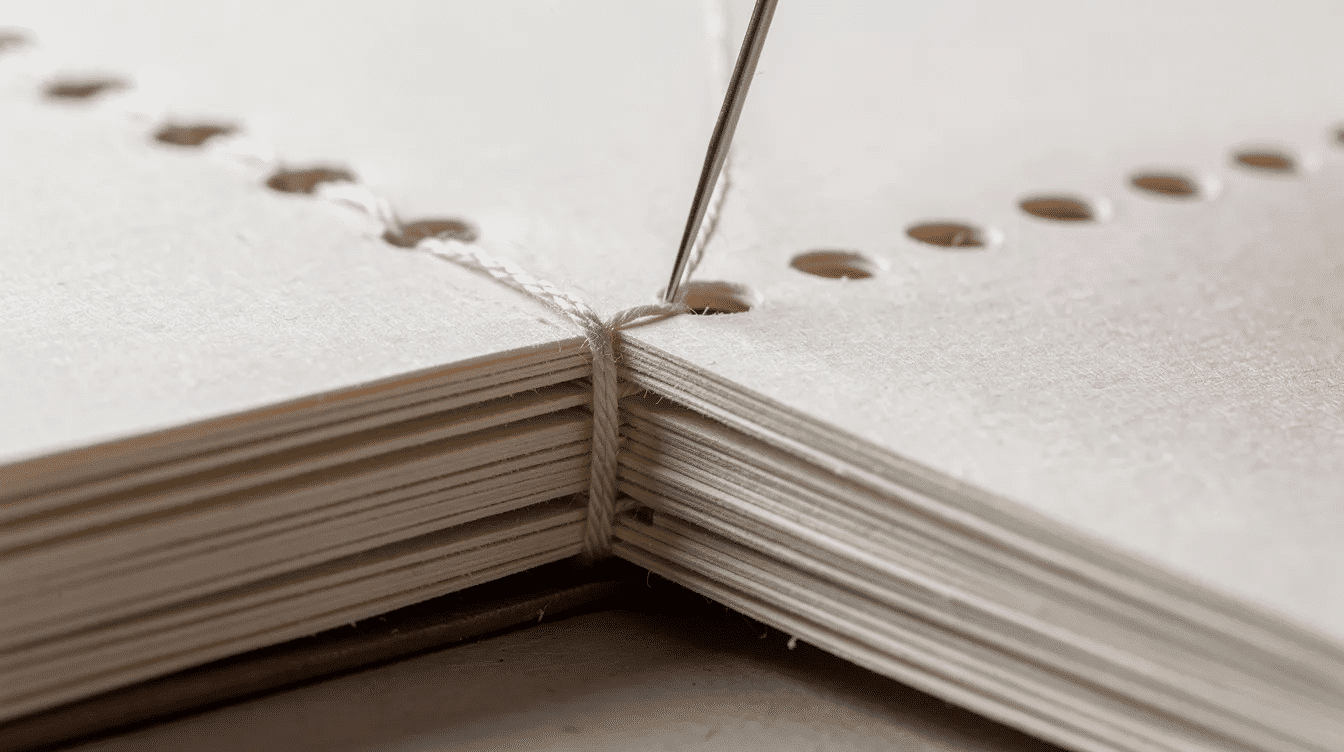
Basic hand binding is less intimidating than it sounds. The 3-hole pamphlet stitch is one of the easiest and most popular methods for binding journal pages together, while the 5-hole pamphlet stitch is considered more secure by some crafters.
- Choose waxed linen thread, embroidery floss, or strong button thread.
- Cut thread 3–4 times the journal height.
- Start through the center hole from inside the signature.
- Sew toward one end, back through the middle, then toward the other end.
- Tie the knot inside, snug but not tight enough to buckle pages.
A variety of binding methods and techniques can be chosen for personalized journals, including saddle-stitch, Coptic stitch, or disc-binding. The coptic stitch binding is a durable and classic handmade style that allows a book to lay completely flat when opened. Elastic binding methods allow for flexibility in moving pages around within a journal, making it a popular choice for those who want to customize their layout. Book binding rings can be used to join journal pages, providing an easy way to add or remove pages as needed, which is especially useful for junk journals.
Creating a Sturdy Journal Cover
You can make a flexible soft cover or a hard cover that feels like a traditional book. Some common materials for a journal cover include decorative paper, book cloth, fabric, or leather.
For a hard cover:
- Cut two boards slightly larger than the pages.
- Cut one spine piece matching the stacked signature thickness.
- Lay boards on fabric or decorative paper with 3–5 mm gaps beside the spine.
- Glue boards down, trim corners, then fold and glue edges inward.
You can create a journal cover from cereal boxes or other packaging by trimming the box to size and reinforcing the spine with cardstock, or borrow ideas from creative cardboard crafts projects. For junk journaling, a vintage collage cover can look awesome.
Attaching the Text Block to the Cover
This is where the sewn pages become a complete journal.
- Cut two folded end papers from card stock or decorative paper.
- Glue one side of each end paper to the first and last page.
- Brush a thin layer of PVA glue onto the outside end papers.
- Set the text block into the cover with the spine aligned.
- Close the journal and press it under a heavy book for several hours.
Junk journals with elastic spines, rings, or disc-binding can skip this glue step and let you move pages later.
Decorating Inside Pages and Adding Extras
Now the simple journal becomes your own journal.
- Add a ribbon bookmark by gluing one end near the spine.
- Create a pocket from card stock: fold side and bottom flaps, then glue it inside the back cover.
- Add washi tape, tabs, labels, drawings, or small collage clusters.
- Try junk journal ideas like receipts, tickets, envelopes, 2026 calendar scraps, tea-dyed paper, and brochures, or even cute paper craft projects for fun DIY sessions.
- Creating an index or visual indices can help categorize entries in a journal.
Leave some inside pages blank so you still have room to write.
Junk Journal Variations and Upcycled Ideas
Once you know the basics, a junk journal can be loose, layered, and experimental.
- Using recycled materials in journaling can enhance creativity and sustainability, featuring items like old book pages or textured paper, which you can also turn into creative paper bead jewelry projects.
- Fold envelopes, paper bags, or bubble mailers in half for instant covers.
- Using envelopes or bubble mailers is a simple way to create a journal cover; you can fold them in half and decorate them as desired.
- Upcycling old books into journal covers involves gutting the book to leave an empty cover, which can then be decorated and lined with cardstock or pretty papers.
- Make tiny notebooks from leftover strips of paper and card stock.
For more inspiration, watch videos on youtube, browse a craft site, explore inspiring notebook cover designs, or read comments and more comments under a helpful tutorial.
Caring for and Using Your Handmade Journals
Store finished journals upright or flat, away from damp and direct sun. Use pens that do not bleed, especially on layered pages. Glue bulky items near the outer edge so the spine is not strained.
A small group of handmade journals can serve different needs: one for meal planning, one for study notes, one for junk journaling, and one for free writing each week. If you share the project on your blog, add links to the post so others can follow along.
FAQ
How long does it take to make a journal from scratch?
A simple stitched A5 diy journal with a soft card stock cover usually takes 1–2 hours. A hard-cover journal may take an afternoon because glue needs drying time. A decorated junk journal can grow over days or weeks.
What is the best paper weight for inside pages?
Use 80–100 gsm plain paper or graph paper for everyday writing. Use 120–160 gsm card stock only for dividers, tip-ins, and art pages so the spine does not become too bulky.
Do I need special bookbinding tools to get started?
No. You can begin with scissors, a ruler, needle, thread, and household glue. Upgrades like a paper trimmer, awl, and bone folder make the finish neater over time.
Can I print my own lined or graph paper at home?
Yes. Create or download a template, print one test sheet, check margins, then trim and fold. Mixing printed graph paper with plain paper is great for planners and study notebooks.
How many pages should my first handmade journal have?
Start with 3 signatures of 4 sheets each. That creates 48 leaves, or 96 sides, which feels substantial without making sewing and binding overwhelming.