
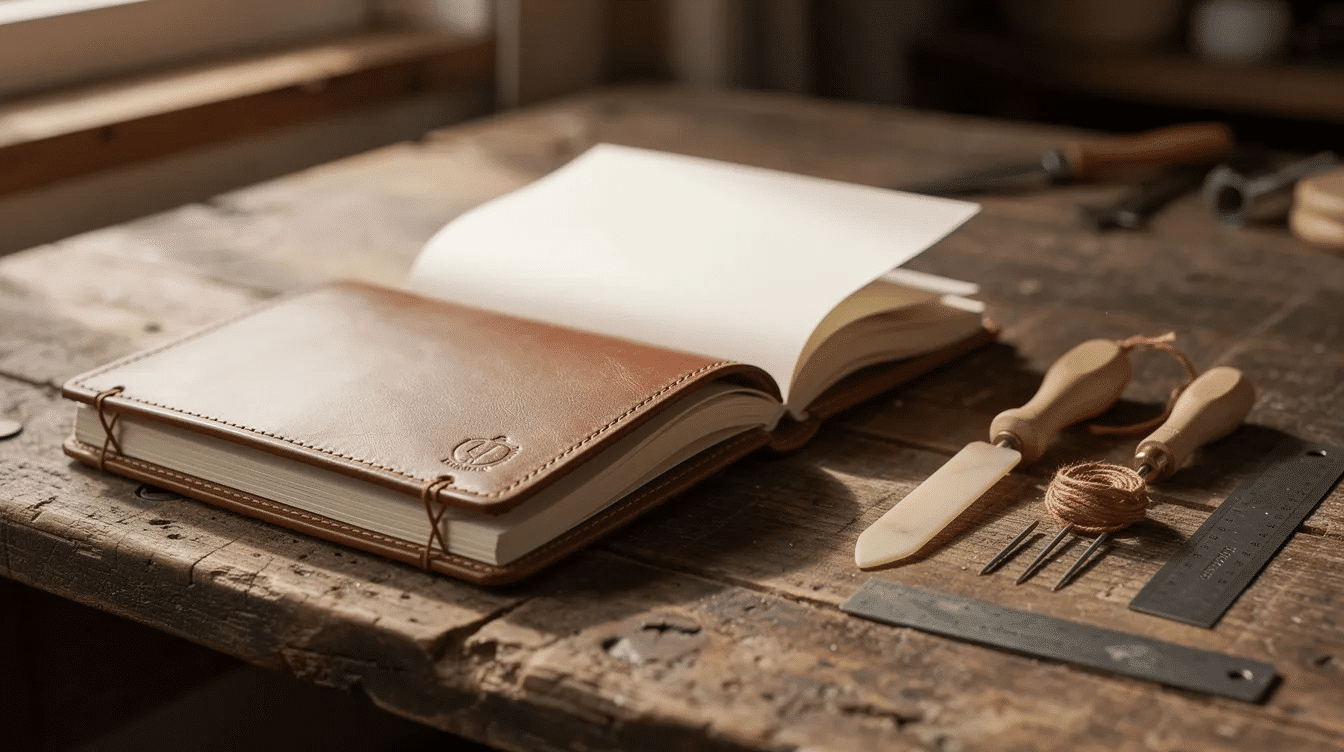
Hand binding a notebook is a rewarding project that requires no prior experience. In this hand bound notebook tutorial for beginners, you’ll turn loose paper into a small book with a cover, visible stitching, and pages that open neatly for writing, drawings, or everyday notes.
Key Takeaways
- This is a simple book binding project using basic materials: paper, card stock, a ruler, needle, and binding thread.
- You’ll learn how to fold pages into signatures, punch holes accurately, and sew by hand instead of using a sewing machine.
- The process helps you bind a sturdy notebook that opens fairly flat without making the pages stick together.
- Low-cost supplies like copy paper, holiday cards, or a cereal box cover work well for a first attempt.
- Small marks, uneven corners, and visible knot ends are normal-and part of the fun.
What You’ll Make and How Long It Takes
You’ll create an A5-style hand bound notebook, around 40–80 pages, using a pamphlet or saddle stitch method. The saddle stitch binding technique involves using an odd number of holes for stitching, which helps secure the pages effectively and gives a clean finish.
Plan on 60–90 minutes for your first try, including folding, marking, punching holes, and stitching with thread. The finished notebook has a soft cover, visible stitches on the spine, and inside pages that lie fairly flat.
This is not a complex hardback book, but it teaches real book binding fundamentals. Compared with machine-made notebooks, the result feels more personal and customizable-just what a handmade blog project should be.
Essential Materials and Tools
Gather everything before starting so you do not have to wait mid-process.
You’ll need:
- 10–20 sheets of 8.5” x 11” or A4 paper
- 1 sheet of card stock for the cover
- Strong binding thread, embroidery floss, or sewing thread
- Needle, scissors, pencil, and ruler
- Awl, thick needle, or pushpin to punch holes
- Binder clips to hold layers steady
- Optional bone folder, white glue, medical gauze, double-sided tape, or glue stick
An awl is a sharp, pointed tool used in bookbinding to punch holes. Common tools needed for creating hand-bound notebooks include scissors, needles, an awl for making holes, and measuring tools like a ruler.
Waxed linen thread is recommended for bookbinding as it helps to prevent tangling and slipping. If you use embroidery floss, wax it for added durability and ease of stitching. Light-colored thread that contrasts with the cover makes it easier to notice each stitch.
For hand-bound notebooks, you can use various types of paper, such as bond paper, cotton rag paper, or even upcycled materials like cereal boxes for covers.
Planning Your Notebook: Size, Page Count, and Layout
Planning prevents a bunch of small problems later. Folding 8.5” x 11” or A4 sheets in half creates an A5-style notebook, about 5.5” x 8.25”.
Each folded sheet creates 4 pages, so:
Sheets | Finished pages |
|---|---|
10 | 40 |
15 | 60 |
20 | 80 |
For beginners, 10–15 sheets is a better plan because the spine will not become too thick. The grain of the paper should run parallel to the spine to avoid a lumpy appearance in the finished notebook. |
Choose portrait or landscape before you fold. You can create blank pages for sketching, add light pencil lines for writing, or fill the notebook with alternating plain and colored paper.
Folding Sheets into Signatures
Clean folds make the notebook look more professional. Fold each sheet in half, align the corners, then run a bone folder, ruler edge, or spoon handle down the fold.
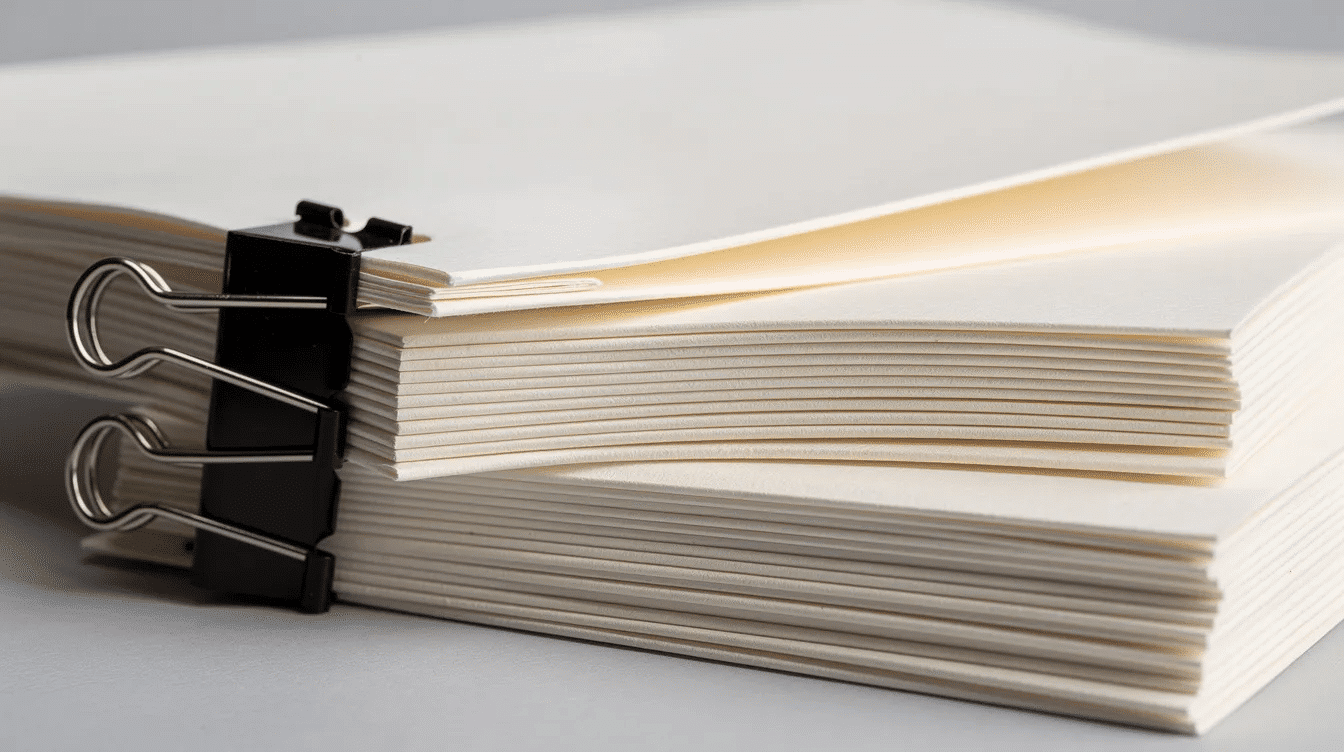
A signature is a group of folded sheets nested together. To bind a notebook, start by folding your pages into signatures, typically grouping 4 sheets (8 pages) per signature for a flat finish. For this tutorial, 3–5 folded sheets per signature is comfortable.
Keep all folded spines facing the same direction. Tap the stack on a flat surface so the edges sit flush. Using binder clips while binding keeps the pages secure and prevents them from sliding. Clip each signature near the open edges before marking.
Marking and Punching Holes in the Spine Fold
Consistent holes create straight stitching and even tension. Make a guide from one spare folded sheet. Use a ruler and pencil to mark 3–5 points along the fold.
A simple 3-hole layout:
- One mark near one end, about 1 cm from the top
- One mark in the center
- One mark about 1 cm from the bottom
For extra strength, use 5 holes. Spacing holes should be 1 to 2 inches apart when making a template for hole punching.
Place the guide inside each signature, align the middle folds, and transfer the marks lightly. Rest the signature on a folded towel or cork mat, then push the awl straight through the fold. Keep the holes vertical and centered so the paper does not tear or make pages stick at the spine.
Preparing and Managing the Binding Thread
Good thread management prevents tangles. Thread for bookbinding should be about 3 times the height of the notebook spine. A simple rule is 3–4 times the notebook height for a single-signature pamphlet stitch.
Run the thread over beeswax or a candle if it is not pre-waxed. To bind a notebook, you will need sewing thread, which can be waxed for easier stitching, and materials like medical gauze or double-sided tape for reinforcing the spine.
Thread the needle, then tie a small knot at the free end. If long thread feels difficult, use a shorter length and rejoin with a tight knot. Linen, embroidery floss, and strong polyester thread all work for this beginner method.
Stitching the Notebook: Simple Pamphlet / Saddle Stitch
Open the signature at the center with the inside facing up. Start at the middle hole.
Basic path:
- Sew from inside through the middle hole to the outside.
- Move to the top hole and sew back inside.
- Sew down to the bottom hole and go outside again.
- Return to the middle hole.
The thread should form a straight line along the spine outside and small loops inside. Keep tension firm, but not so tight that the needle cuts the paper.
Leave a short tail inside at the starting middle hole. When you return to the middle, tie a double knot around the long working thread and trim the rest.
When stitching the signatures together, ensure that the thread connects corresponding holes in each signature to maintain alignment and strength. For multiple signatures, repeat the pattern and link each new signature to the previous stitches, but keep this first tutorial simple.
Reinforcing the Spine and Preventing Sticky Pages
For 10–15 sheets, stitching is usually enough. Glue is optional.
If you want reinforcement, apply a very thin line of white glue to the outside spine only. After stitching, apply gauze over the spine and use white glue to secure it, ensuring not to use too much glue to avoid wrinkling the pages.
Press the notebook between two heavy books for 20–30 minutes. Place scrap paper beside the spine to catch drips. Check that no glue has seeped inside, then flex the pages gently so they move freely and do not stick together.
Too much glue can warp pages, make pages stick, and stop the notebook from opening flat. Conservation guides also recommend stable storage away from direct sunlight and high humidity for longer-lasting paper items.
Making and Attaching a Simple Cover
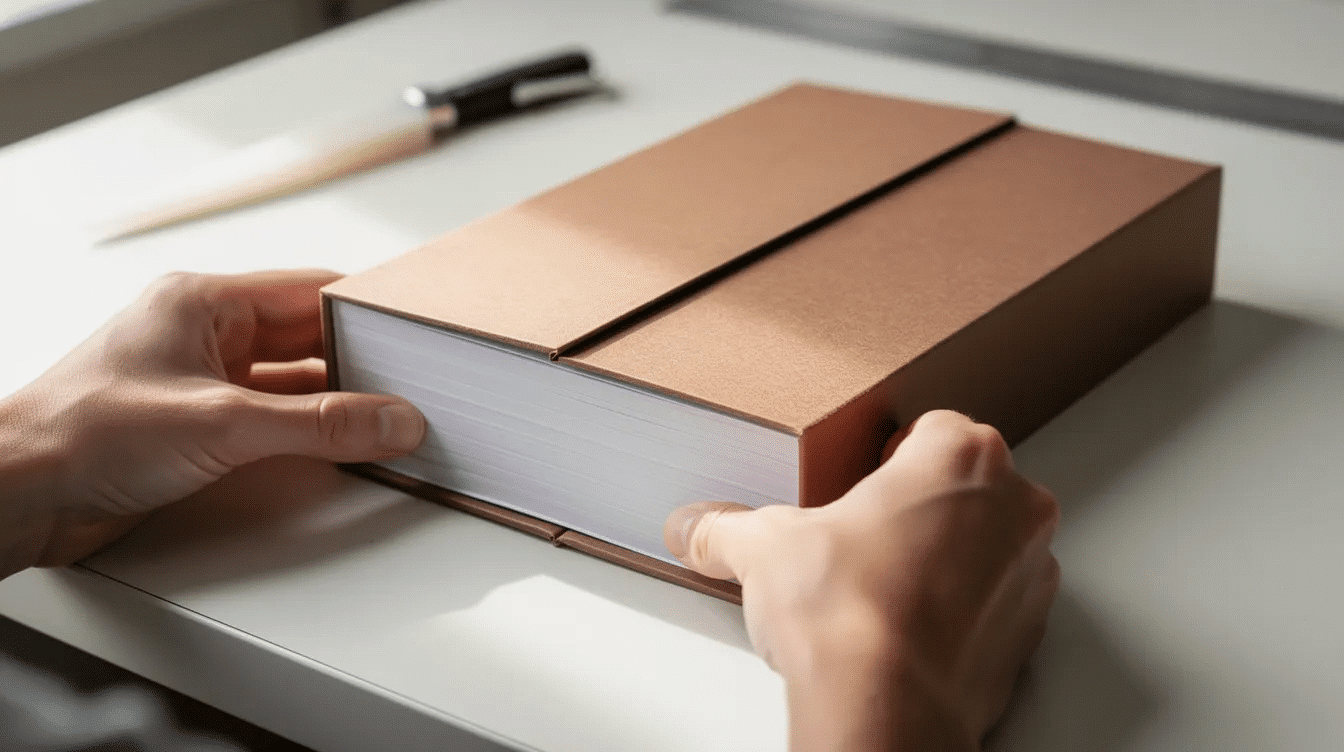
A cover protects the pages and gives the book a finished look, and inspiring notebook cover designs can also enhance how it feels to write in and carry your handmade book. Cut card stock slightly larger than the folded pages, leaving 3–5 mm extra around the edges.
Fold the cover in half, keeping the front and back cover the same size. Place the stitched pages inside and match the page fold with the cover spine.
You have two options:
- Sew the cover with the pages using the same holes.
- Use a glue stick to attach the outermost page lightly to the cover.
Press under a heavy book for at least 30 minutes so everything dries crisp.
Japanese book binding techniques, such as the Noble binding, allow for creative variations in materials and styles, making each notebook unique. That is a great future idea once you understand this basic process.
Finishing Touches and Personalization Ideas
Now decorate the notebook. Add a title, date stamp, washi tape, or a pocket on the inside back cover. A fabric front can add a surprising and lovely feature, such as a floral design.
Decoupage is a popular technique for decorating notebook covers, allowing creative designs using materials like tea bag covers or magazine pages. Embellishing the cover with cut shapes or fabric can create unique designs that showcase the materials underneath, enhancing the overall aesthetic of the notebook.
You can also reuse holiday cards, trim uneven edges with scissors, round the corners, or stick in a ribbon bookmark, or fill your notebook with creative and useful printables like calendars, habit trackers, or to‑do lists. Take a photo, share it on your website, blog, or twitter, and make a note of what you would change in the near future.
Before you finish, flip through every sheet. Check that stitches sit flat, tails are trimmed, and nothing catches. My suggestion: make a second notebook right away while the steps are fresh. The possibilities are awesome.
FAQ
Do I really need special binding thread, or can I use regular sewing thread?
Dedicated binding thread is ideal because it is strong and less stretchy. Regular polyester sewing thread or split embroidery floss works for a first book binding project. If it feels thin, double it and pull gently.
Can I use a sewing machine instead of hand stitching the spine?
A sewing machine can technically sew through a small paper stack, but this tutorial is designed for safe hand stitching. A machine may leave large holes, uneven tension, or damage itself if the stack is thick.
How do I stop the pages from sticking together if I use glue on the spine?
Use only a small amount of glue directly on the exposed spine. Do not push glue deep between pages. Insert scrap paper while drying, then remove it and flex the notebook open and closed.
What should I do if my holes are crooked or don’t line up perfectly?
Small misalignments are normal. Keep sewing through the same set of holes, even if the row slants. Next time, use a cleaner guide and stronger support from binder clips.
How many pages can I bind with this beginner method before it gets too thick?
For a single-signature pamphlet stitch, 10–15 sheets, or 40–60 pages, is comfortable. Thicker notebooks need multiple signatures and more advanced stitching methods.