
Key Takeaways
- You can transform a plain notebook cover with paper, washi tape, mod podge, and basic tools in under an hour.
- This tutorial covers the front cover and inside cover so the whole notebook feels coordinated.
- Try a magazine collage, scrapbook paper wrap, washi tape plaid, or a minimal title label.
- Seal the design with Mod Podge, clear varnish, or contact paper for better durability.
- Finish with stickers, ribbon, tabs, tags, and other accessories to personalize your journal.
Introduction: Why Decorate a Notebook Cover with Paper?
Learning how to decorate a notebook cover with paper is a quick and fun way to upgrade a plain journal, school planner, or cheap composition book. A decorated cover can make a 2026 diary feel special, turn a subject notebook into something you actually want to open, or create a project planner that fits your desk.
Paper is affordable and easy to find: old magazines from 2020–2026, scrapbook pads, gift wrap, vintage book pages, and saved scraps all work. For more ideas, browse paper crafting tutorials and inspiration to spark new cover concepts. This guide uses scissors, glue, tape, and Mod Podge, with optional washi tape for fast decoration. Most steps are no-sew and kid-friendly; if you want, embroidered lettering can add a personal touch to notebook covers, using simple stitches to create names or meaningful words.
Supplies You’ll Need
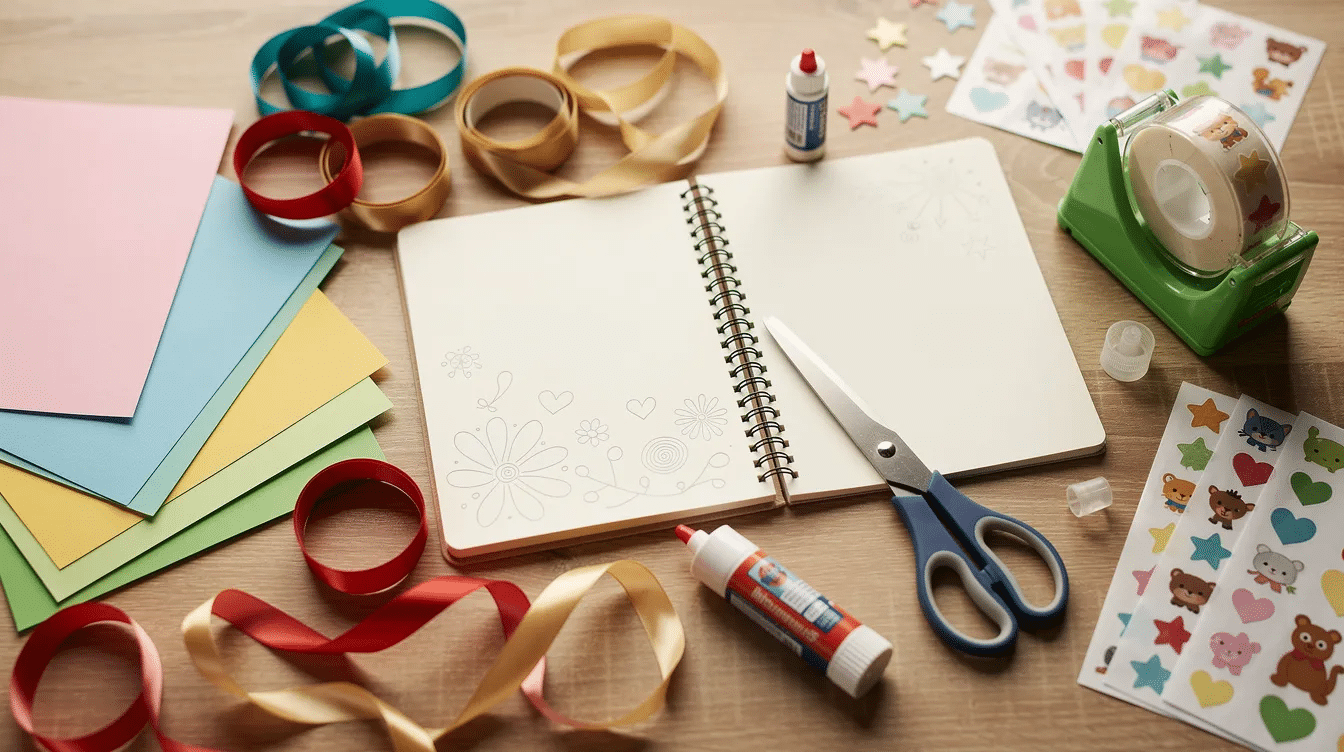
You can decorate classic black composition notebooks, A5 dotted journals, wire-bound notebooks, and school spirals with cardboard covers.
Gather: if you’re building up your stash, make sure you have top craft paper supplies for creative projects on hand.
- Paper: scrapbook paper, scrapbook cardstock, handmade paper sheets, vintage book pages, origami paper, magazine cutouts, printed photos, kraft paper, and gift wrap.
- Adhesives: Mod Podge, glue stick, dry tape runner, double-sided tape, or craft glue.
- Extras: washi tape, stickers, die-cut shapes, labels, markers, ribbon, glitter, paper tags, and other accessories.
- Tools: scissors, craft knife, cutting mat, ruler, pencil, and an old gift card to press bubbles flat.
Common supplies for decorating notebook covers include stickers, markers, washi tape, and various types of paper, which can be combined to create personalized designs.
Mod Podge is a popular adhesive used for decoupage, allowing users to attach various materials like paper and fabric to notebook covers while providing a protective finish. Mod Podge can be used to adhere cut pieces of paper or other materials to a notebook cover, creating a layered design that dries clear. Some people search for modge podge or modge, but the common product name is Mod Podge.
For thin papers, using a dry tape runner or a high-quality craft glue stick is recommended to prevent warping. Before you glue, slide wax paper or scrap paper between the cover and the first page.
Plan Your Design Before You Glue
Start with a theme. You might choose vintage travel, flowers, minimalist black-and-white, polka dots, academic icons, or a bright 90s collage. If you love an aged look, incorporate vintage paper craft ideas using old ephemera. Layering different paper types and textures can create visually interesting notebook covers, so pair glossy magazine pieces with matte cardstock or kraft paper.
Decide whether you want the entire cover wrapped in one sheet or a collage made from many shapes. Take account of the spine, elastic bands, closure straps, and every corner before cutting.
Lay your pieces on the front cover and inside cover without glue. Check placement, color balance, and whether you left enough space for letters such as “Biology 2026,” “Daily Journal,” or one bold word like “Ideas.” If you decided on a picture or quote, draw a light pencil line where it should sit.
Method 1: Collage Notebook Cover with Mod Podge
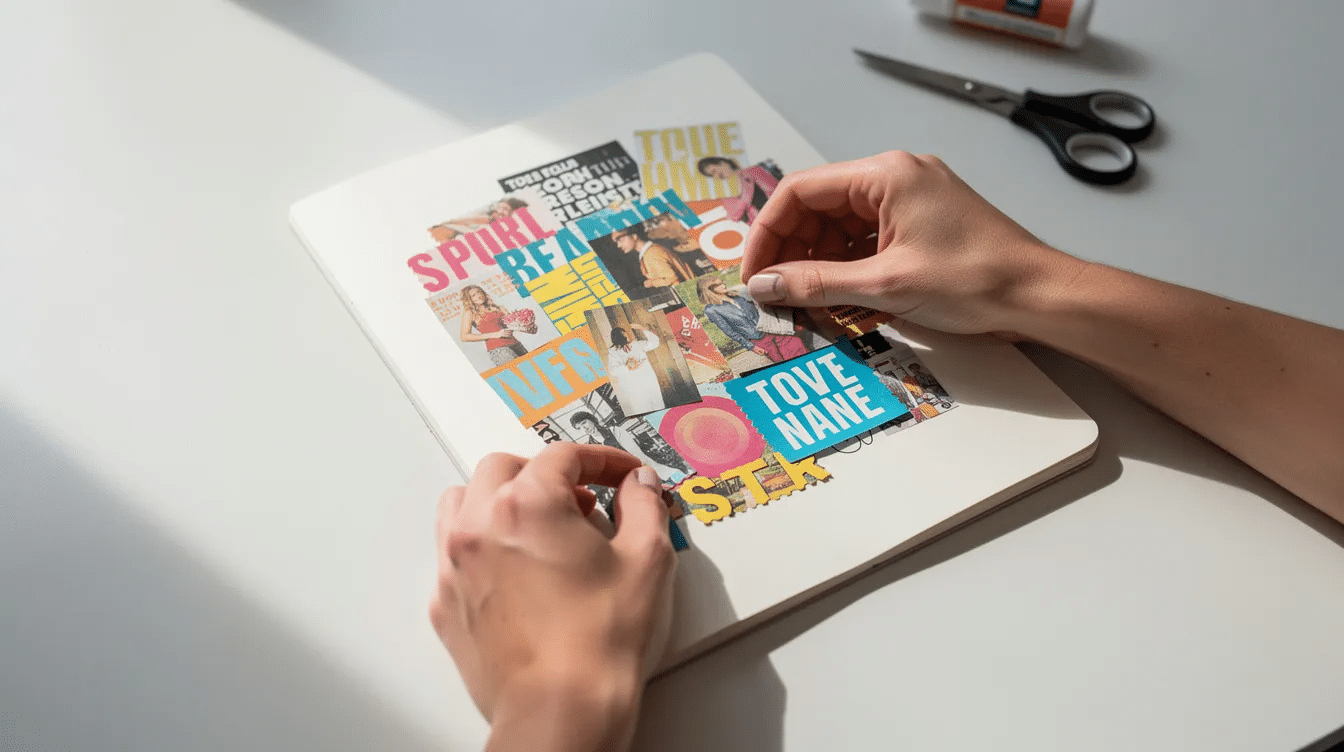
This method is flexible and forgiving. Cutting up old magazines and arranging the pieces in a desired pattern is a creative way to decorate notebook covers.
- Cut or tear paper into shapes, city names, dates, flowers, and inspiring words; you can pull motifs from cute and easy paper craft ideas if you need inspiration.
- Brush a thin coat of Mod Podge onto a small section of the notebook cover.
- Press one piece down and smooth from the center outward with your fingers or a card.
- Overlap edges so no cardboard shows.
- Let pieces hang over the sides; trim them after drying.
- Add a second sealing coat over the entire collage.
A thin layer works better than a thick one. It helps the paper adhere without wrinkles and gives the surface a smooth finish. Let the cover dry flat for several hours or overnight before using the notebook.
Method 2: Full Paper Wrap for a Clean, Minimal Look
A full wrap is a great idea if you want a neat book cover that looks store-bought, similar to many inspiring notebook cover designs you see in shops.
Measure the front cover, spine, and back cover. Add 2–3 cm, about 1 in, around all edges so the paper can fold inside. Cut notches at the corners to reduce bulk.
Glue the front cover first. Smooth the paper from the spine toward the outer edge to push bubbles away. Then fold the flaps inside and glue them down. Repeat on the back, or use one long roll of material around both covers.
Add a contrasting strip on the spine or a small label on the front cover. This helps you find the right notebook on a shelf, especially if you decorate several notebooks at once.
Method 3: Washi Tape Plaid and Borders
Washi tape is a versatile decoration supply that can be used to create patterns and designs on notebook covers, and it is easy to remove and reposition if mistakes are made. Using washi tape for notebook decoration is a forgiving technique, allowing for easy adjustments if mistakes are made. Using washi tape for notebook cover decoration is a forgiving method, allowing for easy adjustments if mistakes are made.
For a plaid pattern, run horizontal strips across the front cover, then add vertical strips to create a loose woven grid. Mix widths and colors for more interest. Trim tape at the edges with scissors or a craft knife.
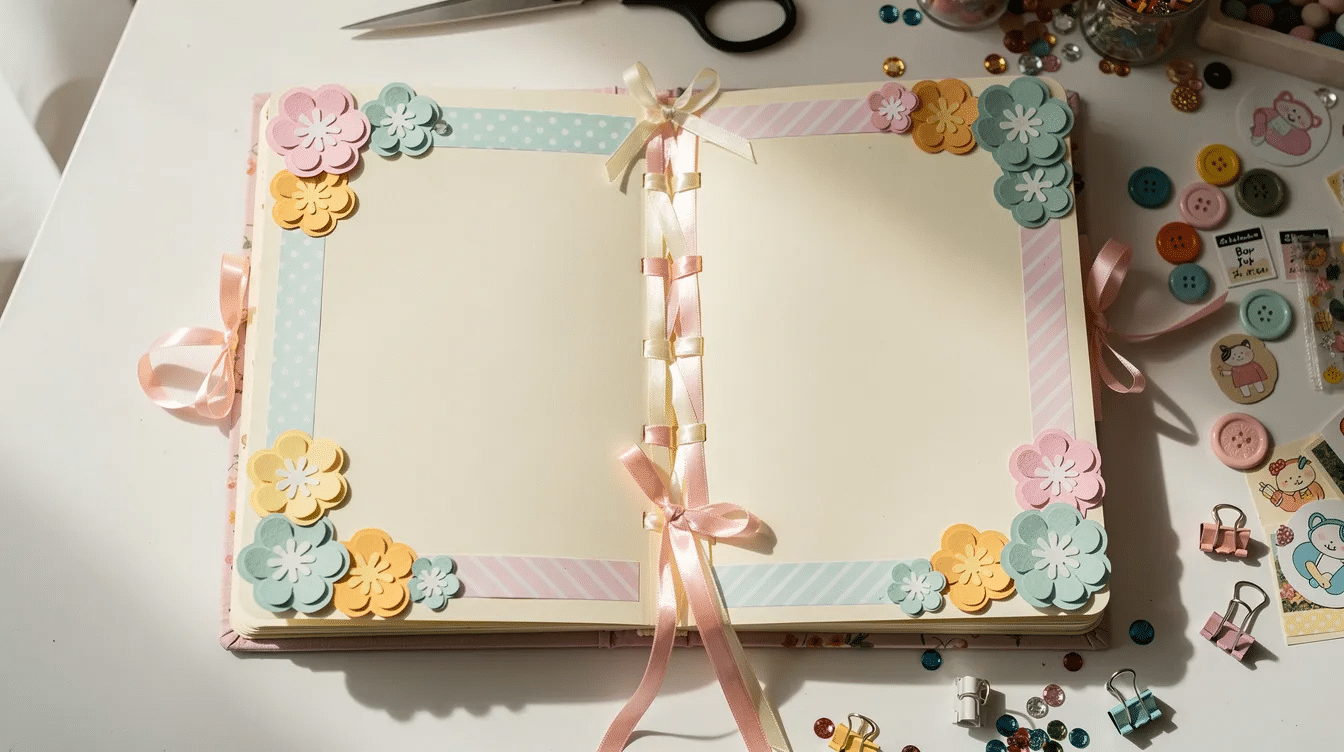
For a subtle design, use washi tape as a border around the front cover, inside cover, or along the spine. You can also mix in tiny paper stars and other small folded shapes for extra texture. If the notebook will be tossed into a backpack every day, seal the tape with a thin coat of Mod Podge.
Finishing Touches: Titles, Inside Cover, and Other Accessories
Add a title block with a rectangle of cream or white cardstock. Write the notebook name with markers, paint pens, or acrylic paints. If you like texture, stitch simple embroidered letters through a paper label before gluing it down.
Decorate the inside cover with matching paper, smaller scraps, or a printed quote sheet. You can also use creative printables like calendars, to‑do lists, and gift tags to make the inside cover more functional. Add a pocket for tiny notes, a nameplate, or “If found, please contact…” information.
Embellishing notebook covers with stickers, markers, or other craft materials can personalize the notebook and make it more visually appealing. You can even coordinate your cover with paper birthday decorations like garlands or flowers if the notebook is a gift. Other accessories such as tabs, charms, flat embellishments, ribbon bookmarks, and gift tags can fill empty areas without making the design too busy. A bit of glitter can highlight decorations, but keep bulky stuff away from the edges.
Date the spine, such as “Journal – Jan–Jun 2026,” so your finished notebooks are easy to organize later.
Care, Durability, and Simple Fixes
A sealed paper cover can handle normal use in a bag, but daily school use may need extra protection. Sealing the paper with a clear varnish or contact paper creates a durable finish that protects the design. To prevent edges from fraying, cover the decorated area with clear contact paper, wrapping excess around the inside of the cover.
To avoid bubbles, use thin coats of glue, work from the center outward, and smooth as you go. Glossy finishes show fingerprints more, while matte Mod Podge gives a softer art-journal look.
If a corner starts to peel, lift it gently, add glue, and press it under a heavy book. Patch small tears with matching scraps. Store unused decorated notebooks flat and away from direct sunlight because paper and ink can fade over time.
FAQ
Can I decorate a plastic or laminated notebook cover with paper?
Yes, but plastic is less absorbent than cardboard. Lightly sand a small corner first, then test a stronger plastic-safe adhesive. Seal with Mod Podge or clear contact paper so the paper layer does not peel off easily.
Is Mod Podge the only option, or can I use regular white glue?
White school glue can work if thinned slightly with water, but it is more likely to wrinkle thin paper. Mod Podge is usually better for the front cover because it acts as glue and protective topcoat.
How do I avoid the pages sticking to the covers while they dry?
Place wax paper, baking parchment, or scrap paper between the decorated cover and the first and last pages. Leave the notebook open and flat until the glue is no longer tacky.
Will these methods work on spiral notebooks with exposed wire bindings?
Yes. Work around the holes, punch new ones after covering, or trim carefully around the wire. The easiest approach is decorating the main front and back panels while leaving the spiral area clear.
Can I remove or change the paper design later?
A design sealed with Mod Podge is semi-permanent and hard to peel cleanly. If you wonder whether you will want changes later, create a removable cardstock slipcover instead. That way, you can decorate a new cover whenever inspiration hits.