Paper craft projects for school work best when they are simple to prepare, safe to supervise, and connected to real learning. The right project helps kids practice fine motor skills, creativity, sequencing, color choice, and following instructions without requiring expensive supplies or a long cleanup.
Hands-on paper crafting projects can make the learning experience engaging for students. Kids can create fun and engaging paper crafts like paper flowers, bookmarks, and garlands, which help develop their fine motor skills and creativity. Simple paper crafts such as paper chains and origami can be great activities for children, allowing them to express their creativity while learning basic crafting techniques.
In this guide, we’ll compare seven school-friendly craft ideas for different ages, time limits, and classroom goals.
- How We Chose the Best Paper Craft Projects for School
- Top 7 Paper Craft Projects for School
- Quick Comparison of the Best School Paper Crafts
- How to Choose the Right Paper Craft Project
- Which Paper Craft Project Is Best for You?
- Final Thoughts
How We Chose the Best Paper Craft Projects for School
We chose these paper craft projects for school based on practical classroom needs: age level, supply cost, time, learning value, safety, and cleanup. Craft projects can be budget-friendly and adaptable for various age groups, which is why paper is such a useful classroom material.
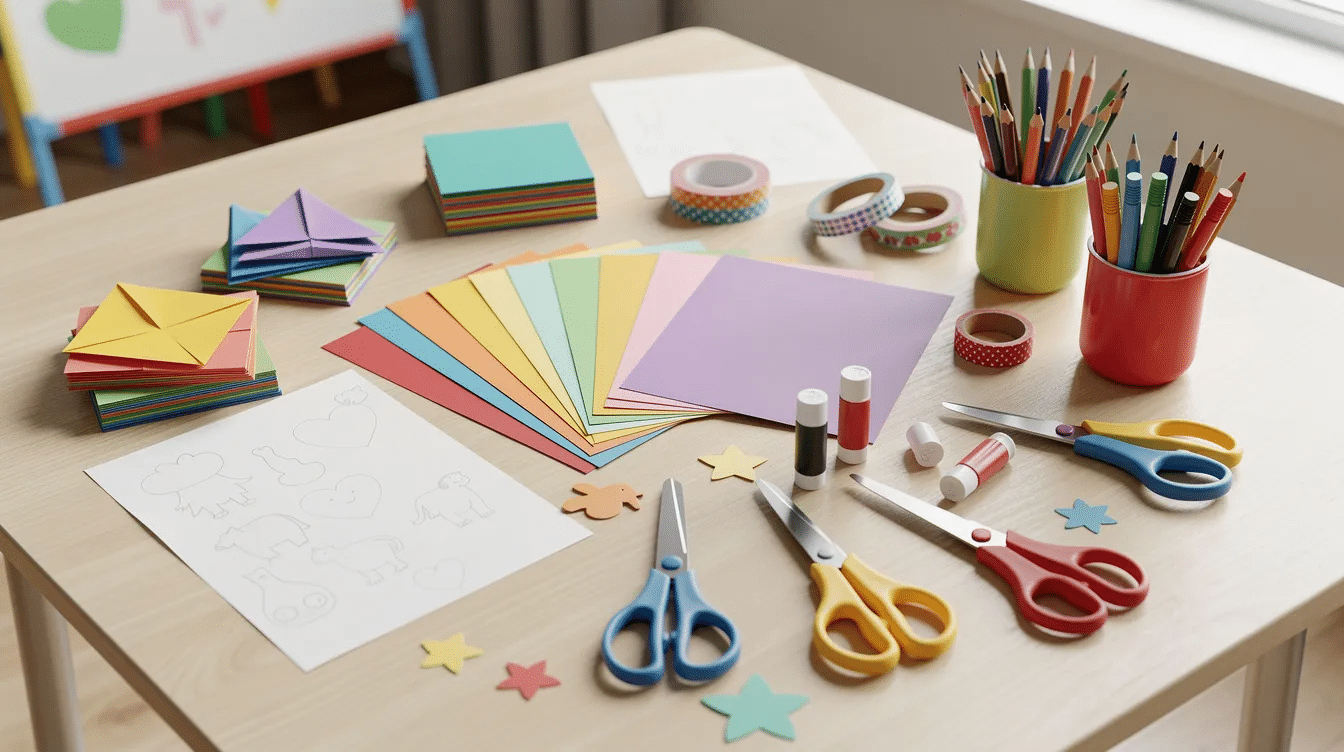
A strong project should use common supplies like construction paper, white paper, cardstock, scissors, glue, tape, markers, colored pencils, a pencil, and sometimes a printable template. Printer paper is a versatile type of paper commonly used for various crafting projects, including printing and drawing. Construction paper is a popular choice for crafting due to its thickness and variety of colors, making it ideal for children’s projects. Kraft paper is known for its durability and is often used for making bags, wrapping gifts, and various craft projects. Scrapbook paper is designed with decorative patterns and textures, making it perfect for creating personalized scrapbook pages and other crafts. Tissue paper is lightweight and comes in various colors, often used for gift wrapping, decorations, and crafting projects like flowers, and choosing among the top craft paper supplies for DIY projects or exploring the best types of paper for craft and their uses can make these classroom activities even more effective.
We also considered skill development. A large fine motor skills meta-analysis covering 118 studies and nearly 80,000 children found strong links between fine motor ability and academic achievement, especially writing. Crafting activities using construction paper can develop fine motor skills in children, particularly when little fingers cut, fold, glue, draw, and decorate.
Safety matters too. Use age-appropriate scissors, non-toxic glue, and supervised work areas. Health Canada’s guidance for art class safety also recommends avoiding materials that create unnecessary fumes or dust.
Top 7 Paper Craft Projects for School
1. Origami Corner Bookmarks
Origami corner bookmarks are a fun paper craft that students can make from just one sheet or a square bit of paper. Students fold the sheet into a triangle pocket, then decorate it with favorite colors, googly eyes, glitter, or animal features such as butterfly wings.
Why It Stands Out
Origami encourages focus and sequential instruction while fostering creativity in students. It also connects naturally to reading because students leave with a bookmark they can actually use. A developmental paper folding study found that many children ages 4 to 5.5 can attempt simple folds accurately, though older students handle multi-step folds more independently, and teachers can draw on creative origami designs for every skill level to differentiate projects.
Best For
Elementary students in grades 2-5, library time, reading incentive programs, and a rainy day activity.
Key Strengths
- Requires minimal materials
- Builds sequencing and listening skills
- Works as an easy project with a useful result
- Can become a monster, owl, heart, or sign for a favorite book
Possible Limitations
Younger students may need a video tutorial or teacher demonstration. Small pieces can also get lost in a busy classroom.
2. Paper Chain Counting Activities
A paper chain is one of the most flexible kids crafts for school. Students cut strips of colorful construction paper, loop each strip, and secure it with glue or tape. The result can be a counting chain, countdown chain, garland, necklace, bracelet, crown, or ring.
Why It Stands Out
Paper chain activities are a fun way to teach counting, colors, shapes, and patterns while creating decorative items for rooms or gifts for family and friends. Paper chain jewelry can be made by cutting construction paper into tiny strips, allowing children to create necklaces, bracelets, crowns, and rings.
Best For
Kindergarten through grade 3, math centers, preschoolers, pattern lessons, and collaborative decorations.
Key Strengths
- Teaches counting, skip counting, and repeating colors
- Uses simple strips and basic supplies
- Works for holidays such as christmas, halloween, spring, and mother’s day
- Making a paper chain rainbow involves using strips of colorful construction paper to create a beautiful display, which is a simple and fun craft for kids
- Creating paper chain snakes involves cutting out snake parts from a printable template and alternating colors to make a playful decoration
Possible Limitations
It can become repetitive for older kids. Large garlands also require many strips, especially if students want to hang them across a house, hallway, or classroom.
3. Scientific Paper Snowflakes
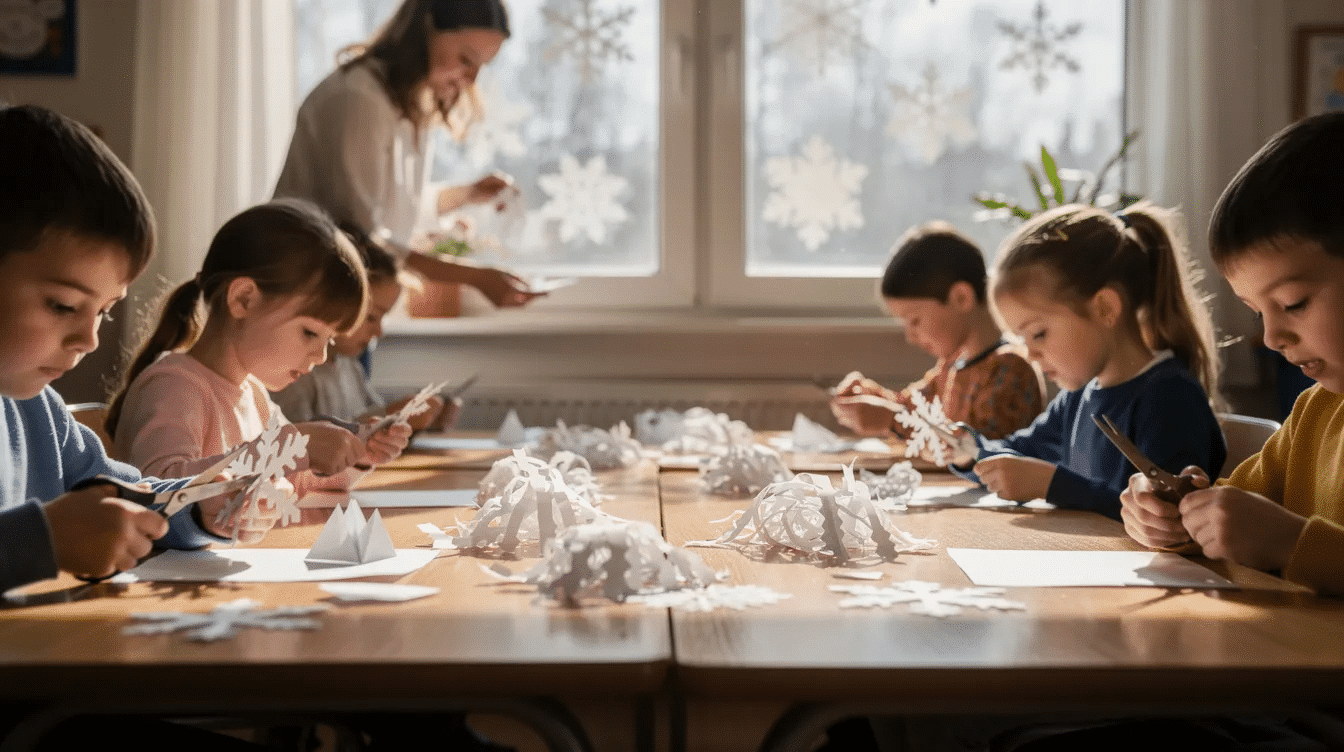
Scientific paper snowflakes combine art, weather, and geometry. Students fold white paper into sections, cut shapes along the edges, and open the paper to reveal symmetry and beautiful patterns.
Why It Stands Out
This is a perfect craft for showing how repeated cuts create beautiful patterns. Students can compare six-sided snowflake designs, talk about symmetry, and connect the craft to winter science, following step-by-step instructions for making paper snowflakes when they need extra guidance.
Best For
Grades 3-8, geometry lessons, seasonal science, and winter decorations.
Key Strengths
- Teaches symmetry, fractions, angles, and reflection
- Uses simple materials
- Creates a fun decoration students can hang
- Helps students create beautiful patterns through repeated cutting
Possible Limitations
The project requires careful cutting skills. It is also seasonal, although the same fold-and-cut method can be adapted into stars, flowers, or abstract designs.
4. Paper Quilling Name Cards
Paper quilling name cards use thin strips of paper rolled into coils, spirals, and loops. Students arrange the pieces around their names on cardstock to create personalized desk signs.
Why It Stands Out
Quilling is a great project for patience, precision, and hand-eye coordination. It gives students ownership of their space and makes a wonderful beginning-of-year activity.
Best For
Grades 4-8, art integration, name tags, class displays, and small-group instruction.
Key Strengths
- Builds concentration and fine motor control
- Lets students use favorite colors
- Creates personalized classroom materials
- Can be adapted with scrapbook paper or tissue paper accents
Possible Limitations
It is time-intensive and requires patience. Younger students may need wider strips and fewer design requirements.
5. Interactive Paper Journals
Interactive paper journals are mini books students create, write in, draw in, and use for reflection. They can be made with folded printer paper, cardstock covers, staples, tape, or string.
Why It Stands Out
This fun project combines writing, drawing, and construction. Creating interactive components, like pop-up cards, can introduce basic engineering principles to students. Interactive crafts like paper bag puppets can be used for class presentations or creative writing projects.
Best For
All grade levels, writing workshops, science notebooks, literature responses, and creative expression activities.
Key Strengths
- Adaptable to any subject
- Encourages students to write, draw, label, and explain ideas
- Works with a rainbow template, story prompt, or science diagram
- Great for kids, adults, and the whole family when sent home as an extension
Possible Limitations
Journals may need lamination or thicker covers for durability. Teachers should plan the content and layout before students begin.
6. Paper Weaving Place Mats
Paper weaving place mats use a base sheet with slits and separate strips woven over and under. Students can alternate colors to make a mat, wall hanging, or patterned artwork.
Why It Stands Out
Using strips of colored construction paper for under-over weaving teaches patterns and fine motor skills. Paper weaving also makes abstract pattern rules visible and tactile.
Best For
Grades K-5, pattern recognition, art centers, and functional classroom items.
Key Strengths
- Develops planning and spatial reasoning
- Helps students create repeating designs
- Produces colorful place mats or decorations
- Works well as a perfect summer craft because the final mat can be used for picnics, class parties, or a birthday party table
Possible Limitations
Glue can get messy, and pre-cut materials save time. Little ones may need help keeping the strips aligned.
7. 3D Paper Sculptures for Science Topics
3D paper sculptures turn science ideas into objects students can build. Examples include planets, habitats, geometric solids, plant parts, organs, and animal models.
Why It Stands Out
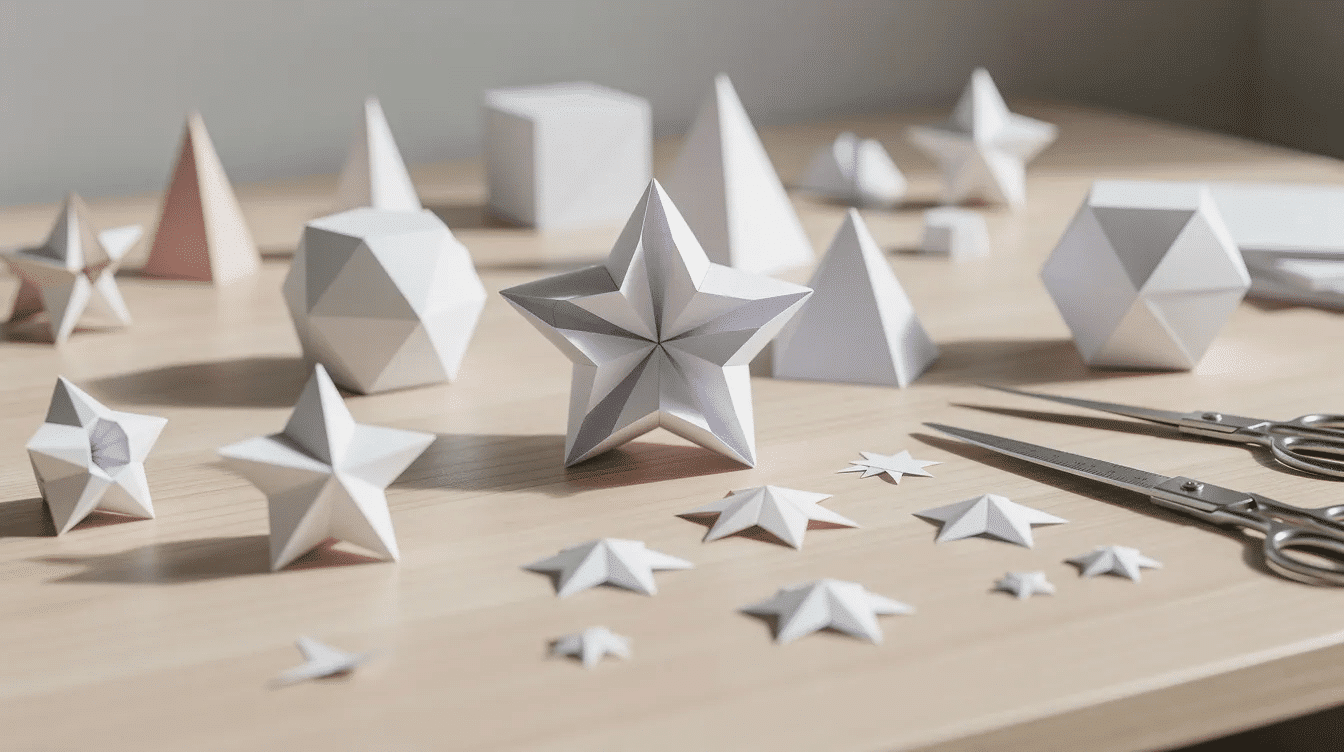
3D paper projects, such as geometric shapes and origami, engage students in learning basic geometry. A cube, pyramid, cone, or folded model helps students see edges, faces, angles, and structure. Construction paper can be used to create 3D flowers by cutting and layering strips of paper, making it a great craft for brightening up a home, and students can also fold easy paper stars with step-by-step instructions to extend the lesson into celebratory decor.
Best For
Grades 3-8, science units, geometry lessons, solar system projects, and anatomy lessons.
Key Strengths
- Reinforces academic content through making
- Develops spatial reasoning
- Creates strong display materials
- 3D paper stars can be made for various celebratory occasions, providing a glitzy decorative element that can enhance any festive atmosphere
- 3D paper stars can be made by cutting and folding paper into star shapes, providing a fun and easy arts and crafts session for children
Possible Limitations
These projects may need templates, scoring, or multiple class periods. For younger students, simplify the model or use pre-cut pieces.
Quick Comparison of the Best School Paper Crafts
Project | Best Use | Time | Difficulty |
|---|---|---|---|
Origami Corner Bookmarks | Reading integration and individual work | 15-30 minutes | Easy |
Paper Chain Counting | Math centers and group activities | 15-30 minutes | Easy |
Scientific Paper Snowflakes | Geometry and seasonal lessons | 30-45 minutes | Medium |
Paper Quilling Name Cards | Fine motor development and personalization | 1-2 periods | Medium |
Interactive Paper Journals | Writing integration and creative expression | 1+ periods | Flexible |
Paper Weaving Place Mats | Pattern recognition and functional results | 30-45 minutes | Easy-medium |
3D Paper Sculptures | Science integration and advanced projects | 2+ periods | Medium-hard |
For extra inspiration, teachers often browse a classroom craft website, a video tutorial, or resources such as red ted art, then adapt the idea to match school standards and available supplies, and a hub like Simply Paper Crafts can provide ready-to-use ideas and visual examples. |
How to Choose the Right Paper Craft Project
Choose Based on Grade Level and Skills
For preschoolers and early elementary students, choose big shapes, fewer cuts, and simple steps. Paper chains, basic bookmarks, paper flowers, and garlands are easier for little fingers. Older students can handle quilling, 3D structures, and detailed paper weaving.
Paper flowers are a timeless decorative staple that can add a stylish touch to any room and will never wilt, making them a great alternative to real flowers. Paper flowers are a timeless decorative staple that can be made by overlapping and gluing flower petals together, creating layers until the desired look is achieved, and using creative crepe paper flower ideas for DIY projects can help older students experiment with more advanced techniques.
Choose Based on Available Time
If you have one short class period, choose origami bookmarks, paper chains, or snowflakes. If you have several sessions, choose interactive journals, quilling, or 3D science models.
Creating a paper wreath is a fun craft that can be displayed year-round, adding a creative touch to your front door or home decor. That makes wreaths a smart extension project for students who finish early or for family craft nights, especially when you pull ideas from cute paper craft projects like flowers, wreaths, and garlands.
Choose Based on Learning Objectives
Match the project to the lesson. Use paper chain counting for math, snowflakes for symmetry, journals for writing, puppets for storytelling, and 3D models for science. If your goal is creativity and classroom display, choose projects that students can decorate, personalize, and hang, drawing on fun paper activities for creative minds of all ages to keep options fresh.
Which Paper Craft Project Is Best for You?
Choose Origami Corner Bookmarks if you want to promote reading and build focus.
Choose Paper Chain Counting if you need math skill reinforcement, color sequencing, or a collaborative classroom display.
Choose 3D Paper Sculptures if you want cross-curricular integration with science, engineering, and geometry.
Choose Paper Weaving if you need pattern practice with functional results.
Choose Interactive Paper Journals if students need to combine writing, drawing, and reflection.
Choose Paper Quilling Name Cards if you want personalization and careful fine motor practice.
Choose Scientific Paper Snowflakes if you want a quick geometry lesson with impressive decorations, or adapt projects for older learners interested in paper crafts that can sell well at school fairs or community markets.
Final Thoughts
The best paper craft projects for school are not just cute crafts for kids. They help students practice academic skills, build independence, and create something meaningful from simple materials.
Start with the supplies you already have, then adjust the difficulty for your students’ ages and abilities. Whether you choose a paper chain, origami bookmark, paper flowers, or a 3D science model, the perfect craft is the one that supports your lesson while keeping students engaged.
Pick one project, print or prepare the templates, gather the materials, and let students create something colorful, useful, and fun.