
Key Takeaways
- You can make paper beads without a toothpick by using a pencil, bamboo skewer, crochet hooks, knitting needles, coffee stirrers, stiff wire, or a drinking straw.
- Long triangular paper strips are the easiest option for beginners and create the classic tapered paper bead look.
- The neatest beads come from a tight roll, a thin layer of glue, and steady pressure from your fingers.
- Sealing finished beads with clear nail polish, Mod Podge, gloss varnish, marine varnish, beeswax, or PC-Petrifier Wood Hardener makes them shinier and more durable.
- This is a great craft for upcycling old magazines, junk mail, gift wrap, calendars, and other paper products into jewelry or decorations.
Introduction: Making Paper Beads Without a Toothpick
Paper beads are small rolled beads made from a paper strip, then glued and sealed so they can be used like other beads in bracelets, necklaces, earrings, charms, and décor. They are lightweight, colorful, and a fun alternative to plastic beads because they turn everyday paper into something useful.
The good news is that a toothpick is not required. Making paper beads without a toothpick is possible by using alternative cylindrical tools such as pencils, chopsticks, metal skewers, straws, bamboo skewers, knitting needles, crochet hooks, coffee stirrers, and stiff wire.
In this guide, you’ll learn how to choose paper, cut long strips into the right shapes, roll each paper bead on a tool you already own, seal it, and use the finished paper bead in simple projects. It is also a smart way to reuse old magazines, catalogs, 2024 wall calendars, gift wrap, and junk mail from the 2020–2026 paper pile.
- Tools You Can Use Instead of a Toothpick
- Choosing and Preparing Paper for Beads
- Cutting Paper Strips for Different Bead Shapes
- Step-by-Step: How to Make Paper Beads Without a Toothpick
- Drying, Sealing, and Hardening Paper Beads
- Stringing and Using Your Finished Paper Beads
- Tips, Variations, and Troubleshooting
- FAQ
Tools You Can Use Instead of a Toothpick
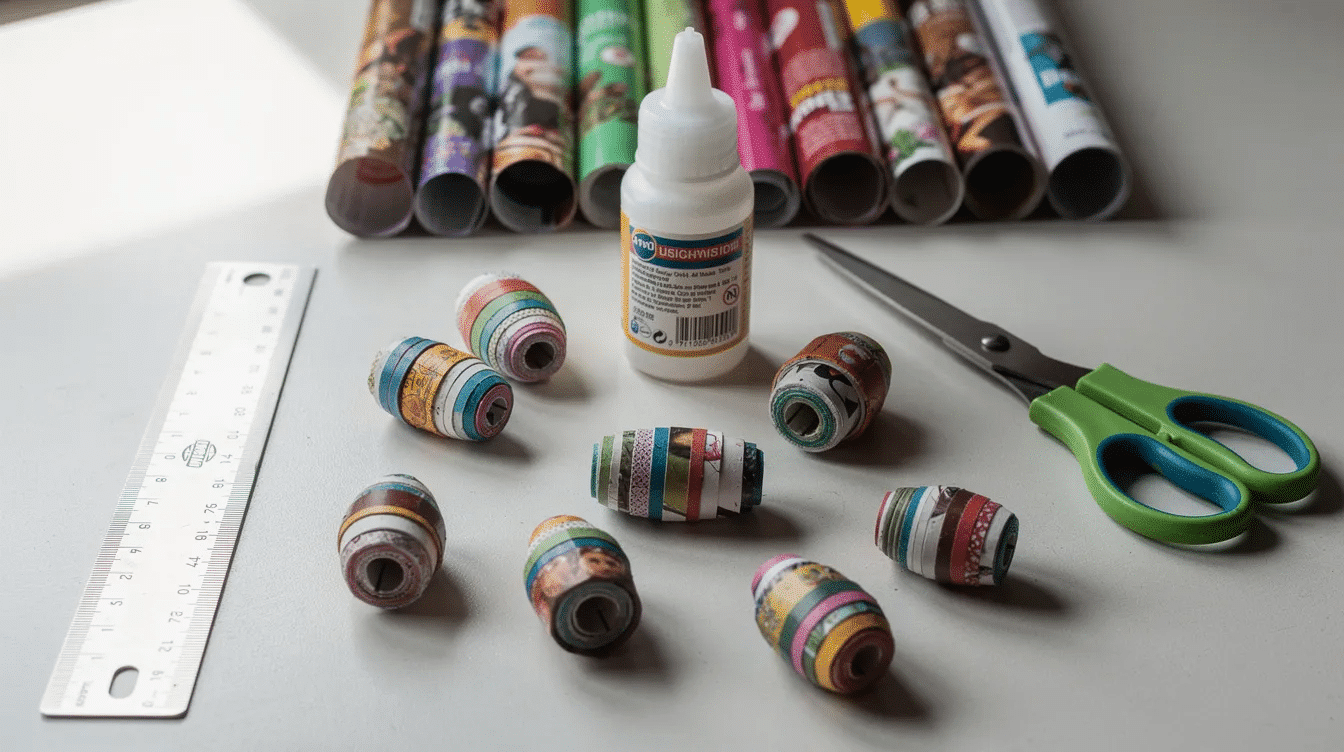
Any slim, smooth cylinder can replace a toothpick for bead making. The tool you choose controls the size of the holes, so match it to the string or wire you plan to use.
Good options include:
- HB pencil or mechanical pencil: creates large holes for cotton cord, yarn, leather, or thick elastic.
- Bamboo skewer: a balanced choice for medium holes and easy handling.
- Metal knitting needle, such as 3 mm: good for neat, consistent jewelry beads.
- Metal wire, about 1–2 mm: creates tiny holes for fine jewelry wire.
- Crochet hooks: useful if you want a comfortable handle while rolling.
- Coffee stirrers: lightweight and easy for kids to grip.
- Plastic or stainless-steel straw: creates larger-hole beads for corded necklaces.
- Wooden chopstick tips: useful for fatter beads, though the taper can change the form slightly.
- Stiff wire: ideal when you want very small, even holes.
If glue tends to stick, cover the tool with a small strip of baking parchment or masking tape before you start rolling. You can also rub on a tiny amount of beeswax or petroleum jelly, but keep it light so the paper still holds its shape.
Choosing and Preparing Paper for Beads
Paper choice affects color, pattern, strength, and how smoothly the roll forms. Paper can be rolled as long as it is thin enough to bend without creasing and strong enough not to tear.
Try glossy magazine pages, decorative wallpaper, handmade paper, wrapping paper offcuts, old gift bags, 2024 wall calendars, scrapbooking paper around 120–160 gsm, junk-mail flyers, cereal boxes, cardstock and other craft papers, and old file folders. Decorative paper like wallpaper, glossy magazines, and handmade paper can be used to create unique paper beads, while sturdier paper options for making beads include cereal boxes, junk mail, cardstock, and old file folders.
Thinner paper, such as magazines and old magazines, rolls easily and creates smooth beads. Thicker paper makes chunkier, sturdier beads, but very thick cardboard can crack instead of curving. Avoid fibrous tissue paper for beginners because it tears, and avoid heavy cardboard over about 200 gsm until you have practiced; save those sturdier scraps for paper mâché craft projects.
Choose each page for strong color, a gradient, or a bold image rather than tiny busy details. Remember that the wrong side of the paper strip faces inward, while the printed side usually becomes the visible surface, which is especially important if you plan to sell your jewelry or branch into paper crafts that sell well.
Cutting Paper Strips for Different Bead Shapes
The shape of the paper strip determines the final paper bead shape. Different cutting techniques can result in unique shapes of paper beads, allowing for a wide variety of designs in crafting, especially if you experiment with handmade paper sheets for beads.
For classic tapered beads, cut a triangle strip. Long triangle strips cut for paper beads should be approximately 12 inches long and 1/2 to 3/4 inch wide at the base. In metric terms, aim for 25–30 cm long and about 1.5 cm wide at the wide end, tapering to a sharp point. Similar dimensions are commonly recommended in beginner paper bead guides, including this paper bead activity guide.
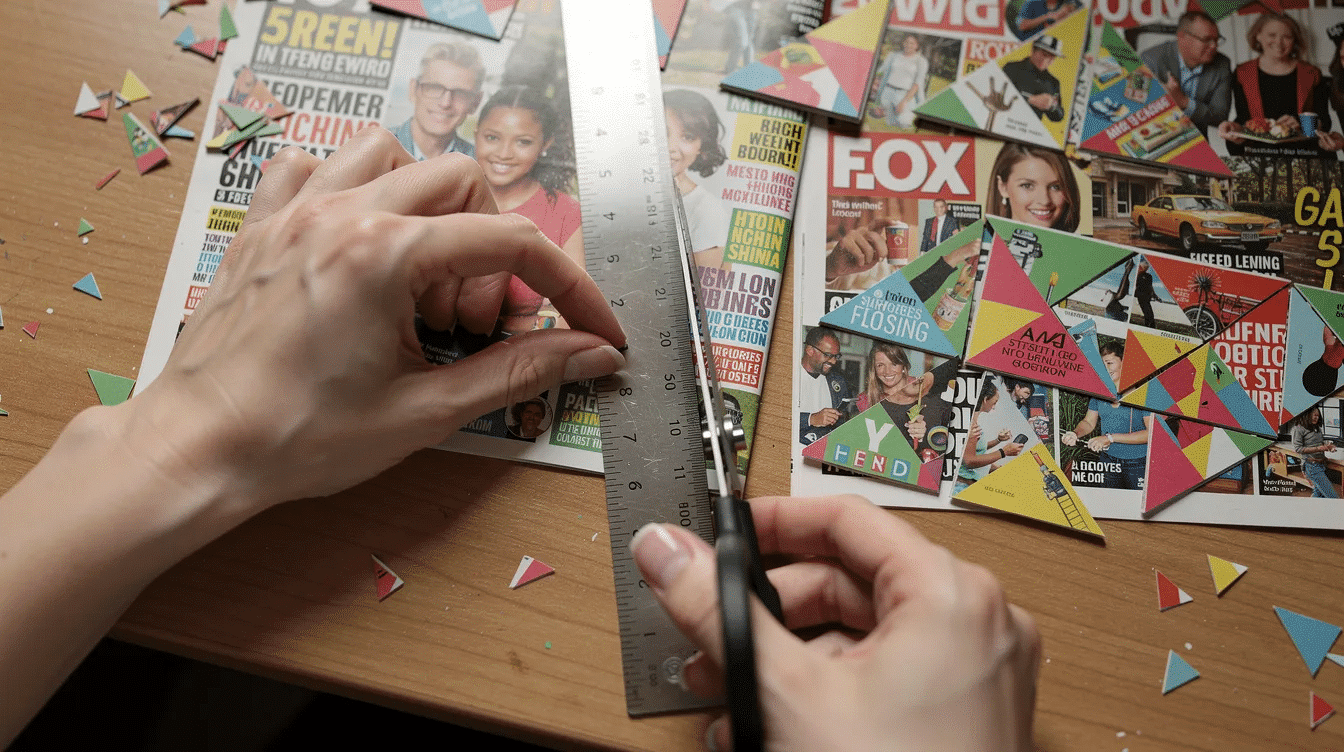
To create paper beads, start by laying your paper flat and measuring 1cm intervals on one side and 0.5cm then 1cm intervals on the other side before scoring the paper. Use a ruler, pencil, or pen to mark grid lines, then cut diagonally between marks to make isosceles triangles. You can also draw a right triangle for teardrop beads.
Rectangular pieces of paper create tubular paper beads. Tubular paper beads are created from rectangular pieces of paper, while teardrop beads are made from right triangle shapes. Paper beads can be made in various shapes, including round, tubular, and teardrop, depending on the paper cutting technique used. You can experiment with different shapes of paper cutting to create beads of various shapes, such as tubular or teardrop beads.
A craft knife, metal ruler, paper cutter, and cutting mat give the cleanest edges. Sharp scissors work too, especially if you are making beads with kids and exploring essential craft paper supplies and tools.
Step-by-Step: How to Make Paper Beads Without a Toothpick
This is the core method for how to make paper beads without a toothpick. The same process works whether you use a pencil, bamboo skewer, straw, wire, or coffee stirrer; only the final hole size changes.
1. Position the tool
Lay the paper flat on your table with the printed side facing down. Place your chosen stick, pencil, bamboo skewer, or straw horizontally across the wide end of the strip.
2. Start the roll
Wrap the wide end once around the tool. Keep the edges lined up, then pinch firmly so the center stays tight. This first turn matters because it sets the shape for the whole bead.
3. Add glue
After the first turn, apply a thin line of white PVA glue or school glue along the inside of the strip. A glue stick can work if it is tacky, but liquid glue usually gives a stronger bond. Avoid putting glue directly where the paper touches the tool, or the bead may stick.
4. Roll slowly and evenly
Tightly roll the paper with steady tension from your fingers. Keep the triangle centered so the point finishes in the middle of the bead. If the point drifts to one side, gently angle the strip as you roll.
5. Clean the edges
Wipe away any glue squeeze-out with scrap paper or a cloth. This keeps the bead smooth and helps you gently remove it later.
6. Finish and slide
Add a tiny dot of glue to the final point, press it for 10–20 seconds, then let the bead firm up. Once it can hold its shape, slide it off the tool slowly.
Drying, Sealing, and Hardening Paper Beads
Sealing helps protect each paper bead from moisture, adds shine, and makes it strong enough for jewelry. After rolling and gluing the paper beads, they can be coated with products like beeswax or other sealants to enhance durability and appearance.
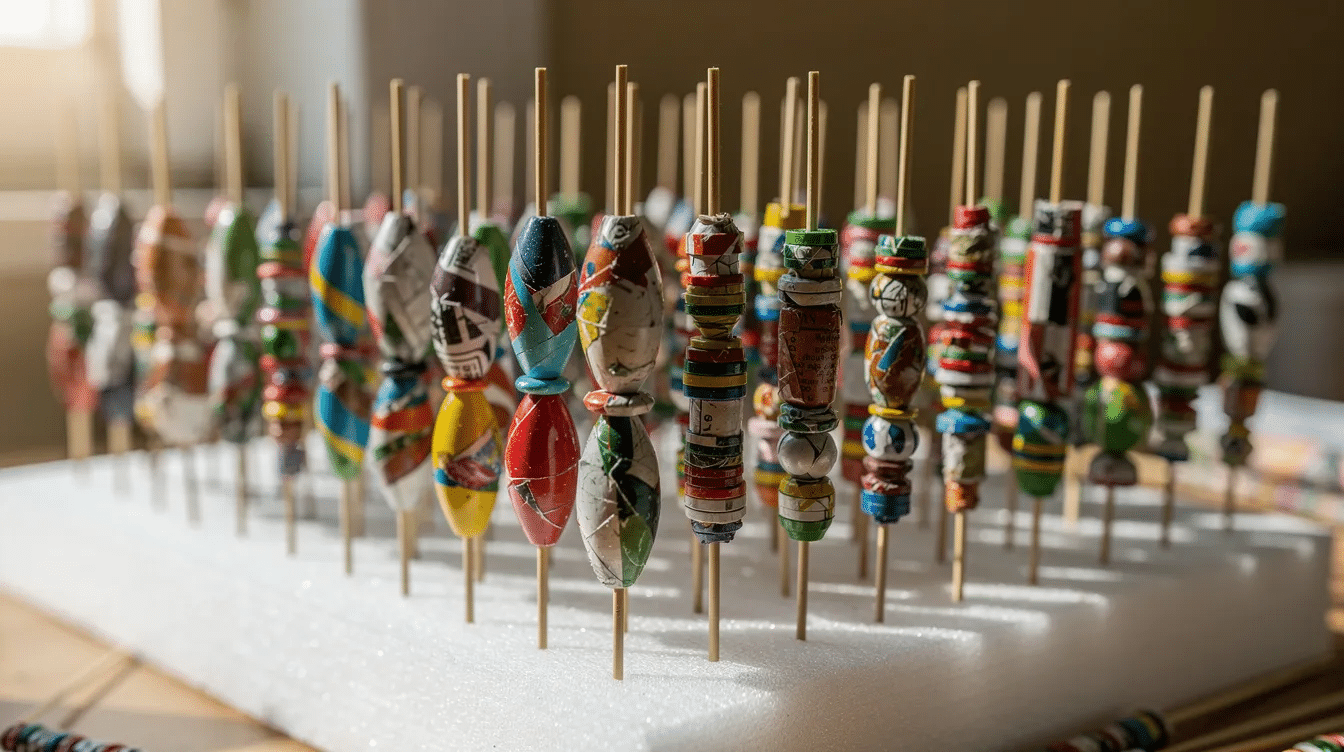
Let fresh beads dry on the tool for 20–30 minutes. Then slide them off and place them on a sheet of baking paper or a wire rack. For easier coating, insert several beads onto a bamboo skewer or wire, then push the skewer into floral foam or styrofoam so the beads can dry without touching the table.
Common products used to seal and finish paper beads include Mod Podge, marine varnish, and clear nail polish. You can also use water-based polyurethane, gloss varnish, or regular nail polish if you want a quick shine. PC-Petrifier Wood Hardener is a popular choice for sealing paper beads, as it hardens the beads and makes them rock solid.
Apply two coats or more in thin layers with a small brush. Let each coat dry 1–2 hours, then cure the beads overnight or up to 24 hours before stringing. After sealing, paper beads can achieve a shiny finish and become more durable, making them suitable for various jewelry projects, especially if you plan creative paper bead jewelry designs. Just keep sealers off your nails and work in a ventilated space.
Stringing and Using Your Finished Paper Beads
Once the finished beads are dry and sealed, turn them into simple accessories. Match the stringing material to the holes: cotton cord for pencil-made beads, 0.8 mm elastic thread for bracelets, nylon beading cord for medium holes, and 0.4–0.6 mm jewelry wire for small holes.
A beginner bracelet can use 15–20 paper beads with metal spacer beads. For necklaces, mix bold paper beads with silver, gold, black, wood, clay, or glass accents. For earrings, use one bead, a small spacer, and an ear wire.
Paper beads also work for decorations, keychains, gift wrap accents, beaded curtains, and charms, and they pair well with cute paper craft projects for families. Pair busy patterns with neutral other beads so the paper design stands out. Save leftover strips by color family so you can create matching sets later.
Tips, Variations, and Troubleshooting
If beads feel loose, roll tighter, add slightly more glue near the tip, and hold the point until it sets. If beads stick to the tool, use less glue near the center, wrap the tool with parchment, or add a tiny non-stick layer before rolling.
For variations, paint the edges before rolling, ink one side for contrast, use double-layer strips for thicker paper beads, or mix narrow and wide strips in one necklace. Wider triangles create fatter beads, rectangles create tubes, and right triangle strips create teardrop beads, and you can also experiment with vintage paper craft ideas to give your beads a nostalgic look.
Always work on scrap paper or a cutting mat to protect your table from glue, blades, and sealant. Once you understand the basic roll, you can experiment with paper products, colors, shapes, and finishes to build your own bead style, drawing more inspiration from Simply Paper Crafts tutorials and gallery.
FAQ
Are paper beads made without a toothpick as strong?
Yes. Strength depends on tight rolling, good glue coverage, and proper sealing, not on whether you used a toothpick. A pencil or bamboo skewer simply changes the hole size.
Can paper beads get wet?
Sealed paper beads can handle light splashes, humidity, and normal wear, but they should not be worn in the shower, pool, or heavy rain. Even sealed paper is still paper underneath.
What is the best glue to use for paper beads?
White PVA glue or school glue is the best all-purpose choice. A glue stick works for quick crafts, but avoid hot glue because it is too bulky and avoid watery glue because it can wrinkle the strip.
How do I make uniform beads every time?
Use a measured template, cut every strip to the same width and length, and always roll around the same tool, such as the same pencil. Consistent paper, pressure, and drying time will create more even beads.
Can beginners make different bead shapes right away?
Yes. Start with a triangle for classic beads, then try rectangles for tubes and a right triangle for teardrop shapes. You can also practice precision cutting on simple projects like paper snowflake designs. Make a few test beads first, then adjust the width, length, and tool size until you like the result.