Key Takeaways
- You can make paper mache without newspaper by using paper towels, tissue paper, junk mail, printer sheets, and other papers that are thin, uncoated, and absorbent.
- Glossy catalogues, laminated flyers, and waxy paper usually resist glue and can peel as they dry.
- The same paper mache recipes still work: a flour and water mixture, cooked wheat paste, PVA glue, or wallpaper glue.
- Paper mache clay can be made from shredded office paper, cardboard egg boxes, egg cartons, coffee filters, or junk mail instead of newspaper pulp.
- Alternative papers can control the texture, strength, and final look of paper mache sculptures, so choose materials based on the project.
What Can I Use Instead Of Newspaper For Papier Mache?
In 2026, many homes no longer receive daily papers, but paper mache without newspaper is easy. Absorbent materials like brown packing paper and paper towels can be used in place of newspaper for paper mache because they soak up adhesive and bend around a form.
Good substitutes include paper towels, tissue paper, printer paper, brown Kraft packing paper, envelopes, non-glossy junk mail leaflets, coffee filters, and old computer printouts. Newspaper is a popular choice for paper mache due to its thin structure, which allows for easy tearing and shaping, so the best replacement should tear by hand, absorb glue quickly, and have no plastic or waxy coat.
Tip: alternating colours of paper strips can ensure even thickness in paper mache layers and helps you see what is already covered.
- The Best Kinds Of Paper For Paper Mache (Without Old Newspapers)
- Using Paper Towels For Paper Mache
- Paper Mache With Tissue Paper
- Office Paper, Junk Mail, And Other Papers
- Paper Mache Recipes That Work With Any Paper
- Making Paper Mache Clay Without Newspaper
- Step-By-Step: How To Paper Mache Without Newspaper
- Finishing, Painting, And Sealing Your Papier Mache
- FAQ
- Can I use regular printer paper instead of newspaper for paper mache?
- Is paper mache without newspaper as strong as traditional newspaper mache?
- What is the cheapest paper I can use if I don’t get newspapers anymore?
- Can I do paper mache with glossy magazines or catalogues?
- How do I stop non-newspaper paper mache from going mouldy?
The Best Kinds Of Paper For Paper Mache (Without Old Newspapers)
Match the paper to the paper mache project. Tissue suits delicate decorations; brown Kraft packing paper is excellent for structural integrity when used in paper mache; blue towels and layered printer sheets suit a mask, prop, or sculpture, just as different craft papers suit particular techniques in paper types for craft and their uses.
Best options, from versatile to specialised: paper towels, tissue paper, printer paper, brown parcel paper, coffee filters, egg cartons, and toilet paper pulp. The best kind is cheap, thin, uncoated, and easy to recycle from the house, such as junk mail, school worksheets, outdated forms, and boxes, and you can mix these with more specialised craft paper supplies for creative projects when you want a particular finish.
Test any sheet by dipping one strip into paste. If it goes floppy without shedding a plastic film, it is useful. Avoid glossy magazines, laminated menus, freezer paper, and heavy catalogue covers.
Using Paper Towels For Paper Mache
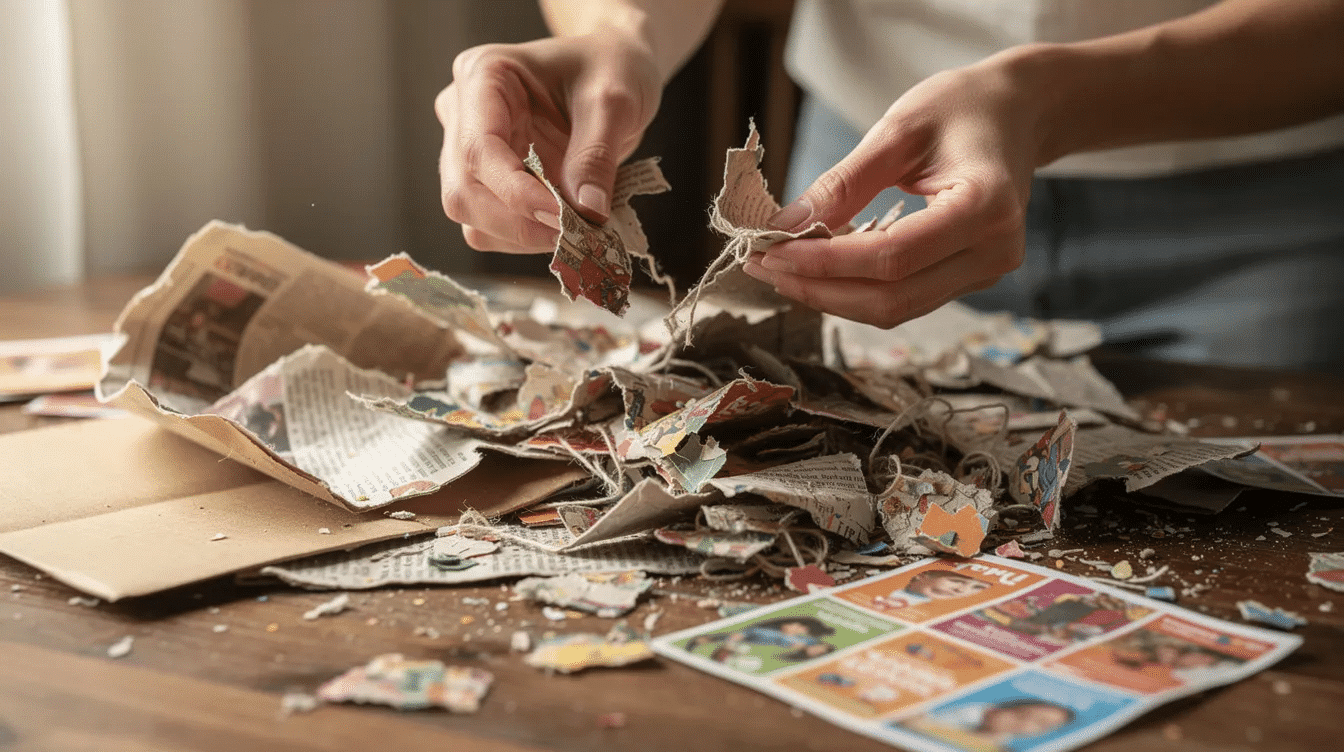
Paper towels are one of the easiest replacements for old newspapers because they absorb paste extremely well and conform to curves. Choose plain one- or two-ply kitchen roll without lotion, printing, or heavy embossing.
Tear pieces by hand, dip them into flour paste or a PVA mixture, press off extra liquid, and smooth them in overlapping layers. Paper towels are ideal for creating organic textures in paper mache due to their absorbency and durability, making them good for rocks, animals, fantasy creatures, and cool art effects.
Because they hold moisture, apply fewer layers and let each coat dry fully to prevent mold.
Blue Paper Towels And Other Shop Towels
Blue paper towels are a cost-effective option for paper mache, providing good absorbency and flexibility for creating detailed textures. Blue paper towels are highly absorbent and can be used in paper mache for their stretchability, making them suitable for creating detailed textures.
They are tougher than kitchen paper towels, so use them for bulk, armour, cosplay props, masks, and inner support. The colour can show through thin paint, so prime with white acrylic paint or gesso, or embrace the blue base. Lightly damp shop towels tear more cleanly, and smaller pieces curve better around horns, eye sockets, and wire details, especially when you adapt them for creative paper mache design ideas like masks and fantasy armour.
Paper Mache With Tissue Paper
Tissue paper is popular for papier mache because it absorbs glue well and adds vibrant colours. Tissue paper is a popular alternative for paper mache projects as it easily absorbs glue and can add vibrant colors to creations.
Brush glue onto the shape first, press dry tissue paper onto it, then brush more adhesive over the top. Do not dip it: wet tissue breaks fast. Tissue paper layers dry crinkled and translucent, which works for lanterns, flowers, light covers, and patchwork animals, and it also adapts easily to cute paper craft ideas for easy DIY projects like simple flowers and garlands.
Note that tissue paper is favored in paper mache projects for its ability to absorb glue well and add vibrant colors, although some varieties may bleed. Test reds, blues, and blacks, and protect the table.
Toilet Roll And Facial Tissue
Toilet paper and facial tissue can be used for fine details in paper mache sculptures. Lay dry tissue on glued areas, press gently, and brush more glue over it to make a smooth skin over joins, holes, and small features.
Toilet paper can be turned into a sculptable clay-like material for intricate paper mache figures, but separate multi-ply sheets first to avoid lumps. Let these soft papers dry thoroughly because folds stay damp, especially if you combine them with other fun paper activities for all ages in a long crafting session.
Office Paper, Junk Mail, And Other Papers
Printer paper and junk mail are often easier to find than newspaper. Use standard 70–80 gsm printer paper in narrow strips, ideally torn across the grain, so it bends around curves.
Non-glossy junk mail, charity letters, and simple leaflets work if ink does not smear. Envelopes, paper bags, and brown packing paper dry stiffer than newsprint, giving different papers unique structural and aesthetic advantages in paper mache, much like choosing the right texture when making handmade paper sheets for creative projects.
Construction paper can work for decoration, but it is often thicker and slower to dry, so save it for final colour patches rather than deep layers.
Cardboard, Egg Boxes, And Corrugated Board
Cardboard can be used as a base or mold for paper mache projects, but it is not recommended as a direct substitute for newspaper due to its rigidity. Aluminum foil is suitable for creating bendable shapes in paper mache, while cardboard is good for flat bases.
Cut cardboard into wings, shields, and bodies, then cover it with thinner paper. Building a rigid armature with aluminum foil, cardboard, and masking tape can save drying time in paper mache projects. Egg cartons are useful for creating thick sculpting pulp in paper mache, especially for noses, horns, and heavy details, and these techniques open the door to many creative uses of paper mache for art and craft beyond basic school projects.
Paper Mache Recipes That Work With Any Paper
The core paper mache recipes do not change. For paper mache, a popular glue option is a homemade mixture of flour and water, which is cheap and easy to make, while wallpaper glue provides a stronger, faster-drying alternative.
Mix 1 cup flour with 1 cup cool water, whisk smooth, and add salt. Cooked wheat paste is smoother and more workable than raw flour paste for paper mache crafting; cool it before kids use it.
A mixture of two parts all-purpose white school glue and one part water results in a strong adhesive for paper mache. Alternative adhesives can provide superior results compared to a basic flour-and-water mix in paper mache, especially for long-lasting decor.
Adjusting Paste For Different Papers
Thin, thirsty paper towels and tissue need a looser mixture. Denser printer paper and brown parcel paper often need thicker paste or straight PVA.
Test one strip on scrap cardboard. If it slides, thicken the adhesive; if it dries chalky, add more glue. Adding acrylic paint or glue size can reduce flaking when sanding.
Making Paper Mache Clay Without Newspaper
Paper mache clay is thick pulp mixed with binder, closer to chewed paper in the original history of papier mache, which is often translated as “chewed paper.” Paper mache techniques can allow for sculpting similar to traditional clay methods when using smooth, moldable pulp.
Use shredded office paper, junk mail, egg cartons, coffee filters, or grey cereal-box card. To create paper pulp, old documents can be shredded, soaked in boiling water, and blended into a fine pulp. Squeeze the pulp in an old cloth, then mix with PVA, joint compound, flour, or cornstarch until spreadable.
It dries hard and can be carved, sanded, painted, and decorated.
Tools And Preparation Tips
Use an old blender, immersion blender, drill mixer, or hand tearing. Remove staples, plastic envelope windows, tape, and labels from boxes before soaking.
Label tubs “office paper clay” or “egg carton clay” to track colour and texture. Start with small batches, around 500 g dry paper, to experiment. Store leftovers in the fridge for a few days; discard if sour or mouldy.
Step-By-Step: How To Paper Mache Without Newspaper
Gather a balloon, bowl, cardboard shape, foil armature, or plastic form; your chosen paper; scissors; brush; paste; and table covering.
Tear or cut strips to suit the project. Torn edges blend better than sharp cuts. Dip each strip, remove excess with fingers, lay it flat, and overlap slightly until the form is covered.
The number of layers needed for paper mache typically ranges from three to five, depending on the desired sturdiness of the final product, with more complex structures requiring additional layers. For masks, crowns, and large props, use 8–10 layers or a stronger armature.
To prevent mold in paper mache projects, it is essential to ensure that each layer is completely dry before adding the next, and working in a well-ventilated area can help reduce humidity. Adding tea tree oil or vinegar can prevent mold growth in paper mache while it dries.
Finishing, Painting, And Sealing Your Papier Mache
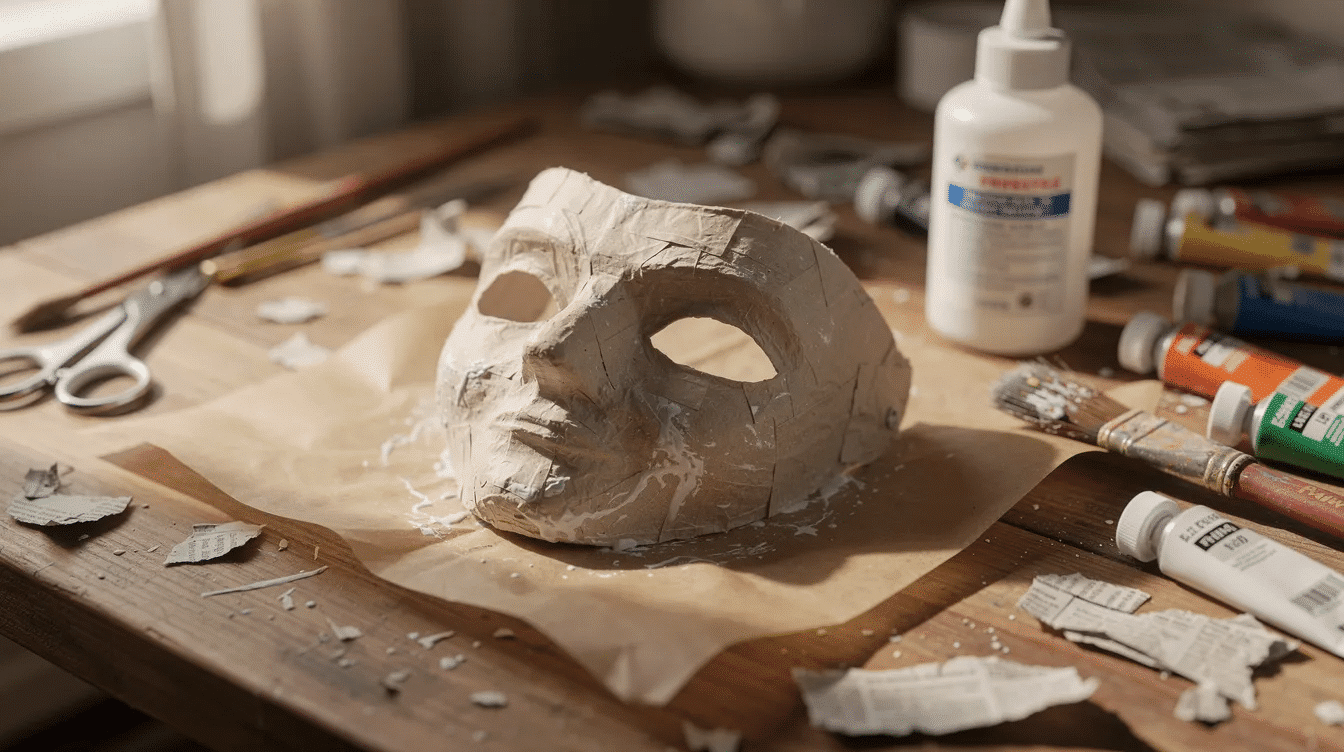
Different types of paper leave different surfaces. Sand rough paper towels or egg-carton clay, then add a smooth final coat of printer paper or tissue.
Undercoat with white acrylic paint or gesso, especially over blue towels or bright tissue. Use acrylics for durable colour; poster paint is fine for kids. Finish with varnish, Mod Podge, or spray sealer to protect against light moisture. These are not fully waterproof outdoors.
For more comments, tips, videos, and inspiration, check a trusted craft website or youtube channel, or browse Simply Paper Crafts for general paper crafting inspiration, then create your own ideas through creativity and practice, maybe even mixing papier mache with vintage paper craft ideas like old book pages or sheet music. Paper mache is fun because every material changes the result.
FAQ
Can I use regular printer paper instead of newspaper for paper mache?
Yes. Printer paper works well, especially as a smooth outer layer. Use narrow strips and a strong PVA paste because it softens more slowly than newspaper.
Is paper mache without newspaper as strong as traditional newspaper mache?
Yes, it can be. Strength depends on layers, adhesive, and armature, not just newspaper. Brown Kraft paper, shop towels, and layered office paper can be stronger.
What is the cheapest paper I can use if I don’t get newspapers anymore?
Use what you already throw away: junk mail, worksheets, delivery wrapping, envelopes, and brown packing paper. Save clean scraps in a labelled box.
Can I do paper mache with glossy magazines or catalogues?
Only as surface collage. Glossy pages resist water-based glue, so build the base with absorbent paper first. Light sanding may help semi-gloss pages stick.
How do I stop non-newspaper paper mache from going mouldy?
Use thin, well-squeezed layers, dry each layer completely, and avoid closed cupboards or plastic bags. Salt, vinegar, or tea tree oil can help, but airflow matters most.