
Key Takeaways
- You can make a paper mache mask in a weekend using paper strips, paste, and a simple mold like your own face, a balloon, cardboard, or wire mesh.
- The project has three main phases: building a form, applying paper layers, and decorating.
- Use crumpled paper and masking tape to create the basic shape, then completely cover it with layers of paper mache.
- Paper strips build strength, while paper mache clay helps with sculpting details like the nose, lips, and eye sockets.
- Plan 2–3 days total so the mask can dry completely before you paint, seal, and wear it.
Introduction: What You’ll Learn in This Tutorial
Paper mache is an affordable craft for making custom masks for halloween, cosplay, school plays, party decorations, or wall art. With newspaper, glue, and a few craft supplies from around the house, you can create your own masks that look amazing without expensive materials.
In simple terms, paper mache means paper strips bonded with paste. As Britannica explains, the method uses paper pulp or strips with adhesive to form lightweight objects. Paper mache clay is different: it is a thicker, clay-like mixture used for sharper details and smoother texture.
This tutorial walks through how to make a paper mache mask step by step, from choosing a mold to cutting eye holes, adding ribbon, and sealing the finished mask.
- Supplies and Tools You’ll Need
- Prepare Your Workspace and Base Mold
- Step 1 – Build the Basic Mask Shape with Crumpled Paper and Masking Tape
- Step 2 – Shape Eye Sockets, Nose, and Other Facial Features
- Step 3 – Apply Paper Mache Strips to Create a Strong Shell
- Step 4 – Using Paper Mache Clay for Detailed Features (Optional)
- Step 5 – Remove the Base and Refine the Mask Shape
- Step 6 – Cutting Eye Sockets, Breathing Holes, and Attachment Points
- Step 7 – Sanding, Priming, and Painting the Mask
- Step 8 – Adding Hair, Textures, and Final Details
- Tips for Working with Kids and First-Time Makers
- FAQ
Supplies and Tools You’ll Need
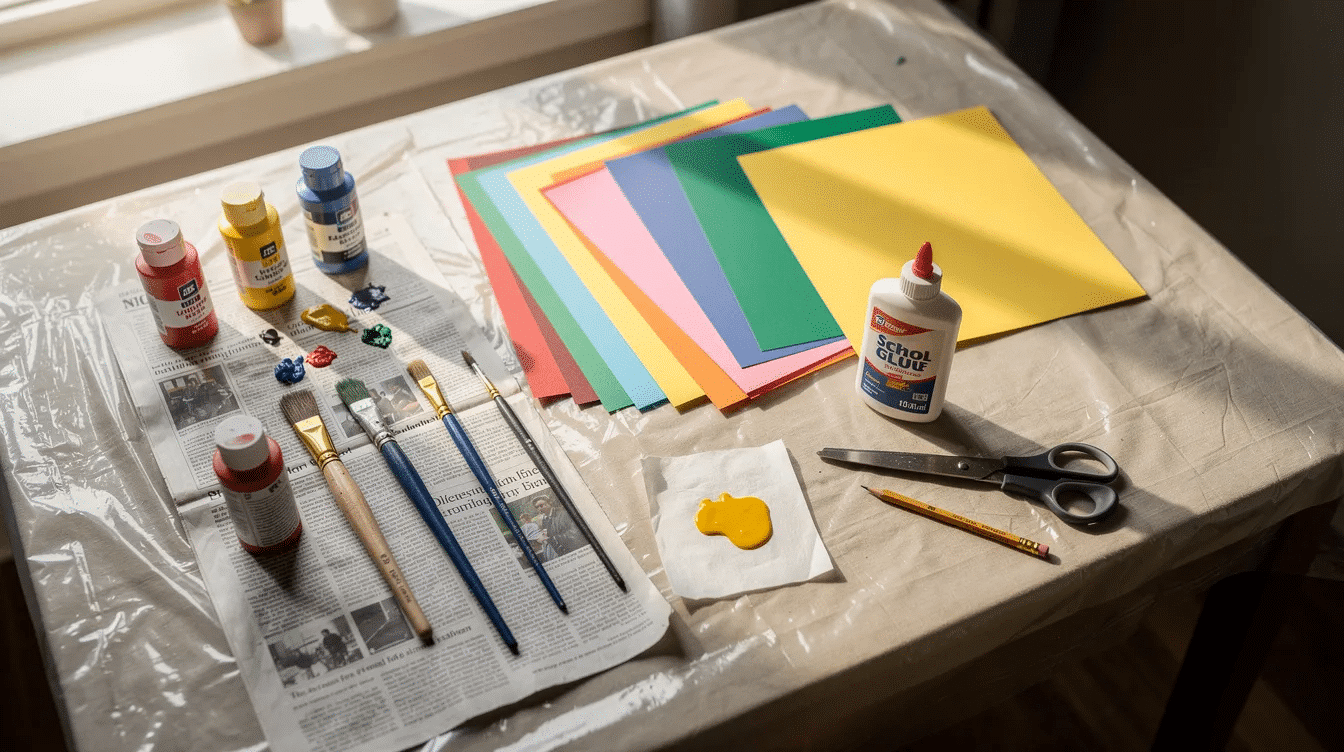
Gather your supplies before the wet paste comes out, paying attention to the top craft paper supplies for creative projects so your mask is sturdy and easy to decorate.
Category | Materials |
|---|---|
Base | balloon, cardboard, aluminum foil, sculpting wire mesh, or a face-safe mold |
Structure | newspaper, scrap paper, paper strips, crumpled paper, masking tape |
Paste | 1 part flour with 2 parts warm water, or watered-down craft glue such as elmer’s glue |
Details | paper mache clay, extra cardboard, cloth, craft foam |
Tools | scissors, brush, bowl, pencil, ruler, craft knife for adults, sandpaper |
Finish | gesso, Flexbond, white paint, acrylic paint, glitter, beads, clear varnish |
You may also want plastic wrap or petroleum jelly if molding near skin, a dust mask for sanding, and an old shower curtain or sheets to protect the table. |
Prepare Your Workspace and Base Mold
Paper mache gets wet and sticky, so cover your table with newspaper over wax paper, freezer paper, or plastic. Keep a damp cloth nearby for hands and spills, and look around your home or studio for other simple paper craft supplies and inspiration that can make the process smoother.
Choose your mold:
- Own face: Only do this with a helper, plastic wrap, and petroleum jelly. Never block nostrils or the mouth.
- Balloon: Inflate it, sit it in a bowl, and tape it so it does not roll.
- Cardboard: Draw a face outline, cut it out, and bend it slightly for a simple flat mask.
- Wire mesh: To create the base of a mask, sculpting mesh can be used to form the shape, which is then covered with paper mache strips.
For a wearable fit, take basic measurements of the face, including the distance from the top of the forehead to the chin, down to the eyes, and the distance between the eyes. When shaping the mask armature, mold the mesh to the contours of the face, making indentations for the eyes and curving around the forehead and cheeks.
Step 1 – Build the Basic Mask Shape with Crumpled Paper and Masking Tape
This step creates the 3D foundation: forehead, nose, cheekbones, chin, and jaw. Start with your foil, balloon, mesh, or cardboard form.
Press small balls of crumpled paper where you want volume. Add a brow ridge, cheekbones, and a nose bridge. Wrap each piece with masking tape so it will stick firmly and not shift under wet paste.
Keep building slowly. A paper mache mask looks better when the jawline and chin have shape instead of lying flat. Check the profile in a mirror or compare it with a printed figure reference or photo, or explore creative paper mache design ideas to inspire different mask shapes.
Step 2 – Shape Eye Sockets, Nose, and Other Facial Features
Now refine the face. Roll thin pieces of paper and tape them around the eye sockets to form shallow depressions. These guides help later when you cut the eye holes.
For the nose, stack small crumpled paper pieces for the bridge and tip, then secure them with tape. Make it narrow for a human mask or wider for an animal snout. Add cheeks, lips, brow ridges, horns, or a muzzle with gradual layers.
Completely cover all loose stuffing with masking tape. If wet paste soaks straight into unprotected paper, it can sag and lose the shape you worked to create.
Step 3 – Apply Paper Mache Strips to Create a Strong Shell
Mix paste using 1 part flour with 2 parts warm water, or use watered-down craft glue. The paste should feel like thin pancake batter, not heavy dough.
For best results, hand-tear newspaper into strips rather than cutting, as torn edges blend better. Make strips about 1–2 inches wide. Use narrow strips on curved areas to create a smooth edge, and for points and corners, fold a strip over on itself to ensure proper coverage.
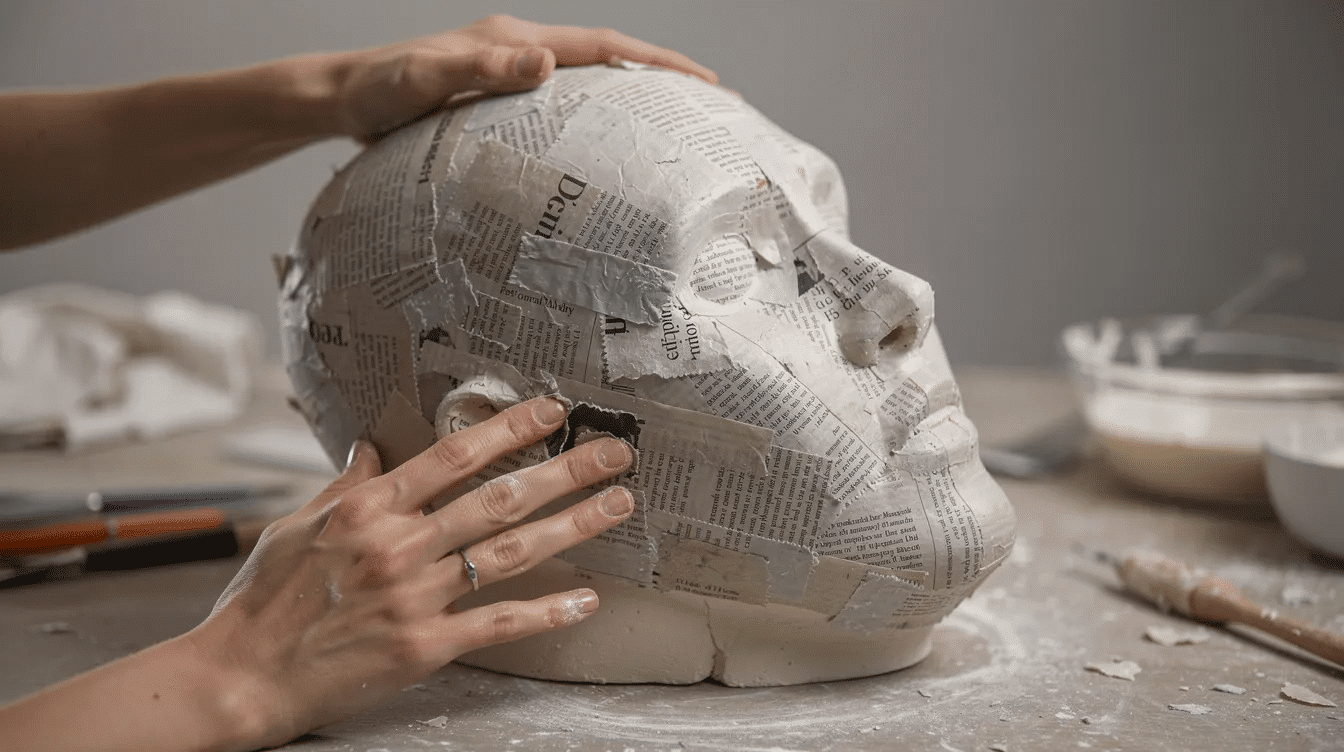
Dip one layer of paper into paste, wipe off excess with your fingers, then lay it on the front. Start by covering the front of the mask with strips, curving them to contour around the shape and tearing them off just before the edge. Overlap each strip and apply each layer of paper in alternating directions to maximize strength.
Cover the entire front of the mask with at least two layers of paper strips, allowing them to dry enough to hold their shape before flipping the mask over to add layers to the back. For a strong wearable shell, use 3–4 layers minimum; 5–6 layers is better for kids who may handle it roughly.
Let the paper mache mask dry completely for about 24 hours, depending on room humidity, before heavy trimming or painting.
Step 4 – Using Paper Mache Clay for Detailed Features (Optional)
Paper mache clay is ideal for detailed features because it allows more accurate sculpting than using paper strips alone. Use it for eyelids, nostrils, teeth, raised decorations, wrinkles, or carved lines around the eye sockets.
Apply a thin layer only where needed. Adding too much paper mache clay can increase the weight of the mask, so cover the mask with a thin layer for a smoother finish without excessive heaviness.
Smooth the clay with damp fingers or a small tool. When using paper mache clay, it is important to smooth the edges into the paper mask to ensure a good grip and blend the details seamlessly. Let clay areas dry 24–48 hours if they are thick.
Step 5 – Remove the Base and Refine the Mask Shape
Do not rush this step. The shell should feel completely dry, firm, and cool-free to the touch before removing the mold.
Turn the mask over. Pull out foil or crumpled paper in chunks, working gently so the shell stays intact. If you used a balloon, pop it with a pin and peel out the rubber. If you used wire mesh, you can leave it inside for strength or detach it for a lighter mask.
Trim rough edges with scissors. Adults can use a craft knife to refine the jaw, cheeks, or forehead line.
Step 6 – Cutting Eye Sockets, Breathing Holes, and Attachment Points
Comfort matters, especially if kids will wear the mask on halloween night or during a play.
Hold the mask to the face and mark where the wearer’s eyes actually sit. Cut small eye holes first, then enlarge them gradually. This prevents uneven openings and helps you figure out the safest view.
Add nostril or mouth holes if breathing feels restricted. Punch side holes near the temples or ears, then thread elastic, string, or ribbon through them so the mask stays on the head.
Step 7 – Sanding, Priming, and Painting the Mask
Lightly sand bumps with fine-grit sandpaper. Wear a dust mask because dry paper and clay create fine dust.
Before painting, it is advisable to use smoothing compounds like gesso or Flexbond to create a smooth finish on the mask’s surface. A coat of gesso or white paint also hides newsprint and gives paint a clean base.
Acrylic paints are recommended for painting paper mache masks because they dry quickly, can be easily mixed, and are relatively inexpensive. Add base colors first, then shade around eye sockets, cheeks, and the nose. Highlight raised areas with a dry brush.
Decorate the finished mask using acrylic paints and seal with a clear varnish to protect the surface. After painting, applying a sealant such as an acrylic medium or shellac can provide extra protection for the mask, especially if it will be worn frequently or displayed outdoors.
Step 8 – Adding Hair, Textures, and Final Details
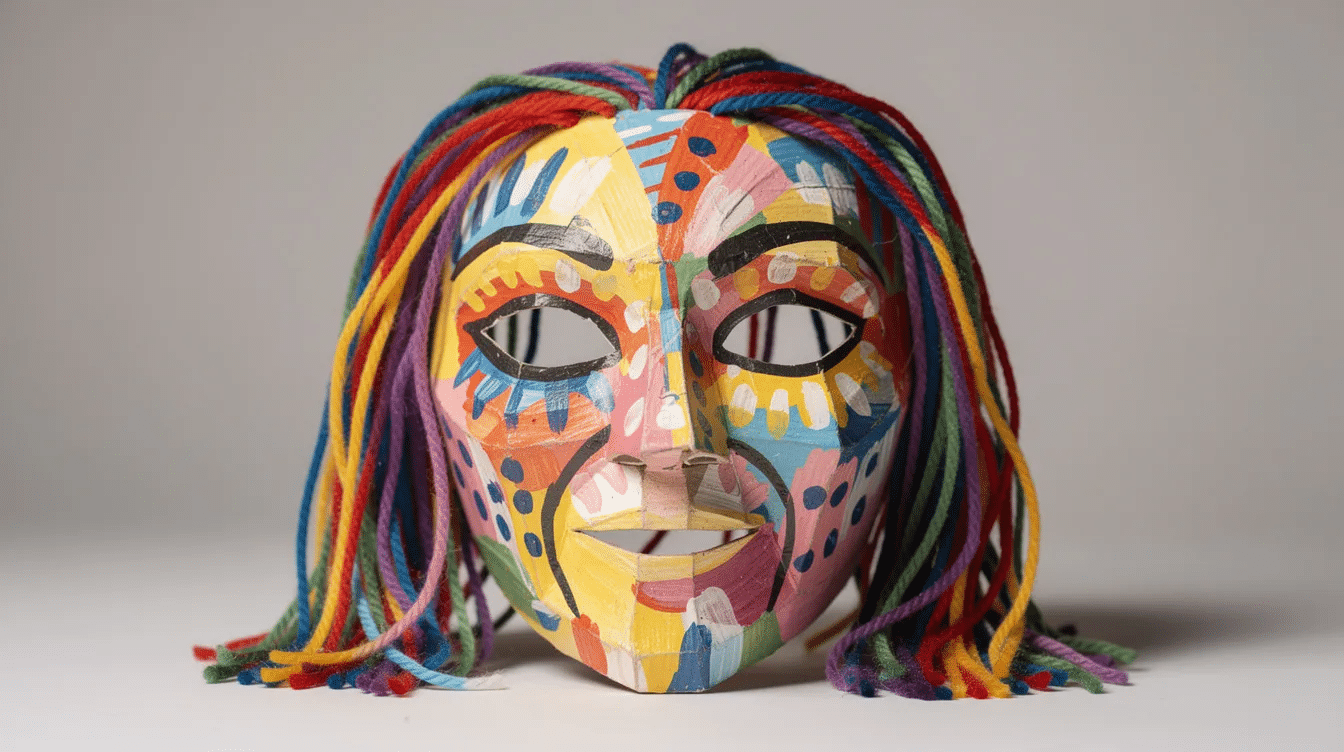
This is where the project becomes so much fun. Glue yarn, string, fabric strips, or faux fur along the top, sides, or chin for hair, beards, or manes.
If you decided to add scars, scales, feathers, or decorative patterns, use tiny bits of paper mache clay or extra strips. Add beads, metallic paint, sequins, or glitter after the paint is dry.
Test-fit the mask. Adjust ribbon tension, soften the inside with foam or cloth pads, and make sure nothing scratches the skin. If you are interested in displaying it instead, mount it on a wall as a finished craft piece, or adapt it into one of many creative uses of paper mache for art and decor.
Tips for Working with Kids and First-Time Makers
Keep the project short and simple for beginners. A half-balloon or flat cardboard base is easier than a full sculpted face.
Before kids start, pre-tear paper strips and pre-mix paste. Let children press strips onto the form, paint, and decorate, but have an adult handle scissors, trimming, and eye holes.
Good beginner themes include:
- animal masks for a school play
- superhero masks for a birthday party
- spooky faces for October 31, 2026
- carnival masks with glitter and bright decorations
Break the project into sessions: build the form, add layers, let it dry, then paint. Watch for frustration during drying time and remind everyone that waiting makes the difference between a floppy mask and a strong one.
FAQ
How long does it take for a paper mache mask to dry?
Each layer of paper strips usually needs 8–24 hours to dry, depending on paste thickness, airflow, and humidity. A full mask with several layers and paper mache clay often needs 2–3 days before painting or wearing.
Can I make a paper mache mask directly on my own face?
Yes, but only with care. Use plastic wrap and petroleum jelly, keep nostrils clear, work with a helper, and use thin layers. Never let heavy wet paper sit on the face for long.
What kind of paper works best for paper mache masks?
Newspaper is easy to tear, flexible, and inexpensive. Packing paper and thin office paper also work. For strength, use softer newsprint inside and stronger brown paper outside.
Is paper mache waterproof once it’s painted?
No. Sealed paper mache is water-resistant, not waterproof. Keep the mask indoors when possible, and use acrylic varnish if it may face brief moisture.
How do I fix cracks or soft spots in my paper mache mask?
Fill small cracks with paper mache clay or pasted strips, then sand and repaint. Soft spots need more layers of strips and time to dry completely.