Paper weight directly affects every aspect of your folding experience. The mass of your sheet determines how easily creases form, how sharp those crease lines stay, and whether your finished model holds its shape for a few years or a few hours. Choosing the wrong weight can turn a simple crane into a frustrating exercise or make a complex insect design physically impossible to complete.
In 2025, most commercial origami papers range roughly from 50 GSM to 120 GSM, with specialty options dipping as low as 17 GSM for tissue-thin sheets or exceeding 300 GSM for card-like stocks. This article focuses specifically on paper weight as measured in grams per square meter—not physical paperweights you might place on your desk. Beginners typically do best with thinner papers around 60–80 GSM, while advanced folders often choose very thin or very heavy papers depending on the model type. The following sections will give you practical recommendations to match the right sheet to your next project.
- Understanding Paper Weight: GSM vs. Pound Weight
- Typical Weights of Common Origami Papers
- How Paper Weight Affects Folding: From Simple Cranes to Complex Tessellations
- Comparing Origami Paper Weight to Everyday Papers
- Choosing the Right Weight for Different Origami Styles
- Advanced Techniques: Modifying Effective Paper Weight
- Practical Buying Tips for Origami Paper by Weight
Understanding Paper Weight: GSM vs. Pound Weight
Paper weight refers to the mass of a sheet, which correlates closely with both thickness and stiffness. The heavier the paper, the thicker and more rigid it typically feels in your hands.
GSM stands for grams per square meter—the weight of a single sheet measuring one meter by one meter. A 70 GSM paper weighs 70 grams for that single sheet area, while 100 GSM paper weighs 100 grams. This measurement provides a standardized way to compare paper weights across different brands and countries.
The U.S. system uses “pound” (lb) weight based on ream weight for a specific paper size, which creates confusion. Standard copy paper labeled “20 lb bond” translates to approximately 75–80 GSM. Japanese origami brands and most international origami authors prefer GSM or simply describe papers as thin, medium, or thick without numerical specifications.
Here are some origami-relevant GSM ranges to help you understand what different weights feel like:
- Standard kami (traditional origami paper) typically measures 60–70 GSM with a smooth surface and crisp handling
- Printer paper and copy paper sits around 75–80 GSM, slightly stiffer than dedicated origami sheets
- Elephant Hide and similar wet-folding papers reach 110–120 GSM, feeling almost like thin cardstock
- Very thin washi and handmade papers range from 25–40 GSM, surprisingly strong despite their light, almost tissue-like feel
Typical Weights of Common Origami Papers
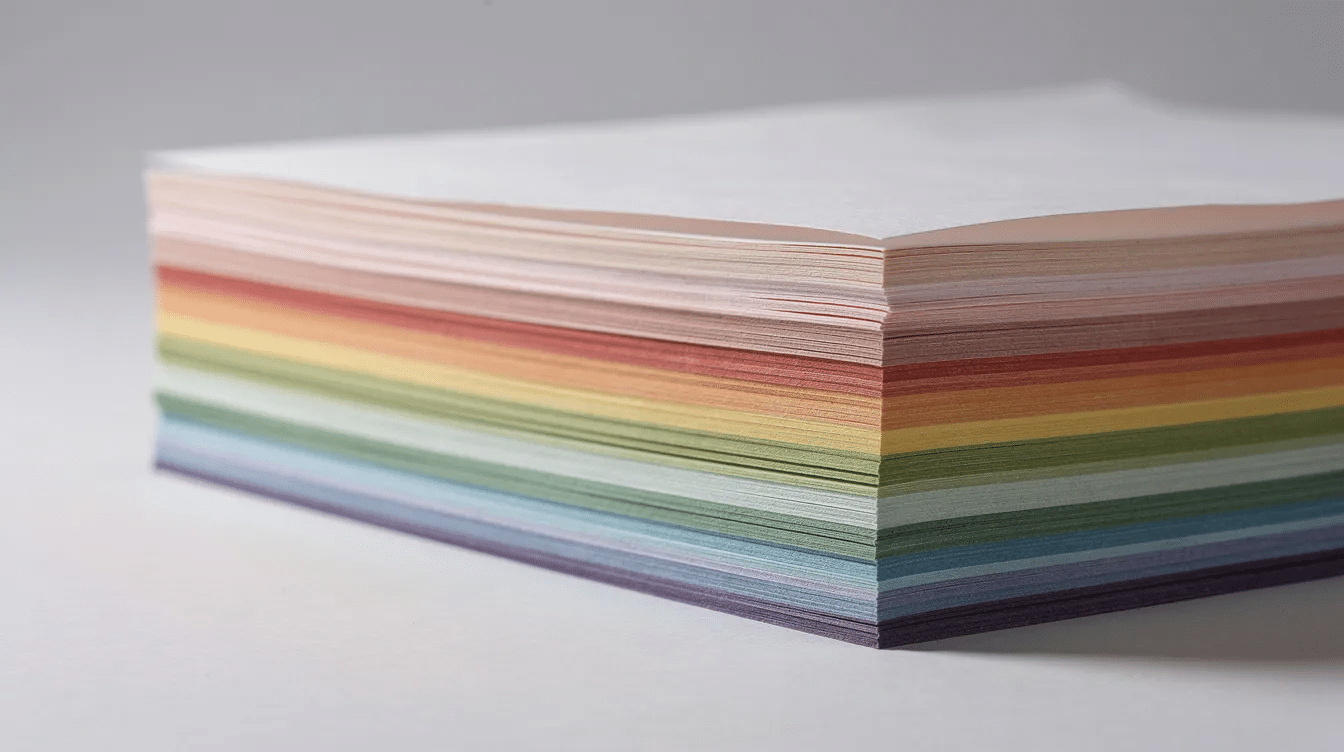
Different origami papers have characteristic weight ranges that influence which models they suit best. Understanding these ranges helps you select the right material before you make a single fold.
Kami remains the most widely available standard origami paper, usually measuring 60–63 GSM. These sheets come pre-cut in squares (commonly 15×15 cm or 24×24 cm), colored on one side with white on the other side, and offer excellent balance between foldability and crease retention. Kami works well for traditional models like the crane or flapping bird, where 20–30 layers accumulate without excessive bulk.
Washi and other handmade Japanese papers vary dramatically. Ultra-thin long-fiber types made from kozo (mulberry bark), gampi, or mitsumata often hit just 20–50 GSM—sometimes as low as 17 GSM in tissue forms. Despite this apparent fragility, the long fibers create surprising strength through interlocking, making these sheets suitable for complex folds where layers exceed 50 without ballooning. Crisper washi versions sit around 50–70 GSM for easier handling.
Foil-backed origami foil combines a thin paper base (roughly 30–50 GSM) bonded to aluminum foil, creating a composite around 50–80 GSM total. This material holds its shape exceptionally well, making it ideal for sculpted models with fine details like insect legs or curved surfaces. The foil layer enhances shaping without adding much weight.
Tant paper measures denser at 78–90 GSM with color running through the entire thickness rather than printed on one or both sides. Its mild roughness and structural integrity make it particularly good for modular origami units and tessellations, where pieces must interlock precisely and hold their shape under tension, similar to how different types of paper for craft projects are chosen for strength, texture, and finish.
Heavy wet-folding papers like Elephant Hide and Wyndstone Marble typically measure 110–120 GSM. These sheets feel card-like and stiff when dry, with actual thickness around 105–120 microns. When moistened, they soften into malleable materials perfect for organic sculptural forms, then dry rigid and durable.
How Paper Weight Affects Folding: From Simple Cranes to Complex Tessellations
The ideal weight depends on your model’s complexity, finished size, and desired aesthetic—whether you want sharp creases or soft, organic curves.
Lighter papers in the 30–60 GSM range allow many folds to accumulate in complex models without creating impossible bulk. Super-complex figures like realistic insects, which might require 100+ individual folds, demand these thin sheets. However, lighter paper tears easily under imprecise handling, making it challenging for beginners who haven’t yet developed precise folding technique.
Medium weights from 60–90 GSM strike the optimal balance for most folders. Standard 63 GSM kami or 80 GSM printer paper fold crisply yet forgive minor errors during a valley fold or mountain fold. This range suits traditional animals, geometric shapes, and modular origami assemblies well, including many of the top origami designs for every skill level. The sheets hold creases without fighting back, and layers stack manageably up to about 20 thick.
Heavier papers between 100–160 GSM resist tearing and hold three-dimensional shaping exceptionally well. Tessellations with deep pleats need this rigidity to prevent collapse. Wet folding techniques—where moisture softens the paper for sculpting curved surfaces before it dries rigid—require sheets like 110 GSM Elephant Hide. These heavier materials create great paper for display pieces like Kawasaki roses or naturalistic animals.
Importantly, two papers with identical GSM can behave quite differently based on fiber content. A 70 GSM cotton washi handles tougher and produces softer creases than 70 GSM wood-pulp copy paper, because longer fibers distribute stress more evenly across the sheet. This is why actual thickness in microns doesn’t always match expected behavior from GSM alone.
Comparing Origami Paper Weight to Everyday Papers
Understanding familiar papers helps you gauge what different GSM values actually feel like, even before purchasing specialty origami materials.
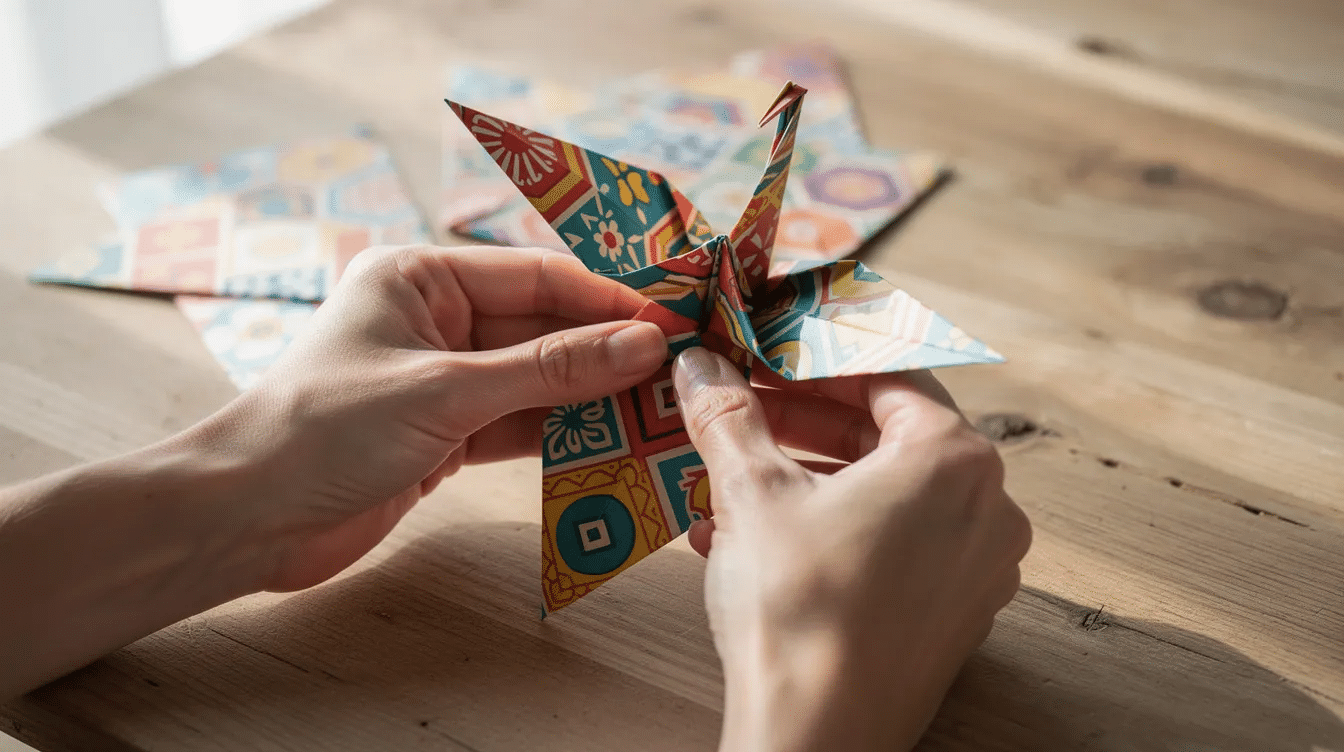
Standard office copy paper in 2025 typically measures 75–80 GSM (labeled as 20 lb in the U.S.), with actual thickness around 0.05–0.10 mm. This cheap origami paper alternative works fine for simple cranes, boxes, or practice sessions, but its shorter wood pulp fibers create sharper yet more brittle creases than dedicated origami sheets. Beyond about 20 layers, copy paper becomes unmanageably thick and loses the flexibility needed for tight sinks or reverse folds, so many crafters turn to more specialized craft paper supplies for creative projects when they want better performance.
Magazine paper and newsprint fall lighter at roughly 35–55 GSM but perform poorly for origami. These materials tear readily under tension, fail to retain shapes in anything beyond basic models, and their printed ink or thin coating can crack along creases. Despite easy sourcing, they represent poor choices for serious folding.
Historical “manifold” or second-sheet papers and modern airmail papers (typically 30–40 GSM) offer examples of thin, crisp sheets that actually work well for folding. These lightweight materials share characteristics with high quality handmade paper sheets for creative projects designed specifically for complex origami.
Notebook paper mirrors copy paper at approximately 80–90 GSM—adequate for booklets or simple shapes but not complex designs. Lightweight sketch or drawing paper often sits around 90–110 GSM and can substitute for papers like Tant when creating boxes, envelopes, or simple wet-folded animals. These same household and school papers also lend themselves to a wide range of fun paper activities for creative minds beyond origami. Business card stock at 300–400 GSM enters territory too rigid for most origami except perhaps micro-modular constructions.
Choosing the Right Weight for Different Origami Styles
No single paper weight fits all origami applications. Your selection should match your intended style: traditional figures, modulars, complex designs, wet-folding, or display pieces.
Traditional models like cranes, flapping birds, and simple animals thrive on 60–80 GSM materials. Standard kami or colored copy paper provides ease of handling without excessive bulk. These weights allow beginners to develop technique while producing satisfying finished pieces.
Modular origami assemblies—Sonobe units, polyhedra, kusudamas—require 70–100 GSM sheets for structural strength. Individual units must hold their shape while interlocking with others under pressure. Tant paper and similar dense-fiber materials excel here, scored high in reviews for memory retention and forgiveness during assembly.
Complex insects and high-layer models demand 25–50 GSM thin paper to manage 50+ layers without creating an unworkable mass. Thin washi, tissue-backed foil, or specialty sheets like Origamido papers around 20–35 GSM allow the tight packing these designs require. Working with such thin materials presents a challenge requiring advanced skills.
Wet-folding and sculptural pieces need 110–160 GSM sized papers that soften with moisture for shaping, then dry rigid. Elephant Hide remains a favorite, often described as the best manufactured paper for these techniques due to its exceptional memory and tensile strength. Heavily sized watercolor paper can also work for large sculptural forms.
For scale considerations: very small models under 5 cm benefit from lighter paper that navigates tight folds easily, while large display pieces over one meter leverage heavier or laminated sheets for visual presence and durability. For instance, choosing the right weight makes it much easier to execute detailed creative paper duck folding ideas cleanly at both miniature and larger scales.
Advanced Techniques: Modifying Effective Paper Weight
Experienced folders can modify how paper behaves through back-coating, resizing, or laminating—effectively adjusting stiffness and strength without dramatically changing GSM numbers, a level of material control that also benefits makers planning paper crafts that sell well where durability and finish really matter.
Back-coating involves gluing two sheets of thin tissue (typically 25–30 GSM each) together with wheat paste or methylcellulose. The result is a stronger composite around 50–60 GSM with different materials or colors on each side—useful for models where both the front and back surfaces are visible. The glue bonds also increase overall stiffness and crease memory beyond what either single sheet would provide.
Tissue-foil lamination bonds tissue paper to household aluminum foil, creating a very malleable composite that shapes fine details like insect legs or antenna while holding its shape permanently. Though thin in GSM, the foil backing provides structural support that pure tissue paper could never achieve, similar to how different specialty papers for craft techniques are chosen for specific structural or decorative effects.
Resizing treats papers like gampi or kozo with methylcellulose or CMC (carboxymethyl cellulose) solutions. This process increases stiffness and crease memory while preserving the paper’s light weight—a 30 GSM sheet can behave like medium-weight paper after proper sizing treatment. Designers creating complex original models often use this technique to control both weight and surface behavior precisely.
These methods carry risks: bubbles can form during gluing, materials can over-stiffen if applied too heavily, and mismatched materials sometimes create unpredictable results. However, they remain standard practice among advanced folders who need control beyond what commercial papers offer, and the same sensitivity to layering and drying is crucial in creative paper mache project ideas and other paper mache art and craft uses.
Practical Buying Tips for Origami Paper by Weight
When purchasing origami paper in 2025, check GSM information on packaging or online product listings carefully. Reputable suppliers now specify exact weights rather than vague descriptors, reflecting increased demand from folders who understand how weight affects their art.
For beginners building their first collection, start with 60–70 GSM kami in 15×15 cm squares for general practice. Add one heavier option around 90–110 GSM—Tant or similar—for boxes, simple wet-folding experiments, and models requiring extra structure. These two ranges cover most learning needs without overwhelming your budget.
Advanced folders should seek detailed specifications from specialist suppliers: exact numbers like 30 GSM kozo, 40 GSM lokta, or 120 GSM Elephant Hide rather than generic “thin/thick” labels. Handmade papers especially vary sheet-to-sheet, so understanding the target GSM helps predict behavior even when individual squares differ slightly.
Sample packs from multiple suppliers let you physically compare thickness and performance before committing to large sheets or expensive handmade papers. The feel of different GSM values in your hands teaches more than any description—and helps you discover which papers suit your preferred folding style. Browsing broad paper crafting inspiration and tutorials can also clarify which weights and textures you’ll actually use. Papers should be acid free if you want finished models to last without yellowing or becoming brittle over time.
Understanding paper weight measured in GSM helps you match the right sheet to each model you create. Whether you’re folding a simple crane from standard kami or sculpting an elaborate rose from heavyweight Elephant Hide, choosing appropriate weight improves both fold quality and your enjoyment of the process. Start exploring different weights, keep notes on what works for specific designs, and build your personal collection of papers suited to the art you want to create.