Paper folding has captivated people for centuries, and you don’t need years of practice to create something beautiful. Whether you’re a parent looking for screen-free activities, a teacher planning a classroom project, or an adult seeking a calming hobby, easy origami offers immediate satisfaction with minimal supplies. This guide walks you through everything you need to start folding today—from ultra-simple models to practical tips that make every crease count.
- Quick Start: The Easiest Origami You Can Fold Today
- What Makes Origami “Easy”?
- Benefits of Starting with Easy Origami
- Essential Tips Before You Start Folding
- 10 Easy Origami Models for Complete Beginners
- Easy Origami Ideas for Kids and Families
- Choosing the Right Easy Origami Resources
- Next Steps: From Easy Folds to Your Own Creations
Quick Start: The Easiest Origami You Can Fold Today
If you’re eager to start folding right now, this section gives you immediate, super-simple projects you can complete in minutes. No experience required—just a piece of paper and a flat surface.
All models in this quick-start list use a single square sheet of paper and 10 steps or fewer. Here are your best options:
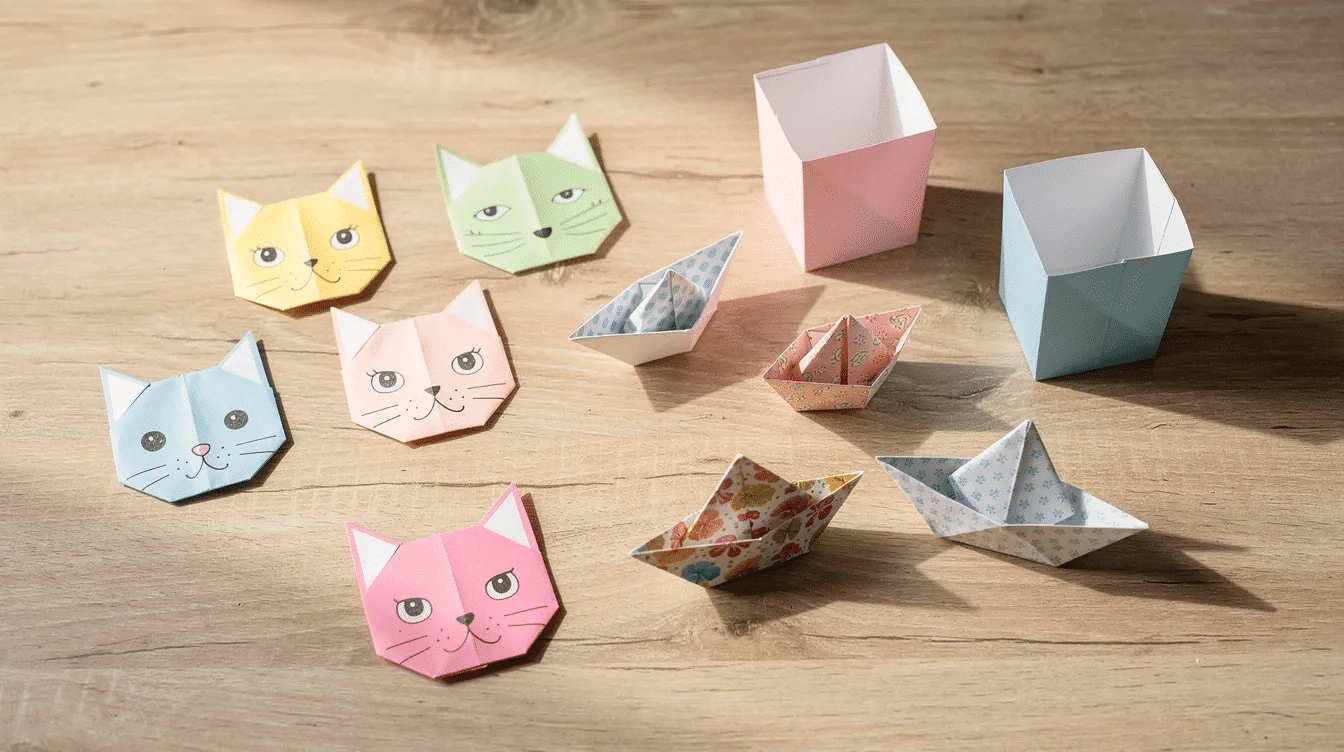
- Cat Face – A wide triangle with pointed ears that kids aged 5+ can fold and decorate with whiskers in under 5 minutes.
- Simple House – A rectangle body with a triangular roof, perfect for drawing doors and windows afterward.
- Paper Cup – A small container made from basic triangle folds that can briefly hold dry snacks.
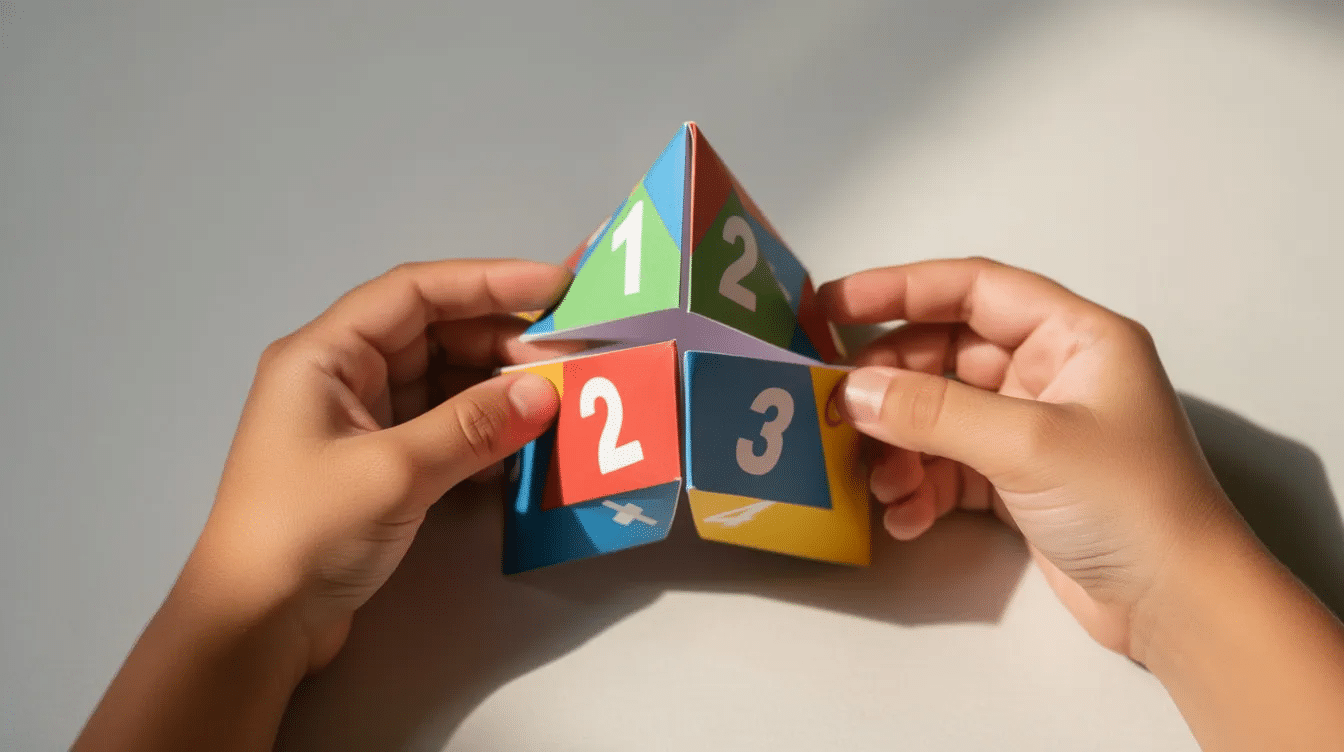
- Fortune Teller – The classic playground favorite with four flaps that open and close on your fingers.
Don’t have origami paper at home? Regular printer paper works fine. Simply cut an A4 or letter-size sheet into a 15 x 15 cm square and you’re ready to go.
More detailed model suggestions and ideas follow in later sections, but pick one easy design now and try it. The best way to learn is to fold.
What Makes Origami “Easy”?
Easy origami typically means few steps, simple bases, and no tricky techniques like sinks or reverses. These models rely on basic geometric principles—symmetry and repetitive folds—that anyone can follow.
Here are the concrete criteria to look for when choosing beginner-friendly models:
- Under 15 folds – Most truly easy projects have fewer than 15 total folds, with many requiring just 5-10.
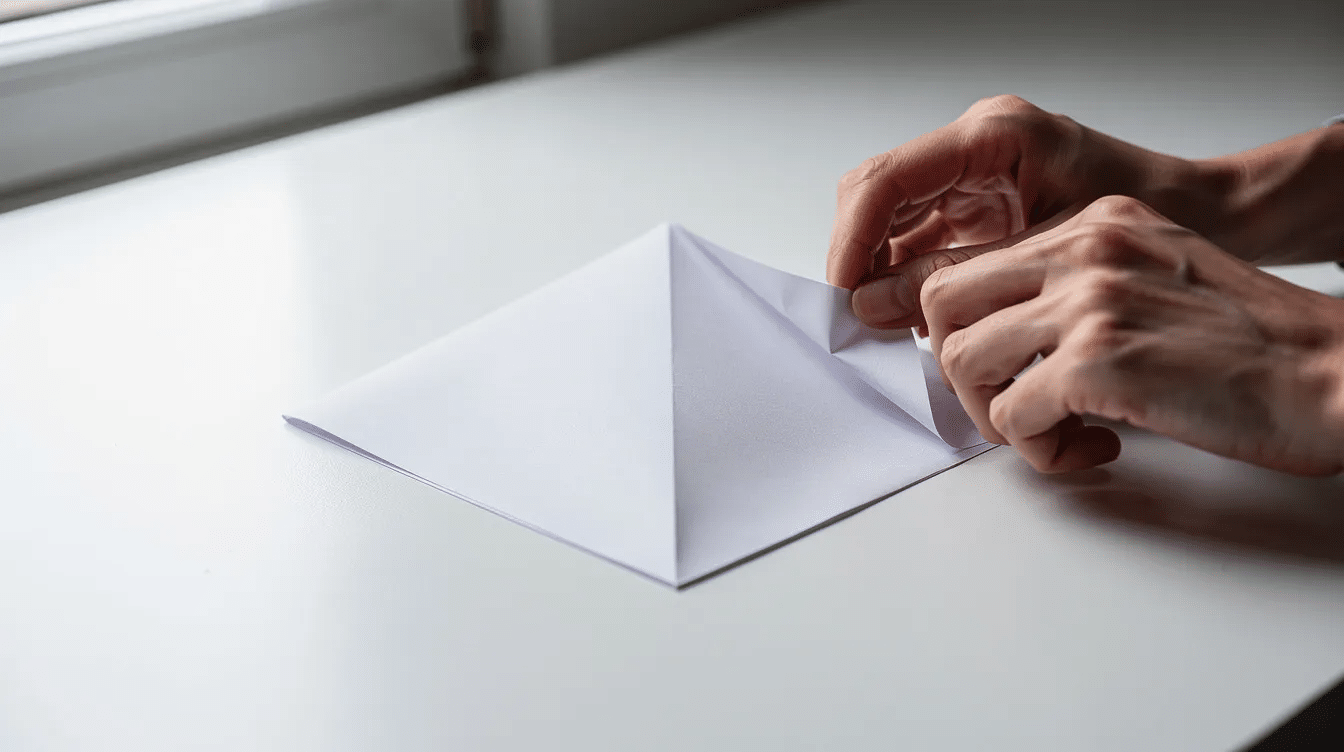
- Mostly valley and mountain folds – Valley folds bring paper toward you; mountain folds push it away. That’s the foundation of all origami.
- Clear symmetrical shapes – Easy models produce recognizable forms like animals, houses, or containers through balanced, mirrored folding.
- Single sheet of paper – Beginners should avoid multi-piece constructions until they’ve mastered the basics.
Beginner-friendly formats include:
- Step-by-step diagrams with numbered arrows and dashed lines
- Slow video tutorials filmed from above on high-contrast surfaces
- Printable instructions you can follow at your own pace
How does easy compare to complex? A simple cat face takes 5-8 steps and under 5 minutes. A multi-piece dragon might exceed 100 steps with advanced techniques. But here’s the key insight: experts emphasize that simple folds embody origami’s philosophical core of elegance through minimalism. A 6-step maple leaf achieves aesthetic satisfaction comparable to far more complex designs—without the frustration.
Benefits of Starting with Easy Origami
Simple models are the best gateway to the paper-folding hobby for kids, teens, and adults alike. Quick wins build momentum, and that momentum keeps you coming back for more, just like other fun paper activities for creative minds.
- Skill-building – Quick models help you practice accuracy, learn to follow sequential steps, and recognize basic fold patterns that appear in countless designs.
- Cognitive benefits – Studies from the Journal of Creative Behavior link short origami sessions to improvements in focus and patience. For children aged 5-11, folding enhances hand-eye coordination as precision creasing aligns motor skills with visual feedback.
- Confidence boost – Finishing a boat or crane in under 10 minutes creates a sense of accomplishment that motivates beginners to explore harder projects.
- Educational connections – Origami naturally teaches symmetry (bilateral folds demonstrate reflection) and angles (45 and 90-degree creases introduce geometry without abstraction), making it a valuable addition to math lessons.
The art of folding paper isn’t just fun—it’s a practical tool for learning and relaxation that works for any age.
Essential Tips Before You Start Folding
Before attempting any model, skim this short checklist. These practical tips prevent common mistakes and help your creations turn out crisp and recognizable.
- Choose the right paper size – Start with 15-20 cm squares. Larger paper (around 25 cm) forgives errors but can be harder for small hands. Smaller sheets demand more precision than beginners typically have.
- Know your paper types – Store-bought origami paper (60-80gsm, colored on one side) creases cleanly. Craft paper supplies like cardstock, origami paper, crepe, and tissue each behave differently in folds, so experiment to see what you like best. Printer paper (80gsm, white both sides) works well for practice. Magazine pages add vibrant colors but may have uneven texture.
- Set up your workspace – Use a flat table, keep your hands clean, and work under good light so you can see crease lines clearly.
- Slow down and align carefully – Take your time matching corners precisely before pressing down. Sharp creases (use your fingernail or a bone folder) yield neat shapes that actually look like what you’re trying to create.
- Start small, then progress – Begin with 5-minute models to build muscle memory, then advance to 10-15 minute projects once basic folds feel automatic.
10 Easy Origami Models for Complete Beginners
This list focuses on individual, well-known origami models that beginners and children can fold with minimal help. The designs are ordered roughly from easiest to slightly more challenging, so you can work through them in sequence.
Expect each model to take between 3-15 minutes depending on your experience. Every sub-section below describes what the finished model looks like, why it’s easy, and simple ideas for using or decorating it.
Most of these designs were popular with kids in the 1990s and 2000s and remain staples in classrooms and craft clubs today. They’re familiar, reliable, and proven effective for teaching.
#1 Easy Origami Cat Face
The cat face starts from a simple triangle and mainly uses folds to form ears and a chin. It’s suitable for children aged 5+ with minimal help, making it one of the most accessible origami animals for absolute beginners.
The finished model is a wide triangle with two pointed ears at the top and a flat base perfect for drawing a mouth, nose, and whiskers. You can make it from any small rectangle cut into a square—half of an A4 sheet trimmed down works perfectly.
Decorating ideas include adding stripes to create a tiger, drawing a mane for a lion, or sketching big cartoon eyes for a playful kitten. This model usually takes less than 5 minutes and is often used as a warm-up in kids’ craft sessions before moving to slightly harder designs.
#2 Simple Origami House
The traditional house features a rectangle body with a triangular roof on top, all folded from a single square of paper. It’s a classic that demonstrates how simple folds can create recognizable structures.
The process involves folding in half, bringing corners together to form the roof, and shaping the base of the house. Nothing complicated—just basic symmetry and clean lines.
White printer paper works especially well for this model because children can draw doors, windows, flower boxes, and gardens afterward. Extra folds can transform the house into simple furniture shapes like tables or small pianos for imaginative play scenarios.
This model appears in early-primary classrooms worldwide because the steps are easy to remember and the results are immediately satisfying.
#3 Traditional Origami Boat
This well-known paper boat is made from a rectangular sheet (like A4) and ends in a pointed, hat-like shape you can gently set on water. It’s been passed down for decades and remains popular at family events and school camps, often appearing in collections that highlight top origami designs for every skill level.
The sequence involves mainly folding halves and corners, then pulling the paper open to reveal the boat form. The locked hull structure means it can actually float—experiments show boats made from thicker 80gsm paper last 2-5 minutes in a tub, while thin 60gsm paper sinks in under 60 seconds.
Try a fun experiment with kids: make several boats using different papers and see which lasts longest in water. It’s a hands-on way to explore materials and buoyancy without any formal lesson.
#4 Classic Paper Plane
The basic dart-style plane is technically origami—it uses only valley folds and a standard A4 or Letter sheet. No glue, no scissors, just folding paper into something that flies.
The finished plane has a long, thin nose and straight wings that can be adjusted slightly for different flight paths. Small changes to the back edges of the wings alter stability and trajectory, teaching children how shape affects motion.
Time a flight contest along a hallway, measuring distance with a tape measure. This model takes under 2 minutes once you know the steps, making it perfect for quick breaks or rainy-day fun.
#5 Origami Cup
The cup is a small, open-topped container often folded from a square napkin or printer paper. It demonstrates how flat paper becomes three-dimensional through clever folding and also pairs well with creative paper cup craft ideas for fun projects.
The process involves folding the paper into a triangle, then bringing corners across to form a pocket. It can briefly hold dry snacks like crackers or even water for about 30 seconds before the paper softens.
Use this model at picnics or parties as a fun way for kids to serve small candy or treats. The simplicity of the folds makes it useful for teaching left-right orientation and following sequential steps.
#6 Fortune Teller (Cootie Catcher)
This interactive model is folded from a square and becomes a finger puppet with four flaps that open and close. It’s the classic playground item that entertained generations of children, much like other fun folding projects such as paper ducks.
The finished shape is a 3D square that kids place on their fingers to reveal hidden numbers or messages inside. Write simple fortunes, quiz questions, or vocabulary words inside the flaps for educational twists.
It’s perfect for birthday party games or classroom activities. Folding precision matters slightly more here than in simpler models (diagonals need to align cleanly), but it remains beginner-friendly with a little patience.
#7 Origami Balloon (Waterbomb)
The balloon is a cube-like paper shape that starts flat but can be blown into through a small hole to inflate it. It’s a satisfying model that adds a new dimension—literally—to your folding skills.
This design uses the classic waterbomb base, introducing beginners to diagonal folds and layered pockets. Colored paper makes attractive strings of balloons as lightweight decorations for a desk or shelf.
Outdoors with supervision, you can fill the balloon with a tiny bit of water before tossing it—just check with parents first and use it in appropriate spaces. This design is a step up in difficulty but manageable for beginners who have completed a few simpler models first.
#8 Origami Tulip and Stem
This flower requires two sheets of square paper: one for the blossom and one for the straight green stem. It’s a great introduction to multi-component origami without overwhelming complexity and can be combined with tissue paper flower projects for any occasion.
The finished tulip is a compact flower head that can be gently opened at the top to show petals. Fold several in different colors—red, yellow, pink—and arrange them in a small jar or cup as a paper bouquet.
The flower introduces slightly more complex folds, while the stem remains simple and repetitive. This project is especially popular around spring holidays and Mother’s Day for handmade gifts that last longer than real flowers.
#9 Flapping Bird
This interactive model is a simple bird that moves its wings when you pull gently on its tail. It uses a preliminary base and a few extra steps, making it slightly easier than the traditional crane but just as impressive.
Lightweight origami paper helps the wings flap smoothly without tearing. Children enjoy the “magic trick” of making the bird appear to fly, which makes it a favorite at workshops and craft parties.
Mastering this model prepares you for the more detailed crane design. The mechanics of the flapping action demonstrate how lever principles work—pull the tail, watch the wings rise.
#10 Traditional Origami Crane
The crane is one of the most famous paper models worldwide, often used as a symbol of peace and good wishes. It represents a milestone in any folder’s journey.
The finished shape features a long neck, pointed beak, wide wings, and a tail—all formed from a single square without cutting or glue. It uses the bird base and requires more careful folding, but is achievable for most beginners with patience.
The custom of folding 1,000 cranes as a wish or memorial project (known as senbazuru) often involves groups working together over several weeks. Consider the crane your milestone model—attempt it after you’re comfortable with the easier designs above.

Easy Origami Ideas for Kids and Families
Origami becomes even more rewarding when you integrate it into everyday family life. These ideas help you turn simple models into memorable activities for children aged 5-11 and beyond, and they can complement other simple paper crafts inspiration you explore together.
- Themed crafting afternoons – Dedicate one weekend to folding only origami animals (cat, fox, bird), then switch to flowers the next. Themes keep things fresh and focused.
- Seasonal decorations – Boats and planes work for summer play; fold trees and paper stars for December celebrations; create hearts for Valentine’s Day.
- Classroom activities – Teachers can use house, cat face, and fortune teller models for art lessons or to demonstrate symmetry in math class.
- Handmade gifts – Simple envelopes, tulips, and boxes filled with small treats make thoughtful presents for birthdays or thank-you notes. The personal touch matters more than perfection, and you can also explore crepe paper flower ideas for stunning DIY gifts.
These applications transform folding from a solo activity into shared experiences that bring people together.
Choosing the Right Easy Origami Resources
Good instructions make even tricky-looking models feel manageable. The format you choose can determine whether you succeed or give up in frustration.
- Written diagrams – Look for clear arrows, distinct crease lines (dashed for valley, dotted for mountain), and numbered steps. This traditional format has been the gold standard since the 1950s.
- Video tutorials – Recommend slow-paced videos filmed from above on a contrasting background. Being able to pause and rewind makes learning at your own pace possible.
- Books – Beginner-friendly titles published in the last 10-15 years typically focus on simple animals, flowers, and paper toys with photo-heavy instructions. Check reviews before buying.
- Printable guides – Step-by-step PDFs work well for group activities, after-school clubs, or library programs where everyone needs their own copy, especially when combined with useful and creative things to print on paper.
Start with resources labeled “easy” or “for kids” before attempting anything rated intermediate or advanced. Difficulty labels exist for a reason—trust them.
Next Steps: From Easy Folds to Your Own Creations
Once you can fold several of the models above without constantly checking instructions, you’re ready to explore simple variations. The foundation you’ve built opens doors to creative experimentation.
- Try small modifications – Change paper size to create different scales, draw different faces on animals, or combine multiple units into garlands, mobiles, or table decorations.
- Learn standard bases – The square base, bird base, and waterbomb base appear in roughly 80% of beginner models. Mastering these prepares you for more complex origami designs.
- Track your progress – Keep a small box or folder of finished models made over weeks or months. Looking back shows how far you’ve come and motivates continued practice.
- Share what you create – Fold with friends, bring origami to classrooms, or join local craft groups. Sharing spreads interest and connects you with others who enjoy this art form.
Easy origami isn’t just a starting point—it’s a complete hobby in itself. You can keep enjoying simple folds indefinitely or gradually explore more advanced projects. Either way, every model you complete adds to your skills and your collection of paper creations. Pick up a sheet of paper today and see where folding takes you.