When it comes to creating exhibition-quality origami, the paper you choose matters just as much as your folding techniques. Origamido paper stands at the pinnacle of handmade papers designed specifically for advanced origami artistry, offering paper folders a material that responds like no other.
- Quick answer: what is Origamido paper?
- History of Origamido Studio and Origamido paper
- What makes Origamido paper unique?
- Fibers, materials, and sheet properties
- How Origamido paper is made
- Performance in complex origami
- Back-coating and wet-folding characteristics
- Workshops, tuition, and making your own sheets
- Purchasing and availability
- How Origamido paper compares to other origami papers
- Care, storage, and long-term preservation
- Origamido paper in the origami community
Quick answer: what is Origamido paper?
Origamido paper is a premium, handmade origami paper created by Michael LaFosse and Richard Alexander at their Origamido Studio in Haverhill, Massachusetts. Renowned among the finest designers and advanced origami artists worldwide, this paper represents decades of refinement in the craft of papermaking for sculptural folding.
- Strong yet thin: Designed with an exceptional strength-to-thickness ratio, enabling sheets to endure thousands of precise folds without tearing
- Responsive to shaping: Behaves like a fine musical instrument, where subtle changes in moisture and pressure produce dramatically different sculptural outcomes
- Custom-made in small batches: Primarily created for specific artworks and commissions, not mass-produced or easily sold through standard retail channels
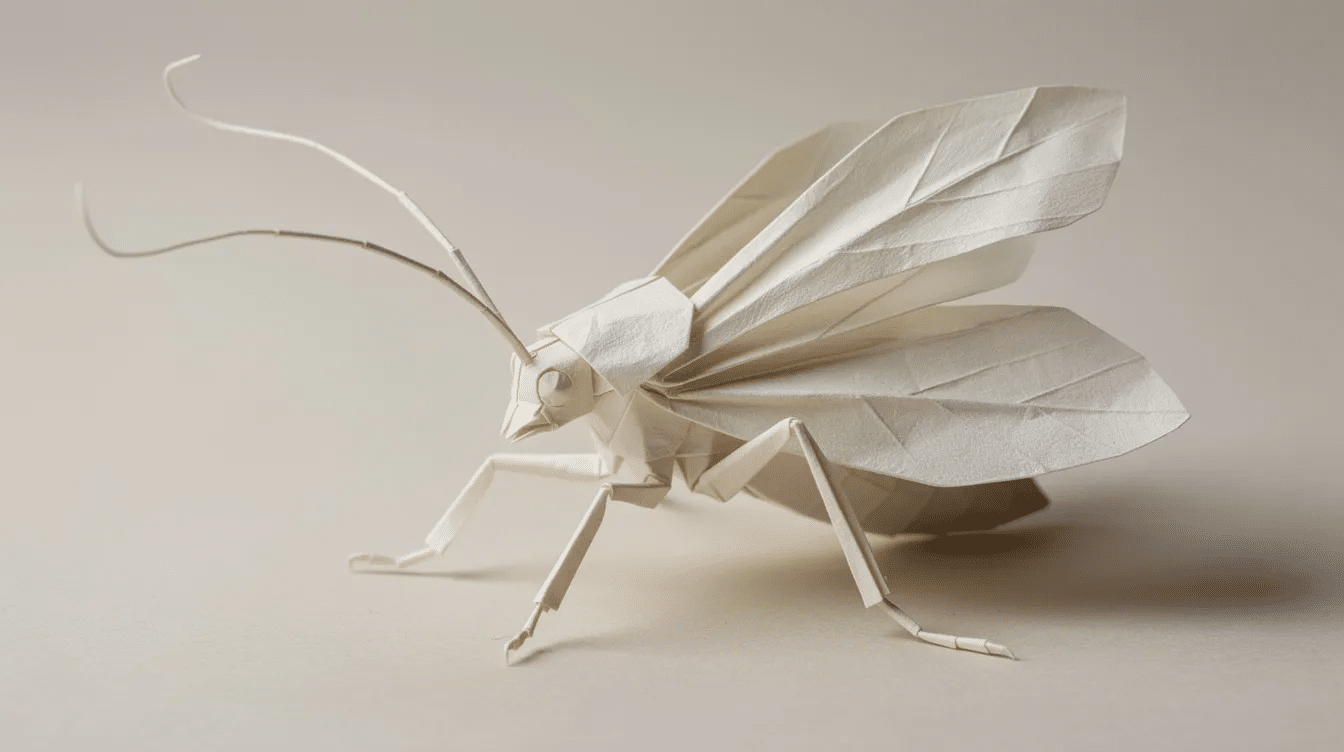
- Exhibition quality: Ideal for complex insects, animals, and figurative works that demand narrow limbs, antennae, and layered details
If you’re looking to learn origami at the highest levels, understanding what makes this paper unique is an essential part of your development as an artist.
History of Origamido Studio and Origamido paper
The story of Origamido paper begins in the mid-1970s, during a transformative period when origami was evolving from a children’s craft into a recognized art form. This development paralleled innovations in papermaking, as artists realized that standard papers couldn’t support increasingly complex designs.
Michael LaFosse began his papermaking journey around age 16, driven by a need to create custom papers for his original models. As a biology student passionate about natural history subjects, he spent decades refining his techniques, influenced by masters like Akira Yoshizawa, whose wet-folding innovation transformed static folds into organic, lifelike sculptures.
The partnership that would define Origamido Studio began in 1988 when LaFosse met Richard Alexander. Both trained biologists with a shared focus on natural forms over geometric patterns, they formalized their collaboration by establishing Origamido Studio in 1996 in Massachusetts.
- The name “Origamido” is a registered trademark, signifying their disciplined, dojo-like approach to elevating origami into professional fine art
- Their division of labor works precisely: Alexander specializes in papermaking, photography, and videos, while LaFosse engineers the folds
- Publishing legacy: Over 50 books, kits, and DVDs, including collaborations exhibited at the Carrousel du Louvre and a five-city Japan tour
- Educational outreach: Thousands of students reached annually through school, museum, and library visits
This beginning set the foundation for what would become the most respected papermaking operation in the origami world, and it parallels many principles found in creating high-quality handmade paper sheets for fine art and craft projects.
What makes Origamido paper unique?
Unlike general stationery or craft papers adapted for folding, Origamido paper is designed from the first day of its development with performance as the primary goal. Every aspect of its creation serves the demands of complex sculptural origami.
The paper’s formulation prioritizes what serious paper folders need most: the ability to create increasingly detailed models without the material failing. Here’s what sets it apart:
- High strength-to-thickness ratio: Extremely thin sheets withstand thousands of precise manipulations without tearing, even in the most demanding projects
- Cloth-like handling: Fiber blends and extended beating times create a supple texture with minimal cracking under severe shaping
- Model-specific customization: Each batch can be tuned for a particular design—for example, the formula for LaFosse’s Frog differs from papers suited to Robert Lang’s insects
- Instrument-like responsiveness: Artists describe subtle changes in moisture and pressure producing clearly different results, similar to playing a fine violin
- Archival permanence: pH-neutral compositions with permanent pigments resist yellowing and degradation over decades
You won’t find this level of customization in any mass-produced paper. It’s what makes Origamido the best paper for folders who expect their work to last.
Fibers, materials, and sheet properties
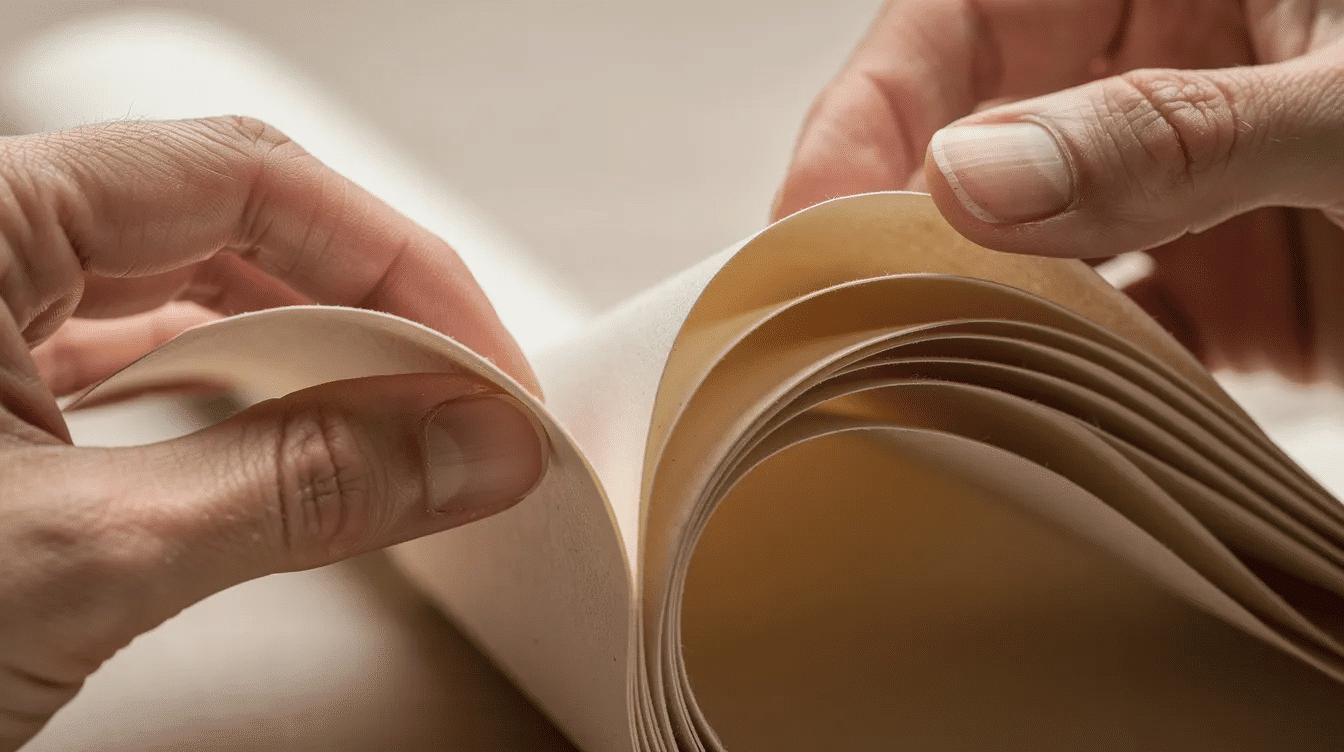
Origamido sheets are made from premium plant fibers selected for their specific contributions to strength, flexibility, and archival quality. The blend varies based on the intended use, but several materials appear regularly in the studio’s pulp formulations, reflecting the same kind of intentional selection discussed in broader guides to the best types of paper for craft.
Common fibers used include:
Fiber | Primary Contribution |
|---|---|
Abaca | High tensile strength |
Hemp | Flexibility and durability |
Flax | Flexibility and crisp fold retention |
Kozo (mulberry) | Suppleness and long fiber structure |
Cotton linters | Body and smooth texture |
Gampi / Mitsumata | Specialized texture and translucency |
Beyond the fiber blend, the studio incorporates permanent pigments directly into the pulp to create through-colored sheets. Some batches include mica or metallic particles for subtle surface sheen, adding visual depth to finished models. |
Key physical properties include:
- High tensile strength for narrow features and thin appendages
- Low bending resistance that aids organic curves and volume creation
- Controllable transparency depending on fiber mix and thickness
- Semi-translucent options that affect how color appears and how light passes through the finished form
The pH-neutral, archival formulations ensure that artworks resist yellowing and fiber breakdown over decades, making this paper suitable for gallery display and long-term preservation.
How Origamido paper is made
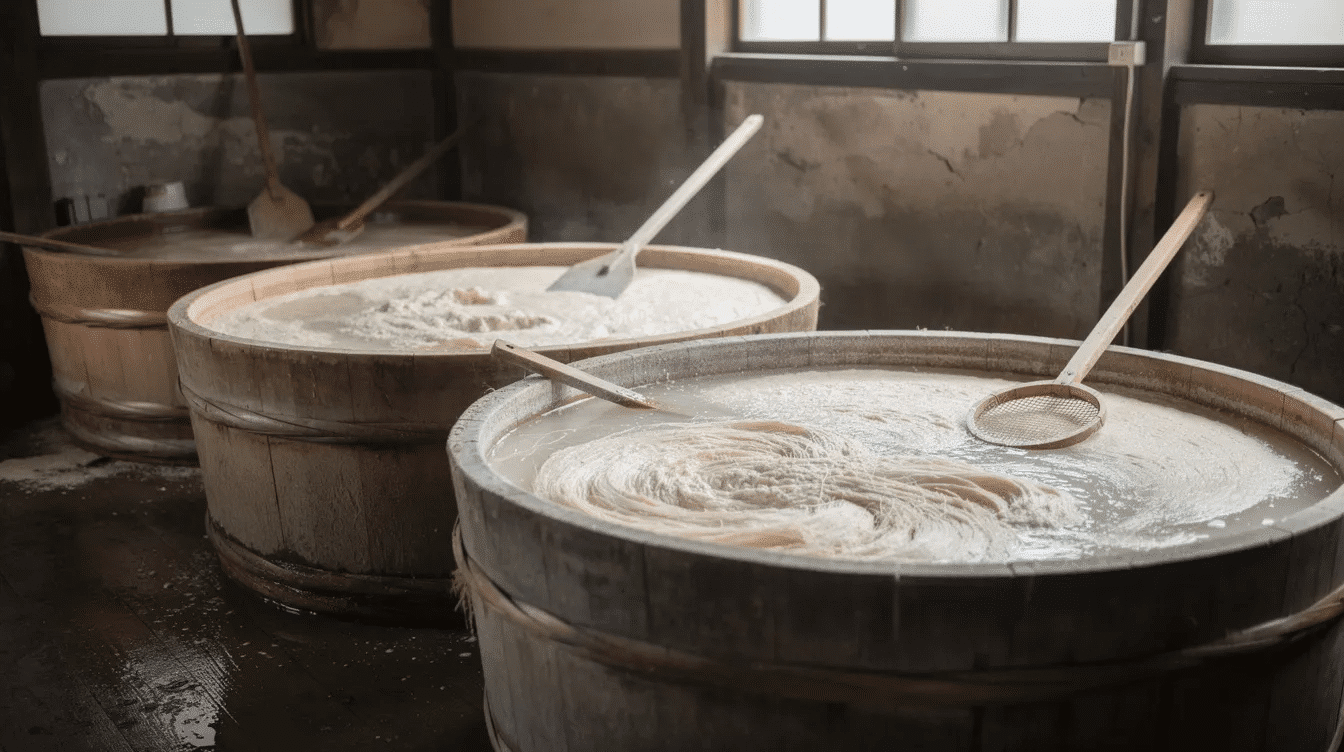
The process of creating Origamido paper unfolds in small-batch, hands-on sessions at the studio. Unlike computer-controlled industrial production, every sheet emerges from direct human involvement at each stage, in deliberate contrast to mass-produced options described in overviews of top craft paper supplies for creative projects.
The journey begins with soaking selected fibers—abaca, hemp, flax, kozo, cotton linters, linen rag, and specialty additions—before beating them into pulp. The equipment preserves fiber length, which is critical for bonding strength and the paper’s final performance characteristics.
- Pigment integration: Colors are dispersed directly into the pulp for through-coloring, eliminating surface paint that could crack or flake
- Multiple vat capability: The studio can run different colored pulps simultaneously, enabling two-color sheet production in a single session
- Hand-forming: Sheets form via hand-couching on moulds, sometimes employing techniques similar to the Japanese nagashizuki method for ultra-thin, even layers
- Pressing and drying: Each sheet is pressed and naturally dried, preserving fiber integrity
- Surface treatment: When needed, sheets receive surface-sizing or back-coating with methyl cellulose to calibrate smoothness, wet-folding resilience, and stiffness
Every sheet differs slightly in thickness and texture, reflecting its handcrafted origin. This isn’t an error in production—it’s the signature of artisanal quality that paper folders learn to appreciate and work with.
Performance in complex origami
Where Origamido paper truly demonstrates its value is in high-end origami: intricate insects with delicate antennae, animals with layered anatomical detail, and expressive figurative works that push the limits of what folded paper can achieve, whether you’re folding classic models from the top 10 origami designs or exploring your own creations.
Strength for complexity: The paper’s exceptional strength allows extremely narrow limbs and features without tearing. This is critical for models like LaFosse’s American Alligator, folded from a single uncut 6-foot square over 50 hours.
Shaping flexibility: Low bending resistance makes it easier to produce curves and organic forms, though the paper can feel “soft” compared with stiffer commercial alternatives. This softness is a feature, not a bug—it enables the kind of sculptural modeling that makes origami come alive.
Wet-folding excellence: The paper responds particularly well to wet-folding techniques, allowing fine gradations of volume and subtle surface modeling that dry-folding simply cannot achieve.
Practical considerations:
- Slight irregularities in thickness can create visible texture in some models
- Matching sheets exactly for tutorials or review documentation can be challenging
- The “soft” feel takes adjustment for folders accustomed to crisp commercial stock
- Not suited for beginners or mass instruction due to cost and scarcity
Advanced folders frequently choose Origamido for exhibition pieces, competitions, and gallery submissions—not for casual practice. When you spend hours on a single model, investing in amazing paper makes sense.
Back-coating and wet-folding characteristics
Back-coating refers to adding an extra layer—often methyl cellulose or another thin sheet—to the reverse side of the paper. This technique enhances the paper’s capabilities for specific sculptural demands.
Origamido sheets are sometimes back-coated at the studio to increase thickness, stiffness, and wet-folding resilience. The process transforms how the paper behaves during shaping and how well it holds form after drying.
- Two-color effects: Back-coating with a different colored sheet allows the front and back to show contrasting hues, creating visual intricacy in models where both sides are visible
- Enhanced curve retention: Methyl cellulose treatment improves the paper’s ability to hold shaped curves and sculptural details permanently after damp folding and drying
- Customizable response: Artists can re-treat or lightly size sheets at home to adjust surface feel, though the studio’s coating is carefully calibrated to each batch
- Yoshizawa-inspired techniques: The back-coating elevates wet-folding approaches pioneered by Akira Yoshizawa, where damp paper molds into permanent three-dimensional forms
For folders achieving the highest levels of sculptural realism, understanding back-coating opens significant creative possibilities, even for seemingly simple subjects like creative paper duck origami ideas that benefit from controlled curves and volume.
Workshops, tuition, and making your own sheets
For artists who want to experience the pleasure of creating their own custom origami paper, Origamido Studio offers small-group papermaking workshops in Massachusetts. These sessions provide hands-on instruction from LaFosse and Alexander themselves.
Workshop structure:
Typical workshops run on a three-day schedule. Fiber preparation and beating happen off-site, while the main sheet-forming day takes place at the studio. Instructors handle drying and shipping for participants who cannot return on the final day.
What to expect:
Aspect | Details |
|---|---|
Duration | Three days total |
Group size | Around three participants |
Tuition | Historically several hundred US dollars |
Materials | Additional costs based on fiber and pigment choices |
Output | Limited number of large sheets in two colors |
The small group sizes ensure personalized instruction and adequate hands-on time at the vats. This isn’t a factory tour—participants actively make paper under expert guidance, much like the project-driven approach celebrated on Simply Paper Crafts. |
Workshops are held by appointment around LaFosse and Alexander’s busy schedule of art production, exhibitions, and educational outreach. Customers should search for current availability through direct contact with the studio.
Purchasing and availability
Origamido paper is primarily created for specific artworks and custom commissions, not as a standard retail product line. This fundamental reality shapes how folders can acquire it.
Surplus sheets from production batches may be sold directly by the studio, but selection varies widely, especially compared with the predictable options available in typical paper for craft selections. You might find sheets in unexpected sizes, colors, thickness levels, and surface textures—whatever emerged from recent commissions or personal projects.
- In-person examination preferred: The creators encourage collectors and artists to handle and examine sheets before buying, due to tactile and visual subtleties that video clips or photographs cannot capture
- Irregular availability: Don’t expect a stable catalog or large quantities of identical sheets
- No mass retail distribution: Standard paper resellers do not carry Origamido products
- Bespoke scarcity: The paper prioritizes artists and collectors over casual buyers
If you decide to purchase, be prepared to communicate directly with the studio about what’s currently available. Signed sheets from notable batches occasionally appear, adding collector value to an already premium product.
How Origamido paper compares to other origami papers
Understanding where Origamido fits among other papers helps you decide when its premium characteristics justify the investment.
Versus mass-produced kami or copy paper: Origamido is dramatically thinner for its strength and far more responsive to shaping. However, it costs exponentially more and requires effort to acquire. Standard kami remains fun and practical for kids, practice sessions, and learning new models.
Versus machine-made specialty papers: Machine-made specialty papers offer consistency between sheets—something Origamido deliberately lacks. But Origamido provides tailored fiber recipes and superior surface character that factory production cannot replicate.
Practical guidance:
Paper Type | Best For | Limitations |
|---|---|---|
Standard kami | Practice, beginners, simple models | Tears easily, limited shaping |
Machine specialty | Consistent results, moderate complexity | Less responsive, generic formulations |
Origamido | Exhibition pieces, competitions, complex sculptures | Expensive, scarce, variable |
Serious folders often treat Origamido as a “reference standard” against which they judge other high-end folding papers, even if they also enjoy more casual fun paper activities for all ages for relaxation and play. Even if you primarily work with other materials, experiencing the perfect paper at least once calibrates your understanding of what’s possible. |
Care, storage, and long-term preservation
Because Origamido paper represents both significant expense and archival quality, proper storage of sheets and finished models deserves attention. The paper’s inherent strength and pH neutrality support long-term preservation, but environmental factors still matter.
Storing unused sheets:
- Keep sheets flat in acid-free folders or between clean boards
- Avoid direct sunlight, which can fade pigments over time
- Maintain stable temperature and humidity—avoid attics, basements, or areas prone to swings
- Handle with clean, dry hands to prevent oils and moisture from affecting surface sizing and color
Displaying finished models: While origami is distinct from paper sculpture, many display and preservation concerns overlap with other dimensional media like paper mache art projects.
- Use UV-filtering glass or display cases when possible
- Control environmental conditions in the display area
- Consider rotating exhibited pieces to reduce cumulative light exposure
The paper’s strength makes it suitable for long-term exhibition, but decades-long preservation requires the same care you’d give any fine art on paper. Your folded work can last for life with proper attention.
Origamido paper in the origami community
Among advanced folders, teachers, and collectors worldwide, Origamido paper commands genuine respect. It’s not marketing hype—the paper has earned its reputation through decades of enabling artists to push their designs further than standard materials allow.
Where you’ll encounter Origamido work:
- Conventions: Complex insects and animal designs showcased at major gatherings often feature Origamido sheets
- Gallery exhibitions: Museums and galleries display models as examples of high-end origami craftsmanship
- Publications: Books, magazines, and Flickr galleries regularly highlight Origamido-folded models, just as galleries and tutorials showcase inventive paper mache art and craft uses across the broader paper arts community
- Documentary features: Films like “Between the Folds” showcase the paper’s role in contemporary origami art
Many artists credit Origamido with unlocking greater detail and expressiveness than they could achieve with standard papers. Some of the paper folders living today who work at the highest levels consider it indispensable for their most ambitious projects.
For folders progressing beyond beginner techniques, handling and folding a piece of Origamido—even a small sample—offers valuable feedback about how premium handmade paper behaves. The experience provides a benchmark that shapes how you evaluate all future materials.
Whether you’re preparing for a competition, creating a signed gallery piece, or simply pursuing mastery of the art, understanding Origamido paper opens new possibilities in your origami life. The world of advanced folding rewards those who invest in both skill and materials.