
That stack of junk mail on your counter, the school worksheets from last semester, and the cardboard packaging from your latest online order all have something in common: they can become beautiful handmade paper by the end of today. This guide walks you through the entire process of turning everyday waste paper into sheets you can use for postcards, gift tags, decorative bowls, and dozens of other crafts.
This recycle paper craft tutorial is beginner-friendly and works equally well for kids around age 7 and up or adults looking for a relaxing weekend project. You can set up in your kitchen near the sink or take the whole operation outside to your backyard table. Either way, you’ll reduce waste, avoid sending paper to the landfill, and create something genuinely useful from recycled materials that would otherwise pile up in your recycling bin.
The sections ahead cover everything you need to know: gathering materials, building a simple mould and deckle from a picture frame, preparing paper pulp, forming and drying sheets, adding decorative elements like petals and color, and finally putting your finished recycled paper to work in specific projects. By the end, you’ll have the skills to turn any scrap paper into a glorious handmade beauty you can use, gift, or sell.
- What You Need for Recycled Paper Craft
- How to Make a Simple Mould and Deckle
- Preparing Recycled Paper Pulp
- Forming and Shaping Recycled Paper Sheets
- Drying and Pressing Your Handmade Recycled Paper
- Decorative Recycled Paper: Flowers, Color & Texture
- Recycle Paper Craft Ideas: From Sheets to Projects
- Tips, Troubleshooting, and Safety
- How to Use and Store Your Recycled Paper Crafts
- Conclusion: Keep Crafting and Keep Recycling
What You Need for Recycled Paper Craft
Before you blend your first batch of pulp, gather your materials and set up a splash-friendly workspace. The good news is that almost everything you need is already in your home or available cheaply at a hardware store. This section breaks down exactly what to collect, divided into paper sources and tools.
Paper Sources
Material | Notes |
|---|---|
School worksheets | High cellulose content, blends smoothly |
Junk mail envelopes | Remove plastic windows first |
Paper grocery bags | Creates strong, tan-colored sheets |
Online order packaging | Tear into manageable pieces |
Office paper and printouts | White sheets produce cleaner results |
Egg cartons | Add interesting texture |
Yellow pages or phone books | Blend quickly due to thin pages |
Construction paper | Adds color variation |
You can also experiment with paper towel scraps, old bed sheets made of cotton (which contain paper fibers), and even shredded cardboard. Avoid glossy magazine pages and anything with heavy plastic coating—these materials don’t break down properly and will clog your screen. |
Tools and Equipment
For a smoother experience, it helps to understand the best craft paper supplies and basic tools that pair well with homemade recycled sheets.
- Kitchen blender or food processor (thrifted models work great to avoid food contamination)
- Large plastic tub or storage tub (at least 30-40 cm wide)
- Two frames: old picture frames around 8×10 inches with glass and backing removed
- Window screen or fine mesh (also called fine weave towel mesh or mosquito netting)
- Absorbent towels, microfiber towels, or old cotton cloths
- Sponge for pressing
- Heavy books for weight (encyclopedias work perfectly)
- Large bowl for soaking paper
Optional add-ins for decoration:
- Dried flower petals (rose, calendula, lavender)
- Thin fabric threads or dryer lint
- Food coloring or liquid watercolor for tinting
Set up your workspace near a sink or outside on a table covered with an old tablecloth or trash bags. Water will splash, and pulp will drip—planning for mess makes the process much more fun.
How to Make a Simple Mould and Deckle
A mould and deckle are simply two frames that work together to shape each sheet of new paper. The mould is the frame with screen attached that catches the pulp, while the deckle is an open frame that sits on top to create clean edges and control thickness.
Start with two old wooden photo frames of the same size—8×10 inches or A4 dimensions work well for beginners. Remove any glass, backing, and hanging hardware so you’re left with just the wooden rectangles.
Take your window screen or fine mosquito netting and cut a piece slightly larger than one frame. Stretch it tightly across the back of the frame (the side that will face down when dipping) and staple it securely every 2-3 cm around the entire screen. Pull the mesh taut as you go to prevent sagging when wet. This becomes your mould.
The second frame stays empty—this is your deckle. It simply rests on top of the mould during dipping to contain the pulp and give your paper defined edges.
Check all corners for gaps larger than 1 mm, which can cause thin spots or fiber loss. Reinforce weak corners with extra staples or waterproof tape. Wet frames take a beating, so solid construction now prevents frustration later.
Preparing Recycled Paper Pulp
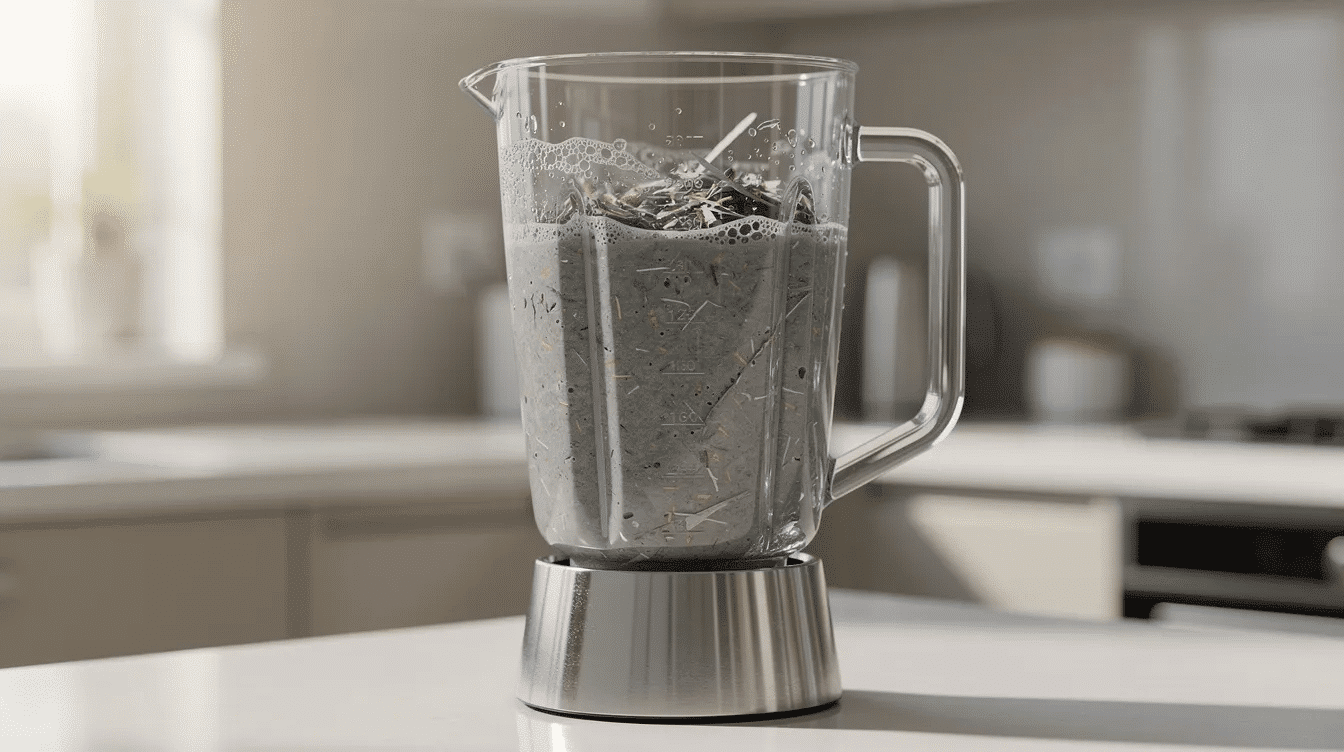
Paper pulp is nothing more than torn paper mixed with water and blended until it becomes a smooth, porridge-like slurry. The fibers in the paper separate and suspend in water, ready to reform into a new sheet when you lift them on your screen.
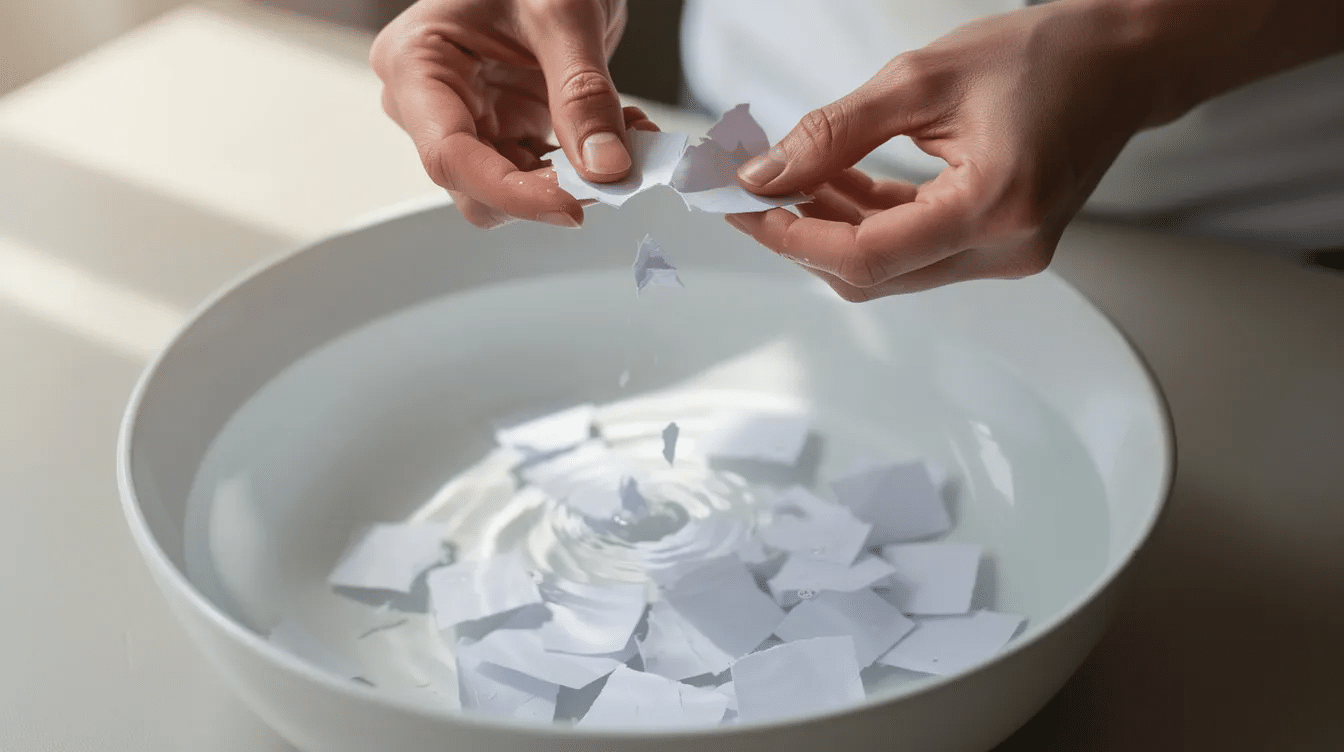
Start by tearing your chosen scrap paper into little pieces roughly 1-2 cm square—small pieces break down faster and protect your blender motor from strain. Remove any plastic windows from envelopes, peel off glossy tape, and discard anything that isn’t actually paper.
Place your paper scraps in a large bowl and add water until everything is submerged. Let the paper soak for at least 1-2 hours. Thicker materials like paper grocery bags or cardboard need longer—overnight soaking works best for dense fibers.
When you’re ready to blend:
- Fill your blender about halfway with soaked paper
- Add enough water to cover the paper completely
- Blend in 20-30 second bursts to avoid overheating the motor
- Continue until no large bits remain and you have fine pulp with smooth consistency
Blend in short bursts rather than one long run. Overloading the blender or running it continuously can burn out the motor.
Consider making separate batches with different colored papers. Brown kraft paper from bags produces warm tan sheets, while white office paper creates lighter results, and choosing the best types of paper for craft projects helps you predict how each fiber will behave. Keeping batches separate gives you more control over your final paper color.
Forming and Shaping Recycled Paper Sheets
Once your pulp is ready, the actual sheet-making process is surprisingly simple. Most beginners find this step intuitive after just one or two attempts, and imperfect first sheets still work beautifully for most craft projects.
Fill your shallow tub with about 5-8 cm of water. Pour in 2-3 cups of prepared pulp and stir thoroughly with your hand until the mixture looks like cloudy soup. The pulp should be evenly distributed with no clumps sinking to the bottom.
Hold your mould and deckle together with the screen facing down (between the two frames). Dip the paired frames flat into the tub at a slight angle, then level them out underwater. Slowly lift the frames straight up, keeping them horizontal so an even layer of pulp settles across the entire screen.
Once lifted, gently press the frames to let excess water drain back into the tub. Shake the mould side to side and front to back in small movements—this helps the paper fibers interlock and creates a stronger sheet. Don’t shake too vigorously or you’ll thin the layer unevenly.
Set the mould aside briefly while stirring the tub again before your next dip. The pulp settles quickly, so a quick stir between each sheet keeps distribution even. You can make several sheets from one batch, adding more pulp to the tub when your results start getting too thin.
Drying and Pressing Your Handmade Recycled Paper
Careful drying is what transforms a fragile wet sheet into durable homemade paper you can actually use. Rush this step and your sheets will tear, curl, or develop wrinkles. Take your time here and the results will reward your patience.
Couching Your Wet Sheets
“Couching” (pronounced “cooching”) means transferring your wet sheet from the mould to an absorbent surface. Place a folded cotton cloth, thick towel, or piece of felt on a flat surface. Turn your mould screen-side down onto the fabric and gently press the back of the frame.
Lift the mould slowly, starting from one edge like opening a door. The wet sheet should release onto the fabric. If it sticks, you may need to press more firmly or work the edge loose with your fingertip.
Pressing Out Water
Lay another piece of cloth over your transferred sheet. Use your hands, a sponge, or a rolling pin to press straight down and squeeze out as much water as possible. Move methodically across the entire surface, but avoid sliding motions that can shift or tear the delicate fibers.
The key to pressing: push down firmly, but never slide. Sliding disrupts the fiber structure and creates weak spots in your paper.
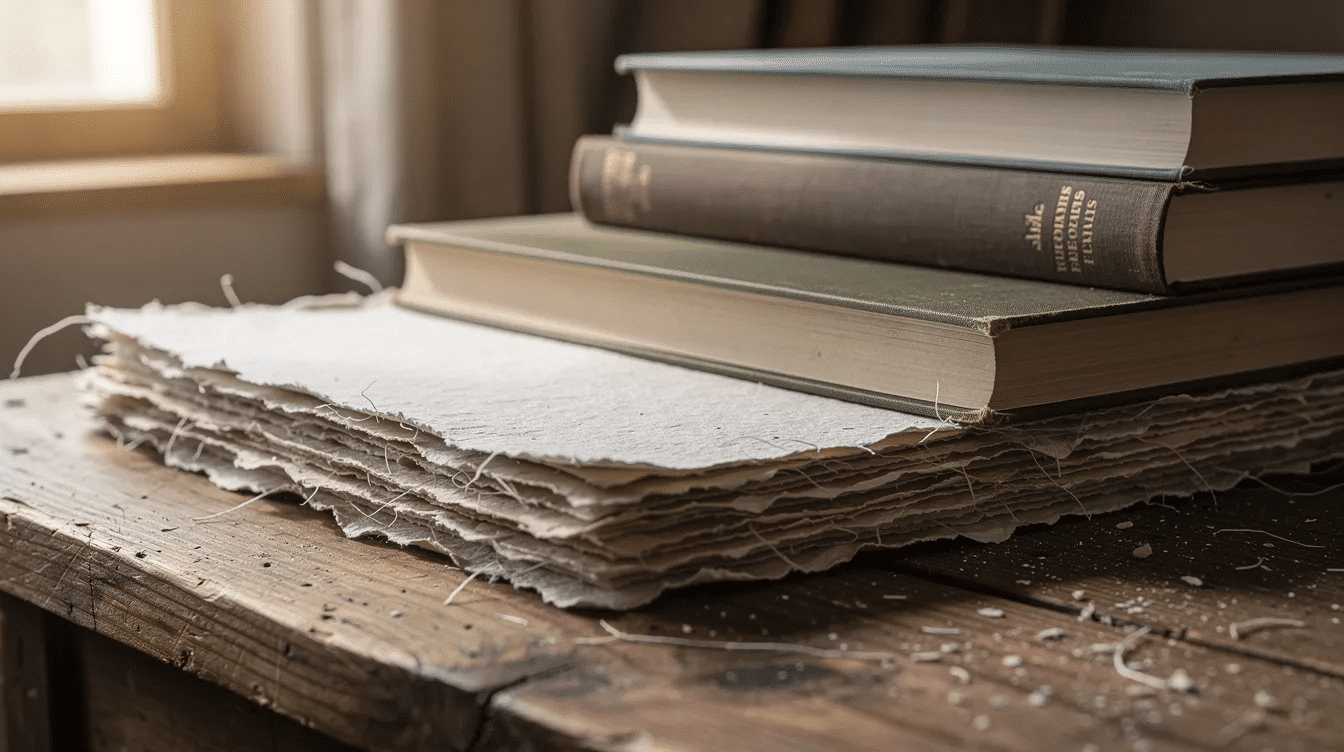
Stack multiple sheets between layers of cloth, creating a “sandwich” of alternating fabric and paper. Place heavy books on top—aim for 10-20 kg of weight—and leave the stack for 12-24 hours.
Final Drying
After pressing, your sheets will still be damp. You have several options to finish drying:
- Leave them under weights another day with fresh dry cloths
- Carefully peel sheets from the fabric and lay flat on a non-porous surface (plastic cutting board, glass, plexiglass)
- Hang damp sheets on a clothesline with clothespins
- Lay on a drying rack in a low-humidity room
Full drying typically takes 1-3 days depending on humidity and sheet thickness. Patience during the drying process prevents the curling and warping that ruins otherwise good sheets.
Decorative Recycled Paper: Flowers, Color & Texture
Plain recycled paper has its own rustic charm, but adding decorative elements transforms simple sheets into genuinely artistic creations. If you want to refine your process further, you can explore discovering the best handmade paper sheet for creative projects. These techniques require no special equipment—just a few household materials and a willingness to experiment.
Embedding Petals and Plant Material
Dried flower petals create beautiful scattered patterns throughout your paper. Add rose petals, lavender buds, calendula, or small leaf fragments directly to your pulp in the blender (blend very briefly to distribute) or in the tub before dipping your mould.
Alternatively, sprinkle petals onto the surface of your wet sheet immediately after lifting the mould from the tub. While the layer is still wet, gently press the petals into the surface with your fingers or a damp sponge so they embed securely. This method gives you more control over placement.
Adding Color
For tinted paper, add 2-3 drops of food coloring or a small squeeze of liquid watercolor directly to your blender before the final blend. This produces soft pastel shades—blues, greens, pinks, and yellows work particularly well. Start with less color than you think you need; you can always add more in the next batch.
Texture Variations
Interesting textures come from unexpected sources:
- Dryer lint adds soft, fuzzy dimension
- Thin sewing thread scraps create visible fiber lines
- Fabric scraps from old clothing blend into unique patterns
- Coffee grounds produce speckled, aged-looking paper
When adding textured materials, mix them into the pulp before dipping rather than sprinkling on top. This ensures they bond securely with the paper fibers during drying and pairs beautifully with vintage paper craft ideas that reuse old ephemera.
Recycle Paper Craft Ideas: From Sheets to Projects
Now that you’ve created beautiful recycled paper sheets, it’s time to put them to use. The projects below range from simple flat items like postcards to three-dimensional objects like bowls. Each works well with the slightly uneven texture of homemade paper—in fact, that handmade quality adds character and value.
Don’t worry if your sheets aren’t perfectly uniform. Deckled edges, visible fibers, and slight thickness variations are features, not flaws. They mark your paper as genuinely handmade and distinguish your crafts from mass-produced alternatives.
Recycled Paper Postcards
Postcards are perhaps the simplest project for your new paper. Cut thicker sheets into standard postcard sizes (roughly 10 x 15 cm or 4 x 6 inches) using a ruler and craft knife or sharp scissors. The USPS accepts handmade postcards as small as 3.5 x 5 inches.
Decorate the front with pressed leaves, small fabric scraps, or hand-drawn ink illustrations. Watercolor washes work beautifully on absorbent handmade paper. On the back, use a fine-tip pen to rule a simple address area and draw a stamp box in the upper right corner.
These postcards make meaningful birthday notes, holiday greetings, or mini art prints you can sell at local craft fairs. You can also combine them with creative and useful things to print on paper like calendars, labels, or wall art. A set of five matching postcards tied with twine creates an impressive handmade gift.
Recycled Paper Business Cards and Gift Tags
For business cards, cut very thick sheets into small rectangles about 5 x 9 cm. Gift tags work well at 3 x 5 cm or smaller. Thicker paper (from denser pulp or double-dipping) holds up better for these uses.
Create a custom rubber stamp with your name or simple logo, then use a basic black inkpad to brand each card. The contrast of dark ink on natural paper creates a striking, professional look.
For gift tags, punch a single hole in one corner using a standard hole punch. Thread cotton string or jute twine through for attaching to gifts or handmade products. Keeping a consistent color palette—natural beige paper with black ink, for example—creates a cohesive, eco-friendly brand aesthetic.
Papier Mâché Decorative Bowl from Recycled Pulp
This fun project uses wet pulp directly rather than dried sheets and is a gentle introduction to top paper mache designs and techniques. Line the inside of a real bowl (about 15-20 cm wide) with plastic wrap or a compostable bag to create a mold.
Press wet paper pulp by hand against the lined bowl, building up a layer 3-5 mm thick. Smooth as you go, pressing firmly to remove air bubbles and ensure even thickness. Pay special attention to the edge, which tends to get thin.
Let the bowl air-dry for 24-48 hours—longer in humid conditions. Once the pulp feels completely firm, gently peel your new bowl from the mold. Paint the outside with watercolor or diluted acrylics, then seal with a non-toxic varnish for a decorative catch-all perfect for keys, jewelry, or small items, or use it as a starting point to explore creative uses of paper mache for art and craft projects.
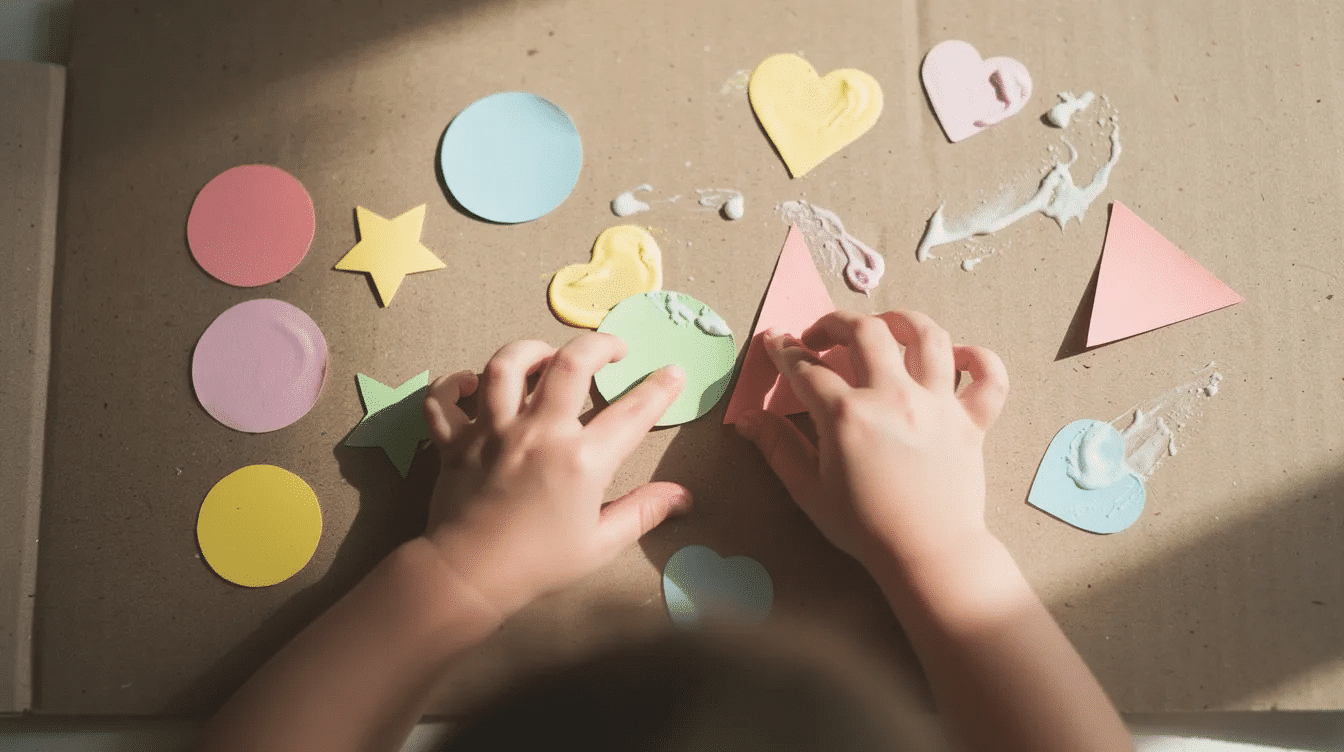
Kids’ Recycle Paper Crafts: Robots, Flowers & Animals
Children love the messy, hands-on nature of papermaking, and they especially enjoy creating projects with their finished sheets. These ideas use handmade paper alongside other recycled items like cardboard boxes, plastic bottles, water bottles, tin cans, and containers.
Recycled Robots: Assemble robots from cardboard boxes, tissue rolls, egg cartons, and containers. Cover surfaces with glue and layers of handmade paper, or cut small shapes from colored sheets to add details. Let kids add googly eyes, paint features, and customize their creations.
Paper Flowers: Cut circles from recycled paper in various sizes. Layer 3-5 circles on a pipe cleaner or wooden skewer, largest on bottom. Crush slightly upward to create dimension. Group several flowers in a jar for a lasting bouquet, or mix these with other cute paper craft ideas for easy DIY projects.
Animal Collages: Help kids cut fish, birds, giraffes, or other animal shapes from colorful handmade sheets. Glue onto cardboard backgrounds for wall art. The textured paper adds visual interest that printed paper can’t match, making these projects feel more special.
Tips, Troubleshooting, and Safety
Even experienced papermakers encounter issues. Here’s how to solve common problems and keep your crafting sessions safe and enjoyable, while also inspiring yourself with fun paper activities for creative minds of all ages.
Common Problems and Solutions
Problem | Cause | Solution |
|---|---|---|
Sheets tear when handling | Too thin | Add more pulp to tub, dip twice, shake less |
Lumpy or uneven texture | Incomplete blending | Blend longer, tear paper into smaller pieces |
Paper takes forever to dry | Not enough pressing | Press harder, change cloths daily |
Sheets curl when drying | Uneven drying | Dry between flat surfaces, use weights |
Holes in finished sheets | Gaps in screen or uneven pulp | Check mould for damage, stir tub before dipping |
For glossy flyers or heavily printed paper, soak longer (overnight) and blend in smaller batches. These materials contain more clay coatings that resist breakdown. |
Safety Considerations
- Always supervise kids around blenders and tubs of water
- Keep electrical cords well away from wet surfaces
- Never roll a blender that’s plugged in toward the sink
- Dispose of pulp water properly—don’t pour it down drains, as fiber buildup can cause clogs over time
- Compost leftover pulp or dispose of it in the trash
Storing Leftover Pulp
If you make more pulp than you need, store it in a covered container in the refrigerator for up to 24 hours. Before your next session, add water and give it a quick blend to refresh the consistency. Pulp left too long will start to smell and develop mold, so use it promptly or compost it.
How to Use and Store Your Recycled Paper Crafts
Well-made and properly dried handmade paper can last for years when stored correctly. The key is keeping sheets flat, dry, and protected from dust.
Store finished sheets in a dry folder, large envelope, or flat cardboard box. Place plain paper or cloth between sheets to prevent them from sticking together, especially if you’ve added flower petals or textured elements that could catch.
Your recycled paper works beautifully for:
- Journaling and sketching (handmade paper takes ink and pencil well)
- Binding into handmade notebooks
- Scrapbooking backgrounds and accents
- Wrapping small gifts
- School projects (kids love presenting on unique paper)
- Creating greeting cards
- Making wind chimes with punched paper shapes
Consider gifting small sets of handmade sheets or finished postcards as eco-friendly presents. For more inspiration, you can browse Simply Paper Crafts for additional project ideas. Bundle 5-10 sheets with twine, add a simple tag explaining how they were made, and you have a thoughtful, zero-waste gift for birthdays, graduations, or holidays.
Each season brings new junk mail and packaging. Make papermaking a recurring project to continuously transform waste into your own paper supply.
Conclusion: Keep Crafting and Keep Recycling
Recycle paper craft transforms the ordinary waste accumulating in your home—school worksheets, junk mail, packaging from online orders—into useful, beautiful materials. The process costs almost nothing, uses equipment you already have, and produces results you can actually use for months of creative projects.
Making your own paper is surprisingly relaxing once you get the hang of it. There’s something satisfying about watching pulp settle on a screen, pressing out water drain slowly through towels, and peeling back a finished sheet to reveal its unique texture. It’s a craft that rewards both precision and experimentation.
Set aside a weekend afternoon to try your first batch. Start simple with white office paper, make a few sheets, let them dry completely, and create one project—maybe a set of postcards or gift tags. Once you see how straightforward the process is, you’ll find yourself saving paper scraps instead of tossing them, knowing they’ll become something new.
Share what you learn with kids, friends, or family. Teaching someone to make homemade paper spreads both creativity and environmental awareness in a hands-on way that sticks. Your roll of paper towels, that cover from a shipping box, even an old cardboard project—everything becomes potential material when you know how to recycle it into something beautiful.