Choosing the right art supplies in 2026 doesn’t have to drain your wallet or overwhelm your storage space. This guide cuts through the noise to help beginners and hobbyists select concrete, practical materials that actually work—no guesswork required.
The focus here is on accessible brands widely available in North America and Europe, including Strathmore, Sakura, Faber-Castell, Staedtler, and Prismacolor. Since this site specializes in papercrafts, you’ll find extra attention on paper-based art materials throughout. Sections are organized by medium—drawing, painting, and papercrafts—so you can jump straight to what interests you most. And here’s a secret: most of these supplies work beautifully across projects. Your sketching pencils can plan papercraft layouts, your paints can add color to handmade cards, and your cutting tools bring everything together.
Core Drawing Supplies
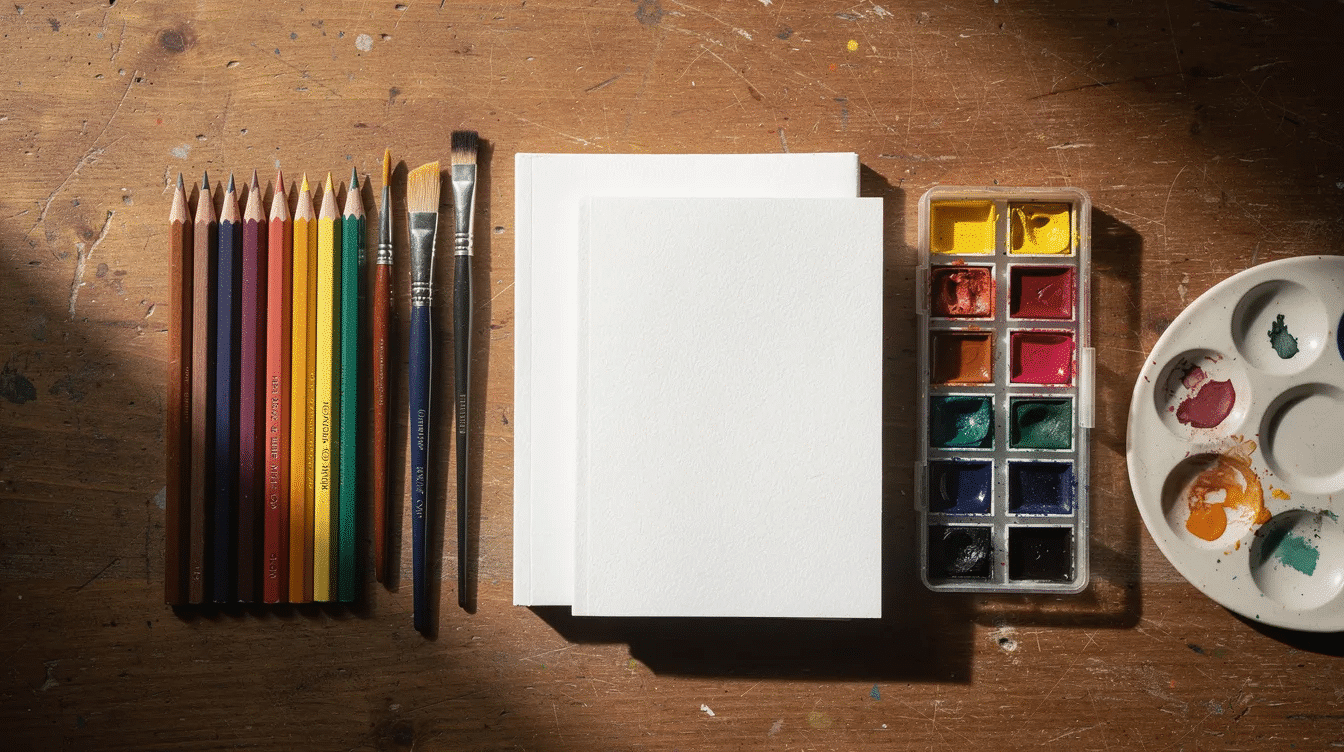
Drawing tools form the foundation for almost every art form you’ll explore. Whether you’re sketching an illustration, planning a scrapbook layout, or drafting a template for a handmade card, these basics belong in your studio.
- Graphite pencils: Start with a 6-pencil range covering HB through 6B grades. The Staedtler Mars Lumograph set offers break-resistant leads with smooth laydown, while the Faber-Castell 9000 series provides a hexagonal barrel for comfortable grip during longer sessions. These pencils contain higher clay content (up to 40% in harder grades), which means they hold their sharpness 30-50% longer than generic alternatives.
- Quality erasers: A kneaded eraser like the Faber-Castell gray model lifts graphite softly without leaving residue—perfect for shading adjustments in portraits or tweaking papercraft sketches. For clean, sharp corrections, the Pentel Hi-Polymer vinyl eraser removes marks 95% cleaner on standard paper without damaging the surface.
- Fine liners and technical pens: Sakura Pigma Micron pens (sizes 01 through 08, with tips from 0.25mm to 0.50mm) use archival pigment ink that resists water, fading, and bleeding. These are ideal for outlining designs before adding watercolor washes or cutting shapes for papercrafts. Their nylon tips last 500-1000 meters of line before showing wear.
- Blending tools: Paper stumps (tortillons) in sizes #2-#6 work beautifully for mechanical shading—think smooth gradients on faces or fur texture. Use them on smooth Bristol paper to reduce graphite buildup by roughly 70% compared to finger blending, which can oil your paper.
Colored Pencils and Art Markers
Colored pencils and markers offer the easiest path to vibrant color without the cleanup demands of paint. They’re perfect for adding details to papercraft projects or creating standalone artwork.
- Student vs. artist grade: Artist-grade pencils cost more but deliver superior pigment load and longevity. For oil-based options, the Faber-Castell Polychromos 24-color set covers approximately 85% of mixing needs and holds sharp points twice as long as wax cores. For soft, buttery layering, Prismacolor Premier 24-color sets offer rich saturation but require burnishing techniques to manage waxy buildup.
- Oil-based vs. wax-based: Oil-based pencils (Polychromos) blend seamlessly with solvent and resist wax bloom—that hazy film that can appear on finished work. Wax-based pencils (Prismacolor) layer more easily but work best for wax resist effects in mixed-media papercrafts.
- Alcohol-based markers: Ohuhu 120-color sets feature dual chisel and fine tips, dissolving pigments for smooth blends in 5-10 seconds. Copic Ciao starter sets (36 colors) offer replaceable nibs for professional-level longevity—up to 2 years of regular use.
- Water-based markers: Tombow Dual Brush Pens mimic watercolor fluidity, ideal for card-making washes. Ecoline brush pens provide re-wettable ink that’s perfect for journaling and creative lettering.
- Dual-tip advantage: Markers with both brush and fine tips (or chisel and fine) cut your tool needs in half. They’re especially practical for card-making, bullet journaling, and quick papercraft accents.
- Ideal surfaces: Smooth Bristol board or mixed-media paper (140lb/300gsm) prevents marker bleed-through when creating greeting cards or scrapbook pages.
Essential Painting Supplies
Acrylics and watercolors stand out as the most beginner-friendly paints available. Both clean up with water, produce minimal odor, and work safely at home—even with kids around.
- Basic acrylic set: A Liquitex Basics or Winsor & Newton Galeria 6-color set provides everything you need to mix most hues. The essential colors: titanium white, primary yellow, naphthol red, ultramarine blue, burnt umber, and ivory black. These paints average 30-40% pigment opacity and dry to a matte finish in 10-30 minutes. No VOCs mean they’re apartment-safe.
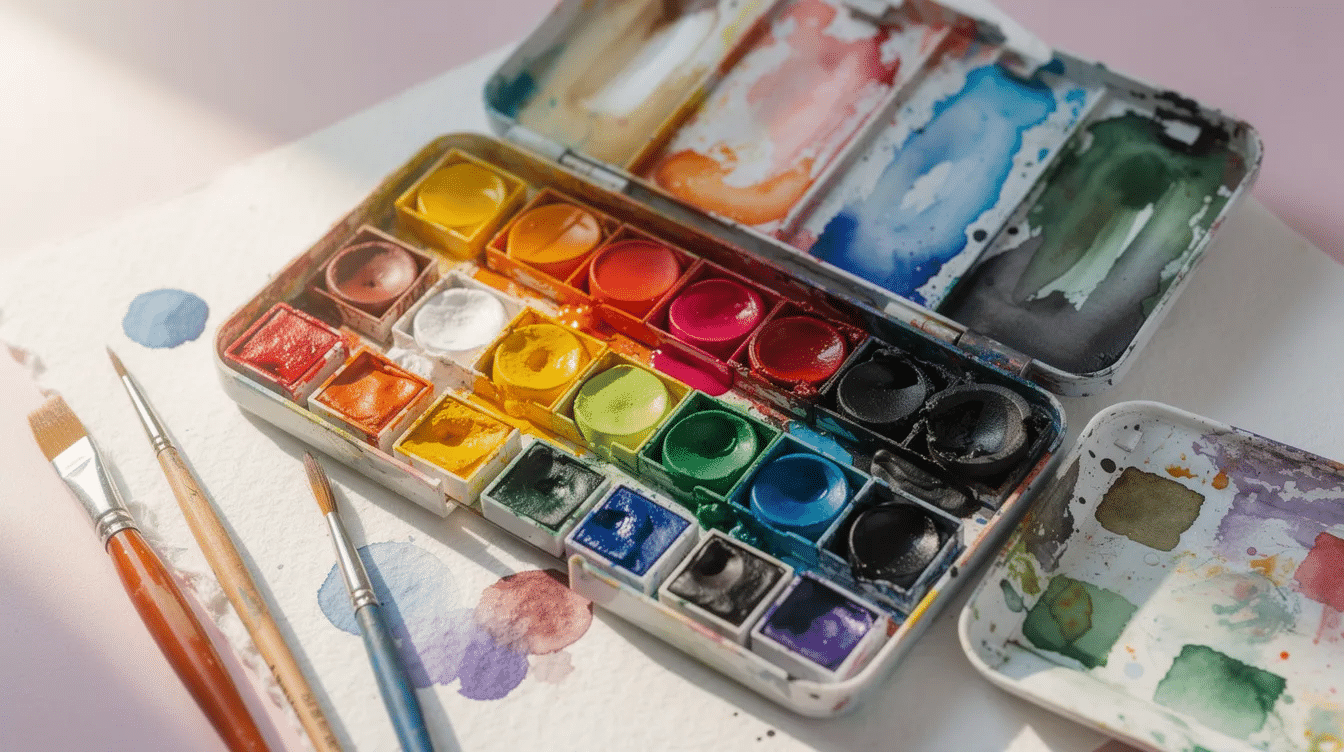
- Watercolor pans: The Winsor & Newton Cotman 12-pan pocket set or Kuretake Gansai Tambi 12-color set suit travel and small papercraft projects perfectly. Pan watercolors yield 50-100 washes per color and store compactly. The Kuretake option offers more opaque, gouache-like coverage for accents on cards and tags.
- Non-toxic formulations: Both paint types carry ASTM D-4236 certification for family use. Stick with water-based paints when working with children or in shared spaces.
- Beyond canvas: Acrylic paints and watercolors work beautifully on heavyweight paper and cardstock. Use them to create handmade cards, painted gift tags, and paper decorations that you can cut and layer for dimensional effects.
Paint Brushes and Painting Tools
A few well-chosen synthetic brushes handle most beginner needs in acrylic and watercolor painting—no need for an overwhelming collection.
- Core brush shapes:
- Round brushes (sizes 2, 6, 10) for versatile strokes and fine details
- Flat brush (1/2”) for blocking areas and bold washes
- Small liner brush (#1) for outlines and delicate lines
- Recommended brands: Princeton SNAP! sets offer excellent value with nylon filaments that hold shape 3x longer than natural sable after 100 washes. Royal & Langnickel beginner sets provide similar quality at entry-level prices.
- Synthetic benefits: These brushes are cruelty-free, easier to maintain, and withstand acrylic buildup better than natural hair options. They clean easily with soap and water.
- Water brushes: The Pentel Aquash features a built-in reservoir (5-10ml capacity), making it ideal for travel sketchbooks and adding watercolor accents to cards or journal pages on the go.
- Essential accessories:
- Reusable stay-wet palette to keep acrylics workable 4x longer
- Water containers (two—one for rinsing, one for clean water)
- Masking tape (1” width) for crisp edges
- Spray bottle to maintain paint moisture during longer sessions
Papers, Sketchbooks, and Surfaces
Choosing the right paper weight and texture matters more than fancy tools for most projects. Understanding GSM (grams per square meter) or lb ratings helps you match surfaces to your medium.
- Standard sketching paper: For daily practice and dry media, 70-90 lb (100-130 gsm) paper works perfectly. Strathmore 400 series pads in 9” x 12” offer vellum finish that minimizes drag for pencils while providing enough tooth for graphite to grip.
- Mixed-media pads: Strathmore 400 or 500 Series Mixed Media pads (140 lb/300 gsm) handle markers, light watercolor, and papercraft experiments without buckling. The 500 Series contains 25% cotton content for superior texture and durability.
- Watercolor paper: Cold-press (textured) absorbs 2x more pigment and provides grip for expressive techniques. Hot-press (smooth) suits fine details and precise line work. Both should be 140 lb/300 gsm minimum to prevent warping. These papers work beautifully for painting backgrounds before cutting shapes for papercrafts.
- Canvas panels and stretched canvases: Pre-gessoed cotton duck canvas panels (8” x 10”) cost about one-third the price of stretched canvases while providing rigid support for acrylic painting. Standard 12oz weight handles multiple paint layers without sagging.
Specialty Papers for Papercrafts
This section speaks directly to what matters most for paper-based creativity—the specific papers that transform simple ideas into dimensional keepsakes.
- Core cardstock weights:
- 65 lb (cover weight): Ideal for die-cuts and lightweight layers
- 80 lb: Perfect for card bases that fold cleanly
- 110 lb: Best for sturdy layered decorations and structures
- Choose acid-free options (pH 7-9) for projects intended to last 50+ years without yellowing, and consider how different craft paper supplies for creative DIY projects change the feel and durability of your designs
- Patterned scrapbook paper: 12” x 12” sheets from brands like Neenah Classic Crest provide decorative backgrounds for albums, journals, and memory books. For more options, explore the best types of paper for craft and their uses. Acid-free varieties protect photos and memorabilia.
- Textured and specialty papers:
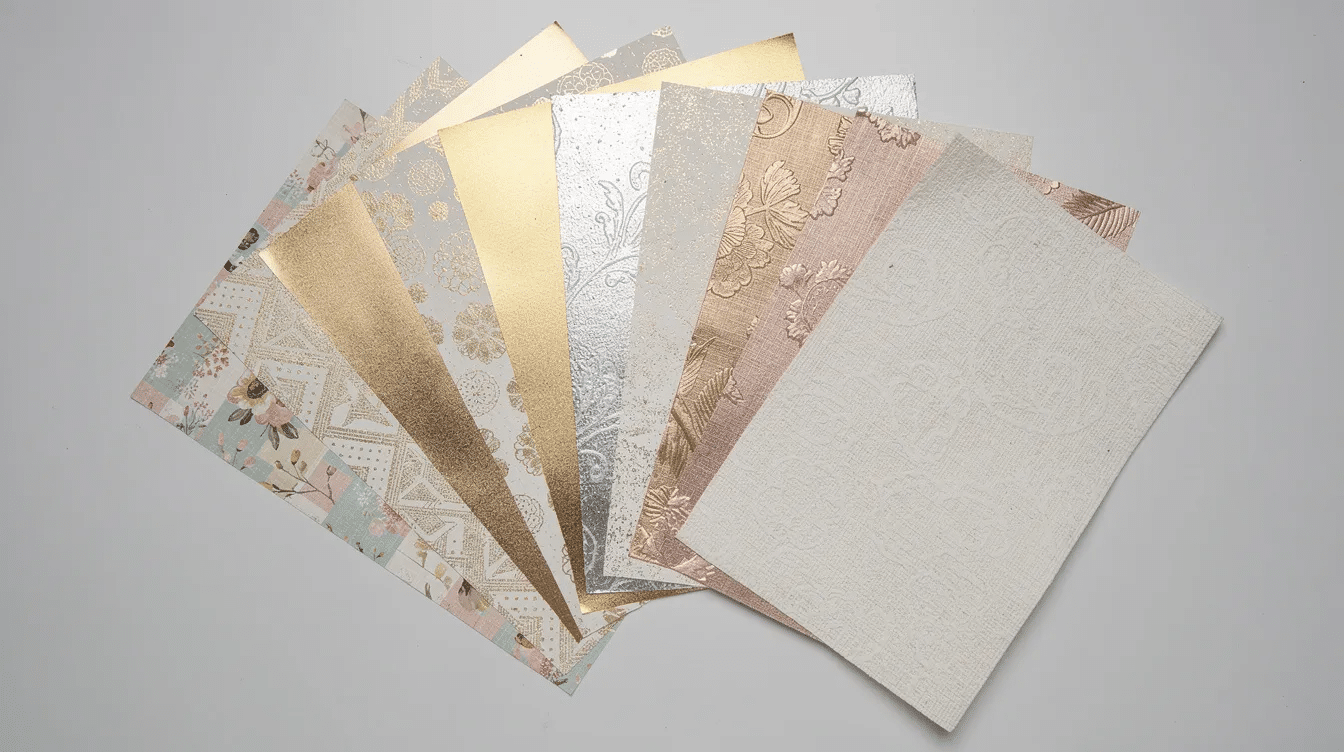
- Vellum (30-50 gsm): Translucent overlays for wedding invitations and elegant card layers
- Metallic foils (80 lb): Reflective surfaces for festive banners and holiday tags
- Glitter cardstock (110 lb): Sparkle effects for gift tags and celebration cards
- Handmade papers: Unique textures for art journal backgrounds and special occasion projects, especially when you work with high-quality handmade paper sheets for creative projects
- Bristol board for stamping: Smooth Bristol (100 lb) prevents marker bleed when coloring stamped images. Fussy-cut your colored images and add them to cards, scrapbook layouts, or journal pages for polished results.
Must-Have Papercraft Tools and Supplies
This is the heart of the matter for crafters who love working with paper. These tools transform flat sheets into dimensional art—greeting cards, scrapbook pages, home decor, and gifts that carry personal meaning, just like the inspiration you’ll find across Simply Paper Crafts’ papercraft tutorials and gallery.
- Cutting tools:
- Precision craft knife (X-Acto No. 1 with #11 blade): Cuts through 110 lb stock with 0.5mm precision
- Self-healing cutting mat (A3 size, 2mm thick PVC): Endures 10,000+ cuts without developing grooves
- Detail scissors (Fiskars micro-tip): Fussy-cut intricate images with 1mm accuracy
- Trimmers and scoring boards:
- 12” paper trimmer with built-in ruler: Delivers 0.1mm accuracy for consistent card sizes
- Scoring board with bone folder (6-12” ruler): Creates crisp creases without cracking for envelopes and folded cards
- Adhesives for every technique:
- Tape runner (1/4” acid-free dots): Quick, clean application for flat layers
- Double-sided tape: Strong hold for permanent bonds
- Liquid glue with fine tip (Zig 2-Way): Repositionable for 10 minutes, allowing adjustments
- Glue stick: Child-friendly for family craft nights
- Foam tape/dots (1/8” thick): Creates 3D pop on layered cards and scrapbook elements
- Stamping supplies:
- Clear photopolymer stamps on 4” x 6” acrylic blocks
- Dye-based ink pads (VersaFine): Crisp, quick-drying impressions
- Pigment ink pads (Delicata): Metallic and opaque effects
- Color stamped images with markers or colored pencils, then fussy-cut for dimensional projects; delicate stamped motifs also pair beautifully with beginner-friendly paper quilling art techniques
- Embellishments (use sparingly for modern aesthetics):
- Washi tape (15mm wide, repositionable): Borders and decorative strips
- Enamel dots (3D resin): Accents and focal points
- Sequins (5mm): Sparkle without bulk
- Ribbon and die-cut ephemera: Finishing touches
Die-Cutting Machines and Advanced Papercraft Gear
Die-cutting machines represent optional but game-changing investments for serious papercrafters who want efficiency and precision.
- Manual machines: The Sizzix Big Shot (hand-crank, A4 platform) handles 80 lb cardstock with universal plates. Spellbinders Platinum adds embossing capability. Both require no electricity and store compactly.
- Electronic cutters: Cricut Maker (12” x 12” cutting area, 2400gf pressure) cuts 300+ materials including fabric and leather. Silhouette Cameo excels at custom SVG designs. Both connect to design software for unlimited creativity.
- Metal dies: Steel dies (0.5mm thickness) come in basic shapes (circles, rectangles), alphabet sets, and intricate florals for card-making. Quality dies yield 10,000+ uses, justifying their $50-200 price range for high-volume crafters.
- Electronic cutter strengths: Custom lettering, intricate mandalas, and repeatable shapes for party decorations and home decor. Cut time runs roughly 5x faster than hand-cutting for complex designs, which is a major advantage if you’re producing paper crafts that sell well for crafters and entrepreneurs.
- Before you purchase: Consider your available space, budget, and project volume. A manual machine suits occasional crafters, while electronic options benefit those creating for gift shops, markets, or frequent personal use.
Kids’ Art Supplies and Family-Friendly Papercrafts
Building a safe, age-appropriate art stash opens doors to family craft nights and creative development. These supplies prioritize non-toxic formulations and easy cleanup, and they’re perfect companions to fun paper activities for creative minds of all ages.
- Washable markers and crayons: Crayola Super Tips (50 colors with vented caps) rinse from skin and clothes in one wash. The classic 24-color crayon box remains AP-certified non-toxic and perfect for coloring projects and simple paper art.
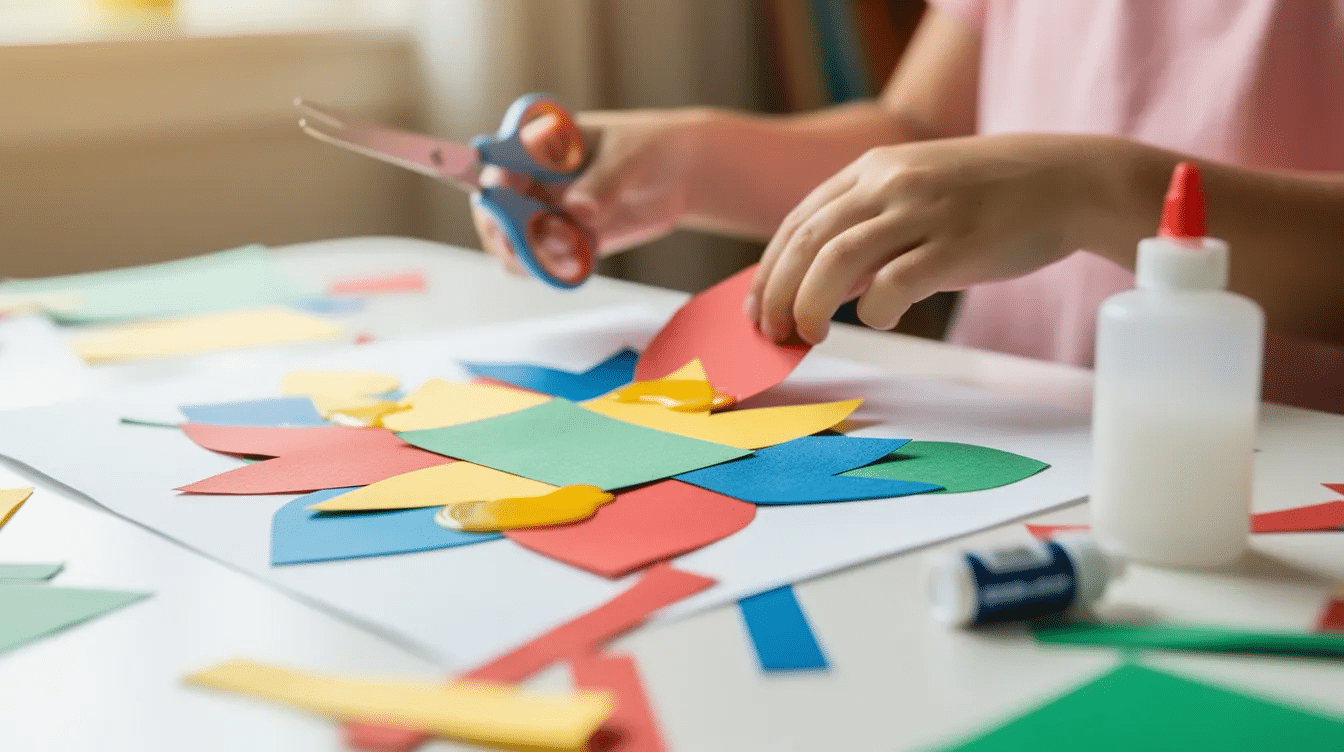
- Child-safe scissors: Kai Kids scissors feature rounded 5” blades designed to cut paper only—not skin, hair, or fabric. Always maintain adult supervision during cutting activities.
- Non-toxic paints and adhesives: Washable tempera paints and glue sticks work beautifully for classroom-style papercrafts: paper chains, simple collages, holiday decorations, and even simple paper cup crafts ideas for fun projects. They clean up with water and pose no harm if accidentally tasted.
- Pre-cut shapes and stickers: Younger children (ages 5-8) thrive with pre-cut cardstock shapes and sticker sheets. They can assemble scenes, create cards, and build confidence without needing knives or advanced tools.
- Starter art kits: Look for pre-packaged kits like Melissa & Doug sets that combine coloring pages, cardstock, and basic embellishments. These work well for ages 5-8 or 8-12 and require minimal parental preparation.
Simple Papercraft Project Ideas for Beginners
Put your new supplies to work immediately with these beginner-friendly projects. Each one builds skills while producing something you’ll want to keep or give as a gift, and you can borrow inspiration from cute paper craft ideas for fun and easy DIY projects.
Folded greeting card: Start with an 80 lb cardstock base folded to 4.25” x 5.5”. Stamp or hand-letter a sentiment, add color with markers or colored pencils, and finish with 2-3 enamel dots clustered near your focal point. The whole project takes 15-20 minutes and teaches layering basics.
Mini memory journal: Use a 6” x 8” mixed-media pad as your base. Add washi tape borders, adhere printed photos with tape runner, and create simple labels from patterned paper scraps. You can even incorporate vintage paper craft ideas using old ephemera for a nostalgic feel. This ongoing project grows with you and documents life’s interesting moments without the pressure of a full scrapbook.
Layered paper wall art: Paint a watercolor or marker wash on heavyweight paper for your background. Die-cut or hand-cut shapes from contrasting cardstock—florals, geometric forms, or abstract curves. Layer pieces using foam tape for dimension, frame your creation, and enjoy original artwork that reflects your style.
Each project uses techniques that spread across different craft categories, helping you experiment with combinations that spark joy and satisfaction.
How to Choose and Organize Your Art Supplies
Start small, then upgrade or expand as your skills develop and favorite mediums become clear. There’s no need to purchase everything at once—building a collection over time brings its own rewards.
Criteria for choosing supplies: | Factor | Questions to Consider | |——–|———————-| | Budget | Can you afford artist-grade paper and student-grade tools to start? | | Space | Do you have a dedicated studio area or a portable caddy? | | Project type | Fine art, papercrafts, mixed-media, or all three? | | Cleanup time | Water-based for quick cleanup, or solvent-based for specific effects? |
Quality where it counts: Invest in artist-grade paper and brushes even if other tools remain student grade. Quality paper (like 300gsm mixed-media) makes beginner work look better and lasts longer. Brushes that hold their shape support your technique rather than fighting against it.
Storage solutions:
- Clear bins or flat drawers (IKEA Alex works well) at 40-50% humidity prevent paper warping
- Labeled containers for pens, adhesives, and small embellishments
- Flat storage for cardstock and specialty papers
- Vertical organizers for sketchbooks and pads
Organized caddies by category: Create separate boxes for “drawing,” “painting,” and “papercraft” supplies. This approach enables 15-minute creative sessions without hunting for materials—grab a caddy and start creating.
The best supplies for art are the ones you’ll actually use. Your range of tools should match your practice habits, your available space, and your creative goals. Don’t be forward about experimenting with new materials as you discover what brings you the most satisfaction.
Whether you’re testing new brands, building a wood storage system for your growing collection, or exploring ceramics and glass surfaces beyond paper, the creativity you develop with these foundational supplies will serve you well. Consider this guide your answer to the “where do I start?” question that every artist faces.
Now grab your supplies, clear a corner of your world, and make something. Your next project is waiting.