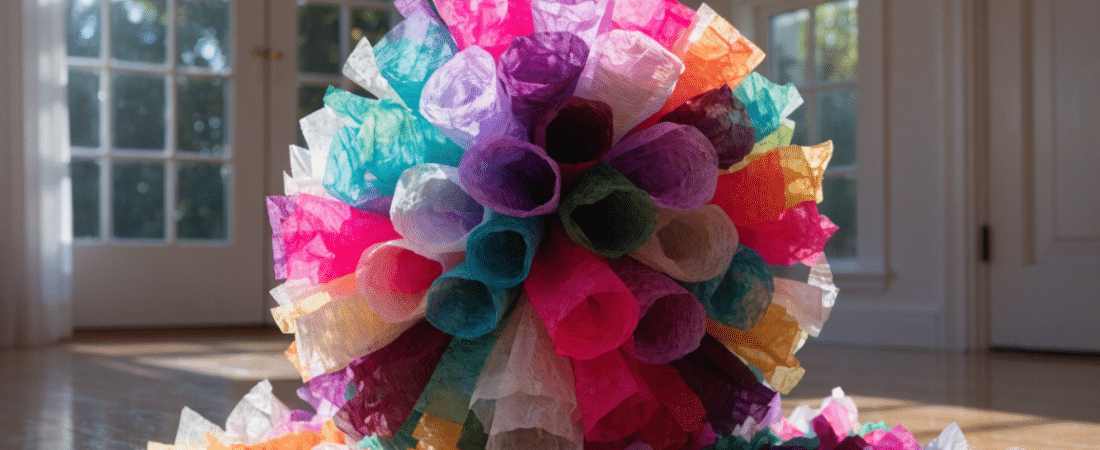
Creating a pom pom with tissue paper is one of the simplest ways to add a bit of celebration and transform any gathering into something memorable. These fluffy, lightweight spheres have become a staple in party decor since the Pinterest crafting boom of the early 2010s, and for good reason—they’re affordable, endlessly customizable, and require no special skills to make.
- Quick Overview: What Is a Tissue Paper Pom Pom?
- Supplies You’ll Need to Make Tissue Paper Pom Poms
- Step-by-Step: How to Make a Classic Round Tissue Paper Pom Pom
- Size Guide: Making Mini, Medium, and Giant Tissue Paper Pom Poms
- How to Hang and Display Tissue Paper Pom Poms
- Project Variations: Garlands, Flowers, and Themed Color Combinations
- DIY Accent Decoration: Creative Ways to Use Pom Poms Beyond Hanging Decor
- Kid-Friendly and Sensory-Friendly Tissue Paper Pom Pom Crafts
- Common Mistakes and Troubleshooting Tips
- Budget, Reuse, and Eco-Friendly Ideas
- Inspiration: Where and When to Use Tissue Paper Pom Poms
Quick Overview: What Is a Tissue Paper Pom Pom?
Tissue paper pom poms are handmade decorative spheres crafted from multiple layers of lightweight tissue paper that’s been folded, secured at the center, and fluffed into a full, rounded shape. The magic lies in the material itself—tissue paper is thin enough to separate easily yet substantial enough to trap air and hold its voluminous form without any internal support structure.
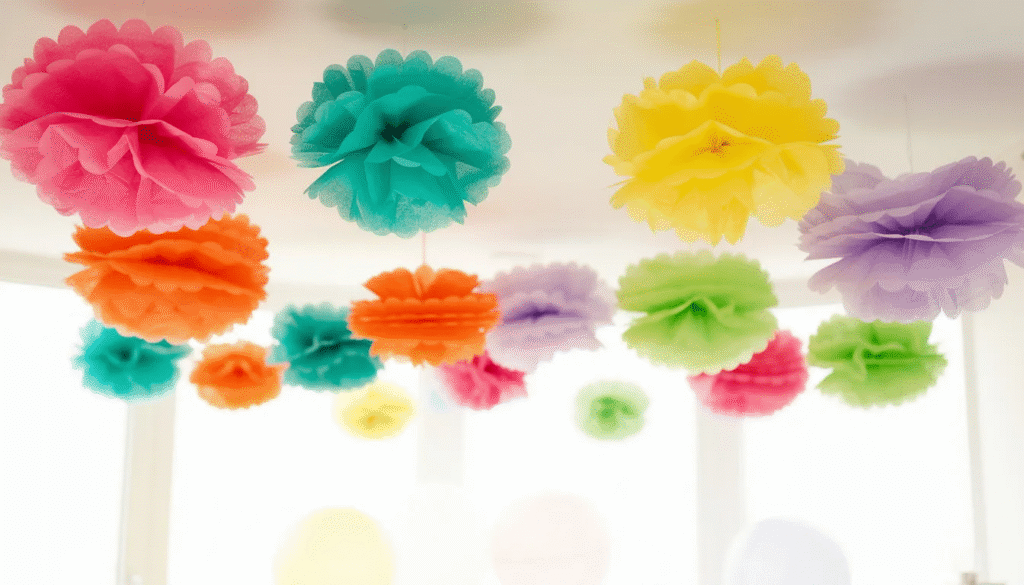
These colorful decorations typically range from 6 to 16 inches wide, though you can create them in virtually any size. Their popularity skyrocketed around 2010 when online crafting communities began sharing tutorials, and they’ve remained a go-to choice for budget-conscious decorators ever since. The appeal is obvious: a single pack of tissue paper costing a few dollars can yield enough material for multiple eye-catching poms.
What makes tissue paper pom poms particularly versatile is their adaptability to any color palette or theme. Soft pastels work beautifully for a baby shower, while metallics and black create drama for New Year’s Eve. You can match them to wedding colors, school spirit themes, or holiday celebrations without breaking the bank.
Common uses for tissue paper pom poms:
- Suspended from ceilings at varying heights for a floating effect
- Clustered above dessert tables and gift stations
- Arranged as photo wall backdrops
- Displayed as table centerpieces on cake stands
- Strung into garlands across mantels or doorways
Supplies You’ll Need to Make Tissue Paper Pom Poms
Before you begin, gather your materials tissue paper and tools in one place. Having everything ready makes the process smoother and helps you avoid interruptions once you start folding.
Essential supplies:
- Tissue paper sheets (standard size is 20” x 26” or 20” x 30”, available at craft stores, big-box retailers, or dollar shops)
- 8–10 sheets per full-size pom pom (4–6 sheets for mini versions)
- Floral wire, 18–22 gauge, cut into 12–18 inch pieces
- Clear fishing line, monofilament, or strong string for hanging
- Sharp scissors capable of cutting through multiple layers
- Ruler and pencil for measuring folds
Optional extras:
- Pre-cut tissue paper packs designed specifically for pom poms
- Glitter tissue or metallic tissue for special occasions
- Patterned tissue paper for added visual interest
- String lights to weave through hanging clusters
- Pipe cleaners as a wire alternative for kid-friendly projects
One important note: quality matters when selecting tissue paper. Paper that’s too thin will tear easily during the fluffing process, while heavier-weight tissue holds its shape better and creates a fuller final product. If you’re practicing for the first time, start with inexpensive plain tissue before investing in specialty metallic or patterned varieties.
Step-by-Step: How to Make a Classic Round Tissue Paper Pom Pom
Making your first tissue paper pom pom takes about 15–20 minutes. The process is straightforward once you understand the basic sequence, and you’ll likely speed up significantly after your second or third attempt.
Directions: Follow these step-by-step directions to make a tissue paper pom pom.
Prepare and stack the tissue paper: Begin by laying 8–10 sheets of tissue paper in a neat stack on a flat surface. Align all edges as precisely as possible—this attention to detail early on ensures your finished pom pom will be symmetrical. If you’re mixing colors for an ombre effect, arrange the sheets in your desired color order now.
Fold accordion-style: Starting at one short end, fold the entire stack back and forth in 1 to 1½ inch accordion folds. Think of it like making a paper fan. Crease each fold firmly with your fingers or press along a ruler’s edge for sharp, consistent lines. As you fold, you may need to flip the tissue paper stack over to continue folding evenly. Continue until you’ve folded the entire length of the paper into a compact, pleated strip.
Trim the ends for shape: Use scissors to trim both ends of the folded strip. You can trim the ends of the tissue paper into rounded or pointy shapes to create different pom-pom styles. Rounded edges create a soft, peony-like pom pom with a classic spherical shape. Pointed or scalloped edges produce a starburst or flower effect. Mark your cutting line with a pencil first if you want extra precision.
Secure the center: Find the exact center of your folded strip and wrap a 12–18 inch piece of floral wire around it. Fold the floral wire in half to create a loop for hanging, and twist the wire tightly to hold everything in place, but avoid pulling so hard that you tear the paper. Folding the wire precisely in half is important for a balanced pom pom. Securing the center of the folded tissue paper with floral wire helps hold the shape of the pom-pom. Leave the wire ends long enough to form a small loop for hanging later.
Separate the layers: This is where the flat fan transforms into a three-dimensional sphere. Carefully unfold one layer of tissue paper at a time, pulling it up toward the center. Work slowly and support the base of each sheet to prevent tearing. Alternate sides—pull one layer up on the left, then one on the right—to maintain balance and create an even shape. Repeat this process of unfolding and separating the layers on both sides to achieve a full, round shape. After securing with wire, gently pull apart the layers of tissue paper to fluff the pom-pom.
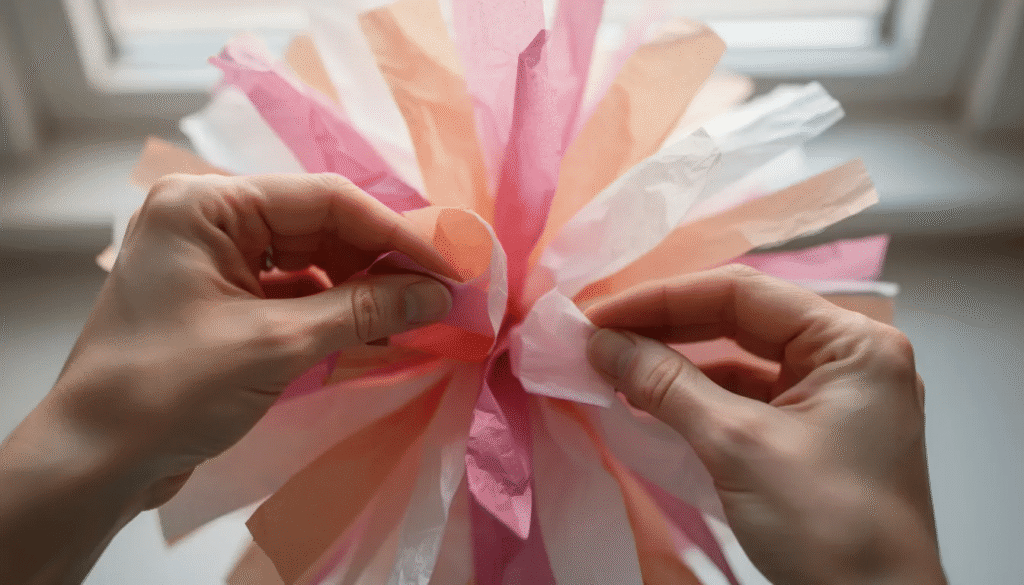
Check and adjust: Once all layers are separated, rotate the pom pom and view it from all angles. Gently tug layers into any gaps or flat spots. Minor tears usually disappear within the fluff, so don’t worry if you notice small rips—they’re typically invisible in the finished decoration.
Size Guide: Making Mini, Medium, and Giant Tissue Paper Pom Poms
The same basic technique works for any size pom pom. What changes are the dimensions of your tissue sheets, the number of layers, and your fold width.
Size | Sheet Dimensions | Number of Layers | Fold Width | Finished Diameter |
|---|---|---|---|---|
Mini | 10” x 5” | 4–6 sheets | ⅜”–½” | 4”–6” |
Medium | 20” x 30” (full) | 8–10 sheets | 1”–1½” | 10”–12” |
Giant | 20” x 32” or larger | 10–12 sheets | 2” | 14”–18”+ |
Mini pom poms are perfect for napkin rings, garlands, or clustered arrangements where you need volume without bulk. Cut your tissue sheets down to approximately 10” x 5” and use narrower accordion folds to create tight, compact spheres. |
Medium pom poms are the most versatile size for party decor. Using full 20” x 30” sheets with 8–10 layers gives you a substantial decoration that works equally well hanging above tables or arranged in centerpieces.
Giant pom poms make dramatic statement pieces for high ceilings, outdoor tents, or ceremony backdrops. Use the largest tissue sheets you can find (some craft stores carry 24” x 36” sheets), increase your layer count to 10–12, and widen your folds to about 2 inches.
Trimming ends closer to the center reduces overall diameter but creates a denser, more compact look. Larger poms require stronger hanging support—fishing line rated for heavier weights or ribbon may be necessary for giant versions.
How to Hang and Display Tissue Paper Pom Poms
Once your tissue paper poms are fluffed and ready, displaying them effectively is key to achieving that magical floating effect. The wire loop you created at the center makes attachment simple.
Ceiling and overhead installations:
- Thread clear monofilament, ribbon, or baker’s twine through the wire loop
- Attach to ceiling hooks, chandelier arms, tent poles, or tree branches
- Vary the hanging lengths to create depth and visual interest
- Group 3–5 poms in clusters rather than spacing them evenly for a more organic look
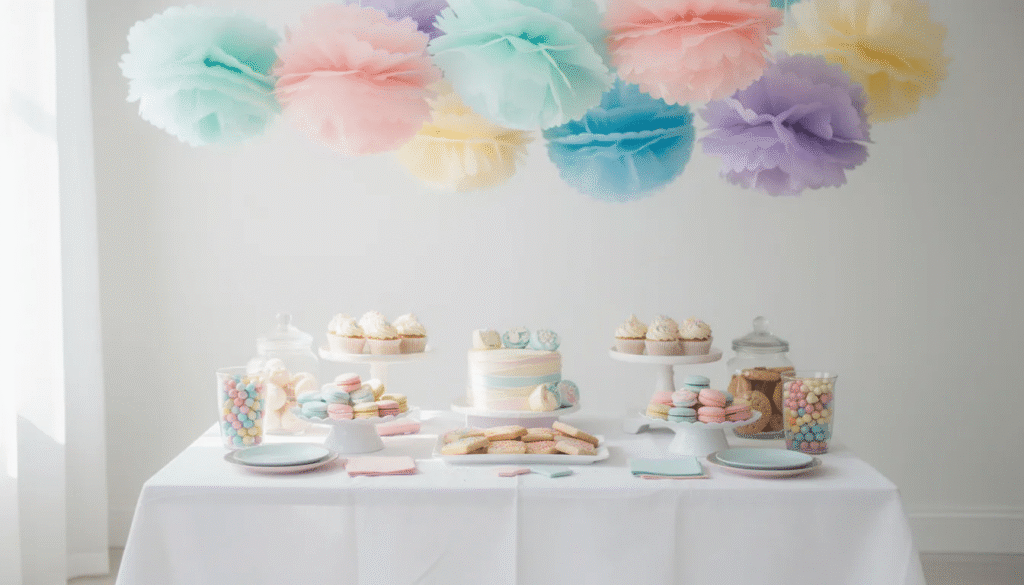
Creating vertical clusters: Position pom poms at varying heights above dessert tables, gift stations, or head tables. The layered effect draws the eye upward and makes even simple setups feel more celebratory. Aim for at least three different hanging lengths within each cluster.
Building a backdrop: Attach multiple pom poms to a horizontal piece of fishing line or wooden dowel. Hang this assembly behind a photo booth, cake table, or ceremony space. You can also secure individual poms directly to a wall using removable adhesive hooks or tape.
Table displays: Place smaller poms directly on tables as centerpieces, stack them on cake stands at different heights, or arrange them in decorative bowls. For a more structured look, glue poms onto foam balls to create perfectly spherical centerpieces.
Storage tip: Gently compress finished pom poms and store them flat in a cardboard box. When you’re ready to reuse them for your next party or event, simply refluff by hand—most poms can be revived multiple times.
Project Variations: Garlands, Flowers, and Themed Color Combinations
Once you’ve mastered the basic round pom pom, you can expand into these creative variations to match any occasion or aesthetic, or branch out into making tissue paper flowers for any occasion.
Pom pom garland: Create several small or medium-sized poms and tie them evenly along a length of twine or string. Space them 6–12 inches apart depending on your desired density. These garlands look stunning draped across mantels, strung between doorways, or zigzagged above party tables.
Flat-backed wall flowers: Make poms as usual but keep one side somewhat flat by limiting how much you fluff the back layers. Secure these directly to walls with removable adhesive strips or tape to form flower clusters, spell out names, or create number shapes (perfect for milestone birthday parties like a 1st or 16th celebration).
Napkin rings: Fashion tiny poms using just 4–6 small squares of tissue. Attach a wire loop large enough to slip around a rolled cloth or paper napkin. These add an elegant touch to wedding reception place settings or baby shower tablescapes.
Themed color palettes:
- Weddings: Blush, ivory, and champagne for romantic elegance
- July 4th: Red, white, and blue in alternating sizes
- Halloween: Orange and black, possibly with purple accents
- Spring birthdays: Soft pastels in mint, lavender, and pale yellow
- Gender reveals: Classic pink and blue or trendy sage and terracotta
Mixed media decor: Combine tissue paper pom poms with paper lanterns, honeycomb balls, and fairy lights for layered texture. The different shapes and materials create visual depth while maintaining a cohesive handmade aesthetic, and browsing a dedicated paper crafts inspiration gallery can spark even more mixed-media ideas.
DIY Accent Decoration: Creative Ways to Use Pom Poms Beyond Hanging Decor
Tissue paper pom poms aren’t just for floating from the ceiling—they’re a fantastic way to add bursts of color and texture to every corner of your party decor. With a little creativity, you can use these fluffy paper accents alongside other birthday paper decorations for your celebration to transform ordinary spaces and everyday items into festive focal points for any celebration.
Tabletop flair: Scatter mini tissue paper pom poms down the center of your dining or buffet table for a playful runner that instantly brightens up your party. Mix and match colors to coordinate with your theme, or stick to one shade for a more cohesive look. You can also top each place setting with a small pom pom or themed printable gift tags and place cards for a fun, personalized touch.
Gift wrapping upgrade: Swap out traditional bows for a vibrant tissue paper pom pom on top of gift boxes or party favors. Simply tie or tape a mini pom to the ribbon for a memorable presentation that stands out in photos and delights guests.
Chair and backdrop accents: Attach pom poms to the backs of chairs using ribbon or string to create a whimsical seating arrangement—perfect for birthday parties, baby showers, or bridal events. For a photo-worthy backdrop, cluster pom poms along a wall or around a doorway to frame the space with color and texture, or mix in playful flamingo craft decorations for summer parties to build a themed vignette.
Balloon alternatives: Looking for something different than standard balloons? Stack or group tissue paper pom poms in corners, on mantels, or around the base of a dessert table for a balloon-free burst of party energy. They’re lightweight, easy to move, and won’t deflate before your event is over.
Centerpiece magic: Combine pom poms with vases, jars, or decorative bowls to create eye-catching centerpieces. Try mixing different sizes and colors of tissue paper pom poms for a dynamic, layered effect that draws attention without breaking the budget.
With so many ways to use tissue paper pom poms beyond just hanging them from the ceiling, you can easily customize your party decor for any occasion. Whether you’re decorating for a birthday, baby shower, or just a fun family gathering, these paper creations add a cheerful, handmade touch that guests of all ages will love.
Kid-Friendly and Sensory-Friendly Tissue Paper Pom Pom Crafts
Making pom poms can be a fun family activity when you adapt the process for younger crafters. Children around age 6 and up can participate with appropriate supervision and some advance preparation, and you can rotate in other fun paper activities for creative minds to keep crafting sessions fresh.
Preparing for young helpers: Pre-cut tissue rectangles to size and pre-fold them accordion-style before the crafting session begins. This allows kids to focus on the most satisfying parts—helping tie the center and fluffing the layers—without struggling with precise folding.
Adapting tools: Use blunt-tip or adaptive scissors for any cutting tasks children will handle. Wider accordion folds (around 2 inches) are easier for small hands to manage and still produce attractive results. The finished pom won’t be as detailed, but the accomplishment matters more than perfection.
Simplified crumple version: For very young children or those who benefit from sensory exploration, skip the folding entirely. Have kids crumple small squares of tissue paper into balls and glue them onto a circular paper or cardboard base, or try easy DIY paper squishies projects that offer a similarly tactile experience. The result mimics a pom pom’s fluffy texture while being completely age-appropriate.
Safety considerations: Wire can have sharp ends that pose a risk for younger crafters. Substitute pipe cleaners, yarn, or twine in place of floral wire when working with children, or upcycle household items like cardboard tubes for other toilet paper roll crafts for family projects. These alternatives are just as effective for securing the center and much safer for little hands to manipulate.
Common Mistakes and Troubleshooting Tips
Even experienced crafters encounter hiccups when making tissue paper pom poms. Here’s how to fix the most common issues.
Pom pom looks flat or sparse: Add more tissue layers next time—10–12 sheets create significantly more fullness than 6–8. Also ensure your accordion folds are consistent in width; uneven folds produce lopsided results. If your current pom looks thin, you can sometimes insert additional pre-folded tissue into the center and refluff.
Tissue paper keeps tearing: Work more slowly when separating layers, and support the base of each sheet with your other hand as you pull upward. Thicker tissue paper is naturally more forgiving. If you’re using very delicate paper, try separating from the outer edges rather than grabbing from the center of each layer.
Lopsided shape: Rotate the pom as you fluff instead of working from one side only. Count your layers—you should have roughly equal numbers pulled up on each side. Gently tug separated layers into any visible gaps rather than trying to push down overfilled areas.
Crushed from storage: Poms that have been compressed can usually be revived. Hang them in a steamy bathroom for 5–10 minutes (don’t let them get wet), then refluff by hand. The humidity relaxes the tissue fibers enough to reshape.
Practice first: Before working with expensive metallic or patterned tissue, make a test pom using plain, inexpensive paper. This lets you work out any technique issues without wasting specialty materials.
Budget, Reuse, and Eco-Friendly Ideas
One of the biggest advantages of tissue paper pom poms is their cost-effectiveness. You can create impressive party decor without spending significant money.
Typical cost breakdown:
- A pack of 30–40 tissue sheets: $3–$5
- Floral wire: $2–$4 for 50+ feet
- Fishing line: $3–$5 for a spool lasting multiple projects
With these basic supplies, you can decorate an entire mid-size party room for under $15–$20, yielding dozens of pom poms. Compare this to store-bought versions that often cost $8–$12 each, and you’re looking at 70–80% savings while getting fuller, more customized results.
Maximizing reuse: Intact pom poms can serve multiple celebrations. Store them in labeled boxes organized by color so you can quickly pull together combinations for birthday parties, anniversaries, seasonal decor, or last-minute gatherings. Many tissue paper pom poms hold up through 2–3 events before showing significant wear.
Eco-conscious choices: Plain tissue paper without glitter, foil, or plastic coatings is typically recyclable or compostable depending on your local guidelines. Avoid metallic varieties if sustainability is a priority. Choosing timeless colors like white, cream, ivory, or gold creates a versatile collection that works across many themes, reducing the need to purchase new materials for each occasion, and pair these with the best craft paper supplies for DIY projects to keep your stash both versatile and eco-aware.
Inspiration: Where and When to Use Tissue Paper Pom Poms
Ready to plan your first project? These concrete applications can spark ideas for your own celebrations.
Milestone birthday parties: Create statement backdrops for 1st birthday smash-cake photos, 16th birthday photo booths, or “over the hill” 40th celebrations. Giant poms in the birthday person’s favorite colors instantly define the party space.
Baby showers and gender reveals: Current trends favor soft, sophisticated palettes—think sage green, terracotta, dusty rose, and cream rather than traditional pink and blue. Hang clusters above gift tables or create a focal point behind the mom-to-be’s seat. These work beautifully for October showers with autumnal shades.
Weddings: Suspend clusters above dance floors for romantic ambiance. Line ceremony aisles with pom pom-topped stakes pushed into the ground. Decorate photo booth corners or frame the head table with cascading arrangements in coordinating shades.
Everyday home decor: Bright pom poms add instant cheer to children’s bedrooms, craft rooms, or home offices without requiring permanent changes. Swap colors seasonally—pastels for spring, jewel tones for fall—to keep spaces feeling fresh.
Your starting point: Gather your tissue paper, scissors, and wire this weekend. Start with just 3–5 pom poms in colors that match your next event or living space. The whole process takes about an hour, and you’ll have portable, reusable decoration that transforms any room from ordinary to celebration-ready. Whether you’re decorating for a wedding, preparing for a birthday gathering, or simply want to brighten your home, tissue paper pom poms deliver maximum impact for minimal investment. For more step-by-step directions and inspiration, refer back to this post as your comprehensive resource for tissue paper pom pom ideas.