
Yes, you can absolutely draw on cardstock, and it’s one of the most underrated drawing surfaces for beginners and experienced artists alike. This versatile material handles a surprising range of mediums, from graphite and colored pencils to alcohol markers and even light washes of paint.
Cardstock is heavier than standard printer paper but lighter than chipboard, typically weighing between 65 and 110 lb (175–300 gsm). You can find it at Walmart, Staples, Michaels, Amazon, and most office supply stores. What makes it special for drawing is its combination of affordability, availability, and forgiving surface that takes ink and pencil beautifully.
- What Is Cardstock and How Is It Different from Regular Paper?
- Best Drawing Mediums to Use on Cardstock
- Can You Use Paint and Water-Based Media on Cardstock?
- Choosing the Right Cardstock for Drawing
- Tips for Drawing on Cardstock Without Warping or Bleeding
- Creative Project Ideas You Can Draw on Cardstock
- Conclusion: Why Cardstock Deserves a Place in Your Art Setup
Key advantages of drawing on cardstock:
- Smooth surface that accepts most dry and marker-based mediums without feathering
- Affordable enough to experiment without worrying about wasting expensive art paper
- Widely available in white cardstock, colored cardstock, and black cardstock options
- Less intimidating than bound sketchbooks—easy to cut, share, or toss if a piece doesn’t work out
- Works exceptionally well with graphite, colored pencils, charcoal, alcohol markers, fineliners, light acrylic, gouache, and watercolor pencils
Whether you’re an art teacher looking for budget-friendly materials for kids or a seasoned artist who wants a quick surface for practice, cardstock deserves a spot in your setup.
What Is Cardstock and How Is It Different from Regular Paper?
Cardstock is a single-ply, heavyweight paper typically ranging from 65 lb to 130 lb (roughly 176–350 gsm). It’s commonly used for greeting cards, invitations, scrapbooking, and various crafts, and it’s one of the most popular options among the best types of paper for craft. Years ago, it was primarily considered a craft material, but artists have increasingly recognized its value as a drawing surface.
The difference between cardstock and standard copy paper is immediately noticeable when you handle both. That everyday 20 lb (75–90 gsm) paper you run through your printer feels flimsy by comparison and buckles easily under moisture or heavy pencil pressure.
How cardstock compares to other papers:
- Standard copy paper (20 lb): Thin, prone to bleed-through with markers, buckles with any moisture, tears easily when erased
- Cardstock (65–110 lb): Sturdy, resists warping with light wet media, holds up to layering and moderate erasing, and is a staple in most top craft paper supplies lists
- Bristol board: Heavier and designed specifically for illustration, more expensive, often smoother
- Watercolor paper: Textured, designed to absorb significant water, much heavier (usually 140 lb+)
Cardstock sits comfortably in the middle—more durable than office paper but more accessible and affordable than specialized art papers.
Common cardstock specifications:
- Weights: 65 lb (light), 80 lb (standard), 100–110 lb (heavy)
- Sizes: 8.5”×11”, A4, 12”×12” (popular for crafts and die cutting)
- Finishes: Smooth (ideal for pen and marker), vellum/slightly toothy (better for charcoal and colored pencils), textured (adds visual interest but harder to control fine details)
Best Drawing Mediums to Use on Cardstock
Cardstock handles dry media exceptionally well and can manage some wet media with care. The key is understanding how each medium interacts with the surface so you can adjust your techniques accordingly, and exploring drawing ideas for every skill level can help you experiment with different approaches.
Dry Media:
- Graphite pencils (HB–6B): Excellent on cardstock. The surface accepts graphite smoothly, allows for shading and blending, and erases reasonably well without destroying the paper fibers.
- Colored pencils: One of the best pairings with cardstock. You can build layers, blend colors, and achieve vibrant results. Works beautifully on both white and black cardstock—try white or light-colored pencils on black for striking high-contrast artwork.
- Charcoal: Applies well to slightly toothy cardstock. Expect some dust, but the surface holds pigment effectively. Always use fixative when finished.
- Pastels: Soft pastels work on textured cardstock, though you won’t get as many layers as on dedicated pastel paper. Great for quick studies and practice.
Markers and Pens:
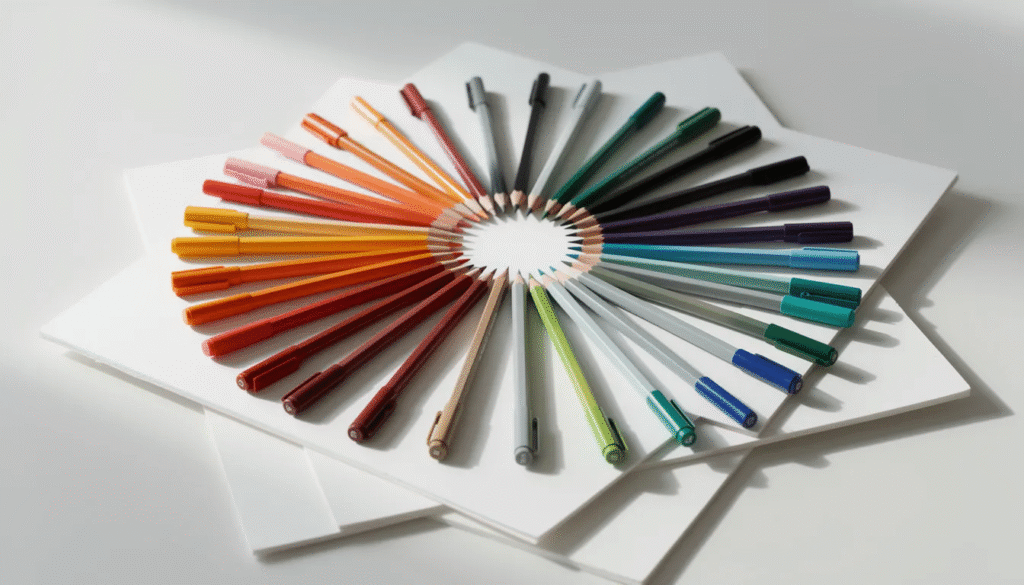
- Alcohol markers (Copics, Ohuhu, Spectrum Noir): Cardstock is a popular surface for alcohol marker artists. Note that color may appear dark and “drabby” immediately after application but develops as the ink sets. Heavier cardstock (80 lb+) minimizes bleed-through.
- Fineliners and technical pens: Ideal for detailed line work, hatching, and illustration. The smooth surface prevents bleeding and allows for crisp lines.
- Gel pens and metallic pens: Perfect for adding highlights or drawing on colored and black cardstock. White gel pen work on dark cardstock creates stunning effects.
Light Wet Media:
- Watercolor pencils: Apply dry, then activate with a damp brush for controlled washes. Keep water minimal to avoid buckling.
- Brush pens: Water-based brush pens work well for lettering and illustration, though heavy layering can cause warping.
Mixed Media Combinations:
- Alcohol marker base with colored pencil details for added texture
- Metallic watercolor highlights over colored pencil drawings
- Fineliner outlines with light marker fills
Cardstock is excellent for artist trading cards (ATCs), card fronts, and small illustrations where you want quality results without committing to expensive paper, while a well-chosen sketchbook—such as those in the best sketchbook for every artist guides—can complement your loose-sheet practice.
Can You Use Paint and Water-Based Media on Cardstock?
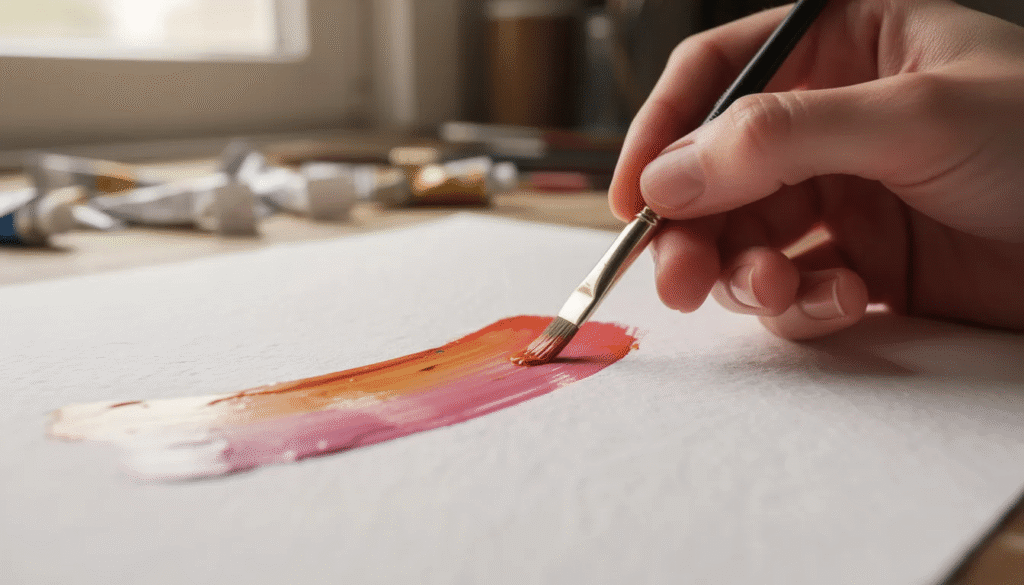
While cardstock isn’t a substitute for heavyweight watercolor paper, you can use some paints and water-based media if you control water usage carefully. The trick is keeping things light and dry, or even exploring handmade paper sheets for creative projects when you want a more textured, absorbent surface.
Watercolor and Watercolor Pencils:
- Light washes work if you keep water to a minimum—think damp brush rather than wet
- Tape edges to a board to reduce warping during and after painting
- Allow pieces to dry flat under heavy books to flatten any buckling
- Heavier cardstock (100–110 lb) handles moisture better than lightweight options
- Best suited for small studies, color swatches, and practice rather than finished pieces
Gouache:
- Thin, semi-opaque layers work well on cardstock
- Avoid watery, heavily diluted applications that can buckle the paper
- Dry-brush techniques give excellent results
- Great for creating cards, small illustrations, and lettering projects
Acrylic Paint:
- Use thin, dry-brush or semi-opaque layers
- Heavy, wet applications will buckle the paper and may peel fibers when dry
- Ideal for mixed media experiments, texture studies, and color testing
- Consider cardstock as a palette for testing acrylic color combinations before applying to canvas
Brush Pens:
- Water-based brush pens apply smoothly for lettering and illustration
- Avoid overworking one area, which can pill the surface
- Let each layer dry before adding more
Practical tips for wet media on cardstock:
- Always test on a scrap piece first
- Work on heavier weights (100–110 lb minimum) for any wet application
- Tape all four edges to a board to minimize warping
- Let finished pieces dry completely flat under weighted books
- Accept that some warping is normal—it can often be pressed flat after drying
Choosing the Right Cardstock for Drawing
Not all cardstock behaves the same. Choosing the right weight and finish will dramatically improve your results with specific mediums.
By Weight:
- 65 lb: Best for light sketching, quick studies, and dry media only. May show bleed-through with markers.
- 80–100 lb: The sweet spot for everyday drawing, marker work, and most projects. Handles layering well.
- 110 lb and up: Ideal for projects involving light wet media, heavy layering, or mixed media experiments.
By Finish:
- Smooth/ultra-smooth: Perfect for fineliners, alcohol markers, and detailed work where you want crisp lines. Marker blending cards fall into this category.
- Vellum (slightly toothy): Better grip for colored pencils, charcoal, and pastels. Allows for more layering and blending.
- Textured: Adds visual interest but makes fine detail work more challenging. Good for expressive, loose work.
By Color:
- Bright white: Standard choice for most drawing and marker work. Colors appear truest on white.
- Cream or toned: Lovely for sketching, especially portraits. Creates a warmer feel than stark white.
- Colored cardstock: Fun for themed projects. Consider how your medium colors will interact with the base.
- Black cardstock: Dramatic for high-contrast work with white and metallic gel pens, light-colored pencils, and metallic markers.
- Kraft cardstock: Natural brown tone that works beautifully with both dark and light mediums for a rustic look, and pairs nicely with creative cardboard crafts ideas if you enjoy upcycling heavier paper materials.
Buying Tips:
- Look for “acid-free” cardstock if you want artwork to last without yellowing
- Buy a multipack with varied weights or colors to test what works for your style
- Office-supply cardstock is perfectly fine for practice and experiments, and online platforms like Simply Paper Crafts offer plenty of inspiration for turning simple sheets into finished pieces
- Specialty art supply stores carry marker-specific cardstock designed to minimize bleed
Tips for Drawing on Cardstock Without Warping or Bleeding
Two common worries come up when drawing on cardstock: warping from wet media and bleed-through from markers and pens. Both are manageable with the right approach.
Testing and Layering:
- Always use scrap pieces to test new tools before committing to a finished piece
- Work with lighter layers and let each layer dry completely before adding more
- Build values slowly with pencils to keep paper fibers intact
Preventing Warping:
- Tape cardstock flat to a board for anything involving moisture
- Work on heavier weights (100 lb+) when using any wet media
- Allow pieces to dry completely before removing tape
- Flatten warped pieces under heavy books overnight
Minimizing Marker Bleed-Through:
- Place a spare sheet of cardstock or scrap paper underneath your working piece
- Avoid excessive overworking in one area, which saturates the paper
- Choose heavier or marker-specific cardstock for alcohol marker projects
- Test markers on a corner or separate scrap before starting your image
Preserving the Surface:
- Avoid harsh erasing with very abrasive erasers—kneaded erasers are gentler
- Be careful with repeated erasing in the same spot, which can rough up fibers
- Use spray fixative for charcoal and pastel drawings to prevent smudging
- Seal finished acrylic or gouache pieces with appropriate varnish if desired
Storage and Presentation:
- Store finished work flat to prevent bending or curling
- Trim pieces to size for framing or use as card fronts
- Mount warped pieces on backing board for a more professional picture presentation
- Consider laminating finished bookmarks or save other options for preservation
Creative Project Ideas You Can Draw on Cardstock
Cardstock is perfect for quick, low-pressure projects because it’s affordable and easy to cut to size. Here’s where your creativity can really shine.
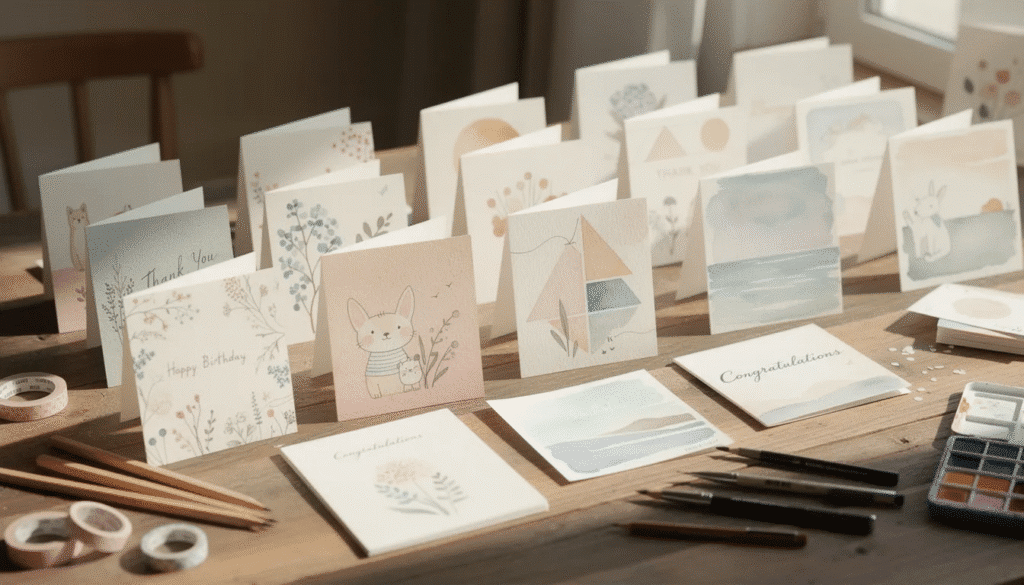
Project Ideas:
- Hand-drawn greeting cards: Create custom birthday, holiday, or thank-you cards with illustrations, lettering, or both
- Postcards: Draw scenes, landscapes, or abstract designs on 4”×6” cardstock pieces
- Bookmarks: Cut strips and decorate with small illustrations, patterns, or inspirational lettering
- Artist trading cards (ATCs): Standard 2.5”×3.5” format perfect for trading or collecting your own mini artwork
- Small character illustrations: Practice drawing people, animals, or fantasy characters on individual sheets
- Lettering pieces: Hand-letter quotes, names, or messages for framing or gifting
- Event signage: Create table numbers, name cards, or directional signs for parties and events, similar to many creative things to print on paper like labels and decor
- Stamping projects: Combine hand-drawing with stamped elements for mixed technique cards, or experiment with paper quilling art for beginners to add dimensional designs
Using Colored and Black Cardstock:
- White gel pen florals and patterns on black cardstock
- Pastel portraits and figure studies on toned gray cardstock
- Bright marker illustrations on vibrant colored sheets
- Metallic pen details on deep jewel-toned cardstock
Practice and Study Ideas:
- Gesture drawing drills on cheap cardstock you can print through your device
- Value scales and shading exercises
- Color charts and swatch reference cards
- Composition thumbnails before starting larger pieces or planning cute crafts paper ideas for easy DIY projects
- Medium testing to learn how different tools behave
The fun part about working on cardstock is that you can experiment freely. If something goes wrong, you haven’t wasted expensive materials. Share your successes, learn from your failures, and keep making.
Conclusion: Why Cardstock Deserves a Place in Your Art Setup
Cardstock is a versatile, budget-friendly surface that works surprisingly well for many drawing and light painting techniques. Whether you’re sketching with graphite, layering colored pencils, blending alcohol markers, or experimenting with thin gouache washes, cardstock handles it all with grace.
I hope this guide has shown you that quality artwork doesn’t require expensive specialty papers for every project. Cardstock offers accessibility, affordability, and genuine artistic potential that makes it worth keeping in your studio.
Key takeaways:
- Cardstock excels with dry media (pencils, charcoal, pastels) and markers
- Wet media works with careful water control and heavier cardstock weights
- Available everywhere in multiple colors, weights, and finishes
- Perfect for both experimental practice and finished pieces you’ll be glad to display or write messages inside
Pick up a small pack of cardstock this week, test your current tools on it, and keep a stack of loose sheets on hand for low-pressure drawing sessions. You might be surprised how often you reach for it. Visit your local craft store, grab a variety pack, and start exploring what this humble material can do for your art practice.