
Paper folding has evolved far beyond a simple childhood pastime. For aspiring students, parents, educators, and anyone interested in learning or teaching origami, origami instructors now bring this ancient art to life across schools, museums, libraries, community centers, and digital platforms worldwide. This guide covers notable instructors, teaching programs, and class formats, providing a comprehensive look at how origami instruction supports creativity, education, and community building.
Origami instructors offer a wide variety of classes and programs, including after-school clubs, library workshops, therapeutic sessions, STEM-focused lessons, and online courses. Whether you are a beginner, a parent seeking enrichment for your child, or an educator looking to integrate origami into your curriculum, this guide will help you understand the landscape of origami instruction and why it matters.
Origami instruction is more than just learning to fold paper—it fosters creativity, develops fine motor skills, enhances spatial reasoning, and builds community connections. The following sections highlight real examples of educators, program types, and lesson formats—presented as descriptive profiles rather than simple lists—showing the remarkable range of what modern origami instruction looks like.

- What Makes a Good Origami Instructor?
- What Origami Instructors Actually Do
- Profiles of Notable Origami Instructors
- Origami Instructors in Schools and STEM Programs
- Therapeutic and Psychological Roles of Origami Instructors
- Online Origami Instructors and Virtual Classes
- Community, Culture, and the Future of Origami Instruction
- Where to Find Origami Instructors and Classes
What Makes a Good Origami Instructor?
A good origami instructor should prioritize patience, clear communication, and foundational folding techniques for beginners (Fact 1). Instructors teach a wide age range, from preschoolers to seniors (Fact 2), and adapt classes for all skill levels, including beginners and advanced students (Fact 3). They often provide step-by-step guidance (Fact 4), start with standard bases and basic folds (Fact 5), teach proper folding terminology (Fact 6), and provide access to diagrams (Fact 7). Effective instructors use clear, step-by-step guidance and demonstrate each move twice (Fact 8), and interactive demonstrations are essential (Fact 9).
What Origami Instructors Actually Do
Origami instructors teach the art of folding paper to students of all ages—children, teens, adults, and seniors—both in person and through online platforms. Their work extends beyond simply demonstrating folds; they design progressive curricula, prepare supplies, manage classroom dynamics, and adapt their teaching for skill levels ranging from absolute beginners to advanced folders.
Defining the Origami Instructor Role
An origami instructor is a teacher who specializes in guiding students through the process of paper folding, from basic to advanced models. A good origami instructor should prioritize patience, clear communication, and foundational folding techniques for beginners (Fact 1). Foundational teaching approaches include starting with standard bases and basic folds (Fact 2). Proper folding terminology should be taught, including terms like “rabbit ear” and “squash fold” (Fact 76b7c3e). Instructors should provide access to diagrams, as reading and interpreting them is a crucial skill (Fact 4).
School & Library Programs
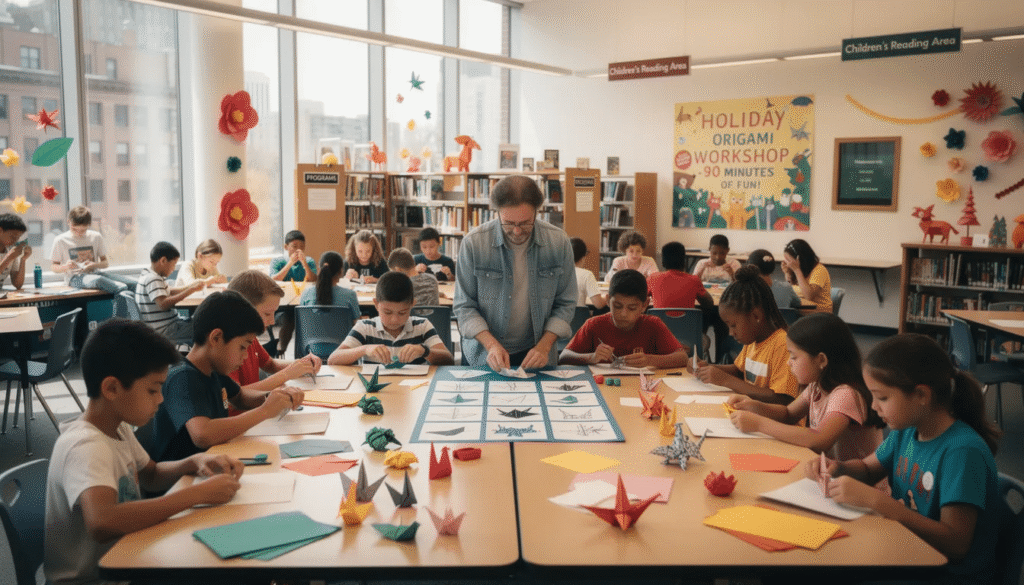
School & Library Programs form a significant portion of an instructor’s work. In California during 2022, for example, instructors led after-school clubs where students learned traditional models like cranes and jumping frogs before progressing to more complex origami designs. Library workshops in New York during 2021 offered similar programming, with instructors guiding groups of 20–30 participants through 90-minute sessions on seasonal themes like holiday flowers and animals.
Online Workshops
Online Workshops expanded dramatically during 2020–2023, when instructors pivoted to platforms like Zoom to reach homebound learners. Corporate team-building events became popular, with companies booking virtual origami classes for employees seeking fun, low-stress activities during the workday. Instructors learned to position cameras over their hands, share downloadable PDF guides, and pace their teaching to accommodate video lag.
Therapeutic Sessions
Therapeutic Sessions represent another vital context. Instructors collaborate with hospitals, counselors, and art therapy programs to bring the calming focus of paper folding to patients and participants dealing with stress, anxiety, or long-term illness. These sessions prioritize patience, clear instruction, and emotional support over technical perfection.
Throughout all these contexts, instructors balance technical accuracy—clean creases, symmetry, and precise steps—with encouragement, creativity, and challenge. The best teachers understand that helping a student successfully complete their first origami box builds confidence that transfers to increasingly complex projects.
Profiles of Notable Origami Instructors
The world of origami instruction features educators with remarkably diverse backgrounds and specialties. The following profiles illustrate how different instructors bring their unique perspectives to this ancient art.
Yuki Tanaka: From Tokyo Classrooms to Pacific Northwest Libraries
Yuki Tanaka began her teaching journey in Japan around 2006, working with school-aged children in Tokyo community centers. After relocating to Seattle in 2012, she adapted her methods for American students while maintaining connections to traditional Japanese techniques. Her work now spans library programs, summer camps, and community festivals throughout the Pacific Northwest.
Tanaka’s teaching emphasizes the cultural history of origami alongside technical skill. She introduces students to the significance of the thousand-crane tradition while teaching them to fold their own versions. Her family-oriented workshops often bring parents and kids together for multi-generational folding sessions.
Marcus Chen: Viral Videos and Museum Collaborations
Based in Brooklyn, Marcus Chen represents a new generation of instructors who built their following online. Around 2016, he uploaded a video tutorial for an intricate modular star that accumulated over 1.2 million views. This visibility led to collaborations with major cultural institutions, including designing and helping construct a holiday tree decorated with hundreds of folded models for a prominent New York museum.
Chen’s teaching style combines precise technical instruction with approachable humor. His online origami classes attract participants from across the world, with Thursday evening sessions becoming particularly popular among working professionals seeking creative outlets after the workday.
Dr. Sarah Watkins: STEM-Focused Instruction in the Bay Area
Dr. Sarah Watkins launched her dedicated origami-and-mathematics program for San Francisco Bay Area students in 2015. With a background in mathematics education, she recognized how paper folding naturally teaches geometry, spatial reasoning, and problem-solving. Her 60–90 minute sessions guide students from 2nd through 8th grade through projects that illuminate mathematical concepts.
Watkins designs curricula where students discover equilateral triangles, angles, and symmetry through hands-on folding. Her program has been adopted by multiple school districts as a supplemental mathematics resource, demonstrating that origami belongs in the classroom as much as it does in the art studio.
Daniel Moreno: Healing Through Paper at Children’s Hospitals
Since 2008, Daniel Moreno has taught origami weekly at a major children’s hospital, bringing simple, calming folds to pediatric wards. His approach emphasizes tiny, manageable steps that allow young patients coping with pain, anxiety, and long-term treatment to experience creative success even during difficult circumstances.
Moreno’s work exemplifies how origami instructors can serve as facilitators of emotional healing. Parents and medical staff have noted that his sessions provide a welcome distraction and sense of accomplishment for children who often have limited control over their daily experiences.
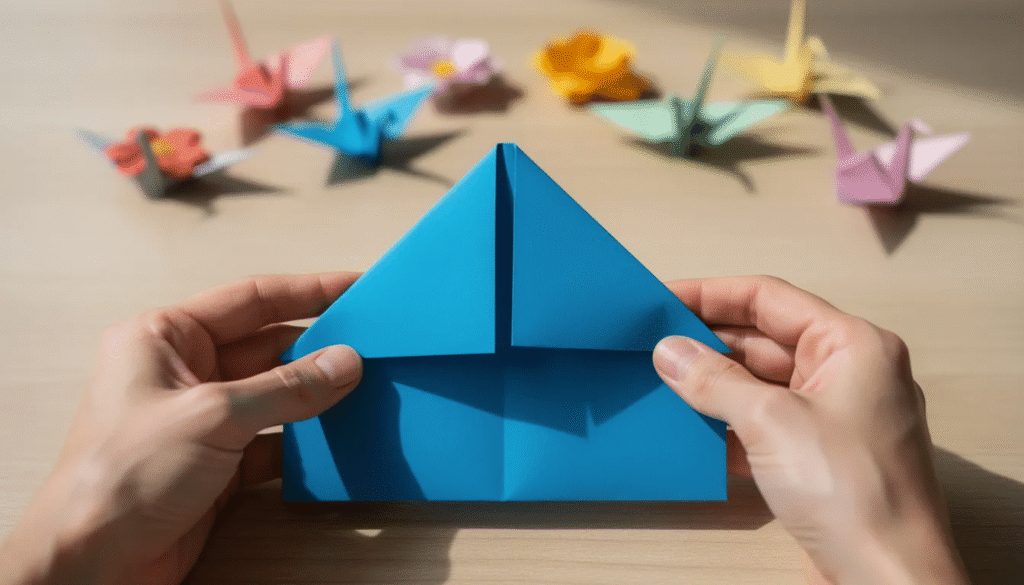
These instructors share core values—patience, clarity, and curiosity—while working in very different environments. Whether in a crowded library program room, a hospital bedside, or a computer screen, their commitment to helping students discover the joy of creating something beautiful from a simple square connects them all.
Origami Instructors in Schools and STEM Programs
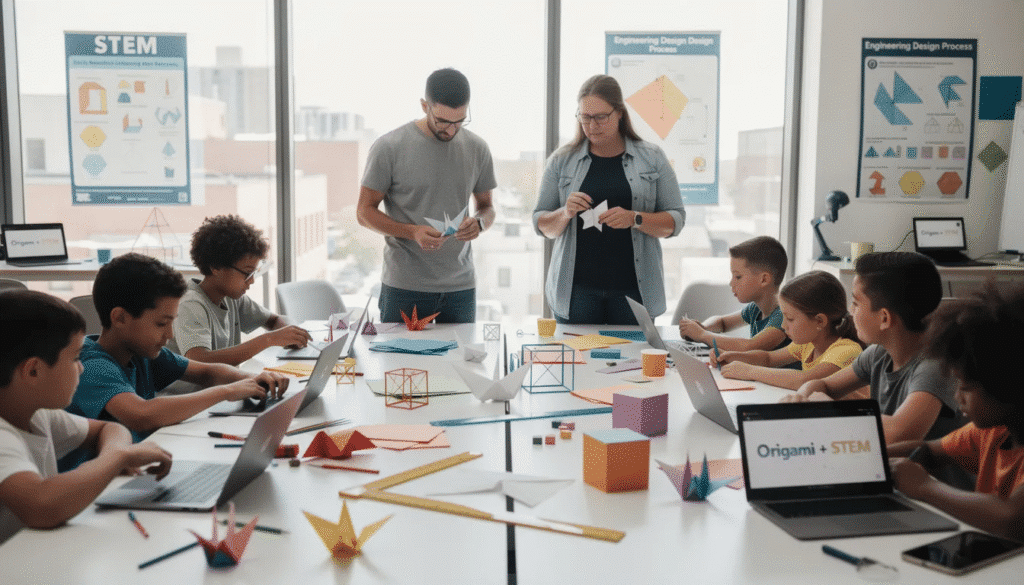
Many instructors now embed origami into STEM education, particularly in US schools during the 2010s and 2020s. This integration reflects growing recognition that paper folding develops spatial reasoning, geometric understanding, and fine motor skills in ways that complement traditional mathematics instruction.
Bay Area–style programs typically use 60–90 minute sessions to teach concepts like symmetry, fractions, angles, and equilateral triangles to students from 2nd to 8th grade. Instructors design progressive curricula that begin with simple boxes and classic models like cranes and jumping frogs in September, advancing to modular polyhedra and tessellations by spring term. This approach mirrors the martial arts–inspired methodology used by some professional origami schools, where mastering basic techniques builds foundation for advanced work.
Origami & Math: Students who learn paper folding demonstrate improved spatial reasoning and geometry comprehension. A 2022 study in a California 5th-grade classroom found that students who completed an origami-based geometry unit showed measurable gains in their ability to identify angles and understand symmetry.
Specific classroom projects illustrate this integration. In one 5th-grade geometry unit during the 2022 school year, students measured angles in folded stars and compared them to protractor measurements, connecting hands-on experience with mathematical tools. A middle school club spent several weeks building modular cubes to explore volume and surface area, with each student contributing faces that assembled into collaborative structures for classroom display.
Origami & Brain Development: Research suggests that the focus required for precise folding strengthens attention and working memory. Instructors document progress with photos of student work and sometimes conduct pre/post assessments of spatial reasoning or concentration.
Instructors in these programs often note that students who struggle with abstract mathematics find success through physical manipulation. The kinetic experience of folding paper makes geometric concepts tangible in ways that textbook diagrams cannot replicate.
Therapeutic and Psychological Roles of Origami Instructors
Hospital Programs
Beyond education, instructors increasingly collaborate with hospitals, counselors, and art therapy programs to use origami for mental health and emotional support. The meditative quality of paper folding—its requirement for focus, its step-by-step progression, its tangible results—makes it particularly suited for therapeutic applications, much like other relaxing paper craft activities that help people unwind and express themselves creatively.
Weekly hospital sessions similar to the UCSF Benioff Children’s Hospital model, established around 2008, demonstrate this potential. An instructor visits pediatric wards to teach simple, calming folds to patients and their families. The activity provides distraction from medical procedures, opportunities for accomplishment, and moments of shared creative experience between children and parents who may be under significant stress.
Therapeutic Techniques
Instructors working in therapeutic contexts break down models into tiny, manageable steps to support children with ADHD, anxiety, and dyslexia. The visual and kinetic nature of origami learning accommodates different learning styles and allows students who struggle with text-based instruction to excel.
“My son loved the origami sessions more than anything else during his hospital stay. Watching him concentrate on folding helped me see him as a kid again, not just a patient.” — Parent testimonial from a 2019 hospital program
Between 2015 and 2023, origami has been introduced in group therapy rooms, autism support groups, and senior centers as a low-cost, clean, and easily distributed activity. Supplies require only paper—no paints, glues, or messy materials—making setup and cleanup simple for institutional settings.
Emotional Impact
Instructors often share a metaphorical dimension with participants: healing and growth happen “one fold at a time,” turning an ordinary square into something unexpectedly beautiful. This transformation resonates with people working through their own challenges, offering a concrete demonstration that small, patient steps can lead to meaningful results—whether they are mastering simple models or experimenting with creative paper duck ideas that bring a bit of whimsy to the process.
“The pleasure of watching a student complete a model they didn’t think they could make—that never gets old. It’s not about the paper. It’s about what they discover about themselves.” — Therapeutic origami instructor, 2021

Online Origami Instructors and Virtual Classes
Class Formats
The rapid growth of online origami instruction, especially during 2020–2021, transformed how teachers reach students. When in-person classes became impossible, many instructors pivoted to Zoom, Google Meet, and dedicated learning platforms, discovering new possibilities for global reach and flexible scheduling.
A typical online class for kids and teens involves small groups of 6–15 learners in 45–60 minute sessions. The instructor positions a camera directly over their hands, demonstrating each fold while students follow along with their own paper. Many teachers share downloadable PDF guides or link to video replays so beginners can pause and re-watch tricky steps at their own pace, and they often provide recommendations for top craft paper supplies so students have materials that fold cleanly on camera.
Effective Online Teaching Techniques
Successful online instructors have developed strong track records. Some maintain average ratings around 4.8 out of 5 stars from hundreds of reviews accumulated between 2019 and 2023, indicating consistent teaching quality across virtual formats. Techniques that make online instruction effective include:
- Multiple camera angles that show folds from different perspectives
- Deliberate pacing with pauses for students to catch up
- Recorded replays available after live sessions for review
- Interactive chat where students can ask questions without interrupting the demonstration
- Pre-mailed supply kits ensuring all participants have appropriate paper
Family and Corporate Workshops
Family-oriented weekend workshops have become particularly popular, with parents and children folding together from their living rooms. Corporate team-building sessions in 2022 brought colleagues together for creative breaks during remote work periods. Holiday-themed folding parties—creating seasonal flowers, animals, and decorative models such as tissue paper flowers for any occasion—offer social connection through shared creative activity.
Comparing Online Class Formats:
Format | Features |
|---|---|
Live Online Classes | Real-time interaction, immediate feedback, scheduled commitment |
Pre-recorded Courses | Self-paced learning, unlimited rewatching, no live support |
Hybrid Models | Recorded instruction with scheduled live Q&A sessions, combining flexibility with personal interaction |
The shift to online instruction has expanded access for people who might never have found local origami classes, making expert instruction available to anyone with an internet connection and a square of paper.
Community, Culture, and the Future of Origami Instruction
Origami instructors often function as community builders, organizing local meet-up groups, contributing to conventions, and participating in international organizations like OrigamiUSA. These connections extend the impact of individual teachers into broader movements that sustain and advance the art form, linking origami to broader paper crafting communities and inspiration.
Meet-up groups modeled on communities like OMG NYC organize monthly folding sessions in city libraries or cafes, bringing together folders of all skill levels. Online hangouts connect participants from multiple countries, allowing instructors to share techniques and models across international boundaries. A teacher in California might learn a new approach from a colleague in Taiwan, then introduce it to students in their next week’s class.
Large origami conventions grew significantly during the 2010s, providing opportunities for instructors to teach specialized workshops, display exhibition-quality work, and connect with fellow professionals. Recognition from institutions like NASA and National Geographic around 2023 highlighted origami’s role in space structures and engineering, bringing new attention to an art form sometimes dismissed as mere child’s play.
Instructors increasingly introduce students to real-world applications of folding techniques, including creative avenues where precise folding and design can evolve into paper crafts that sell well:
Application | Description |
|---|---|
Deployable solar arrays | Structures that unfold in space for satellite and spacecraft power generation |
Foldable medical devices | Tools designed for minimally invasive surgery that can be compacted and expanded as needed |
Microgrippers | Tiny, precise tools for handling delicate materials in scientific and industrial settings |
Self-assembling robots | Robots inspired by paper folding principles that can transform shape or function autonomously |
These connections to engineering, medicine, and space exploration demonstrate that the disciplines involved in origami extend far beyond art alone. Students who learn precise folding techniques are developing skills applicable to cutting-edge scientific challenges.

Looking ahead, future instructors may combine digital tools—3D visualizations, AR apps, interactive video platforms—with traditional hands-on paper instruction to reach more learners globally. The fundamental experience of folding paper will remain central, but the methods for teaching and learning continue to evolve.
Whether in a classroom, hospital, museum, or Zoom room, origami instructors are keeping this ancient art alive and helping it evolve for new generations. The knowledge they share transforms simple squares into creatures, flowers, geometric forms, and functional objects—while teaching patience, precision, and the creative confidence that comes from making something beautiful with your own hands.
Where to Find Origami Instructors and Classes
If you’re interested in learning origami or finding an instructor for yourself, your child, or your organization, there are many resources available:
- Taro’s Origami Studio provides both in-person and online private/group origami lessons.
- OrigamiUSA offers online, live-taught workshops for various skill levels and has a Community Origami Groups (COGS) finder to locate regional clubs and certified teachers in the United States.
- Japanese Cultural Centers often maintain lists of origami experts or host regular workshops.
- Superprof connects users with private origami tutors starting at approximately $10/hr.
- The British Origami Society provides a “Need a Folder?” list featuring experienced members available for teaching and demonstrations.
- Origami instructors can teach at various venues including schools, libraries, camps, and community centers.
- Many instructors are members of organizations like OrigamiUSA, which promotes origami and organizes events.
- Online platforms offer origami classes that can be self-paced or instructor-led, making them accessible to various learners.
- Online origami classes are suitable for beginners and children.
- Origami classes can be conducted online with live instructors.
If you’re curious about exploring origami, consider searching for local workshops at your library or community center, or sign up for an online session with an instructor who matches your interests and skill level. The joy of turning paper into art is just one fold away.