Key Takeaways
- This 3d paper sculpture tutorial for beginners uses scissors, a glue stick, pva glue, cardstock, and folded strips.
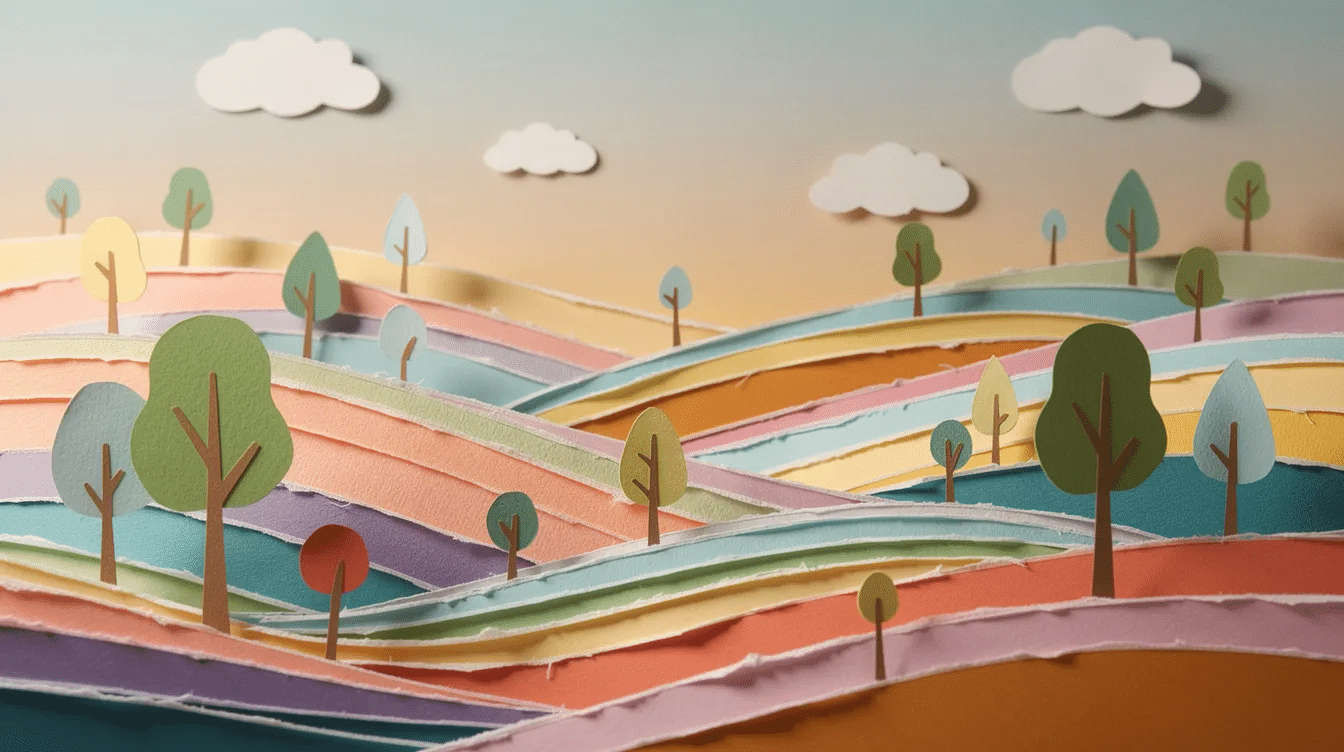
- You’ll create a small layered forest hill or city skyline to learn depth, spacing, and support.
- Use inexpensive materials: A4 sheets, colored cardstock, scrap paper, and recycled packaging for the base.
- Assemble from back to front, using glue carefully to reduce warp and risk.
- The FAQ covers glue choice, storage, tools, and paper weight.
What Is 3D Paper Sculpture?
3D paper sculpture transforms flat sheets of paper into dimensional art through cutting, scoring, and folding. Unlike flat card-making, it uses raised parts, tabs, spacers, and layers so the sculpture can stand away from the page.
Depth comes from stacked layers, foam tape, folded paper strips, and details made by curling or twisting. Think of a mountain landscape with hills in order from sky to foreground, or a cute city skyline with a house, windows, and moon displayed in a shadow box.
It is different from origami because you may cut, glue, and attach separate parts, but you can still enjoy top origami designs for every skill level if you prefer pure folding projects. This project is easy enough for ages 10+ with supervision, and most beginners can complete it in an afternoon.
- Tools and Materials You’ll Need
- Planning Your First 3D Paper Scene
- Cutting and Preparing the Paper Layers
- Building 3D Depth with Paper Strips
- Gluing Layers Together Safely and Cleanly
- Adding 3D Details: Curling, Twisting, and Layering
- Mounting and Framing Your 3D Paper Sculpture
- Beginner Project Ideas and Variations
- FAQ
Tools and Materials You’ll Need
Good supplies make clean edges and a nice result, and choosing the best craft paper supplies for creative projects will make cutting and layering much easier. You’ll need:
- A4 or Letter paper, cut into squares
- 160–200 gsm cardstock; this range is ideal for 3D paper sculpture
- Scrap paper for practice
- 20×20 cm cardboard or foam board base
- pencil, pen, ruler, scissors, craft knife, and glue
- Craft knives like X-Acto knives are recommended for precise cuts in paper sculpture
- metal ruler; using a metal ruler ensures straight, clean scores when cutting or scoring paper
- cutting mat; using a cutting mat protects the workspace and keeps cutting blades sharp
- paper clips, binder clips, optional bone folder, fine marker, frame
Use a glue stick for flat decorations. Use pva glue for structural supports, and consider how different types of paper for craft and their uses affect curling, strength, and cutting. Of course, test both on scrap first.
Planning Your First 3D Paper Scene
Choose a simple pattern: rolling hills, lighthouse, outer-space planets, or a skyline. Templates can include simple geometric shapes which are recommended for beginners in 3D paper sculpture.
Draw a thumbnail for 5–10 minutes. Divide it into background, middle ground, and foreground. Plan 4–6 layers: sky, far hill, near hill, trees, and front details.
Pick 2–4 colors plus an accent. Forests love blues and greens; cities work well in greys, black, and yellow. Avoid lots of tiny windows or thin branches on your first try.
Cutting and Preparing the Paper Layers
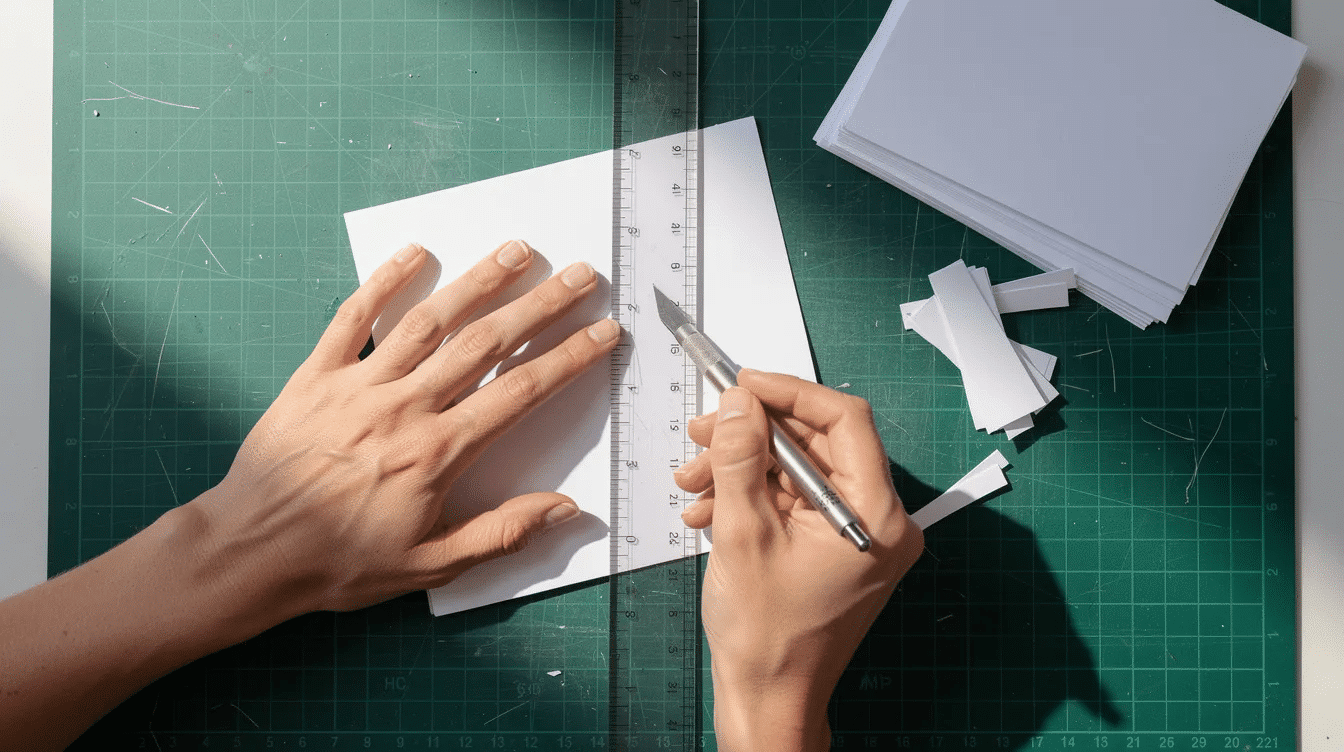
The first step in creating 3D paper sculptures is to cut A4 sheets into square sheets of paper, which can be done using a guillotine or scissors. A useful size guide is 15×15 cm, or 6×6 inches.
Step by step:
- Measure a square with a ruler.
- Mark each line with pencil.
- Cut with scissors or a knife on a mat.
- Stack sheets and label corners L1, L2, L3.
- Add small comments on the back so you remember the order.
Scoring is the process of scratching a line halfway through the paper to create folds. Pre-creasing scored lines helps make assembly easier when constructing paper sculptures, just as controlled coils and curves matter in beginner paper quilling art. Mountain folds and valley folds are methods of folding paper where mountain folds create an upward point and valley folds create a downward point.
After cutting the paper into squares, the next step involves folding the squares to create a template for cutting petals, which includes marking the center and drawing intersecting lines. Once the paper squares are stacked and the template is placed on top, an awl is used to create a hole through the center of the stack, allowing for the assembly of the sculpture.
Building 3D Depth with Paper Strips
Folded strips act like hidden pillars. Cut strips 2–3 cm wide and about 12 cm long for a 15 cm square. Fold each strip into three equal sections to create a sturdy zigzag support, similar to how internal layers support forms in creative paper mache designs.
Prepare 3–4 strips per edge for each layer. Place supports near corners and along edges so the artwork does not sag. Foam tape is used to separate layers and create depth in paper sculpting, and it is a quick alternative if you want a cleaner classroom process.
Gluing Layers Together Safely and Cleanly
When assembling 3D paper sculptures, pieces should be glued together from back to front. Start with the sky layer, then far hills, then near hills, then foreground parts.
Apply pva glue in tiny dots or a thin line on supports. Press for 10–20 seconds. Attach strips to the back of one layer, let them grab, then place the next layer carefully so the edges fit.
Use a glue stick only for light clouds, stars, leaves, or flat designs. Let the stack dry flat for 30–60 minutes under a book.
Adding 3D Details: Curling, Twisting, and Layering
Using techniques such as folding, twisting, and curling paper can enhance the design and structure of your 3D paper sculptures, allowing for creative expression.
Cut leaves, waves, rocks, or buildings. Curl leaves around a pencil. Twist thin strips into vines and glue only one end so the rest lifts. Add large parts first, then medium details, then marker highlights. Step back and watch whether the colors feel balanced, not crowded, just as you would when trying other fun paper activities for creative minds.
Mounting and Framing Your 3D Paper Sculpture
Glue the finished stack to a rigid base with pva glue around the outer edge and a few center dots. If it turned slightly uneven, dry it under light weight.
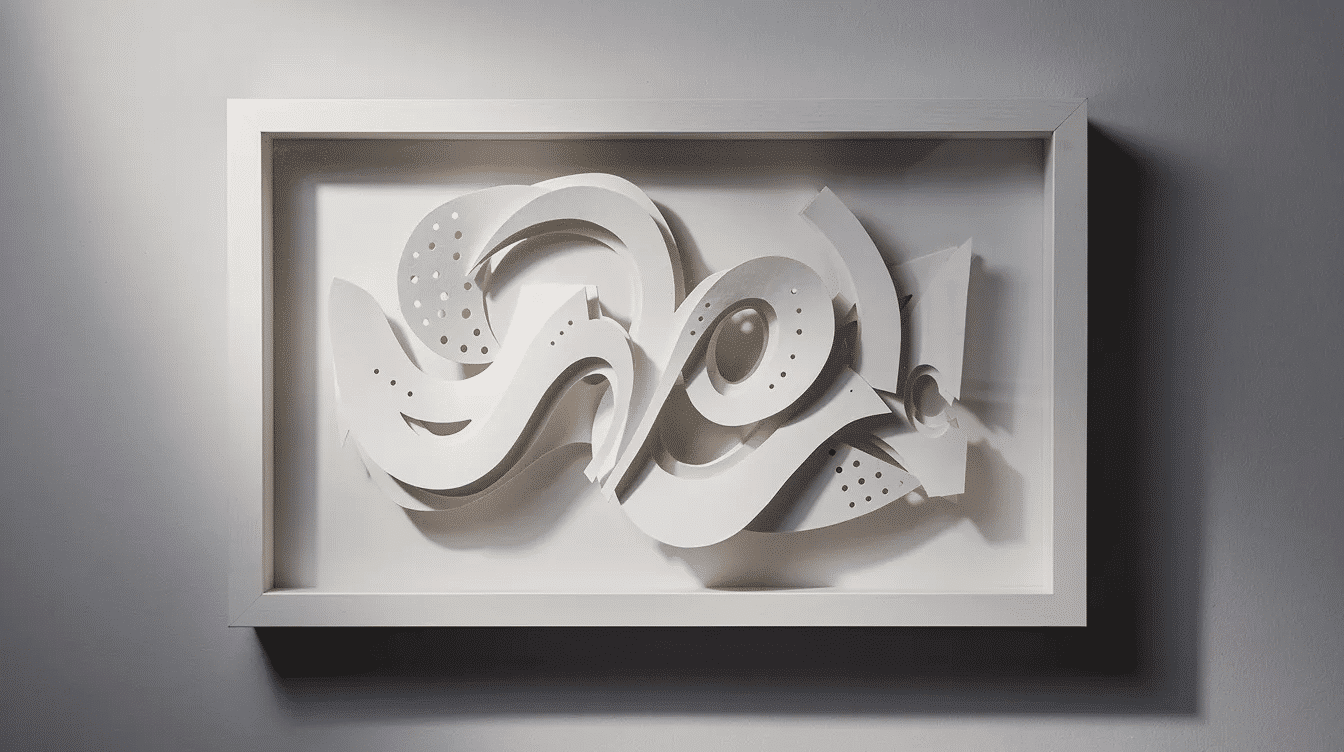
Frame it in a shadow box, or build a simple cardstock box with 2–3 cm walls for 5–6 layers. Label the back with title, date, and artist name. It will look more complete and be easier to display around the house, and you can share a photo in a paper craft inspiration gallery if you want to document your progress.
Beginner Project Ideas and Variations
Once your first paper sculpture is dry, try building on handmade papers for extra texture, using a handmade paper sheet guide for creative projects to choose or make the base:
- Night city skyline
- Underwater reef
- Autumn forest
- Outer-space planets
- Abstract geometric art, or even scenes featuring folded characters like creative origami paper duck designs
Change one variable at a time: paper weight, artwork size, or number of layers. You can also experiment with other sculptural techniques like creative uses of paper mache for art projects. You can find free template ideas on an art website, but do not let a bot-perfect design remove your creativity. Add your own pen marks, colors, and details. Thanks to small experiments, beginners are often impressed by how beautiful 3D paper can become.
FAQ
How do I stop my paper from warping when I use PVA glue?
Warping happens when paper absorbs too much moisture. Use less glue, spread it thinly, and dry the project under a heavy book. If it continues, choose thicker cardstock.
Can I make 3D paper sculptures without a craft knife?
Yes. Start with scissors and bold outer shapes. Later, upgrade to a knife and cutting mat for interior cuts and cleaner edges.
What type of paper is best for my first 3D paper project?
Use 80–120 gsm printer paper for practice and 160–220 gsm colored cardstock for visible layers. Very thin paper buckles; very thick board is harder to cut.
Is a glue stick strong enough for 3D paper strips and supports?
Usually no. A glue stick is fine for flat decorations, but pva glue is better for strips, tabs, and supports that hold weight over time.
How should I store or display my 3D paper sculpture so it lasts?
Keep it dry, away from sunlight, and protected in a shadow box or rigid storage box. If you make another version, follow the same course of steps and compare the experience.